Artificial intelligence-supported marketing is one of the most transformative processes in today’s business landscape. Companies are increasingly shaping their marketing strategies around the vast potential of AI. For marketing managers, understanding the current state of AI and its applications is essential for maximizing its benefits.
This article provides a comprehensive framework for marketing managers to classify their ongoing projects and roll out future AI initiatives effectively. By doing so, it empowers organizations to plan strategically and stay ahead in the competitive market.
Categorizing AI in Marketing
Artificial intelligence can be categorized along two key dimensions:
Level of intelligence
Standalone functionality or integration within a broader platform
Simple, standalone task automation tools serve as an ideal starting point for companies new to AI. However, the real value lies in advanced, integrated applications that utilize machine learning to drive deeper insights and outcomes. Businesses should aim to gradually transition toward these sophisticated technologies as they develop their AI capabilities.
The Value of AI in Marketing
Marketing, more than any other business function, stands to gain the most from AI. The core activities of marketing—understanding customer needs, matching them to solutions, and persuading purchases—are areas where AI excels.
A 2018 McKinsey analysis of over 400 advanced use cases revealed that marketing holds the greatest potential for AI-driven value creation. Similarly, the American Marketing Association’s 2019 survey showed a 27% increase in AI adoption within 18 months, highlighting the rapid embrace of this technology. Moreover, Deloitte’s 2020 global survey of early AI adopters confirmed that three of the top five AI goals are marketing-focused:
Improving products and services
Creating new offerings
Enhancing customer relationships
The Future of AI in Marketing
While AI has already made significant strides in marketing, its role is expected to expand further. CMOs must understand the current applications of AI in marketing and prepare for its evolution.
AI capabilities in marketing include:
Leveraging real-time data, such as geolocation, to simplify the sales process.
Offering personalized recommendations to improve customer engagement.
Reducing cart abandonment rates through smart nudges like testimonials or purchase examples (e.g., “Great choice! James from Vermont bought this same mattress”).
These AI-driven initiatives can boost conversion rates by a factor of five or more, demonstrating the power of tailored experiences in influencing customer decisions.
As AI continues to evolve, marketing leaders have a unique opportunity to harness its potential. By adopting advanced AI tools, CMOs can drive innovation, improve customer engagement, and unlock unprecedented value for their organizations.
You May Also Like
Follow us on TWITTER (X) and be instantly informed about the latest developments…
The luxury watch market continues to thrive, with top auction houses such as Christie’s, Sotheby’s, and Phillips achieving record-breaking sales. Discover the latest luxury watch auction trends in this article.
High-end watch brands like Rolex, Patek Philippe, and Audemars Piguet remain popular among collectors, with pre-owned timepieces also in demand.
Watch auctions attract attention from around the world. Geneva remains a hub, while Hong Kong and New York are also key players in the market.
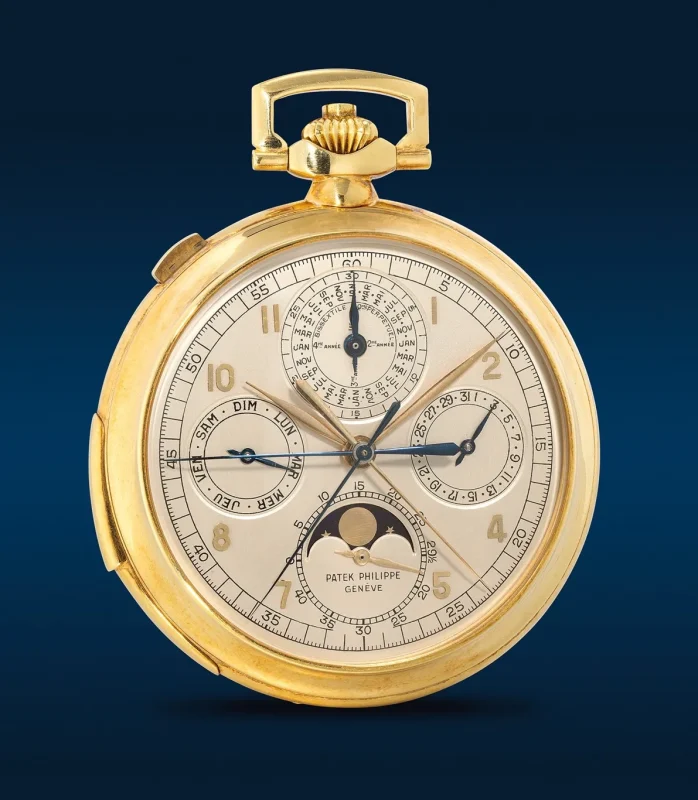
Notable recent sales include a rare Patek Philippe Minute Repeater 6301A-010 which sold for $17,320,032 in Geneva and a Richard Mille Rafael Nadal RM27-01 which went for $1.171 million in Hong Kong.
Nevertheless, recent watch auctions have timepieces on sale for most budgets, from a Tudor Black Bay 79030N that sold for $3,360 to a Patek Philippe GrandMaster Chime (6300G-010) which achieved a sales price of $5.4 million.
The Latest Luxury Watch Auction Trends
Trying to keep up with the latest in luxury watch auctions? This article explores key trends, from Rolex and Patek Philippe dominance to the rise of limited editions.
Read on for insights that could change your watch collecting strategy.
Key Takeaways
Online auctions are changing how people buy luxury watches, making it easier for collectors around the world to join in. These digital platforms have grown a lot and are expected to keep influencing the watch auction market.
The popularity of rare luxury watches keeps going up, with more people interested in buying them now than before. Reports from 2018 to 2024 show this trend clearly, pointing out that classic and vintage styles are especially sought after.
Patek Philippe and Rolex remain at the top of the market due to their high-quality craftsmanship and timeless designs. New players like Roger Smith are also gaining attention for their unique and finely crafted timepieces.
There’s a noticeable shift to dress watches instead of sports models among buyers, indicating a change in customer preferences toward elegance and simplicity.
With an increase in demand for modern and limited edition pieces, prices for these types of luxury watches may start to go up soon. Both sellers and buyers need to stay alert about these changes in the market.
Key luxury watch auction trends to be aware of
The Impact of the Pandemic on Luxury Watch Auctions
The pandemic shook the luxury watch auctions, causing a drop in overall sales at the time. Buyers now prefer dress watches over sports models, shifting the market trend.
Auctions adapted to meet collector demands during the pandemic.
Brands such as Patek Philippe and Cartier witnessed varied effects on their timepieces at auctions. While some models fetched lower prices than expected, others remained in high demand among collectors seeking timeless pieces amid the uncertainty of the pandemic era.
Increase in overall sales
Recent analysis shows that the luxury watch market saw an increase in sales. The latest data from the 2024 New York watch auction sales puts numbers on the up. This period, crucial for assessing pre-holiday interest, also suggests buyers are becoming more selective within the luxury goods space.
The number of unsold lots has also decreased significantly. Auction houses like Sotheby’s and Christie’s witnessed these changes at significant sales events, confirming the overall vibrancy of the watch industry auctions.
Shift towards dress watches over sports watches
Despite an increase in overall sales, a notable trend is the growing interest in dress watches over their sportier counterparts. Auction reports from 2018 to 2024 highlight this shift, particularly among luxury timepieces.
Brands like F.P. Journe and Cartier, especially with their iconic Crash model, are leading examples of this trend. This move reflects a changing preference among collectors and enthusiasts who now favor elegance and classic design over the more casual and sturdy aesthetic of sports models.
Data for specific auction seasons further underlines the rising demand for dress watches. The EveryWatch Auction Report indicates that buyers show a pronounced preference for such pieces.
This suggests not only a change in taste, but also points toward dress watches gaining ground as statement accessories within the luxury market space. It paves the way for brands often associated with high-end sporting designs such as the Rolex Daytona or Audemars Piguet Royal Oak to capture attention with their less celebrated but equally exquisite dress watch offerings.
The latest luxury watch auction trends
Top Players in the Market
Patek Philippe and Rolex consistently outperform other luxury watch brands at auctions, maintaining their stronghold in the market. With a legacy of exceptional craftsmanship and timeless design, these iconic timepieces continue to command high demand and top prices.
In recent auction reports, Patek Philippe and Rolex reaffirm their status as the top sellers in luxury watch auctions. The enduring appeal of these brands resonates with collectors and enthusiasts alike, showcasing their enduring popularity.
As discerning buyers seek investment-worthy pieces with a proven track record of value retention, these renowned brands remain at the forefront of auction success.
Emergence of Roger Smith in the top 10 millionaire lots
In the latest luxury watch auctions, an interesting shift has occurred with the emergence of Roger W. Smith among the top 10 millionaire lots. These auctions showcase a noteworthy trend towards recognizing independent watchmakers, highlighting a shift in consumer preferences towards unique and limited-production timepieces.
With this change, collectors are showing an increasing interest in owning exclusive pieces that embody exceptional craftsmanship and design, paving the way for independent artisans to make their mark on this prestigious stage.
The presence of Roger Smith alongside renowned brands like Patek Philippe and Rolex underscores the growing appreciation for artisanal craftsmanship and attention to detail in high-end watchmaking. This British watchmaker crafts just 12 watches each year.
On 5 November 2023 in Geneva, Roger’s own watch which is the only one he double-signed with George Daniels sold for 2,177,500 CHF ($2,422,142). This timepiece is the most valuable Roger Smith wristwatch ever sold at auction. What’s more, Roger’s Cornerstone Pocket Watch No. 2 achieved the highest auction price for any British watch ever sold at $4.9 million, in New York City on 10 June 2023.
Notable Luxury Watch Auction Trends
The luxury watch auction market has witnessed a noticeable surge in the popularity of modern timepieces. These watches, particularly coveted for their limited editions, have seen an increased demand.
Moreover, there is a growing preference for leather strap watches among collectors and enthusiasts at recent auctions. The focus on classic and timeless designs further underscores this trend, reflecting a shift in preferences within the luxury watch industry.
At the New York auction sales, buyers showed a preference for larger cases. Whilst 40mm cases remain popular, they are seeing a decline in average price and sales. Solid color dials are also in high demand.
In terms of watch case materials, white gold achieved the highest total sales with an increase of 83.66% on the previous year. Titanium watches showed a significant increase in demand.
Additionally, the year-over-year growth in the pre-owned market indicates a small yet sustained upward trajectory, suggesting continued opportunities for both buyers and sellers alike. Furthermore, there is potential for price increases in vintage and limited edition pieces as their scarcity drives up demand.
Patek Philippe World Time 2523 – photo: EveryWatch
Growing popularity of modern luxury watches
The demand for pre-owned luxury timepieces has been on the rise, with yearly analysis reports from 2018 to 2024 indicating an increasing trend. The latest auction reports highlight the ongoing popularity of modern luxury watches, with a 53% increase from 2023 to 2024.
This growing interest is evident across key locations such as New York, Hong Kong, and Geneva based on specific auction season reports for these regions.
Individual reports for specific watch brands like F.P. Journe and Cartier further emphasize the escalating interest in contemporary luxury timepieces. The statistics depict a surge in demand for these items among buyers.
Increasing demand for leather strap watches
We are witnessing an uptick in the demand for leather strap watches in the latest luxury watch auctions. This trend aligns with consumers’ preference for timeless and classic designs that exude elegance and sophistication.
Brands such as Patek Philippe, Rolex, and Vacheron Constantin are experiencing a surge in interest for their exquisite leather strap timepieces at auctions worldwide.
The allure of leather strap watches lies in their ability to elevate any attire while offering a comfortable wearing experience. Auction houses have observed an increase in bidding activity for these luxurious pieces, reflecting the shift towards embracing traditional craftsmanship and refined aesthetics.
Focus on classic and timeless designs
Classic and timeless designs are at the forefront of luxury watch auctions, appealing to collectors and enthusiasts seeking enduring elegance. This trend is reflected in the increasing demand for limited edition watches with a timeless aesthetic.
Luxury brands such as Patek Philippe and Rolex continue to produce iconic timepieces that epitomize classic design, resonating with discerning buyers in the market.
Moreover, this focus underscores the lasting value associated with exquisite horology that transcends fleeting trends or passing fads within the domain of luxury watches.
Patek Philippe Perpetual Calendar – photo: EveryWatch
The Future of Luxury Watch Auctions
Reports covering a period from 2018 to 2024 suggest that there’s increasing demand for vintage and limited edition pieces in the luxury watch auction sector.
This trend signifies a potential for price increases in such items.
Continued growth in the pre-owned market
The modern luxury watch market is on the rise with sustained growth in recent years. There has also been a small rise in demand for pre-owned timepieces.
This trend is evidenced by a significant increase in sales and interest from collectors and enthusiasts alike.
Online platforms have played a pivotal role in driving this growth, providing access to a wider range of contemporary and pre-owned luxury watches for potential buyers. The emergence of reputable online marketplaces has contributed to an increased comfort level among consumers when it comes to making high-value transactions.
With these developments shaping the landscape of luxury watch auctions, it’s clear that the continued expansion of these markets will have profound implications for both sellers and buyers alike.
Potential for price increases in vintage and limited edition pieces
As consumer demand for vintage and limited edition luxury watches continues to rise, there is a strong likelihood of price increases in this segment. Specific reports for June and May of 2024 in New York, Hong Kong, and Geneva offer localized data for potential price surges in these regions.
The emerging trends indicate a growing market appetite for modern luxury watches and increased interest in classic designs. It’s evident that limited edition pieces are poised to command higher prices moving forward.
Impact of online auctions on the industry
Online auctions have significantly impacted the luxury watch industry, contributing to how auctions are conducted and influencing market dynamics. Comprehensive reports and analyses highlight this growing influence, shaping consumer behavior and preferences.
The availability of online platforms has expanded access to a global audience, resulting in increased competition during auctions. This shift has also necessitated adaptation from traditional auction houses by integrating digital strategies while leveraging the potential for wider reach and an enhanced buyer experience.
The rise of online auctions is evident in the increasing participation of both seasoned collectors and new enthusiasts alike. The convenience offered by virtual bidding platforms has revolutionized the industry, allowing collectors worldwide to engage with renowned auction events without geographical limitations.
Enhanced accessibility through online avenues underpins the evolving nature of luxury watch auctions, signifying a profound transformation in a traditionally exclusive domain.
Final Thoughts on Luxury Watch Auction Trends
Luxury watch auctions have seen a shift in trends, with dress watches gaining popularity over sports watches. Patek Philippe and Rolex continue to dominate the market, while Roger Smith has emerged as a significant player.
The demand for modern luxury watches is on the rise, along with an increasing preference for leather strap timepieces. Looking ahead, the pre-owned market is expected to grow further, potentially leading to price increases for vintage and limited edition pieces.
Online auctions are also set to influence the industry’s future trajectory.
FAQs
1. What are the latest trends in luxury watch auctions?
The latest trends in luxury watch auctions include high demand for brands like Richard Mille, Patek Philippe, and Grand Seiko. Breguet and Zenith watches with tourbillon features also fetch high prices on the auction block.
2. How does insurance play a role in luxury watch auctions?
Insurance plays a significant role during transactions at these events. Companies such as Chubb Limited, Ace American Insurance Company, and surplus lines insurers provide coverage for these valuable pieces. Underwriting is crucial to determine deductibles.
3. Are there new entrants making waves in the auction market?
Yes! Philippe Dufour’s creations have been gaining traction due to their exquisite craftsmanship while FP Journe chronographs are becoming increasingly sought after by Gen Z collectors who appreciate their timeless appeal over fast fashion trends.
4. Is digital culture influencing luxury watch auctions?
Absolutely! The influence of digital culture can be seen through the rise of online platforms like Tourneau, owned by Bucherer, where one could bid on coveted models like the Rolex GMT Master II or Milgauss from anywhere around the globe.
5. Is speculation affecting prices at luxury watch auctions?
Indeed it is! Speculation often drives up prices especially when rare pieces come under the hammer.
As the NFT and cryptocurrency world rapidly evolves, a key term frequently encountered by investors is DYOR (Do Your Own Research). This concept is fundamental to making informed decisions, especially for beginners entering the space. But what exactly does DYOR mean, and why is it so crucial?
What Does DYOR Mean?
DYOR stands for “Do Your Own Research.” This phrase is a cornerstone in the crypto and NFT space, urging investors to thoroughly investigate any project before committing their resources. Research involves analyzing the creators, technical infrastructure, roadmap, and community behind an NFT project.
The Importance of DYOR in the NFT World
NFT projects often enter the market with big promises, but some may present unrealistic goals or even turn out to be scams. This is where DYOR becomes an essential strategy. Here’s why DYOR is critical for NFT investors:
Reduces Fraud Risks: Scams are prevalent in the NFT market. By conducting research, you can avoid falling victim to fraudulent schemes.
Assesses Long-term Value: It helps you focus not only on a project’s current hype but also on its potential for future value.
Informed Decision-making: With research, you can better evaluate risks and opportunities.
How to Conduct DYOR
Here are key steps to perform effective DYOR on NFT projects:
Research the Team and Creators: Who are the people behind the project? What is their track record? Are they credible?
Examine the Community: Check the activity and support on platforms like Discord, Twitter, and Telegram.
Evaluate the Technical Infrastructure: Which blockchain does the project utilize? Are the whitepapers clear and well-documented?
Analyze Market Trends: What makes the project unique? How does it compare with competitors?
Inspect Smart Contracts: Are the smart contracts secure and reliable for ownership and transfers?
Tools to Aid DYOR
Etherscan and BscScan: For analyzing smart contracts and blockchain transactions.
OpenSea and Rarible: To explore NFT marketplaces and gauge the popularity of projects.
DappRadar: Useful for project insights and trends.
Twitter and Medium: Often the go-to platforms for the latest project updates.
Tips for Effective DYOR
Avoid making rushed decisions. Taking time to gather information can lead to better outcomes in the long run.
Use multiple sources of information and never rely solely on one.
Pay attention to community feedback but always prioritize your independent analysis.
By practicing DYOR, you not only protect yourself from scams but also enhance your chances of identifying worthwhile projects. In the high-risk, high-reward world of crypto and NFTs, knowledge is your most valuable asset. Always remember, conducting your own research is the golden rule for success.
You May Also Like
Follow us on TWITTER (X) and be instantly informed about the latest developments…
ChatGPT, the groundbreaking chatbot that has reshaped the internet landscape, is currently free of charge and offers users an ad-free experience across both web and app platforms. However, recent statements suggest this model could change in the future. According to OpenAI, there is a possibility that ads may be introduced for non-paying users as a strategy to boost revenue.
The Potential for Ads in ChatGPT
In an interview with the Financial Times, OpenAI CFO Sarah Frier highlighted that while there are no immediate plans to implement ads, the option remains on the table. Frier explained that the high operational costs of running servers and maintaining models might lead OpenAI to explore advertisements as a revenue stream. Despite OpenAI’s valuation of $150 billion, the company spends billions annually on training and sustaining its AI models. This financial pressure could make advertising a viable revenue source in the future.
Earlier this year, OpenAI took steps that may signal such intentions, including hiring professionals with advertising expertise from companies like Google and Meta. These recruits could indicate preparations for potential ad-based monetization strategies.
Ads Not Expected Anytime Soon
Frier emphasized that OpenAI will need to carefully consider how and when to introduce ads, ensuring that they are thoughtfully placed and do not disrupt the user experience. She clarified that ads are not part of the immediate roadmap, meaning any such changes would likely take place in the coming years.
While OpenAI’s CEO Sam Altman has expressed openness to the idea, he has also publicly voiced his dislike for advertisements, calling them a “last resort” in previous statements. This sentiment suggests that the likelihood of ads appearing on ChatGPT remains relatively low for now.
Although ChatGPT ads could become a reality to support the platform’s sustainability, the company appears committed to thoroughly evaluating the implications before taking any steps. For the foreseeable future, users can continue to enjoy an ad-free experience on ChatGPT.
You May Also Like
Follow us on TWITTER (X) and be instantly informed about the latest developments…
Known as an innovator in the beauty industry, e.l.f. Cosmetics is constantly pushing the boundaries on digital innovation and leaning into retail shopping trends. Diving deeper into the immersive commerce space, the beauty brand partnered with Obsess to launch their latest Virtual Luxe Lounge—an interactive speakeasy exclusively for their loyal Beauty Squad Members. A first of its kind, the e.l.f. Cosmetics Virtual Luxe Lounge is the first time a brand has incorporated its loyalty program into a 3D, virtual experience, to exclusively offer its most engaged audience a new way to shop.
“We’re thrilled to once again partner with Obsess and offer our most loyal customers a unique and interactive way to shop our most-coveted new products,” said Ekta Chopra, Chief Digital Officer, e.l.f. Beauty. “Our Beauty Squad members are very important to our brand, and we’re excited to bring them an exclusive shopping experience that will give them new ways to earn and redeem rewards.”
As a perk of e.l.f.’s loyalty program, the gated, digital shopping experience offers members early access to shop new holiday products and exclusive coupons to redeem at checkout; Beauty Squad members have to log in to their account to access the glittery 3D environment with a sultry speakeasy vibe.
Initially launched with a room full of holiday gift sets and the Holy Hydration Hall, the virtual experience expanded as the brand phased out new product drops. Each product drop unlocked a new room and corresponding member-exclusive reward, expanding the virtual experience in a dynamic and exciting way. A peek behind the curtain—once unveiled, the Finish Flawless room featured items from e.l.f.’s Camo collection and the Glimmer Dreams room launched the brand’s new lip oil collection.
The e.l.f. team has previously partnered with Obsess to launch other firsts, including the first beauty shopping app in Apple Vision Pro and more. Following the success of our previous virtual reality beauty shops, this immersive holiday experience further cements e.l.f. as a pioneer and leader in the beauty industry. To learn more about Obsess-powered virtual experiences, email us at contact@obsessvr.com or book a demo.
Artificial Intelligence (AI) and blockchain technology are two transformative innovations reshaping industries and inspiring a new era of technological growth. AI has revolutionized Web2 with unprecedented levels of investment, including high-profile funding rounds for companies like Inflection AI and Anthropic, backed by major tech firms like Microsoft, Nvidia, and Amazon. Despite this momentum, the role of Web3 technologies like blockchain in AI development remains uncertain. However, a promising narrative is emerging: while AI redefines productivity, Web3 has the potential to revolutionize digital interactions. This integration poses unique challenges, particularly in infrastructure, as the demand for computing power grows.
In this article, we’ll explore the state of AI infrastructure, the GPU crunch, centralized and decentralized GPU solutions, and the opportunities for Web3 infrastructure to support AI. We’ll also look at exciting concepts like decentralized data, zero-knowledge machine learning, and the transformative potential of combining AI and Web3.
AI Infrastructure and the GPU Bottleneck
The rapid growth of AI applications, especially with the success of Large Language Models (LLMs) like OpenAI’s GPT-3.5, has created a huge demand for high-performance GPUs. In fact, ChatGPT, based on GPT-3.5, became the fastest-growing app to reach 100 million monthly active users, surpassing platforms like YouTube and Facebook by years. With applications multiplying across fields—from Midjourney’s AI-driven art to Google’s PaLM2-powered services—the computing power needed for training and running these models is enormous.
Deep learning, which powers these models, is computationally intensive. Each parameter in an LLM consumes GPU memory, and as models grow larger, the strain on GPUs increases. Companies like OpenAI face challenges in deploying more complex, multi-modal models due to the limited availability of GPUs, which results in a highly competitive landscape for AI startups vying for access to computing power.
Addressing the GPU Demand: Centralized and Decentralized Solutions
Centralized GPU Solutions
In the short term, centralized GPU solutions have gained momentum. For instance, Nvidia’s release of its tensorRT-LLM in August 2023 promises optimized inference and improved performance. The upcoming Nvidia H200, scheduled for a 2024 release, is also expected to help alleviate the GPU shortage. In addition, traditional mining companies like CoreWeave and Lambda Labs are shifting their focus to GPU-based cloud computing, offering hourly rentals of Nvidia H100s at competitive rates.
ASIC-based mining, which uses specialized circuits optimized for specific algorithms, is another viable approach. However, centralized solutions may not be scalable or cost-effective in the long run, and they often require users to commit to long-term contracts, which can be inefficient.
Decentralized GPU Solutions in Web3
The decentralized approach proposes a “marketplace” for GPUs, where individuals or organizations with idle GPUs can contribute to a blockchain-based network. Unlike centralized providers that require long-term commitments, decentralized systems allow users to join as needed, offering flexibility and reducing wasted resources. One example is Petals, a decentralized approach developed as part of the BigScience initiative, which splits a model across multiple servers. This setup allows users to connect and perform AI tasks without relying on a single central server, much like sharding in blockchain.
The decentralized GPU marketplace concept is particularly appealing for AI applications in Web3, where resource sharing aligns with the principles of decentralization. However, such networks may face challenges with latency and coordination, making real-time AI processing more difficult to achieve.
Opportunities for AI and Web3 Infrastructure Integration
The fusion of AI and Web3 infrastructure opens up avenues for decentralized computing, secure data management, and enhanced user control over AI interactions. Below are some promising areas where this integration could make a significant impact:
1. Decentralized AI Computing Networks
Decentralized compute networks connect users needing computational power with providers who have unused resources. This model allows individuals and organizations to contribute their idle GPUs or CPUs without additional costs, creating an affordable alternative to centralized options.
For example, blockchain-based networks could support decentralized GPU rendering for AI-driven 3D content creation in Web3 gaming. However, these networks face performance constraints, particularly in machine learning training, due to communication delays between various devices.
2. Decentralized AI Data Management
Training AI models requires extensive datasets, which need to be tested and validated for accuracy. Decentralized AI data management could allow blockchain to serve as an incentive layer, encouraging data-sharing and labeling across organizations.
However, this approach has hurdles, including a reliance on human oversight for data quality and privacy concerns. SP (Special-Purpose) compute networks, which are optimized for specific AI use cases, offer a potential solution. These networks pool resources to form a “supercomputer” and often operate on a gas-based cost model regulated by the community.
3. Decentralized Prompt Creation and Management
Prompt engineering is central to the success of LLMs, as prompts guide the model’s responses. Decentralized prompt marketplaces incentivize creators to develop and share effective prompts, which can be traded as digital assets, such as NFTs. This approach could lead to a marketplace where AI model owners have greater control and ownership over their creations.
Decentralizing prompt creation could encourage diverse AI contributions, but scalability and consistency across models remain challenges.
4. Zero-Knowledge Machine Learning (ZKML)
Zero-Knowledge Machine Learning, or ZKML, presents an innovative solution for executing AI tasks in a decentralized environment while maintaining data privacy. This approach could enable LLMs to operate off-chain and provide proof of output without directly revealing the data or model.
With ZKML, AI results could be used to inform blockchain-based decisions while ensuring transparency and security. For example, ZK-proofs could verify that an AI model performs consistently across different datasets, which is critical for applications like digital identity verification and combating deepfakes.
Challenges and Potential Roadblocks
While the integration of AI and blockchain holds immense promise, several challenges must be addressed:
Scalability and Speed: Decentralized networks can experience slower processing speeds due to the need for consensus and coordination across nodes, which may hinder real-time AI applications.
Data Privacy and Security: Handling sensitive data in decentralized environments requires robust encryption and access control. The decentralized approach could expose models to vulnerabilities if not properly secured.
Cost Efficiency: Gas fees and computational costs on blockchain networks can be high, particularly for extensive AI tasks. Developing cost-effective solutions will be critical for widespread adoption.
Interoperability: AI models and blockchain systems are often designed independently, making interoperability a challenge. Ensuring that diverse AI and blockchain solutions work together seamlessly will be essential.
Looking Ahead: The Future of AI and Web3 Synergy
The integration of AI with Web3 technology offers an exciting frontier of innovation. While Web2 has already harnessed AI’s potential to drive productivity, the intersection with Web3 may unlock new ways of organizing digital assets, incentivizing collaboration, and enhancing data privacy. As we move into an era of increased digital autonomy, the synergy between AI and Web3 infrastructure could reshape industries from gaming and finance to social media and beyond.
In this new paradigm, decentralized computing, data sharing, and prompt engineering models promise a future where individuals have more control and ownership over their interactions with AI. As advancements in GPU technology, zero-knowledge proofs, and blockchain-based networks continue to evolve, the full potential of AI x Web3 may soon be realized.
By addressing current limitations and building resilient, interoperable systems, we may unlock transformative capabilities that not only drive productivity but redefine the very nature of digital interactions.
FAQs
How does blockchain benefit AI?
Blockchain enables decentralized data management, secure transactions, and incentivized collaboration, providing a robust infrastructure for data sharing, secure computation, and transparent AI development.
What is a decentralized AI computing network?
A decentralized AI computing network is a peer-to-peer system that connects users needing computational resources with providers who have idle resources, offering a flexible and cost-effective alternative to centralized computing.
What is Zero-Knowledge Machine Learning (ZKML)?
ZKML is a technology that uses zero-knowledge proofs to verify AI computations on a blockchain without revealing underlying data, enabling privacy-preserving AI applications.
Can Web3 help solve the GPU shortage?
Web3’s decentralized GPU marketplaces offer a flexible solution for sharing computing resources, potentially easing the GPU crunch faced by AI developers and startups.
Is AI integration on Web3 feasible now?
While still in its early stages, AI on Web3 shows promise for future applications, but current limitations in scalability, privacy, and cost-effectiveness need to be addressed.
Russia has introduced a new cryptocurrency tax regulation as Bitcoin (BTC) reaches an all-time high against the Russian ruble. The Federation Council, the upper house of Russia’s parliament, has approved the new taxation framework for cryptocurrency transactions.
Cryptocurrencies Recognized as “Property”
The Russian government has been actively exploring cryptocurrencies and blockchain technologies. Recently, Russia legalized the use of crypto assets for international payments and forex transactions. Building on this development, the Russian Federation Council has approved a regulation that officially defines cryptocurrencies as “property.”
This new law imposes a 13% to 15% personal income tax on cryptocurrency sales but provides an exemption for Russian cryptocurrency miners, who will not be required to pay value-added tax (VAT) on the coins they produce.
The bill, discussed three times in the State Duma, is now awaiting the signature of Russian President Vladimir Putin. Once signed, it will be published and officially come into force.
Cryptocurrency Mining Under State Control
The regulation strengthens state oversight of cryptocurrency mining by requiring mining infrastructure operators to report their activities to local authorities. Operators who fail to comply face a fine of 40,000 rubles (approximately $360). Notably, services provided by authorized mining operators will remain exempt from taxes within Russian territory.
Aimed at Regulating and Legalizing Cryptocurrencies
This new law is seen as an effort by Russia to combat informality and prevent misuse of cryptocurrencies, while providing a legal framework for cryptocurrency mining and transactions. By regulating the sector, the government seeks to bring greater transparency and stability to its growing crypto economy.
Russia’s approach to cryptocurrency taxation and mining regulation reflects its strategic effort to integrate blockchain technology into the country’s financial system while maintaining state control.
You May Also Like
Follow us on TWITTER (X) and be instantly informed about the latest developments…
Humanity is on the brink of a new era as digital advancements continue to transform how we experience the world. From visual and audio content dominating the digital space, the next frontier might just involve smell. Imagine a world where scents can be transmitted digitally. This once fantastical idea is now becoming a reality, thanks to the groundbreaking innovations of Osmo.
“I Wish Smell Could Pass Through the Computer!” Now It Can
Have you ever wished you could share a fragrance through your screen? The technology developed by Osmo, an initiative founded by Alex Wiltschko from the Google Research team, has achieved a remarkable feat: digitizing scents. This innovation, known as Scent Teleportation, integrates fragrance into the digital environment and has the potential to revolutionize several industries.
How Does Osmo’s Technology Work?
Osmo’s success lies in its ability to analyze and reproduce scents using Gas Chromatography-Mass Spectrometry (GCMS). By analyzing odor molecules and digitally processing the data, Osmo creates a Basic Odor Map (POM) with the help of artificial intelligence. This AI-supported system reshapes the molecules and reproduces them as liquid essences, enabling accurate representation and reproduction of complex fragrance formulas.
Transforming the Fragrance Industry
Osmo’s innovations are not limited to digitization; they aim to transform the perfume industry by leveraging deep learning and graphical neural networks. These technologies allow the prediction and creation of environmentally friendly and sustainable aromatic molecules. With Osmo’s advancements, processes that once took years in the perfume industry can now be completed in a fraction of the time.
Expanding Applications of Digital Scent Technology
Osmo’s digital scent technology has far-reaching implications, extending beyond perfume creation to impact health, safety, and well-being. By analyzing odor components, Osmo is paving the way for new molecules that are not only safer but also more sustainable. This approach is crucial for reducing the environmental impact of traditional fragrance production.
A Future Full of Possibilities
From digitizing fragrance formulas to enabling scent teleportation, Osmo is leading the charge in a field that blends technology and innovation. This groundbreaking technology has the potential to redefine how we interact with digital content and experience the world, offering endless possibilities for the future.
Osmo’s advancements in scent digitization and artificial intelligence mark a pivotal moment in the evolution of technology, making the dream of transmitting scents through the digital world a reality.
You May Also Like
Follow us on TWITTER (X) and be instantly informed about the latest developments…
Disputes between OpenAI and news publishers continue to escalate. Recently, Canada’s leading news organizations filed a lawsuit against OpenAI, alleging that the company used their content to train ChatGPT without obtaining proper permissions, thus violating copyright laws. The organizations involved include The Canadian Press, Torstar, Globe and Mail, Postmedia, and CBC/Radio Canada.
According to the publishers, OpenAI scanned their news content without authorization to train its artificial intelligence models and profited from it. In a joint statement, the media outlets emphasized, “OpenAI is making a profit by using content owners’ work without obtaining permission or compensating them.”
Media Outlets Stress “Intellectual Property” Rights
The publishers further highlighted that the unauthorized use of their content jeopardizes investments worth hundreds of millions of dollars. They argued that their content is protected under copyright laws and should not be exploited without proper agreements. While acknowledging the benefits of technological innovations, the media organizations stressed the importance of adhering to legal frameworks and ensuring fair use of intellectual property.
In response to the accusations, OpenAI claimed that its models are trained on data obtained from publicly available sources, adhering to the principles of fair use. OpenAI also stated that it provides options for media organizations to control how their content is used and expressed openness to collaboration.
Uncertain Legal Landscape in Canada
Canada recently enacted legislation requiring platforms to pay publishers for using their news content. However, it remains unclear whether this law applies to artificial intelligence applications. The outcome of this lawsuit could set a significant precedent for how AI models interact with copyrighted material in the future.
This case underscores the ongoing tensions between AI developers and content creators, emphasizing the need for clear legal frameworks to balance innovation and copyright protection.
You May Also Like
Follow us on TWITTER (X) and be instantly informed about the latest developments…
Key HighlightsThe “Coruna” kit bundles 23 individual exploits into 5 full chains, targeting every iPhone and iPad running iOS 13.0 through iOS 17.2.1.Updating...