Welcome to Freestyle – Tales of Itch, an upcoming Commodore Amiga game developed with the Scorpion Engine, transforming 1990s comic characters into a 40+ level platformer. Featuring a “freestyle” development approach, the title aims to deliver a nostalgic experience with hand-drawn elements and multiple release formats, including ADF, WHDLoad, and standalone Windows emulation. Currently there is a demo however, and the developer has said this is a basic platformer fare to ease the player into the gameplay and setting. Later levels change things up considerably with genre changes and many more surprises!
The upcoming Commodore Amiga game Freestyle – Tales of Itch features a delightfully absurd plot where a fingerless villain named Cactus, driven mad by his physical shortcoming, decides that true personal worth is measured solely by how much kitchen cutlery a person can bend, forcing a grumpy feline named Stupid Cat to reluctantly set off on a wild adventure to halt the silverware-warping madness.
REQUIREMENTS!
Amiga 500 1mb with pistorm runs amazingly and Amiga 600 2mb with 4 mb fast ram seems to run fairly well as well (Some stuttering on a later level will be fixed in the final game). Basically, it either needs fast ram available or a faster cpu. I haven’t tested on a stock A500 for a while but it was a bit sluggish when I last ran it. I don’t have the ability to test on an Amiga 1200 so hopefully it runs okay on that as well.
Credits :
Everything except for the music – Mark PursellMusic provided by The Mod Archive (curt_cool)Freestyle and related characters (c) Mute.Ink (Mark Pursell) 2026Game Developed for Amiga using Scorpion Engine (thanks earok!)
[UPDATE] A new demo has been released with the following being said “This will probably be the last demo before the final release (unless bugs) but it’s a significant one! I’ve added a couple more levels, changed most of the graphics, changed level layouts, added things, fixed bugs, improved performance and changed some music since getting permission from curt_cool to use his mod tracks.”
The Steam Hardware & Software Survey for July 2026 is out now and going by the current data, Linux has managed to jump back just over 4%.
Here’s the current overall operating system share:
Windows – 93.67%
Linux – 4.01%
macOS – 2.32%
Oddly, some of the comparisons look like they’re against May’s numbers not June, so we may end up seeing some corrections from Valve. We’ll keep an eye on it.
The usual snapshot from our dedicated Steam Tracker page:
And the most popular Linux distributions for July 2026:
SteamOS Holo 64 bit 22.24% -0.59%
CachyOS 64 bit 14.31% +0.28%
Arch Linux 64 bit 8.29% -0.57%
Linux Mint 22.3 64 bit 8.12% +0.22%
Bazzite 64 bit 7.73% +0.45%
Freedesktop SDK 25.08 (Flatpak runtime) 64 bit 5.37% +0.01%
Fedora Linux 44 (KDE Plasma Desktop Edition) 64 bit 2.92% +0.40%
Ubuntu 26.04 LTS 64 bit 2.92% +0.35%
Ubuntu Core 24 64 bit 2.88% -0.20%
Ubuntu 24.04.4 LTS 64 bit 2.78% +0.05%
Debian GNU/Linux 13 (trixie) 64 bit 1.99% +0.03%
EndeavourOS Linux 64 bit 1.69% -0.08%
Fedora Linux 44 (Workstation Edition) 64 bit 1.66% +0.13%
Nobara Linux 43 (KDE Plasma Desktop Edition) 64 bit 1.64% -0.53%
Pop!_OS 24.04 LTS 64 bit 1.53% +0.01%
Other 13.91% +0.02%
The survey shows that 1920 x 1080 is still the top resolution, by quite a wide margin too at 51.10%. The next most popular being 2560 x 1440 at 21.46%. We’re also seeing 32 GB RAM (36.93%) closing in on 16 GB (40.97%).
🌐 External Sources: store.steampowered.com Article taken from GamingOnLinux.com.
Charli XCX White Hot Heap of Happy Birthday Hot Shots!!!
Published
August 2, 2026
1:00 AM PDT
It should be illegal to look this good at 34 … but Charli XCX knows we love it when she’s rocking out in barely-there thongs and thick shades.
That’s right … It’s Charli’s 34th birthday, and there is a whole lot we “Fancy” about this British beauty.
Like this sexy snap of Charli sipping a cocktail in the sun … in a tiny black bikini, of course.
Don’t drool too much in the kitchen … although we get it, Charli’s looking too damn good in an almost see-through shirt, leaving pretty much nothing to the imagination.
That’s okay, Charli, we’ll leave the imagination to you … and we’re happy to just admire.
When I first fell down the rabbit hole of military stealth technology, my mind immediately wandered to the dystopian streets of Blade Runner. I started imagining what it would take to turn a standard daily driver into a ghost that completely fools police radar guns.
We have all seen the urban legends and sci-fi tropes: spray a secret, matte-black paint on your hood, and poof—you vanish from law enforcement screens. But as I dug deeper into the physics behind radar-absorbent materials and the crazy aerodynamic engineering that keeps F-35 fighter jets invisible, reality hit hard. Achieving total invisibility isn’t just about slapping on a fresh coat of high-tech paint.
The Science of Stealth: How Radar Actually Works
To understand why making a car invisible is so difficult, we first need to look at how police radar units operate. They rely on the Doppler effect, bouncing radio frequency waves off a moving target and measuring the frequency shift of the returning echo to calculate speed.
Military aircraft achieve radar cross-section (RCS) reduction through two primary methods:
Radar-Absorbent Materials (RAM): Special coatings that convert incident radar energy into heat rather than reflecting it back to the source.Geometrical Shaping: Sharp angles, faceted panels, and smooth transitions designed to deflect radar beams away from the receiver.
Cars, on the other hand, are essentially rolling collections of curved metallic surfaces, flat glass, protruding side mirrors, and spinning wheels. Every single one of these components acts as a natural corner reflector, throwing radar signals right back to where they came from.
The Myth of Stealth Paint: Why Your Daily Driver Won’t Vanish
Let us talk about those viral claims regarding stealth paint. Can you just buy a radar-absorbing coating online and call it a day?
The short answer is no. Standard commercial radar-absorbent paints—often utilizing carbon nanotubes or ferrite compounds—are engineered for specific radar frequency bands (typically X-band or Ku-band used by military installations). Even under optimal laboratory conditions, these consumer-grade or industrial coatings typically achieve a signal absorption limit of around 20% to 30%.
That means 70% to 80% of the radar wave still bounces off your car’s body. Furthermore, police radar systems use varying frequencies, and a coating tuned for one specific frequency will fail against another.
Why Redesigning a Car’s Angles is an Engineering Nightmare
Even if you managed to cover every square inch of your vehicle with advanced RAM, geometry is your ultimate enemy.
F-35s and B-2 bombers look the way they do for a strict mathematical reason. Their jagged edges and blended wing bodies redirect radar waves in precise, predictable directions away from the radar source. If you tried to apply F-35 geometry to a sedan, you would end up with a vehicle that is:
Aerodynamically unstable at highway speeds.Legally non-compliant with pedestrian safety regulations (sharp leading edges are a major hazard).Impractical for daily commuting, parking, and cargo space.
Redesigning a car’s chassis angles to scatter radio frequencies is an absolute engineering nightmare. You are essentially trading everyday utility and safety for a very minor reduction in radar signature.
The Future: Quantum Radars and Metamaterials
So, are we stuck being visible forever? Not necessarily. The science of stealth is evolving faster than ever.
Researchers are currently exploring metamaterials—artificially engineered structures with properties not found in nature. These materials can bend electromagnetic waves entirely around an object, much like a cloak bending light.
At the same time, military researchers are developing quantum radars, which utilize entangled photons to detect targets that use traditional stealth coatings. As quantum sensing matures, it will likely render current stealth countermeasures obsolete, pushing engineers into a continuous game of technological cat-and-mouse.
Conclusion
Transforming your daily driver into a ghost-like vehicle sounds like an amazing cyberpunk fantasy, but the laws of physics and aerodynamics make it practically impossible with current consumer tech. Between the strict limitations of radar paint and the nightmare of redesigning a car’s geometry, total invisibility remains on the screen rather than in the driveway.
What do you think? Will everyday vehicles ever become completely invisible to radar, or will police tracking tech always stay one step ahead? Let me know your thoughts in the comments below!
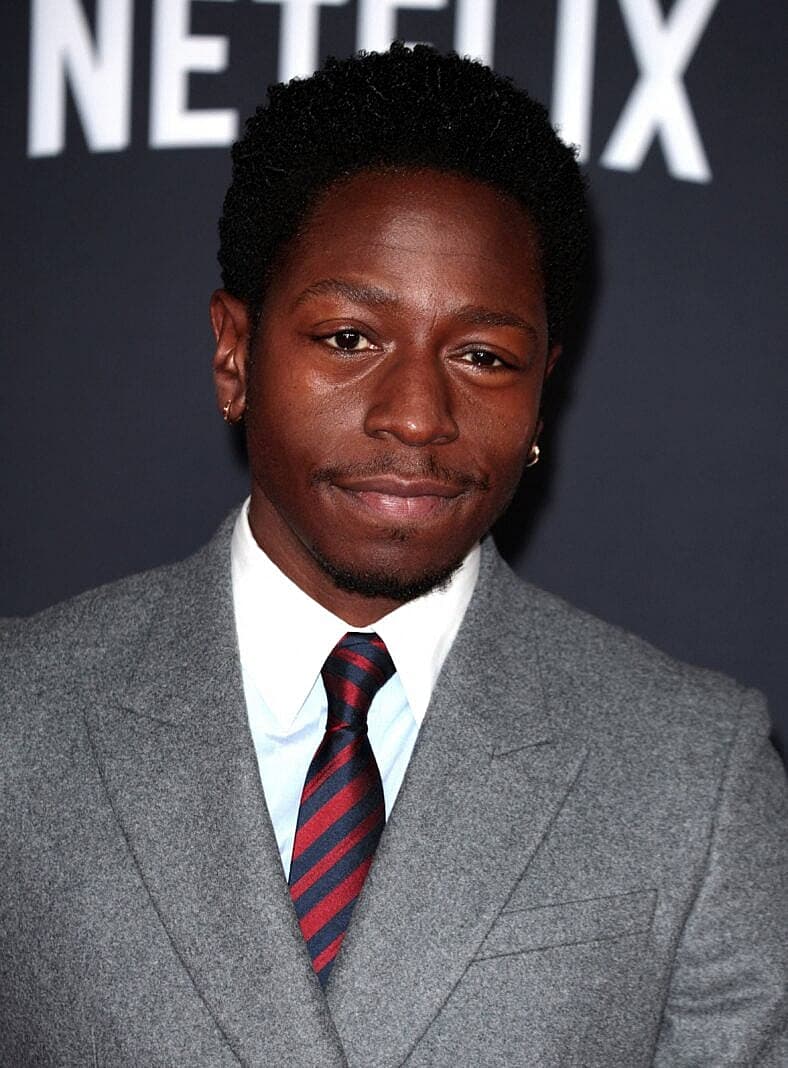
Michael B. Jordan is joining in on the joke after social media users likened his go-to red-carpet stance to a waiter preparing to take an order.
It’s not the first time the actor’s poses have become a talking point online, either, with his resurfaced Calvin Klein campaign also fueling plenty of online commentary a few months ago.
Michael B. Jordan proved he can laugh at himself after fans roasted one of his most recognizable red-carpet habits. Bustle shared an Instagram carousel highlighting years of photos showing the Oscar winner standing with his hands folded in front of him, alongside a viral post comparing the stance to a restaurant server asking, “Y’all ready to order yet?”
Rather than ignore the teasing, Jordan jumped into the comments with laughing and facepalm emojis, embracing the internet’s latest observation. The Bustle admin added to the fun by joking that Jordan could “take my order anytime.”
The lighthearted exchange follows just months after The Blast reported on another instance when Jordan’s poses became part of a heated online conversation. A resurfaced Calvin Klein campaign he ran in 2023 ignited a wave of reactions as fans praised the actor’s physique and confident modeling. A handful of critics were less impressed, though, with one dismissing the images as “not cute.”
3CraSH/imageSPACE / MEGA
Jordan wasn’t the only one enjoying the viral joke. Plenty of fans and fellow celebrities also joined in on the fun in Bustle’s comment section, with many arguing the actor was being unfairly singled out for a pose almost anyone would fall back on during a red-carpet event.
Kevin Hart came to his peer’s defense by joking that the “Hardest thing in the world is finding something to do with your hands on the carpet.” Actress DeWanda Wise playfully added, “Let actors be introverts, ok?!”
Fans, meanwhile, had no intention of letting the restaurant comparison die. One commenter imagined Jordan greeting guests with, “What can I start YALL off with today?” Another extended the bit by asking, “How does everything taste so far? What great customer service.”
Michael B Jordan Kept It Casual At ‘Spider-Man’ Premiere
3dMedia /MediaPunch / MEGA
The Bustle post that roasted Jordan’s signature pose depicted his appearance at the recent “Spider-Man: Brand New Day” premiere. While social media continued to fixate on his folded-hands stance, the rest of his outfit quietly made a statement of its own.
The “Sinners” star arrived in a vintage-inspired Spider-Man graphic T-shirt tucked into wide-leg black trousers, paired with understated accessories.
The relaxed look stood out precisely because it didn’t try too hard. While many superhero premieres have become showcases for custom designer outfits inspired by the films themselves, Jordan looked more like a stylish fan showing support than someone trying to steal the spotlight.
His appearance also fueled the inevitable Marvel speculation. Having played Erik Killmonger in “Black Panther” and Johnny Storm in 2015’s “Fantastic Four,” Jordan’s presence at any Marvel-related event is enough to get fans wondering whether another comic book return could be around the corner.
Jordan Picked Zendaya Over Himself In Their Fashion Faceoff
Remember when Michael B Jordan wore that mottled texture Berluti Suit to the Vanity Fair Oscars afterparty? Well Zendaya wore that mottled texture Berluti suit to the Harper’s Bazaar Icons party last night et THE RUE JUMPED OUT. pic.twitter.com/Hm5DoGtYhh
— GoodGalReRe (@_reneebu) September 7, 2019
Years earlier, the actor unexpectedly found himself at the center of a red-carpet fashion faceoff after Zendaya stepped out in the same gray Berluti suit he had worn to the 2019 Vanity Fair Oscar Party.
The matching looks quickly took over social media, with fans arguing over who wore the tailored ensemble better. Zendaya’s longtime stylist, Law Roach, even joined the conversation by posting both outfits and asking followers to choose between the two stars.
Jordan, however, had no interest in turning it into a competition. When The Shade Room shared the side-by-side comparison, he cast his vote in Zendaya’s favor, writing, “@zendaya hands down no contest.” The gracious response earned praise from fans, many of whom applauded the actor for taking himself out of the equation.
The debate has resurfaced several times over the years, including on Reddit, where many users credited Zendaya’s tailoring and styling for giving her the edge.
Michael B. Jordan Backs Marvel’s New Black Panther
3ZUMAPRESS.com / MEGA
The red carpet also allowed the actor to weigh in on one of Marvel’s biggest recent announcements.
Asked about David Jonsson being cast as the lead in “Black Panther 3” following the reveal at San Diego Comic-Con, Jordan made it clear he was fully behind the decision. The actor, who played Erik Killmonger in 2018’s “Black Panther” before returning for “Black Panther: Wakanda Forever” in 2022, didn’t hesitate when Entertainment Tonight sought his reaction.
“Oh, I love it. It’s amazing! I can’t wait, can’t wait!” Jordan said, as The Blast previously reported.
This article contains spoilers for “Batman: Caped Crusader” Season 2, Episode 4, “The Devil’s Due.”
“Batman: Caped Crusader” is set in the 1940s, and the show is based on the earliest Batman comics from that decade. You can see that in Batman’s design, which resembles his original designs by Bill Finger and Bob Kane (longer ears on his cowl, smaller gloves with no spiked fins, etc.)
Now, “Caped Crusader” has introduced one of the first ever Batman villains: the Mad Monk, who debuted in 1939’s “Detective Comics” #31 (by Kane, Gardner Fox, and Sheldon Moldoff) and fought Batman well before now-classic foes like the Joker, the Riddler, etc. Amazingly enough, this is also the first time the Mad Monk has appeared in “Batman” animation, which might be explained by both his relative obscurity and also the horror-tinged overtones of his character. “Caped Crusader,” which is aimed at an older audience, can embrace those.
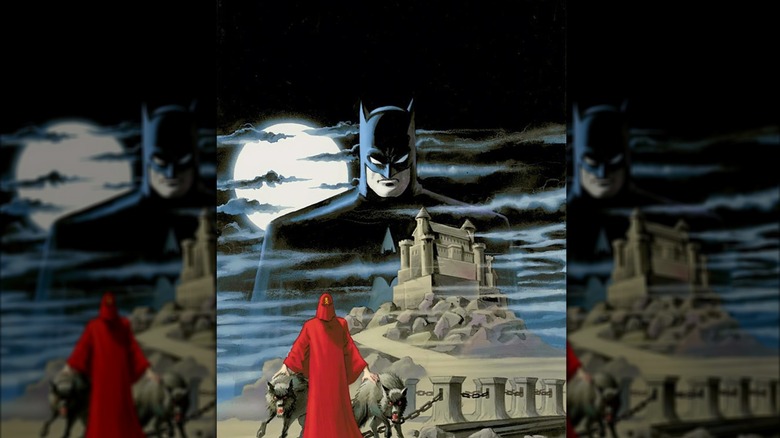
As in the comics, the Monk (voiced by Blythe Melin) is a cult leader. In “The Devil’s Due” his flock worships the bat god Barbatos, which pulls from a much later wrinkle to the Batman legend. The Monk’s robes are red, but are given new bat motifs resembling Batman’s own costume.
The cult believe Batman (Hamish Linklater) is an avatar of Barbatos, and they need his blood to summon their god. At least, that’s what the Monk says. The episode’s twist is that he does not believe in Barbatos, and is only using the myth to swindle his followers. He even tries to rope Batman into the grift, only to find himself stabbed by one of the true believers he cultivated. “Batman: Caped Crusader” has proven unafraid of supernatural stories, but in this case chose to explore the all-too common trend of phony cult leaders.
Batman: Caped Crusader Season 2 brings in the Mad Monk and Barbatos
Prime Video
In “Detective Comics” #31-32, the Monk was a truly supernatural foe: a vampire who could shapeshift into a wolf. A vampire is an easy foe to match up with Batman; he’s a man who dresses like a bat, while Count Dracula and his ilk can literally become bats.
To show you how early into Batman’s history this was, he killed the monk by shooting him with a silver bullet. Yes, Batman used the lethal force of a gun, which is something you’d never see today. This was before Batman developed a “rogues gallery” of villains; the Joker himself was intended to die in his first appearance (“Batman” #1) too, before a last minute edit saved him.
The Monk was revisited in the 2006-2007 mini-series “Batman: The Mad Monk” by Matt Wagner, which remade the original “Detective Comics” story. Here, the Monk’s nature was more ambiguous. He claims to be a vampire named Niccolai Tepes and drinks blood from his sacrificial victims’ necks (then shares that blood with his followers in a goblet, evoking Christian communion). Batman, though, comes to believe he’s really Richard Rallstone, the scion of a rich Gotham family, pulling a con. The comic suggests perhaps Rallstone was possessed by a true demonic force while traveling Europe, but the Monk is incinerated by a strike of lightning and the questions remain unanswered.
“The Devil’s Due” owes most to Wagner’s “Mad Monk” by depicting the villain as a charlatan with a mass of followers. Him supposedly wanting Batman’s blood could read as a nod to vampirism, but he never drinks from anyone’s opened neck. Not for nothing, “Caped Crusader” already did a vampire villain last season, so maybe there was reluctance to revisit that.
In Batman comics, Barbatos is all too real
DC Comics
“The Devil’s Due” depicts Barbatos as a centuries-old Gotham urban legend that the Monk appropriated for his cult. There’s never any true doubt raised that maybe Barbatos is real, but in DC Comics, he absolutely is. The character goes back to the underrated story arc “Batman: Dark Knight, Dark City” by Peter Milligan and Kieron Dwyer (published in “Batman” #452-454).
During the 1700s, in early colonial Gotham, a group of men tried to summon Barbatos (originally spelled Barbathos) to grant them power. But this “Ceremony of the Bat” went awry. The cultists fled, leaving their intended victim (a woman named Dominique) and Barbathos trapped in the cellar where they had performed the act.
The modern Gotham City was built upon this tomb and Barbathos’ influence traveled up like the city’s root. Barbathos manipulated Gotham’s creation, stone by stone, to create the man who would one day set him free: Batman. This recontextualizes the entire history of Batman; he lives in an accursed city, one where a vigilante dressed like a bat is the only sane response to its woes.
Instead of frightening us with a buried bat demon, “The Devil’s Due” is ultimately about a truer corruptive evil: demagoguery. One of the Monk’s intended victims is Hattie Tetch (Laraine Newman), a sensationalist talk show host turning Gotham’s public opinion against Batman by blaming the cult’s murders on him. Both the Monk and Hattie adopt platforms of legitimacy and spread lies to wayward souls for their own benefit. Hattie manipulates via mass media, while the Monk does so with faith and promises of godly power. That Hattie almost winds up on the wrong end of his knife shows which is more dangerous.
“Batman: Caped Crusader” is streaming on Prime Video.
This week’s blog continues my two-part series reflecting on what I learned over more than 25 years as a fashion college professor. My career included 17 years teaching at the Fashion Institute of Technology, followed by 3 years as Chair of the Fashion Design department, and later 6 years teaching graduate-level fashion design at the Academy of Art University. Throughout that time, I had a front-row seat to students’ journeys into the fashion industry, observing how they navigated everything from the application process to making the most of their education once accepted.
In Part One, I focused on helping prospective students understand how to choose and apply to fashion colleges. In Part Two, I shift my focus to fashion educators, offering insight into how they can support students in thriving and creating a meaningful, positive experience once they begin their studies.
Student Insecurities
I still vividly remember my own first day at FIT as a student. Sitting in a class of 200 students selected from a pool of 2,000 applicants, I felt both grateful and overwhelmed. Alongside the excitement came a wave of insecurity: Was I talented enough? Could I keep up with the workload? Had the school made a mistake in accepting me?
That uncertainty quickly eased thanks to my professor. She welcomed the class warmly, invited each of us to introduce ourselves and share where we came from, and immediately created a sense of belonging. She then reviewed the syllabus, emphasized the importance of deadlines, explained attendance and grading policies, and opened the floor for questions.
Throughout my years of teaching, I adopted this same approach. I found that students are far more likely to succeed when they clearly understand expectations from the outset. In later years, the department introduced a detailed grading rubric outlining the criteria for each grade level (A, A-, B, B-, C, C-, D, F). Students were asked to sign this document, which not only helped manage expectations but also supported faculty in addressing the challenges of grade inflation.
Access to Tutoring
University of Fashion — the perfect answer to the tutor and upskilling problem. (Image credit: University of Fashion)
As school budgets continue to tighten, many fashion programs have had to eliminate the free tutoring services they once provided. I remember during my time at FIT, top-performing students were hired to support peers who needed extra help managing the workload. Faculty also made themselves available before and after class to guide struggling students. However, union regulations requiring additional compensation for extra hours, combined with budget constraints, gradually brought these valuable support systems to an end. Today, many students are left to navigate these challenges on their own.
That gap is exactly what inspired the creation of University of Fashion. In 2008, I set out to support aspiring fashion students—first by helping them prepare for the fashion school application process, and then by building a comprehensive library of lessons taught by leading fashion college professors and industry professionals. The goal was not only to provide accessible tutoring for students, but also to empower educators.
University of Fashion gives teachers the tools to expand their curriculum and refine their skills without needing to return to school. With limited time and resources, many faculty members benefit from the flexibility of learning and teaching enhancement from home.
UoF Lesson Disciplines
UoF’s 13 different lesson disciplines. (Image credit: University of Fashion)
Today, University of Fashion offers over 550 lessons across 13 disciplines, including Draping, Sewing, Patternmaking, Accessories, Childrenswear, Menswear, Knits, Product Development, CAD Fashion Art, CAD Patternmaking, Fashion Business, and a wide range of Fashion Lectures covering topics such as A.I for Fashion Design, Costume History, Color Theory, Textile Design, Fabric Studies, Sustainable Design, and many more. We support hundreds of fashion students worldwide while also helping educators broaden their teaching scope.
Testimonials
Don’t just take our word for it—explore some of what our students and educators have to say.
Just a few of our many testimonials. (Image Credit: University of Fashion)
Complement not Replacement
It is important to note that University of Fashion was founded as a complement to, not a replacement for, fashion college education. Our mission was to inspire anyone interested in a career in the fashion industry and to preserve the art & craft of fashion for current and future generations. As we celebrate our 18th anniversary, we are proud that we have succeeded in being the first and largest online fashion education resource, not only for aspiring designers, current fashion school students and teachers, but as a resource for anyone who is curious about a fashion career.
Galaxy Research identified a third attack wave, raising the Coldcard exploit to 1,367 BTC ($88.6M).
Researchers found distinct attack patterns, suggesting either an evolved attacker or a separate threat actor.
All stolen BTC remains unspent, prompting renewed warnings for Coldcard users to migrate funds to secure wallets.
Galaxy Research, the blockchain research firm, has revised its estimate of the Coldcard wallet exploit, revealing a third wave of attacks that has pushed the total stolen Bitcoin (BTC) to 1,367.05 BTC, worth approximately $88.6 million, across 4,585 addresses.
In a detailed X post on August 1, 2026, the firm reported a new attack wave in which 207.7294 BTC was drained. According to Galaxy, the cumulative total from all three attack waves now stands at 1,366.3865 BTC held unspent across attacker-controlled addresses.
🚨 A 3rd wave in what we suspect are hacks of Coldcard-generated addresses has been identified in which 207.7294 BTC has been drained.
Our estimated observed size of the Coldcard hack is now 1,367.05 BTC (~$88.6m) across 4,585 addresses.
More updates in the thread below 👇 https://t.co/hPtXh9444D pic.twitter.com/g6xA4OOi2f
— Galaxy Research (@glxyresearch) August 1, 2026
Galaxy identifies distinct attack patterns
Galaxy Research said Waves 1 and 2 shared several characteristics, including common collector addresses, identical P2WPKH destination addresses, and similar derivation paths. The attacks occurred about 27 hours apart, suggesting they were likely carried out by the same operator.
However, Wave 3 differed significantly. According to Galaxy, it used individual destination addresses for each victim, relied on P2WSH outputs, grouped multiple victims into single batches, and targeted only the default derivation path.
Galaxy said these differences could indicate either that the original attacker adopted new techniques to avoid detection or that a separate threat actor exploited the same vulnerability. Researchers also noted that all attacker-controlled addresses remain unspent, describing that as unusual for a theft of this scale.
The report found that while most affected wallets held less than 1 BTC, the majority of the stolen value came from larger wallets, consistent with individual self-custody users rather than institutional holders. Galaxy also said all compromised addresses were created after the vulnerable Coldcard firmware was released in March 2021.
This follows Galaxy Research’s previous report, which estimated the theft at 1,158.66 BTC, amounting to $75.1 million. At the time, the firm highlighted that none of the funds had moved, suggesting the attacker was either waiting for attention to subside or lacked a safe laundering path for such a visible sum.
Concerns about hardware wallet security
The latest findings have renewed concerns within the Bitcoin self-custody community about the security of hardware wallets and the risks associated with seed phrase generation. Coldcard users have been urged to take immediate precautions, including migrating funds to new, secure setups.
The incident has also renewed attention on the risks associated with firmware vulnerabilities in hardware wallets. With the stolen funds still unmoved, researchers continue to monitor the attacker-controlled addresses while urging potentially affected users to replace vulnerable recovery seeds and migrate funds to new wallets.
Also Read: Michael Saylor Says BIP-110 Lacks Bitcoin Economic Consensus
Disclaimer: The information researched and reported by The Crypto Times is for informational purposes only and is not a substitute for professional financial advice. Investing in crypto assets involves significant risk due to market volatility. Always Do Your Own Research (DYOR) and consult with a qualified Financial Advisor before making any investment decisions.
Ubisoft’s grand NFT experiment is ending exactly where most people expected it to: with the servers being switched off.
The publisher has announced that Champions Tactics: Grimoria Chronicles will shut down on October 30, bringing the curtain down on a game that launched less than two years ago. In-app purchases have already been disabled, although the game will remain playable until the servers disappear into the great digital void.
And I wouldn’t normally cover something like this, but it’s a slow news day.
“After careful consideration, we have made the decision to sunset the game,” Ubisoft told players. The company thanked the remaining community for its support and said more details and reminders would be shared before the closure.
Champions Tactics launched in October 2024 as what Ubisoft described as a “Web3 competitive turn-based RPG.” Players assembled teams of three fantasy characters and sent them into tactical battles, which sounds perfectly normal until you reach the part where those characters were NFTs.
The champions could be bought, forged and traded through a marketplace using regular money or cryptocurrency. Shortly after launch, some were reportedly listed for more than $63,000, because apparently the natural next step after buying horse armour was remortgaging your house for a pretend wizard.
Ubisoft had already begun dismantling the entire point of the game in May. Wallet functionality was frozen, its marketplace and Forge were closed, and players’ blockchain-linked champions were copied into the game as ordinary digital items. VIP perks were preserved, but the supposedly unique assets had effectively become normal videogame characters stored inside a normal videogame.
Champions Tactics therefore became a conventional game, which raised the fairly obvious question of why any of this needed a blockchain in the first place. The answer, it seems, was that it didn’t.
Removing the NFT systems was not enough to save Champions Tactics. Just a few months later, Ubisoft has decided to shut the whole thing down instead. The company has not publicly revealed how many people were still playing or exactly why it made the decision, but live-service games generally do not get “sunset” because they are overflowing with players and money.
A quick look on SteamDB shows that while the game did get a massive (that’s sarcasm) 1,443 concurrent players on release date, those numbers fell fast. Over the last year, the highest concurrent players was just 37 people. And since mid-April, it hasn’t broken 10.
This was not Ubisoft’s first awkward encounter with blockchain technology. The publisher previously attempted to introduce NFTs, which it called “Digits,” into Ghost Recon Breakpoint through its Ubisoft Quartz platform. The response was overwhelmingly negative, but Ubisoft remained convinced that players simply had not yet understood their genius.
Blockchain gaming project DeFi Kingdoms will permanently retire DFK Chain on August 28, 2026, ending support for the dedicated blockchain that has powered the game’s ecosystem for several years.
According to a July 31 announcement on X, the team said the decision followed months of evaluating the project’s long-term infrastructure in collaboration with the Avalanche team.
DFK Chain Sunset & The Road Ahead
Today, we want to share an important update about the future of DeFi Kingdoms.
After careful consideration, DFKChain will officially sunset on August 28th, 2026.
— DeFi Kingdoms 🔺🌿 (@DeFiKingdoms) July 31, 2026
Although the blockchain itself is being shut down, the developers said the game will continue operating through a planned migration to Avalanche C-Chain, with additional migration details expected in the coming weeks.
Users must move assets before the deadline
The shutdown means users holding assets on the DFK Chain will need to take action before August 28.
According to the developers, only DeFi Kingdoms-native assets will be included in the project’s migration process. Users holding bridged assets, including JEWEL, BTC, ETH, AVAX, USDC, and other tokens, are responsible for transferring those assets off the network themselves.
The team warned that those assets cannot be recreated or recovered after the blockchain is retired.
The developers also reminded users that JEWEL can already be bridged to Avalanche C-Chain and advised them not to wait until the final days before the shutdown.
Smart wallet users asked to take additional steps
Beyond bridging assets, the team outlined several actions users should complete before DFK Chain goes offline.
These include:
Moving assets from smart wallets into standard wallets before bridging.
Breaking all liquidity pool (LP) positions, including pools made entirely of DFK-native assets.
Waiting for further instructions regarding the migration of DeFi Kingdoms-native assets.
The project said more technical guidance will be released before the August deadline.
Migration to Avalanche underway
While users are responsible for moving non-native tokens, DeFi Kingdoms said it is preparing a migration process for its own game assets onto Avalanche C-Chain.
The team said the migration remains its immediate priority and that work is continuing with Avalanche to ensure the transition is completed securely.
Although no full migration timeline has been published, the developers indicated additional updates will be shared as implementation progresses.
SDK planned after network transition
Looking beyond the migration, DeFi Kingdoms also revealed plans to release a software development kit (SDK) that would allow third-party developers to build applications using the game’s mechanics and digital assets.
The company said it is also evaluating longer-term options for the project following the retirement of DFK Chain, though no additional product details or launch dates were provided.
Latest in a series of crypto Platform shutdowns
The DeFi Kingdoms announcement follows several other crypto infrastructure projects that have recently announced service closures or user migrations.
Earlier this month, Zapper Fi confirmed it will shut down on August 3, ending a seven-year run as one of the crypto industry’s best-known DeFi portfolio tracking platforms. Users were advised to migrate to alternative portfolio trackers before services end.
Around the same time, Ctrl Wallet also announced it will fully discontinue its wallet services on August 3, disabling sending, receiving, swapping, and decentralized application (dApp) functionality. Users were urged to export their recovery phrases or move their assets before the shutdown.
Unlike those projects, DeFi Kingdoms is not ending its game entirely. Instead, it is retiring its standalone blockchain while relocating its infrastructure to Avalanche.
With the August 28 deadline approaching, users are being encouraged to complete any required transfers early as the project prepares to wind down the DFK Chain.
Also Read: XRP Ledger Rolls Out Update to Fix Manifest Flood Vulnerability
Disclaimer: The information researched and reported by The Crypto Times is for informational purposes only and is not a substitute for professional financial advice. Investing in crypto assets involves significant risk due to market volatility. Always Do Your Own Research (DYOR) and consult with a qualified Financial Advisor before making any investment decisions.


![Freestyle – A platformer set with in game comics, teased for the Amiga! [UPDATE]](https://i0.wp.com/blogger.googleusercontent.com/img/b/R29vZ2xl/AVvXsEhL1HihcPVE2eT8hTuN5v2y1MuH7e-3IW-hiGEFQuMSngh6m8zAeUIGFfqqsNrBbEMJ89CcU7eZep61RDB_5VAEbdKQ1uEDGuCuR2BV0-Pyi6-sfmDptV0C20q9qo5SVmywW3KNgLR5aoa4m9LgFGAFYRtP47jdt01RoPdgI3PKN0gSwUqkzvtXCCvuAPQ/w1200-h630-p-k-no-nu/free.jpg?w=640&resize=640,0&ssl=1 "Freestyle – A platformer set with in game comics, teased for the Amiga! [UPDATE]")