
Home Blog Page 1492

Most Expensive Dresses in the World : Glamour Beyond Imagination

0
Most Expensive Dresses in the World : Glamour Beyond Imagination


December 14, 2024


Fashion holds a unique capacity to fascinate, inspire, and evoke a sense of exclusivity, with luxury couture being one of the best examples. For thousands of years, designers have crossed the creative and constructional boundaries and solidified ostentatious styles for outfits that have gone beyond simple garments to become a statement of art, status, and opulence.

From delicate hand-stitched ornamentation to precious gemstones stitched into the weave, these luxury dresses inspire awe and evoke allure in every thread. Each one has a story, they were fashioned for some particular member of royalty or a leading actress for an exclusive role on some of the world’s grandest stages.

Beyond the material and design, they are steeped in the heritage of the world’s greatest fashion houses, but often with moments in history and culture that propel their worth ever so much more.

Prepare to enter into a world without boundaries, priceless beauty, and fashion at its best, as we unveil the ten most expensive dresses. Whether you’re a style enthusiast or just curious, these amazing creations redefine the definition of luxury. 

1. Nightingale of Kuala Lumpur – $30 Million
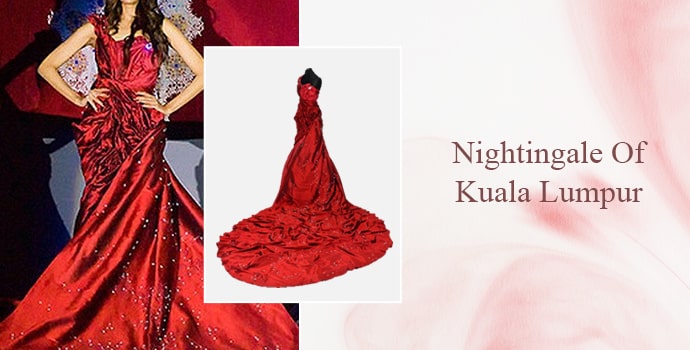
Nightingale of Kuala Lumpur - $30 Million

The Nightingale of Kuala Lumpur is a staggering $30 million dress created by Malaysian designer Faiyzali Abdullah in 2009. The launch of this piece, which features the finest silk chiffon, evokes the exclusive luxury and haute couture of all time.

What really makes the Nightingale stand apart is its breathtaking embellishment, more than 750 diamonds adorn the dress, including a show-stopping 70-carat pear-shaped diamond at its center, all to create a dazzling spectacle. Each diamond is set on with great care and intricacy that bursts through in this dress combining the allure of jewellery with the grace of fashion.

It was staged for the first time during the STYLO Fashion Grand Prix in Kuala Lumpur, underlining Malaysia’s growing influence in the global luxury fashion world. The Nightingale is a testament to Faiyzali Abdullah’s vision of bringing fine jewelry and fashion together within one single extraordinary masterpiece. In itself, it stands as a masterpiece of high-end design.

2. The Diamond Wedding Gown – $12 Million
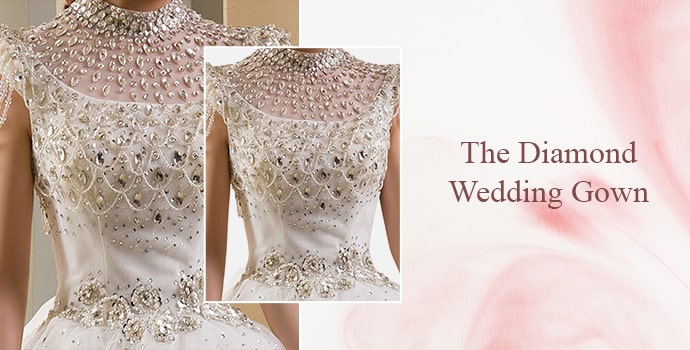
Top 10 most expensive dress in the world The Diamond Wedding Gown $12 Million

This opulent piece is by celebrity bridal designer Renee Strauss, in collaboration with jeweler Martin Katz and costs an astonishing $12 million. Manufacturing of this Diamond Wedding Gown is a designer’s attempt at epitomizing the ultimate luxury wedding experience through this most elaborate fusion of precious gemstones into intricate design.

It carries 150 carats of diamonds subtly spread around which gives an unbeatable sparkling effect that would convert any traditional wedding attire to a gaiety. This silhouette hails from a specific period that could be achieved using the finest pieces of silk and satin only.

Unveiled in 2006, the Diamond Wedding Gown has since ravished the luxury fashion world. Not only does it underline deep dedication to impeccable quality but also a unique vision with bridal wear that raises the bar, bringing its wearer within reach of the pinnacle of luxury and glamour.

3. Yumi Katsura White Gold Dress – $8.5 Million
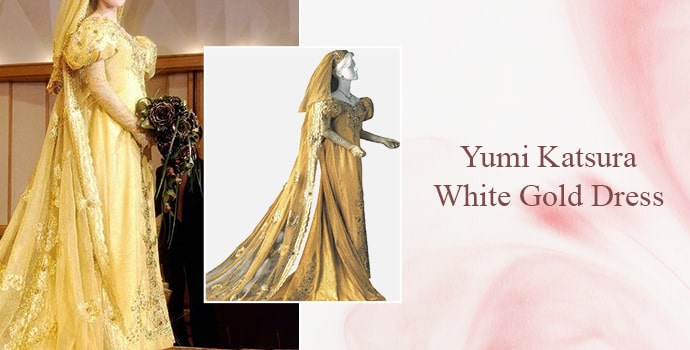
Yumi Katsura White Gold Dress - $8.5 Million

This is the Yumi Katsura White Gold Dress, worth $8.5 million by the Japanese renowned designer Yumi Katsura. A luxury bridal designer, Katsura imbued this work with precision and exclusivity using her unique artistry in combination with rare and precious materials.

This is a unique design in white gold and fine silk, featuring 1,000 pearls and a precious 5-carat white gold diamond, along with an extremely rare 8.8-carat green diamond. The dazzling shine and the depth of these rare gemstones make the dress stand out as an extraordinary piece of haute couture.

Katsura’s White Gold Dress has small, delicate floral motifs that are so elegantly done on embroidery and lacework, creating an essence of timelessness. With such rarity in existence worldwide, only two of these dresses exist in the world.

4. The Peacock Wedding Dress – $1.5 Million
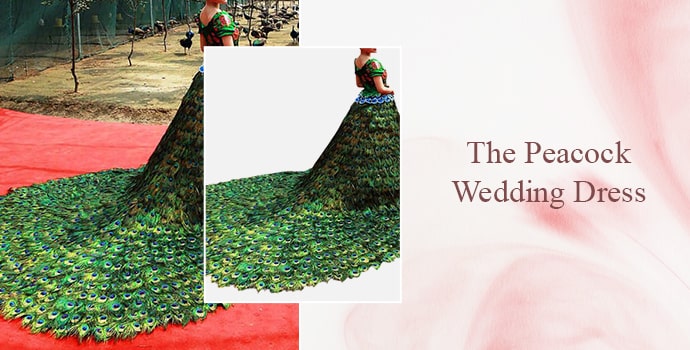
Top 10 most expensive dress in the world The Peacock Wedding Dress - $1.5 Million

One of the most exquisite designs, the Peacock Wedding Dress worth $1.5 million is the epitome of peacock splendor and exotic beauty captured in its design. The breathtaking arrangement of this wedding gown features vibrant blues and greens along with iridescent hues of spring and an unmatched use of over 2,000 rarely arranged peacock feathers, which indeed form the main fabric of the dress.

This was made by a group of professional craftspeople and took eight months to complete it, with the individual feathers being carefully chosen and layered to form a perfectly symmetrical and mesmerizing pattern. The feathers are sourced responsibly, and treated with gentle care, so they maintain their natural shimmer and pliability, all contributing to the lovely flow and richness of texture in the gown.

While unconventional for a traditional wedding dress, this peacock wedding dress translates the meaning of bold designs, redefining the boundaries for the luxury couture that offers profound celebration for nature as well as artistry, thus depicting a remarkable statement for brides who require an unparalleled one-of-a-kind gown embodying opulence, uniqueness, and cultural symbolism.

5. Danasha Luxury Gown – $1.5 Million
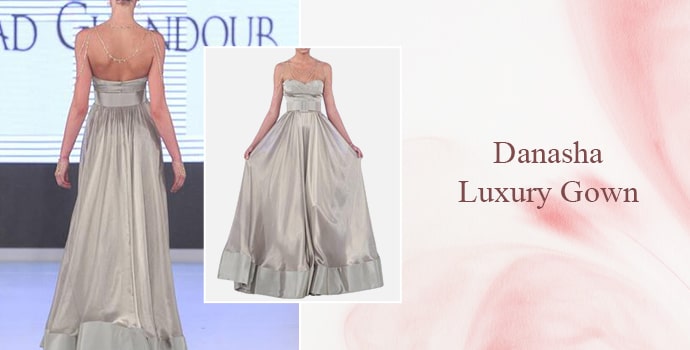
Top 10 most expensive dress in the world Danasha Luxury Gown   $1.5 Million

The $1.5 million Danasha Luxury Gown is a classy mixture of class and modern-day luxury, designed by the firm Danasha Luxury, in partnership with the Lebanese designer Jad Ghandour. This gown, which premiered at Miami International Fashion Week, is distinguished by its subtle yet elegant exquisiteness, thereby making it unique.

What makes the Danasha Luxury Gown different is its careful confection made from 250 grams of 18-karat gold and hundreds of fine diamonds, placed strategically to not be too overwhelming over delicate lines of design but crucially reflected in this dress of refinement and understated luxury.

Rather than the classic heavy ornate bridal dress, the Danasha Luxury Gown is a modern minimalist silhouette celebrating the luxurious material and craftsmanship at its best. It’s perfect for the modern bride, as it is made exclusively and elegantly to become an iconic piece in luxury fashion.

6. Debbie Wingham Black Diamond Dress – $5.5 Million
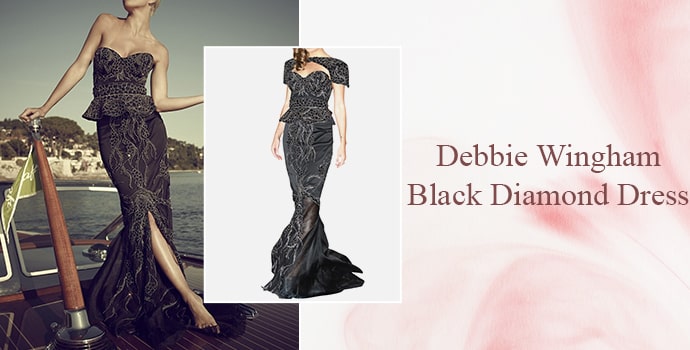
Debbie Wingham Black Diamond Dress - $5.5 Million

Debbie Wingham Black Diamond Dress is worth $5.5 million and is from the British couturier, Debbie Wingham. Debbie Wingham is renowned for her extremely luxurious and unique pieces.

She created this exact dress to put across the theme of luxury in an extraordinary assembly of 50 two-carat black diamonds. This particular piece is a mix of high fashion and precious stones perfectly blended together in dark, rich aesthetics with outstanding craftsmanship.

In addition to the black diamonds, white diamonds and fine 18-carat gold thread are used along with exquisite hand-stitched detailing on fine materials. A silk train with shoulder accents is elaborately decorated, creating a dramatic, high-fashion appeal.

Weighing 29 pounds, due to the tremendous weight of the gemstones, this is not only a luxurious fashion statement but also a masterpiece of wearable art. It is Debbie Wingham’s Black Diamond Dress, so bold and almost theatrical for high-end fashion connoisseurs, that makes it one of the most unforgettable and expensive in the world.

7. Swarovski Dirndl Dress – $150,000
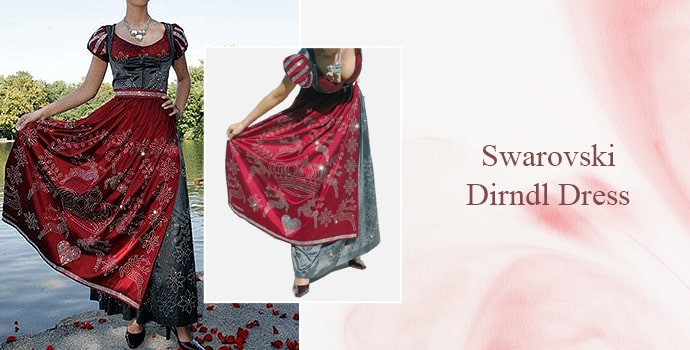
Top 10 most expensive dress in the world Swarovski Dirndl Dress   $150,000

This Swarovski Dirndl Dress priced at $150,000 is an extraordinary rendition of the classic Bavarian Dirndl that has reached its highest point of luxury due to a collaboration between Swarovski and German fashion house Wiesn. Extremely elegant, an outfit from modern, fine craftsmanship that blends heritage into this dazzling couture creation, from classic looks.

The dirndl is decorated with Swarovski crystals which are known as the most delicate hand-laid crystals for a bright shine. The fitted bodice and full skirt give it a recognizable shape of a dirndl, but the luxury of the Swarovski crystals brings the entire gown and apron to a very modern forefront.

The Swarovski Dirndl Dress combines cultural heritage and modern opulence, with a blend of rich, traditional Bavarian elements and a luxury touch. It is perfect for anyone who would like to celebrate tradition with an extravagant, glamorous touch as one goes for Oktoberfest or high-class gatherings.

8. Marilyn Monroe’s “Happy Birthday” Dress – $4.8 Million
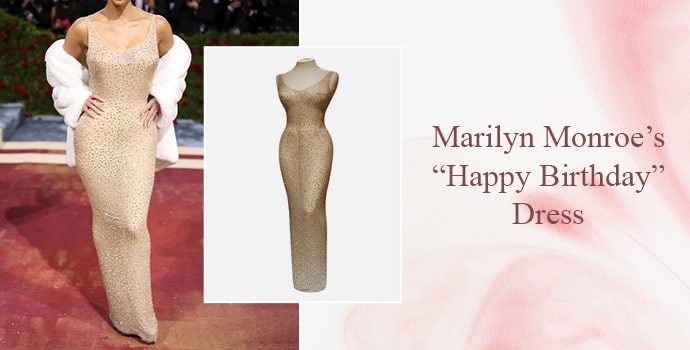
Top 10 most expensive dress in the world Marilyn Monroe’s “Happy Birthday” Dress   $4.8 Million

Happy Birthday” Dress by Marilyn Monroe, estimated at $4.8 million, belongs to one of the most iconic and historically valuable dresses in the history of fashion. Marilyn Monroe wore it in her memorable show for President John F. Kennedy’s birthday in 1962, designed by the famous Hollywood designer, Jean Louis. It is famous in design and because of its cultural significance, it’s the epitome of Hollywood’s golden age, glamour, and allure.

The dress is made of nude-colored silk chiffon and sports an amazing design with 6,000 hand-sewn crystals which offer light reflection and give more luster to Monroe.

It is famous for its form-fitting figure-hugging silhouette accentuating the hourglass shape of Monroe. Its plunging neckline and curves in the daring back make it one of the most sensual and bold fashion choices ever made by a celebrity.

This became a legendary dress in popular culture when Monroe sang the sultry version of “Happy Birthday, Mr. President,” an event that has been continuing into history. The costume was sold in 2016 for $4.8 million at auction, breaking the record then as one of the highest and most prized Hollywood memorabilia.

9. Kate Middleton’s Wedding Dress – $434,000
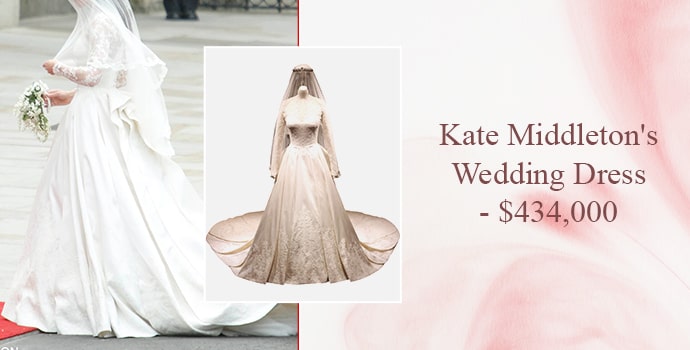
Kate Middleton's Wedding Dress - $434,000

Kate Middleton’s Wedding Dress, which cost $434,000, is perhaps the most beloved and discussed wedding attire in recent history. A creation by Sarah Burton of Alexander McQueen, this gorgeous gown was sported on the big day by the Duchess of Cambridge when she wed Prince William back in April 2011. Elegance in its form, timeless, its beauty remains forever embedded as the epitome of royal wear.

This is a classic A-line gown made from silk tulle and satin gazar. The silk tulle is hand-embroidered lace with assorted flowers from England, comprising roses, thistles, daffodils, and shamrocks representing the four nations of the United Kingdom.

The lacemakers participating were from the Royal School of Needlework, an element of tradition along with the delicate craftsmanship. The bodice emphasized a long flowing train that made for such a dramatic entrance at Westminster Abbey.

The gown reflected Kate Middleton’s style, classic yet tastefully simple yet paying tribute to royal tradition. Adding further detail, it has a v-neckline and three-quarter sleeves under the lace overlay, adding a touch of romance and royalty. The Bridal Veil was concluded in silk tulle, finished with lace edges.

10. Queen Letizia’s Coronation Dress – $61,000
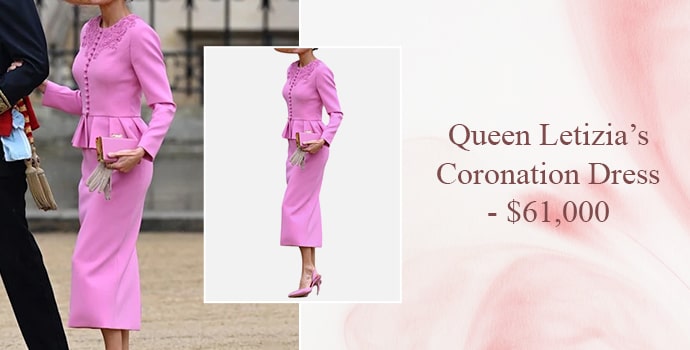
Queen Letizia’s Coronation Dress - $61,000

The Coronation Dress of Queen Letizia cost around $61,000. It was one of the exquisite pieces of haute couture, specially designed by Spanish designer Felipe Varela for the coronation of the new queen of Spain in 2014.

Being the wife of King Felipe VI, her official coronation ceremony featured this exquisite dress, making it one of the most significant and talked-about royal fashion moments.

This is one dress created in silk crepe, with an interesting combination of hand-stitched crystal beads. It has an elegant yet royal design to create balance, offering both tradition and modernity. By itself, the soft ivory color and sleek silhouette speak of a timeless sense of style while the intricate beadwork placed at the bodice and sleeves adds a layer of opulence to the piece.

The high neck and three-quarter sleeves accentuate the modest trend of the dress, adding a pinch of sophistication that makes it look classy and queenly for coronation. Queen Letizia’s coronation gown is considered understated yet amazingly elegant as it reflects the dignity of the Spanish monarchy in modern times.

The world’s most expensive dresses mean much more than just garments, they symbolize opulence, craftsmanship, and the meeting place of fashion with art. Each one of these creations establishes the extreme in design, at once merging luxury with creativity.

Be it a wedding gown or a coronation robe, these are the utmost embodiment of the vision of the designers and the timeless allure of fantastic materials and perfect details. They have served as an inspiration and remain an inspiration continuing to entertain audiences as a testament to the authority of fashion to create unforgettable timeless moments.



Source link

The Tear-Jerking Emilia Clarke Movie Killing It On Prime Video – SlashFilm

    0
    The Tear-Jerking Emilia Clarke Movie Killing It On Prime Video – SlashFilm


    Content warning: This article discusses themes and subject matter that some readers may find triggering, including physician-assisted suicide.

    In the midst of her tenure as Daenerys Targaryen on “Game of Thrones,” Emilia Clarke found the time to shoot a heartfelt, weepy romance movie … and years later, it’s finding new life on Amazon Prime’s streaming service. So what’s the movie?

    Released in 2016, “Me Before You” — based on the best-selling novel of the same name by Jojo Moyes, which came out four years prior — tells the story of Louisa “Lou” Clark (Clarke), a bubbly but unmotivated young woman who ends up working as an in-home carer for Will Traynor (Sam Claflin), who led an extremely active life as a banker and athlete before getting into a motorcycle accident. Will deeply struggles with his new life as a tetraplegic (meaning that he has a devastating spinal cord injury that affects his ability to move his arms and legs) and, frankly, has a really rough attitude about how his whole world has changed, but Lou’s irrepressible spirit and bold nature unexpectedly charms him, helping him live life more fully.

    Unfortunately, before Lou enters Will’s life, he makes the decision to end his life at a clinic in Switzerland that permits physician-assisted suicide. As much as Lou tries to convince Will not to pursue that path, he ultimately does. Lou spends the last moments of Will’s life by his side, and after his death, it’s revealed that he left her a large amount of money to encourage her to live her life to the fullest — something she reads in a letter Will left with his last will and testament while she sits in his very favorite café in Paris. 

    The movie is a tearjerker, to be sure — but apparently, people on Amazon Prime are embracing it. So what did critics have to say about “Me Before You” when it was first released?

    Critics — and the disabled community — actually didn’t think much of Me Before You

    Before addressing the critical response to “Me Before You,” it’s very important to note that the film made waves in the disabled community — and not in a good way. Many disability advocates understandably felt as if the film’s message is that life with a disability is no life at all, which is certainly not true, and the Rotten Tomatoes critical consensus reflects it, reading, “‘Me Before You’ benefits from Emilia Clarke and Sam Claflin’s alluring chemistry, although it isn’t enough to compensate for its clumsy treatment of a sensitive subject.” With an average rating of 54%, which is officially “rotten,” what did individual critics have to say on the matter?

    Roxana Hadidi, writing for Punch Drunk Critics at the time, got right to the heart of the matter: “Solid performances don’t balance out the problematic parts of ‘Me Before You,’ which are many.” In their review for Vox, Aja Romano expressed a similar sentiment, writing, “In other words, if you’ve ever wanted your romance with a side of disability and chronic pain, ‘Me Before You’ is perfect for you — as long as you don’t actually want a realistic depiction of any of those things.” Meanwhile, in New York Magazine, David Edelstein was harsh about both the book and the film, quipping, “Fans of the best-selling novel by Jojo Moyes will be heartened to hear that she wrote the screenplay, too, and that she has preserved all the lines that — when read aloud — will provide much mirth at your next dinner party.” Just for some balance, though, David Ehrlich at IndieWire quite liked it, saying “Me Before You” is “such a wonderfully uncynical movie that it almost doesn’t matter that it isn’t very good.”

    What have Emilia Clarke and Sam Claflin done since Me Before You?

    The bottom line is that, despite the fact that “Me Before You” was a major critical misfire, both Emilia Clarke and Sam Claflin went on to bigger and better projects. Obviously, Clarke continued playing Daenerys Targaryen on the HBO juggernaut “Game of Thrones” until the show came to an end in 2019, although that also stirred up plenty of controversy (largely because the final episode was, uh, not very good). After her time as Daenerys, Clarke took on another weepy love story — the 2019 film “Last Christmas” with Henry Golding and Emma Thompson — lent her voice to the 2022 film “The Amazing Maurice,” and appeared in a romantic comedy with a sci-fi twist called “The Pod Generation,” which released in 2023. That same year, she officially joined the Marvel Cinematic Universe as G’iah in the Disney+ original series “Secret Invasion.”

    As for Claflin, he earned fame and acclaim for his role as Finnick Odair in the “Hunger Games” films before “Me Before You,” and after playing Will Traynor, he joined the cast of the Irish-set drama “Peaky Blinders.” You can also catch Claflin in the 2020 Netflix original “Enola Holmes” — where he plays Mycroft Holmes alongside Millie Bobby Brown and Henry Cavill as Enola and Sherlock, respectively — and, most recently, Claflin received rave reviews for his lead role as the troubled (and fictional) rock star Billy Dunne in “Daisy Jones & the Six.” If you’re curious about “Me Before You,” it’s available to stream on Amazon Prime now.

    If you or someone you know is struggling or in crisis, help is available. Call or text 988 or chat 988lifeline.org


    Source link

    Kyle Chan Shares How to Nail a Chic Holiday Look With Festive Jewelry

      0
      Kyle Chan Shares How to Nail a Chic Holiday Look With Festive Jewelry


      Sparkle this season! Celebrity jewelry designer Kyle Chan sat down with ET to share how to stack pieces in a festive way for the holidays while celebrating his Kyle Chan x Gold Bar Whiskey collaboration.

      Chan, who has created stunning baubles for Taylor Swift, Beyoncé, Carrie Underwood, Mariah Carey, Camila Cabello, Lady Gaga, and more A-listers revealed that this Christmas is all about embracing the joyous spirit with your jewels.

      “Simple, dangling earrings, long, layered chains, black diamonds, and emeralds always do the trick,” he shared. 

      Kyle Chan Design

      “Our colorful beaded bracelets are also a great choice for the holidays. They come in both gold-filled and 14-karat gold options in solid colors, pastels, and other vibrant colors,” he added.

      Just make sure not to overdo it when piling on your favorite accessories. 

      “Avoid wearing too many staple pieces at the same time. … Layer a few thin or chunky chains at choker length together, or stack long, thin chains with sparkling diamond-cut details,” the jeweler spilled. 

      When it comes to mixing metals and colors, Chan also believes less is more. 

      “Stick to single toned necklaces, earrings and bracelets. If you want to add a pop of color, the rule of thumb would be to choose one,” he said.

      Kyle Chan Design

      And you can expect to see this timeless approach continue as we head into 2025.

      “I think people will desire big, yet quiet, luxury moments in the new year. Solitary gemstones, diamond tennis necklaces, diamond rings with rare cut shapes and accents, and bold large colored gemstones will be in,” the jewelry expert predicted.

      RELATED CONTENT:


      Source link

      Telegram Game ‘TapSwap’ Sets Token Launch and Airdrop for January – Decrypt

      0
      Telegram Game ‘TapSwap’ Sets Token Launch and Airdrop for January – Decrypt


      Popular Telegram tap-to-earn game TapSwap revealed it will launch its TAPS token on The Open Network (TON) alongside an airdrop of rewards for players in the second half of January 2025. 

      TAPS will become a critical resource in the TapSwap ecosystem, the developers said, granting holders access to tournaments, staking rewards, and governance participation. 

      Whether or not a player receives the TAPS airdrop will be determined by the player’s overall engagement within TapSwap—in other words, how often a player interacted within TapSwap or played the game. Users will need to connect their wallet to receive the airdrop.

      What started as a tap-to-earn game on Telegram, in which users repeatedly tap a button on the screen to earn in-game coins, has since evolved. In August, the game added a city builder mode called “Tappy Town,” and achievements accrued through that experience will also affect the likelihood of receiving a TAPS airdrop. 

      Alongside the airdrop, the game’s evolution is expected to continue. TapSwap is transitioning into a skill-based platform, offering competitive tournaments to players and “leaving traditional pay-to-win models behind,” a representative for the game told Decrypt. 

      The platform has amassed more than 50 million users globally since its launch in February.

      Telegram gaming and participation on The Open Network has blossomed this year, led by popular mini apps and games like Hamster Kombat and Notcoin. Notcoin famously dropped more than 35 million players over 80 billion tokens earlier this year, gaining listings from Binance and OKX in the process. 

      The Open Network is a layer-1 network created by Nikolai and Pavel Durov, the co-founders of messaging app Telegram. While development began internally, the company dropped the project in 2020 under regulatory scrutiny, leading a community of external developers to continue building the ecosystem.

      Its native token, Toncoin (TON), has risen nearly 200% in the last year, pushing it to more than a $16 billion market cap. That’s made it the 16th-largest crypto asset by market capitalization, according to CoinGecko. 

      Edited by Andrew Hayward

      GG Newsletter

      Get the latest web3 gaming news, hear directly from gaming studios and influencers covering the space, and receive power-ups from our partners.


      Source link

      Reasons Not to Buy Counterfeit Luxury Handbags

      0
      Reasons Not to Buy Counterfeit Luxury Handbags


      The Allure and the Illusion: Why You Should Steer Clear of Superfake Luxury Handbags

      In the world of high fashion, Hermés, Chanel, and Dior are emblems of opulence and sophistication. Their exquisitely designed bags, ranging in price from a few thousand to a staggering tens of thousands of dollars, are more than just accessories. They are a status symbol, an investment, and a mark of impeccable taste. However, in the darker corners of the market, superfakes offer the allure of these high-end brands without the hefty price tag. These aren’t your average counterfeits; superfakes are meticulously designed to mirror the real thing so convincingly that they could fool even a discerning eye. Yet, the real cost of these counterfeits extends far beyond their bargain price. From exploitation to illicit activities, the true price of superfakes is steep.

      The Irresistible Lure of Superfakes

      Brands like Hermés, Chanel, and Dior have cemented their place in the world of luxury fashion, with each piece meticulously crafted and exuding timeless elegance. However, the high price point of these items means they remain out of reach for many.

      This is where superfakes step in. They offer the look and feel of a luxury item at a fraction of the cost, thereby tapping into the aspirational desires of the masses. A Chanel 2.55, which usually retails for over $6000, can be mimicked by a superfake and sold for as little as $100-$200. Similarly, a genuine Hermés Birkin bag, which can cost anywhere from $12,000 to over $200,000, can have a counterfeit version available for just $200-$500.

      The Deep, Dark Underbelly of the Counterfeit Industry

      Make no mistake, the counterfeit industry is a lucrative one. A report by the Organisation for Economic Co-operation and Development (OECD) in 2018 estimated the counterfeit trade to be worth $509 billion, accounting for 3.3% of world trade. This shadow economy, feeding off our desire for luxury at a bargain, supports and fuels nefarious activities across the globe.

      The Hidden and Horrific Costs of Superfakes

      The allure of a luxury lookalike at a slashed price can be tempting. However, the true price of these superfakes is far more than the monetary value. Here’s why:

      1. Unethical Production Practices

      Superfakes are often produced in horrific conditions, involving the exploitation of workers.

      Many are made in sweatshops with atrocious working conditions.
      Workers, including children, are underpaid and overworked.

      2. Compromised Quality

      While they may mirror the aesthetics of luxury brands, superfakes fall drastically short in quality.

      They use inferior materials that do not stand the test of time.
      The craftsmanship, though improved, cannot match the meticulous attention to detail of authentic luxury goods.

      3. Financing Illegal Activities

      Revenues from the superfake industry often end up funding organized crime and terrorist activities.

      The sale of counterfeit goods is a primary source of income for many criminal organizations.
      By buying a superfake, you could unwittingly be contributing to dangerous and illegal activities.

      4. Legal Repercussions

      Dealing with superfakes can lead to severe legal consequences.

      Superfakes infringe on intellectual property rights.
      In many jurisdictions, buying or selling counterfeits can lead to heavy fines or even imprisonment.

      5. Damaging the Fashion Industry

      Superfakes not only undercut the sales of authentic brands, but they also undermine the creativity and craftsmanship of the fashion industry.

      They dilute the brand value and damage the reputation of these luxury fashion houses.
      They discourage innovation and creativity by promoting a culture of imitation over originality.


      The allure of a Chanel or Hermés handbag is undeniable. These iconic brands have mastered the art of creating timeless pieces that captivate the fashion-conscious and lovers of luxury worldwide. However, the rise of superfakes presents a grave challenge to these brands, diluting their brand equity and undermining the tireless efforts of the true artisans who painstakingly create these authentic luxury items.

      At Pursuitist, we stand firmly against the support and endorsement of superfake luxury brands. Our stance is not just about protecting the reputation and integrity of established luxury brands. It’s about standing up for the craftsmen and artisans who depend on the sales of these genuine products to earn a living wage. It’s about resisting an industry that thrives on the exploitation of workers, often in horrific conditions.

      Moreover, the superfake industry is known to finance dangerous activities, including organized crime and terrorism. Each superfake purchased, regardless of its seemingly harmless nature, contributes to these activities. As such, every dollar spent on a superfake can indirectly support these illegal and harmful operations.

      Reasons Not to Buy Counterfeit Luxury Handbags

      Ultimately, the illusion of saving money or enjoying luxury for less with superfakes is just that – an illusion. The true costs are immense and far-reaching, impacting individuals and societies on multiple levels. As consumers, it’s important to make conscious choices that promote fair trade, respect for craftsmanship, and uphold the values we believe in.

      As our Pursuitist mission, we champion the cause of authenticity, fairness, and respect for the craft. We urge our readers to do the same. Say ‘no’ to superfakes and choose authentic, ethically-made products that not only give you the true luxury experience but also contribute positively to the world.

      Your choices matter, and together, we can make a difference.

      FAQ: Reasons Not to Buy Counterfeit Luxury Handbags

      1. Why should I avoid buying counterfeit luxury handbags?

      Counterfeit luxury handbags are often made with substandard materials and poor craftsmanship, which results in a shorter lifespan. Moreover, purchasing fakes supports illegal activities such as child labor, organized crime, and intellectual property theft. Additionally, carrying a counterfeit handbag can damage your reputation and social credibility.

      2. Are counterfeit handbags illegal to purchase or own?

      While laws vary by country, in many places, purchasing counterfeit goods is illegal, especially if you bring them across international borders. Selling counterfeit products is illegal worldwide, as it violates trademark and intellectual property laws. In some jurisdictions, even owning fake designer items can result in fines or legal consequences.

      3. How can I spot a counterfeit luxury handbag?

      To identify a counterfeit handbag, look for signs like poor stitching, incorrect logos, misspelled brand names, uneven hardware, and inferior materials. Genuine luxury handbags typically come with authentication cards, serial numbers, and dust bags. It’s wise to buy from authorized retailers or have the item authenticated by a professional.

      4. What are the ethical issues associated with counterfeit handbags?

      Purchasing counterfeit luxury handbags funds illegal and unethical activities, including forced labor, human trafficking, and exploitation of workers in unsafe conditions. The counterfeit industry is linked to organized crime, and your purchase indirectly supports these harmful operations.

      5. Are counterfeit handbags bad for the environment?

      Yes, counterfeit handbags often use toxic chemicals, low-quality plastics, and non-sustainable materials that harm the environment. Genuine brands invest in eco-friendly materials and sustainability initiatives, while counterfeit producers focus on cheap, mass-produced, and disposable products. This contributes to pollution and waste.

      6. Can counterfeit handbags impact my health or safety?

      Yes, counterfeit handbags can pose health risks since the dyes, glues, and chemicals used are often unregulated and toxic. Additionally, counterfeit handbags are not subject to safety inspections, so there is a chance of exposure to dangerous chemicals that would never be allowed in legitimate products.

      7. Will people know if I’m carrying a counterfeit handbag?

      While some counterfeits look convincing from a distance, people familiar with luxury brands can often spot fakes by their stitching, materials, and logos. Over time, counterfeits degrade much faster than authentic bags, making it obvious that you’re carrying a fake.

      8. Can I get my money back if I unknowingly purchase a counterfeit handbag?

      It depends on where you purchased the handbag. If you bought it from an unauthorized retailer, it may be difficult to get a refund. Reputable platforms like eBay or PayPal offer buyer protection, but you’ll need proof that the bag is fake. Always report counterfeit sellers to protect others from being scammed.

      9. What are the financial downsides of buying counterfeit handbags?

      Although counterfeit handbags are cheaper upfront, they have no resale value. In contrast, genuine luxury bags often increase in value over time and can be sold as vintage or collectible items. Counterfeits are a poor investment, while authentic bags can serve as long-term assets.

      10. How can I ensure I’m buying an authentic luxury handbag?

      To avoid buying a counterfeit, purchase from official brand stores, authorized retailers, or trusted luxury resale platforms like The RealReal or Vestiaire Collective. If buying second-hand, request certificates of authenticity, check serial numbers, and consider professional bag authentication services.

      11. Do counterfeit handbags hurt the luxury fashion industry?

      Yes, counterfeit handbags hurt the luxury fashion industry by stealing revenue from legitimate brands and undermining brand reputation. This theft of intellectual property discourages innovation and reduces funds that brands could reinvest in craftsmanship, design, and sustainability initiatives.

      12. How do counterfeit handbags affect workers in the fashion industry?

      Counterfeiting reduces job opportunities for skilled artisans and factory workers employed by legitimate luxury brands. Instead, it shifts production to exploitative, unsafe, and illegal labor practices. Supporting authentic brands helps sustain fair wages, safe working conditions, and ethical craftsmanship.

      13. Do counterfeit handbags have any resale value?

      No, counterfeit handbags have no resale value. While authentic luxury handbags may appreciate in value, fakes are considered worthless. Selling a counterfeit bag is illegal in most countries, and platforms like eBay and Poshmark have strict rules prohibiting the sale of counterfeit goods.

      14. Can counterfeit handbags be repaired or restored?

      Counterfeit handbags are often impossible to repair. Since they use cheap materials and poor construction, cobblers and repair specialists may refuse to service them. In contrast, authentic luxury handbags can be restored and repaired by brand repair centers or skilled leather artisans.

      15. How does carrying a counterfeit handbag affect my social image?

      Carrying a counterfeit handbag can negatively affect your personal image and credibility, especially among those who recognize luxury brands. People may view it as dishonest or inauthentic. Carrying a genuine handbag, even if it’s a smaller or less flashy design, portrays a more genuine and confident image.

      16. Is there any way to report counterfeit handbag sellers?

      Yes, you can report counterfeit handbag sellers to brand companies directly, as most luxury brands have teams that investigate fakes. Additionally, you can report counterfeit sellers to local authorities, consumer protection agencies, or platforms like eBay, Amazon, and PayPal.

      17. Do luxury brands track counterfeit production?

      Yes, luxury brands actively monitor and combat counterfeit production. Brands hire investigators to track down counterfeit operations, collaborate with law enforcement, and participate in anti-counterfeiting organizations. Digital tracking technologies, like RFID tags and blockchain authentication, are also used to verify authentic products.

      18. How big is the counterfeit handbag market?

      The counterfeit handbag market is part of a multi-billion-dollar global counterfeit goods industry. It’s one of the largest black-market sectors, growing every year due to online sales, social media ads, and unregulated e-commerce platforms. Brands, governments, and non-profits are working to curb its growth.

      19. Can counterfeit handbags be confiscated at customs?

      Yes, customs officials are authorized to seize counterfeit goods when you travel internationally. In some countries, you may face fines or legal consequences for bringing counterfeit handbags into the country. Customs agents use tools like trademark databases and inspections to identify counterfeit products.

      20. Are there any alternatives to counterfeit handbags for those on a budget?

      Yes, there are plenty of ethical alternatives to counterfeit handbags. Consider buying second-hand luxury handbags from reputable resale platforms like The RealReal, Rebag, or Vestiaire Collective. Alternatively, explore contemporary brands that offer high-quality, stylish handbags at affordable prices.


      Source link

      Top 5 Reasons Not to Buy Counterfeit Luxury Handbags

      0
      Reasons Not to Buy Counterfeit Luxury Handbags


      The Allure and the Illusion: Why You Should Steer Clear of Superfake Luxury Handbags

      In the world of high fashion, Hermés, Chanel, and Dior are emblems of opulence and sophistication. Their exquisitely designed bags, ranging in price from a few thousand to a staggering tens of thousands of dollars, are more than just accessories. They are a status symbol, an investment, and a mark of impeccable taste. However, in the darker corners of the market, superfakes offer the allure of these high-end brands without the hefty price tag. These aren’t your average counterfeits; superfakes are meticulously designed to mirror the real thing so convincingly that they could fool even a discerning eye. Yet, the real cost of these counterfeits extends far beyond their bargain price. From exploitation to illicit activities, the true price of superfakes is steep.

      The Irresistible Lure of Superfakes

      Brands like Hermés, Chanel, and Dior have cemented their place in the world of luxury fashion, with each piece meticulously crafted and exuding timeless elegance. However, the high price point of these items means they remain out of reach for many.

      This is where superfakes step in. They offer the look and feel of a luxury item at a fraction of the cost, thereby tapping into the aspirational desires of the masses. A Chanel 2.55, which usually retails for over $6000, can be mimicked by a superfake and sold for as little as $100-$200. Similarly, a genuine Hermés Birkin bag, which can cost anywhere from $12,000 to over $200,000, can have a counterfeit version available for just $200-$500.

      The Deep, Dark Underbelly of the Counterfeit Industry

      Make no mistake, the counterfeit industry is a lucrative one. A report by the Organisation for Economic Co-operation and Development (OECD) in 2018 estimated the counterfeit trade to be worth $509 billion, accounting for 3.3% of world trade. This shadow economy, feeding off our desire for luxury at a bargain, supports and fuels nefarious activities across the globe.

      The Hidden and Horrific Costs of Superfakes

      The allure of a luxury lookalike at a slashed price can be tempting. However, the true price of these superfakes is far more than the monetary value. Here’s why:

      1. Unethical Production Practices

      Superfakes are often produced in horrific conditions, involving the exploitation of workers.

      Many are made in sweatshops with atrocious working conditions.
      Workers, including children, are underpaid and overworked.

      2. Compromised Quality

      While they may mirror the aesthetics of luxury brands, superfakes fall drastically short in quality.

      They use inferior materials that do not stand the test of time.
      The craftsmanship, though improved, cannot match the meticulous attention to detail of authentic luxury goods.

      3. Financing Illegal Activities

      Revenues from the superfake industry often end up funding organized crime and terrorist activities.

      The sale of counterfeit goods is a primary source of income for many criminal organizations.
      By buying a superfake, you could unwittingly be contributing to dangerous and illegal activities.

      4. Legal Repercussions

      Dealing with superfakes can lead to severe legal consequences.

      Superfakes infringe on intellectual property rights.
      In many jurisdictions, buying or selling counterfeits can lead to heavy fines or even imprisonment.

      5. Damaging the Fashion Industry

      Superfakes not only undercut the sales of authentic brands, but they also undermine the creativity and craftsmanship of the fashion industry.

      They dilute the brand value and damage the reputation of these luxury fashion houses.
      They discourage innovation and creativity by promoting a culture of imitation over originality.


      The allure of a Chanel or Hermés handbag is undeniable. These iconic brands have mastered the art of creating timeless pieces that captivate the fashion-conscious and lovers of luxury worldwide. However, the rise of superfakes presents a grave challenge to these brands, diluting their brand equity and undermining the tireless efforts of the true artisans who painstakingly create these authentic luxury items.

      At Pursuitist, we stand firmly against the support and endorsement of superfake luxury brands. Our stance is not just about protecting the reputation and integrity of established luxury brands. It’s about standing up for the craftsmen and artisans who depend on the sales of these genuine products to earn a living wage. It’s about resisting an industry that thrives on the exploitation of workers, often in horrific conditions.

      Moreover, the superfake industry is known to finance dangerous activities, including organized crime and terrorism. Each superfake purchased, regardless of its seemingly harmless nature, contributes to these activities. As such, every dollar spent on a superfake can indirectly support these illegal and harmful operations.

      Reasons Not to Buy Counterfeit Luxury Handbags

      Ultimately, the illusion of saving money or enjoying luxury for less with superfakes is just that – an illusion. The true costs are immense and far-reaching, impacting individuals and societies on multiple levels. As consumers, it’s important to make conscious choices that promote fair trade, respect for craftsmanship, and uphold the values we believe in.

      As our Pursuitist mission, we champion the cause of authenticity, fairness, and respect for the craft. We urge our readers to do the same. Say ‘no’ to superfakes and choose authentic, ethically-made products that not only give you the true luxury experience but also contribute positively to the world.

      Your choices matter, and together, we can make a difference.

      FAQ: Reasons Not to Buy Counterfeit Luxury Handbags

      1. Why should I avoid buying counterfeit luxury handbags?

      Counterfeit luxury handbags are often made with substandard materials and poor craftsmanship, which results in a shorter lifespan. Moreover, purchasing fakes supports illegal activities such as child labor, organized crime, and intellectual property theft. Additionally, carrying a counterfeit handbag can damage your reputation and social credibility.

      2. Are counterfeit handbags illegal to purchase or own?

      While laws vary by country, in many places, purchasing counterfeit goods is illegal, especially if you bring them across international borders. Selling counterfeit products is illegal worldwide, as it violates trademark and intellectual property laws. In some jurisdictions, even owning fake designer items can result in fines or legal consequences.

      3. How can I spot a counterfeit luxury handbag?

      To identify a counterfeit handbag, look for signs like poor stitching, incorrect logos, misspelled brand names, uneven hardware, and inferior materials. Genuine luxury handbags typically come with authentication cards, serial numbers, and dust bags. It’s wise to buy from authorized retailers or have the item authenticated by a professional.

      4. What are the ethical issues associated with counterfeit handbags?

      Purchasing counterfeit luxury handbags funds illegal and unethical activities, including forced labor, human trafficking, and exploitation of workers in unsafe conditions. The counterfeit industry is linked to organized crime, and your purchase indirectly supports these harmful operations.

      5. Are counterfeit handbags bad for the environment?

      Yes, counterfeit handbags often use toxic chemicals, low-quality plastics, and non-sustainable materials that harm the environment. Genuine brands invest in eco-friendly materials and sustainability initiatives, while counterfeit producers focus on cheap, mass-produced, and disposable products. This contributes to pollution and waste.

      6. Can counterfeit handbags impact my health or safety?

      Yes, counterfeit handbags can pose health risks since the dyes, glues, and chemicals used are often unregulated and toxic. Additionally, counterfeit handbags are not subject to safety inspections, so there is a chance of exposure to dangerous chemicals that would never be allowed in legitimate products.

      7. Will people know if I’m carrying a counterfeit handbag?

      While some counterfeits look convincing from a distance, people familiar with luxury brands can often spot fakes by their stitching, materials, and logos. Over time, counterfeits degrade much faster than authentic bags, making it obvious that you’re carrying a fake.

      8. Can I get my money back if I unknowingly purchase a counterfeit handbag?

      It depends on where you purchased the handbag. If you bought it from an unauthorized retailer, it may be difficult to get a refund. Reputable platforms like eBay or PayPal offer buyer protection, but you’ll need proof that the bag is fake. Always report counterfeit sellers to protect others from being scammed.

      9. What are the financial downsides of buying counterfeit handbags?

      Although counterfeit handbags are cheaper upfront, they have no resale value. In contrast, genuine luxury bags often increase in value over time and can be sold as vintage or collectible items. Counterfeits are a poor investment, while authentic bags can serve as long-term assets.

      10. How can I ensure I’m buying an authentic luxury handbag?

      To avoid buying a counterfeit, purchase from official brand stores, authorized retailers, or trusted luxury resale platforms like The RealReal or Vestiaire Collective. If buying second-hand, request certificates of authenticity, check serial numbers, and consider professional bag authentication services.

      11. Do counterfeit handbags hurt the luxury fashion industry?

      Yes, counterfeit handbags hurt the luxury fashion industry by stealing revenue from legitimate brands and undermining brand reputation. This theft of intellectual property discourages innovation and reduces funds that brands could reinvest in craftsmanship, design, and sustainability initiatives.

      12. How do counterfeit handbags affect workers in the fashion industry?

      Counterfeiting reduces job opportunities for skilled artisans and factory workers employed by legitimate luxury brands. Instead, it shifts production to exploitative, unsafe, and illegal labor practices. Supporting authentic brands helps sustain fair wages, safe working conditions, and ethical craftsmanship.

      13. Do counterfeit handbags have any resale value?

      No, counterfeit handbags have no resale value. While authentic luxury handbags may appreciate in value, fakes are considered worthless. Selling a counterfeit bag is illegal in most countries, and platforms like eBay and Poshmark have strict rules prohibiting the sale of counterfeit goods.

      14. Can counterfeit handbags be repaired or restored?

      Counterfeit handbags are often impossible to repair. Since they use cheap materials and poor construction, cobblers and repair specialists may refuse to service them. In contrast, authentic luxury handbags can be restored and repaired by brand repair centers or skilled leather artisans.

      15. How does carrying a counterfeit handbag affect my social image?

      Carrying a counterfeit handbag can negatively affect your personal image and credibility, especially among those who recognize luxury brands. People may view it as dishonest or inauthentic. Carrying a genuine handbag, even if it’s a smaller or less flashy design, portrays a more genuine and confident image.

      16. Is there any way to report counterfeit handbag sellers?

      Yes, you can report counterfeit handbag sellers to brand companies directly, as most luxury brands have teams that investigate fakes. Additionally, you can report counterfeit sellers to local authorities, consumer protection agencies, or platforms like eBay, Amazon, and PayPal.

      17. Do luxury brands track counterfeit production?

      Yes, luxury brands actively monitor and combat counterfeit production. Brands hire investigators to track down counterfeit operations, collaborate with law enforcement, and participate in anti-counterfeiting organizations. Digital tracking technologies, like RFID tags and blockchain authentication, are also used to verify authentic products.

      18. How big is the counterfeit handbag market?

      The counterfeit handbag market is part of a multi-billion-dollar global counterfeit goods industry. It’s one of the largest black-market sectors, growing every year due to online sales, social media ads, and unregulated e-commerce platforms. Brands, governments, and non-profits are working to curb its growth.

      19. Can counterfeit handbags be confiscated at customs?

      Yes, customs officials are authorized to seize counterfeit goods when you travel internationally. In some countries, you may face fines or legal consequences for bringing counterfeit handbags into the country. Customs agents use tools like trademark databases and inspections to identify counterfeit products.

      20. Are there any alternatives to counterfeit handbags for those on a budget?

      Yes, there are plenty of ethical alternatives to counterfeit handbags. Consider buying second-hand luxury handbags from reputable resale platforms like The RealReal, Rebag, or Vestiaire Collective. Alternatively, explore contemporary brands that offer high-quality, stylish handbags at affordable prices.


      Source link

      Yes, Geralt will be in The Witcher 4

      0
      Yes, Geralt will be in The Witcher 4


      The Witcher 4 made its surprise debut at The Game Awards with a gorgeous trailer starring Ciri, now a full-fledged Witcher, chopping down a monster that had been terrorising a village. But with Ciri confirmed as the leading lady, there’s one important question left: will Geralt appear?

      Yes. Yes, he will. That’s according to CD Projekt who confirmed it to IGN, stating that  “Geralt will appear in the game, but we don’t want to spoil his role precisely. You’ll have to wait to learn more for now.”

      Of course, the trailer did hint that Geralt would return as it ended with the gravelly voice of Geralt saying “Time for a new saga. See you on the path.”

      The last we saw of Geralt in the games was in The Witcher 3: Blood & Wine. The white-haired man was in semi-retirement at his vineyard in Toussaint. And we also know from the books that Geralt is alive and well some hundred years after the events of The Witcher 3.

      Meanwhile Geralt’s voice actor Doug Cockle got himself in some minor trouble with CD Projekt earlier this month when revealed that he would appear in the new game but not as the main character.

      “Witcher 4 has been announced. I can’t say anything about it. What we know is that Geralt will be part of the game, we just don’t know how much, and the game won’t focus on Geralt,” said Cockle as downed several potions and prepared to fight a monster. “So it’s not about him this time. We don’t know who it’s about. I’m excited to find out. I want to know! I have not seen any script yet — I mean, I couldn’t tell you if I did. This is the thing, so I could be lying through my teeth. But I’m not. Or am I?”

      As for Ciri, there’s a lot the trailer sets up that the main game will need to answer. For example, Ciri is seen downing the special Witcher potions which would presumably mean Ciri has undergone the Trial of Grasses, despite not being able to previously. She is generally considered a Witcher even though she didn’t go through the usual process, and the book’s author Sapkowski also refers to her as a Witcher. Still, there’s a lot of questions waiting to be answered.


      Source link

      How to Get a Hermès Birkin

      0
      How to Get a Hermès Birkin


      The Hermès Birkin bag is a global icon of luxury, renowned for its impeccable craftsmanship, exclusivity, and jaw-dropping price tags. Coveted by fashion enthusiasts and collectors alike, this legendary handbag is notoriously difficult to obtain, with waitlists spanning years and limited availability worldwide. Securing a Birkin requires more than just wealth — it demands connections, patience, and insider knowledge. Pursuitist’s expert guide reveals everything you need to know about how to buy a Hermès Birkin, from navigating the elusive buying process to understanding what makes this bag so iconic in the world of luxury fashion.

      The Legendary History

      Created in 1984 and named for actress Jane Birkin, the Birkin was designed as a versatile, daily-use bag. Its creation arose serendipitously from a chance airplane encounter between Birkin and Jean-Louis Dumas, Hermès’ chief executive at the time. Upon complaining of not being able to find the ideal weekend bag, Dumas created a black leather handbag for her on the spot, and the Birkin was born.

      It entered the fashion canon as the most exclusive, well-crafted leather bag in the world. Everything from the premium materials like calfskin, crocodile and ostrich leather to the refined, hand-stitched details instantly made it a coveted marker of wealth and status. Though initially designed practically, it quickly became a celebrity favorite, carried by the likes of Lady Gaga, Kim Kardashian, Victoria Beckham and Jane Birkin herself.

      Today, Birkin bags range from $10,000 to an astronomical $200,000. They retain and even gain value, becoming comparable to investments. In 2021, a Hermès Himalaya Niloticus Crocodile Birkin with 18k white gold and diamond hardware sold at auction for over $500,000. The astronomical prices and elusive availability only fuel the Birkin’s mythical status as the ultimate holy grail handbag for serious collectors.

      A rare, matte white Himalaya Niloticus Crocodile Birkin 35 Christie's
      A rare, matte white Himalaya Niloticus Crocodile Birkin 35 Christie’s

      Key Takeaways

      The Hermès Birkin is renowned as the most exclusive, sought-after handbag in fashion. Originating in 1984, it has gained cult status among celebrities and collectors.
      Thanks to painstaking craftsmanship and premium materials, Birkin bags range from $10,000 to $200,000. Many even gain value over time.
      Given limited availability and high demand, getting a Birkin involves long waitlists, building purchase history, and in some cases paying significantly above retail.
      Having an existing relationship with an Hermès sales associate is the best way to get access to Birkin inventory and special orders.

      The Investment

      With no signs of decreasing demand, Birkins continue to be an expensive investment. The entry-level Birkin 30 in basic leather starts around $10,000. From there, prices skyrocket depending on size, materials and personalization.

      The two main determinants of price are material and size. Materials like exotic leathers and finishes like diamond and gold hardware drastically boost the price. Crocodile Birkins can command well over $100,000. Meanwhile, smaller sizes tend to have higher price tags, as do special limited editions.

      The Allure and the Illusion: Why You Should Steer Clear of Superfake Luxury Handbags

      When purchased directly from Hermès, consumers can expect to pay the standard retail prices. However, the extreme scarcity of these bags leads many to purchase pre-owned or through resellers, often for two to three times the retail price. At luxury consignment sites like The RealReal, Birkins frequently auction for $60,000 to $100,000. The enormous demand makes acquiring one for retail price a coup.

      For the majority of shoppers, a Birkin remains an aspirational dream. But for those willing to invest the money and persistence, the payoff is owning an iconic piece of fashion history.

      The Waitlist Game

      Due to tightly controlled production and distribution, getting a Birkin involves joining the legendary waitlist. The queue involves submitting your information to a sales associate and waiting months if not years for the offer to purchase your ideal bag.

      Jumping to the top of the waitlist requires significant purchase history. Hermès does not release exact numbers, but experts estimate spending $10,000 to $20,000 on other items can accelerate Birkin access. Building a purchase history and relationship with a sales associate is key.

      Hermès Open Boutique in Meatpacking District, New York

      For the most desirable leathers, sizes and personalization, wait times can stretch over two years. Limited edition bags are even more selective. Hermès’ strategy of scarcity and selectivity is purposeful. But for the customer, it means playing the long game. Checking in periodically with your sales associate about waitlist status is advised.

      Turning to resellers always expedites access, albeit at premium prices. Sites like Privé Porter offer rare, pre-owned specimens, while luxury consignors like The RealReal hold auctions allowing users to bid on bags. Whether new or pre-owned, the Birkin is never easy to obtain and requires determination.

      Developing Connections

      Having personal connections within Hermès gives you the inside track. Sales associates hold enormous sway over waitlists and first dibs on new shipments. Fostering relationships with SAs and store managers can help position you closer to the top of the queue.

      Positioning yourself as a serious spender and collector is key. The more you shop the brand, the quicker the path to a Birkin. Store managers also have some ability to bypass rules for their best clients.

      Outside the brand, you can also leverage fashion industry connections. Stylists, influencers and editors may have links for procuring bags.

      While less orthodox, utilising the secondary market through resellers is the surest route to fast access. Be prepared to pay premium prices, but sites like Privé Porter acquire inventory faster than consumers.

      Joining Hermès enthusiast Facebook groups and online forums is another route for tips and intel. But your best liaisons remain Hermès SAs themselves.

      The Customization Process

      Purchasing your dream Birkin directly from Hermès allows for a bespoke experience. Each bag takes 48 hours of skilled artisan labor to create.

      During your first appointment, you’ll browse leathers and discuss your preferences with your SA. Touching and smelling leather samples is encouraged. You’ll choose hardware finishes, leather type, size, and any personalizations. Iconic sizes include the smaller Kelly sizes, the popular 30cm and 35cm Birkins, and oversized travel 40cm.

      Six to ten months later, your special order will be ready. At your next appointment, you’ll finalize details like precise color and inspect the final product. Hermès artisans will even hand-stitch your name into the interior if desired.

      Given the costs and wait time, ordering is an investment. But the result is your signature, one-of-a-kind Birkin that perfectly suits your lifestyle.

      Finding Alternatives

      While nothing compares to an authentic Hermès, more accessible options exist. Designers like Mansur Gavriel offer high-quality leather bags at lower price points. Or luxury brands like Moynat and Victoria Beckham create bespoke bags for a fraction of Birkin prices.

      Pre-owned Hermès from sites like The RealReal and Fashionphile is cheaper than retail. While you’ll still pay five figures, it saves purchasing directly from Hermès.

      For those simply wanting the look, seeking out inspired designs is wise. Brands like Coach create “dupes” imitating the Birkin style. Or sites like Etsy offer artisan-made Birkin lookalikes.

      Owning an authentic Hermès Birkin ultimately requires money, persistence and patience. But the hands-on process and ownership of such a legendary bag make the pursuit worthwhile for serious collectors and fashion devotees. Though acquiring one is complex, there are avenues from building Hermès relationships to pursuing pre-owned. For the majority, admiring from afar may have to suffice. But like any elusive luxury, the Birkin only grows more desirable with its scarcity.

      FAQ: How to Get a Hermès Birkin Bag

      If you’ve ever dreamed of owning the iconic Hermès Birkin bag, you likely have plenty of questions about how to actually get one. From navigating the exclusivity to understanding the buying process, we’ve answered the most frequently asked questions about how to secure this coveted luxury handbag.

      1. How much does a Hermès Birkin bag cost?

      The price of a Hermès Birkin bag varies depending on its size, material, color, and exclusivity. Retail prices typically start around $10,000 to $12,000 for standard leather models, while more exotic materials like crocodile or ostrich leather can push prices well over $100,000. On the resale market, rare or highly sought-after Birkins can sell for several hundred thousand dollars, with record-breaking pieces surpassing $500,000.

      2. Can you buy a Hermès Birkin bag online?

      No, Hermès does not sell Birkin bags directly online. The only way to purchase a brand-new Birkin directly from Hermès is by visiting a physical Hermès boutique. However, pre-owned or second-hand Birkin bags can be purchased from reputable resale platforms, luxury consignment shops, and auction houses like The RealReal, Rebag, and Sotheby’s.

      3. Do you need to be on a waitlist to get a Hermès Birkin?

      The concept of the “Hermès waitlist” is somewhat of a myth. While it’s true that Birkins aren’t readily available to purchase on demand, Hermès boutiques do not have a formal waitlist system. Instead, securing a Birkin is about building a relationship with a sales associate (SA) at the boutique. Over time, loyal customers who make consistent purchases of other Hermès items (scarves, shoes, and ready-to-wear) are more likely to be offered the opportunity to buy a Birkin.

      4. What is the fastest way to get a Hermès Birkin?

      The fastest way to get a Hermès Birkin is through the resale market. While it will be more expensive than retail, platforms like Rebag, Fashionphile, and Sotheby’s have pre-owned Birkins available for immediate purchase. If you want a brand-new Birkin from Hermès, you’ll need to build a purchase history at a boutique, develop a relationship with a sales associate, and remain patient. Being a loyal customer and purchasing other Hermès items can significantly increase your chances of being offered a Birkin.

      5. Can anyone walk into an Hermès store and buy a Birkin?

      Technically, yes — anyone can walk into an Hermès store, but buying a Birkin bag on the spot is highly unlikely. Hermès does not display Birkins on store shelves, and they are not “for sale” in the traditional sense. Sales associates have discretion over which customers are offered a Birkin. To increase your chances, it’s recommended to build a purchase history, demonstrate brand loyalty, and work with a dedicated SA.

      6. Do you have to “spend a certain amount” to be offered a Birkin?

      While Hermès does not officially have a required “spend ratio,” it’s widely believed that spending a certain amount on other Hermès products increases your chances of being offered a Birkin. Some customers claim that spending 1 to 1.5 times the price of a Birkin on other items like scarves, belts, and ready-to-wear clothing can improve your odds. However, this amount varies by location, boutique, and sales associate.

      7. How long does it take to get a Hermès Birkin?

      There is no set timeline for getting a Birkin. For new customers with no purchase history, it can take months or even years to be offered a Birkin from Hermès. For VIPs or established customers with an ongoing purchase history, the process can be much faster. On the resale market, however, you can buy a Birkin immediately — but at a premium price.

      8. Are Hermès Birkins cheaper in Paris?

      Yes, Hermès Birkins are often slightly cheaper in Paris due to favorable pricing, tax-free shopping (VAT refund), and direct access to flagship boutiques. Paris-based customers or tourists who visit the Hermès flagship store on Rue du Faubourg Saint-Honoré have a chance to secure a Birkin at a slightly lower price than in the U.S. or other regions. However, you’ll still need to go through the same boutique process and may need to schedule an appointment in advance.

      9. Why is it so hard to buy a Hermès Birkin bag?

      The exclusivity of the Hermès Birkin bag is a deliberate strategy to maintain its status as the ultimate luxury symbol. By limiting production and only offering the bag to select customers, Hermès creates a sense of scarcity and mystique. Each bag is also handcrafted, taking up to 18-24 hours to complete, adding to its rarity and high price. The combination of exclusivity, craftsmanship, and limited production makes the Birkin one of the hardest handbags to buy in the world.

      10. Should I buy a Hermès Birkin from the resale market?

      Yes, but proceed with caution. Buying from the resale market is the fastest way to get a Birkin, but you’ll pay a significant markup. Prices on platforms like The RealReal, Fashionphile, and Sotheby’s can be double or triple the retail price, especially for rare colors, exotic leathers, or special editions. Make sure to buy from reputable sellers who guarantee authenticity, as counterfeit Birkins are common.

      11. How do I verify the authenticity of a Hermès Birkin?

      Authenticating a Hermès Birkin requires checking key features such as:

      Stamp and Blind Stamp: Hermès bags have unique date codes and craftsman stamps.
      Hardware: Authentic hardware is made of high-quality palladium or gold-plated metal, with a flawless finish.
      Stitching: Hermès uses a saddle stitch that is hand-sewn, not machine-made.
      Leather Texture: Hermès leathers like Togo, Epsom, and Clemence have specific textures and grains.If you’re unsure, consider a professional authentication service like Real Authentication or Authenticate Firstbefore making a purchase.

      12. What makes the Hermès Birkin so special?

      The Hermès Birkin is special for several reasons:

      Exclusivity: Birkins are notoriously hard to get, with no set method for purchasing one directly from Hermès.
      Craftsmanship: Each Birkin is handcrafted by a single artisan, taking over 18-24 hours to complete.
      Materials: Only the finest materials, such as Togo leather, exotic skins, and gold-plated hardware, are used.
      Status Symbol: Owning a Birkin signifies wealth, exclusivity, and taste.

      13. What sizes do Hermès Birkins come in?

      Hermès Birkins are available in four primary sizes:

      Birkin 25 (Mini Birkin): 25cm wide, compact, and very popular for evening wear.
      Birkin 30: 30cm wide, versatile and one of the most sought-after sizes.
      Birkin 35: 35cm wide, ideal as an everyday bag.
      Birkin 40: 40cm wide, typically used as a travel bag or work bag.Larger sizes like the Birkin 40 are harder to find, as demand has shifted toward smaller, more compact versions like the Birkin 25.

      14. Can men buy Hermès Birkins?

      Absolutely. While the Birkin is marketed as a women’s bag, many men purchase Birkins for their craftsmanship, functionality, and statement appeal. The larger Birkin 40 and Birkin 35 are particularly popular among men who want a luxury work or travel bag.

      15. Is the Hermès Birkin a good investment?

      Yes, Birkins are often considered a better investment than gold or stocks. The value of a Birkin has appreciated steadily over the years due to its rarity, exclusivity, and enduring demand. Limited-edition colors and exotic leathers hold even higher resale value.

      If you’ve been dreaming of owning the world’s most iconic handbag, these FAQs offer a clear path on how to get a Hermès Birkin. Whether you’re ready to build a boutique relationship or head to the resale market, understanding the process will help you secure this timeless status symbol.


      Source link

      MiceGard Switch Review

      0
      MiceGard Switch Review


      MiceGard is a Nordic mythology tale of mice fighting evil frogs. The story is rather deep for a game of this type, but to be honest, I just skipped through the walls of text to get through the to game play. I regret that decision now that I look back on it, as certain things would have made more sense if I had bothered to read. But that’s not to say the game is bad, it is not. It is an action strategy game where you control a group of mice fighting frog soldiers. You have three stances you can have the mice in: free, attack and defense. In free, the mice run around and freely attack, and usually get their butts kicked. Attack is where they have a triangle formation and fire arrows. Defense is where they get into a circle and fight defensively.

      MiceGard levels consist of mostly of moving from point A to point B, fighting, defending and gathering stuff. As the levels move on, your choice of stance becomes critical, especially starting with the “New Leader” stage. In the levels, there are three things to collect, health potions, stones and mouse prisoners. Stones are used to rebuild buildings in your village which give you benefits, like extra health and regeneration. Mouse prisoners are used for the final stage/battle. The more you have, the easier it is in MiceGard.

      If I had to label MiceGard something, it would be “forgettable.” It is good for what it is and it doesn’t outstay it welcome. However, I never found myself excited or feeling like this would be something I would come back to. This is a game in six months I’ll forget I have reviewed it (and there are quite a few of those with over 500 reviews under my belt). Still, I cannot be hard on it as it still a competent game. It is for that reason MiceGard will get a Recommended with a seven back-end score. A good game that’ll you complete in an evening, but nothing more.

      Overall: MiceGard is a tale of mice versus frogs with Nordic mythology themes. MiceGard offers an intriguing but short-lived experience.

      Verdict: Recommended

      eShop Page

      For more Viking themed strategy fun, try Landnama!

      Game received for free from the publisher

      Subscribe to never miss a review:


      Source link

      Treasure Launches New Ethereum L2 Network Powered by ZKsync

      0
      Treasure Launches New Ethereum L2 Network Powered by ZKsync


      Web3 gaming platform Treasure has launched its own Ethereum layer-2 scaling network via ZKsync, shifting away from its earlier use of Arbitrum.

      The platform seeks to address gaming-specific requirements and enhance the ecosystem with tailored features for both developers and players alike.

      To mark its launch, Treasure has introduced the “Decentralized Entertainment System: Cartridges” campaign, featuring daily NFT mints based on games within its ecosystem.

      Why is Treasure switching to ZKsync from Arbitrum? Source: Treasure

      Why is Treasure switching to ZKsync?

      Treasure decided to transition to ZKsync after evaluating its technical requirements.

      Whilst the company initially planned to continue with Arbitrum, advancements in ZKsync’s capabilities, including account abstraction and Elastic Network interoperability, prompted the change.

      “After extensive evaluation ahead of our layer-2 launch, we found ZKsync’s technology aligns perfectly with our vision to fundamentally transform the gaming industry,” said Kavel Vuong, Co-Founder of Treasure. “This shift isn’t about what was wrong before, but rather about what’s right for Treasure’s future as we scale.”

      What can we expect from this new blockchain?
      What can we expect from this new blockchain? Source: Treasure

      What can we expect from this new blockchain?

      Treasure’s new network is part of ZKsync’s Elastic Chain, a collection of interoperable zero-knowledge rollup chains. The platform’s $MAGIC token will serve as the native currency and over 15 games, NFTs, and tokens will migrate from Arbitrum using the Hyperlane bridge.

      The network includes features such as gasless transactions, social account creation, and infrastructure designed for game economies. These updates aim to enhance Treasure’s Game Exchange system, which facilitates asset trading, liquidity provision, and rewards within games.

      In addition, the Treasure Development Kit will also simplify blockchain integration for game developers by reducing the need for extensive smart contract knowledge, opening up new possibilities for game design and functionality. Players can also log in using email, social accounts, or crypto wallets, enabled by ZKsync’s account abstraction features.

      Future Developments

      Treasure’s mainnet is already live, with several games expected to launch on the network by the end of the year, and more planned for Q1 2025.

      Confirmed titles include Wanderers, which will launch exclusively on Treasure, Bitmates, a monkey-themed MMO integrating on-chain mechanics, and Zeeverse, which is already utilizing the Game Exchange system.

      The platform is also in discussions with developers of other games, including the action RPG Calamity, which is transitioning from Ethereum’s Base layer-2 network.


      Source link

      Popular Posts

      My Favorites

      The Future of Surgical Visualization Is Spatial

      0
      Surgery has always evolved alongside technology. From imaging breakthroughs to robotic assistance, each wave of innovation has expanded what is possible inside the...