Home Blog Page 1467

AI in Education: Breaking Barriers and Building Bridges – Web3oclock

0
AI in Education: Breaking Barriers and Building Bridges – Web3oclock


The Role of AI in Education

Case Studies of AI in Education

Challenges of AI in Education

The Future of AI in Education

Adaptive Learning Platforms: DreamBox and Coursera include AI algorithms that reformulate content with students’ progress and understanding.

Customized Feedback: AI offers instant feedback, to ensure students have understood concepts, before moving further. 

Digital Lessons: AI-Powered Platforms presents lessons through incorporating highly engaging video lessons using quizzes and simulations. 

Content Creation: AI could build quizzes, assignments, and even curriculum plans within several minutes. 

24/7 Availability: There are many platforms, including Carnegie Learning, that provide on-demand tutoring. 

Cost Effective: Virtual tutors save costs on hiring personal tutors. 

Automatic Grading: AI is able to grant the students the marks they receive for answering any type of question multiple-choice or essay.

Streamlined Communication: Answers by chatbots lessen the burden on administrators by allowing students to ask questions without raising their heads.

Language Translation: Duolingo and Google Translate provide for students to be educated in their local language.

Accessibility Features: AI-enabled speech-to-text and screen readers enable persons with inputs to be used for the disabled.

Analytics: AI instruments will watch student progress, flagging areas where improvements within learning have to be made.

Benefits: Strategies can be tailored by educators to help struggling students or provide more enhanced curriculum for advanced students.

7. Promoting Lifelong Learning:

Applications: Platforms like LinkedIn Learning and Coursera offer AI-curated courses that align with career goals.

Outcome: Individuals can learn at their own pace, acquiring new skills to stay relevant in evolving industries.

Initiatives: AI-driven applications and World Wide Web portals are able to help students get high-quality education outside big cities or from less privileged areas. 

Impact: This democratization will be effective in closing the gap in education within the world, one student at a time.
Case Studies: AI in Education

1. Carnegie Learning: AI-Powered Math Tutoring

Improved student outcomes with an average increase of 30% in math proficiency.

Teachers could track real-time performance, enabling targeted interventions.

Success Stories: Schools using MATHia reported better engagement and reduced math anxiety among students.

2. Microsoft Immersive Reader: Accessibility for Diverse Learners

Features like text-to-speech, font customization, and translation made reading accessible to students in over 60 languages.

Increased inclusivity in classrooms, ensuring that all students could participate effectively.

Case Study: A school district in Colorado implemented Immersive Reader and saw a 40% improvement in literacy rates among struggling readers within a year.

3. Squirrel AI: Adaptive Learning in China

The platform identified knowledge gaps and adjusted lessons to address individual needs.

Students who used Squirrel AI for just six months performed 30% better than their peers in traditional classrooms.

Reach: Over 2,600 learning centers in China now use Squirrel AI, making quality education accessible even in remote areas.

4. Duolingo: AI in Language Learning

The AI algorithm adapts exercises to match a learner’s proficiency, ensuring retention and progression.

With over 500 million users worldwide, Duolingo has made language learning accessible and engaging.

Case Study: In a controlled study, Duolingo users were found to achieve language proficiency equivalent to a semester of university-level coursework in 34 hours.

5. Third Space Learning: AI for One-on-One Tutoring

The AI analyzes student interactions during lessons to provide tutors with data-driven insights for tailored teaching.

Over 80,000 students have benefited from improved math skills, particularly in underprivileged communities.

Case Study: A London school district using the platform saw a 20% improvement in test scores among students receiving AI-assisted tutoring.
The Future of AI in Education: A New Era of Learning



Source link

Introducing SVR: A Chainlink-Powered MEV Recapture Solution For DeFi

0
Introducing SVR: A Chainlink-Powered MEV Recapture Solution For DeFi


We’re excited to introduce Chainlink Smart Value Recapture (SVR)—a novel oracle solution designed to enable DeFi applications to recapture the non-toxic Maximal Extractable Value (MEV) derived from their use of Chainlink Price Feeds. 

The initial version of Chainlink SVR was built in collaboration with BGD Labs, Flashbots, and other contributors to the Aave DAO and will initially focus on enabling DeFi lending protocols to recapture oracle-related MEV from liquidations. Built on top of Chainlink infrastructure, SVR systematically reduces unnecessary third-party dependencies and eliminates the need to integrate intermediary smart contracts, making it a very minimal lift for existing Chainlink Price Feed users to adopt SVR.

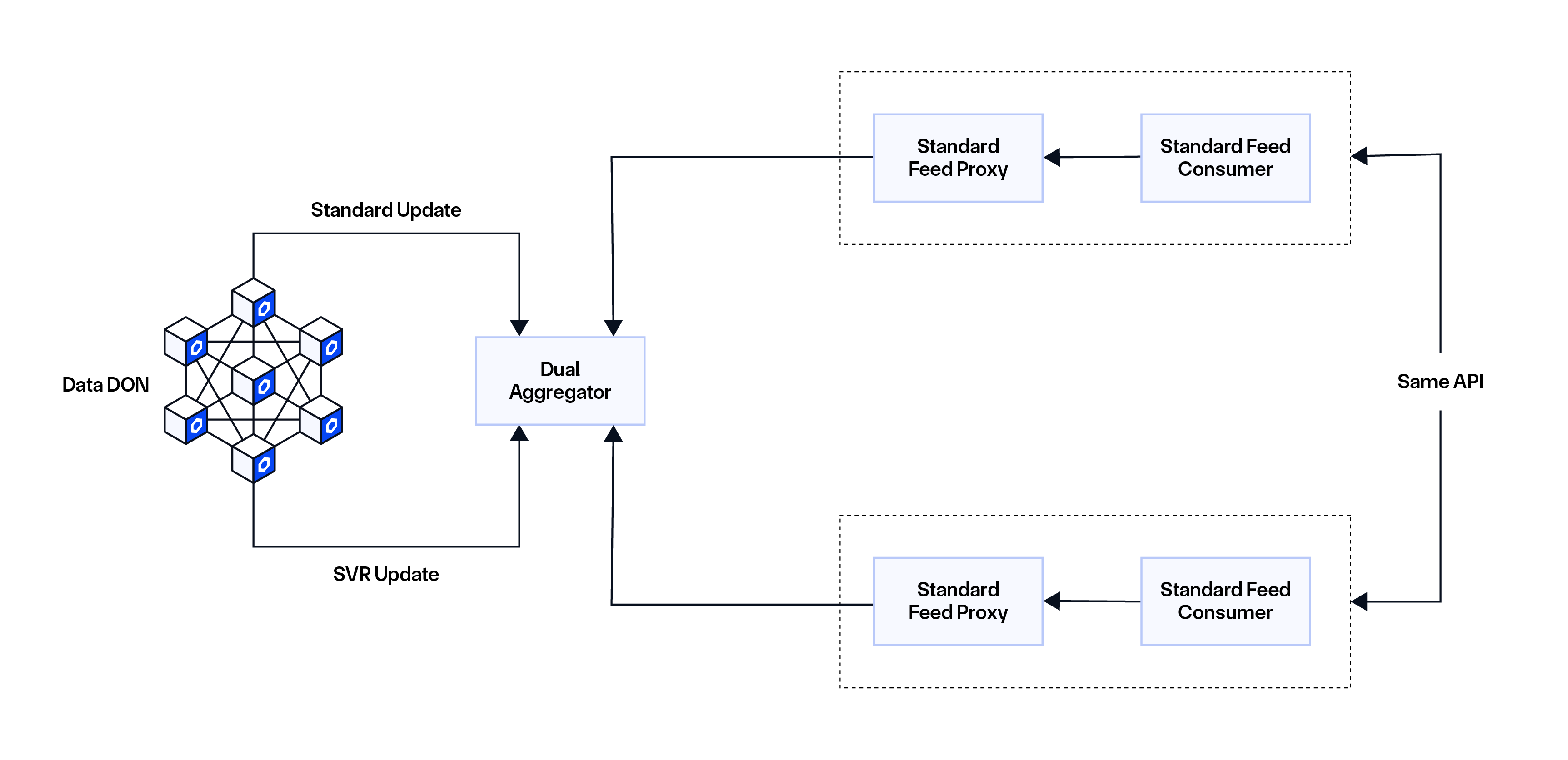
This version of SVR-enabled Price Feeds leverages Flashbots MEV-Share and a novel onchain “Dual Aggregator” contract architecture to provide efficiency and enhanced fallback security. Chainlink SVR is currently live on testnet and will soon launch on Ethereum mainnet. A future, fully custom implementation is planned to introduce further improvements, including increased decentralization, a DON-based auction system, enhanced gas efficiency, and cross-chain capabilities.

The integration of Chainlink SVR by the Aave community is currently undergoing governance approval and can be read on the Aave forum. The value recaptured by SVR not only provides DeFi protocols with a new revenue stream, but can be used to promote the long-term economic sustainability of Chainlink oracles, ultimately ensuring DeFi protocols maintain access to highly secure and reliable oracles.

How Oracles in DeFi Create MEV Opportunities

Maximal Extractable Value (MEV) refers to the value derived from the ability of block proposers (within blockchain networks) to include, exclude, or change the order of transactions in the blocks they produce. Today, these transaction ordering opportunities are identified by searchers, who bid via a competitive auction for the right to order transactions in the block. The value is then captured by the participants of the block building process such as searchers, builders, and validators. 

As a sub-set of MEV, “Oracle Extractable Value” (OEV) refers to the MEV created during the transmission of oracle reports onchain and their subsequent consumption by onchain applications. The most common OEV opportunity is seen with lending protocols, namely during the liquidation process where searchers compete for the right to liquidate an at-risk position and earn a liquidation bonus reward. On Ethereum, the process of auctioning blockspace is commonly achieved through Flashbot’s MEV-Boost, enabling searchers to backrun a price oracle report update with a liquidation transaction via transaction bundling. 

Today, the value associated with oracle-related MEV, such as liquidations, is captured by the searchers, builders, and validators of a blockchain network, with none returning back the DeFi protocols, end-users, and oracles that originally generated the oracle-related MEV. Recapturing this non-toxic MEV would ultimately return value back to its originator. 

Note: The term “OEV” can be considered to be a misnomer, as it does not refer to oracles actively extracting value away from users, but rather relating the existence of oracle-related MEV. We use the term “OEV” here as it’s commonplace to use in reference to this type of MEV. 

Why Chainlink SVR?

Chainlink Labs and the broader Chainlink community have been actively researching solutions around MEV for a number of years, such as research on Fair Sequencing Services (FSS) and Protected Order Flow (PROF). As a subset of MEV, we’ve also engaged in research around OEV and how DeFi protocols can recapture this value and to help support the economic sustainability of oracles. We’ve analyzed various OEV designs in order to realize a solution that maximizes security, reliability, and long-term economic viability. 

From our research, we’ve successfully developed an initial version of an OEV solution called Smart Value Recapture (SVR). Chainlink SVR is built specifically for backrunning as it pertains to liquidations and cannot be used for frontrunning or sandwich attacks, which are toxic forms of MEV that harm the user experience and for which the Chainlink network and community has actively engaged in research on solutions to mitigate this problem for many years. 

We believe Chainlink SVR is best suited to offer a native MEV recapture solution, as Chainlink Price Feeds already help secure many of the largest DeFi protocols and have a proven track record of security and reliability. In integrating a Chainlink-powered MEV recapture solution, DeFi protocols can retain this Chainlink security and reliability while also further increasing the economic sustainability of themselves and the Chainlink infrastructure they rely on. 

Some of the notable benefits of Chainlink SVR include:

SVR is underpinned by the same time-tested and battle-hardened decentralized oracle network (DON) infrastructure that has powered Chainlink Price Feeds for the past 5+ years—which have successfully secured \$75 billion in DeFi TVL at its peak and enabled $17 trillion in transaction value.
SVR reduces unnecessary third-party vendor risks to protocols already consuming Chainlink Price Feeds, reducing their overall attack vector and preventing unnecessary third parties from siphoning economic value.
SVR doesn’t require DeFi protocols to integrate intermediary contracts or to “wrap” Chainlink Price Feeds, ensuring more efficient smart contract workflows that remove the need for DeFi protocols to materially change how they consume oracle data.
With Chainlink being the most widely used oracle solution across DeFi, SVR can drive economies of scale where the most opportunities and highest revenue potential for searchers and subsequently DeFi protocols exists.  

Based on real-world testing, we believe Chainlink SVR can expect to achieve a realistic value recapture rate of approximately 40% (i.e., for every \$100 that would have been leaked via liquidation MEV, \$40 was recaptured). While some alternative solutions have claimed to achieve a higher efficiency rate for recapturing liquidation MEV, we have not seen conclusive real-world data to showcase this. We believe that 40% is a conservative but realistic estimate—real life performance will be needed to gather actual data.

The initial version of SVR is only the beginning. Over time, Chainlink SVR aims to transition into a highly configurable, highly decentralized, generalizable, and cross-chain OEV solution built entirely on Chainlink’s battle-tested infrastructure. We are excited to see protocols maximize MEV revenue recapture across any supported chain while also eliminating unnecessary risks and timing delays introduced by alternative OEV solutions.  

How The Initial Version of Chainlink SVR Works

The initial implementation of Chainlink SVR will consist of a parallel set of Chainlink Price Feeds, powered by the same established DON architecture that secures existing Price Feeds.

Chainlink Price Feeds provide the market-wide, volume-weighted average price of crypto assets by using decentralized oracle networks and multiple independent data sources.

SVR-enabled Chainlink Price Feeds will be deployed in order to recapture liquidation-related MEV for lending protocols that integrate the solution, while also retaining the standard Chainlink Price Feeds as a fallback. The “Dual Aggregator” Price Feed design enables a single Chainlink Data DON to produce oracle reports exactly the same as they do today while transmitting the oracle report onchain via different methods. SVR Feeds are based on existing Chainlink contracts and interfaces, greatly reducing the integration burden on existing Chainlink users since minimal code changes are required (potentially even as minimal as pointing to the new aggregator or SVR feed).

The oracle report sent to the SVR-enabled Price Feed will transmit updates onchain via Flashbots MEV-Share, where the right to bundle a liquidation transaction with the oracle report update is auctioned to searchers in a permissionless manner. In parallel, the same oracle report is also transmitted onchain via the public mempool to the existing standard Price Feeds, which serves as a fallback to mitigate potential risk scenarios. Users of the standard Price Feed are completely unaffected by anything SVR-related, as it is opt-in.

The smart contracts underpinning Chainlink Smart Application Recapture (SVR).
The smart contract infrastructure underpinning Chainlink Smart Application Recapture (SVR).

In the case of a transmission failure by the SVR-enabled Price Feed (i.e., MEV-Share failure), there is a fail-safe mechanism to ensure that the feed can still report a price to the DeFi protocol. When the SVR-enabled Price Feed is determined to be stale by a configurable time period, it will return the latest price report from the standard Price Feed before the cutoff point. This delay is necessary to avoid liquidators extracting value by bypassing the value recapture mechanism provided by Chainlink SVR.

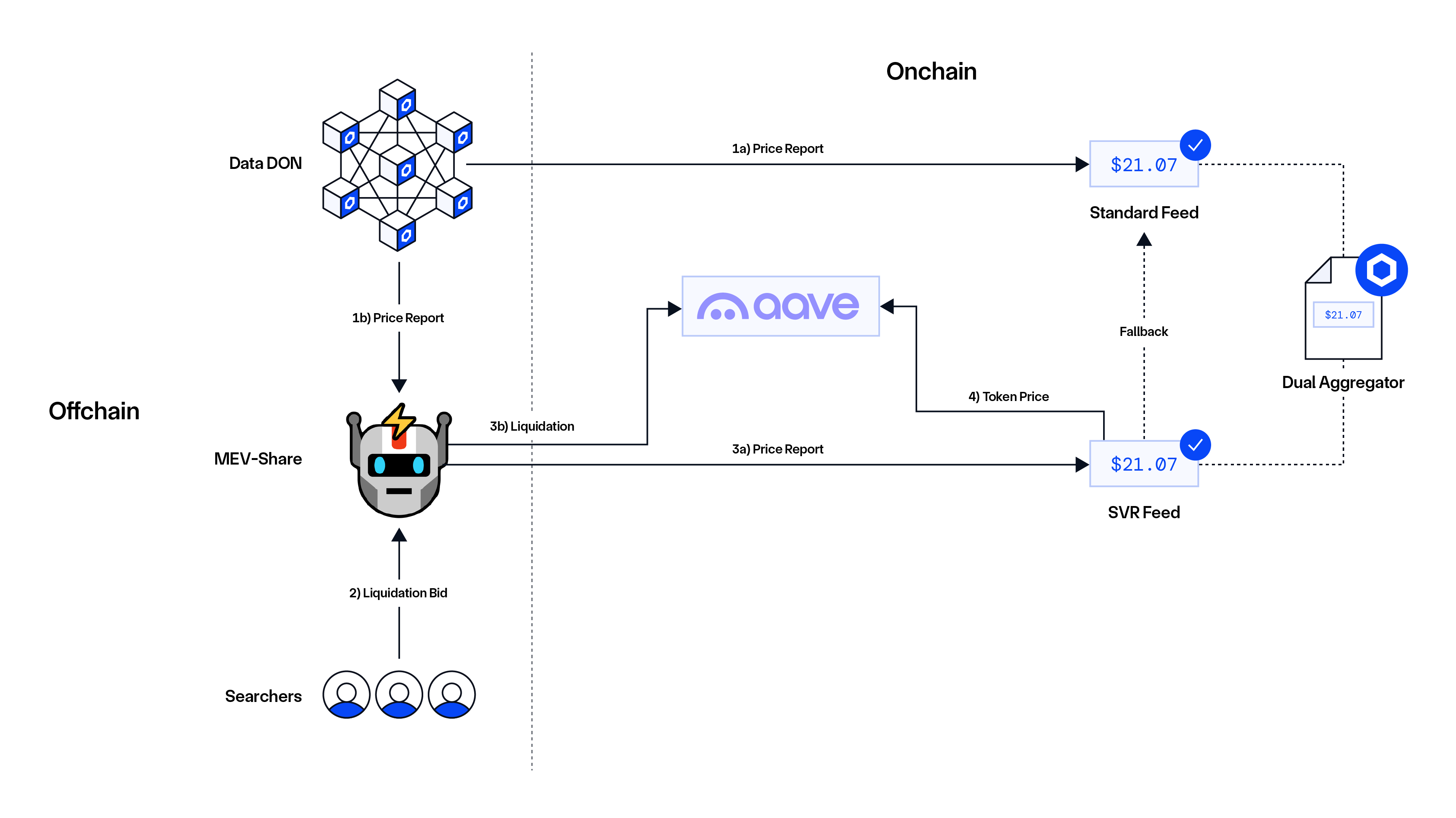
The figure below provides a high-level overview of how SVR is proposed to be integrated within Aave V3 on Ethereum.

The proposed implementation of Chainlink SVR with Aave.
The proposed implementation of Chainlink SVR with Aave v3 on Ethereum.

The flow in the figure works as follows: 

The Chainlink Data DON produces a price oracle report exactly as today (i.e., by a heartbeat or deviation threshold). However, the price report is transmitted twice, from different accounts.

One price report is transmitted to the standard Price Feed via the public mempool (the same as today).
Another price report is transmitted to an SVR Price Feed contract through a Flashbots Protect RPC endpoint.

MEV-Share is an open-source protocol that selectively shares data about transactions, such as price oracle updates, with searchers who bid to include the transactions in bundles shared with builders. Builders then select the highest searcher bid and include the relevant backrun and liquidation transactions in a block. If no bid is placed, then the price oracle report is published onchain without any backrunning liquidation transaction.
When the price report and the backrunning liquidation transactions are published onchain, then:

The price report updates the SVR Price Feed.
The backrunning transaction uses the price update to liquidate the relevant positions.
Most of the value is recaptured by Aave and Chainlink.

In the described example, the SVR feed returns an updated price. However, if no fresh price is available (e.g. if MEV-Share fails), the feed contract connected to Aave has a fail-safe mechanism that returns a price from the standard Chainlink Price Feed at an adjustable delay.

Economics

The oracle-related MEV recaptured by Chainlink SVR is planned to be split at a standard rate between integrating DeFi protocols and the Chainlink Network, with 60% of the value going toward the DeFi protocol and 40% to the Chainlink ecosystem. This split provides DeFi protocols with an additional revenue stream while also supporting the economic sustainability of Chainlink oracles by covering transaction gas costs and other ongoing infrastructure expenses. Note that these values may be subject to change in the future, with the goal of generating sustainable economics between DeFi protocols and the oracles that power them.

Because of the deep, long-standing partnership between the Chainlink and Aave communities and Aave’s role as a launch partner, the near-term revenue split proposed to Aave will be 65% to the Aave ecosystem and 35% to the Chainlink ecosystem for the first six months, starting from in-production integration—subject to the Aave community’s governance approval. 

We anticipate that Chainlink SVR will be one of the first Chainlink services connected to the Payment Abstraction system, subject to the results of security audits and deployment status. Payment Abstraction is a system of onchain smart contracts that help significantly reduce billing and payment friction for users and developers interacting with Chainlink services. The system is designed to convert fee tokens into LINK via existing Decentralized Exchange (DEX) contracts.

Interested in Recapturing MEV Through Chainlink SVR?

If you’re a DeFi protocol and are interested in integrating Chainlink SVR to recapture MEV, reach out or follow us for more updates in the future.

—

Disclaimer: This post is for informational purposes only and contains statements about the future, including anticipated product features, development, and timelines for the rollout of these features. These statements are only predictions and reflect current beliefs and expectations with respect to future events; they are based on assumptions and are subject to risk, uncertainties, and changes at any time. There can be no assurance that actual results will not differ materially from those expressed in these statements, although we believe them to be based on reasonable assumptions. All statements are valid only as of the date first posted. These statements may not reflect future developments due to user feedback or later events and we may not update this post in response. Please review the Chainlink Terms of Service, which provides important information and disclosures.


Source link

BNB Chain Unveils Annual Report, Highlighting Network Consolidation And 58.2% TVL Growth Among Major Achievements

0
BNB Chain Unveils Annual Report, Highlighting Network Consolidation And 58.2% TVL Growth Among Major Achievements


In Brief

BNB Chain has released its 2024 annual report, highlighting the network’s consolidation under the “One BNB” strategy, its positioning as an AI-first blockchain, and the launch of initiatives such as the Gas-Free Carnival and stablecoin incentive programs.

BNB Chain Unveils Annual Report, Highlighting Network Consolidation And 58.2% TVL Growth Among Major Achievements

Blockchain platform for Web3 decentralized applications (dApps), BNB Chain released its 2024 annual report, highlighting milestones achieved throughout the year. These include the network’s consolidation under the “One BNB” multichain strategy, advancements in scalability and storage through opBNB and Greenfield, positioning BNB Chain as an AI-first blockchain, and launching impactful initiatives like the Gas-Free Carnival and stablecoin incentive programs. 

One of the most notable milestones of the year was the consolidation of the network under a unified structure. This transition, referred to as the BNB Chain Fusion involved migrating the functionalities of the BNB Beacon Chain to the BNB Smart Chain (BSC) and retiring the Beacon Chain. This strategic move streamlined operations, improved efficiency, reduced security risks, and aligned the network’s infrastructure with contemporary technological needs and future scalability objectives.

The scalability and performance enhancements of opBNB represented another major breakthrough. The platform now supports a high gas limit of 100 million per second and achieves 4,600 transactions per second (TPS), surpassing similar technologies such as Ethereum’s Optimism. By mapping dependencies and executing non-conflicting transactions in parallel, opBNB significantly boosts transaction efficiency, delivering a 30% improvement in performance across the BNB Chain network.

In the realm of blockchain storage, Greenfield saw advancements with three forks—Hulunbeier, Ural, and Pawnee—that improved functionality and user experience. Additionally, the alpha version of Greendrive was launched, supporting over 30 public datasets and introducing a modernized user interface. The BNB Attestation Service (BAS) also demonstrated its reliability by completing 173,499 attestations with 1,418 unique attestors.

Ecosystem growth throughout 2024 was equally impressive, with Total Value Locked (TVL) increasing by 58.2%, unique addresses rising by 17.7%, and opBNB achieving 4.7 million daily active users. 

BNB Chain Notes Security Milestones And Key Initiatives 

In 2024, BNB Chain made notable progress in enhancing security, reducing financial losses from breaches by 67%—from $162 million in 2023 to $53 million. The number of security incidents also declined by 66%. This improvement highlights BNB Chain’s commitment to creating a safer blockchain environment. Initiatives like the Most Valuable Builder (MVB) Program and the BNB Incubation Alliance (BIA) further solidify its position as a leader in the Web3 ecosystem, fostering innovation and growth.

Stablecoin integration emerged as another focus area, with initiatives designed to incentivize their use within the ecosystem. Programs such as the Gas-Free Carnival and the TVL Incentive Program were implemented to drive adoption and cost-effectiveness. As a result, stablecoins now account for 8.8% of all transactions on the BNB Chain, with a temporary increase to 9.9% during the Stablecoin Retention Initiative. Within the initiative’s first week, BNB Chain’s stablecoin market share grew by 2.1%, highlighting the success of these campaigns in promoting stablecoin usage.

In 2024, BNB Chain also prioritized creating a reliable platform for AI-driven applications. It combined the high throughput and low transaction costs of BSC with opBNB’s rapid processing capabilities and BNB Greenfield’s secure, decentralized data storage. Additionally, BNB Chain launched the Meme Innovation Battle, aimed at fostering creativity and sustainable growth within the meme culture ecosystem. With $1 million pledged for this initiative, the funds were distributed across two streams: the Meme Innovation Competition and the Trade for Airdrop Rewards Competition. 

The year also marked the successful execution of Seasons 7 and 8 of the MVB Program and the establishment of the BIA in collaboration with Binance Labs. These programs were designed to accelerate the growth of early-stage Web3 projects, reinforcing BNB Chain’s role in driving innovation and supporting developers across the ecosystem.

Disclaimer

In line with the Trust Project guidelines, please note that the information provided on this page is not intended to be and should not be interpreted as legal, tax, investment, financial, or any other form of advice. It is important to only invest what you can afford to lose and to seek independent financial advice if you have any doubts. For further information, we suggest referring to the terms and conditions as well as the help and support pages provided by the issuer or advertiser. MetaversePost is committed to accurate, unbiased reporting, but market conditions are subject to change without notice.

About The Author


Alisa, a dedicated journalist at the MPost, specializes in cryptocurrency, zero-knowledge proofs, investments, and the expansive realm of Web3. With a keen eye for emerging trends and technologies, she delivers comprehensive coverage to inform and engage readers in the ever-evolving landscape of digital finance.

More articles


Alisa Davidson


Alisa, a dedicated journalist at the MPost, specializes in cryptocurrency, zero-knowledge proofs, investments, and the expansive realm of Web3. With a keen eye for emerging trends and technologies, she delivers comprehensive coverage to inform and engage readers in the ever-evolving landscape of digital finance.


More articles


Source link

Wilder World Releases Gameplay Trailer with A Map Bigger Than GTA V

0
Wilder World Releases Gameplay Trailer with A Map Bigger Than GTA V


Wilder World’s newly revealed gameplay trailer is making waves across the gaming community, positioning this AAA metaverse as one of the most anticipated titles of 2025 in Web3 Gaming.

Currently trending on the Epic Games Store, it combines AI, blockchain technology, and a sprawling map ‘13.5 times larger’ than GTA 5, according to the announcement. The trailer highlights intense racing, immersive first-person combat, and social interactions, all rendered with some nice cinematic realism.

Many have commented on the trailer’s visuals, which look impressive, and how Wilder World could redefine how we interact with virtual worlds. And the creators are big on a player-driven economy where users can shape the world around them and the game.

Launched in 2021, the new Wilder World footage shows high-speed racing on futuristic streets and intense combat scenarios that show off the dynamic world.

Social features, such as players forming alliances or attending virtual events, also stand out. All of this supports the core idea of a metaverse where you can explore, create and thrive on your own terms.

Advanced Tech Stack and Economy

Wilder World’s tech stack is AI and blockchain-powered but accessible to non-Web3 users where on-chain processes happen behind the scenes. The team will also launch their own blockchain on the Polygon CDK, which aims to be Polygon’s flagship gaming and metaverse project.

The economy is centred around the $WILD token, which fuels all in-game transactions. Players can spend $WILD on racing essentials like fuel, vehicle repairs and parts. They can also use it for weaponry, ammo, mining rigs and upgrades. There is also an NFT-driven marketplace where players can trade avatars and cars and land through the Wilder World Metaverse Market (WWMM).

Source Wilder World

Industry Support

Several big partnerships show the potential of Wilder World in the metaverse space. A collaboration with Samsung will see Wilder World integrated into Samsung Smart TVs and Gaming Hub so millions of users can interact with assets from their living rooms. Wilder World also partnered with Polygon and Celestia to make on-chain gameplay scalable and affordable so millions more players can join the world.

Behind the scenes, the project’s 110-plus member team features industry veterans, including Michael Pryor (previously at Nike) leading procedural generation efforts. Lead Concept Artist Brandon Gobey contributed to major film projects like Dune, and BAFTA winner Jon Reilly focused on character art.

With these experts on board and the trailer looking good, Wilder World looks ready to deliver a metaverse that blends advanced technology with user-generated content when it launches in Q1 2025.

Editor’s note: Written with the assistance of AI – Edited and fact-checked by Jason Newey.

Jason Newey

Jason Newey is a seasoned journalist specializing in NFTs, the Metaverse, and Web3 technologies. With a background in digital media and blockchain technology, he adeptly translates complex concepts into engaging, informative articles.

View all posts


Source link

The Metaverse We’ve All Been Waiting For: Wilder World Unveils Revolutionary Gameplay Trailer

0
The Metaverse We’ve All Been Waiting For: Wilder World Unveils Revolutionary Gameplay Trailer


Disclosure: This is a sponsored post. Readers should conduct further research prior to taking any actions. Learn more ›

Wiami, Wilder World – December 23, 2024 – The wait is over! Wilder World, currently ranked as the 9th most wishlisted game on the Epic Games Store, has unveiled its much-anticipated gameplay trailer, which shows us the future of the metaverse. The visuals are stunning, and the gameplay is immersive with a cinematic realism that competes with the biggest names in the industry. Featuring high-speed racing, dramatic FPS combat, social interactions, and more, the trailer positions Wilder World as one of the most anticipated games of 2025. 

Watch the new Wilder World gameplay trailer here and see for yourself the next-gen Metaverse.

This revolutionary platform empowers creators and players alike to shape their realities and own their digital futures. Powered by AI, blockchain, and NFTs, Wilder World delivers a player-driven economy and limitless opportunities to build, earn, and explore. 

The advanced tech stack behind Wilder World leverages state-of-the-art technology, offering a seamless player experience where Web3 elements are fully abstracted. For non-Web3 native gamers, on-chain processes are completely invisible, creating a groundbreaking experience on par with traditional gaming. Additionally, Wilder World is preparing to launch its own blockchain built on the Polygon CDK, establishing itself as Polygon’s flagship gaming and metaverse project.

With its official super early access launch set for Q1 2025, Wilder World gives players full economic control via its on-chain marketplace, NFTs, and the $WILD token. 

The Wilder World Early Access registration is now at https://www.wilderworld.com/earlyaccess.

Wiami is calling

Wilder World’s Wiami, a city 13.5 times larger than GTA 5, offers gaming, social events, and more. Its NFT-driven economy allows players to trade and own in-game assets like avatars, cars, and land through the Wilder World Metaverse Market (WWMM). Players can co-create, customize, and build experiences, enabling endless opportunities for participation and innovation.

“At the core of Wilder World’s vision is the belief that players – the Wilders – should be the true architects of their digital universe. Wilder World will empower creators to shape their realities today while building meaningful, lasting legacies in a limitless, interconnected metaverse.” – n3o, Wilder World Executive Producer

Fueling these experiences is Wilder World’s $WILD token, which drives all gameplay and in-world transactions. Players earn and spend $WILD in racing (for fuel, repairs, and parts), combat (for weapons and ammo), and mining (for rigs and upgrades). Exploring Wiami means stepping into a fully integrated ecosystem where Wilders are the architects of their own adventures.

Wilder World’s 110+ team features industry veterans like Procedural Generation Leads Michael Pryor (prev. Nike, CDO at DesignMorphine), Oleg Soroko (After Form), Lead Concept Artist Brandon Gobey (prev. DNEG, worked on Dune, Bladerunner, and more), and BAFTA winner Jon Reilly (worked on The Witcher, The Avengers, and more) as Lead Character Artist. Sim-Racing legends Aristotelis Vasilakos (prev. Assetto Corsa) and Marcus Reynolds (prev. Simbin) lead vehicle handling, while Chris Kochan (prev. Apple) directs the production.

Partnerships and Industry Backing

Wilder World is supported and backed by major industry players. The global distribution partnership with Samsung aims to bring the immersive Metaverse experience to millions through the integration of Wilder World on Samsung’s Smart TVs and Gaming Hub. This collaboration allows users to access, trade, and interact with Wilder World assets directly via Samsung TVs. The partnership marks a major milestone in making Wilder World accessible globally. 

Wilder World partnered with Polygon and Celestia to enhance the scalability and accessibility of its virtual ecosystem. This collaboration ensures gasless transactions and strong infrastructure for Wilder World’s ecosystem, enabling millions of players to engage with on-chain gameplay experiences.

“Wilder World isn’t just a game—it’s the beginning of a new digital era where players truly own, create, and shape their experiences. This is the metaverse we’ve all been building toward, and it’s incredible to see it come to life.” – Sandeep Nailwal, Polygon Co-Founder.

Furthermore, Wilder World partnered with NVIDIA as the first Web3 game on GeForce Now (GFN), and Epic Games, where it ranks among the top 10 most anticipated games globally.

About Wilder World

Launched in 2021, Wilder World is an AAA metaverse that blends photorealistic graphics, AI-driven systems, and blockchain technology. Spanning a map 13.5x larger than GTA5, it features a player-driven economy, immersive gameplay, and partnerships with leaders like Samsung, NVIDIA, and Epic Games. Wilder World is redefining what it means to explore, create, and thrive in the Metaverse.


Source link

23 Most Famous Painters In The World

0
23 Most Famous Painters In The World


From the earliest cave paintings to modern artworks, we have always sought ways to express ourselves creatively. The most famous painters in the world were trailblazers who drew their subjects in new ways and explored new brush techniques.

Find out more about these talented painters who have created some of the best art of all time.

The Most Famous Painters In the World

Whether you’re a fan of Dutch masters or modern art, you can’t help but be impressed by these innovative painters and their greatest works. While fame is quite subjective, these influential artists are the most searched for online and their paintings have stood the test of time.

23. René Magritte

René Magritte was a Belgian artist whose enigmatic paintings continue to captivate audiences worldwide. His surrealistic style challenged traditional ideas of representation and meaning.

Magritte often incorporated everyday objects in impossible ways to create a dreamlike world. Additionally, his use of light and shadow added to the mystique of his art and left viewers questioning what objects and shapes truly represented.

With a distinctive style that was both sophisticated and elegant, Magritte’s work represented a new way of thinking for viewers and artists alike. His paintings continue to inspire and intrigue art lovers to this day, cementing his place as a master of the Surrealist movement.

Famous Magritte paintings: The Son of Man, Time Transfixed, The Treachery of Images

The Empire of Light by Magritte
The Empire of Light by Magritte – best artists in the world

22. Andy Warhol

Andy Warhol, one of the most renowned artists of the 20th century, was a true visionary who transformed the art world with his unique style and innovative approach. Known for his iconic paintings and silkscreen prints of celebrities, consumer products, and everyday objects, Warhol’s work has become synonymous with the Pop Art movement.

His use of bright, vivid colors and repetition challenged traditional notions of art, while his fascination with celebrity culture and consumerism reflected the changing values of American society. Today, Warhol’s legacy endures, and his influence can be felt not only in the art world but also in fashion, music, and popular culture.

Famous Warhol paintings: Campbell’s Soup Cans, Marilyn Diptych, Triple Elvis.

Elizabeth Taylor by Warhol at The Broad, Los AngelesElizabeth Taylor by Warhol at The Broad, Los Angeles
Elizabeth Taylor by Warhol at The Broad, Los Angeles

21. Grant Wood

Best known for his portrayal of the American Midwest, Grant Wood was a key figure in the Regionalist art movement. Infusing subtle humor into his artworks, particularly in his masterpiece, American Gothic, Grant Wood captured the isolation of modern life.

He spent much of his life in Iowa, making 4 trips to Europe. Wood was not just an artist but also a jewelry and furniture designer.

He once famously said: “all the really good ideas I ever had came to me while I was milking a cow.” Born in 1891, Grant Wood passed away in 1942 – his style was definitely avant-garde for its time.

Famous Grant Wood paintings: American Gothic, Woman with Plants, Daughters of Revolution.

American Gothic by Grant WoodAmerican Gothic by Grant Wood
©Art Institute of Chicago – American Gothic by Grant Wood

20. Jacques-Louis David

Born in 1748, David was a Neoclassical French painter who sought to convey clarity and symmetry in his art. This was a reaction against the over the top Rococo style.

When he was only seven, David’s father was killed in a duel. His mother’s cousin, the famous artist Francois Boucher taught him how to paint. 

David was a skilled portrait painter, often depicting royalty or political figures like the Emperor Napoleon. He was a key influence on other artists, including Ingres and Delacroix.

Famous David paintings: Oath of the Horatii, The Death of Socrates, The Emperor Napoleon in His Study at the Tuileries

The Death of Socrates by Jacques-Louis DavidThe Death of Socrates by Jacques-Louis David
The Death of Socrates by Jacques-Louis David, Wikimedia

19. Sandro Botticelli

This Italian painter’s real name was Alessandro di Mariano di Vanni Filipepi, although he was known as Sandro Botticelli. This last name means little barrel, and was coined by his brother.

Born in Florence in 1445, Botticelli was a humanist who thrived in the Renaissance period. The Medici family commissioned several of his artworks, including The Adoration of the Magi.

He painted parts of the Sistine Chapel, Events of the life of Moses, The Punishment of Korah and The Temptation of Christ. The Uffizi Gallery in Florence is where you can see three of the most important Boticelli paintings: Primavera, The Adoration of the Magi and The Birth of Venus.

Famous Botticelli paintings: The Birth of Venus, Primavera, Madonna and Child, Portrait of a Young Man, Madonna of the Book, The Adoration of the Magi

The Adoration of the Magi by Sandro BotticelliThe Adoration of the Magi by Sandro Botticelli
The Adoration of the Magi by Renaissance artist Botticelli

18. Edouard Manet

One of the most famous painters of all time, Manet was born into a wealthy family in Paris in 1832. Although Manet once said that he had “no intention of overthrowing old methods of paintings, or creating, new ones”, he certainly shook up the art world.

Édouard Manet portrayed his subjects in an uncompromising manner. In his painting Olympia, a courtesan stares directly out, while in A Bar at the Folies-Bergère, Manet deliberately plays with perspective and mirrors.

Although Manet’s Luncheon on the Grass was rejected by the Paris Salon in 1863, the painting stole the show at the Salon des Refusés created by Napoleon III. The artist considered himself to be a Realist, although he greatly influenced the Impressionists.

Famous Manet paintings: A Bar at the Folies-Bergère, Olympia, Le Déjeuner sur l’herbe.

A Bar at the Folies-Bergère, Édouard ManetA Bar at the Folies-Bergère, Édouard Manet
A Bar at the Folies-Bergère, Édouard Manet, Wikimedia

17. Pieter Bruegel

There are actually two well known artists named Pieter Bruegel – Pieter Bruegel the Elder and his son Pieter Brueghel the Younger. However, it’s Pieter Bruegel the Elder who created the most well known artworks.

Born around 1525 in Breda which is now in the Netherlands, Bruegel was a pioneer of genre painting. He depicted religious scenes, peasants and folk culture in extraordinary detail. Games, dances, festivals and meals are all shown in his body of work.

The Tower of Babel is an intricate painting that symbolizes the futility of human effort.

Famous Bruegel paintings: The Tower of Babel (Vienna), The Harvesters, The Hunters in the Snow, The Wedding Dance, Children’s Games.

The Tower of Babel (Vienna), Pieter Brueghel the ElderThe Tower of Babel (Vienna), Pieter Brueghel the Elder
The Tower of Babel (Vienna), Pieter Brueghel the Elder, Wikimedia

16. James Mcneill Whistler

This American artist based in the UK was born in 1834. Whistler was a key figure in the Aesthetic movement, which believed in art for art’s sake.

Whistler once said that “music is the poetry of sound, so is painting the poetry of sight, and the subject-matter has nothing to do with harmony of sound or of color”. His style was influenced by Orientalism and he is considered to be a Pre-Impressionist.

The art collector Frederick Leyland first coined the term Nocturne to describe Whistler’s evocative night scenes. Whistler then adopted the expression for all his new paintings of the river Thames at night.

Famous Whistler paintings: Harmony in Gray and Green: Miss Cicely Alexander, Whistler’s Mother, Nocturne in Black and Gold – The Falling Rocket.

Symphony in White, No. 1: The White Girl by James McNeill WhistlerSymphony in White, No. 1: The White Girl by James McNeill Whistler
Symphony in White, No. 1: The White Girl by James McNeill Whistler

15. Henri Matisse

Renowned for his use of color and innovative cut-outs, Henri Matisse was a French artist born in 1869 in the South of France. Together with the artist Andre Derain, he created the Fauvism art movement.

Fauvism was characterized by bright primary colors and thick, flat brushstrokes. This Post-Impressionism movement freed up artists to use color in a more spontaneous way.

Matisse was not only a painter, but also a draughtsman, sculptor and printmaker. When his health declined in his late sixties, he cut out shapes from paper painted by his assistants. These collages were a whole new art form.

Famous Matisse paintings: Blue Nudes, Dance, The Fall of Icarus, The Snail.

Paintings by Henri Matisse at the General Staff Building (branch of the museum Hermitage) in Saint PetersburgPaintings by Henri Matisse at the General Staff Building (branch of the museum Hermitage) in Saint Petersburg
Paintings by Henri Matisse at the General Staff Building, Hermitage Museum Saint Petersburg

14. Pierre-Auguste Renoir

A well-known French Impressionist artist, Renoir loved beauty and feminine sensuality. Born in Limoges in 1841, he started as a porcelain painter.

Renoir became friends with Frédéric Bazille, Alfred Sisley and Claude Monet. His painting, Dance at the Moulin de la Galette captures the light dappling over young people dancing.

As Renoir was adept at portraiture, he attracted some wealthy patrons including the banker Paul Berard. This financial security gave him a certain artistic freedom and in 1878 he decided not to exhibit with the Impressionists.

Instead, Renoir visited Italy and Guernsey and became a skilled sculptor as well as a painter.

Famous Renoir paintings: Bal du Moulin de la Galette, The Umbrellas, Luncheon of the Boating Party, Dance at Bougival, Girls at the Piano.

Luncheon of the Boating Party, Pierre-Auguste RenoirLuncheon of the Boating Party, Pierre-Auguste Renoir
Luncheon of the Boating Party, Pierre-Auguste Renoir, Wikimedia

13. Peter Paul Rubens

Sir Peter Paul Rubens was a seventeenth century Flemish artist, and the leading proponent of Flemish Baroque style. His dynamic paintings of religious and allegorical subjects emphasized color and movement.

Rubens lived in Italy from 1600 to 1608. He was greatly influenced by the works of Caravaggio, Raphael and Titian.

The artist also loved to paint voluptuous women, and this style is often referred to as Rubenesque to describe the work of subsequent art painters. Rubens also spoke 5 languages and was a skilled diplomat, negotiating peace between Spain and England.

He received knighthoods from both Charles I of England and Philip IV of Spain.

Famous Rubens paintings: Elevation of The Cross, Self-Portrait, The Massacre of the Innocents, The Garden of Love.

Agrippina and Germanicus by Rubens, Andrew W. Mellon FundAgrippina and Germanicus by Rubens, Andrew W. Mellon Fund
Agrippina and Germanicus by Rubens, Andrew W. Mellon Fund

12. Jackson Pollock

One of the most famous modern artists, Pollock helped to create the Abstract Expressionism movement. He invented a new way of working, by throwing and dripping thinned enamel paint directly onto a canvas on the floor.

Pollock then added further impact to these action paintings by using sticks and knives to smear the paint. These artworks became known as drip paintings.

As his artworks are under copyright, we can’t reproduce them here. If you want to see some of Pollock’s abstract art in person, there are several on display at The Museum of Modern Art in New York and the Peggy Guggenheim Collection in Venice.

Famous Pollock paintings: Guardians of the Secret, Blue Poles, Full Fathom Five.

Jackson Pollock, Smithsonian American Art Museum, Public domain, via Wikimedia CommonsJackson Pollock, Smithsonian American Art Museum, Public domain, via Wikimedia Commons
Jackson Pollock, Smithsonian American Art Museum, Wikimedia

11. Johannes Vermeer

A key figure in the history of art, this 17th century Dutch painter specialized in intimate domestic scenes, often portraying women. Although Vermeer wasn’t particularly well known during his lifetime, his talent was recognized hundreds of years later.

Few artists have been so skilled at capturing the effects of light and making the ordinary extraordinary. Johannes Vermeer had 11 children and died at only 43 years old.

There are 34 confirmed Vermeer paintings, with 3 more unconfirmed. His most well known work, Girl with a Pearl Earring, is a masterpiece of Baroque art. This is not a portrait of an actual person, but a “tronie”.

Tronies are paintings of fictional figures. Notice the glittering pearl and the light on the girl’s lips.

Famous Vermeer paintings: Girl with a Pearl Earring (nicknamed The Mona Lisa of the North), The Milkmaid, The Lacemaker.

Girl with a Pear Earring, Johannes Vermeer, Public domain, via Wikimedia CommonsGirl with a Pear Earring, Johannes Vermeer, Public domain, via Wikimedia Commons
Girl with a Pear Earring, Johannes Vermeer, Wikimedia

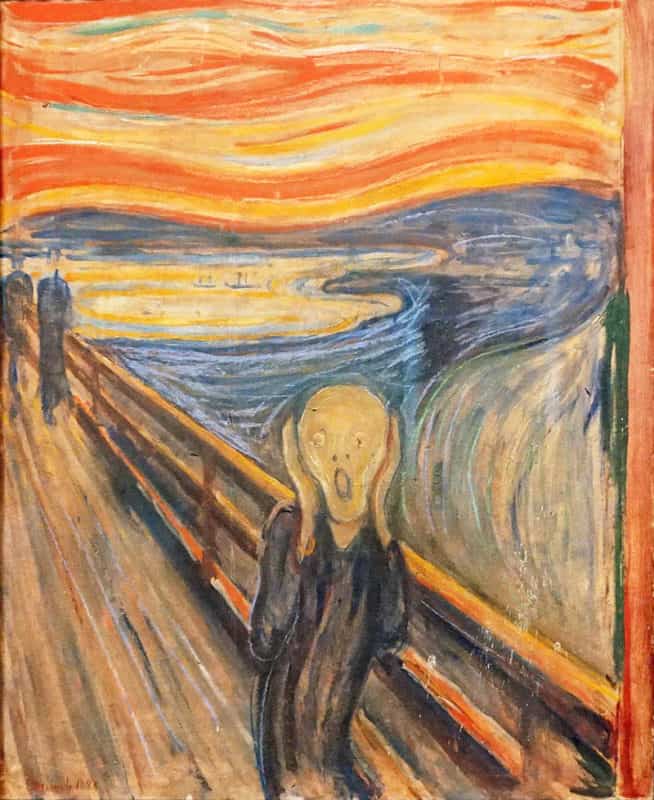
10. Edvard Munch

A Norwegian painter born in 1863, Edvard Munch was quite a tortured soul. In fact, he created his most well known work, The Scream, to represent his soul.

Munch’s mother died of tuberculosis a few years after he was born and he was raised by his father who suffered from mental illness. Two of his sisters died, and Munch himself was often ill as a child.

When he was not at school due to illness, he passed the time by drawing. Munch became a prolific painter and made 4 versions of The Scream, two which were stolen in art heists but later recovered.

Famous Munch paintings: The Scream, Anxiety, The Dance of Life, Jealousy.

The Scream by Edvard Munch, National Gallery of Norway, OsloThe Scream by Edvard Munch, National Gallery of Norway, Oslo
The Scream by Edvard Munch, Wikimedia

9. Salvador Dali

The king of Surrealism, Salvador Dali was a Spanish artist who explored the realm of the subconscious in his art. Dali wasn’t just a painter and sculptor, he also made furniture, designed theater sets, window displays and jewelry and produced Surreal films.

Although not a painting, Dali’s Lobster Telephone is one of his most well known artworks, together with his melting clocks. The Persistence of Memory is widely regarded as Dali’s masterpiece, with astonishing technical details and a dream-like quality.

In fact, some of Dali’s best work was created while he was asleep. He called these works “hand painted dream photographs”.

The maestro fell asleep while sitting on a chair and holding a spoon with a plate underneath it. The spoon would fall from his hand when he slept, clattering onto the plate. Dali would then wake up and immediately paint the images that he dreamt of.

Famous Dali paintings: The Persistence of Memory, Melting Watch, Portrait of Paul Eluard.

Salvador Dali with his pet ocelotSalvador Dali with his pet ocelot
Salvador Dali with his pet ocelot – Roger Higgins, World Telegram staff photographer, Wikimedia

8. Gustav Klimt

Known for his innovative use of gold leaf, Gustav Klimt was an Austrian Symbolist painter. Born in Vienna in 1862, Klimt was a key member of the Vienna Art Nouveau movement.

The founding president of the Vienna Secession, Klimt and 20 other artists rejected the conservative Vienna art exhibition known as the Künstlerhaus. He embraced the avant garde and was inspired by the Byzantine mosaics he saw in Italy to create his Golden Phase famous works such as The Kiss and Portrait of Adele Bloch-Bauer I. These artworks are adorned with gold leaf.

Klimt was known for his sensual portrayal of women. He is thought to have fathered 14 children.

Famous Klimt paintings: The Kiss, Judith and the Head of Holofernes, Portrait of Adele Bloch-Bauer I.

The Kiss by Gustav Klimt, Public domain, via Wikimedia CommonsThe Kiss by Gustav Klimt, Public domain, via Wikimedia Commons
The Kiss by Gustav Klimt, Wikimedia

7. Frida Kahlo

Mexican artist Frida Kahlo had a tumultuous marriage with Diego Rivera, a well known painter in his own right. Although they argued and had extramaritalaffairs, they painted each other for 25 years.

Frida’s life was marked by severe health problems which are reflected in her artworks. At 6 years old she was diagnosed with polio and she suffered chronic leg pain.

Aged 18, this famous female artist was injured in a bus accident which damaged her spine and pelvis. She had to wear orthopedic corsets due to her weakened spine, and decorated them with a Communist hammer and sickle.

Frida made some of the most iconic portrait paintings of all time, depicting her suffering.

Famous Kahlo paintings: The Two Fridas, The Wounded Deer, Self-Portrait with Thorn Necklace and Hummingbird.

Frida Kahlo by Guillermo Kalho, Public domain, via Wikimedia CommonsFrida Kahlo by Guillermo Kalho, Public domain, via Wikimedia Commons
Frida Kahlo by Guillermo Kalho, Wikimedia

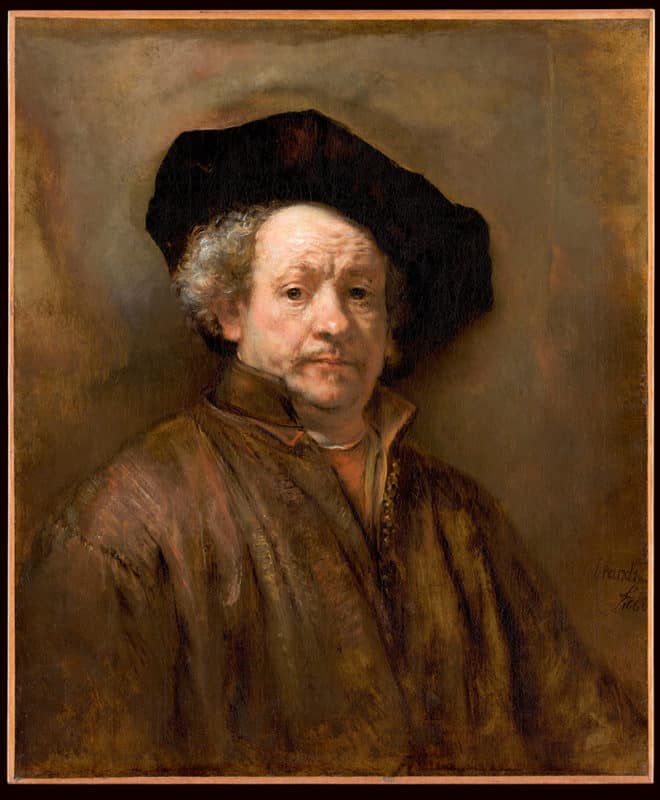
6. Rembrandt Van Rijn

This 17th century Dutch artist is renowned for his oil painting techniques. Rembrandt was born in 1606 in Leiden and trained as a painter with Jacob van Swanenburgh and Pieter Lastman.

Although Rembrandt never travelled abroad, he was influenced by other Dutch artists like Pieter Lastman who had studied in Italy. Rembrandt was adept at painting a wide range of subjects, including self-portraits, landscapes, biblical scenes and animals.

He was particularly interested in the effect of light. Rembrandt painted in a highly realistic style that was unusual for the day, as seen in his Self-Portrait below.

Famous Rembrandt paintings: The Night Watch, The Return of the Prodigal Son, Self-Portrait.

Self Portrait by Rembrandt van RijnSelf Portrait by Rembrandt van Rijn
Self Portrait by Rembrandt van Rijn

5. Claude Monet

The iconic French Impressionist painter Claude Monet was a proponent of open-air landscape painting. After a period living in London where he made his famous Impression: Soleil Levant artwork, Monet returned to France.

Monet was inspired by Japanese art and planted an Asian style garden at Giverny. He painted the flowers at different times of the day, fascinated by the reflected light.

His Water Lilies series includes around 250 oil paintings. Monet designed a special room for the series at the Orangerie Museum.

He offered the series to the French State the day after the Armistice of 1918 as a symbol of peace. The artworks were installed in the museum a few months after Monet’s death.

Famous Monet paintings: Poppies, Impression: Sunrise, The Waterlily Pond, Woman with a Parasol

Water Lilies by Claude Monet at The Art Institute of ChicagoWater Lilies by Claude Monet at The Art Institute of Chicago
©Art Institute of Chicago – Water Lilies by Claude Monet

4. Michelangelo

This highly influential Italian artist was a Renaissance architect, sculptor, poet and painter. After training as a sculptor, he carved the ‘Pietà’ for St Peter’s Cathedral in Rome.

Michelangelo painted the extraordinary Sistine Chapel ceiling frescoes between 1508 and 1512. A triumph of the Mannerist style, they combine idealization of the human form with unnaturalistic use of color.

The artist is also known for his marble sculpture of the biblical figure David. Created from 1501 to 1504, this 5.17metre statue can be viewed at the Accademia Gallery of Florence. A copy is situated in Piazza della Signoria.

Famous Michelangelo paintings: Sistine Chapel ceiling, The Creation of Adam, The Last Judgment – a fresco painting in the Sistine Chapel.

The Creation of Adam by Michelangelo, Wikimedia

3. Pablo Picasso

One of the most famous painters in the world, Pablo Picasso was born in Spain yet lived most of his life in France. A talented ceramicist, printmaker, theater designer and sculptor as well as a painter, Picasso has had a lasting impact on contemporary art.

He created over 20,000 artworks, costumes, ceramics and prints. Picasso’s famous Blue Period is thought to have been inspired by the suicide of his friend Casagemas. His Rose Period came next, with circus performers featuring prominently.

Picasso was also influenced by African and Oceanic art, particularly in his seminal artwork, Les Demoiselles d’Avignon. Together with the artist Georges Braque, he developed the principles of Analytic Cubism.

Famous Picasso paintings: Guernica, Child with a Dove, Les Demoiselles d’Avignon

Les Demoiselles D'Avignon by Pablo Picasso, Museum of Modern Art, New York CityLes Demoiselles D'Avignon by Pablo Picasso, Museum of Modern Art, New York City
Les Demoiselles D’Avignon by Pablo Picasso, Museum of Modern Art, New York City

2. Leonardo da Vinci

The celebrated Italian polymath created some of the most famous paintings of all time. A talented draughtsman, architect, sculptor, engineer and artist, Leonardo was also an inventor.

He imagined all manner of innovations, such as a helicopter, calculator, parachute and diving suit. You can see the models for many of these inventions at Le Clos Lucé, the beautiful French chateau where Leonardo lived for several years.

One of the most famous sketch artists ever, Leonardo filled notebooks with his drawings. The Vitruvian Man is an ink on paper sketch that depicts perfect human body proportions.

Leonardo perfected the sfumato technique of painting. Translating as “soft” or “blurred”, this painting style creates subtle blending without harsh contours. The technique was used to great effect in Leonardo’s painting of the Mona Lisa.

Famous Leonardo paintings: Mona Lisa (also known as La Gioconda), The Last Supper, Lady with an Ermine, Virgin of the Rocks.

Mona Lisa by Leonardo da VinciMona Lisa by Leonardo da Vinci
Mona Lisa by Leonardo da Vinci, Wikimedia

1. Vincent Van Gogh

This Dutch Post-Impressionist artist is considered to be one of the greatest painters of all time. Born in 1853, Van Gogh created around 2,100 artworks despite having had no formal training.

Vincent originally planned to become a pastor and took up painting when he was sacked, aged 27. He was inspired by Japanese woodblock prints as well as Dutch genre artworks.

Van Gogh was a prolific artist who produced 860 paintings, which did not sell well during his lifetime. He famously cut off his own ear after an argument with the artist Paul Gaugin.

The artist’s iconic Starry Night painting was made in the Saint-Paul-de-Mausole psychiatric hospital. Unfortunately, this famous Post-Impressionist painter took his own life aged only 37.

Famous Van Gogh paintings: The Starry Night, Bedroom in Arles, Irises, Self-Portrait with Bandaged Ear, The Night Café.

Self-Portrait with Bandaged Ear by Van GoghSelf-Portrait with Bandaged Ear by Van Gogh
Self-Portrait with Bandaged Ear by Van Gogh

To recap, these are some of the most famous painters in the world:

Vincent Van Gogh

Leonardo da Vinci

Pablo Picasso

Michelangelo

Claude Monet

Rembrandt Van Rijn

Frida Kahlo

Gustav Klimt

Salvador Dali

Edvard Munch

Johannes Vermeer

Jackson Pollock

Peter Paul Rubens

Pierre-Auguste Renoir

Henri Matisse

James Mcneill Whistler

Pieter Bruegel

Edouard Manet

Sandro Botticelli

Jacques-Louis David

Grant Wood

Andy Warhol

René Magritte

Final Thoughts on the Most Famous Painters in the World

Some of the most famous painters in the world have used their art to make powerful statements and document history.Their skill with a brush has brought joy to many and will continue to be treasured by future generations.

Keep an open mind when viewing works of art and you might just find that there’s more to them than meets the eye. These world-renowned painters have made a significant impact on the art community and will continue to be studied for years to come. If you found this article interesting, make sure to check out our other art history articles!

You might also enjoy:

Like this list of the most famous painters? Pin for later or share with friends.

The Most Famous Painters in the World | Iconic artists and their artworksThe Most Famous Painters in the World | Iconic artists and their artworks
The Most Famous Painters in the World

Sharing is caring!


Source link

Taylor Swift Sends Christmas Gift to Teenage Hospital Patient

    0
    Taylor Swift Sends Christmas Gift to Teenage Hospital Patient


    Taylor Swift knows how to put smiles on her fans’ faces — but one “Swiftie” is really feeling the love — receiving a surprise holiday gift from the pop superstar.

    As everyone knows, Taylor visited Children’s Mercy Hospital in Kansas City, Missouri, earlier this month, spending the day with young patients who, of course, are fans of her and her music.

    Waiting for your permission to load TikTok Post.

    In a newly uploaded video to TikTok, a fan named Naya was impressed by Taylor’s stylish outfit during her visit, calling it “tea.” Taylor responded that Naya‘s “tea” comment made her day as she autographed an Eras Tour book for the teen four days after her final show in Canada.

    Fast forward to Sunday … Naya posted her own TikTok video, revealing that Taylor sent her the perfect Christmas gift. And you probably guessed by now what it was. Yup, it was the same $4,500 get up Taylor wore when she visited Naya in the hospital — a Miu Miu pleated skirt and button-down top.

    Waiting for your permission to load TikTok Post.

    Naya also captioned her video, writing, “She [Taylor] is soo amazing im soo blessed🥺, i love you Tay Swizzle you’re literally the Best💗💗.”

    We’ll have to see if Taylor has anymore surprises for her gazillion other fans this holiday season.


    Source link

    Two California Men Indicted for $22 Million NFT “Rug Pull” Schemes   – Cryptoflies News

    0
    Two California Men Indicted for  Million NFT “Rug Pull” Schemes   – Cryptoflies News


    3

    Two 23-year-old men from Southern California, Gabriel Hay from Beverly Hills and Gavin Mayo from Thousand Oaks, have been indicted for allegedly defrauding investors of over $22 million through multiple non-fungible token (NFT) “rug pull” schemes. 

    The term “rug pull” refers to promoting a project to attract investments, only for the creators to abandon it and disappear with the funds.  

    Between May 2021 and May 2024, Hay and Mayo launched several NFT projects, taking money from investors without fulfilling their promises. 

    One notable project, Vault of Gems, involved 5,000 NFTs minted on the Ethereum blockchain. The project’s social media presence ended in November 2021, with many comments from users alleging they had been scammed.  

    The Vault of Gems project was only one of many. Other ventures linked to the pair include Faceless, Sinful Souls, Clout Coin, Dirty Dogs, Uncovered, MoonPortal, Squiggles, and Roost Coin. In total, these schemes allowed them to amass $22.4 million from unsuspecting investors.  

    You Might Be Interested In

    Now, both Hay and Mayo face charges, including one count of conspiracy to commit wire fraud, two counts of wire fraud, and one count of stalking. If convicted, they could each face up to 20 years in prison for the conspiracy and wire fraud charges and an additional five years for stalking.  

    This case is part of a growing trend in NFT-related scams. Data from DappRadar shows that losses from crypto-related frauds, hacks, and scams increased by 5% in 2024, totaling $430 million.  

    Other recent NFT fraud cases highlight the widespread issue. In June, three UK nationals behind the “Evolved Apes” NFT collection were charged in the US with wire fraud and money laundering. 

    Similarly, in January, a US Air Force analyst, Devin Alan Rhoden, was accused of orchestrating a “rug pull” with the UndeadApes project, resulting in charges of money laundering and false statements.  


    Source link

    Top NFT Collections – December 23, 2024 | NFT CULTURE | NFT News | Web3 Culture | NFTs & Crypto Art

    0
    Top NFT Collections – December 23, 2024 | NFT CULTURE | NFT News | Web3 Culture | NFTs & Crypto Art


    Top NFT Collections (Last 24h)

    Here are the hottest NFT Collections of the day.

    Rank

    Name
    Volume
    Transactions
    Chains
    URL

    1

    Kaito Genesis
    1,464.95 ETH
    1136
    ethereum
    View

    2
    Azuki
    Azuki
    662.46 ETH
    58
    ethereum
    View

    3
    Doodles
    Doodles
    496.84 ETH
    76
    ethereum
    View

    4
    Pudgy Penguins
    Pudgy Penguins
    455.35 ETH
    25
    ethereum
    View

    5
    Jirasan
    Jirasan
    261.84 ETH
    303
    ethereum
    View

    6
    Sappy Seals
    Sappy Seals
    220.24 ETH
    137
    ethereum
    View

    7
    Azuki Elementals
    Azuki Elementals
    218.99 ETH
    130
    ethereum
    View

    8
    Bored Ape Yacht Club
    Bored Ape Yacht Club
    182.10 ETH
    10
    ethereum
    View

    9
    CryptoPunks
    CryptoPunks
    176.98 ETH
    4
    ethereum
    View

    10
    Lil Pudgys
    Lil Pudgys
    163.23 ETH
    86
    ethereum
    View

    The post Top NFT Collections – December 23, 2024 appeared first on NFT CULTURE.


    Source link

    Get Ready for the Farm Frens Airdrop: What You Need to Know

    0
    Get Ready for the Farm Frens Airdrop: What You Need to Know


    Farm Frens is a free to play web3 farming game on Telegram. It’s part of the Everseed universe, bringing you fun, rewards and crypto engagement. If you want to mix up your daily mobile gaming or been searching for the next big airdrop in the crypto space, then Farm Frens might be what you need. Below we’ll go into what makes the Farm Frens airdrop worth checking out, how to join and why everyone is so hyped about this game.

    A Farming Game with a Twist

    Farm Frens looks like a simple farming sim at first, but beneath the cute art style is a full-blown blockchain project. Developed by Amihan Entertainment the same minds behind Everseed, Farm Frens is designed to expand the Everseed IP to a wider audience, bringing its characters and charm to more people. What sets it apart from other games is its focus on gamification and decentralized finance (DeFi). While you’re planting crops and upgrading items to grow your farm, you’ll also be earning in-game coins and tokens that have real value.

    Because of its easy-to-use nature, the game is open to everyone from curious newbies to seasoned crypto veterans. Even if you’ve never set foot in the blockchain space you can start a farm by tapping a link in a Telegram channel. On the other hand, if you have experience with wallets and NFTs, the game has many ways to engage deeper through features that reward you for holding specific Everseed NFTs and completing certain milestones.

    How to Get Started

    To join the Farm Frens airdrop you’ll want to join the game through the official Telegram link. Once in you’ll be greeted by cute graphics and silly scenarios to keep it fun. You’ll also find ways to upgrade your Frens, chests and plots of land.

    But it’s not just about farming. One of the main ways to earn rewards is by completing daily quests and social-based achievements. These quests might be planting a certain number of seeds, visiting a friend’s farm or teaming up to do a bigger task that requires group participation. Each task you complete adds to your total earned assets, and some of these assets count towards your airdrop allocation, so you’ll want to stay active.

    Farm Frens and Everseed

    What makes Farm Frens even more cool is its connection to Everseed, a separate game universe that shares lore, characters and NFTs. If you hold Everseed Ranger, Sprout or Diddit NFTs you can potentially increase the amount of tokens you’ll receive in the Farm Frens airdrop. This creates a nice synergy: by playing both Everseed and Farm Frens you’ll get more rewards. It’s an ecosystem that rewards multi-game players who collect NFTs or check in on their farms regularly.

    Airdrop Details

    When it comes to the Farm Frens airdrop itself here are a few things to know. The tokens you’ll get will be launched on Ethereum’s Layer-2 network Base in January 2025. This will ensure smooth transactions and lower fees so everyone can enjoy the experience. The official token launch date is public but the exact airdrop date will be a secret so there will be an element of surprise.

    As for how much you’ll earn it all depends on how many in-game items you collect. Every Nut, Dirt and Dung you get will add to your airdrop allocation. Holding Everseed NFTs will also boost your rewards. By connecting your wallet through the Farm Frens Telegram mini app you’ll qualify for the airdrop and your in-game progress will count towards the tokens.

    Farm Frens Airdrop

    You might be thinking: why invest time and energy into a farming game on Telegram? The best reason is its simple and rewarding approach to blockchain gaming. Many play to earn games require big investments or complicated setups but Farm Frens removes a lot of that friction by allowing you to play (and earn) for free. Even if you’re not a hardcore gamer you can collect tokens by just logging in, completing daily quests and recruiting friends to join in on the fun.

    Plus it’s easy to get started. If you’ve ever swiped through a casual mobile game you’ll have no problem with Farm Frens. You don’t even need a fancy graphics card or extra software just Telegram on your phone or desktop. As you collect more items and get attached to your digital land you might find yourself part of a community built around DeFi fun.

    Conclusion

    If you want to try something new in the crypto space the Farm Frens airdrop is a good starting point. With its silly style, daily surprises and real token rewards this Telegram game is a nice balance of fun and earning. Whether you want to diversify your crypto, support the Everseed ecosystem or just have fun farming life Farm Frens has something for everyone. Join the Telegram bot, do the daily tasks and keep an eye on your crops – before you know it you’ll be celebrating that airdrop.

    Editor’s note: This article was written with the assistance of AI. Edited and fact-checked by Owen Skelton.

    Owen Skelton

    Owen Skelton is an experienced journalist and editor with a passion for delivering insightful and engaging content. As Editor-in-Chief, he leads a talented team of writers and editors to create compelling stories that inform and inspire.

    View all posts


    Source link

    Popular Posts

    My Favorites

    Klippy AI Creator Program: Turning Prompts into On-Chain Creations

    0
    In every wave of technology, there are moments when imagination feels like it is just one step away from reality. We saw it...