Home Blog Page 1382

Best Chanel Bags: Timeless Icons Every Fashionista Dreams Of

0
Best Chanel Bags: Timeless Icons Every Fashionista Dreams Of


January 20, 2025


Introduction

Regarding timeless luxury, Chanel is a name that resonates with elegance, sophistication, and unparalleled craftsmanship. A best Chanel bags is more than just an accessory it’s a symbol of status, style, and legacy. Each creation tells a unique story and holds an irreplaceable charm, from the iconic Chanel Classic Flap Bag to the innovative Chanel Boy Bag.

Whether you’re a seasoned collector or a first-time buyer, this list of the top 10 Chanel bags is your ultimate guide to investing in fashionable and timeless pieces. Let’s dive into the world of Chanel and discover the must-have bags for your collection.

1) 11.12 The Classic Handbag

11.12 The-Classic Handbag

The Chanel Classic Handbag is one of the oldest and most famous pieces associated with the fashion house Chanel. This bag was first launched in 1955 and credited to the German-born Coco Chanel; the bag changed the face of fashion for women by blending style with functionality.

The long, slim, rectangular shape, polished leather, and recognizable quilting give it a sensibility of timeless sophistication and contemporaneous appeal. The Chanel Classic comes with a chain-link shoulder strap, which makes it comfortable to wear, and the gold- or silver-colored chain makes it glamorous.

Coming in a number of colors, the classic handbag has not lost its appeal as one important accessory that you will continue to find handy during the day and at night. Whether it’s made of caviar leather or lambskin, the Keepsake Classic Handbag has evolved into a timeless classic accessory that, even after over thirty years, retains its unique character.

This is one of the most loved Chanel bags. Various CEOs, businesswomen, and celebrities can be seen carrying this piece; having a Chanel handbag simply means having good style and taste.

2) Chanel 22

best chanel bags Chanel 22

The Chanel 22 is a modern yet elegant bag that gives a relaxed and opulent vibe to the person who is carrying it. This bag was first revealed in the Spring/Summer 2022 collection, offering equal proportions of luxury and practicality.

Available in supple calfskin leather, the Chanel 22 is rather sleek and functional, well suited for regular outings. It is large but not imposing due to its minimalistic design, which freely communicates volumes without having an overly dramatic appearance. One of its advantages is that the strap is interlaced and can be worn on the shoulder or hand-carried in a variety of ways.

The straightforward black coloring features a large Chanel logo on the front, so it is more minimal and perfect for those who like to follow the policy of less is more.

3) Chanel 2.55

Chanel 2.55

The Chanel 2.55 is one of the most famous bags of the brand and reflects Coco Chanel’s vision of timeless sophistication combined with functionality. Originally launched in February 1955, consequently the name 2.55, this bag had unique functions with eloquent wit.

Designed to be elegant with a diamond-quilted pattern, a double-C clasp, and a chain strap, the 2.55 is just as functional and refined as you think of it. The design was intended to give comfort to women and allow them to free their hands with a decision to wear it over the shoulder, a novelty.

It was first made with lambskin leather or caviar leather as it combines style with functionality. Manufactured in different sizes and colors, it is still a highly prized piece due to its history and classy look. However, for lovers of fashion/history and luxury, the Chanel 2.55 is a piece that embodies the two eras.

4) Chanel 19

best chanel bags Chanel 19

Chanel 19 is the modern reincarnation of the historic collection that has been launched in 2019. Finally, the equally chic Chanel 19 differs from the original CC flap bag. This Chanel bag has a more laid-back effect with its slouchy exterior, and its leather feels buttery smooth. With its large silhouette and relaxed shape, the gold, silver, and ruthenium-colored metal hardware adds a polished touch.

Chanel 19 also boasts a large, quilted pattern and the interplay of chain and leather straps, which at the same time create elegance and usability of the accessory. The bag is available in different sizes and color variations, including fashion-relevant colors in different seasons, hence suitable for most people. The Chanel 19 is a great representation of what modern Chanel is about stylish and comfortable.

5) Boy Chanel

Boy Chanel

The Boy Chanel bag is one of the newest, biggest, and most daringly youthful statements that the brand has made. It started in 2011 to change the regular approach of the brand, and it took its inspiration from dreary, almost military-like aesthetics.

Thinking about the bag’s design, one must emphasize the defined, structured, boxy shape, rigid linear accents, and the clasp. The brand provides the touch of luxury with quilted leather and a touch of edginess with the chain strap. The Boy Chanel is available in several kinds of material: patent leather, lambskin, and tweed, putting its distinctive touch on the bag.

The Boy Chanel comes in different sizes and caters to those who consider themselves the modern enthusiasts of luxury with a touch of rebelliousness. Just like many of the pieces, the bag is as flexible as it is trendy and can be worn during the day or in the evening.

6) Chanel Large Hobo Bag

Chanel Large Hobo Bag

This Chanel bag is made for people who like casual fashion and want to stand out in the crowd. The washed denim look of this bag gives it a bold look. The two front pockets with the Chanel logo make it look elegant and serve the practical purpose as well.

A golden chain is attached to the bag to carry it on your shoulder with ease. This bag comes in blue color with material using washed denim and golden-tone metal. This large hobo bag has enough storage space to carry your everyday essentials. You can carry this bag on a casual sunny day out or for an evening party that requires you to look fancy and elegant.

This bag is everything that Chanel is known for; it is premium, exclusive, and opulent. Hence, if you are someone who likes to try out new things in life when it comes to fashion, you can go with this bag. Due to its unique approach, it’s one of the most talked about and collectible pieces among the fashion enthusiasts.

7) Chanel 22 Small Handbag

Chanel 22 Small Handbag

The Chanel 22 Small Handbag is one of the loveliest products that performs a perfect combination of contemporary elegance and classic appeal. This bag is made from shiny grained calfskin enamel and with such a fine luxurious finish it is a delight with further added durability.

The shape of the bag remains historically significant with golden metal accessories in order to share a luxurious look. The 22 Small Handbag is very constructed, thus it is comfortable in its usability and blends well into the normal circle of the owner’s life, although it will make any look posher. It comes with enough room to accommodate your necessities and comes with a strap which is easily removed for convenience.

This handbag is specifically for those people who like to have a classy bag and do not want to change it in the evening. The development of the premium quality of leather and polished hardware make the Chanel 22 Small Handbag a symbol of aesthetic and, at the same time, reliable accessory for any woman.

Due to its exquisite design and flawless workmanship this purse should become a must-have accessory of every stylish woman who pays much attention to the quality and exclusiveness of her accessories. I just can breath the spirit of Chanel, exquisite timeless luxury, and the simplicity of style.

8) Chanel Small Flap Bag

best chanel bags Chanel Small Flap Bag

The idea behind creating the small flap bag is to create a compact bag that looks sophisticated and classy. The sequins that are used in designing the body of this bag are small and well placed to create an almost three-dimensional look and feel, at the same time giving the most gracious and lively look.

This bag has been designed with premium leather and has that good Chanel quality, backed up by a classic Chanel stitch quilting that gives the bag a tasteful look that is both classy and timeless. The small flap bag also has pockets to increase the convenience that almost create various sections inside a small bag that does not take up much space, which makes it comfortable to carry around.

This chain strap is very elegant, which makes the purse opulent for both shoulder and crossbody. Due to its solid metal look and slimline design, it can easily be worn with anything from casual wear during the day to formal wear at night.

It is a bag that is an important addition to an outfit as it possesses an element of glamour as well as modernity, thus being among the best luxurious chic accessories that one needs for the new year. In simple terms, the Chanel Small Flap Bag is the epitome of elegance on an ornate Chanel two-toned with a pop of fun and modernity.

9) Chanel Popcorn Minaudiere

best chanel bags Chanel Popcorn Minaudiere

The Chanel Popcorn Minaudière is the best example of an extraordinary accessory that reveals the perfect sense of inspiration and innovative vision of the brand. Made out of resin, enamel, and imitation pearls, this minaudière is decorated with a popcorn pattern, which gives this handbag a cheerful and childish note.

Because of its distinctive surface and unique accents, the bag is a stylish and appropriate hand accessory for evening wear. This is also accentuated by a gold-tone metal hardware that gives a very stylish, classy, and luxurious touch.

Designed for any formal events, the Popcorn Minaudière is a transitional style evening bag that does not only serve its primary function but stands out at the same time. Due to its small dimensions and light weight, it is easy to transport, although it has enough pockets when needed to store such items as lipstick, keys, and a credit card.

This particular minaudière may be termed as being innovative to match the Chanel brand personality and is suitable for anyone who loves to wear fashion accessories that are different from the conventional gadgets on the market. The Popcorn Minaudière is a sweet, stylish confection that whisks high fashion into the realm of whimsy, creativity, and luxury.

10) Chanel Clutch

Chanel Clutch

The Chanel clutch in metallic lambskin remains as one of the best clarions of fashion and great craftsmanship of the company. The metallic bags are created using the material soft and fine lambskin, so the radiance of the materials underlines the superior quality of this design.

The silver-tone metal hardware brings another level of sophistication, so all the materials and looks are very luxurious yet alluring. Perfect for the night or any formal occasions, the Chanel clutch is like a small bag with a little room for a phone, makeup, and cards.

Its simple design added the elegant glance that is Chanel, and it is an ideal fashionable accessory that synchronizes both formal evening dresses and casual wear. This material will have a smooth feel, and the characteristic of the lambskin will only add to the feel of the bag, while at the same time, the structure of the bag will be good as well.

This clutch is timeless and elegant, which fits perfectly into any modern and traditional fashion trends that are trending in the market. Great for a gala or just going out, the Chanel Clutch will complement any outfit while enhancing its classy elegance and sophistication.

Q&A Section

Q1: Why is the Chanel Classic Flap Bag so popular?

A: Its timeless design, high-quality craftsmanship, and iconic status make it a wardrobe essential.

Q2: Are Chanel bags a good investment?

A: Yes, Chanel bags often appreciate over time due to their demand and exclusivity.

Q3: What’s the best way to care for a Chanel bag?

A: Store it in its dust bag, avoid direct sunlight, and clean it with a soft cloth regularly.

Conclusion

A Chanel bag is more than a purchase; it’s a piece of art that reflects luxury and individuality. Owning one—or several—of these iconic bags elevates your style and showcases your appreciation for timeless fashion. Whether you’re drawn to the elegance of the Chanel 2.55 or the modern allure of the Chanel Large Hobo Bag, each bag offers a unique statement. Start building your Chanel collection today and experience the magic of owning a true luxury masterpiece.


Source link

Top 10 Blazer Brands In World That Define the Power of Dressing

0
Top 10 Blazer Brands In World That Define the Power of Dressing


January 20, 2025


Blazers have been part of fabulous chic fashion for a long time, they bridge the gap beautifully from formal to modernistic trends. Originating as a structured piece designed for functionality, the blazer has evolved into a versatile wardrobe essential for men and women alike.

They add the needed edge to the business power suit and take on the night’s affair whether it’s dinner out or a restaurant visit for Sunday brunch, because the right blazer just changes your whole look.

Designer brands offer an array of options that can match one’s imagination and choice of blazer style. Designer blazers showcase uniqueness in terms of their flair, craftsmanship, and personality. For men, it is blending structure with suave sophistication, for women, a delicate balance between empowerment and elegance.

Here is a list of the top 10 designer blazers for men and women, representing pieces that not only stand for perfect craftsmanship but also suit various tastes and occasions. From classic silhouettes to modern designs, these luxury blazers promise to be the ultimate investment in style and versatility.

For Men

1. Gucci Single-Breasted Wool Blazer

Gucci Single-Breasted Wool Blazer

Gucci’s wool blazer is a classic piece of sharp tailoring, evoking sophistication. The finest quality wool makes a refined texture and luxurious feel. The single-breasted style is paired with notched lapels and a subtle logo detail on the buttons for understated elegance.

Its versatility makes it perfect to pair with tailored trousers for formal events or dark denim for a polished casual look. Whether you’re navigating a busy workday or attending a stylish evening affair, this blazer ensures you’re impeccably dressed.

The Gucci Single-Breasted Wool Blazer is a quintessence of refined elegance and modern craftsmanship, perfect for the man who values sophistication in his wardrobe. Made from premium-quality wool, this blazer gives a luxurious feel and excellent durability, making it perfect for formal occasions or smart casual ensembles.

The suit is well-tailored to display a clean and sleekly chiseled silhouette fit for its wearer’s stature. Subtle Gucci detailing such as engraved buttons or hidden logos also gives an impression of luxury. Versatility is maintained with colors like navy, black, and charcoal, providing a true all-rounder-styled suit.

2. Tom Ford Shelton Velvet Blazer

top 10 blazer brands in world Tom Ford Shelton Velvet Blazer

Exuding opulence and class, the Tom Ford Shelton Velvet Blazer is a masterpiece of evening wear. It’s made from plush velvet, giving it an air of luxury that is not easily matched. Its structured silhouette and peak lapels give it a bold and elegant touch, while its deep, jewel-toned hues such as burgundy and midnight blue make it a standout choice.

The jacket has impeccable tailoring, which gives a sharp fit and contours the body for a commanding presence. It is suitable for black-tie events or upscale parties, paired with tailored trousers, a crisp dress shirt, and patent leather shoes.

Tom Ford Shelton Velvet Blazer is the epitome of luxury and refinement. Rich velvet stands out in the sumptuous texture and deep, vibrant color options of this blazer. Its sleek single-breasted design with a sharp, tailored fit screams confidence and class. It features a blazer with a unique sheen and opulence.

This makes it an ideal garment for evening events, fine dinners, or any event requiring a little bit of glamour. Its signature Tom Ford details such as sleek satin lapels and polished buttons add an effortless elegance to the wardrobe of a wearer. Available in timeless shades like deep burgundy, midnight blue, and classic black, it offers versatility while maintaining its bold presence.

3. Balmain Double-Breasted Blazer

Balmain Double-Breasted Blazer

The double-breasted Balmain blazer is synonymous with bold, confident style. A structured fit, along with the brand’s gold-tone buttons, creates this military-inspired piece of modern tailoring.

The sharp shoulders and cinched waist give it a very flattering silhouette that makes it perfect for formal events or making a statement at social gatherings. It can be styled with tailored black trousers and sleek leather shoes to give an unforgettable look that exudes charisma.

A combination of classic tailoring with modern sophistication, this blazer is a must-have in any stylish wardrobe. The bold double-breasted design features gold-toned buttons that add to a certain regal flair, creating a sharp, structured silhouette that accentuates the frame of the wearer and builds strength into the shoulders and tailoring to the waist.

Made from luxurious fabrics, this blazer gives off a sense of power and elegance, making it suitable for high-end events, formal occasions, or as a statement in everyday wear. Classic shades such as black, navy, and charcoal make the Balmain Double-Breasted Blazer effortlessly timeless with a contemporary edge.

4. Saint Laurent Classic Tuxedo Jacket

top 10 blazer brands in world Saint Laurent Classic Tuxedo Jacket

Classic Tuxedo Jacket by Saint Laurent redefines black-tie elegance. The clean-lined, satin-lapel piece in a luxurious wool finish tells everything through its minimalist design. Whether with classic tuxedo trousers or dressed over dark denim for that contemporary look, you can always be the epitome of style at any event.

The Saint Laurent Classic Tuxedo Jacket is known for embodying Parisian chic with elegance and flawless tailoring. Constructed from luxurious wool, this piece of jacket showcases a style that has all the class to be taken in any black-tie or even formal occasion.

Its slim fit also accentuates the silhouette of its wearer while the satin peak lapel and single button closure stand boldly against the matte, sharp, and polished finish. The classic black or deep midnight blue tuxedo jacket is made to make a statement while providing unmatched versatility for those who seek both refinement and edge in their wardrobe.

The Saint Laurent Classic Tuxedo Jacket is ideal for evening affairs or upscale celebrations, making it the epitome of sophistication with a contemporary twist.

5. Armani Collezioni Textured Blazer

Armani Collezioni Textured Blazer

Known as a modern twist on the traditional, the Armani Collezioni Textured Blazer offers a depth of textured fabric. With lightweight construction and tailoring expertise, this blazer goes from day to night effortlessly. You can wear it with a tailored shirt and chinos for an office look or a turtleneck and loafers for a dinner date.

The Armani Collezioni Textured Blazer is the perfect mix of modern sophistication and refined craftsmanship. With a premium construction aspect, this blazer showcases the quality of high-class textured fabric with unique visual effects.

Tailored into perfection, the fit presents a sharp, rather impressive look to the silhouette, thus providing more than the features of an ordinary jacket, it adds an element of interest to the look. Showcasing a single-breasted notch lapel, this blazer exudes understated elegance for both formal and semi-formal occasions.

Armani Collezioni Textured Blazer is an ultimate classic choice in navy, gray, and charcoal colors which gives a refined luxury in any modern wardrobe, apt for those who want classic yet contemporary style. 

For Women

6. Alexander McQueen Peplum Blazer

top 10 blazer brands in world Alexander McQueen Peplum Blazer

McQueen Peplum Blazer is a sharp-tailored feminine blazer in the form of structured shoulders and a nipped waist completed with a dramatic peplum hem, thus portraying a silhouette that reflects both power and elegance.

Produced in luxurious fabrics, Alexander McQueen’s Peplum Blazer is the appropriate event attire for presentations or fine dinners. Pair it with heels for a more elegant look, team it with leather pants and discover this edgier look on its own.

This blazer by Alexander McQueen is for women who know how to flaunt structured femininity, combining sharp tailoring with bold, sculptural elements. Crafted from high-quality wool and blended fabrics, this blazer offers a luxurious feel while maintaining a commanding presence. It has tiny yet particular Alexander McQueen details statement buttons or sharp seaming that breathe modernity into this blazer.

The perfect peplum blazer is perfect for an evening event or formal occasion, its sleekness is also suitable for an elegant office look. Tailored in magnificent colors like black, navy, or deep jewel tones, the peplum blazer puts some high-fashion drama into any wardrobe, making it a perfect statement piece for the modern woman. 

7. Chanel Tweed Blazer

Chanel Tweed Blazer

Chanel Tweed Blazer is a wardrobe icon and a symbol of timelessness. Made of the brand’s signature tweed, the intricate detailing, chain trims, and structured yet feminine silhouette make it perfect to lift any casual outfit or accompany the most formal ensemble. The Chanel Tweed Blazer is an investment in style and heritage beyond trends, reflecting Chanel’s tradition of sophisticated style.

The Chanel Tweed Blazer is an icon of elegance and sophistication, epitomizing the brand’s heritage of luxury craftsmanship. Made from Chanel’s signature tweed fabric, this blazer exudes classic charm with its textured finish and meticulous attention to detail.

Featuring a tailored silhouette, it strikes the perfect balance between structured refinement and effortless chic. Iconic elements such as gold or pearl-accented buttons, chain detailing along the hem, and a cropped or hip-length cut make this blazer instantly recognizable.

8. Stella McCartney Oversized Blazer

Stella McCartney Oversized Blazer

The Stella McCartney Oversized Blazer redefines modern tailoring with a relaxed yet polished aesthetic that exudes effortless sophistication. Crafted from eco-conscious materials in line with the brand’s sustainable ethos, this blazer combines luxury with a commitment to ethical fashion. Its oversized silhouette offers a contemporary twist on classic tailoring, featuring dropped shoulders and a slightly boxy fit that makes it a statement piece.

The blazer’s minimalist design is elevated by thoughtful details such as peak lapels, welt pockets, and a single-breasted front. Its versatile cut allows for layering over both formal and casual outfits, making it a wardrobe essential for the modern woman.

Whether paired with tailored trousers for a power suit look or thrown over jeans and a turtleneck for a chic off-duty style, the Stella McCartney Oversized Blazer ensures effortless sophistication. Available in timeless shades like black, camel, and neutral tones, it is perfect for those seeking a blend of contemporary design and timeless appeal.

9. Versace Baroque Print Blazer

top 10 blazer brands in world Versace Baroque Print Blazer

The Versace Baroque Print Blazer is a bold statement piece that embodies the opulence and extravagance synonymous with the Versace brand. Crafted from high-quality fabrics, this blazer features the iconic Baroque print, showcasing intricate gold swirls and motifs against a rich backdrop, often in black or jewel tones.

Its tailored silhouette combines classic elements, such as peak lapels and structured shoulders, with the brand’s signature flair for dramatic design.

This blazer is perfect for those who want to stand out, whether at a high-profile event, a glamorous party, or a fashion-forward gathering. The vibrant print makes it a versatile choice, easily paired with sleek black trousers for a polished look or styled with matching printed pieces for a daring ensemble. Finished with luxurious details like gold-toned buttons and satin accents, the Versace Baroque Print Blazer is a true symbol of bold elegance and modern luxury.

10. Prada Double-Breasted Blazer

Prada Double-Breasted Blazer

The Prada Double-Breasted Blazer is a sophisticated blend of modern minimalism and classic tailoring, showcasing Prada’s impeccable craftsmanship and eye for detail. Crafted from high-quality materials, such as virgin wool or blended fabrics, this blazer offers a sleek and luxurious feel. The double-breasted design, featuring sharp peak lapels and signature Prada buttons, creates a structured silhouette that exudes power and elegance.

Tailored for a flattering fit, this blazer emphasizes clean lines and a contemporary aesthetic while maintaining timeless appeal. Its versatility makes it ideal for formal occasions, professional settings, or smart-casual ensembles.

Double-Breasted Blazer effortlessly elevates any wardrobe and is available in iconic Prada hues like black, navy, and neutral tones. Whether styled with tailored trousers or layered over a dress, this blazer is a perfect embodiment of Prada’s modern luxury ethos.

Investing in a designer blazer is a step towards a timelessly great wardrobe. Every blazer on this list offers a unique blend of craftsmanship, design, and versatility, making it your go-to for a hundred different occasions. Whether you’re dressing to impress at a formal event, you need a touch of luxury in your everyday attire, or you’re making a statement with fashion, these blazers deliver on all fronts.

Incorporate one of these beautiful designs in your wardrobe, and you are embracing timeless style and celebrating artistry and innovation in luxury fashion. Let these blazers inspire you to express yourself while enjoying the unmatched elegance that they bring to every look.

FAQs

1. What makes designer blazers worth the investment?

Designer blazers are crafted from premium materials with meticulous attention to detail, offering superior fit, durability, and timeless style. They also often include unique design elements and brand-specific craftsmanship, making them standout pieces in your wardrobe.

2. How do I choose the right blazer for my body type?

Opt for tailored fits that enhance your silhouette. Men should focus on shoulder fit and sleeve length, while women can choose styles like peplum for curves or oversized blazers for a modern look. Visiting a store for proper measurements or consulting size guides online can help.

3. Are these blazers suitable for both formal and casual occasions?

Yes, most designer blazers are versatile. Pair them with trousers and dress shoes for formal events or with jeans and sneakers for a smart-casual vibe. Each blazer mentioned in the blog includes styling tips for both occasions.


Source link

Trump-Linked DeFi Venture Buys $48M in ETH as Son Eric Drops Hint – Decrypt

0
Trump-Linked DeFi Venture Buys M in ETH as Son Eric Drops Hint – Decrypt


World Liberty Financial (WLF) has scooped up $48 million worth of Ethereum over an eight-hour buying spree, stretching from Sunday afternoon to late evening.

The purchases come as the Trump family has rocked the crypto industry with consecutive meme coin launches over the weekend.

The platform purchased 14,403 ETH at an average price of roughly $3,300, data from Arkham Intelligence shows. This brings the Trump-linked total holdings in ETH to 28,612, worth approximately $109 million at current prices.

“Wait until you see what they do tomorrow,” Eric Trump posted on X, tagging the project’s account after the initial transactions surfaced.

Further details on what’s expected were not provided. Decrypt has reached out to the project to learn more.

WLF’s accumulation follows the project’s clarification last Tuesday, when it moved approximately $60 million in assets, writing on X that this was part of the venture’s routine “treasury management” for its operations.

This involves “payment of fees and expenses” and “working capital requirements,” the project explained, as speculations of its trading activity began circulating on social media.

“The timing is notable given recent Trump-related token activity on Solana,” Min Jung, an analyst at Presto Research, told Decrypt.

Expanding on that point, WLF “appears to be acting more like a fund than a DeFi or DEX-style protocol,” Jung said. “The size and timing of these purchases suggest preparation for a significant market move or platform upgrade.”

Minutes after initial tracking done by Decrypt, WLF stated on X that it has “sold 20%” of its token supply. Citing “massive demand and overwhelming interest,” WLF confirmed that it has decided to open an “additional block of 5% of token supply.”

Total holdings across ETH, USDC, USDT, and several other assets from the WLF tracker on Arkham now show that the figure has spiked from $187 million to $235 million at press time.

Trump effect

After President-elect Donald Trump’s victory rally in Washington, DC, a Solana-based meme coin linked to Melania Trump was launched on Sunday afternoon.

Hours before the Melania Trump meme coin launched, Donald Trump Jr. claimed on X that his family was “extremely proud” of what they have continued “to accomplish in crypto,” tagging World Liberty Financial and the ticker for his father’s official Trump meme coin.

World Liberty Financial did not immediately respond to requests for comment about the latest purchases, the token sales, or Eric Trump’s teased announcement.

This story is developing and will be updated as more information becomes available.

Edited by Sebastian Sinclair

Daily Debrief Newsletter

Start every day with the top news stories right now, plus original features, a podcast, videos and more.


Source link

Tiffany Trump Hottest Shots on the Eve of the Inauguration

    0
    Tiffany Trump Hottest Shots on the Eve of the Inauguration


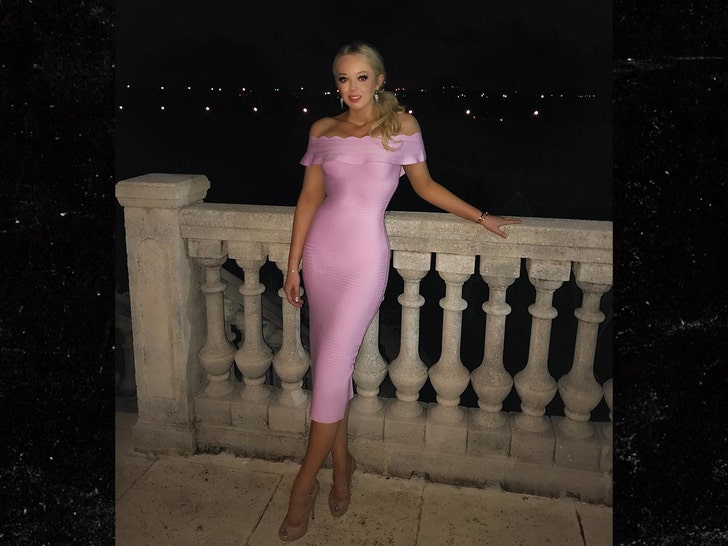
    Tiffany Trump’s got a lot to celebrate this weekend … ’cause her father Donald Trump is heading back into office — and, we’ve got her hottest shots to commemorate the monumental moment.

    Tiffany — Trump’s fourth daughter who he shares with television personality Marla Maples — is active on social media … posting a tons of pics from the beach or lounging around the pool.

    Tiffany Trump Hot Shots

    The 31-year-old daughter of DJT shared this photo from a beach chair … cross-legged and smiling for the camera in a one-piece swimsuit.

    She also showed off her love to the good old U.S. of A in one snap … wearing an American flag bikini top at what looks like a Fourth of July party.

    Tiffany Trump Hot Shots

    TT’s no stranger to a cocktail dress either … dressing up numerous big events over the year in stylish dresses like this black one she’s sporting here.

    Tiffany — who is married to Michael Boulos — will soon welcome a new addition to her family too … ’cause her dad let slip a couple months ago that’s she expecting her first child.

    Tiffany Trump Hot Shots

    Before she gets to celebrate the birth of her kiddo, she gets to enjoy a big party to celebrate her dad’s second term.


    Source link

    Dwayne Johnson’s Latest Makeover Goes Viral On Instagram

      0
      Dwayne Johnson’s Latest Makeover Goes Viral On Instagram


      Dwayne Johnson is embracing fatherhood with a splash of glam, thanks to his daughters’ creative touch.

      The “Moana” star recently shared a hilarious and heartwarming moment on Instagram, revealing a colorful makeover session courtesy of his two youngest daughters, Jasmine, 9, and Tiana, 6.

      In an Instagram reel posted on Saturday, January 18, Dwayne Johnson gave fans a peek into the lively antics in his household.

      Article continues below advertisement

      Dwayne Johnson Rocks the Glam Game

      Instagram | Dwayne Johnson

      The video showcased the actor covered in bright makeup, courtesy of his “two tornadoes,” as he affectionately calls his daughters.

      “What started off with my two tornadoes, Jazzy and Tia, asking, ‘Daddy, can we just put some eyeshadow on you?’ and me saying, ‘Yes, but make it quick and make it cool, because I gotta go to the gym’…#papabearduties,” Johnson captioned the post.

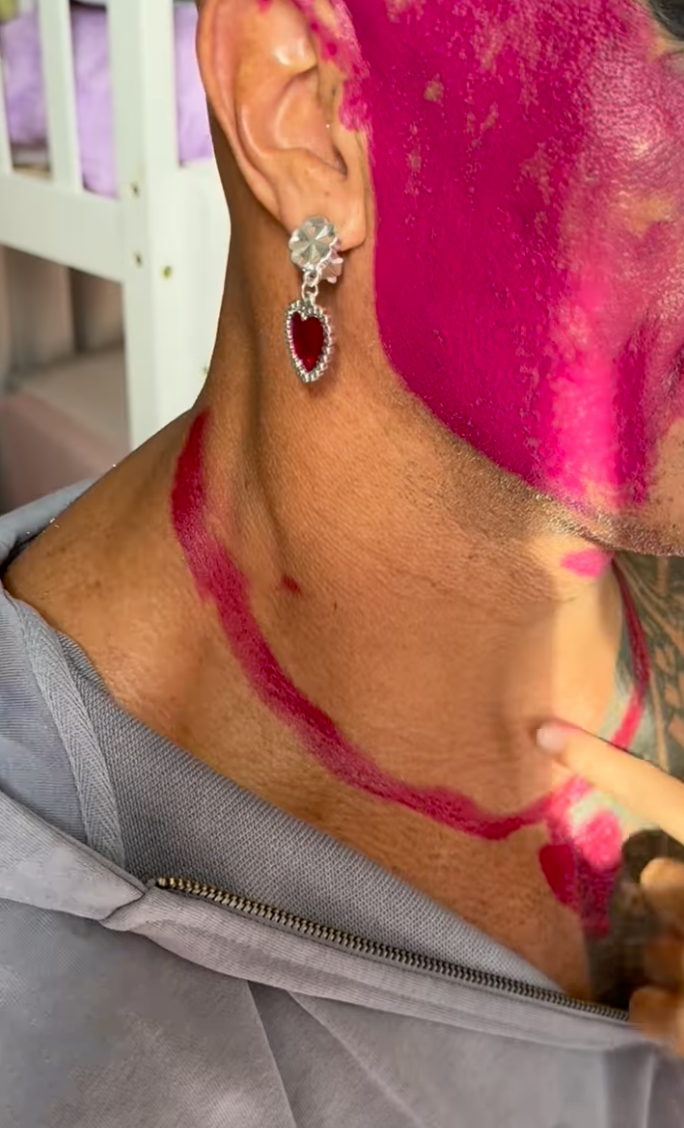
      The clip captured the chaos of the makeover, with half of Johnson’s face painted in bright pink lipstick, while the rest of his nose and eyes were adorned with smeared makeup. Stickers and a broken piece of lipstick crowned his bald head, while one daughter gleefully drew a lipstick “necklace” around his neck.

      Article continues below advertisement

      Dwayne Johnson Embraces Makeup in Latest Video

      Set to Simon & Garfunkel’s iconic “The Sound of Silence,” the video hilariously showcased Johnson’s stone-faced expression with his daughters’ laughter as they unleashed their artistic flair. The clip ended with the actor staring at the camera, frowning — a face every parent can relate to when their little ones take over.

      But beneath the comedic tone, Johnson’s caption revealed his sentimental side. “Hey, I know they won’t always be little or prefer hanging out with Daddy when they’re older, but they’ll always be my baby girls, so I’ll take this abuse all day long — bring it on [laughing face emoji],” he wrote.

      Article continues below advertisement

      In the comment section, Johnson further joked about the “disrespect” his daughters showed him during the makeover: “The disrespect of breaking lipstick on my head and then painting it with nail polish.”

      Article continues below advertisement

      Dwayne Johnson’s Bold Beauty Moment Leaves Fans in Awe on Instagram

      Dwayne Johnson gets a makeover
      Instagram | Dwayne Johnson

      Fans instantly flooded the comments section, with one user calling The Rock “Father of the year.”

      Another chimed in, “Gotta love Dad life,” and a third wrote, “Dwayne being a dad is the best thing ever.”

      Someone else commented, “I love the breaking of the lipstick on your head.”

      Meanwhile, an Instagram user wrote, “Oh my goodness, this is hilarious.”

      Article continues below advertisement

      Dwayne ‘The Rock’ Johnson And Daughter Share Sweet Red Carpet Moment At The 2025 Golden Globes

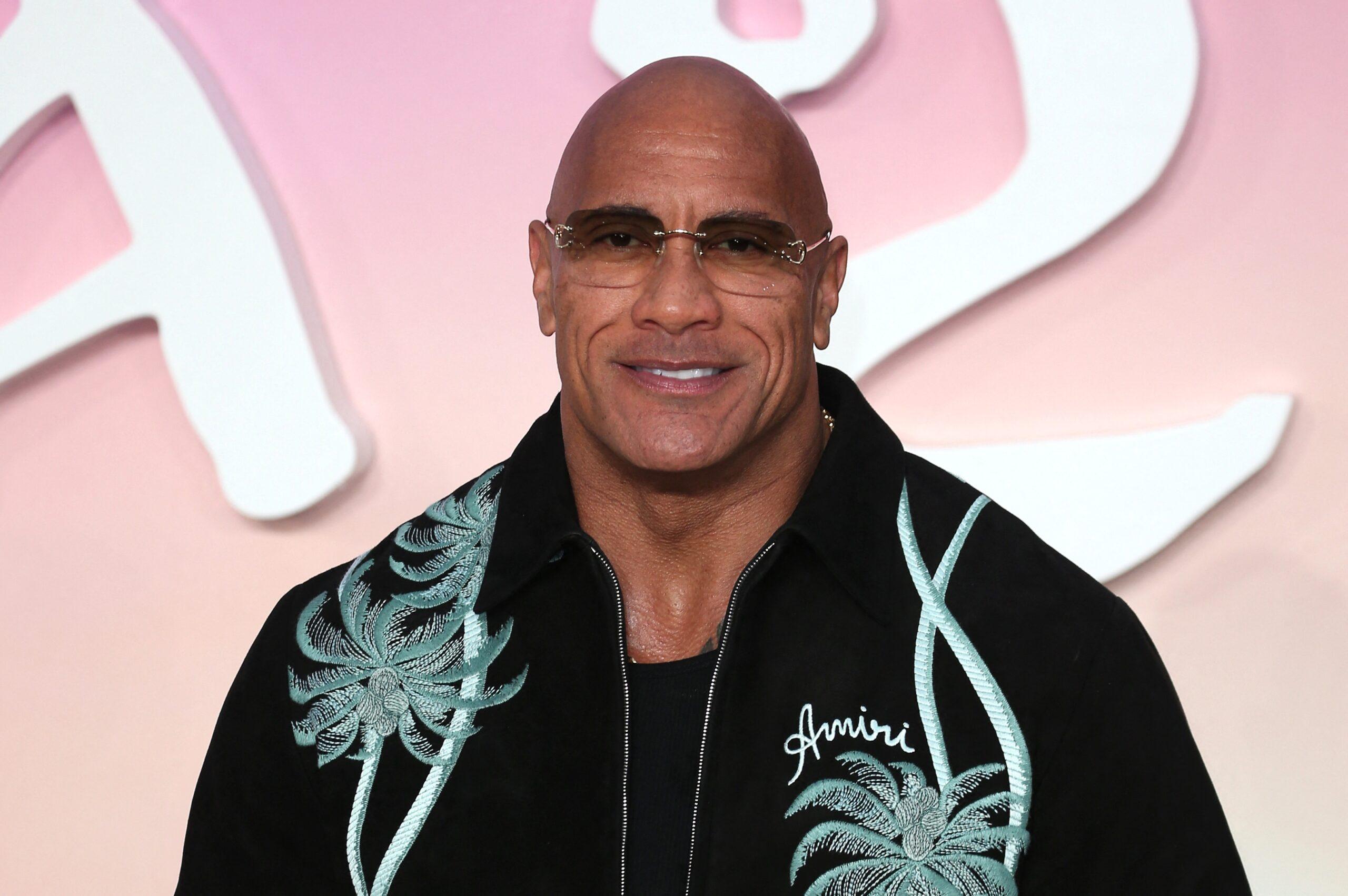
      Dwayne Johnson at "Moana 2" UK Premiere .
      Fred Duval/MEGA

      Dwayne “The Rock” Johnson proved once again that he’s not just a Hollywood icon but also a dedicated dad as he stepped onto the red carpet at the 2025 Golden Globes with his eldest daughter, Simone Johnson, by his side. The father-daughter duo shared a memorable evening at the prestigious event in Beverly Hills on January 5.

      But while their bond is strong, Simone revealed there are limits to their adventurous aspirations. During a chat with Zuri Hall on “Live From E!: Golden Globes”, the 23-year-old dismissed the idea of skydiving with her dad, laughing, “Skydiving might be a bit much.” Her comment prompted Johnson, ever the entertainer, to jokingly counter, “Let’s start with tequila.”

      Simone, who Johnson shares with his ex-wife and business partner Dany Garcia, admitted she might be open to trying skydiving under one condition: “Let’s do it,” she quipped. “Never say never.”

      Article continues below advertisement

      Celebrating Cultural Pride Through ‘Moana’

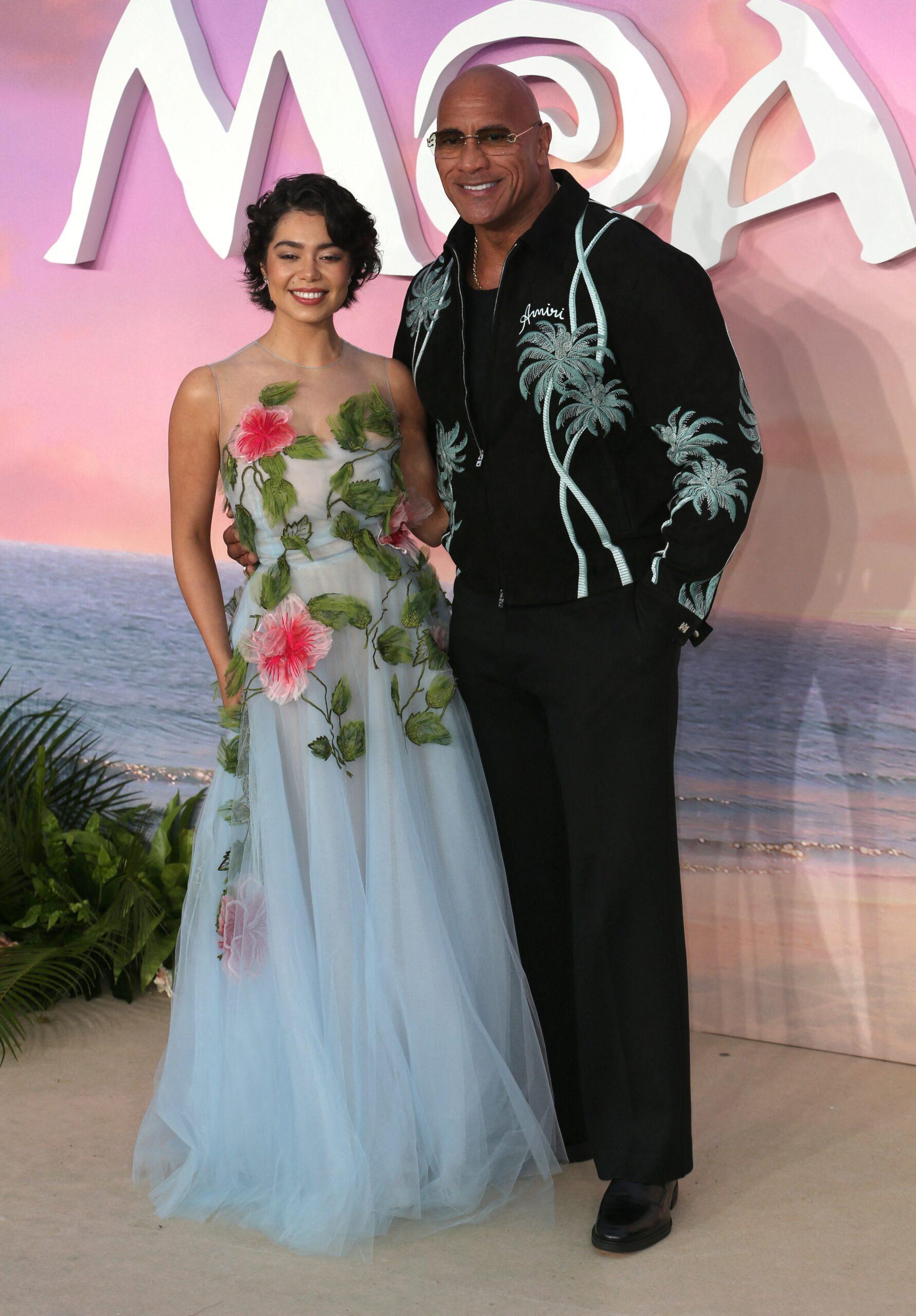
      Auli'i Cravalho and Dwayne Johnson at Moana 2 premiere
      Fred Duval/MEGA

      The Golden Globes marked yet another milestone for Johnson, whose latest success, “Moana 2,” continues to resonate with audiences worldwide. The actor expressed gratitude for the movie’s impact, especially in showcasing Polynesian culture.

      “The thing about ‘Moana’—and I think the success of ‘Moana’—is this global embrace of our Polynesian culture,” Dwayne said, reflecting on the film’s heartfelt reception. “And it’s really cool.”

      For Johnson, the movie holds a special place in his heart as it allows his daughters to see themselves in the character of Moana. The actor, who shares daughters Jasmine, 9, and Tiana, 6, with wife Lauren Hashian, beamed with pride as he spoke about the empowering message the film conveys to young girls.

      “Of everything that I love about ‘Moana,’ the thing that I love most is my daughters—all three of my daughters—see themselves in Moana,” he shared. “I think this idea of emboldening and empowering our young women and how important that is. And I get to run around, with my long hair as Maui, and go, ‘Cheehoo,’ and embolden our young girls—it’s awesome.”


      Source link

      Dancing On Ice fans fume as first star is eliminated: ‘Didn’t deserve to go first’

        0
        Dancing On Ice fans fume as first star is eliminated: ‘Didn’t deserve to go first’


        Dancing On Ice tonight (Sunday, January 19) saw the first celeb of the series eliminated from the competition.

        As there was no skate-off tonight, the judge’s scores were combined with the public votes to find out which celeb was at the bottom of the leaderboard – and therefore booted out of the competition.

        Chelsee was eliminated tonight (Credit: ITV)

        Chelsee Healey first celeb eliminated from Dancing On Ice tonight

        Tonight’s episode of Dancing On Ice saw Chelsee Healey become the first celeb eliminated from the competition.

        The Chelsee was in the bottom two alongside Josh Jones. However, Chelsee received the least amount of public votes, meaning their, albeit brief, time in the competition was over.

        Speaking to Stephen Mulhern and Holly Willoughby, she said that because she had “so much going on”, she felt like they couldn’t “focus” fully on the competition.

        However, Chelsee then also took the opportunity to praise her “amazing” pro skater partner, Andy Buchanan.

        “I couldn’t have done it without him,” she then gushed.

        Andy Buchanan and Chelsee Healey on Dancing On Ice

        Viewers weren’t happy with the decision (Credit: ITV)

        Fans fume as Chelsee is eliminated

        Fans of the show were left gutted by Chelsee being eliminated from the competition in week two.

        “I’m devastated about Chelsee leaving the competition first. She looked really down tonight. I hope she’s ok . She definitely had potential and didn’t deserve to go first. I wish she had a propper exit as well,” one fan tweeted. 

        “Oh our chelsee has been robbed! I’m fuming,” another said.

        “CHELSEE AND ANDY ARE OUT WTF,” a third then wrote.

        “I’m shocked. She didn’t deserve to go first,” another then tweeted.

        “Blimey, surprised at that. Steve should’ve went,” a fifth then tweeted.

        “Was not expecting that, Chelsee didn’t deserve to go! Poor choice,” another then said.

        Holly Willoughby and Stephen Mulhern on Dancing On Ice

        Holly’s outfit was criticised (Credit: ITV)

        What else happened on Dancing On Ice tonight?

        Tonight’s episode of Dancing On Ice saw the remaining five celebrities take to the ice.

        Charlie Brooks was up first. She picked up a score of 26.0. Then up next was Sir Steve Redgrave, who only managed to pick up a score of 17.5 for his performance.

        Third up was The Traitors star Mollie Pearce, who scored an impressive 29.5 for her performance. After her was Josh Jones, who got a 20.0 for his routine.

        The last star to take to the ice was Dan Edgar, who picked up a score of 29.

        Meanwhile, Holly was criticised by fans for her outfit. The star was wearing a long, strapless black dress, with a metal bra showing out of the top.

        “First thought on seeing Holly’s dress: tin opener,” one fan tweeted. “What IS Holly wearing?” another asked.

        Read more: Dancing On Ice host Holly Willoughby ‘struggling’ with Stephen Mulhern partnership, expert claims

        Dancing On Ice continues on Sunday (January 26) at 6.25pm on ITV1 and ITVX. 

        Torvill & Dean's Dancing On Ice 2025 performance of 'Let The Good Times Roll' | Week One

        What did you think of the first elimination? Then let us know by leaving a comment on our Facebook page @EntertainmentDailyFix.


        Source link

        EXCLUSIVE | ‘Presence’ stars Callina Liang, West Mulholland, and Eddy Maday on How Steven Soderbergh Merges Supernatural Horror with Psychological Realism

          0
          EXCLUSIVE | ‘Presence’ stars Callina Liang, West Mulholland, and Eddy Maday on How Steven Soderbergh Merges Supernatural Horror with Psychological Realism


          There are only a handful of Indian films that defy the conventional description and invite the audiences into a world that can only be understood through experience rather than explanation. One such film is Payal Kapadia’s ‘ALL WE IMAGINE AS LIGHT’. Set against the bustling yet isolated backdrop of Mumbai, this cinematic triumph transcends narrative boundaries to create something profound and deeply personal. Through a stunning combination of magical realism and grounded storytelling, it delves into themes of love, loss, identity, and self-discovery. Apart from the storytelling, the cinematography by Ranabir Das, elevates the film to an ethereal realm, capturing the stark contrasts of Mumbai’s urban landscape with poetic finesse. The camera lingers on the city’s chaos and quiet, using light and shadow to mirror the inner worlds of its characters.

          The artistic brilliance has not gone unnoticed, as ‘ALL WE IMAGINE AS LIGHT‘ has garnered widespread acclaim and a plethora of prestigious accolades on the international festival circuit. For Payal and Ranabir, this roaring success is something that they never imagined, as their focus was solely on telling an authentic and deeply personal story. After winning the Grand Prix accolade at this year’s Cannes, the film has solidified its position as a landmark in contemporary Indian cinema. It’s so brilliant to see an Indian filmmaker garnering so much success at the global level, and becoming the first-ever female filmmaker from India to receive a Best Director nod at the Golden Globes. Recently, I had the fortune of talking to Payal Kapadia, and DOP Ranabir Das, about their film and how they created such a magnificent world where moments of magical realism are brought to life by surreal imagery.

          Payal Kapadia at the Cannes Film Festival (Image Credit: Getty Images)

          Here’s the FULL INTERVIEW:

          Aayush Sharma: Congratulations on the incredible win for ‘All We Imagine As Light’. The past few days must have been a whirlwind of emotions, from press engagements to screenings, culminating in this well-deserved triumph. How does it feel to see all the hard work and passion behind this film being celebrated on such a grand stage? Has the magnitude of this achievement truly sunk in yet?

          Payal Kapadia: It’s been really more than we ever imagined for the film. When we were in Cannes, it already felt so big. Every time something else happens, we feel like we want to pinch ourselves. We worked on the film for a long time—especially the two of us (Payal and Ranabir Das), since we write together as well. It’s been a project we’ve worked on, on and off, for almost six or seven years, and intensely over the past four years. Sometimes, you feel like it’s over, and that itself feels so weird.

          Aayush Sharma: The city of Mumbai plays such a central role in your film. How did you approach portraying Mumbai not just as a setting but as a character in itself, with its heartbeat and stories?

          Payal Kapadia: I think it’s because, you know when you make a film—or at least when I make a film—it’s kind of like a reaction to your surroundings. What forces itself into the film is something that concerns you or something you see all the time, and you get bothered by it. The contradictions of Mumbai, I think, are very much part of our daily life. For the past five years, we have been living here together. On one side, you see everybody moving here—especially in the film industry—because all our friends from FTII also moved to Mumbai. In some senses, it’s kind of liberating because you have your own kind of freedom here to do things. But it’s also a city that can be very cruel. It’s a very expensive city, not very comfortable to navigate or travel in every day, considering the amount of time it takes. There is also constant gentrification taking place. It’s a city that’s always in a state of change because the people who come with a lot of difficulty can also be very easily made to leave. We especially saw that during the COVID time. It’s also a city that is geographically changing because it’s like an island city that became attached to the peninsula. And now, land reclamation is also taking place. So even physically, the city is like an amoeba. I was very interested in all these things about the city, and some of it makes us very angry also.

          Ranabir Das: In general, Mumbai is a city where so many films are shot. But in very few films do we actually see the city. We just wanted to document some senses of now—a time now—that will remain somewhere.

          Payal Kapadia: Because I think that Mohammad Ali Road, that area, will also one day get gentrified and be shot. And I feel like we wanted to also remember different, different places.

          Aayush Sharma: The shift from the bustling urban landscape of Mumbai to the serene coastal village marks a significant tonal change. How did you conceptualize this transition, and what does it signify in the larger context of the story?

          Ranabir Das: Well, on some levels, it’s very basic. Like, we just wanted a shift, a change in season. Yeah. A little bit of time has gone by between the previous events and what is to follow. In that sense, the largest shift, I think, is that the first half is very cloudy, and the second half is very bright sun. The color palette also shifts in the process. But we wanted the second half to have a slightly different feeling of time as well. We wanted it to be just one long day, this entire second half. So we wanted to feel the time a little bit more. We wanted to be a little closer to the characters. In the city, we always included the city a little bit in the background or in some plane. There’s always some presence of the city creeping in. But over here, we wanted to be physically closer to the characters and be with them more.

          Payal Kapadia: The type of this village, but our intention at least was to somewhere avoid looking at that too much, okay, and being with the character. Yeah, like that’s why most—at least what we tried, I don’t know how much of it came through—but a lot of time, Riku would bleach out some of the background when it was a very wide shot, for example, because the sunlight would not kind of, you know, just stick to that cliche of a pretty place. Something that, you know, that heat—I don’t know if you are from Delhi, but I guess in Delhi also, in the summer, that very top sun is like, it’s not very pleasant. So that feeling, we wanted to kind of get. I think, yeah, because Mumbai looks so different, I think that contrast has been much.

          Kani Kusruti and Divya Prabha

          Kani Kusruti as Prabha and Divya Prabha as Any in ‘All We Imagine As Light’ (Image Credit: Spirit Media)

          Aayush Sharma: The film opens with a documentary-style montage of street scenes and migrant voices. How did your background in documentary filmmaking shape this approach, and what was your intent behind blending this style with fiction?

          Payal Kapadia: You know, like, I think both of us are very process-driven filmmakers. So a lot of time, we end up doing a lot of research and, you know, not even just research—when we go for location scouting, you sit, you chat with people, you have chai, you eat, or we just meet people for the sake of, you know, understanding things better. While doing that, we were getting a lot of different stories from people—people were telling us, and our friends were also telling us. So we wanted to keep the essence of those conversations somehow in the film, though we didn’t know how. I think it was the same with our previous film too—like, a lot of the stuff that’s there comes out later because of interactions with reality. You can imagine some things, you write certain things, you have a script, and everything, and then reality comes and says, ‘Hello,’ which is nice. I really enjoy that, and I think we really enjoy that. So we wanted to keep a feeling of those conversations and random interactions. We also felt like somehow it gave a kind of symphony of the city, with all the people here. It’s a city made up of people from different parts of the state, and different parts of the country, and you hear so many languages in Mumbai. It’s a very diverse space. So we wanted to have a jhalak of that in the film.

          Ranabir Das: Also, we felt that it was something that was treating it like there are so many stories floating around, and we are entering one of them. Just one thing we are delving into deeper, and then that fiction also becomes a little bit more real after that.

          Aayush Sharma: The film is dedicated to your grandmother and your friend who’s a nurse. How did their lives and experiences inspire the story of All We Imagine as Light, and what personal connections shaped your approach to telling this tale?

          Payal Kapadia: For me, my grandmother’s story has been a nagging string for all my films so far. Every film has this copy in it. All my short films have it. Basically, when she was in her 90s, she started losing her memory. So, I told her, just to kind of keep the mind moving, ‘Why don’t you write a diary?’ So, she started writing the diary. And somehow, in the diary, this husband of hers used to keep appearing. Now, she was 97 or 96 or something like this. Her husband died when she was 50. So, all these years, she was single. But at this time, it was he who was coming out, coming in her dreams and coming almost like a person, like a ghost, and was annoying her. So, she was very irritated. I think she didn’t get along with him very much. So, I was thinking a lot about that, like this kind of thing that a lot of women around me—like they are independent, they are living alone, working jobs, financially independent—but these men don’t seem to go. So, I was thinking a lot about that, and like, kind of, you know, that our ideas in India, we have to look at our feminism in a way, keeping these kinds of things in mind. At least for me, this is my perspective. Everybody has their own. So, like, it is these lingering men who we don’t want them to define us, but they’re there. Now, what to do? So, that’s kind of what this film is about. Like, this Prabha also, you know, kind of trying to leave this chap who just popped up out of nowhere. So, yeah, that’s it.

          For the nurse, she was very open to telling me all about the early…like, all this stuff about learning about the placenta, how their training used to be. So, that is what got me into the nursing profession—it’s because of all this. She used to tell me about how it was for them when they were students and, you know, the kind of things on a day-to-day basis, how it was. So, I got very…like, she was very open to keep telling me. I would WhatsApp her saying, ‘Is this clinically correct?’ and all that. Very generous with that—consulting all the information and the nursing stories. Many nurses have helped in this, and we did so many interviews, but she was one of the first people I spoke to.

          Aayush Sharma: Riku, I needed to understand, and explain to me like I am a 10-year-old. For you, getting to know about the characters, struggles, and everything else, play a significant role in using certain visual techniques, like lighting and all. 

          Ranabir Das: Yes, absolutely. It’s not only about what a character is feeling or going through at the present time but also about the larger vision of how a director wants the story to be told. So, with each project I undertake, I make a conscious effort to be as true and honest to the essence of that project as possible. It’s about ensuring that the character’s journey, emotions, and experiences resonate with the overall narrative and the director’s creative vision.

          Aayush Sharma: The majority of the film is in Malayalam, reflecting the reality that many nurses in Mumbai come from Kerala. As someone who didn’t grow up speaking the language, how did you navigate the challenge of authentically portraying this linguistic and cultural context? What steps did you take to ensure that the nuances of Malayalam-speaking characters were captured with depth and accuracy?

          Payal Kapadia: I have to say, it was tough, and took extra time to get this right. But I had Robin Joy and Naseem, my dialogue writers, who are both from Kerala and also filmmakers. I actually met Robin at FTII, and I’ve always liked his writing and short films. I wanted to work with him because I felt we connected well emotionally, politically, and in terms of our social contexts. So, I brought him on board almost two years ago, in 2022. He then began rewriting the dialogues based on how we had discussed the characters. For example, we decided that Anu would be from Palakkad, so we adjusted her accent and even incorporated her specific slang. We also worked on how the characters would communicate on WhatsApp, using that Gen Z style of texting. Robin and Naseem truly dedicated a whole year to rewriting and refining the dialogues.

          When we worked with the actors, we’d re-examine the dialogues together. The actors would deliver their lines, and we’d listen to the recordings to hear how they sounded. This process was essential because, otherwise, how would I direct in a language I don’t fully understand, right? We did a lot of rehearsals to help me get a sense of what they were saying and how it felt. With Robin’s expertise, he’d point out if something didn’t sound quite right, which was incredibly helpful. Having someone like him by my side made the whole process smoother and more authentic.

          Aayush Sharma: All We Imagine as Light is a deeply political film, yet much of the discussion around it focuses on its aesthetics or limits its politics to an Indian context, overlooking its universal relevance. Have you noticed this, and how do you feel about such interpretations?

          Ranabir Das: We’ve tried in our own way, though I’m not sure how successfully it comes through or to what extent we’ve been right or not. But we’ve tried to include some elements. I think that, in general, any film you watch is political, whether the filmmakers intended it to be or not. You can read into it, and you’ll find things that are, in some ways, political. In that sense, there are definitely aspects of this film that are more directly political, but everything else also becomes something to interpret and understand. Ultimately, everyone will have their own interpretation.

          Payal Kapadia: Yeah, true. But I think some things are so deeply rooted for us, like the context of the papers and the relationship, or some of the little things we’ve kept in the film that we haven’t even subtitled. I feel like there’s always this balance between explaining things and allowing people to feel them. And we’re always struggling with this balance—how much to explain or for which audience. So, at the end of the day, this is the balance we’ve found for this film. We’ll see how it goes with the next one. But yeah, many people don’t fully understand our country. There are so many things here, so many contexts, so many layers. Some people even ask me if we speak “Indian,” and I’m like, no! So, what can we do? Even within the country, the arts often represent just one voice and one opinion. Interpretation will always be different. I think even within our country, a film about Delhi will be seen differently by someone who’s never been there or lived there. All of these things are true, and one of my goals was to avoid falling into clichés about nursing, the characters, or anything else. They are just people. There’s nothing you can label as clichéd about their identity. That was something I thought a lot about, but again, that’s the beauty of cinema. You create something, then you see how people react and learn from it, understanding what you did and always striving to do better, I guess.

          All We Imagined As Light

          Divya Prabha and Hridhu Haroon in a still from ‘All We Imagined As Light’ (Photo Credit: Spirit Media)

          Aayush Sharma: You are quite active on social media, especially on Twitter. Recently, you talked about the wrong aspect ratio in theatres. What happened there?

          Payal Kapadia: Don’t make me cry. please. (laughs) But since I posted it on Twitter, at least people are talking about it. I’ve noticed that people are going, and the brave ones are stopping the projection. I don’t understand that—so many films must be shot in 1.85:1 at least.

          Aayush Sharma: Mr. Hansal Mehta, the director, said on social media that a movie like ‘All We Imagine As Light’ is failing to get support from streaming platforms. Was that true? and what did you learn from that process?

          Ranabir Das: In our case, there is some interest from streaming platforms that producers are looking at.

          Payal Kapadia: But the problem is that in our case, since we’re releasing in so many countries, we can’t do an international sale. This makes streaming platforms a bit hesitant, I guess—it’s an issue for them as they all want international reach. And we really wanted a release time. We wanted the film to be in cinemas for a longer duration, so that was one of the points I put forth—what I could say in this matter. But the other thing you’re pointing out, distribution is a real problem. This year, there were so many films from India at Cannes. Directors of Indian origin, my batchmate Maisa Malli’s film was there in ACID. It’s a really nice film, and I think it was at MAMI as well. We’re getting attention in the news and everything, but there were so many films there. There was Sister of Midnight, there was Santosh, and Girls Will Be Girls, which I think has done quite well but didn’t get a cinema release. So I think we should find a way to watch our own country’s films in the cinema, even if they are small. Why can’t we get one slot a day for these films? Why aren’t exhibitors willing to take that challenge? Anyway, they have multiplexes, so they can show the big movies, and if they show one smaller film once a month, it could be very good. The way she makes films is incredible, so on her own, and the films are fantastic. I think so many people would enjoy watching them, like schoolchildren. They could do outings and take all the kids from some schools to the cinema. The cinemas could offer discounted prices too.

          Ranabir: I feel that these kinds of interactive things could be a way to keep people engaged from a young age and encourage critical thinking. Cinema can do that as well. And regarding your initial question about OTT, it’s becoming an increasingly difficult market in general. When it first came in, it seemed like there was scope for independent cinema. There was also some amount of money that filmmakers and producers could access.

          Image Credit: Rediff

          Aayush Sharma: Both the films that you are a part of are basically independent films. For All We Imagine As Light, you saw a lot backing coming up after the movie won at Cannes. Then, Rana Daggubatti got involved in it. As someone who is deeply involved in this movie, did you see any kind of difference in how the movie was taken to theatres or distributors once a person like Rana got into the process?

          Ranabir Das: Yes, I mean, he also has a distribution company, so in that sense, he knows the exhibitors, he understands the market. I don’t know if it’s simply because of his start, but yeah, as a distributor, he definitely has some amount of experience and knowledge in this area.

          Payal Kapadia: I think it really helped us because he has, especially in the south, a lot of connections. They come from a family of distribution, and he’s also putting weight behind the film. See, we don’t have the budget for big posters or to put it on a bus, or even to have it in the cinema. There weren’t any more traditional methods like that. So, talking to the press and having him there to support was kind of our way to reach out.

          Aayush Sharma: You’ve previously highlighted the challenges of securing funding for independent films in India. Could you share more about your experiences navigating this landscape and how it shaped the journey of bringing ‘All We Imagine as Light’ to life?

          Ranabir Das: I mean, initially, it was a bit scary because we didn’t actually know if the film would ever get made. But our producers gave us some amount of confidence, and we faced a few rejections as well. However, as we started getting more funds and the script began developing further, we started receiving more money. With that, we felt more confident, and we realized that it was a system that helped us.

          Payal Kapadia: One thing we learned throughout this process is what a producer truly is. At least in the West, a producer isn’t someone who has their own money or a company with funds, but rather, they are the ones who can shape your project in a way that allows you to secure funding from other sources. It’s really a collaboration. They will read the project and, if they believe in it, they won’t just agree with you—they will trust their opinion and offer their support. It’s important to find someone whose judgment you trust and who also believes in you, and who will say, “Okay, let’s do this. Whatever happens, we’ll make it happen.” We received a lot of that kind of motivation, even from our producer here in India. He did his best to get the film off the ground, finding the right people for us to work with, and we ended up with a fantastic team of collaborators. All of that is what makes the film what it is—not just one person, but the collective effort of many people coming together.

          Aayush Sharma: I had the pleasure of interviewing Kani Kusruti, and she told me that you (Payal) had envisioned her as Anu. So, how did the change happen?

          Payal Kapadia: Yeah, back then, when I was still a student, I wrote about two pages of a concept for the film, a loose idea about two friends who were nurses. But I hadn’t done much research at that time. It was just a basic thought, and I wanted to make a 20-minute film about it. At that time, I had seen her short film Memories of a Machine, and I really liked her performance in it, so we wanted to cast her as Anu. However, I decided not to pursue it for FTII because I felt there was still a lot I needed to understand before making this film. I didn’t feel like I had the right connection at the time, so I let it go. After that, I started researching, meeting more people, gathering stories, and eventually realized it had to be a feature film. And that, of course, takes time. So I would work on it, then leave it, come back to it, and make another film in between. Throughout all this, I kept sending Kanni the script.

          I thought I might not be able to do it at a younger age. Both of us had gotten older, and we were the same age, so I wondered, what could I do? But then she said, “Let me try for the older one.” Still, I think I was so fixated on her being Anu that it was initially hard for me to accept that she could play the older version. But she’s just such a fine artist, a wonderful actor, and incredibly hardworking. It’s amazing. She is so inspiring, and I feel so lucky to have met her.

          Ranabir Das: You know, for Anu, we had seen Divya in ‘Declaration’. Yeah, yeah. And she was playing an older character in that film, so we initially thought of her as Prabha.

          The cast and crew of ‘All We Imagine As Light’ (Image Credit: Getty Images)

          Aayush Sharma: The film uses magical realism and lyrical elements in the second half. How do you see this blending of realism and fantasy as a way to explore the inner worlds of your characters? 

          Payal Kapadia: Well, I wanted to go from this very day-in-the-life style of city people, using wide shots of a city with a shaky camera, to go deeper and deeper, until we reached such a close point that we could capture the texture of the skin, the hair on the body, and the grain of sand. We wanted to approach it as if we were using a microscope, where we first show a wide shot and then funnel down to something as small as the grain of sand on a man’s body. The transition from that vérité style to something like magical realism felt natural, becoming more internal. I was thinking a lot about how to express desire, as in our society, it’s not something you talk about. How do you say “I love you” in English? How do you say it if you haven’t said it yet? It’s difficult. We can’t express these things easily. So I thought, cinematically, how will she hear it, or what will she say? Cinema allows us to speak without speaking. I wanted to find a language in our own way to talk about certain things, and this seemed to be the right way, a magical one. I was thinking a lot about how this had been done in the past.

          In Rajasthan, Gujarat, or Karnataka on the western coast, folk tales often tell stories about longing and the men who go away as merchants. There’s a lot of travel and many women’s tales about how they cannot talk to their husbands. One famous one is Duvida, where the husband comes back as a ghost, and she falls in love with him, but eventually, he gets caught. There are stories where the man becomes a tree or a thief. Sangam poetry also uses nature to talk about longing. I was thinking about all these things, as well as a short story by Márquez I read where a man washes up in a village. While he’s passed out, the women start saying things like, ‘Oh, he’s so handsome,’ or, ‘His family must have made big doors in the house because he’s so tall,’ creating their own stories. Their desires are projected onto the dead man. So I was interested in this idea of not being able to speak, and how we start projecting things and find a way to release that pain. In my head, it all just made sense.

          Payal Kapadia’s ‘ALL WE IMAGINE AS LIGHT’ is playing worldwide. 



          Source link

          The Unparalleled Opportunity in Crypto AI: A Transformative Megatrend

          0
          The Unparalleled Opportunity in Crypto AI: A Transformative Megatrend


          The period between 2022 and 2025 will be remembered as the tipping point before humanity entered an era of unprecedented technological acceleration. Artificial intelligence is proving to be the most transformative force of our time, with the potential to reshape industries, economies, and everyday life. Unless breakthroughs in life extension allow us to live for centuries, this is the defining technological shift of our lifetime.

          The momentum behind AI is undeniable. In the first half of 2024 alone, $35 billion has flowed into AI startups, a staggering figure that doesn’t even account for the massive internal investments made by tech giants. Companies like Microsoft, Google, and Meta are securing AI infrastructure at an unprecedented scale, leading to a surge in demand for GPUs from NVIDIA, whose market cap has soared to $3 trillion.

          Amidst this AI explosion, one opportunity remains largely overlooked—Crypto AI (or decentralized AI). While AI’s growth has been largely centralized, driven by a few dominant corporations, there is an urgent need to decentralize its power. Left unchecked, centralized AI will consolidate control over data, algorithms, and decision-making into the hands of a few monopolistic entities. Decentralized AI presents an alternative—a model where AI development, access, and governance are democratized, ensuring that AI remains open, fair, and accountable.

          Skeptics dismiss Crypto AI as another speculative fusion of buzzwords, citing previous failed attempts to integrate blockchain into entertainment, gaming, and social media. However, the fusion of AI and blockchain represents something entirely different—a convergence of two revolutionary technologies that together unlock new paradigms in computing, trust, and accessibility.

          This article marks the first installment of a three-part series that will explore the Crypto AI landscape in depth. It will examine the key sectors poised for exponential growth and provide insights into how investors and entrepreneurs can capitalize on this transformative megatrend.

          The Power of Converging Megatrends

          Technological revolutions are driven by secular technology trends—deep-rooted shifts that redefine entire industries. Crypto represents one such trend, fundamentally altering how we perceive and use money. Other major secular trends include the rise of cloud computing, mobile technology, and renewable energy.

          However, simply following a single trend is not enough. The real breakthroughs occur when two or more secular trends converge, creating unprecedented opportunities for value creation. The fusion of AI and blockchain is one such moment—a powerful intersection where AI’s ability to process and automate combines with blockchain’s ability to create decentralized, trustless networks.

          Crypto AI benefits from multiple growth drivers. Companies operating at this intersection are not solely reliant on the growth of blockchain or AI individually; instead, they gain momentum from both industries simultaneously. This dual exposure amplifies their potential for success, making them more resilient to market fluctuations. Additionally, the complexity of building in both AI and blockchain creates natural barriers to entry, reducing competition and increasing the likelihood of long-term dominance for early adopters. The convergence of these two trends also fosters groundbreaking innovations, allowing ideas from both domains to merge in ways that would be impossible within either industry alone.

          The larger the market, the greater the opportunity. AI is already a trillion-dollar industry, and blockchain continues to evolve beyond financial applications. The intersection of these fields represents an entirely new frontier, one that is still in its infancy.

          Why AI and Crypto Are Perfect Complements

          AI and blockchain have the potential to enhance each other in fundamental ways. AI is notoriously resource-intensive, requiring vast amounts of computational power, data, and infrastructure. Blockchain, meanwhile, enables decentralized coordination, verifiable trust, and transparent governance. Together, they create a symbiotic relationship that strengthens both ecosystems.

          AI benefits from blockchain’s decentralized governance and trustless infrastructure. Today’s AI landscape is dominated by centralized corporations like OpenAI, Google, and Anthropic, which control the development and deployment of cutting-edge AI models. Blockchain introduces an alternative—a decentralized framework where AI models can be trained, deployed, and monetized in an open, permissionless manner. Smart contracts ensure that AI operates transparently, reducing biases and preventing manipulation by centralized entities. Additionally, blockchain-based token economies create powerful incentives for AI development, allowing contributors to be rewarded fairly.

          Crypto benefits from AI’s ability to improve user experience, security, and automation. AI-powered interfaces make blockchain applications more accessible by allowing users to interact with crypto ecosystems through natural language instead of complex cryptographic keys and transactions. AI enhances blockchain security by detecting fraud, monitoring transactions, and optimizing network efficiency. Smart contracts, powered by AI automation, can execute complex agreements with improved precision, reducing human error and inefficiencies.

          The integration of AI and blockchain is not just a speculative trend—it is an inevitable technological evolution that will redefine industries.

          The Lessons of the Past: Why Crypto AI Is Different

          Crypto has witnessed multiple cycles of hype and disillusionment, with some trends fizzling out while others established lasting dominance. To understand why Crypto AI is different, it is important to examine two key trends from the past: NFTs and DeFi.

          The rise of NFTs in 2021 was driven largely by speculation rather than real-world utility. While NFTs offer legitimate use cases in digital ownership and the creator economy, they lacked the backing of a strong secular technology trend outside of crypto. Without integration into a broader technological shift, NFTs struggled to sustain their initial momentum.

          In contrast, DeFi succeeded because it intersected with fintech, an industry worth trillions of dollars. By offering decentralized alternatives to banking, lending, and asset management, DeFi provided tangible financial solutions, ensuring its long-term relevance. Today, the total stablecoin market cap is at an all-time high of $170 billion, with $82 billion locked in DeFi protocols.

          Crypto AI is uniquely positioned for sustainable growth because it benefits from two unstoppable trends: AI and blockchain. Unlike NFTs, which were primarily driven by speculation, and unlike DeFi, which was constrained to financial applications, Crypto AI represents a fundamental technological shift with widespread applications across multiple industries.

          Why AI Needs Crypto: The Token Revolution

          One of the biggest challenges in AI development is its high cost and centralization. Unlike traditional software, which scales at near-zero cost, AI requires massive computational resources and continuous investment. Currently, AI development is dominated by well-funded corporations with access to specialized hardware and talent.

          Crypto offers a solution through tokenized incentives and decentralized funding models. Tokens allow AI to be built and maintained in a decentralized manner, rewarding contributors through blockchain-based incentive structures. Instead of relying on venture capital or corporate funding, open-source AI projects can be financed through tokenized networks, ensuring they remain independent and accessible.

          Tokens also enable the creation of global AI infrastructure. Right now, AI compute power is concentrated within tech giants. Blockchain-based GPU marketplaces can unlock unused computing resources from around the world, significantly reducing costs and increasing accessibility. By decentralizing AI infrastructure, crypto ensures that AI remains a public good rather than a corporate monopoly.

          Why Now Is the Right Time for Crypto AI

          Image

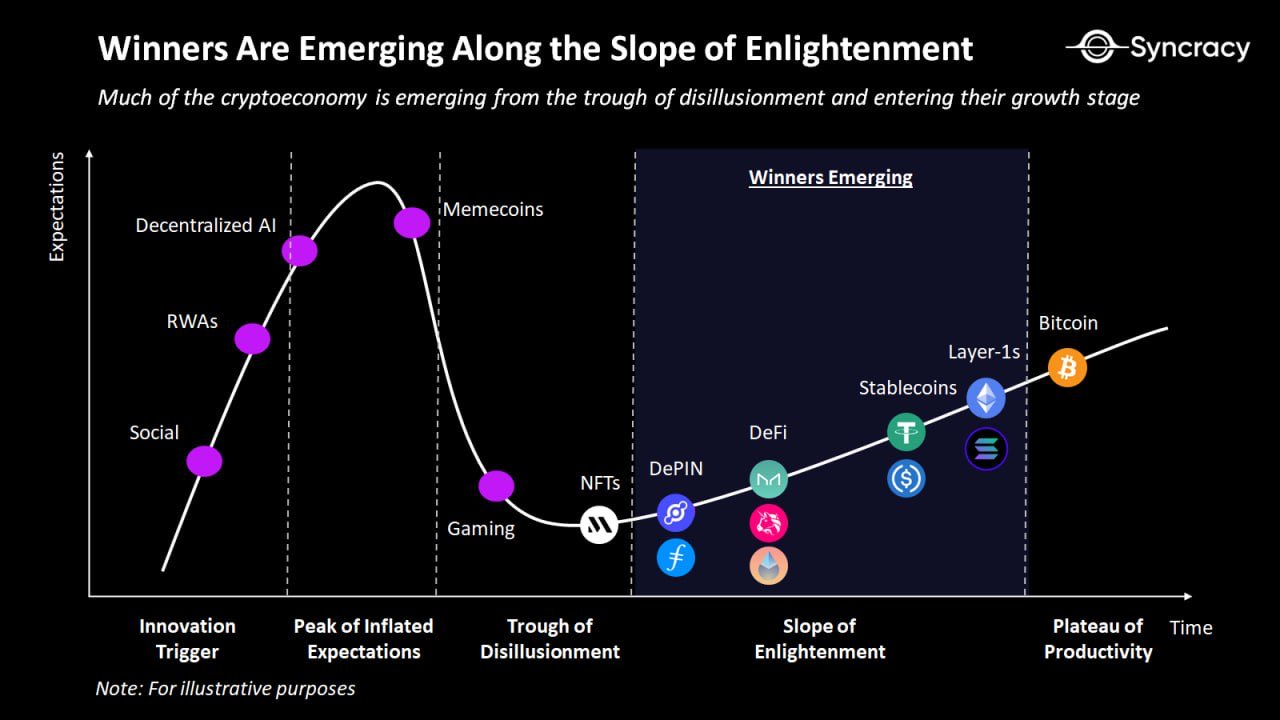
          Timing is critical in emerging technologies. The best investment opportunities arise when an innovation is either in its early stages or recovering from the trough of disillusionment before mainstream adoption. Many believe that Crypto AI has already peaked, but the data tells a different story.

          The total market cap of Crypto AI tokens is only $30 billion—just 2.9% of the total altcoin market. Compared to smart contract platforms, which have a combined valuation of nearly $600 billion, Crypto AI is still vastly undervalued. If decentralized AI captures just 10% of the projected $1.3 trillion generative AI market by 2032, it could be worth $390 billion—13 times its current size. Even a more conservative estimate suggests a 9X increase within three years, making Crypto AI one of the most promising investment sectors of the decade.

          Final Thoughts: The Future of Decentralized AI

          Crypto AI is poised to be the most significant evolution within blockchain, bringing real-world utility and solving fundamental problems in AI governance, funding, and accessibility. Unlike previous speculative trends, this is a deep technological transformation with real demand and sustainable growth.

          We are entering an era where AI and blockchain will become inseparable. The question is no longer if Crypto AI will succeed—it’s how big it will become.

          In Part II, we will explore the key subsectors within Crypto AI, including decentralized compute, AI agents, data networks, and verifiable AI. The revolution is just beginning.


          Source link

          Inside Paddy McGuinness’ health battles – from crippling diagnosis aged 44 and ‘regular tests’ for hereditary heart problems to clinical depression

            0
            Inside Paddy McGuinness’ health battles – from crippling diagnosis aged 44 and ‘regular tests’ for hereditary heart problems to clinical depression


            Farnworth-born comedian, actor and TV personality Paddy McGuinness has had his fair share of health struggles, from physical ailments to mental health challenges.

            He recently addressed rumours regarding his love life following his split from Christine McGuinness.

            The pair separated in 2022 after a decade and a half together. Christine is dating again – she confirmed as much during an episode of Loose women in October 2024.

            But she hasn’t been too happy about the idea of Paddy doing jokes about their divorce during his standup routines. A “source” told The Sun she was “devastated” and “distraught” about becoming the butt of some of his material.

            The Lancastrian comedian is a regular fixture on our TV screens, and has been open about his health struggles over the years (Credit: This Morning/YouTube)

            Paddy McGuinness reveals arthritis diagnosis age 44

            On June 12, 2018, Paddy McGuinness, then 44 years of age, revealed that he had been diagnosed with arthritis.

            “Morning! Nursing a poorly shoulder today,” he posted on Instagram, alongside a picture of him in hospital. “I had an ultra sound steroid injection in it yesterday. The reason, arthritis? I’m 44!”

            Support came in thick and fast from both fans and friends. Olly Murs and former England footballer Jamie Redknapp were among those sending their well wishes.

            Both played alongside Paddy in Soccer Aid to raise money for Unicef. Other participants included Robbie Williams, Usain Bolt and Eric Cantona.

            Fortunately, Paddy showed no signs of illness or discomfort during the game.

            Jamie wrote in the comments, “Still looking good though pal. See you Friday big man.”

            Shortly after Paddy’s revelation, British charity Arthritis Research UK said it was “grateful to Paddy McGuinness for speaking out and showing other young people with arthritis that they are not alone,” per the BBC.

            “People often think of arthritis as an older person’s disease. But Paddy is actually one of 11.8 million people under the age of 65 living with a musculoskeletal condition, including 2.7 million under 35 years old.”

            Comedian’s role in Christine McGuinness getting checked for breast cancer

            In her 2021 autobiography, Christine McGuinness shares a personal story about her fears of developing breast cancer.

            A doctor diagnosed her mum Joanne with the disease in September 2020. She underwent chemotherapy and, thankfully, is currently in remission.

            However, her mum’s diagnosis indicated to Christine (and Paddy) that her risk of developing the disease was higher than average.

            “Having a mother, sister or daughter (first degree relative) diagnosed with breast cancer approximately doubles the risk of breast cancer,” writes Cancer Research UK on the subject.

            “This risk is higher when more close relatives have breast cancer,” CRUK continues. “Or if a relative developed breast cancer under the age of 50. But most women who have a close relative with breast cancer will never develop it.

            Paddy and Christine McGuinness in the trailer for BBC documentary Our Family and Autism

            Christine and Paddy made a documentary about their experiences parenting three autistic children (Credit: BBC Trailers/YouTube)

            Paddy encouraged her to get tested despite fears

            Christine wrote in her autobiography that the “strong risk” of inheriting the disease made her “terrified” to take a test, per Lancs Live. But Paddy insisted.

            “I need to be around for my children for as long as possible and if that meant I was required to have a double mastectomy to reduce my chances of developing cancer, I was fully prepared to do it. Actually doing the test was another story. I put off having it for so long because I was terrified what the results might be.

            “But it was something my husband encouraged me to do, too. He has a history of heart problems in his family and goes for regular check-ups himself. So, reluctantly, I went and got tested,” she wrote.

            “It was all very easy, a simple swab test, and the results were sent to my GP. I didn’t tell my mum about it until after I got the results, as I didn’t want to put that extra worry on her. Many weeks of anguish and worry later, I got the results. It was negative. I felt so relieved.”

            Paddy and Christine McGuinness in the trailer for BBC documentary Our Family and Autism

            Paddy developed clinical depression following his three kids’ autism diagnoses (Credit: BBC Trailers/YouTube)

            Paddy McGuinness’ mental health struggles

            All three of Paddy and Christine McGuinness’ children have received autism diagnoses. The couple opened up about their experiences in the BBC One documentary Our Family And Autism, which came out in December 2021.

            “What gets to me with them all, and it’s only how I think, I think, ‘Will they ever know how loved they are? Do they understand what love is?’” Paddy says in the documentary.

            “When I’m with Leo every night in bed I will say to him, ‘Who loves you more than anything in the world?’. He’ll say, ‘you do’. Then I’ll go, ‘Do you love Daddy?’ and he’ll go, ‘yeah’.

            “But I think to myself, ‘Is he just saying that, or does he know that?’”

            Following his kids’ diagnoses, Paddy McGuinness says he developed clinical depression as his worries and anxieties about them spiralled beyond his control.

            “I wasn’t unhappy for me,” he said. “I was just stressed with the whole thing but I worked my [backside] off because I thought the only thing I can do for these kids is give them a life where they’re as comfortable as possible.

            “What I should have been think­­ing is I need to give them as much love as I can. It’s more about having time with them. I realise that now.”

            “I’ve got three amazing kids with autism, I’ve got a wife who’s autistic and I feel blessed and equipped with life going forward. This is my gang, my family. I’m proud of us and wouldn’t change it for the world.”

            Paddy and Christine ended their relationship in 2022 after 11 years of marriage. However, they are still close, and co-parent their three children.

            If you have been affected by any of the issues raised in this article, contact The Samaritans on 116 123. They are available for free at anytime.

            Read more: Christine McGuinness confesses she still hasn’t ‘dealt’ with Paddy marriage split

            YouTube video player

            So, can you relate to any of Paddy and Christine’s physical or mental health challenges? Let us know by leaving a comment on our Facebook page @EntertainmentDailyFix. We want to hear your thoughts. 


            Source link

            Kinds Of Kindness Ending Explained: What Is RMF? – SlashFilm

              0
              Kinds Of Kindness Ending Explained: What Is RMF? – SlashFilm


              Nobody makes movies quite like Greek director Yorgos Lanthimos, and his 2024 dark comedy anthology film “Kinds of Kindness” is something like “The Twilight Zone” for perverts and sickos (in the most complimentary way). Emma Stone leads a cast of talented actors who each appear in a triptych of tales, playing different roles in each story, and the somewhat nihilistic fable is the most “Lanthimos” movie Lanthimos has ever made. 

              Some fans were disappointed in “Kinds of Kindness” after the Academy Award-winning psychosexual delights of Stone and Lanthimos’s previous collaboration, “Poor Things,” which featured a script by “The Great” creator Tony McNamara, but “Kinds of Kindness” is a fascinating piece of work nonetheless. Lanthimos co-wrote “Kinds of Kindness” with his frequent collaborator Efthymis Filippou, who also wrote the director’s films “Alps,” “Dogtooth,” “The Lobster,” and “The Killing of a Sacred Deer,” and it’s a return to many of his unusual trademarks. Characters sometimes speak as if they’re detached from reality, delivering bizarre lines of dialogue with almost monotone clarity, and the humor is absolutely pitch dark. It’s weird stuff, and that means sometimes it’s easy to get lost and end up wondering what it all really means.

              Each of the stories in “Kinds of Kindness” has a title: “The Death of R.M.F.,” “R.M.F. Is Flying,” and “R.M.F. Eats a Sandwich,” so maybe the best place to start with figuring out “Kinds of Kindness” is to figure out who — or what — is “R.M.F.”.

              What does RMF stand for in Kinds of Kindness?

              In the most literal terms, “R.M.F.” are the initials of a man (played by Yorgos Stefanakos) who serves as the narrative throughline in each of the stories. (He also has the initials embroidered on his shirt, though Margaret Qualley’s Vivian mistakes the “R” for a “B”.) In the first story, he is hired by controlling, twisted businessman Raymond (Willem Dafoe) to be killed by someone else he hires with the same initials. He’s eventually killed by Raymond’s obsessive former employee Robert (Jesse Plemons) and appears again in the third story, “R.M.F. Eats a Sandwich,” as a corpse that is brought back to life by Ruth (Qualley), a veterinarian with magical powers. In the second story he’s a helicopter pilot who rescues two researchers who were stuck on an island, including Liz (Stone), whose husband Daniel (Plemons) believes came back changed somehow.

              Lanthimos told Variety that there’s no real meaning behind the character or his initials, explaining that they “didn’t want to have a main character reappearing, but a character that had a short time in the film.” And while “his presence was pivotal,” his actual name means nothing. Lanthimos left it up to audiences, saying, “You can apply any kind of explanation that you want or your own thoughts.”

              Fans have tried to come up with their own explanations, and a discussion on the Lanthimos subreddit came up with some pretty decent ones, including “Random MotherF******,” “Random Male Figure,” “Redemption, Manipulation, Faith,” and more. There are many words that could apply to each of the stories and just as many interpretations, and that ambiguity is part of the film’s genius. Like many of Lanthimos’s films, “Kinds of Kindness” isn’t trying to give the audience any answers: it just wants them to ask questions.

              The Kinds of Kindness stories share a central theme

              Besides R.M.F., there is a central theme throughout “Kinds of Kindness” that binds the stories. Each part follows a character who will stop at nothing to get what they want. They all long for connection, though that connection must be with someone specific: in the first story, Robert only wants his extremely controlling boss Raymond to approve of him; in the second, Daniel just wants his wife Liz and refuses any substitute; and in the third, Emily wants to find her cult’s chosen one and be loved by her cult leaders, Omi (Dafoe) and Aka (Hong Chau). Each of these protagonists ends up separated from the object of their love/desire as well, as Robert is cast aside by Raymond for initially refusing to kill R.M.F., Liz is lost at sea, and Emily is kicked out of the cult after she is raped by her estranged husband and comes back to the cult “tainted.”

              Each goes to extreme lengths to get what they want, and their varying levels of success aren’t presented as good or bad, leaving it up to the audience to decide whether or not it was all worth it. It’s interesting to note that in all three stories, the characters eschew having children in some way, as Robert slips his wife abortifacients on Raymond’s orders, Daniel rejects the Liz doppelgänger even though she’s fertile (and Liz is assumedly not), and Emily left her daughter with her husband despite clearly loving her and leaving her little gifts. Family and children are an easy stand-in for all kinds of sacrifices that people make for their jobs, romantic relationships, and faith, and these characters show that they’re willing to sacrifice it all. Sacrifice is a theme Lanthimos enjoys playing with (see also: “The Killing of a Sacred Deer”), and “Kinds of Kindness” takes it to its most absurd lengths.

              What really happened to Liz?

              In the second story, Daniel longs for his wife Liz to return after her research ship is lost at sea, but the woman that eventually returns does not seem like his wife. Her feet are slightly larger and none of her shoes fit, for starters, and she suddenly loves chocolate despite having always hated it. Her sexual appetites have also increased to a point where Daniel is concerned, and that’s taking into account the fact that the pair normally engage in group sex with their best friends. Everyone around him thinks that he’s caught in some kind of persecutory delusion and that Liz is exactly who she says she is, though the only other survivor from the island is in a coma. She came back different, and Daniel begins asking her to sacrifice herself to him. First, he asks her to cut off her thumb and cook it, then her liver.

              The liver-removal kills Fake Liz and it seems like Daniel is some kind of monster when the real Liz appears at the door and the two are reunited. It’s sort of joyous, if you ignore the dead doppelgänger in the background. The short credits sequence between stories then shows the Land of Dogs where doppelgänger Liz said she lived, where dogs and humans had switched places and the humans were fed chocolate. We’ll never know exactly why R.M.F. rescued what are apparently slightly-off clones, or even how the real Liz got home, because it’s a fable and those parts really don’t matter! What matters is that Daniel knew who his wife really was and was willing to lose everything to find her and get rid of her imposter.

              The cult’s special water and contamination

              In the third story, cult members Emily (Stone) and Andrew (Plemons) are out seeking their cult’s messiah, a woman who will be able to bring the dead back to life. There are specific, odd criteria, and they travel around the country looking for people who just might fit. They only drink water from containers they brought with them, and it’s revealed that the water comes from the home of their leaders, Omi and Aka, who purify it with their tears. The members of the cult all have sex with one another and with Omi and Aka, but if they have sex with anyone outside of the cult it can “contaminate” them. Unfortunately, Emily is found to be contaminated when her ex-husband drugs and rapes her, which gets her kicked out of the cult. Even a near-fatal, long sit in a sweat lodge doesn’t “purify” her. She throws everything into finding the messiah so she can be allowed back into the cult, with terrible results.

              It’s interesting because in the first two segments, the lead character ended up ostracized by choice. Robert refused to kill R.M.F. despite being comfortable with everything else he had been doing, while Daniel could have tried to accept that Liz had changed or simply left her instead of demanding his pound of flesh. Emily was only near her ex because she wanted to see her daughter, and for that she was punished by not only the assault itself, but also by being sent away from the one thing she truly cared about. It’s a heartbreaking commentary on sexual assault victims being blamed for their own victimhood, and it makes what happens next even more tragic.

              The meaning of Ruth’s death

              Emily kidnaps Ruth (Qualley), who healed a deep cut on a dog’s leg as good as new, and takes her to the morgue to see if she is the chosen one. Ruth manages to resurrect R.M.F., who was dead after being run over by Robert in the first story. (How was he alive as a helicopter pilot in the second story? Maybe that’s why Liz was a doppelgänger, or maybe they’re out of order. Your guess is as good as ours.) Ecstatic that she can now get back into the cult, Emily speeds toward the estate with a drugged Ruth in the passenger seat, only to get into an accident and send the un-seatbelted Ruth flying through the windshield, where she dies. It feels like a bit of a nihilistic “everything was for nothing” kind of sick Lanthimos laugh, but it’s also a lesson in recognizing our flaws before they’re too late, as Emily drives like a stuntperson on “The Dukes of Hazzard” (even in motel parking lots). 

              Sometimes life is just a mean joke, especially if you’re in a Yorgos Lanthimos movie.

              The Kinds of Kindness post-credits scene explained

              After Ruth is killed and the final credits begin to roll, we get a colorful little mid-credits scene in which R.M.F. is seated outside of a restaurant called “Baby’s Snack Box.” He’s eating that sandwich from the final chapter’s name and gets ketchup all over his shirt, prompting a waitress to get him more napkins. Despite having been in two terrible car accidents and then being run over by a murderous Robert, dying, and being brought back to life, he’s still just here among the rest of us slobs, eating sandwiches and getting ketchup on his shirt. He’s enjoying the little things, I suppose, embracing the mundanity of it all in spite of the ridiculous circumstances of his existence. It’s absurdism at its core, which is really what Lanthimos movies are all about.


              Source link

              Popular Posts

              My Favorites

              OKX Vs Gate.io 2025: Which Crypto Exchange is Best?

              0
              OKX and Gate.io are well-known cryptocurrency exchanges that provide traders with access to spot and futures trading, earning products, and a diverse range...