Home Blog Page 1324

Olly Rix lands ‘steamy new role’ in Casualty following Call the Midwife exit

    0
    Olly Rix lands ‘steamy new role’ in Casualty following Call the Midwife exit


    Call the Midwife star Olly Rix has landed a “steamy” new role in the BBC drama series Casualty.

    Olly, who played the role of Matthew Aylward, was a regular on Call the Midwife for three years.

    Viewers were disheartened to see him depart from series 14 of the BBC show in 2024. However, sources say his new “complex” role will set pulses racing among his fans.

    Olly Rix is ‘excited’ about his new role (Credit: ITV)

    Olly Rix to star in BBC’s Casualty

    The BBC star said he’s thrilled to take on his new role in the BBC medical drama and its upcoming miniseries called Internal Affairs.

    A source said: “He has already got viewers hot under the collar on Call the Midwife, but their pulses will be truly racing when they see Olly embrace the steamy new role.”

    They added: “Fans of Olly will only have a few weeks before they get the chance to see him on Casualty.”

    Olly will be seen as Clinical Leads Flynn Byron in the Casualty miniseries Internal Affairs, which will air on Saturdays starting in March.

    Flynn is created with an intense backstory revolving around trauma. The character is shown as fresh out of the military, determined to make a difference in the hospital.

    Meanwhile, the Executive Producer for the show, Roxanne Harvey, believes Olly’s character is highly relatable.

    Roxanne said: “Flynn’s journey promises to resonate with viewers, exploring the often emotional toll of working in the NHS.”

    “The cost of making tough decisions, and the possibility of redemption when you’re confronted with the consequences of your actions.”

    BBC star is ‘excited’

    Sharing his excitement about his new role, Olly said he can’t wait for his audience to meet Flynn. “It’s been a pleasure to join the Casualty cast in such a dynamic role,” he said.

    Olly then added: “Flynn crashes into the world of it from a very different background, resulting in a complex and exciting story in Internal Affairs and beyond. It’s a brilliant new chapter for the show and I am excited for the audience to get to know Flynn.”

    The BBC has also been teasing Olly’s new character ahead of the series. The show said: “Welcome to the E.D, @olly.rix The E.D’s new Clinical Lead, Flynn Byron joins the NHS fresh from a tour of duty.”

    “He’s a man with a purpose, and with a fierce resolve to make a difference. Look out for Flynn in the upcoming #Casualty boxset #InternalAffairs. #InternalAffairs coming soon.”

    Read more: Call the Midwife star Olly Rix splits from girlfriend – a week after on-screen wife Helen George announces break-up

    YouTube video player

    So are you excited to watch Olly on Casualty? Leave us a comment on our Facebook page @EntertainmentDailyFix and let us know.


    Source link

    Marvel Rivals announce huge Valentine’s bundle – here’s what you get and when it lands

    0
    Marvel Rivals announce huge Valentine’s bundle – here’s what you get and when it lands


    You can trust VideoGamer. Our team of gaming experts spend hours testing and reviewing the latest games, to ensure you’re reading the most comprehensive guide possible. Rest assured, all imagery and advice is unique and original. Check out how we test and review games here

    Marvel Rivals players will soon get an opportunity to obtain a new bundle of cosmetic items. NetEase will release new cosmetics on Thursday night. These items will be available as a bundle, but they will also be purchasable separately.

    In this article, we will take a detailed look at the upcoming cosmetics, including their exact release and time, price, all the items included in the bundle, and more.

    When will new Invisible Woman and Mr. Fantastic skins come to Marvel Rivals?

    NetEase will release the 60th Wedding Anniversary bundle on Thursday at 9 PM Eastern Time. The bundle, which celebrates the most popular couple in the game, will cost 2,800 Units. It includes two costumes along with a couple of other cosmetic items. Here is everything that’s included in the bundle:

    🚀 Save Up to $1,200 on the Samsung Galaxy S25!

    Pre-order now and save big with trade-in and Samsung credit. Limited time only!

    *Includes trade-in value + $300 Samsung credit.

    Invisible Woman costume – The Life Fantastic

    Mr. Fantastic costume – The Life Fantastic

    MVP animation

    Two nameplates

    Two sprays

    Two emotes

    Mr. Fantastic and Invisible Woman skins
    Mr. Fantastic and Invisible Woman will get new costumes in Marvel Rivals. Image by VideoGamer

    For those who don’t want to purchase the entire bundle, the skins will be sold separately. The new Invisible Woman skin is Legendary and will cost 2,200 Units. It includes an MVP animation, a nameplate, a spray, and an emote. Considering how popular this Fantastic Four character has been in Marvel Rivals so far, this may end up being one of the hottest-selling items.

    Mr. Fantastic’s new costume will also cost 2,200 Units and will also include all the extra items.

    🎮 Must-Listen: Publishing Manor Lords w/ Joe Robinson 🎙️

    It’s important to note that this is not the only content that will come to the popular video game this month. On February 21, NetEase will release two more Fantastic Four characters: The Thing and Human Torch. Judging by previous characters, these new heroes should have at least four different costumes available on their release date.


    marvel rivals cover image showing marvel characters line upmarvel rivals cover image showing marvel characters line up

    Marvel Rivals


    Platform(s):
    macOS, PC, PlayStation 5, Xbox Series S, Xbox Series X


    Genre(s):
    Fighting, Shooter


    Source link

    SlowMist Identifies SafeMath Library In Market Contract As Core Cause Of zkLend’s $9.5M Exploit

    0
    SlowMist Identifies SafeMath Library In Market Contract As Core Cause Of zkLend’s .5M Exploit


    In Brief

    SlowMist has identified a critical vulnerability at the core of the recent zkLend attack, attributing the issue to the implementation of the SafeMath library within the market contract.

    SlowMist Identifies SafeMath Library In Market Contract As Core Cause Of zkLend's $9.5M Exploit

    Blockchain security firm SlowMist has disclosed that its security team identified a critical vulnerability at the core of the recent attack on zkLend, a Layer 2 money market protocol built on Starknet. The firm attributes the issue to the implementation of the safeMath library within the market contract.

    According to SlowMist, the vulnerability arises from the way division calculations are handled. The contract performs direct division operations, leading to a rounding-down vulnerability when determining the precise amount of zTokens that must be burned during withdrawal operation. This flaw creates an opportunity for attackers to exploit the discrepancy and gain unauthorized benefits.

    In response to the findings, SlowMist has advised zkLend users to remain vigilant about the security of their assets. The firm recommends temporarily refraining from conducting deposit-related transactions on the platform to mitigate the risk of potential financial losses.

    zkLend experienced a $9.5 million exploit on the Starknet network earlier today. In response, withdrawals on the protocol have been paused, and zkLend reached out to the hacker, offering them a “white hat” reward of 10% of the stolen funds while requesting the return of the remaining 90%, which amounts to 3,300 ETH, approximately $8.4 million.

    In a statement shared on social media platform X, zkLend said, “Upon receiving the transfer, we agree to release you from any and all liability regarding the attack. We are working with security firms and law enforcement at this stage. If we do not hear from you by 00:00 UTC, 14th Feb 2025, we will proceed with the next steps to track and prosecute you.”

    Real-time security alert platform Cyvers Alerts reported that the stolen funds were bridged to Ethereum and laundered through the privacy-focused protocol Railgun.

    What Is zkLend?

    zkLend aims to provide a user-friendly, secure, and efficient money-market platform tailored to meet users’ liquidity needs. The protocol is a permissionless lending market designed primarily for retail users, allowing them to deposit and borrow digital assets directly through their wallets at any time. Depositors can earn yields based on the interest paid by borrowers who utilize the deposited assets. Additionally, users can leverage their deposited assets as collateral to borrow other digital assets.

    The project raised $5 million in a seed funding round in 2022, with Delphi Digital leading the investment and Three Arrows Capital and StarkWare also participating.

    Disclaimer

    In line with the Trust Project guidelines, please note that the information provided on this page is not intended to be and should not be interpreted as legal, tax, investment, financial, or any other form of advice. It is important to only invest what you can afford to lose and to seek independent financial advice if you have any doubts. For further information, we suggest referring to the terms and conditions as well as the help and support pages provided by the issuer or advertiser. MetaversePost is committed to accurate, unbiased reporting, but market conditions are subject to change without notice.

    About The Author


    Alisa, a dedicated journalist at the MPost, specializes in cryptocurrency, zero-knowledge proofs, investments, and the expansive realm of Web3. With a keen eye for emerging trends and technologies, she delivers comprehensive coverage to inform and engage readers in the ever-evolving landscape of digital finance.

    More articles


    Alisa Davidson


    Alisa, a dedicated journalist at the MPost, specializes in cryptocurrency, zero-knowledge proofs, investments, and the expansive realm of Web3. With a keen eye for emerging trends and technologies, she delivers comprehensive coverage to inform and engage readers in the ever-evolving landscape of digital finance.


    More articles


    Source link

    How Did BRC-20 Come About? What Does BRC-20 Do? – Metaverseplanet.net

    0
    How Did BRC-20 Come About? What Does BRC-20 Do? – Metaverseplanet.net


    A new token has joined the list of token standards in the cryptocurrency world: BRC-20. Inspired by the ERC-20 token standard of the Ethereum (ETH) blockchain, BRC-20 offers a wide range of functions. Thanks to the Ordinals protocol, BRC-20 makes it possible to mint tokens on the Bitcoin (BTC) blockchain.

    In this article, we will take a closer look at what the BRC-20 standard does and discuss its origins.

    What is BRC-20?

    BRC-20 is a token standard based on the Ordinals protocol that enables the creation of NFTs on the Bitcoin network. Although it is inspired by the ERC-20 standard, BRC-20 does not use smart contracts like ERC-20 or other Ethereum standards. Instead, BRC-20 allows users to store a script on the Bitcoin blockchain and bind tokens to individual satoshis.

    Each satoshi is then assigned a unique number, turning them into non-fungible tokens similar to NFTs. These uniquely numbered satoshis are referred to as ordinals. In the BRC-20 system, ordinals replace the smart contracts found in ERC-20 and its derivatives.

    What Does BRC-20 Do?

    So, what exactly does BRC-20 do, and why is it important? The answer lies in the inherent security of the Bitcoin blockchain. Many blockchain experts agree that Bitcoin is the most secure network, and its track record speaks for itself—Bitcoin has never been hacked.

    With its unique structure, BRC-20 paves the way for developers to create fungible tokens on the Bitcoin blockchain. Already, many BRC-20 tokens have been created, with a significant number of them being meme tokens.

    How is BRC-20 Different from ERC-20?

    The main difference between BRC-20 and ERC-20 is that, unlike ERC-20, the BRC-20 standard does not rely on smart contract technology. Instead, it operates based on the Bitcoin Ordinals protocol, which makes it less complex but also more limited compared to standards that utilize smart contracts.

    How Did BRC-20 Come About?

    The BRC-20 token standard was created and published on March 8, 2023, by a programmer using the pseudonym Domo. Initially, it was conceived as an experiment to enable the issuance of fungible tokens on Bitcoin.

    The first BRC-20 token was Ordinals (ORDI), which, like BTC, has a maximum supply of 21 million. The ORDI token quickly gained popularity, achieving a market cap of over $180 million at the time of writing.

    Domo, the creator of BRC-20, remains active on Twitter under the handle @domodata. As both a blockchain analyst and a key figure in the Bitcoin and BRC-20 community, Domo continues to engage with enthusiasts and developers alike.

    By leveraging the robust security of the Bitcoin blockchain and the innovative Ordinals protocol, BRC-20 has opened new avenues for creating and trading fungible tokens. Whether you are a developer or an enthusiast in the cryptocurrency space, understanding BRC-20 is essential as it continues to shape the future of digital tokens.

    Follow us on TWITTER (X) and be instantly informed about the latest developments…

    Copy URL


    Source link

    What is Learn-to-Earn? All About Learn Earn – Metaverseplanet.net

    0
    What is Learn-to-Earn? All About Learn Earn – Metaverseplanet.net


    Learn-to-earn is a business model that allows users to earn cryptocurrency rewards by learning about blockchain technology, crypto, and related topics. Inspired by the play-to-earn and move-to-earn models, this approach rewards users with digital tokens for engaging with educational content.

    In play-to-earn games, players earn cryptocurrency by playing games, while move-to-earn platforms incentivize physical activity with crypto rewards. Similarly, learn-to-earn platforms reward users with cryptocurrency for completing lessons, watching videos, or reading tutorials related to the crypto industry.

    Different learn-to-earn programs implement this model in various ways, but the process is generally simple:

    Engage with Educational Content: Users are typically asked to watch tutorials or read informative guides.

    Complete Quizzes: Short quizzes assess how much you have learned.

    Earn Rewards: Based on your quiz results, you receive cryptocurrency rewards.

    Platform Membership: To earn these rewards, you usually need to register on the platform or connect your cryptocurrency wallet.

    This model is especially popular among platforms looking to drive traffic, such as cryptocurrency exchanges and DeFi applications. Users can immediately transact with the cryptocurrency they earn, and various crypto projects leverage this model to educate and attract new users.

    The number of platforms offering learn-to-earn programs is growing every day. Among the most notable are EarnCrypto, Earnathon, and the DeFi platform Cake.

    EarnCrypto

    EarnCrypto is one of the fastest-growing learn-to-earn platforms. Here, users can educate themselves about cryptocurrency and blockchain technology through comprehensive text and video guides. To earn cryptocurrency, users complete various tasks such as:

    Watching entertaining videos

    Taking surveys

    Downloading and testing crypto applications

    Upon completing these tasks, users receive token and coin rewards.

    Earnathon

    Earnathon offers a wide range of cryptocurrency courses that cover the fast-growing blockchain and crypto industry. Its learn-to-earn model involves collaboration with cryptocurrency projects, which use the platform to educate users about their native tokens. In return, users are rewarded with these tokens, deepening their understanding of the crypto ecosystem.

    Cake

    As one of the leading DeFi platforms, Cake attracts users with its engaging learn-to-earn program. By completing main courses available on Cake‘s course page, users can earn cryptocurrency rewards, enhancing their knowledge while benefiting financially.

    By integrating educational content with reward incentives, the learn-to-earn model not only increases user engagement but also spreads awareness about cryptocurrency and blockchain technology. Whether you’re new to the crypto space or looking to expand your knowledge, learn-to-earn platforms offer a rewarding way to learn and earn simultaneously.

    You May Also Like

    Follow us on TWITTER (X) and be instantly informed about the latest developments…

    Copy URL


    Source link

    TMZ’s Last Minute Valentine’s Day Cards!

      0
      TMZ’s Last Minute Valentine’s Day Cards!


      TMZ’s Last Minute
      V-Day Cards!

      Published February 12, 2025 5:00 AM PST

      Y’all really think we were about to let Valentine’s Day slip through the cracks? Well, think again, because TMZ has got you covered with these cute custom cards that’ll knock your significant other’s socks off!

      Click through this cool collection of cards and pick your top faves …

      Give some props to Chappell Roan, Kendrick Lamar, Lionel Messi and lots more celebs who are here to spruce up your Valentine’s Day!

      All you gotta do is take a look through our adorable and cheeky V-Day cards, and when you find your perfect match click on the link to download a printable version.

      Hot off the press, these cards are “HOT TO GO!” 😘

      ‘H-O-T-T-O-G-O!’


      Source link

      BlockDAG’s $200M Presale Marks a New Era in Blockchain, Challenging HBAR and TON – Web3oclock

      0
      BlockDAG’s 0M Presale Marks a New Era in Blockchain, Challenging HBAR and TON – Web3oclock


      BlockDAG’s $200M Presale Surge: What’s Fueling the Hype?

      HBAR and TON: Market Giants Facing Volatility

      Can BlockDAG’s Innovation Give It the Competitive Edge?

      The Road Ahead: Will BlockDAG Surpass HBAR & TON?


      Source link

      Deal or No Deal fans accuse Banker of lying over contestant’s final offer: “No way”

        0
        Deal or No Deal fans accuse Banker of lying over contestant’s final offer: “No way”


        Deal Or No Deal fans were not happy with The Banker during yesterday afternoon’s show (Tuesday, February 11).

        The hit ITV show, hosted by Stephen Mulhern, saw Taylor take part in the show – but a cruel twist almost ruined his afternoon…

        Taylor was in the hot seat yesterday (Credit: ITV)

        What happened on Deal Or No Deal?

        Yesterday’s edition of Deal Or No Deal saw Taylor play the game in the hope of winning big.

        As he went up to the hot seat, Taylor revealed that he’d been “manifesting” all night that yesterday would be his big day.

        After opening a string of boxes, Taylor was offered £11,070 by The Banker.

        “Thank you very very much, Mr Banker. It’s a deal,” he said.

        However, there was something of a cruel twist in store for Taylor.

        The Banker revealed that if Taylor had played on for one more box, the banker would have offered him £28,000.

        But, there was some good news for Taylor, as he learned that he’d only bought £5 with him to the table – and he seemed to be pretty happy about that!

        Taylor looking gutted on Deal Or No Deal

        Viewers didn’t believe the banker’s offer (Credit: ITV)

        Viewers accuse the Banker of lying

        Taylor may have been left disappointed to miss out on The Banker’s £28,000 offer – however, some viewers were skeptical of whether The Banker would have even offered it in the first place.

        “Yet again, no way would £28,000 have been the offer. Load of [bleeps],” one viewer tweeted.

        “28 grand on £5 / £50K,” another wrote, before adding a gif of the Rock sniffing with the caption: “Smells like…[bleep]”.

        Banker lies, it wouldn’t have been £28,000!

        “Takes £750. £5 and £50,000 left. Offer would have been £28,700. In his box was £5. Not sure The Banker would have offered that in live play, more than the average?” a third mused.

        “Banker lies, it wouldn’t have been £28,000! He can say ought when someone’s dealt,” another wrote.

        Stephen Mulhern on the phone while speaking to Wendy on Deal Or No Deal

        Wendy missed out big time (Credit: ITV)

        Wendy in tears over major loss

        Last week, another player was left gutted after missing out on a major cash prize.

        Wendy had a tough start to the game – as the first box she opened was the second highest amount on the show: £75,000.

        Near the end of the episode, she had three blue numbers left: 1p, 50p, and £500. As for reds left on the board, she had £2,000, £3,000 and £50,000.

        The Banker then rang up and offered her a final offer of £6,170.

        Breaking down in tears, Wendy accepted the banker’s offer.

        It was then revealed that Wendy had the £50,000 box – meaning she missed out on big, big money.

        “Okay I understand why Wendy is always crying now… A shame she only went away with £6,100. Dealt one round too early,” one fan tweeted.

        Read more: Deal or No Deal player Alexis told to ‘get a grip’ as she sobs on show: ‘You’ve known him two weeks, love’

        Deal Or No Deal airs on weekdays from 4pm on ITV1 and ITVX. 

        Nay Nay takes the BIGGEST Deal EVER! | Deal or No Deal

         Do you think the banker was lying? Let us know with a comment on our Facebook page @EntertainmentDailyFix.


        Source link

        What Are The Apps To Make Money By Walking? – Metaverseplanet.net

        0
        What Are The Apps To Make Money By Walking? – Metaverseplanet.net


        The concept of move-to-earn is rapidly gaining popularity, allowing users to earn cryptocurrencies simply by walking, jogging, or engaging in other physical activities. These blockchain-based applications reward users for their movements, making fitness both fun and profitable.

        So, what are the best apps to make money by walking? First, let’s explore the move-to-earn concept before diving into the top apps.

        What is Move-to-Earn?

        Inspired by play-to-earn, the move-to-earn model refers to apps that provide crypto rewards for real-world physical activities. These platforms encourage users to engage in activities like walking and running, turning everyday movement into a source of income.

        Unlike play-to-earn games, move-to-earn platforms do not require users to be online constantly. You can earn by walking without even picking up your phone, as these apps track movement using GPS and location services.

        However, it’s important to note that some move-to-earn apps require an initial investment. For example, Stepn, the first major move-to-earn app launched in 2021, requires users to purchase an NFT sneaker before they can start earning cryptocurrency rewards for walking.

        Would you like to explore the top move-to-earn apps? Let’s take a look at the most popular options available today! 🚀

        What are the apps to make money by walking?

        If you’re intrigued by the move-to-earn concept and want to start earning cryptocurrency by walking, here are some of the most popular move-to-earn apps you can explore.

        1. Stepn

        Launched in September 2021, Stepn is the first and largest move-to-earn app, boasting over 800,000 daily active users. To start using Stepn, users must purchase an NFT sneaker. The app rewards movement with GMT, its native token built on the Solana (SOL) blockchain.

        Users can enhance their earnings by upgrading their NFT sneakers or equipping them with additional items to increase crypto rewards.

        2. Step

        A direct competitor to Stepn, Step offers a different approach by not requiring NFT purchases. Instead, users need to hold at least 22,000 Step tokens in their wallet to be eligible for crypto rewards. Once they meet this requirement, they can start earning by walking at least 4,000 steps per day.

        3. Sweatcoin

        Sweatcoin is a move-to-earn app that does not require NFTs or initial investments. Users can start earning cryptocurrency immediately after signing up.

        The app syncs with your phone’s motion detectors and compatible services like Apple Health, tracking steps to reward users with Sweatcoins. These can be converted into the platform’s native token, SWEAT, or spent on exclusive deals with partnered brands.

        4. Calo Run

        Calo Run operates similarly to Stepn, allowing users to earn cryptocurrency by walking after purchasing an NFT sneaker. Since each NFT sneaker has a limited durability, users may need to upgrade them periodically or buy replacements.

        For those who prefer not to invest in NFTs, Calo Run offers a rental system, enabling users to lease NFT sneakers instead of purchasing them.

        The platform features two BNB Chain-based cryptocurrencies:

        CALO – Governance token

        FIT – Utility token

        Users can earn crypto rewards in two modes:

        Solo Mode – Walk alone to earn rewards

        Team Mode – Participate in challenges with others

        By choosing either mode, users can maximize their earnings while staying active.

        5. Genopets

        Genopets brings a gamified move-to-earn experience, similar to Pokémon GO. Instead of just walking, players capture, train, and battle NFT creatures known as Genopets.

        However, unlike traditional mobile games, users must physically explore the real world to find opponents, tokens, and upgrades, making Genopets a highly interactive move-to-earn experience.

        The Solana-based game features two tokens:

        GENE – Governance token

        KI – In-game currency

        With its unique gameplay mechanics, Genopets stands out as one of the most entertaining and engaging move-to-earn projects.

        You May Also Like

        Follow us on TWITTER (X) and be instantly informed about the latest developments…

        Copy URL


        Source link

        Ultimate Comparison of DeepSeek Models: V3, R1, and R1-Zero

        0
        Ultimate Comparison of DeepSeek Models: V3, R1, and R1-Zero


        DeepSeek has gained recognition in the AI community with its latest models, DeepSeek R1, DeepSeek V3, and DeepSeek R1-Zero. Each model offers unique capabilities and is designed to address different AI applications. DeepSeek R1 specializes in advanced reasoning tasks, employing reinforcement learning to improve logical problem-solving skills. Meanwhile, DeepSeek V3 is a scalable natural language processing (NLP) model, leveraging a Mixture-of-Experts (MoE) architecture to manage diverse tasks efficiently. On the other hand, DeepSeek R1-Zero takes a novel approach by relying entirely on reinforcement learning without supervised fine-tuning.

        This guide provides a detailed comparison of these models, exploring their architectures, training methodologies, performance benchmarks, and practical implementations.

        DeepSeek Models Overview

        1. DeepSeek R1: Optimized for Advanced Reasoning

        DeepSeek R1 integrates reinforcement learning techniques to handle complex reasoning. The model stands out in logical deduction, problem-solving, and structured reasoning tasks.

        Real-World Example

        Input: “In a family tree, if Mark is the father of Alice and Alice is the mother of Sam, what is Mark’s relation to Sam?”

        Expected Output: “Mark is Sam’s grandfather.”

        DeepSeek R1 efficiently processes logical structures, ensuring its responses are both coherent and accurate.

        2. DeepSeek V3: General-Purpose NLP Model

        DeepSeek V3, a versatile NLP model, operates using a Mixture-of-Experts (MoE) architecture. This approach allows the model to scale effectively while handling various applications such as customer service automation, content generation, and multilingual processing.
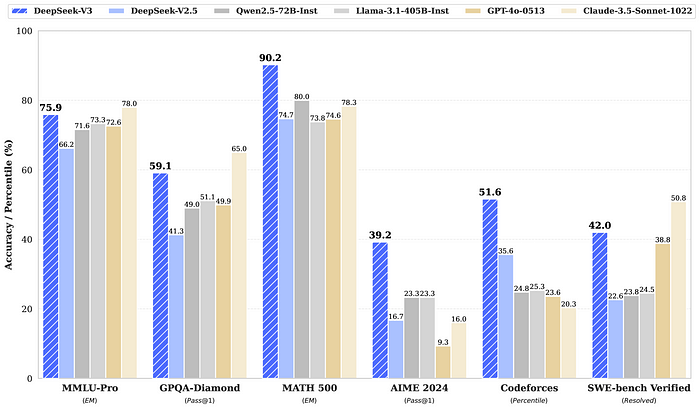
        Real-World Example

        DeepSeek V3 ensures that responses remain concise, informative, and well-structured, making it ideal for broad NLP applications.

        3. DeepSeek R1-Zero: Reinforcement Learning Without Supervised Fine-Tuning

        DeepSeek R1-Zero takes a unique approach. It is trained exclusively through reinforcement learning without relying on traditional supervised fine-tuning. While this method results in strong reasoning capabilities, the model may occasionally generate outputs that lack fluency and coherence.
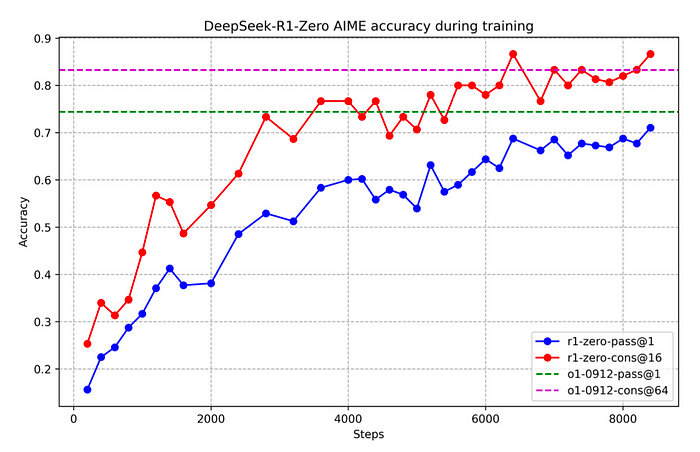
        Real-World Example

        Input: “Describe the process of volcanic eruption.”

        Expected Output: “Volcanic eruptions occur when magma rises beneath the Earth’s crust due to intense heat and pressure. The magma reaches the surface through vents, causing an explosion of lava, ash, and gases.”

        DeepSeek R1-Zero successfully conveys fundamental scientific concepts but sometimes lacks clarity or mixes language elements.

        Model Architecture: How They Differ

        1. DeepSeek V3’s Mixture-of-Experts (MoE) Architecture

        The Mixture-of-Experts (MoE) architecture makes large language models (LLMs) more efficient by activating only a small portion of their parameters during inference. DeepSeek-V3 uses this approach to optimize both computing power and response time.

        DeepSeek-V3 builds on DeepSeek-V2, incorporating Multi-Head Latent Attention (MLA) and DeepSeekMoE for faster inference and lower training costs. The model has 671 billion parameters, but it only activates 37 billion at a time. This selective activation reduces computing demands while maintaining strong performance.

        MLA improves efficiency by compressing attention keys and values, lowering memory usage without sacrificing attention quality. Meanwhile, DeepSeek-V3’s routing system directs inputs to the most relevant experts for each task, preventing bottlenecks and improving scalability.

        Unlike traditional MoE models that use auxiliary losses to balance expert usage, DeepSeek-V3 relies on dynamic bias adjustment. This method ensures experts are evenly utilized without reducing performance.

        The model also features Multi-Token Prediction (MTP), allowing it to predict multiple tokens simultaneously. This improves training efficiency and enhances performance on complex tasks.

        For example, if a user asks a coding-related question, DeepSeek-V3 activates experts specialized in programming while keeping others inactive. This targeted activation makes the model both powerful and resource-efficient.

        2. Architectural Differences Between DeepSeek R1 and R1-Zero

        DeepSeek R1 and DeepSeek R1-Zero benefit from the MoE framework but diverge in their implementation.

        DeepSeek R1
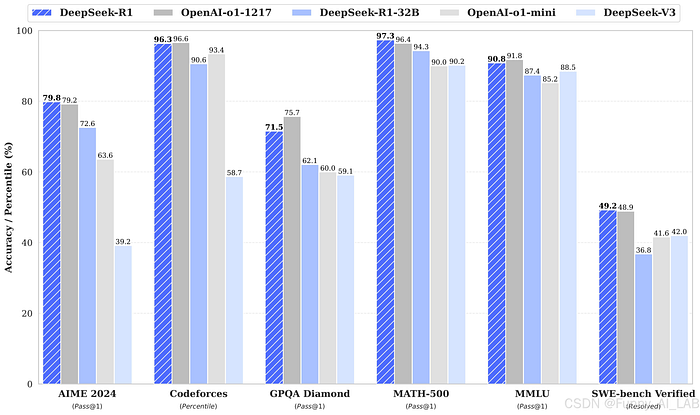
        Employs full MoE capabilities while dynamically activating experts based on query complexity.

        Uses reinforcement learning (RL) and supervised fine-tuning for better readability and logical consistency.

        Incorporates load balancing strategies to ensure no single expert becomes overwhelmed.

        DeepSeek R1-Zero
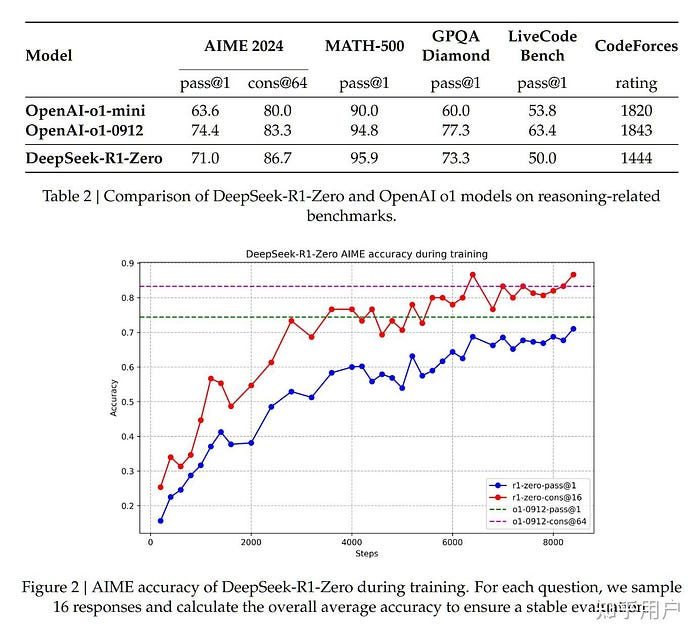
        Uses a similar MoE structure but prioritizes zero-shot generalization rather than fine-tuned task adaptation.

        Operates solely through reinforcement learning, optimizing its ability to tackle unseen tasks.

        Exhibits lower initial accuracy but improves over time through self-learning.

        Training Methodology: How DeepSeek Models Learn

        DeepSeek R1 and DeepSeek R1-Zero use advanced training methods to improve the learning of large language models (LLMs). Both models apply innovative techniques to boost reasoning skills, but they follow different training approaches.

        1. DeepSeek R1: Hybrid Training Approach

        DeepSeek R1 follows a multi-phase training process, combining reinforcement learning with supervised fine-tuning for maximum reasoning ability.

        Training Phases:

        Cold Start Phase: The model first fine-tunes on a small, high-quality dataset created from DeepSeek R1-Zero’s outputs. This step ensures clear and coherent responses from the start.

        Reasoning Reinforcement Learning Phase: Large-scale RL improves the model’s reasoning skills across different tasks.

        Rejection Sampling and Fine-Tuning Phase: The model generates multiple responses, keeps only the correct and readable ones, and then undergoes further fine-tuning.

        Diverse Reinforcement Learning Phase: The model trains on a variety of tasks, using rule-based rewards for structured problems like math and LLM feedback for other areas.

        2. DeepSeek R1-Zero: Pure Reinforcement Learning

        DeepSeek R1-Zero relies entirely on reinforcement learning, eliminating the need for supervised training data.

        Key Training Techniques:

        Reinforcement Learning Only: It learns entirely through reinforcement learning, using a method called Group Relative Policy Optimization (GRPO), which simplifies the process by removing the need for critical networks.

        Rule-Based Rewards: It follows predefined rules to calculate rewards based on accuracy and response format. This approach reduces resource use while still delivering strong performance on various benchmarks.

        Exploration-Driven Sampling: It explores different learning paths to adapt to new scenarios, leading to improved reasoning skills.

        Overview of Training Efficiency and Resource Requirements

        DeepSeek R1

        Resource Requirements: It needs more computing power because it follows a multi-phase training process, combining supervised and reinforcement learning (RL). This extra effort improves output readability and coherence.

        Training Efficiency: Although it consumes more resources, its use of high-quality datasets in the early stages (cold-start phase) lays a strong foundation, making later RL training more effective.

        DeepSeek R1-Zero

        Resource Requirements: It uses a more cost-effective approach, relying only on reinforcement learning. It uses rule-based rewards instead of complex critic models, which significantly lowers computing costs.

        Training Efficiency: Despite being more straightforward, it performs well on benchmarks, proving that models can be trained effectively without extensive supervised fine-tuning. Its exploration-driven sampling also improves adaptability while keeping costs low.

        Performance Benchmarks: How They Compare

        BenchmarkDeepSeek R1DeepSeek R1-Zero

        AIME 2024 (Pass@1)79.8% (Surpasses OpenAI’s o1-1217)15.6% → 71.0% (After training)

        MATH-50097.3% (Matches OpenAI models)95.9% (Close performance)

        GPQA Diamond71.5%73.3%

        CodeForces (Elo)2029 (Beats 96.3% of humans)Struggles in coding tasks

        DeepSeek R1 excels in reasoning-intensive tasks, while R1-Zero improves over time but starts with lower accuracy.

        How to Use DeepSeek Models with Hugging Face and APIs

        You can run DeepSeek models (DeepSeek-V3, DeepSeek-R1, and DeepSeek-R1-Zero) using Hugging Face and API calls. Follow these steps to set up and run them.

        1. Running DeepSeek-V3

        Step 1: Clone the Repository

        Run the following commands to download the DeepSeek-V3 repository and install the required dependencies:

        git clone https://github.com/deepseek-ai/DeepSeek-V3.git
        cd DeepSeek-V3/inference
        pip install -r requirements.txt

        Step 2: Download Model Weights

        You can download the model weights from Hugging Face. Replace with DeepSeek-V3 or DeepSeek-V3-Base:

        huggingface-cli repo download –revision main –local-dir /path/to/DeepSeek-V3

        Move the downloaded weights to /path/to/DeepSeek-V3.

        Step 3: Convert Model Weights

        Run the following command to convert the model weights:

        python convert.py –hf-ckpt-path /path/to/DeepSeek-V3 –save-path /path/to/DeepSeek-V3-Demo –n-experts 256 –model-parallel 16

        Step 4: Run Inference

        Use this command to interact with the model in real-time:

        torchrun –nnodes 2 –nproc-per-node 8 generate.py –node-rank $RANK –master-addr $ADDR –ckpt-path /path/to/DeepSeek-V3-Demo –config configs/config_671B.json –interactive –temperature 0.7 –max-new-tokens 200

        2. Running DeepSeek-R1

        Step 1: Install and Run the Model

        Install Ollama and run DeepSeek-R1:

        ollama run deepseek-r1:14b

        Step 2: Create a Python Script

        Create a file called test.py and add the following code:

        import ollama

        model_name = ‘deepseek-r1:14b’
        question = ‘How to solve a quadratic equation x^2 + 5*x + 6 = 0’

        response = ollama.chat(model=model_name, messages=[
        {‘role’: ‘user’, ‘content’: question},
        ])

        answer = response[‘message’][‘content’]
        print(answer)

        with open(“OutputOllama.txt”, “w”, encoding=“utf-8”) as file:
        file.write(answer)

        Step 3: Run the Script

        Ensure Ollama is installed, then run:

        pip install ollama
        python test.py

        3. Running DeepSeek-R1-Zero

        Step 1: Install Required Libraries

        Install the OpenAI library to use the DeepSeek API:

        pip install openai

        Step 2: Create a Python Script

        Create a file called deepseek_r1_zero.py and add the following code:

        from openai import OpenAI

        client = OpenAI(api_key=“”, base_url=“https://api.deepseek.com”)

        messages = [{“role”: “user”, “content”: “What is the capital of France?”}]

        response = client.chat.completions.create(
        model=“deepseek-r1-zero”,
        messages=messages
        )

        content = response.choices[0].message.content
        print(“Answer:”, content)

        messages.append({‘role’: ‘assistant’, ‘content’: content})
        messages.append({‘role’: ‘user’, ‘content’: “Can you explain why?”})

        response = client.chat.completions.create(
        model=“deepseek-r1-zero”,
        messages=messages
        )

        content = response.choices[0].message.content
        print(“Explanation:”, content)

        Step 3: Run the Script

        Replace with your actual API key, then run:

        python deepseek_r1_zero.py

        You can easily set up and run DeepSeek models for different AI tasks!

        Final Thoughts

        DeepSeek’s latest models—V3, R1, and R1-Zero—bring significant advancements in AI reasoning, NLP, and reinforcement learning. DeepSeek R1 dominates structured reasoning tasks, V3 offers broad NLP capabilities, and R1-Zero showcases innovative self-learning potential.

        With growing adoption, these models will shape AI applications across education, finance, healthcare, and legal tech.



        Source link

        Popular Posts

        My Favorites