Home Blog Page 1219

No Man’s Sky’s Relic Update Delivers Indiana Jones-Style Space Adventure

0
No Man’s Sky’s Relic Update Delivers Indiana Jones-Style Space Adventure


Summary

Uncover ancient alien civilizations with the new Relic update, turning you into an intergalactic treasure hunter. Hunt for ultra-rare relics to trade at space stations, creating personal alien museums. Encounter threats like Artifact Guardians and Titan Worms at excavation sites, adding a thrilling risk-reward dynamic.

No Man’s Sky has never been short on adventure, but its latest Relic update 5.6 takes planetary exploration to a whole new level. Hello Games has introduced a full-fledged archaeological system, turning you into an intergalactic treasure hunter.

Think Indiana Jones, but with a jetpack, a scanner, and an entire galaxy of lost civilizations to uncover.

Announced by Hello Games founder Sean Murray, the now-available Relic update expands on the game’s excavation mechanics in a massive way. For years, players have been digging up buried technology and resources, but now you’ll be unearthing the remains of ancient alien creatures.

Related

Eight Years Later No Man’s Sky Receives ‘Very Positive Status’ And It’s On Sale

The greatest redemption story in gaming continues, and now it’s on sale!

No Man’s Sky Universe of Hidden and Risky Relics
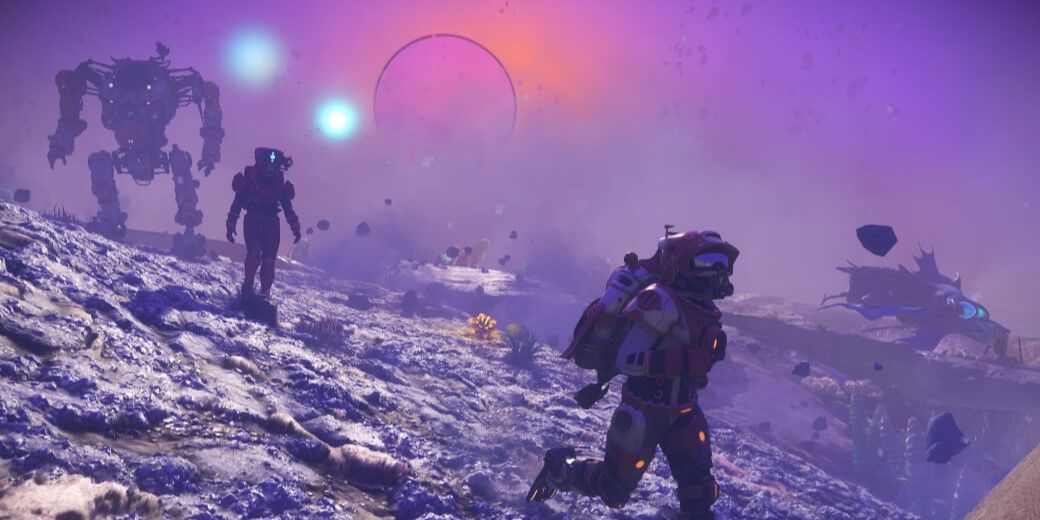
no man's sky gas giant

You can reassemble fossils into full skeletons and display them in your bases, effectively turning your outposts into personal alien museums. Some relics, however, are far rarer than others, making the hunt for the most valuable discoveries all the more rewarding.

These ultra-rare artifacts can be traded for a hefty sum at space stations, giving you a lucrative reason to channel your inner archaeologist.

Players are already showcasing intricate museums filled with reconstructed fossils, with some comparing the experience to real-world paleontology. As one fan put it:

“I spent hours just hunting for bones—it’s like an intergalactic Indiana Jones adventure!”
Related

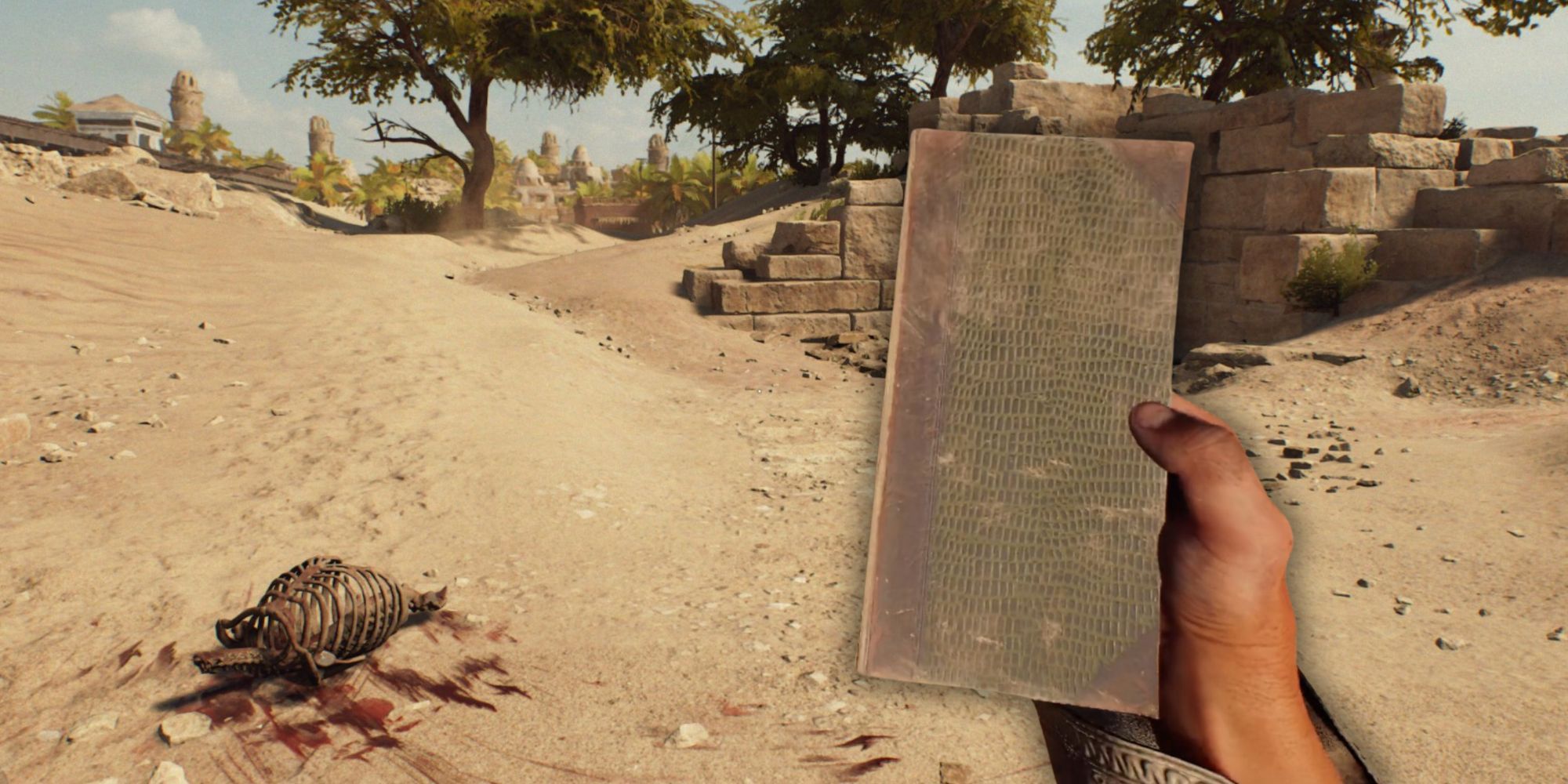
Indiana Jones and the Great Circle: Where to Find the Gizeh Relics Map

Get your hands on those Ancient Relics!

In true Indiana Jones fashion, not every excavation goes smoothly. Alongside the excitement of unearthing ancient remains, you will need to contend with new threats lurking beneath the surface.

Much like Indy dodging poison darts and rolling boulders, No Man’s Sky’s latest update introduces formidable Artifact Guardians. These encounters aren’t just aesthetic additions; they add a thrilling risk-reward dynamic to exploration.

And that’s not all. Titan Worms are now even more present, adding an ever-looming sense of danger to excavation sites. It’s the kind of grand mystery that would have even Dr. Jones reaching for his whip.

“Players should be wary where they choose to excavate, though. Dangerous creatures guard the greatest treasure and may be awoken from their slumber, including Stone Ghosts and the colossal Stone Golem,” Hello Games warned.
Related

No Man’s Sky February Update 5.56 Fixes Titan Expedition Bugs and PS5 Crashes

No Man’s Sky’s latest update fixes keep the spacefaring adventure smooth.

If you’re aiming to complete full skeleton collections, space stations now feature specialist NPCs who facilitate fossil trading. They allow you to swap duplicate bones for missing pieces, enhancing the sense of progression and encouraging collaboration as you seek out the rarest and most elusive remains.

Much like a real-world archaeologist, or, say, a rogue adventurer bartering for ancient relics in a shady backroom, you will need to track down specific fossils to complete your collections. And with some relics fetching sky-high prices, there’s a booming new economy emerging in No Man’s Sky’s intergalactic black market.

Following the massive Worlds Part II update earlier this year, Relic is yet another example of how the studio continues to inject fresh, engaging mechanics into its ever-expanding universe.

Late last year, Hello Games hailed No Man’s Sky, hitting a ‘very positive’ Steam user review rating for the first time, eight years after players initially slammed the game’s controversial launch.

Relic Update 5.6 is out now across PC, console, and VR for free.

Next

Nintendo Direct for March 27th, 2025: How to Watch & What Times

Before we learn more about the Nintendo Switch 2, it’s one last hurrah for the Nintendo Switch.
mixcollage-07-dec-2024-08-42-am-1209.jpg

Released August 9, 2016

ESRB T for Teen: Fantasy Violence, Animated Blood


Source link

The Seven Deadly Sins NFT Collection Hits OpenSea | NFT News Today

The Seven Deadly Sins NFT Collection Hits OpenSea | NFT News Today


The popular anime franchise Seven Deadly Sins has made a jump from Netflix screens to the blockchain world with an NFT collaboration between OpenSea and YOAKE. This partnership is another convergence of mainstream entertainment and digital collectibles, with scenes from the beloved series becoming available as digital assets on Sony’s Soneium chain.

Key Takeaways:

Anime Meets Blockchain: The Seven Deadly Sins NFT Collection

In a move that has fans buzzing, OpenSea has partnered with YOAKE to release YOAKE & The Seven Deadly Sins Anime Series NFTs. The collection features iconic scenes from Netflix’s The Seven Deadly Sins: Cursed by Light movie and the wildly popular anime series. Minting kicked off on March 25, 2025, with unlimited NFTs available during a 72-hour window at an accessible price point of 0.002 ETH, roughly $4.12.

The artwork prominently showcases fan-favourite characters Meliodas and Zeldris from Cursed by Light, capturing the dynamic relationship between the demon brothers. This blockchain anime collaboration represents a new frontier for digital collectibles tied to major entertainment franchises.

OpenSea’s Comeback in the NFT Space

While new marketplaces have challenged its position in recent years, OpenSea has staged a resurgence in 2025. OpenSea dominated the NFT market last week, capturing 40.1% of total trading volume and a massive 78.8% of all trades, according to Dune analytics.

OpenSea’s announcement of the upcoming launch of its SEA token and partnerships like the Seven Deadly Sins collaboration have fueled its return to dominance.

Seven Deadly Sins on OpenSea

From Manga to Global Netflix Phenomenon

The Seven Deadly Sins has transformed from a popular manga into a global entertainment powerhouse. Available in 190 countries via Netflix, the anime was a huge success in its 2020 debut, becoming one of the Top 10 titles among all series in over 70 countries since its launch. The franchise has sold over 55 million manga copies worldwide, cementing its status as a cultural phenomenon.

Netflix has continued to invest in the franchise, adding the sequel Four Knights of the Apocalypse in 2025. The streaming giant now offers 124 episodes and four movies globally, with Cursed by Light (2021) and various spinoffs remaining Netflix exclusives. This widespread availability has created the perfect foundation for the franchise’s expansion into NFTs.

YOAKE’s Approach to Fan Engagement

YOAKE has positioned itself as more than just an NFT creator—it’s a fan engagement protocol that merges Japanese pop culture with blockchain technology. By minting the Seven Deadly Sins NFTs on Soneium, Sony’s Ethereum Layer 2 chain, YOAKE leverages scalability benefits while maintaining security.

This model aligns perfectly with Web3 community-building goals, representing an evolution beyond traditional anime merchandise. Rather than physical collectibles with limited reach, blockchain-based digital assets offer fans worldwide the opportunity to own authentic pieces of their favorite franchise.

Collectors will gain access to exclusive benefits and community engagement opportunities. YOAKE has hinted at an extensive roadmap for future anime collaborations, suggesting early adopters may receive preferential access to upcoming releases.


Source link

Crypto Adoption Surges in Africa While Global Growth Faces Hurdles

Crypto Adoption Surges in Africa While Global Growth Faces Hurdles


In Brief

Crypto adoption surges in Africa and Southeast Asia, while global growth faces challenges from security concerns, high transaction costs, and limited merchant acceptance.

Crypto Adoption Surges in Africa While Global Growth Faces Hurdles

Cryptocurrency use is accelerating in some places, but security concerns and limited merchant acceptance restrain global mainstream adoption. Bitget Wallet’s newest Onchain Report offers insights into the geographical dynamics affecting the future of digital asset transactions.

According to a poll of 4,599 users, Africa (52%) and Southeast Asia (51%) dominate in cryptocurrency payment usage, while North America, Oceania, and Western Europe fall behind owing to regulatory uncertainty and privacy concerns. Despite huge demand for cross-border transactions, Latin America has transaction cost problems. These statistics highlight the many variables impacting crypto acceptance in different markets.

Africa and Southeast Asia Drive Adoption

Africa has emerged as the global leader in crypto payment use, with 52% of respondents using cryptocurrency for transactions. Limited access to traditional banking infrastructure and enormous remittance fees have made digital assets a feasible option. Mobile-based financial solutions and peer-to-peer networks help to boost crypto’s influence in the region.

Southeast Asia follows closely, with 51% of respondents reporting using cryptocurrency for payments. Many individuals and organizations use cryptocurrencies to avoid currency conversion fees and reduce the expenses associated with overseas transactions. The region’s digital-first economy, along with a young populace familiar with blockchain technology, promotes quick adoption.

Latin America Faces High Transaction Fees

Latin America has a significant need for cryptocurrency payments, with 41% acceptance, but high transaction costs remain a significant barrier. The usage of cryptocurrencies for cross-border transfers is common, as many people seek alternatives to established remittance methods. However, expenses associated with blockchain transactions, particularly on highly congested networks, discourage widespread use.

Despite these limitations, stablecoins have gained popularity as a solution to avoid local currency fluctuation. The dependence on digital assets in Latin America is projected to grow as options for lowering transaction costs become more widely available.

Privacy and Seamless Transactions in Developed Markets

In North America and Oceania, 36% of respondents choose cryptocurrency for smooth worldwide transactions. This need derives from a desire for more financial independence and efficiency. Businesses that operate globally benefit from cryptocurrency’s capacity to conduct quick and cost-effective cross-border transactions.

Western Europe, with 35% adoption, and the Middle East, with 38%, have differing adoption goals. Western European users are concerned about privacy, but Middle Eastern consumers utilize cryptocurrency to hedge against economic volatility. The regulatory landscape in these regions continues to influence adoption patterns as policymakers evaluate frameworks that balance innovation and consumer protection.

Security Risks and Limited Merchant Acceptance as Barriers

Despite localized success, security concerns remain a major barrier to worldwide crypto acceptance. According to the poll, 37% of respondents view security concerns as a main barrier. Hacking, fraud, and scam incidents all contribute to potential adopters’ hesitation. To establish confidence in the ecosystem, robust security solutions like multi-signature wallets, smart contract audits, and regulatory compliance are required.

Limited merchant acceptance acts as a barrier, with 31% of respondents claiming that the inability to utilize cryptocurrency for everyday transactions limits greater adoption. While some companies accept crypto payments, widespread adoption needs further infrastructure support. Payment processors and point-of-sale systems that simplify cryptocurrency transactions are critical to eliminating this obstacle.

Future Outlook for Crypto Payments

The findings indicate that regional adoption patterns will continue changing in response to local economic situations, legislative reforms, and technical breakthroughs. Africa and Southeast Asia are primed to continue their leadership in crypto transactions due to their reliance on digital assets for financial inclusion. Meanwhile, developed markets may see growth as privacy-focused technologies and stronger security standards gain popularity.

The role of corporations and governments in promoting adoption is critical. Increased collaboration between traditional financial institutions and cryptocurrency service providers might close existing gaps, making digital assets more accessible for routine transactions. As security issues are resolved and merchant use grows, the worldwide landscape of cryptocurrency payments is expected to evolve, opening the path for wider acceptance.

Disclaimer

In line with the Trust Project guidelines, please note that the information provided on this page is not intended to be and should not be interpreted as legal, tax, investment, financial, or any other form of advice. It is important to only invest what you can afford to lose and to seek independent financial advice if you have any doubts. For further information, we suggest referring to the terms and conditions as well as the help and support pages provided by the issuer or advertiser. MetaversePost is committed to accurate, unbiased reporting, but market conditions are subject to change without notice.

About The Author


Victoria is a writer on a variety of technology topics including Web3.0, AI and cryptocurrencies. Her extensive experience allows her to write insightful articles for the wider audience.

More articles


Victoria d’Este


Victoria is a writer on a variety of technology topics including Web3.0, AI and cryptocurrencies. Her extensive experience allows her to write insightful articles for the wider audience.


Source link

Starknet Upgrades To V0.13.5, Improving Transaction Costs And Developer Experience

Starknet Upgrades To V0.13.5, Improving Transaction Costs And Developer Experience


In Brief

Starknet has released the v0.13.5 upgrade on mainnet, ensuring it maintains cost-efficiency even as demand for Ethereum blobs grows by optimizing blob usage through state diff compression.

Starknet Upgrades To v0.13.5, Enhancing Transaction Costs And Developer Experience

Ethereum Layer 2 network, Starknet has announced the release of its v0.13.5 upgrade on mainnet, bringing improvements to transaction costs and the developer experience (DevX). This upgrade ensures Starknet maintains its cost-efficiency even as demand for Ethereum blobs grows, by optimizing blob usage through state diff compression. Additionally, the upgrade introduces the concept of Layer 2 gas, laying the foundation for future fee markets.

The v0.13.5 upgrade continues Starknet’s focus on keeping fees low by enhancing the way data is submitted to Ethereum. Through the optimization of blob usage, the impact of rising blob costs is reduced, making transactions more affordable. This update builds on the stateless compression introduced in v0.13.3, incorporating stateful compression, which improves the efficiency of storage key encoding over time by minimizing redundancy in state updates.

Stateful compression tracks and optimizes the appearance of storage keys across multiple updates. Instead of repeatedly writing the full storage key in the state diff, Starknet now references it with an “alias” (a small integer), allowing more diffs to be packed into each Ethereum blob and reducing Layer 1 costs. 

With this upgrade, Starknet ensures that its transactions remain cost-effective, even amid increasing Ethereum data costs, reinforcing its position as a long-term, scalable solution for cost-efficient Ethereum scaling.

Starknet v0.13.5: Introducing Layer 2 Gas And Error Handling For Improved Developer Experience

Additionally, this upgrade sets the stage for future developments. One key addition is Layer 2 gas, a new resource model introduced in v0.13.5, which will form the core of Starknet’s upcoming fee market in v0.14.0. This shift is aimed at making fees more predictable, scalable, and sustainable, helping reduce volatility over time and paving the way for a more efficient and stable fee market.

Beyond fee optimizations, v0.13.5 brings an improvement for developers in terms of contract execution: error handling. Smart contracts can now catch errors, preventing immediate execution halts.

This capability to handle and respond to execution errors provides a more flexible and robust developer experience. It gives developers greater control over execution flow, allowing them to write more resilient applications that can address unexpected issues, rather than merely reverting transactions.

This change is part of Starknet’s broader goal to improve its developer ecosystem by making it more intuitive and user-friendly. Alongside error handling, v0.13.5 introduces a new Wallet-Dapp application programming interface (API), which simplifies interactions between wallets and decentralized applications (dApps). By eliminating strict dependencies on specific versions of Starknet.js, this update ensures a unified standard across the ecosystem and facilitates smoother integrations between dApps and wallets.

While v0.13.5 introduces key improvements, it also lays the groundwork for even more important developments in the future. One of the most notable upcoming features is Cairo-native execution, which enhances performance by allowing contracts to run as native machine code rather than being processed by the Cairo VM. Although this optimization is still in the testing phase and hasn’t yet been activated on the mainnet, it marks a clear step in Starknet’s direction towards increased throughput, faster execution, and a network that can scale more easily.

With the upcoming v0.14.0 release, Starknet plans to introduce 2-second blocks, a fee market, and additional efficiency upgrades. Each successive update brings Starknet closer to its goal of becoming a scalable, cost-efficient, developer-friendly blockchain network built for long-term sustainability.

Disclaimer

In line with the Trust Project guidelines, please note that the information provided on this page is not intended to be and should not be interpreted as legal, tax, investment, financial, or any other form of advice. It is important to only invest what you can afford to lose and to seek independent financial advice if you have any doubts. For further information, we suggest referring to the terms and conditions as well as the help and support pages provided by the issuer or advertiser. MetaversePost is committed to accurate, unbiased reporting, but market conditions are subject to change without notice.

About The Author


Alisa, a dedicated journalist at the MPost, specializes in cryptocurrency, zero-knowledge proofs, investments, and the expansive realm of Web3. With a keen eye for emerging trends and technologies, she delivers comprehensive coverage to inform and engage readers in the ever-evolving landscape of digital finance.

More articles


Alisa Davidson


Alisa, a dedicated journalist at the MPost, specializes in cryptocurrency, zero-knowledge proofs, investments, and the expansive realm of Web3. With a keen eye for emerging trends and technologies, she delivers comprehensive coverage to inform and engage readers in the ever-evolving landscape of digital finance.


More articles


Source link

The Witcher 4 Release No Sooner Than 2027 – ISK Mogul Adventures

0
The Witcher 4 Release No Sooner Than 2027 – ISK Mogul Adventures


CD Projekt confirmed that The Witcher 4 won’t be released before 2027, and that multiple teams will be working on the game throughout development. They want to not only avoid burnout, but to constantly bring new ideas into the project to keep it from stagnating. One of the big pieces of news in this area is that the team responsible for the remake of the first game will be assisting the main team, at least early in development. For those that didn’t know, the remake of the first game is scheduled to drop AFTER the launch of The Witcher 4, so expect that to possibly the delay the former game a bit. Anyway, on to the real news you can here for.

It’s financials season this time of the year, and that means board meetings and investor calls galore. At a conference about the CD Projekt Group’s financial results for 2024, the board of CD Projekt announced some very interesting details about their newest RPG. And yes, we learned something key about The Witcher 4 release.

During the earnings call this week, the studio heads fielded questions about both the company and its projects. One project of note is the continuation of the Cyberpunk 2077 games. So far, little has been revealed about this, other than the name: Project Orion. So far, we only know that the new game will enter pre-production in the coming months. And another thing, the company has previously committed to avoiding the use of generative AI for the game. So for those worried about AI slop tainting this iconic franchise, rest a little easier.

These details provide insight, albeit very little, into the progress of the game. Sadly, it’s not all good news.

On the release date front, we have some bad news. Piotr Nielubowicz, the CFO of the company, announced that the release of The Witcher 4 is planned only after 2026, which, of course, means that this title won’t launch earlier than in 2027 (via Reuters). So sadly, we’re going to be waiting a very long time for the next entry into this iconic franchise.

We are not going to announce the precise launch date for the game yet. ll we could share now to give more visibility to investors is that the game will not be launched within the time frame of the first target for the incentive program, which ends December 31, 2026 – said Nielubowicz.

You can learn more about this upcoming RPG via the recorded earnings call down below:

Jump forward to 19:36 in the video above if you want the details about The Witcher 4 release and how development is progressing on that project.

The products below are affiliate links, we get a commission for any purchases made. If you want to help support ISKMogul at no additional cost, we really appreciate it.


Source link

Ronin NFTs Now Tradeable on OpenSea

    0
    Ronin NFTs Now Tradeable on OpenSea


    NFTs minted on the Ronin blockchain are now live on OpenSea, allowing users with a Ronin Wallet to engage with OpenSea’s interface to buy, sell, and launch new NFTs on the network.

    The update also includes access to OpenSea Studio, a no-code creation platform for launching NFT collections directly on Ronin which is expected to make NFT creation more accessible for creators operating on the network.

    To mark the integration, Sky Mavis has released two free commemorative NFTs—Jin and Ronke—which users can mint by connecting their Ronin Wallets. Both tokens reference figures familiar to the Ronin user base and are available for a limited time.

    Ronin NFTs Now Tradeable on OpenSea Source: OpenSea

    Why is this significant to the Ronin community?

    The integration with OpenSea provides Ronin users with a broader marketplace for their digital assets.

    Prior to this update, NFTs on the Ronin blockchain were limited to trading within the Ronin Market. The addition of OpenSea expands trading options, potentially increasing visibility and liquidity for collections originally built within the Ronin ecosystem.

    With 8% of OpenSea’s platform fees from Ronin-based NFT transactions directed to the Ronin Treasury, the network gains a new revenue stream. According to Sky Mavis, this setup mirrors the existing arrangement with Ronin Market, further supporting long-term funding for network operations and ecosystem growth.

    Ronin NFTs Now Tradeable on OpenSea
    Ronin NFTs Now Tradeable on OpenSea Source: Ronin

    What can we expect from the OpenSea integration?

    NFT creation on Ronin is now supported via OpenSea Studio, which allows users to mint new items or launch collections without coding experience. By selecting “Ronin” as the blockchain during the creation process, users can publish NFTs using the same wallet and assets required for Ronin-native interactions.

    The integration also introduces a split approach to royalty enforcement. OpenSea will honour royalties on collections using ERC-721C and ERC-1155C token standards. However, collections built on older standards such as ERC-721 and ERC-1155 will not have enforceable royalties on OpenSea, though they remain enforced within Ronin Market. Sky Mavis has indicated plans to address this discrepancy and align enforcement across platforms.

    The commemorative Jin and Ronke NFTs are part of a limited-time mint tied to the integration announcement. Users can claim them at no cost through OpenSea by connecting their Ronin Wallets and following standard transaction confirmation steps.


    Source link

    Microsoft Unveils Windows 11 VR on Meta Quest 3 & 3S at Ignite – Metaverseplanet.net

    Microsoft Unveils Windows 11 VR on Meta Quest 3 & 3S at Ignite – Metaverseplanet.net


    Microsoft announced: Windows 11 VR is now a reality! In a groundbreaking partnership, Microsoft and Meta are bringing Windows 11 to VR headsets, specifically the Meta Quest 3 and Meta Quest 3S. Revealed at the Microsoft Ignite 2024 event, the new feature will debut in a preview release next month, enabling users to access their Windows 11 computers directly from a virtual reality environment.

    Transforming VR into a Productivity Hub

    a brain with many squares and lines

    The integration between Windows 11 and Meta Quest headsets will turn these devices into portable, multi-monitor workstations. According to Microsoft’s announcement, users will be able to create and customize virtual desktops, greatly enhancing productivity and multitasking. The system will support both local Windows 11 installations and the cloud-based Windows 365, ensuring flexible access regardless of location.

    Bringing the Metaverse to Meetings

    In addition to expanding desktop capabilities, Microsoft aims to revolutionize virtual meetings by integrating Microsoft Teams into the VR environment. This move aligns with previous efforts to transition Teams meetings into VR using Microsoft Mesh and to offer Microsoft Office applications on the Quest platform, further solidifying the company’s shift in its VR strategy.

    A Strategic Shift in VR Focus

    After discontinuing HoloLens 2, Microsoft appears to be prioritizing software integration and strategic partnerships over developing its own VR hardware. By leveraging the capabilities of the Quest platform, Microsoft is poised to extend its Windows ecosystem to a broader VR audience, marking a significant step forward in the convergence of traditional computing and virtual reality.

    This innovative collaboration not only enhances the functionality of VR devices but also signals a new era where the metaverse and everyday productivity tools merge seamlessly.

    You May Also Like

    Follow us on TWITTER (X) and be instantly informed about the latest developments…

    Copy URL


    Source link

    Kaiserpunk melds multiple genres while succeeding in none

    0
    Kaiserpunk melds multiple genres while succeeding in none


    When Kaiserpunk was announced a couple of years ago, I couldn’t contain my excitement. Having played numerous strategy games in the past, the notion of combining concepts from city-building management sims, 4X strategy, and grand warfare, all wrapped up in an alternate post-World War I timeline, seemed too good to be true.

    Regrettably, it surely is. Having played Kaiserpunk for roughly 15 hours, this offering from Overseer Games initially shows promise, though it’s bogged down by several glaring flaws with its UI, core mechanics, and general progression.

    Kaiserpunk is set in an alternate post-World War I time period where survivors have risen from the devastation to form their own city-states across the world. While there are several options of different regions to choose from, there’s an almost Eurocentric focus. Just imagine my surprise when I thought I could play as my home country, the Philippines, only to realize that the four options in South Asia and Southeast Asia were for locations in India and Indonesia only. Europe, meanwhile, has close to two dozen map options.

    Regardless of your decision, there’s still very little to differentiate your chosen region/nation outside of the “heritage” that you choose at the start of the campaign. Think of it as akin to passive bonuses with one drawback, such as having improvements to scientific developments and agricultural output at the cost of lower military production speed.

    Image: Overseer Games via Polygon

    As for the city-building aspect, this is where Kaiserpunk initially shines. The mechanics should feel familiar to anyone who’s played logistics/management sims like the Anno or Tropico series. You start with just a town center, and you have to construct various residences, production facilities, mines, farms, and amenities, all to satisfy the needs of citizens. All roads must lead to the town center, too, and you have to create side streets and pathways to improve logistical throughput. It’s a good idea to have clusters of facilities that are part of the same production chain, such as farms, bakeries, and flour mills, plopped down next to each other to speed up the manufacturing process.

    All in all, this core concept where you start from scratch, plan the layout of your city, and gain new citizens from laborers to specialists, while watching your burgeoning settlement turn into a sprawling metropolis, is so thoroughly engaging that I found myself playing for hours just to see my capital’s continued development.

    Perhaps my only gripes here are related to the logistical radius and the game’s UI/UX. Regional maps are huge, and numerous resource nodes dot the countryside. Evidently, you have to place mines and other buildings to gather those resources. But these, too, require additional depots and infrastructure (i.e., power stations or water towers), not to mention extra laborers. A larger effective radius for utility and logistics buildings would alleviate intensive micromanagement. As for the UI/UX, this facet surely needs a few tweaks — upgrade icons are so tiny that I have to squint just to read descriptions, and notification tooltips regarding issues aren’t particularly clear either.

    The image shows an isometric view of a city’s laborer houses and farms.

    Image: Overseer Games via Polygon

    Where Kaiserpunk woefully falters is in its transition from city builder/management sim to grand strategy warfare. Firstly, it’s because trying to get your armies up and running — not to mention your navy and air force — is a painstaking and arduous task. You need to have enough unemployed citizens, as well as extra resources to manufacture military rations and equipment, just to train a single unit. When you do encounter problems, the game’s tooltips aren’t quite clear about what caused them in the first place. At one point, I knew I had a surplus of wheat and bread, so I built a factory that made rations. I couldn’t tell for certain if it used up all the bread I had, but whatever I did caused my citizens to grow hungry due to a lack of food.

    Secondly, warmongering and diplomatic options are about as bare-bones as they could get. For the most part, you attack adjacent regions with your armies in fairly simplistic combat encounters. You also need to ensure that you advance with multiple units in your battalion; not engaging with overwhelming force almost certainly leads to defeat, which means waiting until your units are finished with cooldown and in tip-top condition again. The poor execution is more akin to a board game like Risk, as opposed to a title with strategic depth like Hearts of Iron or Europa Universalis.

    Thirdly, the overall development of your region takes so long that you’re unlikely to build ships and planes until you’re several hours into your campaign. So, if you somehow need to cross the sea before then, you need the proper facilities and related scientific improvements. It’s a mind-boggling design decision given the setting. It’s as though World War I was a “swords to ploughshares” reset for the entire human race, and everyone suddenly forgot how to make armaments and military transports.

    But perhaps the most glaring flaw of Kaiserpunk is that you don’t necessarily feel that you’re working toward a goal or objective. 4X strategy series like Civilization and Age of Wonders have unique victory conditions, whereas grand strategy titles from Paradox Interactive have events and requirements that lead to enforcing debilitating demands upon your foes, restoring your nation’s prestige, or unifying a fractured empire. In Kaiserpunk’s sandbox campaign, I mostly just recruited units, sent them over to nearby territories, hoped that they’d win battles, and moved on to the next region. It’s conquest for the sake of conquest, minus the engrossing “one more turn” (or “one more hour”) aspect.

    The image shows a map of Europe, including active garrisons and available resources.

    Image: Overseer Games via Polygon

    I’d be remiss if I didn’t mention how the endgame section of your Kaiserpunk campaigns will go. This is a single-player game and, other than minor factions that hold single regions, you can choose to battle up to seven AI-controlled leaders. However, since the sandbox takes place on the world map — emphasis on world, since you can’t change the map size, make custom maps, or interact with minor factions — you end up having to scour the whole planet just to finish off your opponents. This makes future playthroughs egregiously tedious and repetitive to a fault.

    Ultimately, the Kaiserpunk team tried its hand at presenting a mishmash of genres, but the resultant game is a jack of all trades without excelling in any individual facet. That said, if you’re looking for a game that combines warfare and strategy with other aspects, like role-playing or management, then you might be better off playing titles like Crusader Kings 3, Mount & Blade, or Manor Lords. A take on the modern era, sadly, will just have to wait.

    Kaiserpunk was released March 21 on Windows PC. The game was reviewed on PC using a copy provided by Overseer Games. Vox Media has affiliate partnerships. These do not influence editorial content, though Vox Media may earn commissions for products purchased via affiliate links. You can find additional information about Polygon’s ethics policy here.


    Source link

    Request Finance Surpasses $1 Billion in Bill Payments, Secures Strategic Funding to Scale Stablecoin and Fiat Finance – Web3oclock

    0
    Request Finance Surpasses  Billion in Bill Payments, Secures Strategic Funding to Scale Stablecoin and Fiat Finance – Web3oclock


    Transforming Crypto and Fiat Finance –

    Driving Growth Through Strategic Acquisitions and Compliance –

    A Defining Moment for Global Crypto Adoption –

    About Request Finance –


    Source link

    5G Chipset Market Size Is Projected To Reach $92.05 Billion By 2030 | Web3Wire

    0
    5G Chipset Market Size Is Projected To Reach .05 Billion By 2030 | Web3Wire


    Allied Market Research published an exclusive report, titled, “5G Chipset Market Size, Share, Competitive Landscape and Trend Analysis Report by IC Type, Operational Frequency, Product and Industry Vertical : Opportunity Analysis and Industry Forecast, 2021-2030”.

    The 5G chipset market size was valued at $13.26 billion in 2020, and is projected to reach $92.05 billion by 2030, registering a CAGR of 21.8% from 2021 to 2030.

    Download Research Report Sample & TOC : www.alliedmarketresearch.com/request-sample/5114

    5G network is an enhanced communication solution designed to deliver to the public, a fully connected mobile world, comprising everything from connected automobiles and smart cities to smartphones and internet of things (IoT) devices. Further, reefshark chipset solutions such as application-specific integrated circuits offer higher voltages, greater performance, and reduction in footprint/bill off materials. In addition, the rise in utilization of 5G network solutions across emerging economies is anticipated to offer significant growth opportunities for the market.

    The growth of the 5G chipset market is majorly driven by the rise in demand for high-speed internet and large network coverage coupled with proliferation of M2M/IoT connections. Furthermore, increase in demand for mobile broadband services is anticipated to drive the market growth. However, privacy and security concern, high investment, and technological & infrastructure challenges in the implementation of 5G network act as a prime restraint of the market. On the contrary, surge in government initiatives for building smart cities in Asia-Pacific is anticipated to provide lucrative opportunities for the expansion of the 5G chipset industry during the forecast period.

    Key Market Players:The 5G chipset size report offers an in-depth analysis of the 10 prime market players that are active in the market.

    Moreover, it provides their thorough financial analysis, business strategies, SWOT profile, business overview, and recently launched products & services. In addition, the report offers recent market developments such as market expansion, mergers & acquisitions, and partnerships & collaborations. The prime market players studied in the report are Qualcomm Technologies, Inc., Broadcom, Intel Corporation, Nokia Corporation, Samsung Electronics Co., Ltd., Mediatek Inc., Xilinx Inc., Huawei Technologies Co., Ltd., Qorvo, and Infineon Technologies AG.

    Request For Customization @ https://www.alliedmarketresearch.com/request-for-customization/5114

    Segmentation Analysis:The 5G chipset market is segmented by IC type, operational frequency, product, industry vertical, and region. The report offers an in-depth study of every segment, which helps market players and stakeholders to understand the fastest growing segments and highest grossing segments in the market.

    The 5G chipset is analyzed across the globe and highlight several factors that affect the performance of the market across the various region including North America (United States, Canada, and Mexico), Europe (Germany, France, UK, Russia, and Italy), Asia-Pacific (China, Japan, Korea, India, and Southeast Asia), South America (Brazil, Argentina, Colombia), Middle East and Africa (Saudi Arabia, UAE, Egypt, Nigeria, and South Africa).

    The 5G chipset report provides thorough information about prime end-users and annual forecast during the period from 2022 to 2030. Moreover, it offers revenue forecast for every year coupled with sales growth of the market. The forecasts are provided by skilled analysts in the market and after an in-depth analysis of the geography of the market. These forecasts are essential for gaining insight into the future prospects of the industrial cooking fire protection system industry.

    Key Findings Of The Study:

    In 2020, the devices segment accounted for maximum revenue, and is projected to grow at a notable CAGR of 21.5% during the forecast period.

    The consumer electronics and automotive and transportation segments together accounted for around 74.6% of the 5G chipset market trends in 2020.

    The mmWave IC segment is projected to growth at a CAGR of 24.1% during the 5G chipset market forecast period.

    Asia-Pacific contributed for the major share in the market, accounting for more than 35.5% share in 2020.

    The research operandi of the global 5G chipset includes significant primary as well as secondary research. When the primary methodology encompasses widespread discussion with a plethora of valued participants, the secondary research involves a substantial amount of product/service descriptions. Furthermore, several government sites, industry bulletins, and press releases have also been properly examined to bring forth high-value industry insights.

    Inquiry Before Buying : https://www.alliedmarketresearch.com/purchase-enquiry/5114

    Read More Reports :

    https://www.alliedmarketresearch.com/optical-detector-market-A16497

    https://www.alliedmarketresearch.com/fluid-sensors-market-A16493

    https://www.alliedmarketresearch.com/eo-ir-gimbal-market-A06283

    Contact:David Correa1209 Orange Street,Corporation Trust Center,Wilmington, New Castle,Delaware 19801 USA.Int’l: +1-503-894-6022Toll Free: +1-800-792-5285Fax: +1-800-792-5285help@alliedmarketresearch.comWeb:https://www.alliedmarketresearch.com

    About us :

    Allied Market Research (AMR) is a full-service market research and business-consulting wing of Allied Analytics LLP based in Wilmington, Delaware. Allied Market Research provides global enterprises as well as medium and small businesses with unmatched quality of “Market Research Reports” and “Business Intelligence Solutions.” AMR has a targeted view to provide business insights and consulting to assist its clients to make strategic business decisions and achieve sustainable growth in their respective market domain.

    We are in professional corporate relations with various companies, and this helps us in digging out market data that helps us generate accurate research data tables and confirms utmost accuracy in our market forecasting. Each and every data presented in the reports published by us is extracted through primary interviews with top officials from leading companies of domain concerned. Our secondary data procurement methodology includes deep online and offline research and discussion with knowledgeable professionals and analysts in the industry.

    This release was published on openPR.

    About Web3Wire Web3Wire – Information, news, press releases, events and research articles about Web3, Metaverse, Blockchain, Artificial Intelligence, Cryptocurrencies, Decentralized Finance, NFTs and Gaming. Visit Web3Wire for Web3 News and Events, Block3Wire for the latest Blockchain news and Meta3Wire to stay updated with Metaverse News.


    Source link

    Popular Posts

    My Favorites