Home Blog Page 1196

DeepL Targets Bold IPO as It Redefines the Future of Global AI Innovation – Web3oclock

0
DeepL Targets Bold IPO as It Redefines the Future of Global AI Innovation – Web3oclock


IPO Speculations Grow Around DeepL’s Market Entry:

DeepL’s Growth Story: From Unicorn to $185M in Annual Revenue

Product Innovation: Clarify and the Power of Context

IPO Momentum Builds in Germany’s Tech Ecosystem:

What DeepL’s IPO Could Mean for Europe’s Tech Future?


Source link

Little Mix star Leigh-Anne Pinnock shares her heartbreak following two tragic family deaths: “I’m just in complete shock”

    0
    Little Mix star Leigh-Anne Pinnock shares her heartbreak following two tragic family deaths: “I’m just in complete shock”


    Leigh-Anne Pinnock has shared the sad news that both of her dogs died within weeks of each other.

    The singer, 33, got her beloved pug Harvey over 10 years ago, after she won X Factor as part of the chart-topping band Little Mix.

    Leigh-Anne and her now-husband Andre Gray, 33, then added another addition to the family in 2018, by welcoming an American Bully, Kyro.

    Recently though, Leigh-Anne – who is a mum to two twins with Andre – revealed her family heartbreak following the death of her dogs.

    The singer has shared her family heartbreak (Credit: SplashNews.com)

    Leigh-Anne Pinnock announces death of dogs

    This week, Leigh-Anne announced the sad news on Discord that Harvey and Kyro have died. In an emotional post, that has since been shared on Instagram, the pop star admitted she is in “complete shock” following their deaths.

    “I just wanted to let you guys know the reason I have been a little quiet lately. Harvey passed away literally the day before I flew to Brazil,” she shared.

    “It was just crazy and unexpected tbh. He had cancer that had spread rapidly. I tried everything but in the end I had to put him down. It was traumatic. He’s literally been with me half my life.”

    Leigh-Anne ‘in complete shock’

    Revealing Kyro’s passing, Leigh-Anne – who also has another dog called Louie – continued: “And then last week Kyro wasn’t feeling very well turns out he’d swallowed something plastic and he needed to have surgery to remove it.

    “They removed it fine and he was all good, but then the next day his wound broke down which only happens to 5-15% of cases.

    “They went to re-operate but his body just shut down. I’m just in complete shock.”

    @leighannepinnockMeet Louis ♬ Are You Even Real – Teddy Swims & GIVĒON

    Leigh-Anne adopted dog earlier this year

    Earlier this year Leigh-Anne revealed she had adopted a stray Cane Corso bully puppy, called Louie.

    On TikTok, she uploaded a video of the moment the pup was found tied to a lamppost. Leigh-Anne revealed that the owners couldn’t be found and the dog had no chip.

    After making sure he was safe around her twins and Harvey and Kyro, she adopted pooch.

    “I was sceptical at first because you don’t know what he’s been through or what he’s come from. But he’s just a puppy who needs love..” she said.

    Leigh-Anne added: “And my goodness is just an absolute dream.”

    Read more: Inside Jesy Nelson’s ‘feud’ with Little Mix as they maintain silence over her pregnancy

    YouTube video player

    So what do you think of this story? You can leave us a comment on our Facebook page @EntertainmentDailyFix and let us know.


    Source link

    6 Ways Web3 Is Changing Online Communities | NFT News Today

    6 Ways Web3 Is Changing Online Communities | NFT News Today


    Web3 technologies, built on blockchain foundations, are reshaping how online communities form, interact, and govern themselves by emphasizing transparency and user ownership. The shift from centralized to decentralized digital spaces is changing everything from governance models to incentive structures, creating communities where members have real influence and control over their digital experiences.

    Key Takeaways

    Decentralized Governance through DAOs (Decentralized Autonomous Organizations) enables community members to participate directly in decision-making rather than following top-down leadership.

    Token-based incentive systems reward user contributions with actual ownership stakes, transforming passive participants into active stakeholders.

    Web3 empowers users to control their personal data, ending reliance on central platforms that monetize user information without compensation.

    Blockchain transparency creates trust through verifiable transactions and community-governed processes rather than centralized authorities.

    Token-gated communities and NFT memberships are creating new models for exclusive collaboration and content creation.

    1. Decentralized Governance Through DAOs

    What is a DAO in Web3? A DAO (Decentralized Autonomous Organization) is a community-led entity with no central authority, where members collectively make decisions through token-based voting systems. By mid-2023, over 12,700 DAOs had been created, with 6.8 million people holding governance tokens.

    Unlike traditional organizations with rigid hierarchies, DAOs operate on transparent rules encoded in smart contracts. Members can propose changes, vote on initiatives, and directly influence the project’s direction. This democratic approach distributes power across the community rather than concentrating it at the top.

    Interestingly, despite their decentralized structure, data shows that 65% of DAO proposals come from just 10% of active DAOs. This highlights how even decentralized systems develop natural leadership patterns, though with far greater transparency than traditional models.

    The beauty of DAO structures is that they can adapt to virtually any purpose – from investment groups pooling funds to media organizations collaborating on content. Each member’s voting power typically correlates with their token holdings, creating a system where those most invested have proportional influence.

    2. Token-Based Incentive Systems Transform Engagement

    Web3 Communities have reinvented how online platforms reward participation through token-based incentive systems, with the total market capitalization of DAO tokens currently at $25 billion.

    Unlike traditional loyalty programs offering points with limited value, Web3 tokens represent actual ownership stakes. Communities can reward various contributions such as:

    Content creation and curation

    Network participation through staking

    Providing liquidity to decentralized exchanges

    Bug hunting and code contributions

    Community moderation and governance

    Well-designed tokenomics balance token supply and demand through mechanisms like token burning (removing tokens from circulation) or vesting schedules that prevent market flooding. These systems ensure the long-term health of the ecosystem while aligning individual incentives with community goals.

    The most effective Web3 communities create virtuous cycles where participation earns tokens, tokens grant governance rights, and governance improves the platform, making tokens more valuable.

    3. Reclaiming Data Sovereignty

    Blockchain Technology is enabling a fundamental shift in how digital identity and personal data are managed online. Through Decentralized Identity (DID) systems, users can maintain control over their personal information rather than surrendering it to corporate platforms.

    In traditional online spaces, users trade personal data for “free” services, while companies generate billions in advertising revenue. Web3 flips this model by letting users:

    Store personal data in encrypted, self-sovereign wallets

    Grant temporary, specific permissions via smart contracts

    Directly monetize their own data

    Verify credentials without revealing underlying information

    This shift threatens the multi-billion dollar market currently dominated by big tech companies that profit from user data, like Google reporting over $260 Billion in ad revenue in 2024 alone.

    Instead of surveillance capitalism’s extractive model, Web3 creates user-centric systems where individuals decide when, how, and at what price their data is shared.

    For example, a user might grant a retailer temporary access to their purchase history in exchange for tokens, rather than having that data harvested without consent or compensation.

    4. Community-Owned Funding and Development

    Web3 has transformed fundraising through token-based crowdfunding that bypasses traditional financial gatekeepers. Startups can issue digital assets directly to supporters, raising capital without banks, venture capitalists, or crowdfunding platforms taking substantial cuts.

    The differences between Web3 and traditional crowdfunding are significant:

    Global accessibility: Anyone with an internet connection can participate

    Instant liquidity: Tokens can often be traded immediately on decentralized exchanges

    Governance rights: Contributors become stakeholders with voting power

    Transparency: Funds and milestones are tracked on public ledgers

    Web3 projects actively incorporate community feedback into their development process, and this collaborative approach builds stronger communities while producing products that are better aligned with user needs.

    5. Building Trust Through Transparent Blockchain Systems

    Decentralized Governance in Web3 communities replaces trust in central authorities with trust in transparent code and cryptographic verification. This “trustless trust” seems contradictory but actually means systems that don’t require participants to trust each other or central intermediaries.

    Blockchain’s public ledgers provide immutable records of all transactions and governance decisions, making manipulation or fraud immediately detectable.

    This transparency delivers multiple benefits:

    Reduced operational costs

    Lower fraud risk due to immutable transaction records

    Real-time auditing capability rather than periodic reviews

    Elimination of gatekeepers who might censor or control access

    For example, in decentralized finance (DeFi), smart contracts automate lending, borrowing, and trading without requiring trust in a bank or broker. The code itself guarantees the execution of agreements, with all transactions recorded permanently on the blockchain.

    6. Community-Driven Content and Collaboration

    Web3 has transformed how communities create, share, and monetize content through decentralized collaboration tools and incentive systems.

    Rather than being passive consumers, Web3 community members become active participants through:

    NFT-based membership systems granting exclusive access

    Token-gated Discord channels for focused collaboration

    On-chain voting for content direction and curation

    Direct rewards for valuable contributions

    Discord, in particular, has become the “town square” for many Web3 projects, hosting live chats, AMAs (Ask Me Anything sessions), and collaborative workshops.

    NFT memberships, meanwhile, introduce digital scarcity with concrete perks like exclusive merchandise or early access to content. Because members truly own these NFTs, they have a vested interest in growing and supporting the community.

    The Future of Web3 Communities

    The evolution of Web3 communities continues at a rapid pace, with several emerging trends poised to further transform online interaction:

    Cross-chain communities that span multiple blockchains

    AI-enhanced governance to handle increasing proposal volumes

    Integration with traditional platforms for broader adoption

    More sophisticated reputation systems beyond token holdings

    Real-world asset integration with on-chain governance

    As Web3 technologies mature, we’re likely to see increasing hybridization where traditional communities adopt decentralized features while Web3 natives streamline user experiences for mass adoption.

    The continued growth of DAOs and token-based systems signals a fundamental shift toward community ownership across digital spaces. While challenges remain in scalability, user experience, and regulatory clarity, the direction is clear: online communities are moving from centralized platforms to user-owned ecosystems where members share in both governance and economic value.


    Source link

    Lindsay Lohan Reunites with Jamie Lee Curtis to Promote “Freakier Friday”

      0
      Lindsay Lohan Reunites with Jamie Lee Curtis to Promote “Freakier Friday”


      ‘Freakier Friday’
      Lohan, Curtis Promote New Sequel In Vegas …
      Fans Gearing Up

      Published April 4, 2025 4:45 AM PDT
      |
      Updated April 4, 2025 5:59 AM PDT

      Lindsay Lohan and Jamie Lee Curtis made a surprise appearance together Thursday to promote the sequel to their popular 2003 film, “Freaky Friday.”

      The actresses made an appearance during CinemaCon, strolling onstage at Caesars Palace in Las Vegas to talk to fans about their upcoming movie, “Freakier Friday,” set to be released August 8.

      The two were all smiles, with Jamie wrapping an arm around Lindsay, who told the crowd, “We can’t begin to tell you how amazing it’s been to be back in Anna and Tess’s shoes.”

      Of course, Lindsay was referring to the characters she and Jamie played in the fantasy comedy — Anna and Tess Coleman. In the original film, Tess and Anna are mother and daughter and they wake up one day to discover they’ve switched bodies.

      Play video content

      lindsay-lohan-timeline

      TMZ.com

      At the event, Jamie tweaked Lindsay’s comments, telling the crowd they wouldn’t be spending “much time in those shoes actually since this Friday is even freakier because this time we have doubled the swaps.”

      Play video content

      072624_tv_clips_freaky_friday_2_filming.01_00_01_25.Still002

      TMZ.com

      Lindsay said fans would get to see her and Jamie “take on all new personalities because we find the bodies we have swapped with our teenage counterparts.”

      The trailer for “Freakier Friday” revealed that this time around there’s a four-way body swap involving Anna, Tess and Anna’s daughter and stepdaughter.

      At Thursday’s event, Curtis noted moviegoers would get to view her like “never before thanks to a very aggressive teenage makeover.”

      Sounds like one freaky ride … buckle up!


      Source link

      Hyperliquid Deep Dive: Understand HYPE and HLP Model

      0
      Hyperliquid Deep Dive: Understand HYPE and HLP Model


      Hyperliquid is a decentralized derivatives trading platform (DEX derivatives) that has been gaining traction in the DeFi ecosystem thanks to its unique operational model, transparent governance, and deep integration of security and risk management mechanisms.

      Hyperliquid Liquidity Model (HLP)

      Hyperliquidity Provider (HLP) is the shared liquidity vault of Hyperliquid, funded by the community to execute market-making and liquidation strategies on the platform. Anyone can deposit USDC into HLP and earn profits or bear losses proportional to their contribution. HLP serves as the primary trading counterparty for most orders on the platform, similar to how GLP operates on GMX, but with a more active and adaptive approach.

      HLP does not charge any management fees; all profits and losses are fully distributed to depositors, as the vault is entirely community-owned.

      In practice, HLP is structured into several sub-vaults, each implementing different strategies. Specifically, there are two vaults focused on market-making (referred to as Vault A and Vault B) and one vault designated for liquidations (the Liquidator vault). Vaults A and B continuously place buy/sell orders to provide liquidity to the order book, while the Liquidator vault handles positions that are being liquidated.

      Learn more: What is Hyperliquid?

      HLP displays the net position aggregated across all three sub-vaults. For example, if Vault A is long 100 million USD worth of ETH, Vault B is long 200 million USD, and Liquidator is short 300 million USD, the overall net position of HLP would be zero since the long and short positions offset one another.

      hyperliquid logo

      HLP Performance

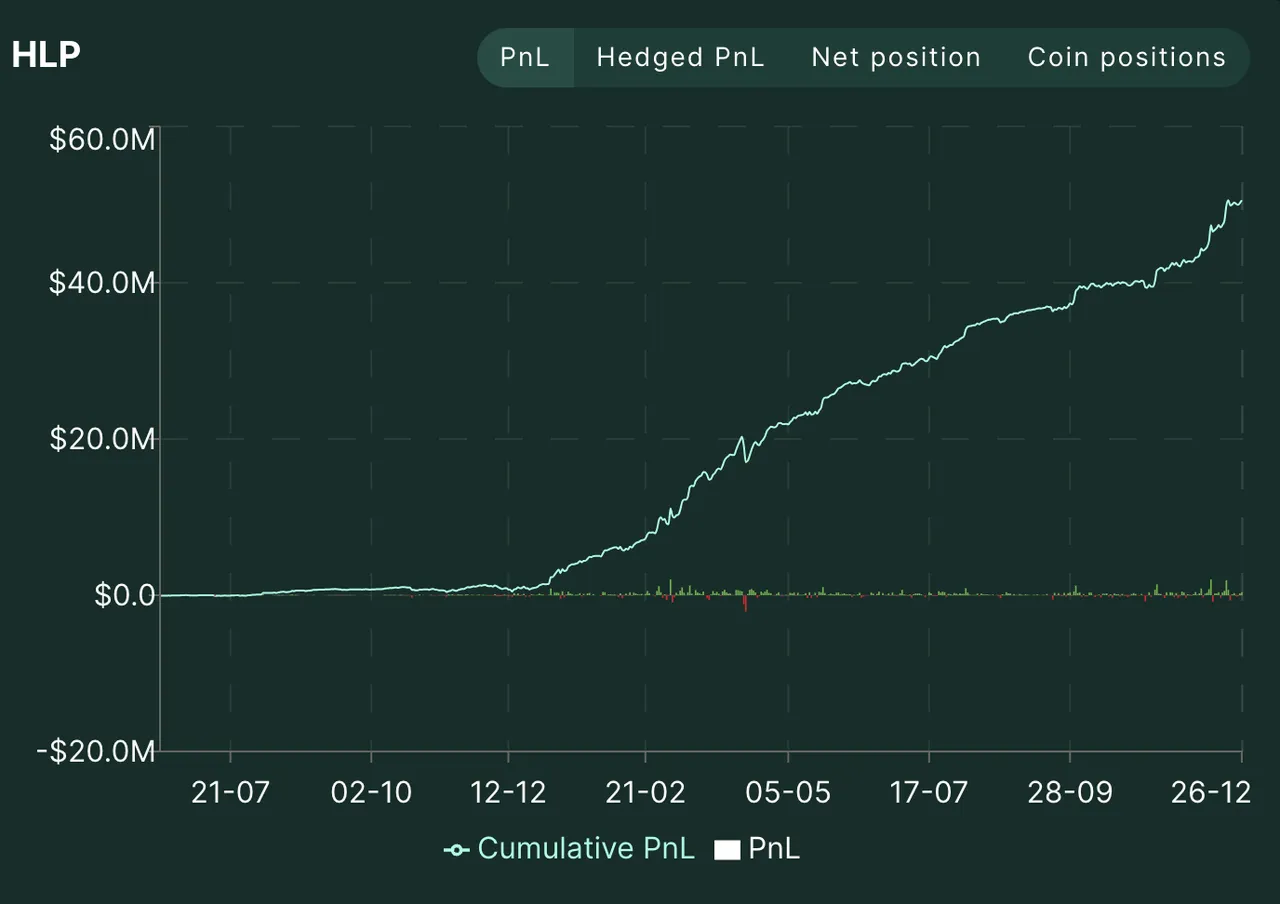
      Since its launch, HLP has generally remained profitable – thanks to its market-making strategy and trading fee revenue. By the end of 2024, the HLP vault had reached a total value locked (TVL) of approximately 350 million USDC and had accumulated around 50 million USDC in profit, reflecting a consistently positive APR.

      HLP’s tendency to maintain a net short position throughout the 2023–2024 bull market allowed it to deliver steady returns, even as asset prices were trending upward.

      HLP performanceHLP performance

      HLP performance remained profitable since launched – Source: HyperLiquid

      However, HLP is not without risk. On several occasions, the vault recorded significant losses due to unexpected market volatility.

      Jelly and a Hard-learned Lesson for Hyperliquid

      One of the most notable incidents occurred in late March 2025, involving a short squeeze on the token JELLY. A trader opened a short position worth approximately 8 million USDC on JELLY, then proceeded to buy up the token on decentralized exchanges (DEXs), causing the price to surge dramatically. As a result, the short position was liquidated and fully transferred to the HLP vault.

      Read more: Recap of the Price Manipulation in Hyperliquid

      The price of JELLY on DEXs skyrocketed by several hundred percent, pushing HLP into an unrealized loss of over 10 million USD.

      Facing the risk that a 230 million USD vault could lose everything to a small memecoin, the team acted quickly: they delisted JELLY and set a mandatory liquidation price at 0.0095 USD – exactly the level where the attacker had originally opened the short.

      However, this move sparked widespread controversy regarding Hyperliquid’s decentralization and transparency. Many argued that this was effectively a “validator bailout” (or “validator put”)—a” situation where the network steps in to cap losses when the vault is hit too hard. This raised concerns that Hyperliquid may be willing to override market mechanisms to protect HLP’s capital, potentially at the expense of other users.

      In response, Hyperliquid upgraded its blockchain to include on-chain validator voting for future asset delistings – a step toward deterring manipulation. Still, questions remain about the platform’s commitment to true decentralization.

      Hyperliquid’s Risk Management Measures

      Following the JELLY incident, Hyperliquid implemented a series of risk management upgrades to prevent similar scenarios from occurring in the future. One major change involved reducing the portion of HLP capital used for liquidation strategies. The team set this allocation at a fixed, clearly defined amount and also decreased the rebalancing frequency for the Liquidator vault to help limit potential losses during major liquidation events.

      In addition, Hyperliquid introduced a mechanism for loss thresholds and Auto-Deleveraging (ADL). This system automatically triggers deleveraging when losses from liquidation strategies exceed a specific threshold. Once the losses hit that limit, the protocol activates ADL, which draws on unrealized profits from other traders within the same asset pair to cover the deficit.

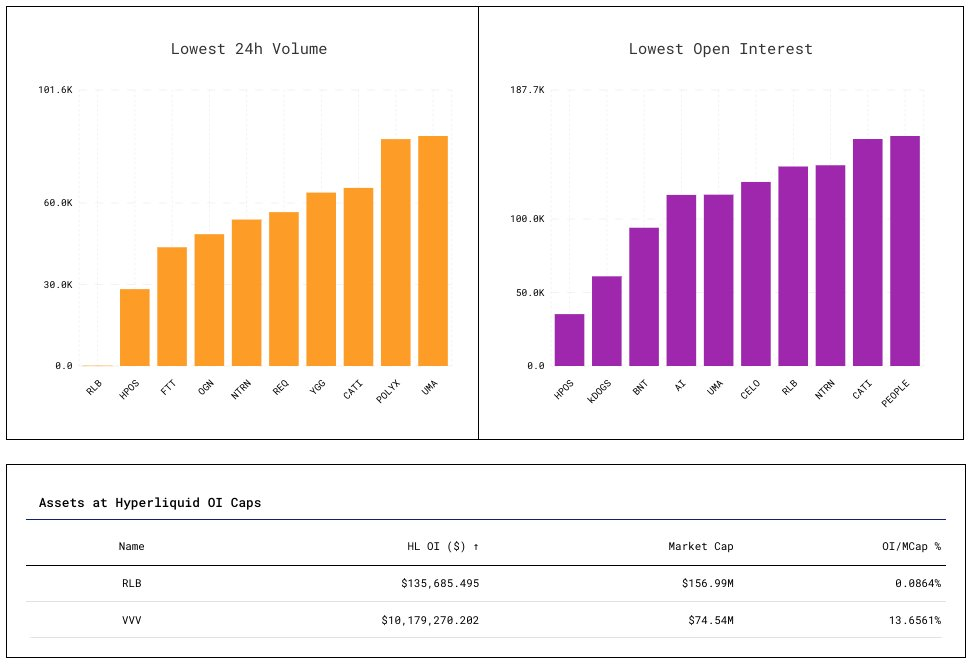
      To further enhance stability, the platform also adopted dynamic Open Interest (OI) caps. The platform adjusts these caps based on each asset’s liquidity and market capitalization, enforcing much stricter limits on low-cap tokens. This measure helps prevent a small number of traders from opening oversized positions that could distort market depth and introduce systemic risk.

      OI level of HyperLiquidOI level of HyperLiquid

      Source: ASXN

      These recent improvements reflect Hyperliquid’s recognition of the vulnerabilities exposed by the JELLY episode and its commitment to building a more resilient system. HLP shares profits with users but needs strong risk controls during volatile market conditions.

      One recent example that highlights Hyperliquid’s evolving governance and risk management practices is the delisting of MYRO perpetuals. On March 29, 2025, validators 2-5 voted to delist MYRO due to low liquidity and manipulation risks.

      ASXN backed delisting due to low volume, poor liquidity, and thin order books across CEXs, DEXs, and Hyperliquid. These conditions made MYRO highly susceptible to price manipulation and posed unnecessary risk to HLP

      hyperliquid logohyperliquid logo

      Exchanges Supporting HYPE and Liquidity

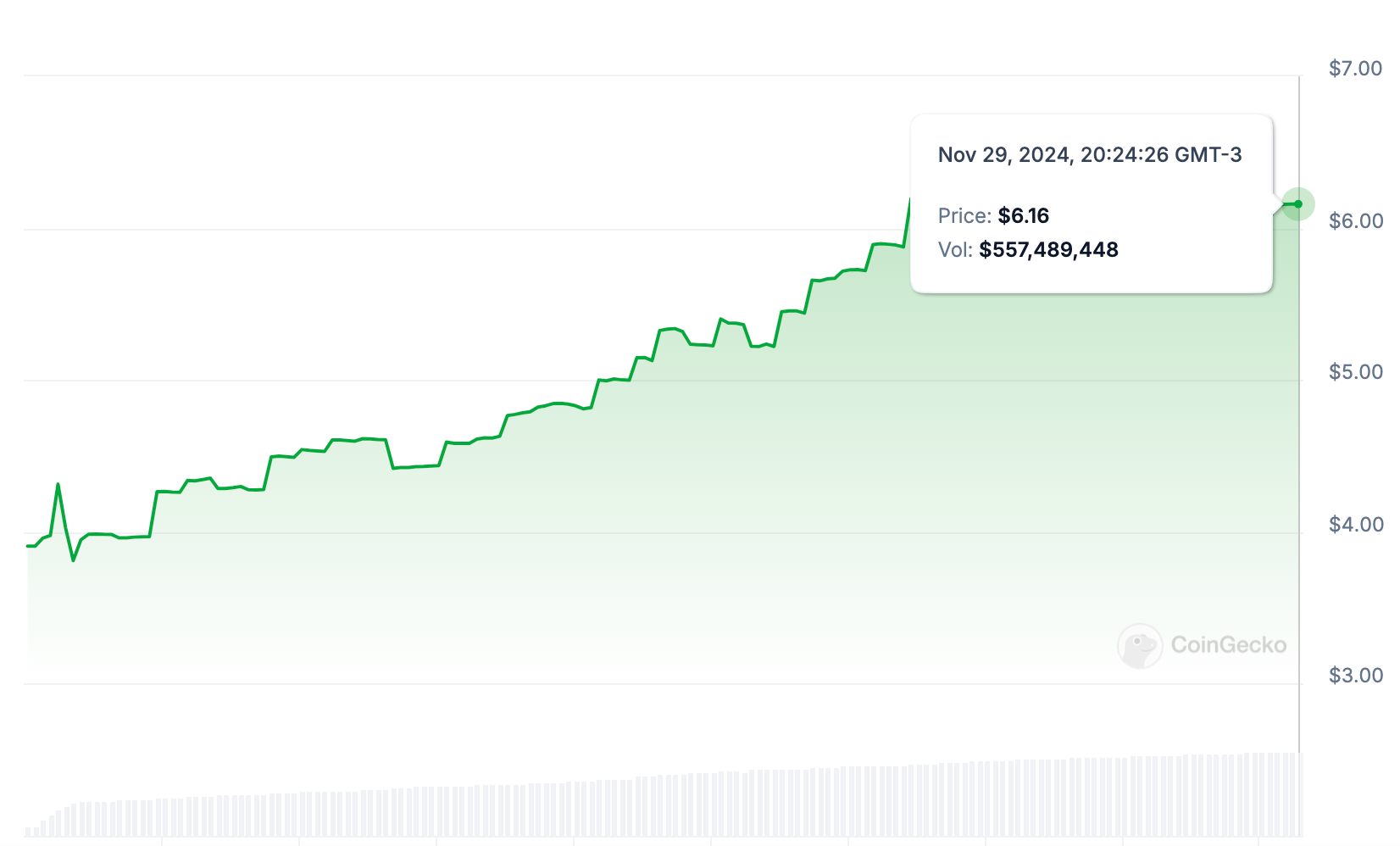
      Following its token launch, Hyperliquid quickly drew significant attention from the crypto community. HYPE jumped 60% in half a day, hitting 6 USD and nearing 2B USD in market cap.

      Exchanges Supporting HYPE and LiquidityExchanges Supporting HYPE and Liquidity

      Source: CoinGecko

      Users swapped USDC for HYPE directly on Hyperliquid DEX after connecting their wallet.

      In the weeks following the airdrop, several mid-tier centralized exchanges began listing HYPE, further expanding its liquidity. KuCoin was the first CEX to enable HYPE deposits, withdrawals, and trading (starting December 7, 2024). Today, exchanges such as KuCoin, Gate.io, Bitget, LBank, and CoinW account for the highest trading volumes of HYPE.

      Learn more: Why Hyperliquid Doesn’t Need to List on Binance

      Despite no Binance listing, HYPE trades actively, driven by strong community interest after the major airdrop. In its early days, HYPE saw strong volatility from profit-taking and fallout after the JELLY incident. However, in recent weeks, the price has shown signs of stabilization.

      Conclusion

      Hyperliquid gains traction in DeFi with community-backed liquidity and strong, proactive risk controls. HLP vaults generate yield, but the JELLY incident exposed tough trade-offs between user safety and decentralization.

      The Layer 1 Perpetual DEX’s swift upgrades and HYPE’s strong debut show rising trust in the protocol’s long-term potential.

      Read more: Hyperliquid Airdrop Season 2 Guide


      Source link

      What Is DEX? A Beginner Guide to Decentralized Exchanges

      0
      What Is DEX? A Beginner Guide to Decentralized Exchanges


      If you’re getting started in the crypto and DeFi ecosystem, you might be wondering, “What is DEX?”. A DEX is a decentralized exchange, which is a peer-to-peer marketplace for trading cryptocurrencies without relying on a central authority. It runs on blockchain technology, where smart contracts execute trades, removing the need for intermediaries like payment processors or banks.

      In this post, we’ll look at how this model grants users full control over private keys and custody of funds, minimizing counterparty risk. We’ll also see why DEX platforms can often provide lower fees and increased privacy, which appeals to both casual users and experienced traders.

      What is a DEX?

      A decentralized exchange, or DEX, is a cryptocurrency marketplace that relies on decentralized technology to execute trades without a middleman. Unlike centralized exchanges like Coinbase, which manage user funds in their wallets, a DEX leaves control of crypto assets in the user’s hands through self-custody. Transactions occur via smart contracts on public blockchains, making them secure, transparent, and tamper-resistant.

      DEXs enable users to buy or sell digital assets around the clock, requiring only an internet connection. Fees often include network costs and platform-specific fees that help fund development or reward liquidity providers. DEXs are less prone to large-scale hacking events since there is no central wallet to target. They also reduce regulatory compliance burdens because they do not typically handle fiat directly, though this varies by region and platform design.

      While decentralized exchanges offer permissionless access and minimize reliance on a central authority, they can face issues such as lower liquidity and more complex user interfaces. Despite these obstacles, DEXs remain a vital component of the expanding decentralized finance ecosystem, an immutable bulwark of the trustless, peer-to-peer ethos at the heart of crypto.

      Top Decentralized Exchanges

      DEX spot volume

      Source: The Block

      Uniswap: A pioneering Ethereum-based AMM, enabling frictionless token swaps, deep liquidity, and user-friendly operations.Curve: Focused on stablecoins, featuring minimal slippage through specialized liquidity pools for pegged assets.PancakeSwap: Leading AMM on BNB Chain, offering yield farming, staking, and broad BEP-20 token support.Balancer: Provides customizable multi-token pools, letting users define weights and automate portfolio management strategies.Sushi: A community-driven DEX evolved from Uniswap, delivering yield farming, lending, and multi-chain expansions.Hyperliquid: A cutting-edge DEX built for ultra-fast trading and deep liquidity, Hyperliquid leverages advanced blockchain protocols to minimize latency and support high-frequency trading.

      For more details, check out our best decentralized crypto exchanges review.

      How Does a DEX Work?

      Decentralized exchanges empower users to trade crypto directly from their wallets without intermediaries. Beyond the traditional order book model, modern DEXs integrate innovative features such as cross-chain bridges, lending protocols, and liquidity pools. 

      Bridges facilitate the seamless transfer of digital assets between different blockchains, enabling interoperability and expanding market access. On the other hand, liquidity pools allow users to deposit tokens into shared pools, which are then used to facilitate trades; in return, liquidity providers earn a portion of the transaction fees.

      These enhancements create a trustless and transparent ecosystem where transactions are recorded on a public ledger, and users maintain full custody of their funds. Let’s take a deeper look.

      Order Book DEXs

      Some decentralized platforms mirror traditional order books, matching buy and sell orders. Here, users submit limit orders specifying the desired price. If a corresponding sell (or buy) order is found, the trade happens automatically.

      While this resembles centralized exchanges, the difference lies in custody: user funds stay in personal wallets rather than a central platform. Each order and cancellation requires an on-chain transaction, which can cause network congestion or increased trading fees, especially when activity is high.

      Order book DEXs often face liquidity challenges if fewer users participate. Because the platform depends on matching buy-sell pairs, it may be harder to complete trades efficiently.

      On the other hand, traders retain more control through limit orders and advanced features like stop-loss orders. This approach suits those who want a familiar trading process without relinquishing ownership of their assets.

      Bridging

      Bridging is the term for transferring assets from one blockchain to another so that tokens that are created on one chain can be traded, staked, or otherwise utilized on other chains. Since DEXs rely on a range of tradable assets, bridging is a critical function that facilitates exchanges on a large scale. It helps unite liquidity sources and unlock new markets and cuts out the need for centralized intermediaries. 

      Cross-chain interoperability also makes DEXs much more versatile, by giving customers access to the key features, low fees, and deep liquidity of multiple crypto networks. By offering bridging, an exchange can dramatically expand the selection of assets available to its users, which translates to an edge over platforms where bridging isn’t an option.

      Lending

      Some DEXs also integrate decentralized finance products, like loans. DeFi lending protocols let you borrow or lend crypto assets directly through smart contracts. This approach eliminates any potential for centralized gatekeepers in the lending process, reducing lending fees and approval times. By staking your holdings, you can earn interest while borrowers secure their loans with on-chain collateral, for a trustless, transparent loan process. 

      DeFi lending functionality not only provides crucial liquidity to the platform but also gives users a wider range of options for putting their assets to work for them. The expansion into lending will help cement DEXs as one of the financial hubs of the future, specifically for those with an eye toward decentralized governance. 

      Enhanced Featureset DEXs

      Many modern DEXs have grown past the conventional order book model and now support cross-chain bridges, enabling seamless asset transfers between different blockchains. This interoperability expands critical market access and lets users participate in diverse ecosystems from a single platform.

      Overall, this creates a highly incentivized framework for liquidity provision, while also reducing slippage, enhancing the entire experience. Together, these features help craft a comprehensive DeFi platform that supports traditional trading styles while facilitating access to a massive array of financial services and capital efficiency.

      Automated Market Makers (AMMs)

      Automated market makers introduced a novel way of providing liquidity by using specialized smart contracts that create liquidity pools. In this model, liquidity providers deposit tokens into these pools and receive a share of trading fees whenever a swap occurs. Prices adjust based on each pool’s token ratio, eliminating the need for traditional order books.

      Platforms like Uniswap, SushiSwap, and PancakeSwap gained popularity for their simplicity: users easily connect a wallet, select tokens to swap, and confirm transactions. AMMs excel at ensuring constant availability, though liquidity pool sizes can affect slippage and pricing accuracy. In return for contributing to the pool, liquidity providers earn rewards proportional to their stake in the pool. That said, they also risk impermanent loss if token values diverge significantly.

      Despite these drawbacks, AMMs have propelled DeFi by lowering barriers to entry, supporting niche tokens, and expanding user access to on-chain trading.

      Automated Market Makers (AMMs)Automated Market Makers (AMMs)

      Source: Shardeum

      Pros and Cons of DEXs

      Pros 

      Self-custody: Using a decentralized exchange enables users to maintain control over private keys, ensuring full ownership of their crypto assets. Unlike centralized exchanges, which custody user funds, DEXs execute trades while leaving tokens in users’ wallets until the transaction completes.Diversity: DEXs offer a vast array of digital assets that might not be listed on more traditional, centralized platforms. This allows for the inclusion of emerging tokens or smaller market cap projects that may not currently meet the listing criteria of a CEX.Reduce Hacking risks: Because decentralized exchanges work by distributing funds across user wallets rather than a central authority, large-scale hacks are less likely. No single wallet holds all user funds, mitigating counterparty risk.Anonymity: Many DEXs require only an internet connection and a compatible crypto wallet to start trading, with no lengthy identity verification. This allows permissionless access, supporting those seeking greater privacy.Trustless Transactions: By using smart contracts on public blockchains, DEX platforms can provide liquidity and execute trades without relying on intermediaries or payment processors. This trustless environment also reduces the need for anti-money laundering oversight, although regional rules may still apply.Utility in the developing world: Lower fees, no mandatory KYC, and an easily connectable DEX interface create opportunities for financial inclusion. Users in regions lacking robust banking infrastructure can trade cryptocurrencies directly, bypassing traditional barriers.

      Cons 

      Scalability: Network congestion on popular DEXs can lead to high gas fees or delayed transactions, particularly on blockchains struggling with throughput. These limitations hamper user experience and future growth.User Interfaces and Experience: Navigating a DEX can feel daunting for newcomers, with complex order forms, liquidity pool mechanisms, or advanced features like limit orders. Home screen layouts and tutorials often lag behind more user-friendly centralized platforms.Liquidity: While some DEXs excel at market liquidity, many struggle if too few liquidity providers join the pool. Low liquidity means higher slippage and less favorable trade execution for large orders.Smart contract: DEXs rely on code that may contain vulnerabilities. Even though many popular DEXs undergo audits, unforeseen exploits can compromise user funds or disrupt the trading process.Riskier coins: Because listing on a DEX typically requires no centralized vetting, fraudulent or extremely volatile tokens can appear, exposing traders to higher risk.On and Off-Ramps: Converting fiat to crypto or vice versa often requires centralized exchanges (CEXs). As most DEXs lack direct trade fiat functionality, new users might need a CEX for deposits and withdrawals.

      Centralized Exchanges (CEXs) vs. Decentralized Exchanges (DEXs)

      Centralized Exchanges (CEXs)Decentralized Exchanges (DEXs)Custody of FundsUser funds held by the exchangeUsers control their private keys and fundsLiquidity & VolumeGenerally high, supported by a central authorityVaries based on liquidity providers; can be lower for niche tokensFees & StructureTrading fees, withdrawal fees, and potential hidden costsFees vary (gas and platform fees), no central authority to set unified pricesUser ExperienceOften beginner-friendly with advanced features and order typesDex interface can be complex, requiring own research on liquidity pool usage and smart contractsSecurityTarget for hackers due to centralized storageReduced hacking risks since there’s no single point of failureRegulatory ComplianceTypically required to follow anti-money laundering (AML) regulationsGenerally non-custodial, but certain jurisdictions may still require compliance

      How do DEX Fees Work?

      DEX fees differ from CEXs in that they are not typically controlled by a central authority. Instead, costs can include network transaction fees known as gas, plus any platform-specific fees. While there are no standard withdrawal fees imposed by the platform (since user funds remain in user custody), on-chain actions like swapping or moving tokens to another wallet still incur blockchain fees. Fees may fluctuate due to market volatility, network congestion, or different governance decisions in the decentralized finance (DeFi) ecosystem.

      The Future of DEXs and DeFi

      Decentralized exchanges are poised to play a greater role in shaping the broader DeFi ecosystem. Advancements in blockchain technology could alleviate scaling concerns, allowing DEXs to handle more users and trade cryptocurrencies at minimal costs.

      As regulatory frameworks evolve, some DEXs may integrate compliance tools while preserving user autonomy. With institutional interest rising, next-generation DEXs might adopt features like derivatives, futures contracts, or advanced analytics, attracting more sophisticated traders.

      On top of that, the development of cross-chain solutions is likely to unify liquidity across multiple networks, creating a more seamless trading process.

      Conclusion

      By providing instant access to digital assets, preserving control through private keys, and encouraging community-driven liquidity provision, decentralized exchanges offer a glimpse of the potential of permissionless, trust-free, financial transactions. That said, there are still challenges to tackle related to liquidity, user experience, and regulatory compliance, which can be significant, especially for newcomers.

      As technology evolves and more users embrace decentralized platforms, DEXs are poised for continuous growth. For those willing to conduct thorough research and manage risk appropriately, these exchanges open doors to innovative ways of engaging with crypto markets.


      Source link

      Why Everyone’s Talking About Pudgy Penguins in 2025 | NFT News Today

      Why Everyone’s Talking About Pudgy Penguins in 2025 | NFT News Today


      The Pudgy Penguins NFT collection has transformed from a cute cartoon project to the dominant force in the NFT space in 2025, outperforming longtime leaders like Bored Ape Yacht Club and CryptoPunks. Its remarkable success comes from a strategic blend of viral marketing, physical product expansion, and a devoted community that’s rapidly expanding the penguin empire beyond crypto enthusiasts.

      Key Takeaways

      Pudgy Penguins recorded $768K in 24-hour sales (March 2025), nearly doubling Bored Ape Yacht Club’s performance

      While the broader NFT market declined 63% in Q1 2025, the Pudgy Penguins collection grew sales by 13% to $72M

      The PENGU token launch on Solana reached a $781M market cap by February 2025 despite significant price volatility

      Physical merchandise in major retailers like Walmart and Target brought 500K+ new users into Web3

      Viral marketing campaigns generated over 40 billion GIPHY views and 500M+ TikTok views

      How Pudgy Penguins Became the NFT Market Leader

      In a market where most NFT projects are struggling, Pudgy Penguins has broken away from the pack. March 2025 data shows the project generated an impressive $768K in 24-hour sales, easily outpacing former market leaders Bored Ape Yacht Club ($346K) and CryptoPunks ($252K).

      This performance is even more remarkable considering the broader market conditions. According to KuCoin News, the NFT industry experienced a 63% year-over-year decline in Q1 2025. However, Pudgy Penguins defied this trend with a 13% sales increase, reaching $72 million in total sales.

      The December 2024 launch of the PENGU token on Solana has been a key factor in this growth. With a maximum supply of 88.89 billion tokens, the PENGU ecosystem quickly established a market cap of $781 million by February 2025, showing strong investor interest despite price volatility.

      Luca Netz, the project’s leader, hasn’t been shy about the project’s ambitions, predicting that Pudgy Penguins is becoming “the Dogecoin of NFTs” – a reference to the meme coin that transcended its origins to become a household name.

      The Viral Marketing Engine Powering Pudgy’s Success

      The explosive growth of Pudgy Penguins can’t be separated from its innovative marketing approach. The team has focused on creating shareable, fun content that resonates far beyond traditional crypto audiences. Their GIPHY channel alone has generated over 40 billion views, with new content adding approximately 1 billion additional views every 3-4 days.

      Social media has been central to this strategy, particularly on TikTok, where the #KindPengu campaign has:

      Amassed 1.2 million followers

      Generated over 500 million views across just 14 videos

      Created content that appeals to both crypto natives and mainstream audiences

      The project has skillfully leveraged meme culture without becoming a mere flash-in-the-pan trend. By connecting fun, shareable content with a consistent brand message about kindness and accessibility, Pudgy Penguins has built sustained engagement that other NFT projects can only dream of.

      Influencer partnerships have amplified this reach, with carefully selected collaborators who align with the brand’s friendly, accessible image rather than typical crypto personalities focused primarily on price speculation.

      From Digital to Physical: The Retail Revolution

      Perhaps the most significant factor in Pudgy Penguins’ 2025 dominance has been its successful expansion into physical retail. Unlike most NFT projects that remain purely digital, the Pudgy team has created a genuine bridge to mainstream consumers.

      The impact of this strategy is clear in the numbers:

      Toys sold in major retailers like Walmart and Target have introduced over 500,000 new users to Web3 through NFC-enabled collectibles

      The project has licensed more than 20 penguin designs from NFT holders for merchandise, paying over $1 million in royalties back to the community

      Strategic partnerships, like the one between Doodles and McDonald’s, have driven sales growth of 58% for both projects

      This retail distribution strategy has created new entry points to the Pudgy ecosystem that don’t require any prior understanding of blockchain technology. A child can love a Pudgy Penguin toy without knowing anything about NFTs, but the toy can eventually lead them (or their parents) into the digital ecosystem.

      Other NFT projects are now trying to copy this approach, but Pudgy Penguins’ early mover advantage and execution quality have set a high bar. The Pudgy Penguins price has benefited from this expanded audience, with the floor price for the collection maintaining strength even as competitors faltered.

      PENGU Token: Performance and Future Outlook

      For anyone looking to buy Pudgy Penguins or invest in the ecosystem, understanding the PENGU token’s performance is crucial. Like many crypto assets, the token has experienced significant volatility since its December 2024 launch.

      As of February 2025, PENGU was trading at $0.00997, representing a 73% drop from its December 2024 peak of $0.03272. This volatility is typical for new tokens, particularly in the meme/NFT space.

      Market forecasts for PENGU vary widely:

      2025 price range: $0.00879–$0.02150

      April 2025 prediction: 230.77% gain to $0.023463

      2030 bull case target: $0.3511 (978% increase from 2024)

      2040 speculative range: $1.1–$4.40 per token

      This forecast from ICOBench should be taken with appropriate caution, as the crypto market is notoriously difficult to predict. However, the long-term projections reflect growing confidence in the project’s fundamentals and expansion strategy.

      The Penguin Community: Building a Lasting Ecosystem

      A crucial factor in Pudgy Penguins’ staying power has been its community-centric approach. When the PENGU token launched, 75% of the total supply was airdropped to NFT holders and community initiatives, creating immediate value for supporters.

      Holders of Pudgy Penguins NFTs enjoy several benefits:

      Exclusive access to events and merchandise

      Governance rights in project decisions

      IP monetization opportunities through merchandise licensing

      Ongoing royalties from secondary sales and licensed products

      The project’s Discord community has grown to over 46,000 members who actively participate in decisions about the project’s direction. This level of engagement has created a self-sustaining ecosystem where community members have genuine incentives to promote and improve the project.

      Real-world events at major crypto conferences have further strengthened these connections, allowing online relationships to develop into more meaningful networks. This community-building approach has created loyalty that helps buffer against market volatility.

      Roadmap and Vision: Beyond 2025

      The Pudgy Penguins team has ambitious plans that extend far beyond being merely an NFT collection. Their stated goal is to become “crypto’s number one public good” through several strategic initiatives:

      Metaverse integration to create immersive penguin-themed experiences

      AI-authenticity tools to fight fake products and protect the brand

      Continued focus on Solana for its speed and lower transaction costs

      Planned integrations with other Web3 platforms to expand the ecosystem

      Educational initiatives designed to bring new users into Web3 through the approachable Pudgy brand

      The choice to build on Solana rather than Ethereum represents a strategic bet on scalability and user experience. While Ethereum remains the home of many blue-chip NFT projects, Solana’s lower fees and faster transactions align better with Pudgy Penguins’ mass-market ambitions.

      The long-term vision focuses on evolving beyond the NFT space to become a mainstream brand with blockchain elements, rather than a blockchain project trying to appeal to mainstream audiences.

      Risks and Challenges Ahead

      Despite its impressive performance, the Pudgy Penguins ecosystem faces several challenges that could impact its future growth:

      Price volatility: The 55% crash post-airdrop in December 2024 and a 12.27% weekly drop in February 2025 highlight the project’s sensitivity to market sentiment

      Regulatory uncertainty: Increasing scrutiny of NFTs and tokens could Competition: New meme coins and established NFT projects are all vying for the same attention and investment

      Market saturation: The broader NFT space shows signs of overcrowding, making it harder to maintain prominence

      Maintaining momentum: Keeping a community engaged long-term is difficult even for the most successful projects

      These challenges aren’t unique to Pudgy Penguins, but they could slow the project’s growth trajectory if not carefully managed. The team’s focus on physical products and mainstream appeal provides some insulation from crypto market volatility, but doesn’t eliminate these risks entirely.

      Why Pudgy Penguins Matters in 2025

      The rise of Pudgy Penguins represents more than just another successful NFT project. It demonstrates a potential blueprint for how digital assets can cross over into mainstream awareness and adoption. By balancing community building, physical products, and digital innovation, the project has created something more durable than typical crypto projects.

      For investors, collectors, and Web3 enthusiasts, Pudgy Penguins offers valuable lessons about building sustainable value in the digital asset space. While price volatility will likely continue, the project’s strategic expansion beyond pure speculation sets it apart from many competitors.

      Whether Pudgy Penguins will truly become “the Dogecoin of NFTs” remains to be seen, but its performance in 2025 suggests it has the momentum and strategy to remain a significant force in the NFT landscape for years to come.


      Source link

      Lady Gaga Fans Rip Singer Over ‘Insane’ Ticket Prices For ‘Mayhem Ball’

        0
        Lady Gaga Fans Rip Singer Over ‘Insane’ Ticket Prices For ‘Mayhem Ball’


        Lady Gaga’s “Mayhem Ball” tour kicks off in Las Vegas on July 16 and ends in Paris on November 22, marking her first arena tour since 2018.

        However, fans of the pop star are outraged over ticket prices, with many taking to social media to slam the cost as “outrageous.”

        Meanwhile, Lady Gaga faces a $100 million lawsuit from Lost International, alleging she copied their trademarked logo for her Mayhem merchandise.

        Article continues below advertisement

        Lady Gaga’s ‘Mayhem Ball’ Tour Ticket Prices Spark Backlash

        MEGA

        Lady Gaga’s highly anticipated “Mayhem Ball” tour in Las Vegas is seemingly off to a rocky start over the price of its tickets.

        While fans were excited for the pop icon to return to arena shows, many were shocked by the cost of attending.

        With nosebleed seats priced as high as $600 and floor tickets soaring to $1,000-$2,000 due to dynamic pricing, frustration has spread across social media.

        Fans have been left feeling outraged, with some even threatening to boycott the upcoming “Mayhem Ball” tour over what they call “insane” ticket prices.

        Article continues below advertisement

        Fans Drag The Singer Over The ‘Disappointing’ Ticket Prices

        Lady Gaga's Mayhem on Broadway Marquees and Times Square Billboards in NYC
        RCF / MEGA

        A Reddit user summed up the anger surrounding the “Mayhem Ball” tickets, writing: “Disappointing to see Lady Gaga has turned on dynamic pricing for her upcoming tour, resulting in outrageous prices even for nosebleeds ($400-$600).”

        Many have also taken to social media to vent their frustration. One fan sarcastically commented, “At those prices, I’ll be seated… for the inevitable concert movie.”

        Another person wrote: “I’m sorry, but no concert is worth that amount for such bad seats. I love Lady Gaga, and I would love to see her in concert, but that’s crazy.”

        “But for all the complaining, the concerts will still sell out, so artists will continue doing this,” they added, per The U.S. Sun.

        Article continues below advertisement

        ‘Mayhem Ball’ Tour: Ticketmaster Shuts Down Rumors About ‘Surge Pricing’ And ‘Dynamic Algorithms’

        Lady Gaga at "Joker: Folie A Deux" Photocall - The 81st Venice International Film Festival
        Daniele Cifalà / MEGA

        Lady Gaga’s “Mayhem Ball” tour is set to launch in Las Vegas this July, with stops at major venues across North America and Europe.

        The tour includes three nights at Madison Square Garden in New York City and two at Chicago’s United Center.

        In September, Gaga will take the stage at London’s O2 Arena for three shows before performing in Stockholm, Milan, Barcelona, Berlin, Amsterdam, Paris, and more.

        Before all that, she’s also set to headline Coachella this month. However, fans remain outraged at the ticket prices despite Ticketmaster’s claims that they don’t use surge pricing or dynamic algorithms.

        Article continues below advertisement

        In a statement to The Daily Beast, the company insisted: “Ticketmaster does not have surge pricing or dynamic algorithms to adjust ticket prices. Tickets were priced in advance of the sale and set at the individual seat level.”

        Tickets are also available through resale platforms like StubHub, Vivid Seats, and SeatGeek.

        Article continues below advertisement

        Lady Gaga Says She Wanted To ‘Create A Different Kind Of Experience’

        Lady Gaga Signs Autographs in NYC
        MEGA

        Lady Gaga’s “Mayhem Ball” tour comes on the heels of her seventh studio album, Mayhem, which debuted at No. 1 on the Billboard 200.

        The tour marks her first major run across North America, Europe, and the U.K. since 2022’s “Chromatica Ball.”

        “This is my first arena tour since 2018,” Gaga shared in a statement, per Variety. “There’s something electric about a stadium, and I love every moment of those shows.”

        “But with the Mayhem Ball, I wanted to create a different kind of experience — something more intimate, closer, more connected — that lends itself to the live theatrical art I love to create,” The “Bad Romance” singer noted.

        Lady Gaga Hit With $100M Lawsuit Over Alleged Logo Theft For ‘Mayhem’ Merchandise

        Lady Gaga on the Bafta Film Awards Red Carpet 2022
        MEGA

        Amid the ticket sale uproar, Lady Gaga is facing a $100 million lawsuit from California-based surf company Lost International, accusing the singer of stealing their logo for her “Mayhem” merchandise, according to legal documents obtained by FOX Business.

        The lawsuit, filed in a California district court, alleges that Gaga’s Mayhem design is “substantially similar, if not nearly identical” to logos the company trademarked over a decade ago.

        Gaga’s legal team has pushed back against the claims, calling the lawsuit an attempt to profit off her success.

        In a statement to the news outlet, her attorney, Orin Snyder, said: “Lady Gaga’s ‘MAYHEM’ soared to No. 1 and shattered records, a testament to her unmatched talent and global impact.”

        Article continues below advertisement

        She added: “It’s disappointing—but hardly surprising—that someone is now attempting to capitalize on her success with a baseless lawsuit over the name MAYHEM. This is nothing more than an opportunistic and meritless abuse of the legal system.”


        Source link

        Top 10 Luxury Cars That Hold Their Value

        Top 10 Luxury Cars That Hold Their Value


        Investing in a vehicle can be a significant financial decision, and understanding which are the luxury cars that hold their value over time can help you make a more informed choice. While luxury cars typically depreciate faster than their more economical counterparts, certain models have proven to be more resilient against depreciation.

        Disclaimer: The resale values of vehicles mentioned in this article are not guaranteed and can be affected by numerous factors including condition, mileage, market trends, economic conditions, and regional demand. All potential buyers should perform their own due diligence and consult with automotive valuation experts before making any purchasing decisions.

        1. Porsche 911

        The Porsche 911 consistently ranks as one of the luxury vehicles with the best resale value. This iconic sports car has maintained its distinctive silhouette while evolving technologically with each generation.

        Why it holds value:

        Timeless design that transcends trends

        Exceptional build quality and reliability

        Strong brand heritage and enthusiast following

        Limited production numbers for certain models

        Consistent performance benchmarks

        The 911 GT3 and limited edition variants typically command even stronger resale values, with some rare models actually appreciating over time.

        Porsche AG - 911 GT3 with Touring Package - luxury cars that hold their value
        @Porsche AG – 911 GT3 with Touring Package

        2. Lexus LX

        The Lexus LX SUV demonstrates that luxury and durability aren’t mutually exclusive. Based on the legendary Toyota Land Cruiser platform but with added luxury appointments, the LX offers the best of both worlds.

        Why it holds value:

        Toyota/Lexus reputation for reliability

        Genuine off-road capability combined with luxury features

        Lower production numbers compared to other luxury SUVs

        Appeal in both domestic and export markets

        Minimal styling changes between generations

        Many LX models retain up to 65% of their value after three years, an impressive figure in the luxury SUV segment.

        2025 Lexus LX 700h2025 Lexus LX 700h
        @Lexus – 2025 Lexus LX 700h

        3. Mercedes-Benz G-Class

        The G-Wagon represents a unique case in the automotive world, with used examples sometimes selling for more than new ones during periods of high demand and limited availability.

        Why it holds value:

        Instantly recognizable, iconic design

        Military heritage and genuine off-road capability

        Limited production capacity

        Celebrity association and status symbol

        Gradual evolution preserves design integrity

        The G-Class has defied conventional depreciation curves, particularly for AMG variants and special editions.

        Mercedes-Benz - G 580 ElectricMercedes-Benz - G 580 Electric
        @Mercedes-Benz – G 580 Electric

        4. Audi RS Models

        The high-performance RS variants from Audi tend to depreciate more slowly than their standard counterparts, with models like the RS6 Avant and RS7 performing particularly well.

        Why they hold value:

        Limited production numbers

        High-performance specifications that remain impressive as they age

        Dual personality of practicality and performance

        Subtle styling that ages well

        Strong enthusiast following

        The rarity of RS models in the North American market further helps their value retention compared to European markets.

        Audi RS 6 Avant GT, Audi 90 quattro IMSA GTOAudi RS 6 Avant GT, Audi 90 quattro IMSA GTO
        @Audi AG – Audi RS 6 Avant GT, Audi 90 quattro IMSA GTO

        5. BMW M3/M4

        BMW’s performance-focused M cars have a strong following that helps maintain their values, particularly for models with manual transmissions and in special colors or editions.

        Why they hold value:

        Motorsport heritage

        Performance that remains impressive as they age

        Extensive aftermarket support

        Strong enthusiast community

        Limited production of special editions

        Clean, well-maintained examples with documented service histories command significant premiums in the pre-owned market.

        BMW - First-ever BMW M3 CS TouringBMW - First-ever BMW M3 CS Touring
        @BMW – First-ever BMW M3 CS Touring

        6. Porsche Taycan

        Porsche’s electric sedan has shown promising early signs of strong value retention, following in the footsteps of its combustion-engine siblings.

        Why it holds value:

        Porsche build quality and performance credentials

        Limited initial production

        Distinctive styling that stands out from other EVs

        True Porsche driving dynamics in an electric package

        Strong initial demand exceeding supply

        As the electric vehicle market matures, the Taycan’s position as a pioneer in the performance EV segment helps maintain its value.

        Porsche - Taycan, Taycan Turbo Cross Turismo, Taycan 4S Sport TurismoPorsche - Taycan, Taycan Turbo Cross Turismo, Taycan 4S Sport Turismo
        @Porsche – Taycan, Taycan Turbo Cross Turismo, Taycan 4S Sport Turismo

        7. Land Rover Range Rover

        The full-size Range Rover, particularly in higher trim levels and with desirable options, tends to hold value better than many of its luxury SUV competitors.

        Why it holds value:

        Unmatched combination of luxury and off-road capability

        Strong brand prestige and recognition

        Mature design language that ages well

        Genuine capability that justifies its premium positioning

        Appeal to diverse buyer groups

        The Range Rover’s position as the original luxury SUV helps maintain its cachet in a crowded market.

        Range Rover Evoque Dynamic HSERange Rover Evoque Dynamic HSE
        @Land Rover – Range Rover Evoque Dynamic HSE

        8. Lexus LC

        This grand touring coupe from Lexus combines striking design with the brand’s legendary reliability.

        Why it holds value:

        Head-turning styling that appears more expensive than it is

        Limited production numbers

        High-quality interior materials that wear well

        Toyota/Lexus reliability reducing ownership concerns

        Available as both conventional and hybrid powertrains

        The LC’s relatively low sales volumes help maintain exclusivity and value over time.

        Lexus - LC convertibleLexus - LC convertible
        @Lexus – LC convertible

        9. Rolls-Royce Phantom

        At the highest end of the luxury spectrum, the Rolls-Royce Phantom depreciates at a slower rate percentage-wise than many less expensive luxury cars.

        Why it holds value:

        Ultra-luxury status symbol

        Bespoke nature means no two are exactly alike

        Handcrafted quality and materials that age gracefully

        Limited production numbers

        Timeless design philosophy

        While the absolute depreciation in dollars remains substantial, the Phantom retains a higher percentage of its original value compared to other ultra-luxury sedans.

        Rolls-Royce - Phantom Coupé Aviator CollectionRolls-Royce - Phantom Coupé Aviator Collection
        @Rolls-Royce – Phantom Coupé Aviator Collection

        10. Tesla Model S

        Despite being a relatively new entrant to the luxury market and putting all politics aside, the Tesla Model S has demonstrated strong residual values, especially for a vehicle with significant technology components.

        Why it holds value:

        Regular software updates that add features to older models

        Pioneer status in the luxury EV segment

        Strong performance credentials

        Network of Superchargers

        Brand cachet and environmental credentials

        The Model S benefits from Tesla’s approach to over-the-air updates, which help older vehicles maintain technological relevance.

        Tesla - Model STesla - Model S
        @Tesla – Model S

        Factors That Help Luxury Cars Retain Value

        Several factors contribute to better-than-average value retention:

        Brand reputation – Established luxury marques with strong heritage typically hold value better

        Limited production – Scarcity helps maintain demand in the pre-owned market

        Performance credentials – Vehicles that offer exceptional performance tend to depreciate more slowly

        Timeless design – Cars that avoid trendy styling elements age more gracefully

        Build quality – Vehicles constructed with superior materials and craftsmanship remain desirable longer

        Reliability – Luxury vehicles with proven reliability records command premium prices when used

        Desirable options – Certain optional equipment can significantly impact resale value

        The Importance of Due Diligence

        While these vehicles have historically demonstrated strong value retention, past performance does not guarantee future results. Potential buyers should consider:

        Comprehensive pre-purchase inspections by marque specialists

        Verification of maintenance records and service history

        Market research on current selling prices and trends

        Regional variations in demand and pricing

        Model-specific issues that may affect particular years or variants

        Economic factors that might impact the luxury car market

        Mileage and condition assessment by qualified professionals

        Remember that even the best-performing luxury cars will still depreciate—the goal is to minimize this inevitable decline rather than expect appreciation.

        Conclusion

        Luxury vehicles that hold their value well typically combine strong brand heritage, limited production, exceptional quality, and timeless design. While these models have demonstrated better-than-average resale values historically, all automotive purchases should be approached with careful research and realistic expectations regarding depreciation.

        A vehicle that retains its value well can significantly reduce the total cost of ownership, but this should be just one of many factors considered when making a luxury car purchase. Personal enjoyment, performance, reliability, and suitability for your needs should remain primary considerations.

        Read next:

        Sharing is caring!


        Source link

        Superman | Sneak Peek

          0
          Superman | Sneak Peek


          The journey of Daredevil: Born Again could probably be series of its own. It has been a bumpy rollercoaster to say the least. From the 18-epsiode initial order to the cameos in No Way Home, She-Hulk and Echo, to the creative overhaul midway through filming. But it’s finally a reality. Daredevil: Born Again is welcome return for our blind vigilante and Kingpin. The show is created by Dario Scardapane, Chris Ord and Matt Corman and stars Charlie Cox, Vincent D’Onofrio who reprise their roles from the original Netflix series.


          The series sbut istarts strong, with a pretty impactful first couple episodes. Right from the opening episode, it catches you off guard with its brutal violence and bold story decisions, setting up what initially feels like a dark, gritty, and layered street-level saga. It leans into, or at least tries to, everything that made Daredevil a fan favorite—complex characters, grounded stakes, and a world that thrives in the shadows of the MCU rather than under its spotlight. However, as the season progresses, the cracks start to show, and the series struggles under the weight of its own ambitions.


          One of the biggest issues is the sheer number of characters and subplots fighting for attention. The show introduces multiple new faces, and side stories, but none of them get the time they need to breathe. Characters go in and out at convenience and we barely see some of the major ones. Instead of a tight, focused narrative that we expected to revolve around Matt and Wilson’s conflict, we linger in unnecessary places. As a result, we rarely get to see them face off, which is disappointing. We also don’t get to see Fisk get his hands dirty, which makes sense now that he’s the mayor.

          (L-R) Daredevil/Matt Murdock (Charlie Cox) and Kingpin/Wilson Fisk (Vincent D’Onofrio) in Marvel Television’s DAREDEVIL: BORN AGAIN, exclusively on Disney+. Photo by Giovanni Rufino. © 2024 MARVEL.

          The series ends up juggling too much, making it feel cluttered and unfocused. This directly impacts Matt’s arc, which feels oddly inconsistent. The Daredevil we get here gets more and more stranger from the one we have known and loved with each episode. His journey is nowhere near as compelling as it was in the original Netflix series, and it definitely had the potential to thanks to the bright first few episodes. Also at times, it feels like the show isn’t quite sure what to do with him. In episode 5, we take him on a very wired little adventure that just felt like it was forced to accomodate a cameo.


          By the time we get a glimpse of the Matt Murdock we’ve been waiting for, the season is already wrapping up, leaving much to be desired. That said, the show still delivers in some key areas. The action remains top-notch, with well-choreographed fight sequences that remind you why Daredevil has some of the best combat in the superhero genre. The performances are also excellent, as expected, with Charlie Cox slipping back into the role effortlessly. Vincent D’Onofrio and Jon Bernthal also return like they never left.


          Michael Gandolfini was the standout among the new cast members. His character was very charming and likeable. He instantly finds chemistry with D’Onofrio, and they’re setting him up almost like a protege to Fisk. The part that was surprisingly most engaging was the way Vanessa and Wilson’s relationship. It was handled very carefully and respectfully, and takes interesting turns. Ayelet Zurer is so good as Vanessa and thank god they brought her back. Jon Bernthal also steals the show as always with his brief appearance as The Punisher.

          (L-R) Karen Page (Deborah Ann Woll), Daredevil/Matt Murdock (Charlie Cox) and Foggy Nelson (Elden Henson) in Marvel Television’s DAREDEVIL: BORN AGAIN, exclusively on Disney+. Photo by Giovanni Rufino. © 2024 MARVEL.

          There are also some solid twists along the way, and the show occasionally finds moments of brilliance that hint at its potential. But if Born Again continues down this path, it risks becoming yet another property that bends under the pressure of fitting into the wider MCU instead of standing on its own. The biggest mistake that Dario Scardapane made is keeping the 6 episodes that were shot proir to the creative overhaul. The episodes that were shot after he come are by far the best episodes and the difference is quite apparent.


          Daredevil:Born Again does a great job of expanding the street-level side of the MCU while offering the gritty and dark storytelling that Marvel rarely delivers. It starts off strong, embracing the violence and brutality that made the original show so beloved, but it ultimately loses focus under the weight of too many characters and scattered subplots. it still delivers thrilling action, strong performances, and sets the foundations for something that could be great in future seasons. Even if you can’t get on board with the storytelling, you’ll enjoy seeing our beloved characters back doing what they do best.

          Daredevil: Born Again premieres with its first 2 episodes on March 4 on Disney+. 


          Source link

          Popular Posts

          My Favorites

          5 Hidden Sci-Fi Horror Masterpieces You Need to Experience | Metaverse...

          Look, I love Alien and The Thing as much as anyone else. If you catch me on a weekend, there’s a solid chance...