It’s been a classic series of Celebrity Big Brother, but the winner won’t see anything in terms of a cash prize after being crowned at the final tonight.
From Mickey Rourke’s unpleasant outbursts to the interactions between Chris Hughes and JoJo Siwa, CBB 2025 will certainly be missed.
But what will the winner take home with them tonight for their efforts over the past three weeks?
The build up to the Celebrity Big Brother 2025 final has been filled with drama, and Jack drinking tea (Credit: YouTube)
What does the winner of the Celebrity Big Brother final 2025 get?
According to OK!, the CBB winner will not bag the same prize as victorious housemates of the regular Big Brother series have done.
That’s because BB winners have often been awarded cash, usually around £100,000, for being the viewers’ top pick.
Previously, CBB final winners have seen a donation of £50,000 given to the charity of their choice. However, it is believed this was abandoned by Channel 5 in 2018. And ITV reportedly did not reinstate this when the show was rebooted after nearly six years away from screens in 2024.
But that’s not to say housemates aren’t reimbursed for their time and efforts.
Donna Preston proved to be a fan favourite (Credit: YouTube)
How much do Celebrity Big Brother housemates earn?
Earlier this month, ED! reported on the net worths of the CBB 2025 cast, as well as ‘revealing’ how much ITV has shelled out for the lineup.
It is believed Ella Rae Wise is this year’s lowest paid contestant. She is said to have been paid £20,000 to take part. Meanwhile, Hollywood star Mickey Rourke is said to have been given the most. He has been reportedly handed a cool £500,000 for his ITV exertions.
Elsewhere, JoJo Siwa will receive £400,000 for her time in the CBB house, it is claimed. And Chris Hughes is reportedly trousering £45,000 for his antics, which have included him wiping at a litter tray he peed in while dressed as a cat.
Also in the final, Chesney Hawkes is said to be in line for £25,000, and Danny Beard could be paid £30,000. Donna Preston is also tipped to receive £30,000, and Jack P Shepherd is expected to pocket £100,000.
What next?
But surely the greatest win of all will be all the lucrative opportunities that come their way post-show. Although, for two CBB 2025 stars, our PR expert expects it might be quite the opposite!
Read more: Celebrity Big Brother fans sickened as Chris Hughes wears JoJo Siwa’s bikini
What do you think of this story? Leave us a comment on our Facebook page @EntertainmentDailyFix and let us know.
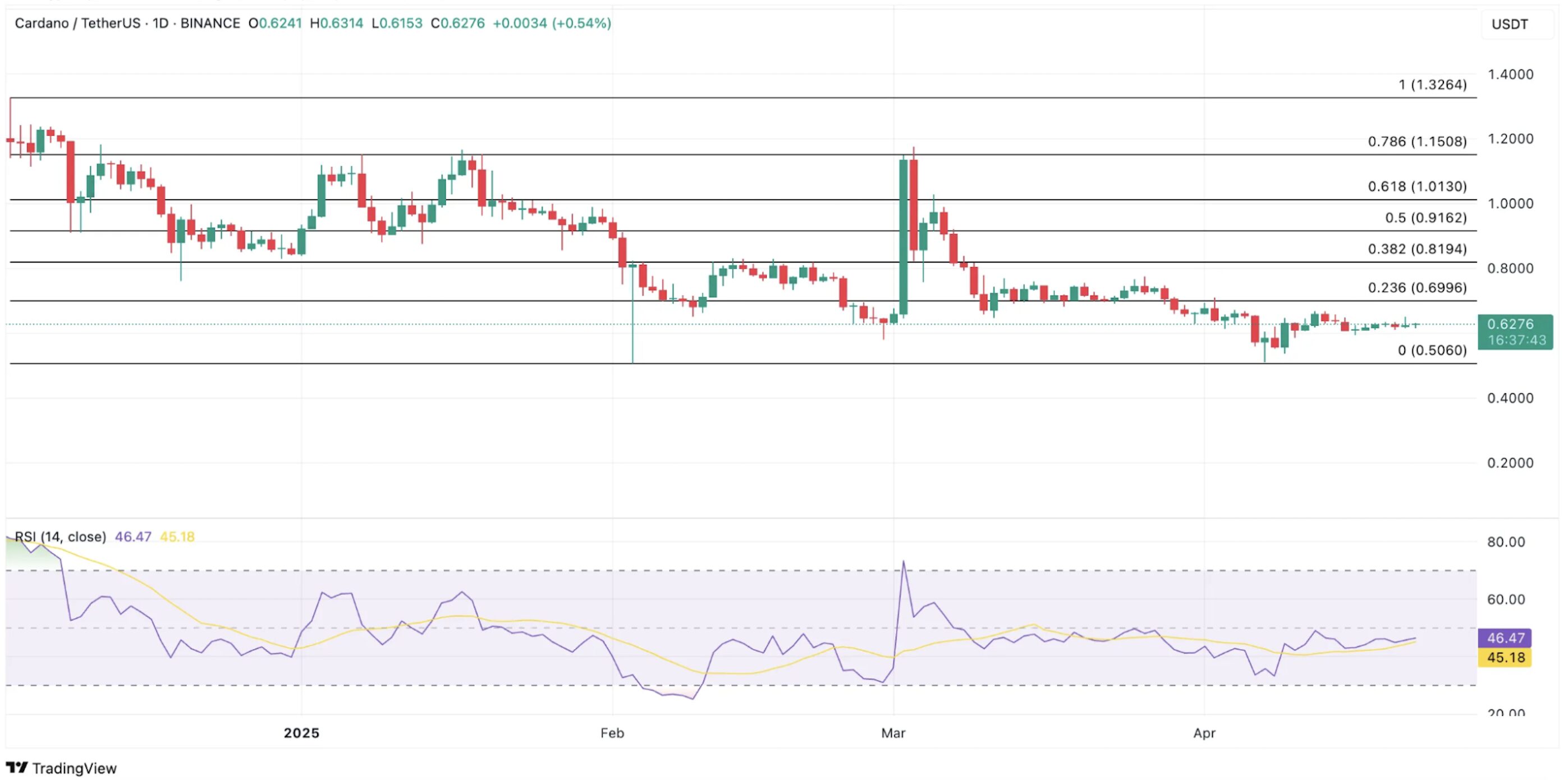
In early 2025, ADA peaked near $1.10 but quickly dropped below $0.70 as the market entered a correction phase. Data from CoinMarketCap shows that ADA has lost over 22% since the beginning of Q2.
However, current price action suggests that ADA is consolidating around a strong support zone and may be poised for a rebound if broader market conditions improve.
According to daily chart data on TradingView, ADA is currently trading within an ascending triangle pattern, a bullish technical structure that often signals a breakout when preceded by an uptrend. A short-term top is forming around the $0.74 level, while higher lows indicate growing buying pressure at increasingly higher price levels.
The Relative Strength Index (RSI) is hovering around 57 – a neutral zone—suggesting that ADA is not yet overbought and still has room to climb if capital inflows continue. At the same time, the 50-day moving average is approaching a crossover above the 200-day moving average. If confirmed, this would form a “golden cross”—a” widely recognized signal of a potential medium-term uptrend.
If ADA successfully breaks above the $0.74 resistance level, the next price target could range between $0.80 and $0.84, which aligns with the 50% Fibonacci retracement from the most recent correction. However, failure to hold the $0.63 support could open the door for a deeper pullback, with the next key support zone around $0.52–$0.55, previously a strong accumulation area in Q4 2024.
Source: TradingView
Fundamental Analysis: Strong Development, but Capital Inflows Remain Subdued
Chang Hard Fork, Intersek Testnet, and Hydra Rollout
The biggest catalyst for ADA in the near term is the upcoming Chang Hard Fork, expected to go live in May 2025. This marks a pivotal transition as Cardano enters the Voltaire era, the final phase of its development roadmap.
Source: Cardano Roadmap
The upgrade will introduce comprehensive on-chain governance, allowing ADA holders to vote on treasury allocations and network-level decisions. This represents a significant step toward decentralization, long-term stability, and transparent governance for the Cardano ecosystem.
In parallel with governance enhancements, Cardano is ramping up its technical infrastructure to improve scalability and cross-chain compatibility. A notable highlight is the launch of Intersek testnet, an EVM-compatible bridge that enables Ethereum-based dApps to deploy directly on Cardano. This move is seen as a strategic effort to attract developers from other ecosystems, especially given Ethereum’s persistently high gas fees.
Cardano’s Layer-2 solution Hydra Head also continues to advance, boasting the potential to process thousands of transactions per second without congesting the main chain. Several development teams have already successfully tested simple games and payment applications using Hydra.
On the research front, IOHK has unveiled an early roadmap for Ouroboros Leios, a next-generation consensus mechanism designed to enhance throughput and reduce transaction latency. These advancements boost Cardano’s core infrastructure and expand its potential use cases in DeFi, AI, and supply chain tracking.
Capital Flows: Mixed Signals
Despite robust technical progress, capital flows remain a decisive factor. On-chain data from WhaleStats and Santiment shows that, in the last week of April 2025, several large wallets sold more than 150 million ADA, applying short-term downward pressure on price. This likely reflects profit-taking after ADA’s recovery from $0.50 earlier this year.
Source: Santiment
However, medium- and long-term holders (with holdings between 10,000 and 1 million ADA) have started accumulating again, particularly in the $0.65 – $0.68 range. Additionally, funding rates across derivatives platforms remain positive, signaling sustained bullish sentiment among margin traders.
Rumors are also circulating within analyst circles about potential spot ETF filings for ADA, following Ethereum’s precedent. If such a product is confirmed and approved in the second half of 2025, it could significantly boost institutional capital inflows and serve as a game-changer for ADA’s long-term price trajectory.
ADA Price Prediction
Short-Term (Next 1 Month): Range-bound between $0.65–$0.80
In May 2025, if ADA can maintain support around $0.67 and decisively break above the key resistance at $0.74, a move toward the $0.80 level is well within reach. The $0.78–$0.80 zone also aligns with the 0.5 Fibonacci retracement of the most recent correction – a level where short-term profit-taking may occur.
However, if ADA fails to hold above $0.70 in the next 2–3 weeks and faces pressure from whale sell-offs or unfavorable macro news (e.g., rising U.S. inflation or continued Fed hawkishness), the price could retest the $0.60 zone or lower. The $0.63 level remains a strong technical support.
A drop toward $0.52 is only likely if the broader crypto market enters a sharp correction phase or if there is regulatory or ETF-related negative news.
Mid-Term (3–6 Months): Targeting the $1–$1.20 range
Should Cardano successfully roll out the Chang Hard Fork and launch the mainnet version of the Intersek EVM bridge, the ecosystem could see a significant uptick in dApp activity and user onboarding, acting as strong catalysts that could help ADA reclaim the $1 mark in Q3 2025.
A bullish scenario for the next 3–6 months may include:
ADA breaking past its previous high of $1.10 and targeting $1.20, particularly if the market enters a mini-altseason or if an ADA spot ETF is approved.If Cardano’s ecosystem expands but macro conditions remain neutral, ADA may consolidate between $0.90–$1.00 before a clearer breakout.Conversely, if the broader crypto market stays range-bound, ADA may continue to trade within the $0.65–$0.85 range without a decisive breakout.
Conclusion
In summary, ADA’s 1–6 month trajectory is conditionally bullish. If both technical and fundamental factors align, the price could break back above the $1 mark.
Otherwise, if broader market conditions weaken or capital continues to flow elsewhere, ADA may remain range-bound between $0.60 and $0.85 for some time. For medium- to long-term investors, however, ADA remains a project worth watching, backed by a robust infrastructure roadmap and a highly engaged community.
Read more: SOL Strategies Makes Bold $500M Bet on Solana
Images tied to the popular Ethereum NFT collections Clone X and Animus temporarily disappeared on April 24, leaving collectors with blank screens and a notice about a terms of service violation.
The glitch follows the closure of RTFKT, the digital studio behind the collections, which was shut down by Nike in December 2024. Whilst ownership and metadata remained secure on the blockchain, the visual assets linked to the tokens became temporarily inaccessible due to a third-party hosting problem.
RTFKT’s former Head of Technology, Samuel Cardillo, has since confirmed efforts are underway to prevent similar disruptions in the future.
Source: RTFKT
Why did the NFTs disappear?
The images for RTFKT’s Clone X and Animus collections disappeared after Cloudflare downgraded the account responsible for serving the files. The downgrade, which Cardillo said happened a few days before the paid contract was due to expire, resulted in restrictions being applied to the content.
Instead of displaying NFT images, holders saw a generic black screen with a message indicating that the content had been restricted for violating Cloudflare’s terms of service. This occurred because the files were not stored directly on the Ethereum blockchain, but rather hosted off-chain and delivered through Cloudflare’s services.
Whilst the NFTs themselves were unaffected—the tokens, metadata, and ownership records remained on-chain—the incident highlighted the risks of relying on centralised hosting to display NFT content.
Source: Samuel Cardillo
What’s next for RTFKT?
Although RTFKT as a company was closed by Nike in late 2024, its collections continue to exist and circulate in the secondary market. To safeguard the media assets associated with those collections, Cardillo announced a migration to Arweave, a decentralised storage network that allows users to store files permanently.
Using AR Drive, a tool built to interface with Arweave, the team plans to move approximately 200GB of image data by the end of April. This transition aims to eliminate reliance on services like Cloudflare and ensure that holders can continue to view their NFTs regardless of third-party service interruptions.
The storage move is estimated to cost around $2,800 and is intended to provide a more reliable solution for long-term access to the digital files linked to RTFKT’s NFTs.
Since first gracing our screens in 2013, Channel 4’s Gogglebox has become a national favourite, with the cast sharing their reactions to the week’s most talked-about TV moments.
With familiar faces like Ellie and Izzi Warner, Jenny and Lee, Pete and Sophie Sandiford, the Malones and Giles and Mary, viewers have formed a unique bond with the personalities who invite us into their living rooms each week.
But just how much do the Gogglebox stars earn for their time in front of the camera? And what perks do they enjoy behind the scenes?
Jenny and Lee are huge fan favourites (Credit: Channel 4)
How much are the Gogglebox cast paid?
According to reports, Gogglebox cast members receive £1,500 per month per household. This works out to £18,000 a year.
The fee covers their participation in two filming sessions a week, which can last up to six hours per sitting.
“The Gogglebox cast are filmed for two to three nights per week,” Channel 4 previously told the Daily Star. “We film them watching live television and some that has been recorded. The cast have received fees for their time on every series. The production team do not influence the comments. The reactions are genuine.”
In addition to their monthly salary, Gogglebox households are treated to weekly expenses for takeaways. From pizza to curry, the cast can order whatever they fancy to snack on while filming.
Sandra Martin claimed that she made over £100k a year (Credit: Channel 4)
Big bucks to be made from appearing on the show
Despite its popularity, Gogglebox isn’t a full-time job for most cast members. Many of them maintain other employment due to the modest salary.
However, former cast members have revealed that earnings can vary, especially if you remain on the show for several years or take on other media opportunities after leaving.
Former castmate Sandra Martin previously told The Mail on Sunday, per OK!: “I paid tax on an income of £100,000. In fact, ever since I started doing Gogglebox in 2012, I have earned around £100,000 every year.”
Sandra left the show in 2017. She later went on to appear in shows such as First Dates and 100 Years Younger in 21 Days.
How do you apply to be on Gogglebox?
If this all sounds very tempting, you’re probably wondering how to get yourself a spot on the Gogglebox sofa.
Unfortunately, if you’re thinking of applying, you can’t. Gogglebox cast members are handpicked by producers, rather than selected via application.
“Everybody on Gogglebox has been found and persuaded to be on the show,” show creator Stephen Lambert explained. “I think that’s the key to why they are likeable and why the show works. Because we get to know these people. We’ve never advertised for people on Gogglebox.”
Until then, it seems that watching telly with your loved ones might just be one of the best part-time gigs on British television.
We’ve contacted Channel 4 for comment.
Watch Gogglebox on Channel 4, Fridays at 9pm.
Read more: Gogglebox couple Mary and Giles leave fans divided: ‘I can’t enjoy them’
Do you watch Gogglebox? Head over to our Facebook page @EntertainmentDailyFix and let us know! We want to hear from you!
System76 continue building up their desktop environment COSMIC, with a 7th Alpha release now available for testing built on top of Pop!_OS 24.04 LTS alpha.
Even though I’m firmly happy with the latest KDE Plasma, because it does everything I need, I’m still quite keen to see the finished product when it comes to COSMIC as they’re doing some pretty interesting stuff with it.
Pictured – COSMIC Alpha 7
In the latest release they’ve tweaked Workspaces so you can click and drag them around and you can pin them to ensure they stick around even when empty too. There’s also various new accessibility features they’ve highlighted:
High Contrast Mode uses a high-contrast theme affecting various elements for easier visibility — calculated automatically by COSMIC’s theming system using a specialized method.
Color Filters add a filter to address common forms of colorblindness: Deuteranopia, Protanopia, and Tritanopia. For those with sensitive eyesight, a grayscale filter is also available.
Color Inversion changes theme colors using a different calculation for the purpose of helping those affected by colorblindness differentiate between like colors.
Mono Sound aids those with hearing loss by combining left-right sound channels into a single channel for both ears. We plan to add more accessibility features to COSMIC in future releases!
There’s also improvements to the magnifier, global shortcuts for applications even when they’re not in focus, improved fractional scaling for XWayland, there’s a new seek ahead search option for their file manager, new sound settings and lots of bug fixes.
Published: April 25, 2025 at 11:07 am Updated: April 25, 2025 at 11:07 am
by Ana
Edited and fact-checked:
April 25, 2025 at 11:07 am
To improve your local-language experience, sometimes we employ an auto-translation plugin. Please note auto-translation may not be accurate, so read original article for precise information.
In Brief
Blum celebrated its first anniversary by receiving top honors at Blockchain Forum 2025, while its co-founder Vladimir Smerkis was awarded “Web3 Entrepreneur of the Year.”
Telegram-based trading platform Blum marked its first year of operations by participating prominently at Blockchain Forum 2025, one of the most important cryptocurrency gatherings in the CIS region. The event, held from April 23th to 24th, brought together more than 15,000 attendees from over 130 countries and featured discussions from key industry leaders. An awards ceremony during the forum recognized accomplishments across the Web3, blockchain, and cryptocurrency sectors.
Blum was recognized for its performance within the Telegram ecosystem, receiving awards for “Best GameFi App” and “Best Trading App” on the messaging platform.
As of now, Blum reports 93 million users, positioning it as a major player in the cryptocurrency trading application landscape. It ranks as the second-largest memepad globally by the number of tokens launched and holds the top position on The Open Network (TON), with over 350,000 tokens created, 32 million TON in trading volume, and more than 8,000 live streams. The platform is also linked to nearly 40 million unique on-chain wallets.
Blum operates the largest trading bot on TON and has recently expanded to the Solana blockchain, where it has facilitated over 5 million SOL in trading volume. Further integrations, including BNB and additional networks, are expected. The application also claims the second-largest Telegram community globally, with over 28 million members.
Initially founded by former Binance executives Gleb Kostarev and Vladimir Smerkis, Blum was designed to offer a multi-functional application that simplifies trading, token creation, and digital asset management across different blockchain networks. Just one year after its launch, the platform has positioned itself as a notable participant in the evolving Web3 landscape.
“We could never have imagined that over 93 million users would join the Blum community to build the future of crypto superapps together,” said Vladimir Smerkis, Blum’s CMO, in a written statement. “These awards belong to every user who created tokens, streamed live, traded on Memepad, or used our bots on Solana and TON. Your engagement is our greatest achievement,” he added.
Vladimir Smerkis Awarded ‘Web3 Entrepreneur Of The Year,’ Highlights Role Of User Engagement In Attention Economy
Furthermore, at the event, Blum’s Co-Founder and Chief Marketing Officer, Vladimir Smerkis, was individually recognized for his contributions to the evolving digital landscape, receiving the “Web3 Entrepreneur of the Year” award.
During his keynote address titled “Dominate the Attention Economy,” Vladimir Smerkis emphasized the importance of capturing and sustaining user engagement, suggesting that the next phase of Web3 growth will be driven by platforms that can successfully compete for user attention in an increasingly crowded digital environment.
“Hype is now an asset. Attention is a currency. In Web3, you don’t win by being the biggest — you win by being the most interesting,” said Vladimir Smerkis in a written statement.
In his presentation, Vladimir Smerkis explored how the dynamics of Web3 are evolving, particularly within the Telegram ecosystem. He emphasized that memes are no longer just cultural phenomena but are increasingly functioning as financial instruments in the decentralized economy. He also noted that simple user actions, such as tapping a screen, can now be monetized, turning user engagement into tangible cryptocurrency rewards.
According to Vladimir Smerkis, Telegram has emerged as a powerful platform for capturing and directing user attention, thanks in part to the rise of Mini Apps and its integration with The Open Network (TON). He argued that in this new paradigm, communities should be viewed as sources of capital in their own right, rather than being treated merely as passive user bases.
Blum has embraced these shifts by gamifying the trading experience. By merging viral meme culture, experience points (XP), and blockchain-based rewards, Blum has transformed cryptocurrency trading into an interactive and entertaining experience directly within Telegram.
Blum’s fast growth has been driven by features such as tap-to-earn mechanics, social engagement loops based on the fear of missing out (FOMO), and engaging gamification techniques designed to maintain user interest and activity.
Blum: What Is It?
Blum operates as a hybrid cryptocurrency exchange embedded directly within Telegram through its mini-app framework, blending features commonly found in centralized and decentralized exchanges. The platform is designed to make cryptocurrency trading more intuitive and appealing, particularly for a younger, mobile-savvy audience that is already active on messaging platforms.
Functioning seamlessly within Telegram, Blum supports token trading across more than 30 blockchain networks, including major chains like Ethereum, BNB Smart Chain, TON, and Solana. Users have the flexibility to choose between custodial wallets, which simplify key management, and non-custodial wallets, which offer greater control over assets—serving varying preferences for convenience and self-custody.
In order to keep users engaged, Blum has integrated gamified mechanics into its ecosystem. Participants can earn Blum Points through activities such as playing the Drop Game, completing interactive missions, and inviting new users. These points are anticipated to have utility within the platform, with conversion into BLUM tokens expected to occur during the upcoming Token Generation Event (TGE).
According to its roadmap, the platform is also planning to introduce a suite of advanced features. These include AI-powered tools for launching new tokens, meme token creation supported by AI agents, a Trading Arena that will host competitive, gamified trading experiences, as well as systems for adaptive trading strategies. Future developments also include the rollout of perpetual futures and a professional-grade trading interface that will operate across multiple blockchains.
As part of its broader engagement strategy, Blum is preparing to host an exclusive side event during Token2049. The gathering will take place at the Armani Hotel in the Burj Khalifa on April 30th, and users interested in participating are encouraged to register in advance.
Disclaimer
In line with the Trust Project guidelines, please note that the information provided on this page is not intended to be and should not be interpreted as legal, tax, investment, financial, or any other form of advice. It is important to only invest what you can afford to lose and to seek independent financial advice if you have any doubts. For further information, we suggest referring to the terms and conditions as well as the help and support pages provided by the issuer or advertiser. MetaversePost is committed to accurate, unbiased reporting, but market conditions are subject to change without notice.
About The Author
Alisa, a dedicated journalist at the MPost, specializes in cryptocurrency, zero-knowledge proofs, investments, and the expansive realm of Web3. With a keen eye for emerging trends and technologies, she delivers comprehensive coverage to inform and engage readers in the ever-evolving landscape of digital finance.
More articles
Alisa Davidson
Alisa, a dedicated journalist at the MPost, specializes in cryptocurrency, zero-knowledge proofs, investments, and the expansive realm of Web3. With a keen eye for emerging trends and technologies, she delivers comprehensive coverage to inform and engage readers in the ever-evolving landscape of digital finance.
In a move that signals growing momentum for high-performance, decentralized applications, MagicBlock has announced a $3 million pre-seed funding round to expand its cutting-edge infrastructure for real-time, onchain games and consumer apps built on Solana.
The round was secured alongside MagicBlock’s participation in the prestigious a16z Crypto Startup Accelerator (CSX) Spring 2024 cohort — a program run by Andreessen Horowitz’s crypto division aimed at backing next-gen web3 startups.
Reinventing Onchain Performance with Ephemeral Rollups:
At the heart of MagicBlock’s innovation is its Ephemeral Rollups technology, a novel scaling solution purpose-built to deliver Web2-like performance for decentralized applications while maintaining the core principles of decentralization and trustlessness.
Unlike traditional Ethereum Layer 2 scaling solutions — which often face issues like liquidity fragmentation, poor composability, and a clunky, transaction-lag-heavy user experience — MagicBlock’s approach is natively integrated with Solana’s architecture. Leveraging the Solana Virtual Machine’s (SVM) ability to separate state and logic, developers can shift portions of a dApp’s state to isolated Ephemeral Rollup sessions while keeping core programs anchored on Solana.
This architecture effectively transforms Solana into a multi-threaded environment for dApps, offering seamless composability and blazing-fast real-time performance. It’s a game-changer for industries like onchain gaming, but also for any consumer application where speed, scale, and decentralization matter.
Why It Matters: Next-Gen, Unstoppable, Composable dApps
MagicBlock’s breakthrough enables developers to build unstoppable, serverless applications without compromising performance or user experience. The result is decentralized games and apps that feel as responsive as their Web2 counterparts, without the latency and complexity that often plague onchain experiences.
The $3 million funding will allow MagicBlock to scale its engineering team, ramp up developer outreach, and continue refining its technology stack. The raise also reflects a broader industry trend: a growing appetite for decentralized, high-performance consumer applications capable of rivaling centralized platforms in both usability and speed.
As Web3 gaming edges closer to mainstream adoption, with ecosystems like Solana increasingly favored for their performance-first design, MagicBlock’s infrastructure could be pivotal in enabling a new generation of real-time, fully decentralized experiences.
For more insights and updates on Metaverse, DeFi, Blockchain, NFT & Web3, be sure to subscribe to our newsletter. Stay informed on the latest trends and developments in the decentralized world.
San Francisco-based open-source database pioneer Supabase has just raised an impressive $200 million in Series D funding, catapulting its valuation to a staggering $2 billion. The round, first reported by Fortune, featured heavyweight backers like Accel, Coatue, Y Combinator, Craft Ventures, and Felicis, alongside notable angels like Kevin Weil, Chief Product Officer at OpenAI.
Founded in 2020 by Paul Copplestone and Ant Wilson, Supabase has rapidly evolved into one of the most commercially successful open-source backend platforms globally — and it’s showing no signs of slowing down.
What is Supabase, and Why Is Everyone Betting Big on It?
It has positioned itself as the open-source, developer-friendly answer to Google’s Firebase — but built on the rock-solid foundation of PostgreSQL. It blends enterprise-grade performance with a no-nonsense developer experience, offering intuitive tools like:
Table Editor (think Excel for your database),
Supabase Cron for task automation.
With powerful capabilities like real-time updates, edge functions, and global scalability via read-only replicas, Supabase delivers lightning-fast performance for developers building everything from SaaS products to AI-native apps.
Riding the AI & Vibe Coding Wave:
Supabase isn’t just another backend tool — it’s becoming the backbone of AI-powered applications and vibe coding projects. This emerging trend involves AI-enhanced development processes, reducing build timelines and accelerating iteration cycles.
The company claims that Web3 and AI startups are increasingly relying on its platform, thanks to vector storage support and edge-first functions that simplify AI integrations. Its tagline — “Build in a weekend. Scale to millions.” — perfectly captures the product’s appeal in an era where speed and scalability are non-negotiable.
Notable AI and automation projects, including early adopters in Web3 gaming and AI-powered marketplaces, have integrated Supabase as their backend infrastructure, cementing its relevance for the AI-first future.
Explosive Growth and Enterprise Traction:
In the last three months alone, Supabase doubled its developer sign-ups, now powering over 3.5 million database environments for 2 million+ developers worldwide. Heavyweights like Mozilla and GitHub have already adopted the platform, alongside a rapidly expanding startup base.
Its popularity within the Y Combinator ecosystem and the open-source community (with over 81,000 GitHub stars) underscores the platform’s growing influence. Whether you’re a solo founder building a prototype or a large enterprise architecting a production-grade AI platform, Supabase offers a scalable, cost-effective alternative to legacy database giants like Oracle and Microsoft SQL Server.
Why This Matters?
As AI, automation, and Web3 increasingly reshape the software landscape, platforms like Supabase — with their open-source DNA and AI-readiness — are defining how next-gen applications get built and scaled. With a fresh $200 million war chest, Supabase is poised to double down on AI tooling, edge computing, and advanced developer experiences.
It’s more than a funding story — it’s a signal that open-source, AI-integrated infrastructure is no longer niche. It’s the new standard.
For more insights and updates on Metaverse, DeFi, Blockchain, NFT & Web3, be sure to subscribe to our newsletter. Stay informed on the latest trends and developments in the decentralized world.
Published: April 25, 2025 at 10:28 am Updated: April 25, 2025 at 10:28 am
by Ana
Edited and fact-checked:
April 25, 2025 at 10:28 am
To improve your local-language experience, sometimes we employ an auto-translation plugin. Please note auto-translation may not be accurate, so read original article for precise information.
In Brief
STON.fi has unveiled the Omniston decentralized liquidity aggregation protocol for TON, designed to address the challenges of market fragmentation within the expanding TON ecosystem.
Developer of the automated market maker (AMM) protocol, STON.fi unveiled Omniston, the first decentralized liquidity aggregation protocol specifically optimized for the architecture of The Open Network (TON) blockchain. Omniston, now live within the STON.fi decentralised application (dApp), seeks to address the challenges of market fragmentation within the growing TON ecosystem.
Omniston aims to tackle several issues faced by the decentralized finance (DeFi) space, where liquidity providers and market makers encounter inefficiencies in capital allocation and limited access to broader user bases. DeFi developers also face challenges with redundant technical integrations across multiple decentralized exchanges (DEXs), leading to increased costs and complexity. Users, on the other hand, often face suboptimal swap rates and a limited trading experience due to fragmented liquidity.
Omniston introduces a series of innovations designed to streamline liquidity management, improve swapping efficiency, and broaden market access throughout the TON ecosystem. Liquidity providers and market makers can now quickly access the market and effortlessly connect with users across all major TON applications via Omniston’s extensive distribution network. The protocol’s horizontally scalable backend is built to handle the potential scale of up to 1 billion users within the Telegram ecosystem, allowing market makers and liquidity providers to focus on their trading strategies without the concern of infrastructure limitations.
For DeFi developers, Omniston removes the need to manage multiple technical integrations across various DEXs or to independently source liquidity from numerous providers. This allows them to concentrate on refining the core features of their projects while Omniston takes care of liquidity management. Additionally, through its integration with STON.fi, users benefit from optimized token swaps, access to deep liquidity, and faster transaction execution, ensuring reliable and cost-effective trades with minimal slippage and improved price stability.
Omniston is reshaping liquidity infrastructure on TON by eliminating the barriers between liquidity providers and applications. With just a single integration, liquidity providers can access an expanding network of DeFi protocols, streamlining both integration processes and operational efforts. Early adopters of Omniston have reported reductions in maintenance costs by as much as 70% and have seen onboarding times drop from over a month to just a few days.
Currently, Omniston consolidates liquidity from the largest DeFi protocols on TON. As more liquidity protocols are integrated in the near future, developers of DeFi applications will automatically gain access to an expanded liquidity pool, offering users better trading opportunities without requiring additional technical work or further investment from developers.
In the second quarter of 2025, Omniston plans to introduce support for proprietary liquidity from OTC market makers. Additionally, cross-chain swaps are set to be implemented, connecting TON’s liquidity to other major blockchain ecosystems, which will broaden the available opportunities for participants across the DeFi landscape.
Understanding How Omniston Operates
All transactions within the system are carried out in a trustless environment, leveraging smart routing and decentralized swap mechanisms to ensure both security and efficiency in execution. If all parties adhere to the protocol, the transaction proceeds smoothly. However, if any participant deviates or acts inappropriately, the transaction is automatically canceled, and the funds are returned to their respective parties.
According to the process, a user initiates a swap through an application, which then forwards the request to Omniston. Omniston generates a request-for-quote (RFQ) and sends it to the connected resolvers. The resolvers return their quotes to Omniston, which then selects the most favorable option. Once the quote is chosen, the transaction is executed, and both parties receive their respective tokens.
Exploring Omniston’s Roadmap: What’s Ahead For The Protocol
At this stage, Omniston is prioritizing accessibility and user adoption over monetization. According to Andrey Fedorov, the company’s Chief Marketing Officer and acting Chief Business Development Officer, the goal is to encourage developers and liquidity providers to start engaging with the platform without any immediate financial barriers. Currently, the protocol does not impose any fees, as the focus is on fostering participation and building a network of integrated applications. This approach allows liquidity providers to begin earning from their involvement, while developers using Omniston can implement their own revenue-generating models on top of the protocol.
Regarding future monetization, Andrey Fedorov notes that while revenue strategies are expected to emerge over time, they may not follow the conventional pay-to-use format. Given that Omniston only recently launched, the team is primarily focused on expanding adoption by onboarding more applications and liquidity providers. Monetization strategies will be explored after broader integration is achieved, though this does not necessarily imply that users will face usage fees in the future.
As for development plans, the introduction of cross-chain swap functionality represents a milestone on the roadmap. Although Omniston is currently deployed on the TON blockchain, the underlying architecture is already designed for cross-chain operations, and active testing is underway. The rollout will be gradual, with Tron expected to be the first additional network, followed by expansion into Ethereum Virtual Machine (EVM)-compatible blockchains. This phased approach ensures that each integration is carefully validated before broader deployment.
Disclaimer
In line with the Trust Project guidelines, please note that the information provided on this page is not intended to be and should not be interpreted as legal, tax, investment, financial, or any other form of advice. It is important to only invest what you can afford to lose and to seek independent financial advice if you have any doubts. For further information, we suggest referring to the terms and conditions as well as the help and support pages provided by the issuer or advertiser. MetaversePost is committed to accurate, unbiased reporting, but market conditions are subject to change without notice.
About The Author
Alisa, a dedicated journalist at the MPost, specializes in cryptocurrency, zero-knowledge proofs, investments, and the expansive realm of Web3. With a keen eye for emerging trends and technologies, she delivers comprehensive coverage to inform and engage readers in the ever-evolving landscape of digital finance.
More articles
Alisa Davidson
Alisa, a dedicated journalist at the MPost, specializes in cryptocurrency, zero-knowledge proofs, investments, and the expansive realm of Web3. With a keen eye for emerging trends and technologies, she delivers comprehensive coverage to inform and engage readers in the ever-evolving landscape of digital finance.
Published: April 25, 2025 at 10:15 am Updated: April 25, 2025 at 11:38 am
by Ana
Edited and fact-checked:
April 25, 2025 at 10:15 am
To improve your local-language experience, sometimes we employ an auto-translation plugin. Please note auto-translation may not be accurate, so read original article for precise information.
In Brief
Vanilla Finance launches 10,000x leverage Super Perpetuals on BNB Chain, bringing no-liquidation, capital-efficient trading to DeFi’s fastest-growing network.
Vanilla Finance, the leading on-chain trading protocol on Telegram, is expanding its infrastructure to BNB Chain with the launch of Super Perpetuals. Super Perpetuals support up to 10,000x leverage and are uniquely designed with no liquidation risk, offering a safer and more capital-efficient trading experience. This launch marks a major step forward in Vanilla’s mission to become the foundational on-chain trading infrastructure across Web3.
Super Perps has already achieved a remarkable $37 billion in cumulative trading volume, 6 million registered users, and 1.4 million active traders, solidifying Vanilla Finance’s position as a dominant force in the DeFi trading space.
A Game-Changer in DeFi: Super Perps
At the heart of Vanilla Finance’s success is their Super Perps, a groundbreaking product that allows traders to gain exposure to cryptocurrencies like Bitcoin, ETH, Doge and many others with unprecedented flexibility. With Super Pers, users can leverage up to 10,000x, meaning they can own one Bitcoin—valued at $93,000 as of today—for as little as $10. Unlike traditional leveraged trading, Super Perps eliminates the risk of liquidation, offering a safer and more accessible way for traders to participate in volatile markets.
This unique feature has resonated with both seasoned traders and newcomers, driving Vanilla Finance’s rise. “Super Perps is designed to empower everyone, from Web3 natives to Web2 users, by making high-potential trading simple and secure,” said Michael Cameron, Co-Founder & CMO of Vanilla Finance, at the Hong Kong Consensus Conference in March 2025. “Our product brings the efficiency of traditional finance to DeFi, and the results speak for themselves.”
Why BNB Chain
The integration with BNB Chain, known for its speed and low transaction costs, enhances Super Perps scalability and accessibility, positioning Vanilla Finance to capture an even larger share of the DeFi market.
“Launching Super Perps on BNB Chain is a pivotal moment for us,” Cameron added. “BNB Chain’s robust infrastructure allows us to scale our vision of making DeFi inclusive and efficient, while our partnership with DeFi Llama ensures our users have access to transparent, reliable data.”
Vanilla Finance’s Achievements
The official launch of Super Perps on BNB Chain is just the beginning. Vanilla Finance is committed to pushing the boundaries of DeFi by introducing new features, expanding to additional blockchains, and forging strategic partnerships.
In just seven months, the platform achieved over $37 billion in trading volume, attracted 1.4 million cumulative traders and 6 million total users, secured the #1 trading volume rank among Telegram-based exchanges, and was selected for both Binance MVB Season 8 Cohort and CoinMarketCap’s CMC Labs Accelerator Program.
Not to mention with investments from prominent venture firms like UOB Ventures, ABCDE Labs, and Paper Ventures, Vanilla Finance is well-positioned to sustain its rapid growth. The platform’s focus on security, compliance, and innovation has earned it the trust of users and investors alike, setting the stage for even greater milestones.
Whats Next for Vanilla Finance
Fresh off its reign as Telegram’s top trading protocol by volume, Vanilla Finance is charging into the BNB Chain with its bold new venture: Super Perpetuals. Known for its vibrant DeFi scene and developer-friendly vibe, BNB Chain is the perfect stage for Vanilla’s next act.
Vanilla’s sights are set on dominating the perpetuals market on BNB Chain, aiming to outpace rivals in trading volume and user buzz. The team is pulling out all the stops—expanding asset options, sharpening the trading experience, and reeling in both casual traders and seasoned pros.
But Vanilla’s ambitions don’t stop there. The platform is gunning to become the backbone of on-chain trading across every major blockchain. With cutting-edge, capital-efficient derivatives and a growing arsenal of permissionless tools, Vanilla is poised to redefine decentralized trading on a global scale. Buckle up—this is just the beginning. (CMC Labs: Partnership)
Disclaimer
In line with the Trust Project guidelines, please note that the information provided on this page is not intended to be and should not be interpreted as legal, tax, investment, financial, or any other form of advice. It is important to only invest what you can afford to lose and to seek independent financial advice if you have any doubts. For further information, we suggest referring to the terms and conditions as well as the help and support pages provided by the issuer or advertiser. MetaversePost is committed to accurate, unbiased reporting, but market conditions are subject to change without notice.
About The Author
Victoria is a writer on a variety of technology topics including Web3.0, AI and cryptocurrencies. Her extensive experience allows her to write insightful articles for the wider audience.
More articles
Victoria d’Este
Victoria is a writer on a variety of technology topics including Web3.0, AI and cryptocurrencies. Her extensive experience allows her to write insightful articles for the wider audience.






 Source: RTFKT