Published: May 14, 2025 at 11:00 am Updated: May 14, 2025 at 6:44 am
by Ana
Edited and fact-checked:
May 14, 2025 at 11:00 am
To improve your local-language experience, sometimes we employ an auto-translation plugin. Please note auto-translation may not be accurate, so read original article for precise information.
In Brief
Aurora Labs has launched Aurora Blocks, a six-week incubator offering $250,000 to support five teams building EVM-compatible Virtual Chains on NEAR.
Network of Virtual Chains, Aurora Labs introduced a new initiative focused on supporting early-stage blockchain development. The company has announced the launch of Aurora Blocks, a six-week incubator program aimed at accelerating the creation of EVM-compatible Virtual Chains within the NEAR ecosystem. The initiative is set to offer financial support totaling $250,000, which will be distributed among five selected teams. In addition to funding, participants will gain access to technical guidance, strategic business advice, and resources to support their go-to-market efforts.
“We’re building the future of on-chain ecosystems – one Virtual Chain at a time,” said Alex Shevchenko, CEO of Aurora Labs, in a written statement. “This incubator is about more than funding; we’re giving teams the infrastructure, guidance, and momentum they need to launch real products, attract users, and scale. Aurora Blocks is what allows us to turn bold ideas into reality,” he added.
Aurora Blocks is structured to provide early-stage blockchain teams with direct access to a consortium of established Web3 organizations specializing in areas such as infrastructure, security, funding, and user growth. Participating entities include Lemniscap, NEAR, CV VC, MarketAcross, Hacken, Cookie DAO, Peanut.Trade, AuditOne, Aleph Cloud, Cere Network, Billions Network, and Mobula.io. These collaborators are expected to engage through mentorship sessions, technical support, and strategic guidance throughout the six-week incubator.
The program focuses on facilitating the development of Virtual Chains within key emerging sectors such as AI-integrated finance (AI/DeFAI), decentralized finance (DeFi), Bitcoin Layer 2 ecosystems, real-world asset tokenization (RWA), and decentralized physical infrastructure networks (DePIN). This effort forms part of Aurora’s long-term strategy to support the launch of 1,000 Virtual Chains during 2025, with the incubator positioned as a core mechanism for translating early-stage concepts into operational blockchain networks.
Aurora Labs Opens Applications For Aurora Blocks Incubator, Offering Funding And Full-Stack Support
Applications for participation in the Aurora Blocks incubator are currently being accepted through May 28th, via the official portal at aurorablocks.dev. Following an initial evaluation process, five selected teams will receive early-stage capital along with access to advanced development tools, code security assessments, legal resources, and technical mentorship.
The incubator concludes with a Demo Day scheduled for July 23rd, during which participating teams will present their Virtual Chains to an audience that includes potential investors and members of the NEAR ecosystem. The initiative places emphasis on team performance, user engagement potential, and long-term project sustainability.
Aurora Blocks is structured to support the development of Ethereum-compatible chains built on the NEAR protocol. By offering an integrated framework that combines scalability, affordability, and compatibility, the program is intended to assist founders in deploying functional blockchain products that are technically sound and positioned for market adoption.
Disclaimer
In line with the Trust Project guidelines, please note that the information provided on this page is not intended to be and should not be interpreted as legal, tax, investment, financial, or any other form of advice. It is important to only invest what you can afford to lose and to seek independent financial advice if you have any doubts. For further information, we suggest referring to the terms and conditions as well as the help and support pages provided by the issuer or advertiser. MetaversePost is committed to accurate, unbiased reporting, but market conditions are subject to change without notice.
About The Author
Alisa, a dedicated journalist at the MPost, specializes in cryptocurrency, zero-knowledge proofs, investments, and the expansive realm of Web3. With a keen eye for emerging trends and technologies, she delivers comprehensive coverage to inform and engage readers in the ever-evolving landscape of digital finance.
More articles
Alisa Davidson
Alisa, a dedicated journalist at the MPost, specializes in cryptocurrency, zero-knowledge proofs, investments, and the expansive realm of Web3. With a keen eye for emerging trends and technologies, she delivers comprehensive coverage to inform and engage readers in the ever-evolving landscape of digital finance.
Whenever you buy a product in resale, you try to figure out whether it’s worth the price, in other words, if you are getting value for the money spent. It always works to your advantage to get a real deal, i.e., better value at a lesser price. This is also one of the reasons why resale platforms enjoy an edge over their retail counterparts: great products at steal-worthy prices.
As far as luxury products are concerned, the item’s condition defines its resale value. A rare piece in pristine condition can fetch even more than its original retail price. In contrast, another in good or fair condition can be priced considerably lower depending on the visible wear and tear. However, describing the product’s true-blue state in an online transaction can be a win-win for both the buyer and the seller, considering both parties don’t feel duped at the end of the deal.
To understand the difference between a smart investment and a pricey mistake, one must be able to spot the intricacies of progressive usage or the lack of it in a product, i.e., noticing how much—or how little—a product has been used.
Luxury isn’t just about labels—it’s about longevity. And that longevity is best judged through a well-honed condition grading system. After all, the condition isn’t just cosmetic; it’s currency. In the secondary luxury market, the state of an item determines its:
Resale value Collectibility Longevity Investment potential
Simply put: the better the condition, the better the value. That’s why a clearly defined grading system is crucial—it ensures buyers and sellers are on the same ground, speaking the same language, enabling clear, confident, and trustworthy transactions.
Here’s your insider’s guide to decoding terms like Pristine, Like New, and Gently Used to help you shop (and sell) like a pro.
The Glossary: Decoding Luxury Condition Grades
From showroom-fresh to beautifully broken-in, here’s what each condition truly means:
New with Tags (NWT)
Unworn, untouched, and straight from the boutique. This is luxury in its purest form—original tags, packaging, dust bags, and sometimes even the ribbon. They fetch the highest prices as buyers get a near-retail experience.
New Without Tags (Never Used)
Unused but without tags. Think: a gift that wasn’t quite your style or a piece purchased on impulse and never used. Impeccable, yet slightly less formal than NWT. In this category, the items typically have their packaging, such as shoes in their original box, jewelry in their original cases, handbags in their dust bags, and so forth.
Pristine
It looks and feels brand new, possibly worn once, but with zero visible signs of use. Think of a Cartier bracelet that lived in its box or a pair of Louboutins worn to a red carpet dinner and promptly returned to their dust bags. These items also fetch top-tier resale prices and are highly desirable. Buyers get coveted pieces that are as good as brand new at considerably lower prices.
Excellent
It shows minimal wear with immaculate upkeep. Perhaps a Chanel Boy Bag, carried a few times, or a Rolex with micro-scratches only visible up close. Even a dress without any stains or snags, in perfect wearable condition, and with a wash care label attached can fall under this category. This is a sharp choice for savvy buyers who are happy to own a piece that is aesthetically fine and functionally perfect.
Like New
There are light signs of use, often so faint they’re invisible in photos. Maybe a slight crease on a sneaker toe box or softening of a leather jacket’s collar. Still stunning, still statement-worthy, these are popular with brand connoisseurs, who are happy to own a piece that is still usable and good enough to flaunt.
Very Good / Gently Used
Loved, but not abused. Expect visible signs of wear—corners, soles, or interior linings may show the story of use, but functionality remains intact. Best for everyday luxury. Buyers with limited budgets or who, instead of buying fakes, want the real thing, even though pre-owned, opt for this category.
Good / Fair
The bargain bin of the elite. Scuffs, fading, or structural wear don’t make these pieces any less authentic—just well-worn. It is ideal for those who love a fixer-upper or believe luxury should be lived in. For example, a designer dress with a little color fading under the arms or a vintage watch with visible scratches; both are still high-end and can be used again. Depending on its current rarity factor, the latter could even fetch a price higher than what it originally retailed for.
Heavily Used
Worn well—and it shows. Heavy wear throughout, but still holds designer DNA. It is perfect for restoration projects or vintage collectors who value history over condition. They might need minor repairs if they have to be used again. For example, handbags with broken hardware or shoes with worn-out soles.
Product-Specific Condition Cues
Not all luxury items age the same. A lambskin Chanel ages differently than an LV Monogram canvas, and sneakers are worn differently than silk dresses. Here’s what to keep in mind when deciding the condition:
Leather Bags: Look for corner wear, handle darkening, sagging, and scratches.
Canvas Bags: Examine for fraying at edges, darkening of handles, discoloration, and cracking of printed monograms.
Sneakers & Shoes: Examine soles, heels, toe boxes, and creasing on uppers. Original insoles and laces? Major bonus.
Apparel: Check fabric pilling, fading, stretched seams, missing buttons, and underarm discoloration. Tags and labels intact add value.
Watches & Jewelry: Scratches on clasps, dials, or watch bands; look for missing stones, tarnishing, or signs of resizing.
Small Leather Goods: Inspect zippers, snaps, interior lining, and edge paint wear. Cardholder warping is common.
How The Luxury Closet Grades Condition.
At The Luxury Closet, every item is meticulously inspected by in-house experts. Each product goes through a multi-point condition check covering:
Exterior and interior cleanliness Hardware quality Stitching, handles, zippers Smell and structure
We also photograph every visible detail, so what you see is exactly what you receive. Our mission? To make luxury more transparent, trustworthy, and timeless.
We have four categories of condition grading:
What Pristine Looks Like Across Our Product-Specific Categories
At The Luxury Closet, Pristine means never used—or so gently handled that it’s virtually indistinguishable from brand new. This is our gold standard for pre-loved luxury.
Leather Bags
Pristine leather bags retain their firm structure, flawless hardware, immaculate interiors, and sharp corners. Whether crafted from smooth calfskin or delicate lambskin, the finish is near-perfect—no sagging, no patina, no surprises.
Canvas Bags
Think vibrant prints, no fading, and a crisp coating. Monograms stay sharp, leather trims remain untreated, and handles show minimal to no darkening.
Sneakers & Shoes
Outsoles are unworn, uppers are crease-free, and interiors remain untouched. Pristine pairs always come with original laces, insoles, and boxes.
Apparel
Luxury clothing in pristine condition includes original tags, crisp seams, no fading, and zero signs of wear. Picture: structured coats with perfect shoulders or pleated gowns free from deodorant marks.
Watches & Jewelry
No scratches. No smudges. Pristine watches and jewelry have flawless bezels and bands, perfect clasp function, and sparkle that says “just unboxed.” Original packaging and certificates? Essential.
Small Leather Goods
From wallets to key pouches, pristine SLGs show no peeling, fraying, or loss of structure. Interiors are clean, zippers are smooth, and edges remain intact.
Buyer Preference: Which Condition Suits You?
Pristine / NWT: Perfect for collectors, investors, or as luxury gifts
Like New / Excellent: Ideal for style lovers who want high-end quality at a better value
Good / Gently Used: Perfect for everyday use without the guilt
Fair: For treasure-hunters, vintage lovers, or repurpose pros
Condition Is Confidence @ The Luxury Closet
Luxury resale requires accessibility with assurance. You take control of your purchase when you understand what “gently used” versus “pristine” really means. Knowing how to read the condition is just as chic as the brand name on the label.
Ready to shop smarter? Discover The Luxury Closet’s expertly graded, authenticated, pre-owned designer pieces—luxury made transparent, trustworthy, and totally irresistible.
FAQs
Q: What does “gently used” mean in luxury resale?
A: It means the item has been used carefully and shows only minor signs of wear, like light scuffing or corner wear.
Q: Is “pristine” better than “like new”?
A: Yes. Pristine typically indicates virtually untouched condition, while Like New may show faint signs of use.
Q: Can I trust condition labels from resale websites?
A: Trusted platforms like The Luxury Closet use detailed, standardized grading and expert authenticators to ensure accuracy.
Q: Why are some pre-owned bags more expensive than new ones?
A: Limited editions, discontinued styles, or rare pieces in pristine condition often command higher prices due to their scarcity and collectibility.
Q: How can I maintain the condition of my luxury item?
A: Store it properly, avoid humidity, use dust bags, and clean regularly using recommended products or services.
Infinite Node Foundation (NODE), a newly formed nonprofit based in the United States, has acquired the intellectual property rights to the popular NFT collection CryptoPunks.
NODE has announced plans to exhibit the full 10,000-piece collection in a new physical space in Palo Alto, California. The transition marks a change in governance from private ownership to nonprofit management, with NODE aiming to focus on preservation and public access rather than commercialisation.
Alongside the acquisition, NODE has committed $25 million in funding to support the long-term stewardship of the collection.
Source: NODE Foundation
What is the Infinite NODE Foundation?
The Infinite Node Foundation (NODE) is a nonprofit organisation formed in 2025 by Micky Malka and Becky Kleiner. Its stated aim is to preserve, study, and exhibit digital artworks, particularly those created on or linked to blockchain technology.
With the CryptoPunks acquisition, NODE becomes one of the best-funded digital art nonprofits in the United States. The organisation plans to open a permanent facility in Palo Alto that will serve as an exhibition space and technical infrastructure hub, including the operation of a full Ethereum node.
NODE’s governance includes an advisory board comprising figures associated with CryptoPunks and digital art more broadly, such as Larva Labs founders Matt Hall and John Watkinson, Yuga Labs co-founder Wylie Aronow, and Art Blocks founder Erick Calderon. Natalie Stone, a longtime contributor to the CryptoPunks community, will serve as a consultant during the transition.
Source: NODE Foundation
What does this mean for CryptoPunks?
The transfer of IP rights from Yuga Labs to NODE marks the second major change in the collection’s management. Yuga Labs acquired the rights from Larva Labs in 2022, promising to protect and promote the project. With this latest handover, control shifts from a commercial entity to a nonprofit structure focused on preservation rather than monetisation.
“CryptoPunks sparked a cultural movement that blended code, community, and commerce,” said Micky Malka, Chair of the Node Foundation. “By pairing museum-grade conservation with an evergreen endowment, we intend to future-proof this landmark work and make it easier than ever for scholars, curators, and collectors to engage with it.”
NODE has said it will maintain the project as originally intended by its creators, without introducing new commercial initiatives. Its focus will be on technological preservation, community engagement, and recontextualising CryptoPunks within the broader history of digital and contemporary art.
“The Punks were created to be truly decentralized, and have become a defining example of digital permanence and online network effects,” said Matt Hall and John Watkinson of Larva Labs. “The NODE foundation was created to explain and promote these ideas as a new art medium, and are the perfect long term home for the punks.”
Sony’s latest financial gave us some juicy details regarding the sales trajectory of the PS5 as it takes another toward the 100m milestone.
According to Sony, the PS5 has now sold 18.5 million units this fiscal year. 2.8m of these were from the last financial quarter. That brings the total units sold to 77.7m units worldwide.
Compared to the last generation machine, that’s 1.4 million units less than the PS4 sold in the same timeframe, so in other words, the sales trajectory is pretty close.
It’s worth remembering that the PS5 is also a more expensive console than the PS4 overall, meaning that the overall dollar amount of sales for the PS5 is higher.
Whether or not the PS5 can equal or beat the PS4s total sales is the big question. Sony’s last-gen machine is the 5th best-selling console of all time at 117m units overall. The PS5 is sitting in the 12th spot and needs to sell another 10m to overtake the PS3 which is the 8th best-selling machine. Given its current pace, the PS5 should have accomplished this by three-quarters of the way through the next financial year.
However, there is a big roadblock that can affect sales. Just last month, Sony increased the MSRP of the PS5 in the UK, Australia, NZ and Europe. The new data provided in today’s financial call won’t really reflect that just yet.
And on top of that, Sony also admitted in this financial call that it is considering raising prices again to combat a predicted $680m hit due to tarriffs imposed by the US.
Square Enix plans to emphasize “quality over quantity” for its games business, and it has come up with a new strategy to help it realize these goals. The company has now revealed more details on its “Square Enix Reboots and Awakens” medium-term plan that will unfold over the next three years.
According to Square Enix, it plans to adopt a multiplatform approach for its games, leading to “major” titles being released on a consistent basis starting March 2027. All of its game titles will be placed “under the management of the same studio,” and this will allow all of its in-house knowledge to be “consolidated, accumulated, and shared,” Square Enix added. This new approach has also resulted in several in-development games being canceled, as Square Enix decided to focus its resources on funding other projects instead.
A closer look at Square Enix’s medium-term business plan.
“Under the new management structure, we reviewed all projects at our domestic studios, including HDG and SD titles, and decided to discontinue development of some titles and invest additional funds in titles that require refinement, thereby steadily implementing a strategy of selecting and concentrating development resources,” Square Enix explained in an update for its investors. “We will continue to control the scale of development investment in a disciplined manner.”
The new multiplatform approach is already active, as Square Enix recently announced that the entire Final Fantasy 7 Remake trilogy will be coming to Nintendo’s Switch 2 console. Final Fantasy 7 Remake Intergrade will be a launch game for the console alongside Bravely Default Flying Fairy HD Remaster, but a release date for Final Fantasy 7 Rebirth hasn’t been revealed yet.
Final Fantasy 14 also arrived on Xbox consoles last year, and Square Enix is looking to bring more games to the Microsoft platform in the future.
Brave has incorporated Cardano into its native wallet, enabling straightforward ADA transfers and swaps. By adding Cardano to its existing lineup, Brave continues to explore ways to support user privacy and a range of decentralized options.
Brave reinforces its place as a one-stop hub for Web3 by bringing ADA functionality to a massive user base. At the same time, Cardano continues its push to “fix broken windows” and accelerate ecosystem growth.
Key Takeaways
Cardano integration in Brave Wallet brings native ADA and token support without third-party extensions.
Users can now participate in Cardano’s on-chain governance directly through Brave Wallet.
The move is part of Cardano’s broader “fixing broken windows” campaign to accelerate ecosystem growth.
What Is the Cardano Integration in Brave Wallet?
The integration of Cardano into Brave Wallet, announced on May 12, 2025, signifies a pivotal update in the Web3 landscape. Brave—a browser known for championing user privacy and crypto-native tools—has incorporated full Cardano blockchain support into its native wallet.
Users can now:
Send, receive, and swap ADA and Cardano-native tokens (CNTs),
Manage assets like NIGHT directly in the Brave Wallet,
Participate in decentralized governance on Cardano.
This update makes Cardano the latest addition to Brave Wallet’s growing multichain portfolio, joining Ethereum and Solana. It reinforces Brave’s goal of offering an all-in-one platform for Web3 interaction.
How to Use Cardano in Brave Wallet
To take advantage of this update, users only need to access the Brave Wallet embedded within the Brave browser. Here’s how it works:
Access the Brave Wallet: Open Brave and click on the wallet icon in the toolbar.
Add a Cardano Account: Select “Add Account” and choose Cardano from the list of supported networks.
Send/Receive ADA or CNTs: Use your Cardano address to transact with ADA or other tokens like NIGHT.
Swap ADA and Cardano-native tokens directly within the Cardano network. While Brave Wallet supports multichain access to Ethereum and Solana, cross-chain swaps involving Cardano are not currently available.
Vote on Governance Proposals: Participate in Cardano’s on-chain governance by accessing voting features inside the wallet interface.
No third-party plugins or extensions are necessary, streamlining the user experience and eliminating added security risks.
Why This Matters: Use Cases and Ecosystem Impact
Brave’s Cardano integration opens several compelling use cases and boosts ecosystem accessibility:
1. Cardano dApps at Your Fingertips
By integrating Cardano natively, Brave effectively becomes a gateway to Cardano’s dApp scene. Whether it’s DeFi, NFTs, or other blockchain-based applications, you’ll be able to explore them without leaving your browser.
2. Enhanced Privacy
Brave is known for shielding users from unwanted tracking, and Cardano’s upcoming Midnight sidechain aims to introduce privacy-focused contracts. Together, they could redefine what private transactions and secure dApp interactions look like.
3. A Community-Driven Ecosystem
Cardano’s decentralized governance model empowers individual users to help direct project development. With Brave making governance accessible, anyone can now cast a vote on proposals—potentially increasing community input.
Charles Hoskinson, Cardano’s founder, emphasized this collaboration as a long-delayed yet vital piece of the broader “fixing broken windows” initiative. He said in a tweet: “The Brave announcement is the first in a series that will come out throughout the Summer and Fall that I term the fixing broken windows deals that originated from Midnight negotiations.”
FAQs
How does the Brave Wallet support Cardano tokens?
Brave Wallet now allows direct management of ADA and Cardano-native tokens like NIGHT, with features for sending, receiving, and swapping.
Is this integration safe to use?
Yes. Brave’s native wallet is integrated into the browser, eliminating the need for third-party extensions, which reduces potential security vulnerabilities.
Can I participate in Cardano governance using Brave?
Absolutely. The wallet supports on-chain governance tools, enabling users to vote on proposals within the Cardano ecosystem.
Does this affect Brave Wallet’s support for Ethereum and Solana?
No. The update expands Brave Wallet’s multichain capabilities. Users can still use Ethereum and Solana assets.
What’s coming next for this integration?
More partnerships and tools are expected throughout Summer and Fall 2025, including deeper privacy integration through Midnight and possibly new privacy-preserving stablecoins.
Conclusion
The Cardano integration in Brave Wallet is more than a technical upgrade—it represents a convergence of two privacy-driven Web3 platforms working to decentralise control and empower users.
With over 85 million people using Brave, adding Cardano’s functionalities offers a smoother path into decentralised finance, governance, and privacy innovations.
Pixelmon has signed an exclusive partnership with Avalanche blockchain for its upcoming flagship mobile game “Warden’s Ascent” and future titles, while maintaining existing games on other networks.
The company is shifting to a “mobile-first publishing strategy” with Warden’s Ascent (a turn-based RPG featuring over 100 unique monsters) targeted for full public launch in late 2025.
Despite a controversial start in 2022 with poorly-received NFT artwork, Pixelmon has transformed under new leadership to develop multiple games and raise millions in funding.
Pokémon inspired crypto IP Pixelmon is set to launch its role-playing adventure mobile game Warden’s Ascent as well as a future idle game on Avalanche, after signing an exclusive partnership deal with the network. This is despite its core assets remaining on Ethereum and its already released battle arena game Monster Tycoon being built on the Immutable zkEVM blockchain.
Giulio Xiloyannis, CEO of Pixelmon, told Decrypt that the move is motivated by needing a “partner aligned with our ambition to grow beyond the current Web3 user base.” Warden’s Ascent is slated for a full public launch in the second half of 2025, with Pixelmon now branding the game as its flagship title.
“In Pixelmon’s earlier exploratory phase, we published three hyper casual games across Mantle, Base, and Immutable X—each with limited scope, designed to test mechanics and user behavior,” he said. “Avalanche makes sense for us as it is the right fit for the scale, ambition, and audience of our games.”
Pixelmon held discussions with “multiple leading blockchains” before signing a strategic partnership with Ava Labs, the developers of Avalanche. This exclusive deal will see all Pixelmon projects launch on the network going forward. The ability to launch a dedicated layer-1 for Pixelmon and Avalanche’s proven gaming track record were enough to seal the deal.
On top of Warden’s Ascent being released on Avalanche, a Pixelmon representative told Decrypt, the franchise will be rolling out two to three other titles on the network. This will include idle role-playing mobile game Nova Thera Chronicles and real-time battler Warriors of Nova Thera.
Monster Tycoon, the previously released battle arena game, will not migrate from Immutable, as it went live per an agreement with the network. Pixelmon says it to maintain the game’s servers and player services but will not be rolling out any expansions.
The now-beloved crypto franchise had a rocky start, to say the least. In 2022, collectors shelled out $70 million for artwork that was so bad its creator called it “a horrible mistake”—becoming the laughing stock of Web3. But, now three years and a leadership change later, the IP has launched a number of games, raised millions of dollars, and dropped a token.
Pixelmon has also been developing PC-based monster battler Warriors of Nova Thera but this project has been de-prioritised as the franchise shifts its focus to a “mobile-first publishing strategy.” As a result, Warden’s Ascent and Nova Thera Chronicles will be the center of Pixelmon’s attention for now.
In the turn-based role-playing adventure game Warden’s Ascent, players will discover, hatch, and evolve more than 100 unique monsters in order to fight through the campaign. It is expected to be the IP’s biggest swing yet and hopes to expand the franchise beyond the borders of Web3.
“Starting on the [Avalanche] C-Chain allows Pixelmon to go to market quickly, while laying the groundwork to seamlessly transition into a dedicated Avalanche-based Layer 1 as scale grows,” Xiloyannis explained. “This future move unlocks full control over performance, fees, [user experience], and governance, crucial for a mobile-first title aimed at onboarding millions of players globally.”
“Avalanche has demonstrated real gaming traction at scale—and that matters a lot,” he added. “It has proved its ability to onboard multi-platform games and millions of gamers.”
Namely, watching the successful launch of shooter Off the Grid and MMORPG MapleStory Universe convinced the team that Avalanche was the right move. Off the Grid has been slowly transitioning from testnet to mainnet since early May. Over this period the dedicated Avalanche-based layer-1 has processed more than 700,000 transactions, according to the GUNZ block explorer, with a number of in-game items selling for big bucks.
“Just as importantly, Avalanche stands out not only for its tech, but also for its marketing and brand execution,” Xiloyannis said. “That’s exactly the kind of foundation we need to build ambitious, player-first titles like Warden’s Ascent.”
Currently, there is an early access version of the mobile game available to download in the Play Store. Over the coming months, Pixelmon is expected to roll out pre-launch campaigns to build anticipation as well as campaigns aimed at onboarding new users.
Then, once the game goes fully live in the second half of the year, the developers are expected to continue providing season updates and long-term content.
Edited by Stacy Elliott.
GG Newsletter
Get the latest web3 gaming news, hear directly from gaming studios and influencers covering the space, and receive power-ups from our partners.
Spot Bitcoin ETFs continued to attract investor interest, recording net inflows for the fourth straight trading day. On May 12, a total of $5.09 million was added across various spot Bitcoin ETF products, highlighting ongoing confidence in Bitcoin as a digital asset investment vehicle.
Among the ETFs, BlackRock’s iShares Bitcoin Trust (IBIT) stood out, receiving the largest single-day net inflow of approximately $69.41 million. This strong interest in IBIT indicates that institutional and retail investors continue to favor this fund as a reliable gateway to Bitcoin exposure.
However, not all Bitcoin ETFs saw gains. The Grayscale Bitcoin Trust (GBTC), which has experienced steady outflows since its conversion to a spot ETF, recorded a net outflow of $32.93 million on the same day. Despite this, the overall net flow remained positive thanks to strong performance from other issuers.
In stark contrast, spot Ethereum ETFs faced a negative trend. The nine Ethereum-based ETFs registered a combined net outflow of $17.58 million, with none reporting any net inflows. This lack of demand signals a short-term hesitation among investors when it comes to Ethereum-related products, possibly influenced by broader market sentiment or pending U.S. regulatory decisions.
The ongoing divergence between Bitcoin and Ethereum ETF flows suggests that Bitcoin continues to be perceived as the more stable and dominant crypto asset in the institutional investment landscape. Market watchers will now be focusing on whether Ethereum ETFs can recover momentum and attract capital inflows in the coming weeks, especially with the potential approval of U.S.-listed spot Ethereum ETFs still uncertain.
You Might Also Like;
Follow us on TWITTER (X) and be instantly informed about the latest developments…
We’ve compiled a list of 7 free AI-powered email tools that help you create professional and personalized messages in minutes. Artificial intelligence no longer just chats — now it’s your assistant when writing emails. If you’re dealing with dozens of emails daily and finding it hard to dedicate time to each one, you’re not alone. Fortunately, there are now powerful AI tools that make this process much easier — and many of them are completely free.
These tools can adjust your writing tone based on the recipient, helping you craft emails that are either more formal or friendly. Thanks to these apps, you no longer need to spend time crafting each sentence from scratch. Below, we’ve gathered the best free AI email tools that can speed up your workflow and make your communication more effective.
✅ Free AI Email Tools You Can Use Today
1.Grammarly
Grammarly’s AI-powered email assistant is ideal for those who don’t want to waste time writing emails. With just a few steps, you can generate a compelling email draft. Whether you’re studying or working under pressure, Grammarly can significantly reduce the time spent on emails.
Features: Grammar correction, tone suggestions, real-time feedback, AI email generator
Pricing: Free plan available. Premium starts at $12/month.
2.Mailmodo
Mailmodo helps you draft emails quickly by entering basic information like the subject, target audience, and tone. You can customize the number of paragraphs, writing style (formal or casual), and even decide whether to use emojis.
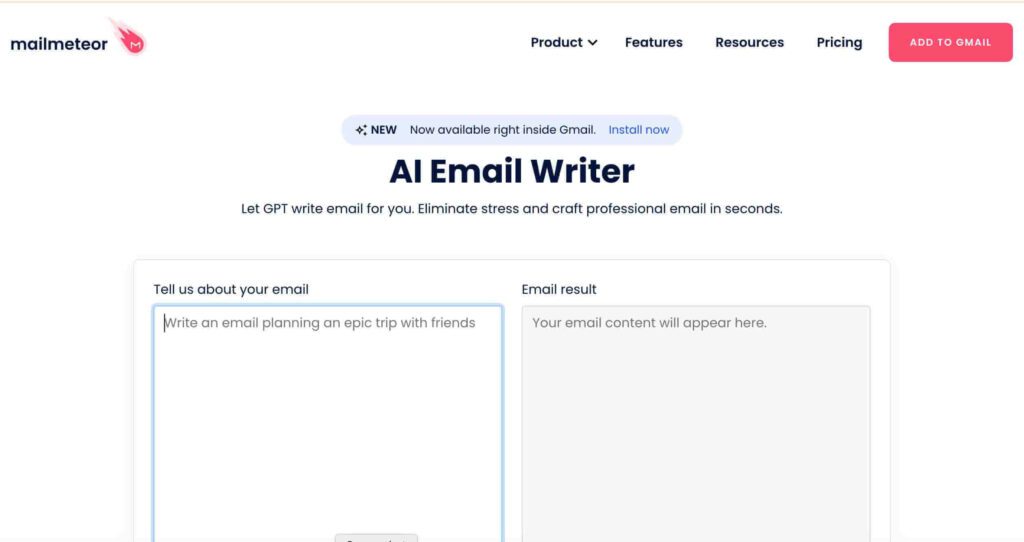
Mailmeteor allows you to create email drafts within minutes by following simple prompts. You can generate multiple versions of the same message, making it easy to tailor emails for different audiences — for example, classmates and professors.
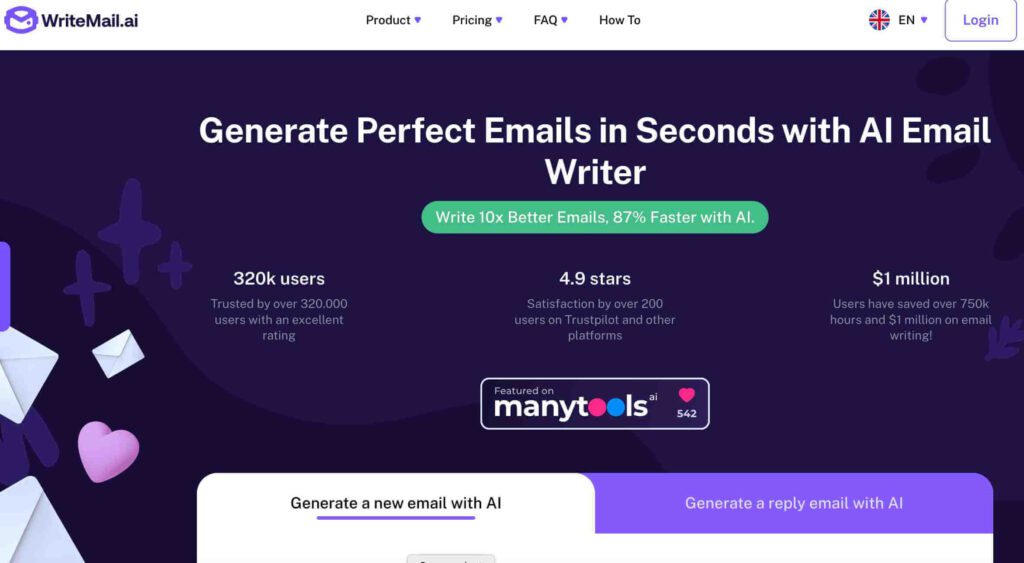
WriteMail.ai provides real-time analysis while writing your email and offers suggestions for tone, structure, and clarity. This ensures consistency across all types of correspondence, from formal academic emails to casual group messages.
Features: Real-time suggestions, multi-language support, tone consistency
Ideal for: Erasmus programs, internship applications, international projects
Pricing: Free usage option available.
5.Hiver
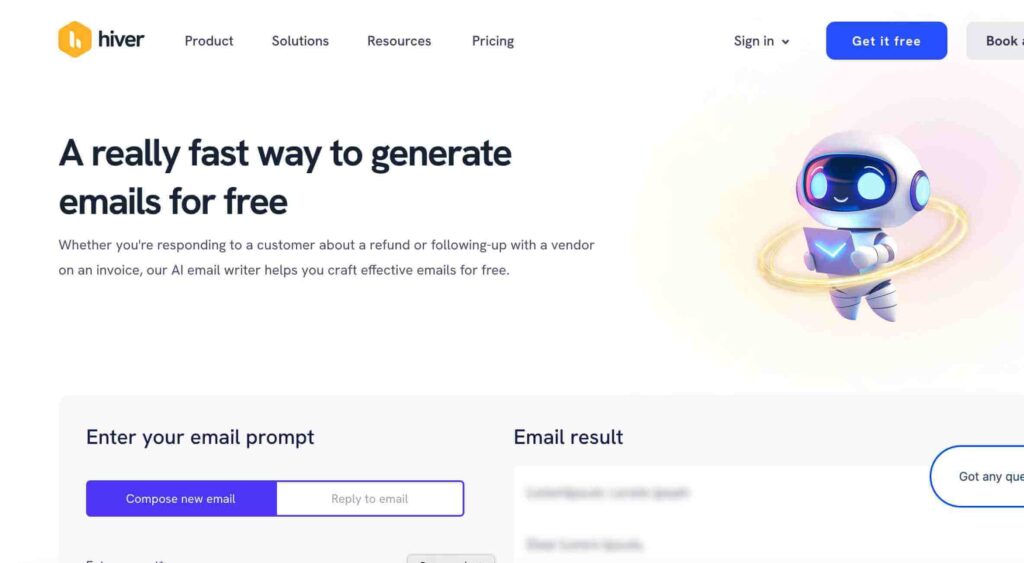
Hiver suggests multiple email drafts based on the selected type and purpose of the email. You can then choose the most relevant draft and make minor adjustments according to your needs.
Built on Gmail, Shortwave offers features like AI-powered replies, content summarization, and natural language event scheduling. The “Magic Stars” feature gives you direct access to the AI assistant.
Pricing: Free plan available. Premium starts at $8.50/month.
7.Gemini (Google)
Integrated with Gmail, Gemini offers smart suggestions for starting conversations and follow-up messages. To use Gemini, you need a Google Workspace subscription and the Gemini extension.
Usage: Click the Gemini icon on the top-right corner of Gmail’s web version to open the AI panel
Pricing: Free trial available. Google Workspace required.
What Is an AI-Powered Email Tool?
An AI email tool is software that automatically generates email drafts based on defined prompts. These tools optimize writing style, tone, and content structure, making communication more efficient.
Benefits of Using AI Email Tools
Save time by automating repetitive writing tasks
Improve tone and professionalism in messages
Reduce spelling and grammar errors
Get personalized and context-aware responses
Increase efficiency in daily communication
📌 Where Can You Use AI Email Tools?
AI email generators can be used in various settings, including:
Work-related correspondence
School/university communication
Customer service responses
Marketing campaigns
Follow-ups and introductions
These tools help streamline the entire email creation process, whether you’re starting a message from scratch or responding to an existing one.
You Might Also Like;
Follow us on TWITTER (X) and be instantly informed about the latest developments…
The landscape of the gaming industry is continuously evolving, and one of the most significant shifts has been the embrace of virtual reality (VR). As game studios worldwide invest heavily in VR technology, the question arises: Why is VR becoming such a pivotal part of the gaming experience, and how can you, as a developer or gaming enthusiast, harness its potential? In this article, we will explore the dynamics of vr game development, the role of virtual reality companies, particularly in burgeoning markets like India, and offer insights into how you can join the VR revolution.
The Rise of Virtual Reality in Gaming
Virtual reality has been a part of science fiction for decades, but recent advancements have transformed it into a tangible reality. The allure of VR lies in its ability to offer an immersive experience that traditional gaming platforms cannot match. By enveloping players in a 360-degree environment, VR games provide a sense of presence that significantly enhances the gaming experience.
The Evolution of VR Technology
The journey of VR technology from science fiction to reality has been remarkable. Initially seen as a futuristic dream, VR has benefited from decades of incremental technological advancements. Early VR attempts were hindered by bulky hardware and limited processing power. However, recent developments in miniaturization, sensors, and computing have made sleek, powerful VR headsets a reality. These advancements have not only brought VR to the consumer market but have also democratized access, allowing more developers to explore its potential.
The Psychology of Immersion
The psychological impact of VR is profound, as it leverages the human brain’s natural inclination for immersion. VR creates a convincing illusion of presence, making users feel as though they are truly inside the game world. This sensation of “being there” is achieved through a combination of visual fidelity, audio cues, and interactive elements. When players are immersed, their emotional and cognitive responses are heightened, leading to a more engaging and memorable gaming experience. This is why game studios are eager to capitalize on VR’s unique ability to captivate audiences.
The Social Dimension of VR
While VR is often associated with solitary experiences, it also has the potential to redefine social interactions in gaming. Multiplayer VR games enable players to connect and communicate in virtual spaces, creating a sense of camaraderie and shared experience. These interactions can mirror real-world social dynamics, providing an avenue for meaningful connections. Moreover, VR offers opportunities for social VR platforms where users can meet, collaborate, and socialize in ways that were previously unimaginable. This social aspect is becoming a driving force behind VR’s growing popularity.
Why Game Studios Are Investing in VR
At the heart of VR’s appeal is its capacity to engage players on a level that traditional games struggle to achieve. The immersive environments created by VR technology allow gamers to become a part of the game world, fostering a deeper emotional connection to the game’s narrative and mechanics. This heightened engagement can lead to increased player retention and, ultimately, greater commercial success.
Enhanced Player Engagement
The immersive power of VR is unparalleled, drawing players into fantastical worlds with unprecedented depth. In VR, players don’t just watch the game unfold; they become active participants, influencing the outcome with their decisions and actions. This level of interactivity fosters a deep emotional connection to the game’s narrative and characters. As players invest more emotionally, they are likely to spend more time in the game, leading to increased retention rates and a loyal player base. This engagement is a key factor in VR’s commercial potential.
Technological Advancements
Significant technological advancements have paved the way for VR’s adoption in gaming. Improvements in hardware, such as more affordable and accessible VR headsets, have lowered the entry barrier for both developers and players. Additionally, advances in graphics processing and motion tracking have enhanced the realism and responsiveness of VR games, making them more appealing to a broader audience.
The Role of Graphics and Sound
The visual and auditory aspects of VR are critical to its success. High-quality graphics create realistic environments that enhance the sense of presence, while spatial audio allows players to pinpoint sounds, adding to the authenticity of the experience. Recent developments in rendering technologies and audio design have made it possible to create stunningly realistic worlds. These improvements are crucial for maintaining immersion and ensuring that players remain engaged.
Motion Tracking and Haptics
Motion tracking and haptic feedback are essential components of VR technology. Precise tracking of head and hand movements allows for natural interactions within the virtual environment. Haptic feedback, which provides tactile sensations, further enhances realism by simulating textures and impacts. These innovations add a layer of physicality to VR experiences, making them more convincing and enjoyable. As these technologies continue to evolve, they will play a significant role in shaping the future of VR gaming.
Competitive Edge
For game studios, investing in VR can offer a competitive edge. By developing VR titles, studios can differentiate themselves in a crowded marketplace. Moreover, as VR technology continues to grow, early adopters are likely to benefit from a first-mover advantage, establishing themselves as leaders in this burgeoning field.
Standing Out in a Crowded Market
The gaming industry is fiercely competitive, with countless titles vying for players’ attention. VR offers a unique opportunity for studios to stand out by delivering experiences that are fundamentally different from traditional games. The novelty and innovation associated with VR can capture the interest of both players and the media, generate buzz and increasing visibility.
Building a Brand in VR
Establishing a strong brand presence in the VR space can pay dividends as the market matures. Studios that become known for high-quality VR experiences can build a loyal following and attract partnerships and collaborations. This brand recognition can extend beyond gaming, opening doors to opportunities in other industries that are exploring VR applications, such as education, healthcare, and training.
Long-Term Growth Potential
Investing in VR is not just about immediate gains; it’s a strategic move for long-term growth. As VR technology continues to evolve and become more mainstream, the demand for VR content is expected to rise. Studios that invest in VR now are positioning themselves to capitalize on future trends and market expansion. This foresight can lead to sustained success and influence in the gaming industry.
VR Game Development: A New Frontier
Developing games for VR presents unique challenges and opportunities. Unlike traditional virtual reality game development, VR requires a reimagining of game design principles to accommodate the immersive nature of the platform.
Redefining Game Design
In VR, game design must account for the player’s physical presence within the game world. This means considering elements such as scale, perspective, and interaction in ways that differ from traditional gaming. Developers must create intuitive interfaces and controls that leverage the player’s natural movements, enhancing immersion without causing discomfort.
Designing for Physical Interaction
Designing for VR involves creating environments that encourage physical interaction. Players expect to reach out, touch, and manipulate objects as they would in the real world. This requires a focus on intuitive controls and natural interactions, making the experience seamless and engaging. Developers must also consider the ergonomics of gameplay to prevent discomfort or fatigue during extended sessions.
The Role of User Interface in VR
The user interface (UI) in VR is a critical component of the gaming experience. Unlike traditional screens, VR demands interfaces that are integrated into the environment. Developers must design UIs that are easy to access without breaking immersion. This might involve using diegetic elements, where information is presented within the game world itself, enhancing realism and maintaining the player’s sense of presence.
Overcoming Motion Sickness
Motion sickness is a common challenge in VR development. It occurs when there is a disconnect between visual motion and physical sensations. To mitigate this, developers must optimize frame rates, minimize latency, and design smooth movement mechanics. Understanding the causes of motion sickness and incorporating user feedback can help create comfortable and enjoyable VR experiences.
Storytelling in VR
The narrative potential of VR is vast. By placing players at the center of the story, developers can craft experiences that feel personal and impactful. This requires a nuanced understanding of storytelling techniques that cater to VR’s unique strengths, such as environmental storytelling and non-linear narratives.
Environmental Storytelling
VR excels in environmental storytelling, where the setting itself conveys narrative elements. Every detail in a VR environment can contribute to the story, from the architecture and objects to the ambient sounds. Players can explore and discover narrative clues at their own pace, creating a sense of agency and immersion. This approach allows for rich, layered storytelling that invites players to become active participants in the narrative.
Non-Linear Narratives
VR offers the opportunity to experiment with non-linear narratives, where players can influence the story’s direction based on their choices. Branching paths and multiple outcomes can be woven into the gameplay, providing a dynamic and personalized experience. This interactivity enhances replayability and encourages players to explore different story arcs, deepening their engagement with the game.
Emotional Resonance in VR
The emotional impact of VR storytelling is profound, as the medium’s immersive nature allows players to experience emotions firsthand. Developers can create moments of tension, joy, or empathy by leveraging VR’s ability to convey subtle cues and nuances. This emotional resonance can leave a lasting impression, making VR narratives memorable and impactful.
Virtual Reality Companies: Leading the Charge
As the demand for VR content grows, so too does the number of companies dedicated to advancing VR technology. Among these, virtual reality companies in India have emerged as significant players in the global VR landscape.
The Role of Virtual Reality Companies
A virtual reality company is instrumental in driving innovation within the industry. These companies not only develop VR content but also create the tools and technologies that enable developers to bring their visions to life. By fostering a collaborative ecosystem, VR companies are helping to push the boundaries of what is possible within virtual environments.
Innovation and R&D
Leading VR companies invest heavily in research and development to stay at the forefront of technological advancements. They explore new ways to enhance immersion, improve hardware performance, and develop novel interaction methods. This commitment to innovation drives the industry forward, setting new benchmarks for VR experiences and encouraging developers to experiment and push creative boundaries.
Building Developer Communities
VR companies play a crucial role in building and nurturing developer communities. By providing resources, training, and support, they empower developers to create high-quality VR content. These communities foster collaboration and knowledge-sharing, enabling developers to learn from each other’s experiences and overcome common challenges. Such ecosystems are essential for the growth and sustainability of the VR industry.
Partnerships and Collaborations
Partnerships between VR companies and other industries are expanding the applications of virtual reality. Collaborations with sectors like healthcare, education, and real estate demonstrate VR’s versatility beyond gaming. These partnerships bring fresh perspectives and opportunities for cross-industry innovation, further solidifying VR’s position as a transformative technology.
India’s Growing Influence
India’s gaming industry is experiencing rapid growth, with virtual reality companies in the region playing a pivotal role. These companies are leveraging India’s technological expertise and creative talent to produce cutting-edge VR content that resonates with both domestic and international audiences. As a result, India is becoming a hub for VR innovation, attracting investment and talent from around the world.
The Talent Pool in India
India is home to a vast pool of skilled professionals in technology and creative fields. This talent pool is a valuable asset for the VR industry, providing the expertise needed to develop complex VR projects. Indian developers and artists bring unique perspectives and creativity to the table, contributing to the diversity and innovation of VR content on a global scale.
Economic Opportunities
The growth of VR companies in India is creating significant economic opportunities. As these companies expand, they generate jobs and drive investment in the technology sector. The government’s support for innovation and entrepreneurship further fuels this growth, positioning India as a key player in the global VR market.
Cultural Influence in VR Content
Indian VR companies are exploring the rich tapestry of Indian culture and history in their content. By incorporating elements of Indian mythology, art, and traditions, they offer unique experiences that resonate with audiences worldwide. This cultural influence not only enriches the VR landscape but also promotes cross-cultural understanding and appreciation.
How You Can Invest in VR
For developers and gaming enthusiasts looking to invest in VR, there are several paths to consider.
Developing VR Games
For those with a passion for game development, creating VR titles can be a rewarding endeavor. This requires a solid understanding of VR technology and the unique design principles that govern it. Fortunately, there are numerous resources and communities dedicated to helping developers learn the intricacies of VR development.
Learning the Ropes
Aspiring VR developers can start by gaining a foundational understanding of VR technology. Online courses, tutorials, and workshops offer valuable insights into the technical aspects of VR development, from programming to 3D modeling. Engaging with these resources can help beginners build the skills needed to create compelling VR experiences.
Networking and Collaboration
Connecting with other VR developers and professionals can provide valuable support and opportunities for collaboration. Online forums, social media groups, and industry events are excellent places to network and exchange ideas. Collaborating with experienced developers can accelerate learning and lead to innovative projects that push the boundaries of VR gaming.
Experimentation and Prototyping
Experimentation is key to success in VR development. Developers should embrace a mindset of exploration and prototyping, testing new ideas and mechanics. Rapid prototyping allows for quick iteration and refinement, helping developers identify what works and what doesn’t. This iterative approach is essential for creating polished and engaging VR experiences.
Collaborating with VR Companies
Partnering with established VR companies can provide valuable insights and resources. By collaborating with these companies, you can gain access to cutting-edge technology and expertise that can help elevate your projects. Additionally, such partnerships can open doors to new markets and opportunities within the VR space.
Access to Advanced Technology
Collaborating with VR companies provides access to state-of-the-art technology and tools. These resources can enhance the development process, enabling the creation of more sophisticated and immersive VR experiences. Working with industry leaders also offers insights into emerging trends and best practices, keeping developers at the forefront of innovation.
Joint Ventures and Co-Development
Joint ventures and co-development projects offer opportunities for shared expertise and resources. By partnering with VR companies, developers can tackle ambitious projects that might be challenging to undertake independently. These collaborations can lead to innovative solutions and unique experiences that capture the attention of players and the industry.
Expanding Market Reach
Partnerships with established VR companies can facilitate entry into new markets and audiences. These companies often have established distribution networks and marketing channels, which can help promote and distribute VR content more effectively. Leveraging these networks can increase visibility and drive engagement with a wider audience.
Investing in VR Technology
For those interested in the business side of VR, investing in VR technology and companies can be a lucrative venture. As the VR market continues to expand, there are numerous opportunities for investment in hardware, software, and content creation.
Identifying Investment Opportunities
Identifying promising investment opportunities requires a keen understanding of the VR landscape. Investors should look for companies and technologies that demonstrate innovation, scalability, and strong market potential. Staying informed about industry trends and developments can help identify startups and projects with significant growth prospects.
Diversifying Investments
Diversifying investments across different sectors of the VR industry can mitigate risk and maximize returns. Investing in a mix of hardware, software, and content companies can provide exposure to various aspects of the VR ecosystem. This diversified approach ensures that investors benefit from the overall growth of the VR market.
Long-Term Strategic Vision
Successful investment in VR requires a long-term strategic vision. The VR industry is still evolving, and while short-term gains are possible, the greatest returns are likely to come from sustained growth over time. Investors should be prepared to support companies through their development phases, recognizing the potential for substantial rewards as the industry matures.
Conclusion
Virtual reality is reshaping the gaming industry, offering unparalleled opportunities for innovation and engagement. As game studios and virtual reality companies continue to invest in this transformative technology, the potential for VR to revolutionize gaming becomes increasingly apparent.
Whether you are a game developer, journalist, or content strategist, understanding the intricacies of VR and its impact on gaming is essential. By embracing VR, you can position yourself at the forefront of this exciting field, shaping the future of gaming for years to come.
Virtual reality’s journey from a futuristic dream to a transformative reality is a testament to human ingenuity and creativity. As the technology continues to evolve, it promises to unlock new dimensions of storytelling, interaction, and connection. The future of gaming is immersive, and those who embrace VR will play a pivotal role in defining this new era of entertainment.
Author Profile
Adam Regan
Deputy Editor
Features and account management. 3 years media experience. Previously covered features for online and print editions.







 Source: NODE Foundation