
Web3

Home Web3 Page 84

Painting services Market Hits New High | Sherwin-Williams, PPG Industries, Behr Paint | Web3Wire

0
Painting services Market Hits New High | Sherwin-Williams, PPG Industries, Behr Paint | Web3Wire


Painting services Market

HTF MI just released the Global Painting services Market Study, a comprehensive analysis of the market that spans more than 143+ pages and describes the product and industry scope as well as the market prognosis and status for 2025-2033. The marketization process is being accelerated by the market study’s segmentation by important regions. The market is currently expanding its reach.

Major Giants in Painting services Market are:Sherwin-Williams (US), PPG Industries (US), Behr Paint (US), Benjamin Moore (US), AkzoNobel (Netherlands), Valspar (US), Jotun (Norway), RPM International (US), Kansai Paint (Japan), Asian Paints (India), Nippon Paint (Japan), BASF (Germany), Hempel (Denmark), Dulux (UK), ICI Paints (UK)

Request PDF Sample Copy of Report: (Including Full Toc, List of Tables & Figures, Chart) @👉 https://www.htfmarketinsights.com/sample-report/4377380-painting-services-market?utm_source=Vaishali_OpenPR&utm_id=Vaishali

HTF Market Intelligence projects that the global Painting services market will expand at a compound annual growth rate (CAGR) of 19.1% from 2025 to 2033, from 16.0 Billion in 2025 to 38.4 Billion by 2033.

Our Report Covers the Following Important Topics:

By Type:Residential Painting, Commercial Painting, Industrial Coatings, Exterior & Interior Painting, Decorative Finishes

By Application:Residential, Commercial, Industrial, Government, Infrastructure

Definition:Painting services include the application of paints and coatings to buildings, structures, and interiors. The market is expanding as the demand for home renovations, commercial upgrades, and new construction increases. Focus on eco-friendly, low-VOC paints and the rise of automation in painting processes are also driving market growth.

Dominating Region:North America

Fastest-Growing Region:Asia-Pacific

Market Trends:• Growth in demand for residential and commercial building painting services, Increase in demand for sustainable and eco-friendly paints, Rise in demand for specialized finishes for luxury properties, Growth in demand for repainting services in aging buildings, Increase in government funding for urban renewal projects boosts demand.

Market Drivers:• Increasing demand for home renovations and commercial building upgrades drives market growth, Rising disposable incomes and urbanization accelerate adoption, Growth in demand for eco-friendly and low-VOC paints strengthens market, Technological advancements in automated painting tools boost market, Expansion of commercial construction projects supports market.

Market Challenges:• High labor costs and shortage of skilled painters limit market growth, Regulatory constraints regarding paint compositions slow market expansion, Difficulty in managing large-scale commercial painting projects restricts scalability, Limited availability of affordable eco-friendly paints slows adoption, Weather conditions impacting exterior painting projects create delays.

Market Opportunities:• Corporate partnerships with construction firms expand market, Growth in demand for eco-friendly paints strengthens market, Rise in demand for smart painting tools and automated painting systems accelerates adoption, E-commerce platforms for paint supplies boost market access, Social media-driven trends in home improvement increase demand.

Buy Now Latest Edition of Painting services Market Report 👉 https://www.htfmarketinsights.com/buy-now?format=1&report=4377380

The titled segments and sub-section of the market are illuminated below:

In-depth analysis of Painting services market segments by Types: Residential Painting, Commercial Painting, Industrial Coatings, Exterior & Interior Painting, Decorative Finishes

Detailed analysis of Career &Education Counselling market segments by Applications: Residential, Commercial, Industrial, Government, Infrastructure

Global Painting services Market – Regional Analysis

• North America: United States of America (US), Canada, and Mexico.

• South & Central America: Argentina, Chile, Colombia, and Brazil.

• Middle East & Africa: Kingdom of Saudi Arabia, United Arab Emirates, Turkey, Israel, Egypt, and South Africa.

• Europe: the UK, France, Italy, Germany, Spain, Nordics, BALTIC Countries, Russia, Austria, and the Rest of Europe.

• Asia: India, China, Japan, South Korea, Taiwan, Southeast Asia (Singapore, Thailand, Malaysia, Indonesia, Philippines & Vietnam, etc.) & Rest

• Oceania: Australia & New Zealand

Painting services Market Research Objectives:

– Focuses on the key manufacturers, to define, pronounce and examine the value, sales volume, market share, market competition landscape, SWOT analysis, and development plans in the next few years.

– To share comprehensive information about the key factors influencing the growth of the market (opportunities, drivers, growth potential, industry-specific challenges and risks).

– To analyze the with respect to individual future prospects, growth trends and their involvement to the total market.

– To analyze reasonable developments such as agreements, expansions new product launches, and acquisitions in the market.

– To deliberately profile the key players and systematically examine their growth strategies.

FIVE FORCES & PESTLE ANALYSIS:Five forces analysis-the threat of new entrants, the threat of substitutes, the threat of competition, and the bargaining power of suppliers and buyers-are carried out to better understand market circumstances.

• Political (Political policy and stability as well as trade, fiscal, and taxation policies)

• Economical (Interest rates, employment or unemployment rates, raw material costs, and foreign exchange rates)

• Social (Changing family demographics, education levels, cultural trends, attitude changes, and changes in lifestyles)

• Technological (Changes in digital or mobile technology, automation, research, and development)

• Legal (Employment legislation, consumer law, health, and safety, international as well as trade regulation and restrictions)

• Environmental (Climate, recycling procedures, carbon footprint, waste disposal, and sustainability)

Get customized report 👉 https://www.htfmarketinsights.com/customize/4377380-painting-services-market?utm_source=Vaishali_OpenPR&utm_id=Vaishali

Points Covered in Table of Content of Global Painting services Market:

Chapter 01 – Painting services Executive Summary

Chapter 02 – Market Overview

Chapter 03 – Key Success Factors

Chapter 04 – Global Painting services Market – Pricing Analysis

Chapter 05 – Global Painting services Market Background or History

Chapter 06 – Global Painting services Market Segmentation (e.g. Type, Application)

Chapter 07 – Key and Emerging Countries Analysis Worldwide Painting services Market

Chapter 08 – Global Painting services Market Structure & worth Analysis

Chapter 09 – Global Painting services Market Competitive Analysis & Challenges

Chapter 10 – Assumptions and Acronyms

Chapter 11 – Painting services Market Research Method Painting services

Thank you for reading this post. You may also obtain report versions by area, such as North America, LATAM, Europe, Japan, Australia, or Southeast Asia, or by chapter.

Nidhi Bhawsar (PR & Marketing Manager)HTF Market Intelligence Consulting Private LimitedPhone: +15075562445sales@htfmarketintelligence.com

About Author:HTF Market Intelligence Consulting is uniquely positioned to empower and inspire with research and consulting services to empower businesses with growth strategies, by offering services with extraordinary depth and breadth of thought leadership, research, tools, events, and experience that assist in decision-making.

This release was published on openPR.

About Web3Wire Web3Wire – Information, news, press releases, events and research articles about Web3, Metaverse, Blockchain, Artificial Intelligence, Cryptocurrencies, Decentralized Finance, NFTs and Gaming. Visit Web3Wire for Web3 News and Events, Block3Wire for the latest Blockchain news and Meta3Wire to stay updated with Metaverse News.


Source link

The Latest Nobel Peace Prize Winner Is a Bitcoin Supporter – Decrypt

0
The Latest Nobel Peace Prize Winner Is a Bitcoin Supporter – Decrypt


In brief

Venezuelan opposition leader María Corina Machado won the Nobel Peace Prize on Friday.
Machado last year spoke about how Bitcoin has been used in Venezuela as a tool to fight autocracy.
Bitcoiners praised Machado following news of her win.

The 2025 Nobel Peace Prize winner, Venezuelan opposition leader María Corina Machado, appears to be a Bitcoiner. 

Machado, 58, who was awarded the prize on Friday, last year spoke about how Bitcoin has become a “vital means of resistance” for many people in the country. 

Speaking to Bitcoin Magazine, Machado said that the asset has long been used by people in the country to get around a collapsing economy, and that the opposition looked forward to embracing the oldest cryptocurrency “in a new democratic Venezuela.”

“This financial repression—rooted in state-sponsored looting, theft, and unchecked money printing—happened despite our best, vast natural resources, and despite an oil price boom that peaked at $147 in July 2008,” she said in the September 2024 interview. 

“Some Venezuelans found a lifeline in Bitcoin during hyperinflation,” she continued. “[Bitcoin] has evolved from a humanitarian tool to a vital means of resistance.”


“We envision Bitcoin as part of our national reserves, helping rebuild what the dictatorship stole,” she added.

Crypto industry bigwigs uncovered the year-old interview following news of Machado’s win—and celebrated the move.

“For the first time in history, the Nobel Peace Prize was awarded to a Bitcoiner,” ProCap Chief Investment Officer Jeff Park wrote on X. 

Bradley Rettler, director of the University of Wyoming’s Bitcoin Research Institute, added: “Love to see Nobel Peace Prize winner María Corina Machado understand Bitcoin as resistance money.”

The Norwegian Nobel Committee on Friday awarded Machado the Nobel Peace Prize for “her tireless work promoting democratic rights for the people of Venezuela, and for her struggle to achieve a just and peaceful transition from dictatorship to democracy.”

Venezuelan President Nicolas Maduro, who’s been president since 2013 and has ruled the country with an iron fist, barred Machado from running in the 2024 presidential elections. Following Maduro’s win, international observers said the election wasn’t democratic. 

Venezuelans have long used cryptocurrencies as a way to dodge out of control prices. A toxic combination of government currency controls, corruption, and U.S. sanctions led the Venezuelan bolivar to collapse almost 10 years ago. 

The country still suffers from one of the highest inflation rates in the world, but the South American nation is mostly—informally—dollarized now. 

Daily Debrief Newsletter

Start every day with the top news stories right now, plus original features, a podcast, videos and more.


Source link

When You Tell AI Models to Act Like Women, Most Become More Risk-Averse: Study – Decrypt

0
When You Tell AI Models to Act Like Women, Most Become More Risk-Averse: Study – Decrypt


In brief

Researchers at Allameh Tabataba’i University found models behave differently depending on whether they act as a man or a woman.
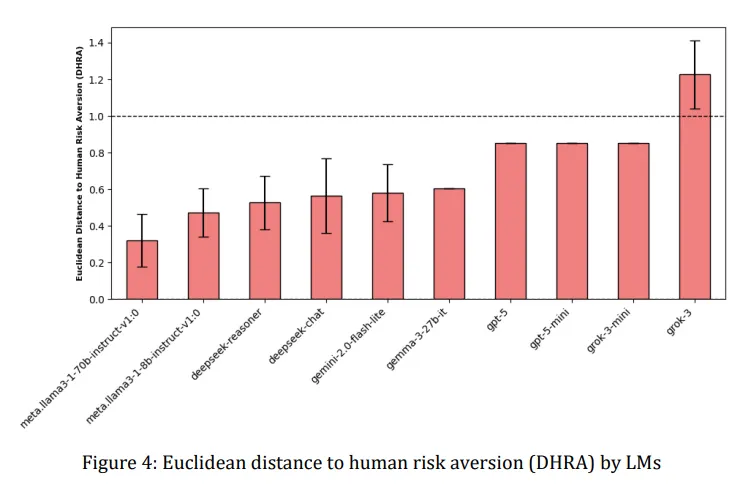
DeepSeek and Gemini became more risk-averse when prompted as women, echoing real-world behavioral patterns.
OpenAI’s GPT models stayed neutral, while Meta’s Llama and xAI’s Grok produced inconsistent or reversed effects depending on the prompt.

Ask an AI to make decisions as a woman, and it suddenly gets more cautious about risk. Tell the same AI to think like a man, and watch it roll the dice with greater confidence.

A new research paper from Allameh Tabataba’i University in Tehran, Iran revealed that large language models systematically change their fundamental approach to financial risk-taking behavior based on the gender identity they’re asked to assume.

The study, which tested AI systems from companies including OpenAI, Google, Meta, and DeepSeek, revealed that several models dramatically shifted their risk tolerance when prompted with different gender identities.

DeepSeek Reasoner and Google’s Gemini 2.0 Flash-Lite showed the most pronounced effect, becoming notably more risk-averse when asked to respond as women, mirroring real-world patterns where women statistically demonstrate greater caution in financial decisions.

The researchers used a standard economics test called the Holt-Laury task, which presents participants with 10 decisions between safer and riskier lottery options. As the choices progress, the probability of winning increases for the risky option. Where someone switches from the safe to the risky choice reveals their risk tolerance—switch early and you’re a risk-taker, switch late and you’re risk-averse.

When DeepSeek Reasoner was told to act as a woman, it consistently chose the safer option more often than when prompted to act as a man. The difference was measurable and consistent across 35 trials for each gender prompt. Gemini showed similar patterns, though the effect varied in strength.

On the other hand, OpenAI’s GPT models remained largely unmoved by gender prompts, maintaining their risk-neutral approach regardless of whether they were told to think as male or female.

Meta’s Llama models acted unpredictably, sometimes showing the expected pattern, sometimes reversing it entirely. Meanwhile, xAI’s Grok did Grok things, occasionally flipping the script entirely, showing less risk aversion when prompted as female.

OpenAI has clearly been working on making its models more balanced. A previous study from 2023 found its models exhibited clear political biases, which OpenAI appears to have addressed by now, showing a 30% decrease in biased replies according to a new research.

The research team, led by Ali Mazyaki, noted that this is basically a reflection of human stereotypes.

“This observed deviation aligns with established patterns in human decision-making, where gender has been shown to influence risk-taking behavior, with women typically exhibiting greater risk aversion than men,” the study says.

The study also examined whether AIs could convincingly play other roles beyond gender. When told to act as a “finance minister” or imagine themselves in a disaster scenario, the models again showed varying degrees of behavioral adaptation. Some adjusted their risk profiles appropriately for the context, while others remained stubbornly consistent.


Now, think about this: Many of these behavioral patterns aren’t immediately obvious to users. An AI that subtly shifts its recommendations based on implicit gender cues in conversation could reinforce societal biases without anyone realizing it’s happening.

For example, a loan approval system that becomes more conservative when processing applications from women, or an investment advisor that suggests safer portfolios to female clients, would perpetuate economic disparities under the guise of algorithmic objectivity.

The researchers argue these findings highlight the need for what they call “bio-centric measures” of AI behavior—ways to evaluate whether AI systems accurately represent human diversity without amplifying harmful stereotypes. They suggest that the ability to be manipulated isn’t necessarily bad; an AI assistant should be able to adapt to represent different risk preferences when appropriate. The problem arises when this adaptability becomes an avenue for bias.

The research arrives as AI systems increasingly influence high-stakes decisions. From medical diagnosis to criminal justice, these models are being deployed in contexts where risk assessment directly impacts human lives.

If a medical AI becomes overly cautious when interfacing with female physicians or patients, then it could affect treatment recommendations. If a parole assessment algorithm shifts its risk calculations based on gendered language in case files, it could perpetuate systemic inequalities.

The study tested models ranging from tiny half-billion parameter systems to massive seven-billion parameter architectures, finding that size didn’t predict gender responsiveness. Some smaller models showed stronger gender effects than their larger siblings, suggesting this isn’t simply a matter of throwing more computing power at the problem.

This is a problem that cannot be solved easily. After all, the internet, the whole knowledge database used to train these models, not to mention our history as a species, is full of tales about men being reckless brave superheroes that know no fear and women being more cautious and thoughtful. In the end, teaching AIs to think differently may require us to live differently first.

Generally Intelligent Newsletter

A weekly AI journey narrated by Gen, a generative AI model.


Source link

Mutuum Finance (MUTM) Surges 250% as It Surpasses 750M Tokens Sold and Gains Over 16,800 Investors | Web3Wire

0
Mutuum Finance (MUTM) Surges 250% as It Surpasses 750M Tokens Sold and Gains Over 16,800 Investors | Web3Wire


In a market dominated by large-cap tokens and established narratives, a new DeFi protocol is quickly carving out a name for itself. Mutuum Finance (MUTM), built on Ethereum, has seen rapid momentum in 2025 — both in its structured presale and investor participation. The project’s combination of utility-driven tokenomics and clear fundraising milestones has positioned it as one of the most closely watched DeFi launches of the year.

Structured Presale With Predictable Upside

Mutuum Finance (MUTM) launched its presale in early 2025 with Phase 1 priced at $0.01. Mutuum Finance has designed its presale in clearly defined stages, with approximately 20% price increases per phase. This structure rewards early participants while maintaining transparency and creating urgency for newcomers.

The results have been striking. After completing five phases, MUTM now is priced at $0.035 in Phase 6, representing a 250% token appreciation for the earliest participants. Phase 6 is already more than halfway sold, with Phase 7 priced at $0.04 and the official listing price fixed at $0.06. This means early buyers at $0.01 could see up to 600% appreciation by launch, while those entering during Phase 6 still have the potential to nearly double their token value.

To date, over $17 million has been raised, more than 740 million tokens have been allocated, and the community has expanded to 16,800 holders. This broad base of participants helps reduce concentration risk at launch, avoiding scenarios where a few wallets dominate supply.

Transparency and Community Engagement

Mutuum Finance has built strong investor confidence through its transparency measures during the presale. A live dashboard allows participants to track their allocations, token balances, and potential ROI in real time. Additionally, a Top 50 leaderboard highlights major contributors and will reward them with bonus token allocations upon listing.

To further boost participation, the team launched a $100,000 giveaway, awarding 10 winners $10,000 in MUTM tokens each, a move that has driven community engagement while spreading awareness to new audiences. This blend of gamification, real-time data visibility, and financial incentives has been instrumental in growing the protocol’s investor base quickly and organically.

Development Roadmap in Parallel With Fundraising

Mutuum Finance isn’t relying on fundraising alone. According to a recent team statement on X (formerly Twitter), development of the lending and borrowing protocol is well underway, with V1 scheduled for Sepolia Testnet deployment in Q4 2025.

The first version will feature core components essential for a functional lending and borrowing protocol, including a Liquidity Pool to support asset supply and borrowing, mtTokens as interest-bearing deposit receipts, a Debt Token system to track borrowing positions, and a Liquidator Bot to help maintain solvency across markets.

The initial supported assets will be ETH and USDT for lending, borrowing, and collateral. This alignment between fundraising and tangible product milestones is a major confidence signal to early backers, showing that the team is executing toward launch, not just raising capital.

Security, Audit, and Bug Bounty Program

Mutuum Finance has placed a strong emphasis on security well before launch. The protocol has successfully completed a CertiK audit, earning a 90/100 Token Scan score, which signals a robust smart contract architecture and adherence to industry standards. This early audit provides prospective investors and future users with added confidence that the protocol’s core mechanics have undergone thorough third-party scrutiny.

Beyond the audit, the team has implemented a $50,000 bug bounty program, structured across multiple reward tiers to incentivize white-hat developers to identify and report vulnerabilities before mainnet deployment. This proactive approach encourages continuous external testing and strengthens the overall resilience of the platform. By combining independent auditing with community-driven security measures, Mutuum Finance is building a trust foundation that many early-stage DeFi protocols often overlook.

Final Thoughts

Looking ahead, the project’s plans to deploy a layered oracle system and launch a native overcollateralized stablecoin further reinforce its long-term potential. The oracle design will combine Chainlink feeds, fallback sources, aggregated pricing, and DEX time-weighted averages to ensure accurate and manipulation-resistant valuations, an essential feature for maintaining lending market integrity. Meanwhile, the introduction of a native stablecoin is set to provide an internal unit of account, deepen on-platform liquidity, and reduce reliance on external stable assets like USDT, making the ecosystem more self-sustaining.

Mutuum Finance is emerging as one of 2025’s most notable DeFi crypto presales, not because of grand promises, but due to data-backed growth and strategic execution. With over $17.1 million in funding, a well-defined roadmap, and thousands of participants already onboard, MUTM is positioning itself strongly ahead of its expected token launch at $0.06.

For more information about Mutuum Finance (MUTM) visit the links below:

Website: https://www.mutuum.com

Linktree: https://linktr.ee/mutuumfinance

Disclaimer: The information provided in this press release is not a solicitation for investment, nor is it intended as investment advice, financial advice, or trading advice. Investing involves risk, including the potential loss of capital. It is strongly recommended you practice due diligence, including consultation with a professional financial advisor, before investing in or trading cryptocurrency and securities. Neither the media platform nor the publisher shall be held responsible for any fraudulent activities, misrepresentations, or financial losses arising from the content of this press release.

About Web3Wire Web3Wire – Information, news, press releases, events and research articles about Web3, Metaverse, Blockchain, Artificial Intelligence, Cryptocurrencies, Decentralized Finance, NFTs and Gaming. Visit Web3Wire for Web3 News and Events, Block3Wire for the latest Blockchain news and Meta3Wire to stay updated with Metaverse News.


Source link

Super Apps Market Forecast to Reach USD 440.19 Billion by 2030, Driven by Integrated Digital Services and Mobile Adoption | Web3Wire

0
Super Apps Market Forecast to Reach USD 440.19 Billion by 2030, Driven by Integrated Digital Services and Mobile Adoption | Web3Wire


Super Apps Market

Mordor Intelligence has published a new report on the Super Apps Market, offering a comprehensive analysis of trends, growth drivers, and future projections.Super Apps Market Overview

The Super Apps Market stood at USD 127.46 billion in 2025 and is forecast to climb to USD 440.19 billion by 2030, advancing at a 28.13% CAGR. Consumers and businesses are increasingly relying on super apps for financial transactions, transportation, e-commerce, and other essential services, highlighting the expanding Super Apps Market share globally.

Current Super Apps Market trends [https://www.mordorintelligence.com/industry-reports/super-apps-market?utm_source=abnewswire] show a shift toward integrated platforms that improve engagement, retention, and provide actionable insights through data analytics, reflecting the growing importance of unified digital ecosystems.

Key Trends in the Super Apps Market

1.Rising Smartphone and Mobile-Data Penetration Rising smartphone ownership and affordable mobile data are connecting millions globally, especially in Latin America, Africa, and Asia-Pacific, driving adoption of super apps for daily tasks and transactions.

2.Shift Toward Digital Payments and E-Commerce Digital payment adoption drives the Super Apps Market, offering secure, convenient, cash-less transactions, while e-commerce growth and digital currencies enhance platform appeal and seamless user experiences.

3.Demand for Integrated “All-in-One” User Experience Consumers prefer single apps consolidating services due to app fatigue. Super apps using centralized data boost engagement and retention, with healthcare, finance, and logistics valued for convenience and efficiency.

4.Challenges in Privacy and Regulatory Compliance Despite growth, data privacy and security concerns persist. Multi-jurisdictional compliance challenges and preference for specialized apps may limit adoption, though improved security and transparency are addressing these issues.

Check out more details and stay updated with the latest industry trends, including the Japanese version for localized insights: https://www.mordorintelligence.com/ja/industry-reports/super-apps-market?utm_source=abnewswire

Market Segmentation of the Super Apps Market

*By Platform:

*Android

*iOS

*Web/PWA

*Hybrid OS

*By Device:

*Smartphone

*Tablet

*Wearable and IoT

*By Deployment Type:

*Cloud

*On-premise

*By End-User:

*Consumers

*Micro and Small Businesses

*Large Enterprises

*Government and Public-sector Agencies

*Others

*By Application:

*Financial Services and Wallets

*Transportation and Logistics

*E-commerce and Retail

*Social Media and Messaging

*Healthcare and Wellness

*Government and Civic Services

*Entertainment and Streaming

*By Geography:

*North America: United States, Canada, Mexico

*South America: Brazil, Argentina, Rest of South America

*Europe: Germany, United Kingdom, France, Italy, Spain, Russia, Rest of Europe

*Asia-Pacific: China, Japan, India, South Korea, Australia and New Zealand, Rest of Asia-Pacific

*Middle East and Africa:

*Middle East: Saudi Arabia, UAE, Turkey, Rest of Middle East

*Africa: South Africa, Nigeria, Kenya, Rest of Africa

Explore Our Full Library of Technology, Media and Telecom Research Industry Reports – https://www.mordorintelligence.com/market-analysis/technology-media-and-telecom?utm_source=abnewswire

Key Players in the Super Apps Market

*Tencent Holdings Ltd.: A Chinese multinational conglomerate offering WeChat, a super app combining messaging, payments, social media, and entertainment.

*PhonePe Pvt Ltd.: An Indian digital payments platform providing financial services, e-commerce, and utility payments through a unified app.

*Grab Holdings Ltd.: A Southeast Asian super app offering ride-hailing, food delivery, digital payments, and financial services across multiple countries.

*Alibaba Group Holding Ltd. (Alipay): A Chinese company providing Alipay, an app for payments, e-commerce, financial services, and lifestyle management.

*GoTo Group (Gojek): An Indonesian super app offering transportation, food delivery, payments, and other on-demand services across Southeast Asia.

Conclusion

The convenience of one-stop platforms is transforming consumer behavior, while businesses benefit from increased engagement, cross-selling opportunities, and data-driven decision-making, highlighting the expanding Super Apps Market size.

Current Super Apps Market statistics indicate a focus on enhancing user experience, expanding services, and maintaining secure, compliant operations, providing opportunities for stakeholders to develop innovative solutions that meet evolving digital needs.

For more insights on Super Apps Market, please visit the Mordor Intelligence Page: https://www.mordorintelligence.com/industry-reports/super-apps-market?utm_source=abnewswire

Industry Related Reports:

App Development Market

The App Development Market [https://www.mordorintelligence.com/industry-reports/app-development-market?utm_source=abnewswire] is valued at USD 264.96 billion in 2025 and is projected to reach USD 543.13 billion by 2030, growing at a CAGR of 15.42%. The market is driven by rising smartphone adoption, increasing demand for mobile applications across enterprises, and the growing focus on cloud-based and cross-platform app development solutions.

In-App Advertising Market

The In-App Advertising Market [https://www.mordorintelligence.com/industry-reports/in-app-advertising-market?utm_source=abnewswire] is estimated at USD 387.76 billion in 2025 and is projected to reach USD 571.76 billion by 2030, growing at a CAGR of 8.08%. Market growth is driven by increasing mobile app usage, rising engagement in gaming and social media apps, and the shift toward targeted, personalized advertising to enhance user experience and ROI.

Indonesia E-Services Market

The Indonesia E-Services Market [https://www.mordorintelligence.com/industry-reports/indonesia-e-services-market?utm_source=abnewswire] is valued at USD 1.99 billion in 2025 and is projected to reach USD 3.48 billion by 2030, growing at a CAGR of 11.8%. Growth is driven by increasing internet penetration, rising adoption of digital platforms for government and business services, and the growing demand for convenient, on-demand e-services across the country.

About Mordor Intelligence:

Mordor Intelligence is a trusted partner for businesses seeking comprehensive and actionable market intelligence. Our global reach, expert team, and tailored solutions empower organizations and individuals to make informed decisions, navigate complex markets, and achieve their strategic goals.

With a team of over 550 domain experts and on-ground specialists spanning 150+ countries, Mordor Intelligence possesses a unique understanding of the global business landscape. This expertise translates into comprehensive syndicated and custom research reports covering a wide spectrum of industries, including aerospace & defense, agriculture, animal nutrition and wellness, automation, automotive, chemicals & materials, consumer goods & services, electronics, energy & power, financial services, food & beverages, healthcare, hospitality & tourism, information & communications technology, investment opportunities, and logistics.

For any inquiries or to access the full report, please contact:

media@mordorintelligence.com

https://www.mordorintelligence.com

Media ContactCompany Name: Mordor Intelligence Private LimitedContact Person: Jignesh ThakkarEmail:Send Email [https://www.abnewswire.com/email_contact_us.php?pr=super-apps-market-forecast-to-reach-usd-44019-billion-by-2030-driven-by-integrated-digital-services-and-mobile-adoption]Phone: +1 617-765-2493Address:11th Floor, Rajapushpa Summit, Nanakramguda Rd, Financial District, GachibowliCity: HyderabadState: Telangana 500008Country: IndiaWebsite: https://www.mordorintelligence.com/

Legal Disclaimer: Information contained on this page is provided by an independent third-party content provider. ABNewswire makes no warranties or responsibility or liability for the accuracy, content, images, videos, licenses, completeness, legality, or reliability of the information contained in this article. If you are affiliated with this article or have any complaints or copyright issues related to this article and would like it to be removed, please contact retract@swscontact.com

This release was published on openPR.

About Web3Wire Web3Wire – Information, news, press releases, events and research articles about Web3, Metaverse, Blockchain, Artificial Intelligence, Cryptocurrencies, Decentralized Finance, NFTs and Gaming. Visit Web3Wire for Web3 News and Events, Block3Wire for the latest Blockchain news and Meta3Wire to stay updated with Metaverse News.


Source link

Public Keys: BlackRock Bitcoin Fee Frenzy, S&P Catchall and New York Stakes – Decrypt

0
Public Keys: BlackRock Bitcoin Fee Frenzy, S&P Catchall and New York Stakes – Decrypt


In brief

BlackRock’s Bitcoin ETF (IBIT) has become the asset manager’s most profitable fund by annualized fee revenue, with $97 billion in assets after just 21 months.
S&P Global launched its first hybrid “Digital Markets 50” index combining 35 blockchain-related stocks with 15 major cryptocurrencies.
Coinbase secured approval to offer staking services in New York for Ethereum, Solana, and Cosmos, becoming the first major exchange to do so.

Public keys is a weekly roundup from Decrypt that tracks the key publicly traded crypto companies. This week BlackRock mints a new most-profitable ETF, S&P Global gets in the mix, and Coinbase stakes its claim on New York.

Bitcoin Rules at BlackRock

BlackRock’s iShares Bitcoin Trust has become the $12 trillion asset manager’s most profitable ETF by annualized fee revenue. As of Thursday’s close, the fund had $97 billion worth of assets under management, according to iShares.

That means the 21-month-old ETF is already generating more revenue than products that have been trading for 25 years, like the iShares Russell 1000 Growth ETF and the iShares MSCI EAFE ETF.

Even without Friday’s data, the inflows for IBIT have already been higher than last week’s, coming in at $2.5 billion compared to $1.8 billion.


Analysts have been saying that institutional flows will keep recent market volatility from being too widespread, despite news that President Donald Trump plans to unleash “massive” new tariffs on goods imported from China.

The bullish honorific has done little to protect IBIT shares from sliding into the red with most other equities on Friday. Just before the closing bell on Friday, IBIT was trading for $65.85 after having lost 4% on the day.

BlackRock CEO Larry Fink foreshadowed exactly the conditions that analysts have been credited with Bitcoin’s recent rise during a Legends Live @Citi appearance in August.

“You own Bitcoin because you’re frightened of the debasement of your currency,” he said, alluding to the debasement trade that swaps Bitcoin for gold as a hedge against currency dilution.  “I became a believer,” he added.

S&P Crypto Mixer

There’s crypto assets, publicly traded crypto companies, and now an S&P Global index that combines both.

S&P Global earlier this week debuted its first hybrid “Digital Markets 50” index, which will combine cryptocurrencies and crypto-related equities. At its launch, the new benchmark will track 35 publicly traded companies tied to blockchain and 15 cryptocurrencies from the S&P Cryptocurrency Broad Digital Market Index.

The Broad Digital Market index includes Bitcoin, Ethereum, XRP, BNB, Solana, and Tron.

The fund would give asset managers one fund through which to gain exposure to many of the largest assets related to cryptocurrencies. And it spares them from having to pick winners, too.

“Cryptocurrencies and the broader digital asset industry have moved from the margins into a more established role in global markets,” S&P Dow Jones Indices Chief Product & Operations Officer Cameron Drinkwater said, adding that the new index suite “offers market participants consistent, rules-based tools to evaluate and gain exposure.”

Ever upward indeed, for Coinbase staking services.

The crypto exchange has ended its years-long fight with state regulators to offer its crypto staking services to New York residents this week.

It’s not entirely clear how this happened, as a representative of the New York Department of Financial Services, which regulates the state’s crypto industry, did not immediately respond to a query from Decrypt about when a deal with Coinbase was reached on staking, or whether the crypto exchange had to fulfill any obligations to reach such an agreement.

And a Coinbase spokesperson declined to comment beyond what the company had already said publicly in a press release.

Staking will be available for Ethereum, Solana, and Cosmos, the company said. There’s been no sign yet that other crypto exchanges or companies would offer staking to New York residents.

Gemini still explicitly says its staking is not available to New York residents in its customer agreement, which was last updated in August. Kraken’s Bitcoin staking still excludes New York  and a handful of other states. Crypto exchange Bitstamp, although it was acquired by U.S.-based Robinhood earlier this year, limits its staking service to Europe. The U.S. trading platform does still offer Ethereum and Solana staking, but it’s not available in NY.

So for the time being, Coinbase appears to have the New York crypto staking market to itself.

Other Keys

More for Morgan Stanley: Morgan Stanley has thrown open the gates to let all of its wealth clients have access to Bitcoin, Etheruem, and Solana through its E*Trade platform.

Miner surge: Bitcoin miners saw their shares surge at the start of the week in the wake of BTC setting a new all-time high above $125,000.

Daily Debrief Newsletter

Start every day with the top news stories right now, plus original features, a podcast, videos and more.


Source link

Aster Airdrop Delayed Due to ‘Data Inconsistencies’ With Token Allocations – Decrypt

0
Aster Airdrop Delayed Due to ‘Data Inconsistencies’ With Token Allocations – Decrypt


In brief

Aster has delayed its airdrop from October 14 to October 20, due to “potential data inconsistencies” leading to miscalculated token allocations.
The announcement said that “for most users,” the new figures should not be lower than what they have already been shown.
It comes just hours after the airdrop checker went live, which prompted a stream of users to complain about their allocations.

Multi-chain decentralized exchange Aster has delayed its airdrop due to what it has identified as “potential data inconsistencies affecting certain users’ ASTER allocation.”

It is now targeting an October 20 date for the token drop to users, less than a week’s delay from its original October 14 date.

Aster’s announcement said that “for most users,” any updated figures should not be lower than what they have already been shown. Allocation numbers will be updated in the coming days.


Meanwhile, the ASTER token has climbed nearly 3% on the day to $1.75, sitting just shy of a $3 billion market capitalization, which makes it the 54th largest cryptocurrency according to CoinGecko.

Despite Friday’s upswing, which comes amid losses across much of the crypto market, predictors on Myriad Markets believe it is 85% unlikely that Aster will hit $4 before November. (Disclosure: Myriad Markets is developed by Decrypt’s parent company, DASTAN.)

Aster is a decentralized exchange specializing in perpetual futures with leverage up to 1,001x, operating on Solana, Ethereum, Arbitrum, and BNB Chain. The project is backed by YZi Labs, the crypto investment firm of Changpeng “CZ” Zhao, who co-founded Binance.

The airdrop delay comes just hours after the “S2 airdrop checker” went live, for which Aster said 153,932 wallets are qualified for a token allocation. After posting the checker, Aster was flooded on social media with disappointed customers claiming their allocation had been miscalculated. 

“I hope this calculation is wrong, almost $9 million volume is only 336 tokens,” one X user said. “I believe it’s wrong, I saw people who made half of these points with more ASTER, and people with the current share smaller than mine.”

“The airdrop amount was calculated based on multiple factors from Stage 2 activities, including your trading volume, holding duration, Aster assets (asBNB, USDF), realized P&L, and referral or team contributions across different epochs. All eligible users’ points were then proportionally converted into their final airdrop allocation,” the Aster X account replied.

A matter of hours later, Aster confirmed that there had been inconsistencies with the calculation and delayed the airdrop, targeting the later date.

Daily Debrief Newsletter

Start every day with the top news stories right now, plus original features, a podcast, videos and more.


Source link

NeuTTS Air + Spheron: Bringing Ultra-Realistic Voice AI to Your Local

0
NeuTTS Air + Spheron: Bringing Ultra-Realistic Voice AI to Your Local


Voice AI has finally broken free from heavy hardware and cloud lock-in. With NeuTTS Air, built by Neuphonic, we are entering a new era of text-to-speech (TTS) technology where studio-grade realism, instant cloning, and real-time speech generation can all happen locally on your device, without any internet connection required.

This breakthrough is not just an engineering milestone; it is a paradigm shift in how we build and deploy voice intelligence systems. For years, creating lifelike AI voices required access to massive GPUs, proprietary APIs, and costly cloud infrastructure. NeuTTS Air changes that completely.

When combined with Spheron Network’s decentralized GPU infrastructure, you can now set up, run, and scale ultra-realistic TTS models affordably, powered by community and data center-grade compute from around the world.

The Evolution of Text-to-Speech: From Cloud Dependence to Local Autonomy

Before diving into NeuTTS Air, it’s important to understand the evolution of text-to-speech technology and why this release is such a breakthrough.

The Early Days: Synthetic and Static: Traditional TTS systems were rule-based, stitching together phonemes to simulate human speech. Voices sounded robotic, flat, and emotionless. They lacked rhythm, emotion, and realism.

The Neural Wave: Cloud-Powered Realism: The 2010s saw a revolution with DeepMind’s WaveNet and Tacotron from Google. These neural TTS systems generated remarkably realistic speech using deep learning. However, they came with a major limitation: they were cloud-bound. Running these large models required specialized infrastructure, typically accessible only through APIs offered by major tech players like Google, Amazon, or Microsoft. Developers were effectively locked into closed ecosystems and pricing models.

The Next Frontier: Edge-Ready Voice AI: In the AI renaissance of 2024–2025, a new focus emerged on local, privacy-first AI. Users and enterprises demanded control over their data. Devices became more powerful. The natural next step was bringing high-quality voice synthesis to the edge without sacrificing realism or latency. That is where NeuTTS Air stands out.

Introducing NeuTTS Air: Redefining On-Device Speech Generation

NeuTTS Air is the world’s first on-device, super-realistic text-to-speech system capable of running locally, without internet access or external APIs.

Key Highlights

Studio-Grade Realism: Speech indistinguishable from human recordings, complete with tone, pitch, and emotion.

Instant Voice Cloning: Clone any voice with just 3 seconds of audio.

Real-Time Generation: Produces speech instantly, even on laptops or Raspberry Pis.

Privacy-First: Keeps data and audio securely on your device.

Efficient Performance: Optimized for speed and low power usage.

NeuTTS Air runs on a 0.5B parameter LLM backbone and NeuCodec, a custom neural audio codec designed by Neuphonic to balance speed, quality, and efficiency.

Hardware Requirements

To ensure smooth and real-time inference, the recommended system setup is:

Deploying NeuTTS Air on Spheron Network

Spheron Network provides affordable, privacy-preserving GPU compute, sourced from both data center-grade and community GPUs. This decentralized infrastructure makes it perfect for running NeuTTS Air locally without relying on cloud APIs.

Step-by-Step Setup Guide

Step 1: Access Spheron Console and Add Credits

Head over to console.spheron.network and log in to your account. If you don’t have an account yet, create one by signing up with your Email/Google/Discord/GitHub.

Once logged in, navigate to the Deposit section. You’ll see two payment options:

SPON Token: This is the native token of Spheron Network. When you deposit with SPON, you unlock the full power of the ecosystem. SPON credits can be used on both:

Community GPUs: Lower-cost GPU resources powered by community Fizz Nodes (personal machines and home setups)

Secure GPUs: Data center-grade GPU providers offering enterprise reliability

USD Credits: With USD deposits, you can deploy only on Secure GPUs. Community GPUs are not available with USD deposits.

For running NeuTTS, we recommend starting with Secure GPUs to ensure consistent performance. Add sufficient credits to your account based on your expected usage.

Step 2: Navigate to GPU Marketplace

After adding credits, click on Marketplace. Here you’ll see two main categories:

Secure GPUs: These run on data center-grade providers with enterprise SLAs, high uptime guarantees, and consistent performance. Ideal for production workloads and applications that require reliability.

Community GPUs: These run on community Fizz Nodes, essentially personal machines contributed by community members. They’re significantly cheaper than Secure GPUs but may have variable availability and performance.

For this tutorial, we’ll use Secure GPUs to ensure smooth installation and optimal performance.

Step 3: Search and Select Your GPU

You can search for GPUs by:

Region: Find GPUs geographically close to your users

Address: Search by specific provider addresses

Name: Filter by GPU model (RTX 4090, A100, etc.)

For this demo, we’ll select a Secure RTX 4090 (or A6000 GPU), which has excellent performance for running NeuTTS. The 4090 provides the perfect balance of cost and capability for both testing and moderate production workloads.

Click Rent Now on your selected GPU to proceed to configuration.

Step 4: Select Custom Image Template

After clicking Rent Now, you’ll see the Rent Confirmation dialog. This screen shows all the configuration options for your GPU deployment. Let’s configure each section. Unlike pre-built application templates, running NeuTTS requires a customized environment for development capabilities. Select the configuration as shown in the image below and click “Confirm” to deploy.

GPU Type: The screen displays your selected GPU (RTX 4090 in the image) with specifications: Storage, CPU Cores, RAM.

GPU Count: Use the + and – buttons to adjust the number of GPUs. For this tutorial, keep it at 1 GPU for cost efficiency.

Select Template: Click the dropdown that shows “Ubuntu 24” and look for template options. For running NeuTTS, we need an Ubuntu-based template with SSH enabled. You’ll notice the template shows an SSH-enabled badge, which is essential for accessing your instance via terminal. Select: Ubuntu 24 or Ubuntu 22 (both work perfectly)

Duration: Set how long you want to rent the GPU. The dropdown shows options like: 1hr (good for quick testing), 8hr, 24hr, or longer for production use. For this tutorial, select 1 hour initially. You can always extend the duration later if needed.

Select SSH Key: Click the dropdown to choose your SSH key for secure authentication. If you haven’t added an SSH key yet, you’ll see a message to create one.

Expose Ports: This section allows you to expose specific ports from your deployment. For basic command-line access, you can leave this empty. If you plan to run web services or Jupyter notebooks, you can add ports.

Provider Details: The screen shows provider information:

This shows which decentralized provider will host your GPU instance.

Scroll down to the Choose Payment section. Select your preferred payment option:

USD – Pay with traditional currency (credit card or other USD payment methods)

SPON: Pay with Spheron’s native token for potential discounts and access to both Community and Secure GPUs

The dropdown shows “USD” in the example, but you can switch to SPON if you have tokens deposited.

Step 5: Check the “Deployment in Progress“

Next, you’ll see a live status window showing every step of what’s happening, like: Validating configuration, Checking balance, Creating order, Waiting for bids, Accepting a bid, Sending manifest, and finally, Lease Created Successfully. Once this is complete, your Ubuntu server is live!

Deployment typically completes in under 60 seconds. Once you see “Lease Created Successfully,” your Ubuntu server with GPU access is live and ready to use!

Step 6: Access Your Deployment

Once deployment completes, navigate to the Overview tab in your Spheron console. You’ll see your deployment listed with:

Status: Running

Provider details: GPU location and specifications

Connection information: SSH access details

Port mappings: Any exposed services

Step 7: Connect via SSH

Click the SSH tab, and you will see the steps on how to connect your terminal via SSH to your deployment details. It will look something like the image below, follow it:

ssh -i -p root@

Open your terminal and paste this command. Upon your first connection, you’ll see a security prompt requesting that you verify the server’s fingerprint. Type “yes” to continue. You’re now connected to your GPU-powered virtual machine on the Spheron decentralized network.

Step 8: Installing Miniconda and Setting Up the Environment

We will use Miniconda to create a clean Python environment for NeuTTS Air.

1. Download Miniconda

wget https://repo.anaconda.com/miniconda/Miniconda3-latest-Linux-x86_64.sh

2. Make the Installer Executable and Run It

chmod +x Miniconda3-latest-Linux-x86_64.sh
./Miniconda3-latest-Linux-x86_64.sh -b -p /root/miniconda3

3. Initialize Conda

/root/miniconda3/bin/conda init bash

Step 9: Creating the TTS Environment

1. Create and Activate the Environment

conda create -n tts python=3.11 -y && conda activate tts

If you see TOS not accepted errors, run the following commands one by one:

conda tos accept –override-channels –channel https://repo.anaconda.com/pkgs/main
conda tos accept –override-channels –channel https://repo.anaconda.com/pkgs/r

Then run again:

conda create -n tts python=3.11 -y && conda activate tts

2. Initialize Conda

conda init bash

Step 10: Installing Dependencies and Cloning NeuTTS Air

1. Install Git

apt update && apt install -y git

2. Clone the NeuTTS Air Repository

git clone https://github.com/neuphonic/neutts-air.git && cd neutts-air

3. Install Dependencies

pip install -r requirements.txt
apt install espeak-ng

4. Install Gradio for Browser Access

pip install gradio

Step 11: Running the NeuTTS Air Application

1. Connecting a Code Editor

While you can write Python scripts directly in the terminal using editors like nano or vim, connecting a modern code editor dramatically improves productivity. We recommend VS Code, Cursor, or any IDE supporting SSH remote development. For this tutorial, we are using Cursor. Just open it and connect it to “Connect Via SSH“

2. Create a file named app.py

import os
import sys
sys.path.append(“neutts-air”)
from neuttsair.neutts import NeuTTSAir
import numpy as np
import gradio as gr

SAMPLES_PATH = os.path.join(os.getcwd(), “neutts-air”, “samples”)
DEFAULT_REF_TEXT = “So I’m live on radio. And I say, well, my dear friend James here clearly, and the whole room just froze. Turns out I’d completely misspoken and mentioned our other friend.”
DEFAULT_REF_PATH = os.path.join(SAMPLES_PATH, “dave.wav”)
DEFAULT_GEN_TEXT = “My name is Dave, and um, I’m from London.”

tts = NeuTTSAir(
backbone_repo=“neuphonic/neutts-air”,
backbone_device=“cuda”,
codec_repo=“neuphonic/neucodec”,
codec_device=“cuda”
)

def infer(
ref_text: str,
ref_audio_path: str,
gen_text: str,
) -> tuple[int, np.ndarray]:
“”
Generates speech using NeuTTS-Air given a reference audio and text, and new text to synthesize.
Args:
ref_text (str): The text corresponding to the reference audio.
ref_audio_path (str): The file path to the reference audio.
gen_text (str): The new text to synthesize.
Returns:
tuple [int, np.ndarray]: A tuple containing the sample rate (24000) and the generated audio waveform as a numpy array.
“”

gr.Info(“Starting inference request!”)
gr.Info(“Encoding reference…”)
ref_codes = tts.encode_reference(ref_audio_path)

gr.Info(f“Generating audio for input text: {gen_text}”)
wav = tts.infer(gen_text, ref_codes, ref_text)

return (24_000, wav)

demo = gr.Interface(
fn=infer,
inputs=[
gr.Textbox(label=“Reference Text”, value=DEFAULT_REF_TEXT),
gr.Audio(type=“filepath”, label=“Reference Audio”, value=DEFAULT_REF_PATH),
gr.Textbox(label=“Text to Generate”, value=DEFAULT_GEN_TEXT),
],
outputs=gr.Audio(type=“numpy”, label=“Generated Speech”),
title=“NeuTTS-Air☁️”,
description=“Upload a reference audio sample, provide the reference text, and enter new text to synthesize.”
)

if __name__ == “__main__”:
demo.launch(allowed_paths=[SAMPLES_PATH], mcp_server=True, inbrowser=True, share=True)

The code creates an interactive, browser-based voice cloning demo where you upload a short sample of someone’s voice, input a new sentence, and instantly hear that person’s cloned voice speak the new text, all powered by NeuTTS Air running locally on a GPU.

Create a Python file named app.py Then run the following command in the terminal

python3 app.py

Then open the given link in your browser. You can now upload a reference audio, type new text, and listen to real-time voice synthesis with your cloned voice.

The results show a highly realistic tone, pacing, and emotional delivery.

Why Spheron is the Perfect Platform

FeatureSpheronTraditional Cloud

CostUp to 90% cheaperHigh and fixed

PrivacyLocal or on-deviceData passes through APIs

FlexibilitySecure + Community GPUsFixed provider

OwnershipToken-based pay-as-you-goVendor lock-in

Ecosystem$SPON-poweredNone

Spheron ensures compute sovereignty, letting developers own and control their AI infrastructure completely.

The Future of Decentralized Voice Intelligence

NeuTTS Air and Spheron together mark the rise of privacy-first, decentralized AI.This approach enables:

Local-first apps like assistants and toys.

Reduced reliance on cloud monopolies.

A foundation for DePIN (Decentralized Physical Infrastructure Networks) for compute supply.

NeuTTS Air is more than a TTS model. It represents freedom in voice AI. By combining realistic speech synthesis, instant cloning, and local-first architecture, it sets a new benchmark for voice generation.

With Spheron Network, you can deploy and experiment with NeuTTS Air quickly, securely, and affordably, while keeping full control over your data.

Whether you are building a voice assistant, AI storyteller, or enterprise-grade audio solution, NeuTTS Air on Spheron brings human-like voices to life, locally, privately, and beautifully.

Get Started Now at console.spheron.networkDeploy NeuTTS Air today. Own your compute. Shape the future of Voice AI.


Source link

United States Robotic Window Cleaners Market $658.02 Million in 2024, Forecast to Reach $2,950.66 Million by 2032 at 20.90% CAGR. | Web3Wire

0
United States Robotic Window Cleaners Market 8.02 Million in 2024, Forecast to Reach ,950.66 Million by 2032 at 20.90% CAGR. | Web3Wire


Robotic Window Cleaners Market

Global Robotic Window Cleaners Market reached $658.02 million in 2024. It is expected to grow to $2,950.66 million by 2032, with a CAGR of 20.90% from 2025 to 2032. The market is driven by increasing urbanization and the growing use of smart home technology. The demand for automated and time-saving cleaning solutions among busy consumers and businesses is boosting growth. Advances in AI, sensors, and navigation systems improve device efficiency and reliability. The rise of high-rise residential and commercial buildings makes robotic cleaning safer and more practical. Growing awareness of convenience and safety is also encouraging market adoption globally.

Get a Free Sample PDF Of This Report (Get Higher Priority for Corporate Email ID):- https://www.datamintelligence.com/download-sample/robotic-window-cleaners-market?ram

Key Developments:

United States: Robotic Window Cleaners Developments

✅ October 2025: Several U.S. manufacturers launched next-generation robotic window cleaners with advanced AI navigation, enabling better cleaning efficiency for high-rise buildings.

✅ September 2025: A major U.S. company introduced a robotic window cleaner with enhanced suction technology, improving safety and performance on large glass surfaces.

✅ August 2025: Research institutions in the U.S. demonstrated new sensors and AI algorithms that allow robotic cleaners to detect dirt concentration and optimize cleaning patterns.

✅ July 2025: Pilot programs in hospitals and commercial offices tested robotic window cleaners integrated with IoT connectivity for remote monitoring and scheduling.

Japan: Robotic Window Cleaners Developments

✅ October 2025: Japanese manufacturers introduced compact, energy-efficient robotic window cleaners suitable for residential and small commercial buildings.

✅ September 2025: A Japanese company developed a robotic cleaner with integrated UV sterilization to disinfect windows while cleaning, addressing hygiene concerns.

✅ August 2025: Japanese universities collaborated with robotics firms to enhance AI path planning for robotic window cleaners, improving safety and reducing cleaning time.

✅ July 2025: Japanese high-rise office buildings began trial deployments of robotic window cleaners with remote operation and automatic obstacle detection.

Recent Mergers and Acquisitions (M&A):

United States: Robotic Window Cleaners M&A

✅ October 2025: A leading U.S. robotic window cleaner manufacturer acquired a startup specializing in AI navigation technology to improve cleaning efficiency and market reach.

✅ September 2025: A U.S.-based cleaning equipment firm merged with a robotics company to expand its portfolio of smart window cleaning solutions.

Japan: Robotic Window Cleaners M&A

✅ October 2025: A Japanese robotics company acquired a startup focused on AI-driven window cleaning systems to strengthen product innovation.

✅ August 2025: A Japanese cleaning equipment manufacturer formed a strategic partnership with a robotics firm to co-develop next-generation window cleaning robots.

Key Players:

=> Ecovacs Robotics Co. Ltd, HOBOT Technology Inc, Mamibot Manufacturing USA Inc, Cop Rose Robot Co. Ltd, Windowmate (RF Co. Ltd.), Fmart, EriWeave, Alfred Kärcher SE & Co. KG, and Skyline Robotics

Growth Forecast Projected:

The Global Robotic Window Cleaners Market is anticipated to rise at a considerable rate during the forecast period, between 2024 and 2031. In 2023, the market is growing at a steady rate, and with the rising adoption of strategies by key players, the market is expected to rise over the projected horizon.

Research Process:

Both primary and secondary data sources have been used in the Global Robotic Window Cleaners Market research report. During the research process, a wide range of industry-affecting factors are examined, including governmental regulations, market conditions, competitive levels, historical data, market situation, technological advancements, upcoming developments, in related businesses, as well as market volatility, prospects, potential barriers, and challenges.

Buy Now & Unlock 360° Market Intelligence: https://www.datamintelligence.com/buy-now-page?report=robotic-window-cleaners-market?ram

Key Segments:

➥ By Product Type: Vacuum Suction, Fan Absorption, Others➥ By Control Type: Automatic, Semi-Automatic➥ By Application: Residential, Commercial, Industrial

Regional Analysis for Robotic Window Cleaners Market:

⇥ North America (U.S., Canada, Mexico)

⇥ Europe (U.K., Italy, Germany, Russia, France, Spain, The Netherlands and Rest of Europe)

⇥ Asia-Pacific (India, Japan, China, South Korea, Australia, Indonesia Rest of Asia Pacific)

⇥ South America (Colombia, Brazil, Argentina, Rest of South America)

⇥ Middle East & Africa (Saudi Arabia, U.A.E., South Africa, Rest of Middle East & Africa)

Benefits of the Report:

Chapter 1: Sets the stage by outlining the report’s coverage, summarizing key market segments by region, product type, and application. Presents a snapshot of market sizes, growth potential across segments, and anticipated industry evolution both short and long term.

Chapter 2: Highlights pivotal market insights and uncovers the most significant emerging trends driving change within the industry.

Chapter 3: Offers an in-depth look at the competitive landscape among Robotic Window Cleaners Market producers, including revenue shares, strategic moves, and recent mergers and acquisitions.

Chapter 4: Presents comprehensive profiles of the market’s key players, delving into details such as revenue, profit margins, product portfolios, and company milestones.

Chapters 5 & 6: Analyze Robotic Window Cleaners Market revenue at both regional and country levels, providing quantitative breakdowns of market sizes, growth opportunities, and development prospects worldwide.

Chapter 7: Focuses on different market segments by type, examining their individual sizes and potential, guiding readers toward high-impact, untapped market areas.

Chapter 8: Explores segmentation by application, evaluating industry growth potential in various downstream markets and pinpointing promising sectors for expansion.

Chapter 9: Provides a thorough review of the industry’s supply chain mapping out both upstream and downstream activities.

Chapter 10: Concludes with a summary of the report’s key findings and highlights the most critical takeaways for industry stakeholders.

Speak to Our Analyst and Get Customization in the report as per your requirements: https://www.datamintelligence.com/customize/robotic-window-cleaners-market?ram

Q1: What is the current size of the Robotic Window Cleaners Market?

A: In 2024, the Robotic Window Cleaners Market was valued at US$658.02 million, reflecting its strong industry presence.

Q2: How large is the Robotic Window Cleaners Market expected to be by 2032?

A: By 2032, industry forecasts suggest the Robotic Window Cleaners Market will grow to around US$2,950.66 million, demonstrating significant expansion.

Q3: What is the growth rate of the Robotic Window Cleaners Market?

A: The market is projected to expand at a compound annual growth rate (CAGR) of 20.90% during the forecast period from 2025 to 2032.

Unlock 360° Market Intelligence with DataM Subscription Services: https://www.datamintelligence.com/reports-subscription

Power your decisions with real-time competitor tracking, strategic forecasts, and global investment insights all in one place.

✅ Competitive Landscape✅ Sustainability Impact Analysis✅ KOL / Stakeholder Insights✅ Unmet Needs & Positioning, Pricing & Market Access Snapshots✅ Market Volatility & Emerging Risks Analysis✅ Quarterly Industry Report Updated✅ Live Market & Pricing Trends✅ Import-Export Data Monitoring

Have a look at our Subscription Dashboard: https://www.youtube.com/watch?v=x5oEiqEqTWg

Contact Us –

Company Name: DataM IntelligenceContact Person: Sai KiranEmail: Sai.k@datamintelligence.comPhone: +1 877 441 4866Website: https://www.datamintelligence.com

About Us –

DataM Intelligence is a Market Research and Consulting firm that provides end-to-end business solutions to organizations from Research to Consulting. We, at DataM Intelligence, leverage our top trademark trends, insights and developments to emancipate swift and astute solutions to clients like you. We encompass a multitude of syndicate reports and customized reports with a robust methodology.

Our research database features countless statistics and in-depth analyses across a wide range of 6300+ reports in 40+ domains creating business solutions for more than 200+ companies across 50+ countries; catering to the key business research needs that influence the growth trajectory of our vast clientele.

This release was published on openPR.
About Web3Wire Web3Wire – Information, news, press releases, events and research articles about Web3, Metaverse, Blockchain, Artificial Intelligence, Cryptocurrencies, Decentralized Finance, NFTs and Gaming. Visit Web3Wire for Web3 News and Events, Block3Wire for the latest Blockchain news and Meta3Wire to stay updated with Metaverse News.


Source link

Coinbase, Mastercard Eye Billion Dollar Deals for Stablecoin Firm BVNK: Report – Decrypt

0
Coinbase, Mastercard Eye Billion Dollar Deals for Stablecoin Firm BVNK: Report – Decrypt


In brief

Coinbase and Mastercard are each reportedly negotiating to buy BVNK for up to $2.5 billion.
The talks come amid hype surrounding digital assets pegged to the U.S. dollar.
Observers say payment and crypto firms now see stablecoins as core infrastructure.

Coinbase and Mastercard are reportedly in advanced talks to acquire BVNK, a U.K.-based fintech firm building stablecoin infrastructure.

If completed, the sale could value BVNK between $1.5 billion and $2.5 billion, according to an initial report from Fortune, citing six sources familiar with the matter. The talks remain ongoing, and neither Coinbase nor Mastercard has reached a final agreement, per Fortune, though Coinbase reportedly has the inside track.

At this scale, the prospects for BVNK outstrips Stripe’s $1.1 billion acquisition of stablecoin startup Bridge, first reported in October last year, which at the time was the largest in the crypto industry. The deal was completed in February this year.


“We don’t comment on rumors or speculation,” a Coinbase spokesperson said, responding to Decrypt’s inquiry on the matter. Mastercard and BVNK have also been approached for comment.

Founded four years ago, BVNK helps businesses integrate stablecoins into payments, cross-border transfers, and treasury operations.

It raised $50 million in December last year at a $750 million valuation in a Series B round. BVNK also received concurrent investments from Visa in May, though the deal’s size was not disclosed at the time.

Still early

Industry observers say the latest wave of massive corporate interest in stablecoins reflects a broader shift in how payment networks and crypto firms look at digital money.

Prospects of acquiring BVNK signal how major firms “view stablecoins as critical payment infrastructure, though motivations diverge sharply,” Ryan Yoon, senior analyst at Tiger Research, told Decrypt.

For Coinbase, it could represent “vertical integration to own both issuance (USDC via Circle) and enterprise distribution, capturing more value chain,” while for Mastercard, it could be “defensive positioning against disintermediation if stablecoin settlement bypasses card networks, plus optionality to white-label crypto services without custody burden,” Yoon said.

Both firms vying for BVNK “acknowledge programmable dollars on public rails could erode interchange economics,” such that these moves could be seen as a rational tactic to secure an early positioning, he explained.

“Capital allocation suggests the infrastructure thesis has crossed a threshold where strategic inaction carries more risk than timing uncertainty,” he added.

Stablecoins “are becoming and will further become commonplace,” Chris Miglino, co-founder and president of crypto venture capital firm DNA Fund, told Decrypt. “[In] the same way that DATs have infiltrated Wall Street, stables will replace money transfer.”

One of DNA Fund’s co-founders, Brock Pierce, was also a co-founder at Tether, issuer of the world’s largest stablecoin by volume, Decrypt was told.

“We saw a landscape in which stables existed along fiat,” Miglino said, drawing from that earlier venture. “Now it’s time for regulation to make these stables mainstream, and it’s happening globally.”

The stablecoin market’s legitimacy gained more ground after stablecoin issuer Circle’s public debut in June, followed by U.S. President Donald Trump’s signing the GENIUS Act into law in July, which created a federal framework for stablecoin issuers in the U.S.

Daily Debrief Newsletter

Start every day with the top news stories right now, plus original features, a podcast, videos and more.


Source link

Popular Posts

My Favorites
