Web3

Home Web3 Page 48

Bitcoin Shrugs Off Powell Probe as DOJ Targets Fed Chair – Decrypt

0
Bitcoin Shrugs Off Powell Probe as DOJ Targets Fed Chair – Decrypt


In brief

The Department of Justice has filed a criminal lawsuit against U.S. Federal Reserve Chairman Jerome Powell.
Powell asserts the DOJ probe is a “pretext” for an attack on the Fed’s independence, aimed at pressuring its interest rate decisions, a claim echoed by a Republican senator.
The event could trigger a long-term re-evaluation of non-sovereign assets like Bitcoin as a hedge against compromised monetary institutions.

The Department of Justice has opened a criminal investigation into the sitting U.S. Federal Reserve chairman, Jerome Powell—an unprecedented legal move igniting concerns over the central bank’s independence. 

“The legal proceedings have added a new layer of uncertainty to the macro front,” Jimmy Xue, co-founder and COO of quantitative yield protocol Axis, told Decrypt. “The challenge to central bank autonomy reinforces Bitcoin’s narrative as a ‘neutral’ asset that operates independently of legal or political disputes.”

Xue noted that this “perceived neutrality is attracting institutional capital that views Bitcoin as a hedge against the risk that monetary policy could be influenced by executive-level litigation.”

]]>

In early market reactions, haven assets gold and silver jumped nearly 2% and 5%, respectively. Bitcoin noted a relatively muted response, rising 1.7% to $92,000, according to CoinGecko data.

Powell confirmed the investigation in a Sunday statement, noting that it centers on allegations he misled Congress about a headquarters renovation project. Powell dismissed those allegations as a “pretext.” 

Instead, he framed the inquiry as a direct attack on the Fed’s autonomy.

“This is about whether the Fed will be able to continue to set interest rates based on evidence and economic conditions—or whether instead monetary policy will be directed by political pressure or intimidation,” Powell stated.

The probe is being overseen by U.S. Attorney for the District of Columbia Jeanine Pirro, a Trump appointee, a detail that quickly drew political backlash from within the President’s own party. 

Senator Thom Tillis (R-NC), a member of the Senate Banking Committee, condemned the action as a clear attempt to undermine Fed independence and vowed to block all Fed nominations, including the upcoming Chair vacancy, until the matter is resolved.

“It is now the independence and credibility of the Department of Justice that are in question,” Tillis said in a Sunday statement.

“This escalation in Trump’s war against the Fed smells like Powell not stepping down from the board after his role as Chair ends… they want to make his life hell to try to force it,” according to a tweet from Quinn Thompson, CIO of Lekker Capital, suggesting the fight could create a leadership vacuum at the central bank. 

After 12 months of silence, the Fed Chair Powell is fighting back against President Trump, according to a Sunday tweet from The Kobeissi Letter. The legal development comes as the Fed is expected to pause rate cuts again on January 28th.

What this means for crypto

If the Justice Department’s case succeeds, it would set an “extremely dangerous precedent,” Tim Sun, senior researcher at HashKey Group, told Decrypt. “The President could use executive authority and the judicial system to punish a central bank chair for failing to comply with his preferred monetary stance.”

A scenario that directly challenges the foundation of the dollar system by questioning the Fed’s independence would destabilize and erode confidence in the entire dollar and U.S. Treasury system, Sun explained. As such, it would embed political intervention into pricing models permanently, benefiting decentralized, non-sovereign assets that cannot be manipulated.

In the short term, Sun expects heightened volatility rather than a direct rally. “It would unanchor rate expectations, distorting the yield curve, and initially drive higher volatility across all risk assets—including Bitcoin,” he said.

The pivotal shift would come later. “After the market completes this round of repricing, Bitcoin could gradually evolve, at the narrative level, into an institutional hedge,” Sun said, as investors price in a permanent risk premium for political interference.

“If the Federal Reserve became subordinate to the president, leading to a sharp depreciation of the dollar or a loss of control over rate expectations, then Bitcoin may indeed be approaching its historic moment,” he concluded.

Sun tempered immediate expectations, however, noting that Bitcoin remains tethered to the dollar for now.

Daily Debrief Newsletter

Start every day with the top news stories right now, plus original features, a podcast, videos and more.


Source link

Visual AI Takes Center Stage at CES 2026: FIRSTHABIT’s ‘Chalk 4.0’ Becomes the Silicon Valley of Eureka Park | Web3Wire

0
Visual AI Takes Center Stage at CES 2026: FIRSTHABIT’s ‘Chalk 4.0’ Becomes the Silicon Valley of Eureka Park | Web3Wire


Las Vegas, NV, Jan. 11, 2026 (GLOBE NEWSWIRE) — As the doors opened at the Venetian Expo for CES 2026, a clear trend emerged: the world is moving past text-based chatbots. FIRSTHABIT, an education technology company, is leading this shift with their AI Model, Chalk 4.0, an AI Tutor which has become one of the most talked-about activations in Eureka Park. 

Visual AI Takes Center Stage at CES 2026

About FIRSTHABIT

FIRSTHABIT is a pioneer in Visual LLM applications for the education sector. The company is a two-time CES Innovation Award winner, proving its leadership as an EdTech Startup in the AI era. By combining cognitive science with advanced generative vision, their flagship platform, Chalk 4.0, is redefining the boundaries of personalized education and student engagement.

How Chalk AI Works in Real Time

At its core, the AI tutor scans a student’s work to identify exactly where they are stuck and guides them toward the correct answer. Students can also take a photo of any question they don’t understand and ask Chalk AI for personalized assistance.

As the best next generation tool for AI in education, Chalk 4.0 has already been highlighted by reputed sites like Triple A Review, Likely A Business, Brics Technology & Get Pro Links for its unique ability to solve modern technical challenges and drive student growth.

Core Features:

Visual LLM: This technology is built for the way Gen Alpha learns through platforms like TikTok and YouTube. It avoids long blocks of text and instead uses real-time animations and diagrams to explain complex ideas. Students can write or draw anything, and the system creates a visual representation to make the concept clear.Personalized Explanations: The system works like a private tutor. It watches how a student takes notes and where they hesitate during a lesson. By using this data, the AI changes its teaching style in real time to match the way each individual learns.Student-Centered Learning Flow: Students can ask Chalk 4.0 anything at any time. If a learner is stuck on a math problem, the AI looks at the work and guides them through the process. It focuses on how a student remembers information for the long term rather than just finishing a task.Education-Optimized Interface: The platform uses an integrated LMS to track weak spots and a tool called the Fast Track Finder to build customized student learning roadmaps. All of this happens inside Mind City, which is a 3D world where students grow from small cities into big fancy cities as they master new subjects.Gamified Rewards and Growth: The experience feels more like a game than a classroom. As students solve problems, they earn points that can be used to decorate their own universal planet. These points even have real-world value and can be used to like real money in CHALK’s world which keeps students motivated to stay engaged.

FIRSTHABIT is planning to officially launch CHALK in the United States in 2026. While the platform starts with mathematics, it is ready to expand into all STEM subjects very soon. The company is now looking for global partners in the EdTech sector who want to help build this new future for education together.

Live Feedback from Educators and Industry Experts

The response from educators and industry experts at CES was immediate and thoughtful.

“We’ve seen many AI tutors, but most of them still feel like a black box,” said a Lead Digital Specialist from a major U.S. school district. “What stood out with Chalk 4.0 was how clearly it visualized the reasoning process. Students are not just given answers. They can actually see how each step connects, which makes a real difference in understanding.”

Technology experts also pointed to FIRSTHABIT’s Visual LLM approach as a key differentiator.

“What impressed me most was how the Visual LLM was applied,” said an education technology specialist who reviewed the platform at CES. “Chalk 4.0 does not simply generate visual output. It uses visuals as part of the reasoning process itself. That makes explanations feel grounded and educational, not decorative.”

This feedback reflects the strength of Chalk 4.0’s design philosophy. At its core is a process-oriented AI model built on a Cognition Model and ontology-based structure, which prioritizes how learners understand and internalize concepts. Rather than optimizing for speed alone, the system focuses on guiding learners through structured thinking.

Chalk 4.0 delivers interactive AI guidance that closely resembles a one-to-one tutoring experience. By responding to visual input, learner behavior, and real-time interactions, the platform adapts its explanations dynamically, helping learners build understanding step by step.

Interviews & Talking Points

At CES, FIRSTHABIT leadership met with delegations from the United States and Asia to discuss the future of learning.

The core message at the booth is that the next generation of learners won’t interact with screens via keyboards, but through intent-based visual interfaces.

This vision is being realized through customized learning roadmaps and tools like the Fast Track Finder.

“At CES this year, the focus has clearly shifted from AI spectacle to real educational value.” says Hyunwoo Choi (Head of Business & Operations).

“Chalk 4.0 shows what happens when AI is designed not to impress, but to actually teach and help students understand, not just answer.”

What’s Next for FIRSTHABIT at CES 2026

FIRSTHABIT plans to launch its first product in the United States in 2026. The company’s confidence in this expansion is supported by prior results, with beta tests conducted in Korea and the United States achieving a 76.4 percent completion rate, nearly five times higher than that of traditional e-learning programs. These results indicate that FIRSTHABIT’s personalized, process-oriented learning approach resonates strongly with learners across different markets.

Building on this momentum and the strong traction demonstrated at CES 2026, FIRSTHABIT believes its learning technologies are well positioned to scale in the U.S. and globally. The company remains focused on expanding access to personalized learning experiences that move beyond short-term answers and support lasting understanding.

The CHALK AI Math Challenge will continue through the final day of the show, and we will contact the winners of the competition individually. 

At the same time, the company is showcasing Mind City, a 3D, game-like environment where students explore their cognitive progress spatially. This student engagement platform turns learning into an interactive journey, allowing users to earn point-based rewards and cash.

The results speak for themselves. Beta tests in Korea and the U.S. showed a 76.4% completion rate, nearly five times higher than traditional e-learning. This success validates the effectiveness of Personalized Learning that moves away from short-term answers toward long-term internalization of knowledge.

Press Inquiries

FIRSTHABIThyunwoo.choi [at] firsthabit.com

A video accompanying this announcement is available here: https://youtube.com/watch?v=YcVOk9GwY2M

About Web3Wire Web3Wire – Information, news, press releases, events and research articles about Web3, Metaverse, Blockchain, Artificial Intelligence, Cryptocurrencies, Decentralized Finance, NFTs and Gaming. Visit Web3Wire for Web3 News and Events, Block3Wire for the latest Blockchain news and Meta3Wire to stay updated with Metaverse News.


Source link

AI and the Future of the Translation Profession – Translation Conference to Deliver Practical AI Workflows, Case Studies, and Real-World Professional Tools | Web3Wire

0
AI and the Future of the Translation Profession – Translation Conference to Deliver Practical AI Workflows, Case Studies, and Real-World Professional Tools | Web3Wire


The Israel Translators Association is pleased to invite its members and the wider community of translators to participate in its annual conference. This year, the conference will be held under the theme The Future of the Translation Profession in the Age

Want to work smarter with AI – not just “go with the flow”? At the conference we’ll share tools, methods, and practical workflows from the field – not just theory. Upgrade your professional toolkit.The 2026 ITA hybrid translation conference will focus on one of the most urgent needs of today’s language professionals: practical, applicable knowledge for working effectively – and responsibly – with artificial intelligence in real-world translation environments.

While public discussion about AI often remains theoretical or speculative, the conference places its emphasis squarely on practice. The program will introduce participants to concrete methods, case studies, and professional tools designed to support quality, security, and strategic decision-making in everyday translation work.

Conference sessions will explore a range of hands-on topics, including prompt engineering for translation and editing tasks, smarter and more structured approaches to post-editing, quality-control methodologies, workflow optimization, secure information handling, and professional risk assessment when using automated systems.

Alongside the technical dimension, the program will address the business and professional aspects of working in an AI-supported environment. Participants will be exposed to new perspectives on freelance business management, marketing and positioning strategies, translator training and skill development, and models of human-AI collaboration that enhance – rather than replace – professional expertise.

Speakers will present real case studies drawn from ongoing translation and localization projects, providing participants with tangible examples of how AI tools can be integrated into professional workflows in a thoughtful and controlled manner. The goal is not to encourage blind adoption of technology, but to support informed, critical decision-making.

A key theme of the conference is the idea that technology becomes valuable only when paired with professional judgment. Through discussions and practical demonstrations, the event will highlight situations where automation can streamline work – as well as those where human expertise remains essential for accuracy, context, and ethical responsibility.

For translators and interpreters seeking to enhance their capabilities, improve efficiency, and strengthen their professional toolkit, the conference offers a rare opportunity to acquire tools and insights that can be implemented immediately.

By the end of the day, participants are expected to leave with a clearer strategic framework for working with AI – transforming technology into a meaningful asset rather than an external force of disruption.

Media ContactCompany Name: Israel Translators AssociationContact Person: Uri BruckEmail:Send Email [https://www.abnewswire.com/email_contact_us.php?pr=ai-and-the-future-of-the-translation-profession-translation-conference-to-deliver-practical-ai-workflows-case-studies-and-realworld-professional-tools]Country: IsraelWebsite: https://ita.org.il/en/ita-2026-conference-the-future-of-the-translation-profession-in-the-age-of-artificial-intelligence-speakers-and-talks/

Legal Disclaimer: Information contained on this page is provided by an independent third-party content provider. ABNewswire makes no warranties or responsibility or liability for the accuracy, content, images, videos, licenses, completeness, legality, or reliability of the information contained in this article. If you are affiliated with this article or have any complaints or copyright issues related to this article and would like it to be removed, please contact retract@swscontact.com

This release was published on openPR.

About Web3Wire Web3Wire – Information, news, press releases, events and research articles about Web3, Metaverse, Blockchain, Artificial Intelligence, Cryptocurrencies, Decentralized Finance, NFTs and Gaming. Visit Web3Wire for Web3 News and Events, Block3Wire for the latest Blockchain news and Meta3Wire to stay updated with Metaverse News.


Source link

Kypspr Defines “Federated Data Fabric” Category to Solve Healthcare’s Multi-Trillion-Dollar Semantic Data Crisis | Web3Wire

0
Kypspr Defines “Federated Data Fabric” Category to Solve Healthcare’s Multi-Trillion-Dollar Semantic Data Crisis | Web3Wire


New Infrastructure Standard Delivers Perfect Data Fidelity and Absolute Security; Kypspr Announces “Compliance-by-Design” API Sandbox for Enterprise Trials.

MEMPHIS, TENNESSEE / ACCESS Newswire / January 10, 2026 / Kypspr, the definitive provider of high-trust enterprise health data infrastructure, today announced the launch of the industry’s first Federated Data Fabric. This category-defining move addresses the healthcare industry’s central crisis: not a lack of connectivity, but a profound lack of data clarity and fidelity.

For decades, the industry has been sold “plumbing” to move data, but moving broken data only results in propagating errors at scale. Kypspr is not the plumbing; it is the refinery. By bridging the “Level 3 (Semantic) Gap”-the dirty data problem that leaves 80% of clinical data inaccessible – Kypspr enables health systems to finally unlock the intelligence required for AI and modern operations.

The Federated Moat: Security Without Compromise At the core of this announcement is Kypspr’s proprietary patent pending Federated Moat architecture. Designed specifically for the “Messy Middle”-mid-market health systems, large provider groups, and regional payers-this infrastructure provides a provable security guarantee: Protected Health Information (PHI) never leaves the customer’s tenant.

By utilizing Customer-Managed Encryption Keys (CMEK) and Federated Learning, Kypspr allows organizations to refine chaotic source data (HL7v2, unstructured notes) into high-fidelity “Golden Records” without the risks inherent in centralized “black box” platforms.

A Mandate for Clarity and Translation Kypspr’s mission is to provide perfect, auditable, and legally defensible translation of chaotic source data. The platform’s AI-powered Semantic Refinery interprets, structures, and normalizes clinical data without ever altering the original source of truth.

“The real crisis in healthcare data isn’t connectivity; it’s clarity and fidelity,” said Ambar Prajapati, Founder and CEO of Kypspr. “We are bringing structure to chaos, empowering organizations to operate with perfect clarity and absolute trust.”

The API Sandbox: Eliminating the “BAA Gap” To accelerate enterprise adoption, Kypspr is launching the Kypspr API Sandbox, a compliant trial environment that allows technical leads and CISOs to validate the platform’s AI-powered Semantic Refinery. This trial includes a mandatory, upfront Business Associate Agreement (BAA), ensuring full regulatory compliance from the first interaction and solving the historical “BAA Gap” that has often hindered healthtech innovation.

About Kypspr Kypspr is a deep-tech enterprise infrastructure company providing the high-velocity data fabric required for modern healthcare. Its AI-driven architecture delivers perfect data fidelity and absolute security, empowering organizations to eliminate operational drag and realize the full potential of AI.

For more information on the Federated Moat and the Fidelity Imperative, visit kypspr.ai.

Media Contact:

Ambar Prajapati Founder & CEO [email protected]

SOURCE: Kypspr AI

About Web3Wire Web3Wire – Information, news, press releases, events and research articles about Web3, Metaverse, Blockchain, Artificial Intelligence, Cryptocurrencies, Decentralized Finance, NFTs and Gaming. Visit Web3Wire for Web3 News and Events, Block3Wire for the latest Blockchain news and Meta3Wire to stay updated with Metaverse News.


Source link

Ethereum just solved a critical problem Bitcoin doesn’t want to fix on its own network – but why?

0
Ethereum just solved a critical problem Bitcoin doesn’t want to fix on its own network – but why?


A few years ago, the easiest way to explain Bitcoin to a newcomer was to keep it simple, slow, and sturdy.

Ten-minute blocks. Limited space. Everyone checks everything. Nobody gets special treatment.

That design is a feature. It is what makes Bitcoin feel like bedrock.

It is also why every bull market ends up replaying the same argument. Block space gets tight, fees jump, users complain, and builders promise solutions that live somewhere above the base layer.

This week, Vitalik Buterin showed up with a very different claim about Ethereum’s future, one that lands directly on Bitcoin’s turf.

In a post on X, he argued the blockchain “trilemma” is solved by pairing PeerDAS on mainnet with zkEVMs reaching “alpha” performance, while security work continues.

He sketched a 2026–2030 path where proofs increasingly replace re-execution as the way Ethereum validates blocks.

He also pointed to a third pillar: more distributed block building over time, so transaction inclusion is harder for a small club of builders to capture.

Vitalik Buterin declares Ethereum solved crypto Trilemma, yet his 2030 roadmap exposes a massive ideological risk
Related Reading

Vitalik Buterin declares Ethereum solved crypto Trilemma, yet his 2030 roadmap exposes a massive ideological risk

Vitalik Buterin outlines how Ethereum’s world computer roadmap aims to challenge the subscription-based internet model

Jan 5, 2026 · Oluwapelumi Adejumo

If you mostly live in Bitcoin land, it is tempting to shrug. Ethereum always has a roadmap, always has a new acronym, and Bitcoin keeps doing what it does.

This one deserves a closer look. It is less about another upgrade and more about shifting what a “decentralized network” can do, at least in theory, with code already shipping.

The part that is real today

Ethereum’s Fusaka upgrade activated on Dec. 3, 2025, at a specific mainnet slot. The Ethereum Foundation published the exact slot timing, and the headline feature was PeerDAS.

PeerDAS is one of those ideas that sounds abstract until you reduce it to a single question.

When a rollup posts data to Ethereum, how do we know that data is actually available to the network without requiring every node to download every byte?

PeerDAS answers with sampling.

Nodes subscribe to a small slice of the blob data. They check enough random pieces that the network gets a high-confidence guarantee the whole thing is there.

The math behind it uses erasure coding, so missing pieces can be reconstructed if enough of the full set exists.

The plain-English point is that Ethereum is trying to raise throughput while keeping the “regular node” workload from exploding.

Ethereum.org’s own explanation says a default node receives roughly one-eighth of the original blob data under PeerDAS, because it listens to eight of 128 subnets, and blobs are extended for sampling.

That matters because bandwidth is one of the quiet killers of decentralization.

When the cost of staying synced climbs, home operators drop off. The network can look distributed while behaving like a handful of professional operators.

Fusaka also introduced something that feels small but can become huge over time: blob parameter-only forks.

These are preprogrammed mini-upgrades that adjust blob targets and maximums without the full drama of a traditional hard fork.

The idea is to let Ethereum raise blob capacity in steps as the network proves it can handle it.

The Ethereum Foundation published a schedule where BPO1 raised the blob target and max to 10 and 15 on Dec. 9, 2025. BPO2 is set to raise the target and max again to 14 and 21 on Jan. 7, 2026.

Coin Metrics framed this as the start of Ethereum treating blob throughput like a dial it can turn.

The report also notes that blobs had been running near the prior six-blob target and that blob fees often sat at 1 wei, a polite way of saying the market was barely charging for the resource.

That “barely charging” issue is why another EIP keeps showing up in the background.

It sets a reserve price so blob base fees do not collapse to near zero relative to execution costs.

If you are a Bitcoiner, this should already sound familiar.

Block space in Bitcoin is expensive because it is scarce, and scarcity is the point. Ethereum is trying to grow blob space for rollups without turning it into a free lunch that invites spam and centralizes validation.

Will Fusaka keep users on L2? Upcoming Ethereum upgrade eyes up to 60% fee cutsWill Fusaka keep users on L2? Upcoming Ethereum upgrade eyes up to 60% fee cuts
Related Reading

Will Fusaka keep users on L2? Upcoming Ethereum upgrade eyes up to 60% fee cuts

The Fusaka upgrade cements Ethereum’s modular vision: L1 as settlement, L2 as the user layer.

Oct 30, 2025 · Andjela Radmilac

The zkEVM piece: fast enough now, safe enough later

PeerDAS is live today. The zkEVM claim is about what happens next.

In December, the Ethereum Foundation published a second “Shipping an L1 zkEVM” update that is blunt about the shift in priorities: speed is no longer the main question. Provable security is.

The Foundation laid out milestones through 2026. That includes a target of 100-bit provable security by the end of May 2026 and 128-bit by the end of 2026, along with proof-size caps.

Here is why that matters for Bitcoin.

Bitcoin’s base-layer security story is simple enough to explain at a dinner table. Miners hash, nodes verify, invalid blocks get rejected, and the network moves on.

Ethereum’s story is trending toward a world where the network can accept far more activity because validators verify succinct proofs instead of replaying every step of execution themselves.

That is a different kind of trust. It is still decentralized in the sense that anyone can verify, but it leans more on cryptography, implementation correctness, and the economics of who produces proofs.

And it comes with a timeline.

Vitalik’s post sketches 2026 as the year of big gas-limit increases driven by other upgrades, and the first real chances to run a zkEVM node.

He frames 2027–2030 as the window where zkEVM validation becomes the primary path for block validation.

Why Bitcoin should care, even if nothing changes on Bitcoin

Bitcoin does not need to “win” throughput. It needs to keep winning credibility.

For a long time, Bitcoin’s strongest competitive edge has been decentralization plus a base layer that stays understandable, conservative, and brutally hard to change.

Ethereum’s edge has been flexibility and a willingness to scale through new primitives, then lean on rollups to carry most user activity.

Those roads are now colliding.

If Ethereum can scale data availability while keeping node requirements bounded, and push proof-based validation without breaking trust assumptions, the market gets a second credible “settlement-style” network.

It would be able to handle high-bandwidth activity without looking like a permissioned data center.

That impacts Bitcoin in three ways.

First, the narrative premium on block space.

Bitcoin fees spike when demand spikes. That is normal, and it is the market signal.

Ethereum is trying to make the rollup fee experience feel more like the internet: steady, cheap, and boring, by expanding blob capacity and smoothing the fee market.

If Ethereum succeeds, Bitcoin’s block space remains premium. But the use cases that demand premium settlement may narrow toward high-value transfers, long-term custody moves, and settlement of layered systems.

Second, the fight over decentralized rails for everything else.

A lot of crypto’s “real world” pitch, tokenized dollars, on-chain equity, supply-chain settlement, lives or dies on cost and throughput.

Base’s scaling write-up says its median fees fell from about $0.30 to fractions of a cent during frequent capacity increases. It also points to Ethereum’s data availability roadmap, including PeerDAS and further blob increases, as the next unlock.

When that kind of user experience exists at scale, capital and builders follow. Bitcoin’s role becomes more clearly monetary and less general-purpose.

Some Bitcoiners will call that a win. Others will see it as Ethereum absorbing the parts of crypto that attract mainstream users.

Third, a new centralization battleground that Bitcoin already understands.

Bitcoin’s risks concentrate in mining pools, ASIC supply chains, and regulation touching custodians and large intermediaries.

Bitcoin's transaction finality now takes over a week due to mining centralization, developer claimsBitcoin's transaction finality now takes over a week due to mining centralization, developer claims
Related Reading

Bitcoin’s transaction finality now takes over a week due to mining centralization, developer claims

Calls for decentralization grow as Bitcoin’s transaction security is challenged by central mining pools.

Feb 10, 2025 · Oluwapelumi Adejumo

Ethereum’s next risks concentrate in prover markets and block building, which Vitalik acknowledged by talking about distributed block building and mechanisms like inclusion lists.

On the Ethereum roadmap, the tools that show up here include enshrined proposer-builder separation, fork-choice-enforced inclusion lists, and block-level access lists. The goal is to keep scaling from handing control to a small set of professional actors.

Bitcoiners have seen this movie.

Scaling often shifts power somewhere else. The hardest part is keeping the system neutral when the tooling gets expensive.

What the next four years could look like

Nobody gets to declare victory in crypto without a few “if” statements, and Ethereum’s own sources are clear that zkEVM safety is still the main work.

So the honest way to cover this is with scenarios. The impact on Bitcoin changes depending on which path plays out.

Scenario one: slow and careful, fewer surprises. PeerDAS keeps expanding blob capacity through scheduled parameter forks. zkEVM security milestones take time, and proof-based validation remains optional longer than enthusiasts want.

In this world, Ethereum improves the fee experience for rollups. The market gradually treats ETH as the most scalable “credible neutral” settlement network outside Bitcoin.

Bitcoin remains the most conservative monetary base. The competitive tension stays ideological and investor-driven.

Scenario two: demand pulls the roadmap forward. Rollups soak up blob capacity quickly, usage stays high after each BPO step, and Ethereum keeps turning the dial upward.

In this world, the “cheap crypto UX” narrative consolidates around Ethereum’s rollup stack. Bitcoin becomes even more clearly a settlement and savings layer.

The market starts asking whether Bitcoin’s L2 ecosystem can offer a similar experience while retaining Bitcoin’s social and technical conservatism.

Scenario three: zk proofs become normal, and the argument changes. Ethereum hits its security targets, proof verification becomes the default for validators, and higher gas limits become more feasible without raising hardware requirements for everyone.

In this world, Ethereum’s claim to “high-bandwidth decentralization” becomes harder to dismiss. Bitcoin’s differentiation leans harder on simplicity, immutability, and monetary policy.

The investor conversation shifts toward two base layers with different philosophies, rather than one base layer and a crowd of alt chains racing for speed.

Ethereum’s 2026 roadmap includes this validator risk that's bigger than you thinkEthereum’s 2026 roadmap includes this validator risk that's bigger than you think
Related Reading

Ethereum’s 2026 roadmap includes this validator risk that’s bigger than you think

The planned jump in capacity relies on a fragile shift to ZK-proof verification that could buckle under network stress.

Dec 28, 2025 · Liam ‘Akiba’ Wright

What users actually feel

Most users do not wake up excited about data availability sampling.

They wake up frustrated that moving money costs too much, or that a swap fails, or that a memecoin mint chews up a paycheck in fees.

Bitcoiners know this pain too, especially when the mempool gets crowded, and fees price out casual users.

Ethereum’s promise here is a future where the base layer stays decentralized enough for ordinary validators, while the user experience happens on rollups with costs that feel like app fees, not settlement fees.

If that happens, it does not kill Bitcoin. It clarifies Bitcoin.

Bitcoin becomes the thing you trust when you want to exit the casino.

Ethereum becomes the network that tries to make the casino scale without collapsing into a single operator.

The risk is that Ethereum’s path requires more moving parts, more cryptography, more sophisticated markets for building and proving blocks, and more chances for concentration to sneak in through the back door.

Vitalik all but says so when he highlights distributed block building as unfinished business.

Bitcoin’s risk is different. It stays slow, it stays scarce, and it stays expensive when demand rises.

The industry keeps trying to rebuild the world on layers above it.

Bottom line

Vitalik’s “trilemma solved” line is a headline. The substance is a roadmap, with real code already deployed on the data side and a hard security push on the proof side.

Bitcoin should care because the strongest argument for Bitcoin as crypto’s only credibly neutral base layer weakens if Ethereum can scale without pricing out regular validators.

Bitcoin should also stay calm. Bitcoin’s value proposition is not throughput.

It is restraint, predictability, and a base layer that remains legible under stress.

The more Ethereum evolves toward a high-bandwidth settlement fabric, the more Bitcoin’s role as the conservative monetary anchor looks intentional rather than outdated.

That is the kind of competition crypto needs: two networks pushing different definitions of trust, and forcing the rest of the market to stop confusing speed with decentralization.

Mentioned in this article



Source link

Dymesty Unveils Next-Generation AI Glasses, Bringing Premium Titanium Wearables to Market with Built-In AI Assistant | Web3Wire

0
Dymesty Unveils Next-Generation AI Glasses, Bringing Premium Titanium Wearables to Market with Built-In AI Assistant | Web3Wire


Image: https://www.abnewswire.com/upload/2026/01/ce4b080ca152df9ad5784609e5dc2abd.jpg

Imagine your glasses starting to think. That is what happens with Dymesty AI Glasses [https://dymesty.com/], where regular frames meet quiet intelligence. Not loud, not flashy – just useful. A shift shows up quietly: tools that once lived inside phones now sit on your face. Information flows with upout asking twice. Tasks shrink down into glances. The surroundings talk back in helpful ways. People who work hard find new rhythms. Tinkerers get fresh puzzles to solve. Daily routines gain subtle upgrades. This is not about chasing gadgets. It looks more like stepping forward while barely noticing. Choices like this one tend to matter later.

The Rise of Smart Wearables: A New Era in Wearable Tech

Years ago, wearables did little more than count steps. Now they do far more, thanks to faster chips and smarter software. These days, people expect gadgets that fit their lives without getting in the way. Enter Dymesty AI Glasses – not another screen to stare at, but a tool built into what you already wear. Intelligence moves off your palm and onto your face, right in front of your eyes. They let you stay aware of surroundings while accessing info, cutting out endless tapping on phones. Interaction feels different now, less like operating a device, more like thinking aloud.

Design Meets Practicality

Premium Build Quality and Comfort

What stands out right away with Dymesty AI Glasses is how they look. Most tech-heavy wearable eyewear feels clunky, putting function ahead of form – these do not. Instead, there’s a slim shape built for comfort during long hours. Built using titanium it only weighs 35g, the frame stays strong while staying light. That balance means it fits just as well in meetings as it does on weekend walks.

Style Without Sacrificing Function

Not everyone liked how first-gen smart glasses stood out. Some people felt awkward wearing them around friends or at work because they screamed “tech toy.” Looking good matters just as much as function now. These new Dymesty AI Glasses? They keep things clean, quiet and sleek, like something you’d pick for style alone.

Worn with a suit or jeans, they just look natural. Looks sharp without trying too hard – matters when eyes judge fast. Built to work well while still looking good.

Transforming Communication and Productivity

Live transcription and chat help

What grabs attention about Dymesty AI Glasses? Real-time speech is written into text right away. When you’re in a meeting, lecture or an interview, keeping up with notes is really a hassle. Words people say are written down without any effort by the glasses AI. Paying full attention becomes easier since writing stops being necessary.

For busy people managing several tasks at once, this feature really helps. Because they do not need to write down what happened in meetings later. Transcripts appear fully written and available right away. You don’t have to worry about missing important details. Time gets saved without extra effort involved.

Intelligent Assistance on your Face

Hands-Free Voice-Activated Controls

One of the best features about Dymesty AI glasses is you don’t need your mobile or any other tech to use them. You only need your voice. Everything can be done just by a single voice command or a subtle cue or even a hand gesture. It’s like talking to your assistant who get your work done in no time. It’s the best.

Enhanced Audio Experience and Connectivity

Seamless Bluetooth Integration

What keeps these smart glasses useful? A solid Bluetooth link that ties them to your tech. Hook them up to a phone, tablet or any compatible gadget without much fuss. Sound travels straight through, whether it’s music, a conversation or talking to an app.

Long Battery

You don’t have to worry about charging them on a daily basis. These glasses can last up to 48 hours after constant use.

Clear sound for calls and music

Sound that cuts through the noise matters when it comes to wearables – Dymesty builds around sharp delivery and strength. During conversations or while absorbing music, people get clean audio without any noise and they can feel everything without needing extra gear or heavy headsets.

Long-Term Value and Future-Ready Technology

Keeping up with software update

New updates in tech mean gadgets can quickly feel outdated. Yet Dymesty AI Glasses are built to keep up, thanks to ongoing improvements. Software upgrade notifications pop up quite often, bringing fresh tools, smoother operation, sometimes even functions no one expected. Because of this forward-thinking design, the glasses grow more useful as time passes. Owning them means getting lasting worth, not just at first but years later too.

Summary

Dymesty AI Glasses [https://dymesty.com/] have set a new criteria for the wearables tech companies and they have shown what modern wearable tech today is capable of. Whether you need some help for your work or you are travelling in different countries where you need help for language barrier or with your everyday life these AI glasses have it all to help you while still having a smart and sleek design.

If you’re considering investing in wearable tech that truly integrates into your life and work, Dymesty AI Glasses provide compelling reasons to take that step into the future.

Media ContactCompany Name: WinTech Innovations Group Corp.Contact Person: NickyEmail:Send Email [https://www.abnewswire.com/email_contact_us.php?pr=dymesty-unveils-nextgeneration-ai-glasses-bringing-premium-titanium-wearables-to-market-with-builtin-ai-assistant]Country: United StatesWebsite: https://dymesty.com/

Legal Disclaimer: Information contained on this page is provided by an independent third-party content provider. ABNewswire makes no warranties or responsibility or liability for the accuracy, content, images, videos, licenses, completeness, legality, or reliability of the information contained in this article. If you are affiliated with this article or have any complaints or copyright issues related to this article and would like it to be removed, please contact retract@swscontact.com

This release was published on openPR.

About Web3Wire Web3Wire – Information, news, press releases, events and research articles about Web3, Metaverse, Blockchain, Artificial Intelligence, Cryptocurrencies, Decentralized Finance, NFTs and Gaming. Visit Web3Wire for Web3 News and Events, Block3Wire for the latest Blockchain news and Meta3Wire to stay updated with Metaverse News.


Source link

Should Politicians Be Able to Use Prediction Markets? House Bill Proposes Ban – Decrypt

0
Should Politicians Be Able to Use Prediction Markets? House Bill Proposes Ban – Decrypt


In brief

Rep. Torres proposed the Public Integrity in Financial Prediction Markets Act to keep federal officials off prediction markets.
The bill follows controversy over a Polymarket trader winning a bet on Venezuelan President Nicolás Maduro’s removal, placed mere hours before his capture.
Former House Speaker Nancy Pelosi is among 30 House members supporting the bill alongside Torres.

Rep. Ritchie Torres (D-NY) and 30 of his House of Representatives colleagues, including Former House Speaker Nancy Pelosi (D-CA), are making a push to ban government officials from accessing prediction markets.

The lawmakers introduced new legislation, the Public Integrity in Financial Prediction Markets Act of 2026, on Friday morning.

The bill would stop lawmakers and their staff from participating in prediction markets. In the context of the bill, that would include all federal elected officials, political appointees, and employees of the House of Representatives, Senate, and other executive agencies.

]]>

The bill argues that D.C. insiders should be blocked from participating in markets when they possess “material non-public information” about a market or the ability to influence its outcome.

The term is borrowed from securities law and is used to stop people with insider information about a company from trading securities. Prediction markets and the companies that offer them, like Kalshi and Polymarket, have so far been exclusively regulated by the Commodities and Futures Trading Commission.

Earlier this week, Polymarket faced scrutiny after a trader won more than $400,000 on a bet that Venezuelan President Nicolás Maduro would be removed from office before the end of the month. Criticism focused on the timing of the bet, which appeared just hours before U.S. special forces apprehended Maduro.

“The most corrupt corner of Washington, D.C. may well be the intersection of prediction markets and the federal government—where insider trading and self-dealing are no longer imagined risks but demonstrated dangers,” said Rep. Torres, in a statement. “We ignore this plain-sight corruption at our own peril.”

Torres, Pelosi, and their House colleagues aren’t the only ones crying foul over what appears to be unfair predictions placed by people with insider knowledge in D.C..

Sen. Chris Murphy (D-CT) included a clip of a recent White House press conference in his own criticism of allowing elected officials access to bet on markets that they can directly influence.

The clip shows the last 30 seconds of a White House press conference, and a timer showing that the event concluded right before it had lasted 1 hour and 5 minutes—which created a huge windfall for predictors who bet against the press conference lasting 65 minutes.

“Who cares about the length of a press conference? What idiot is betting on that?” he wrote on X. “But we should definitely care that there are markets that give incentives to people with power to change outcomes so they or people they know can get rich on a big bet. It’s insane we allow this.”

Loxley Fernandes, the CEO and co-founder of Dastan—which owns prediction protocol Myriad and also an editorially independent Decrypt—argued that participation from insiders is more of a feature than a bug.

“Academically speaking, prediction markets are one of the most effective tools for rooting out inside information and maximizing the efficiency and speed of information transmission,” he said earlier this week.

While he does consider insider trading to be a problem, he does take issue with the comparison between prediction markets and traditional gambling. “To date, we have looked at modern prediction markets as alternative casinos—and I believe this framing is incorrect,” he added.

Daily Debrief Newsletter

Start every day with the top news stories right now, plus original features, a podcast, videos and more.


Source link

Insiders Say DeepSeek V4 Will Beat Claude and ChatGPT at Coding, Launch Within Weeks – Decrypt

0
Insiders Say DeepSeek V4 Will Beat Claude and ChatGPT at Coding, Launch Within Weeks – Decrypt


In brief

DeepSeek V4 could drop within weeks, targeting elite-level coding performance.
Insiders claim it could beat Claude and ChatGPT on long-context code tasks.
Developers are already hyped ahead of a potential disruption.

DeepSeek is reportedly planning to drop its V4 model around mid-February, and if internal tests are any indication, Silicon Valley’s AI giants should be nervous.

The Hangzhou-based AI startup could be targeting a release around February 17—Lunar New Year, naturally—with a model specifically engineered for coding tasks, according to The Information. People with direct knowledge of the project claim V4 outperforms both Anthropic’s Claude and OpenAI’s GPT series in internal benchmarks, particularly when handling extremely long code prompts.

Of course, no benchmark or information about the model has been publicly shared, so it is impossible to directly verify such claims. DeepSeek hasn’t confirmed the rumors either.

Still, the developer community isn’t waiting for official word. Reddit’s r/DeepSeek and r/LocalLLaMA are already heating up, users are stockpiling API credits, and enthusiasts on X have been quick to share their predictions that V4 could cement DeepSeek’s position as the scrappy underdog that refuses to play by Silicon Valley’s billion-dollar rules.

This wouldn’t be DeepSeek’s first disruption. When the company released its R1 reasoning model in January 2025, it triggered a $1 trillion sell-off in global markets.

The reason? DeepSeek’s R1 matched OpenAI’s o1 model on math and reasoning benchmarks despite reportedly costing just $6 million to develop—roughly 68 times cheaper than what competitors were spending. Its V3 model later hit 90.2% on the MATH-500 benchmark, blowing past Claude’s 78.3% and the recent update “V3.2 Speciale” improved its performance even more.

Image: DeepSeek

V4’s coding focus would be a strategic pivot. While R1 emphasized pure reasoning—logic, math, formal proofs—V4 is a hybrid model (reasoning and non-reasoning tasks) that targets the enterprise developer market where high-accuracy code generation translates directly to revenue.

To claim dominance, V4 would need to beat Claude Opus 4.5, which currently holds the SWE-bench Verified record at 80.9%. But if DeepSeek’s past launches are any guide, then this may not be impossible to achieve even with all the constraints a Chinese AI lab would face.

The not-so-secret sauce

Assuming the rumors are true, how can this small lab achieve such a feat?

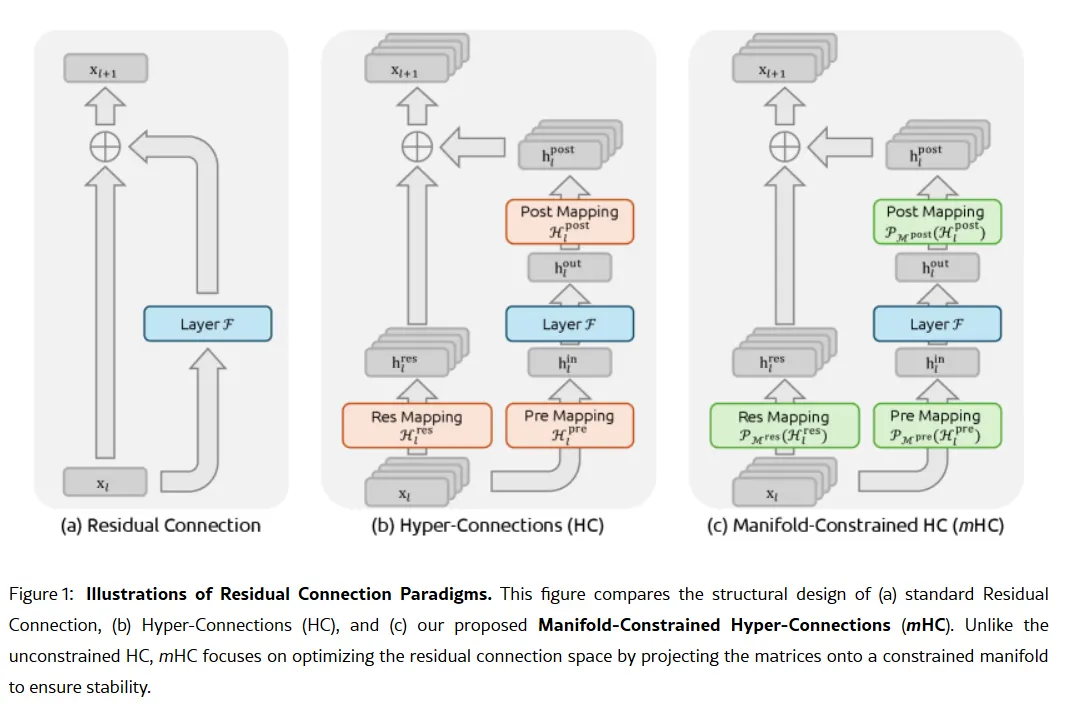
The company’s secret weapon could be contained in its January 1 research paper: Manifold-Constrained Hyper-Connections, or mHC. Co-authored by founder Liang Wenfeng, the new training method addresses a fundamental problem in scaling large language models—how to expand a model’s capacity without it becoming unstable or exploding during training.

Traditional AI architectures force all information through a single narrow pathway. mHC widens that pathway into multiple streams that can exchange information without causing training collapse.

Image: DeepSeek

Wei Sun, principal analyst for AI at Counterpoint Research, called mHC a “striking breakthrough” in comments to Business Insider. The technique, she said, shows DeepSeek can “bypass compute bottlenecks and unlock leaps in intelligence,” even with limited access to advanced chips due to U.S. export restrictions.

Lian Jye Su, chief analyst at Omdia, noted that DeepSeek’s willingness to publish its methods signals a “newfound confidence in the Chinese AI industry.” The company’s open-source approach has made it a darling among developers who see it as embodying what OpenAI used to be, before it pivoted to closed models and billion-dollar fundraising rounds.

]]>

Not everyone is convinced. Some developers on Reddit complain that DeepSeek’s reasoning models waste compute on simple tasks, while critics argue the company’s benchmarks don’t reflect real-world messiness. One Medium post titled “DeepSeek Sucks—And I’m Done Pretending It Doesn’t” went viral in April 2025, accusing the models of producing “boilerplate nonsense with bugs” and “hallucinated libraries.”

DeepSeek also carries baggage. Privacy concerns have plagued the company, with some governments banning DeepSeek’s native app. The company’s ties to China and questions about censorship in its models add geopolitical friction to technical debates.

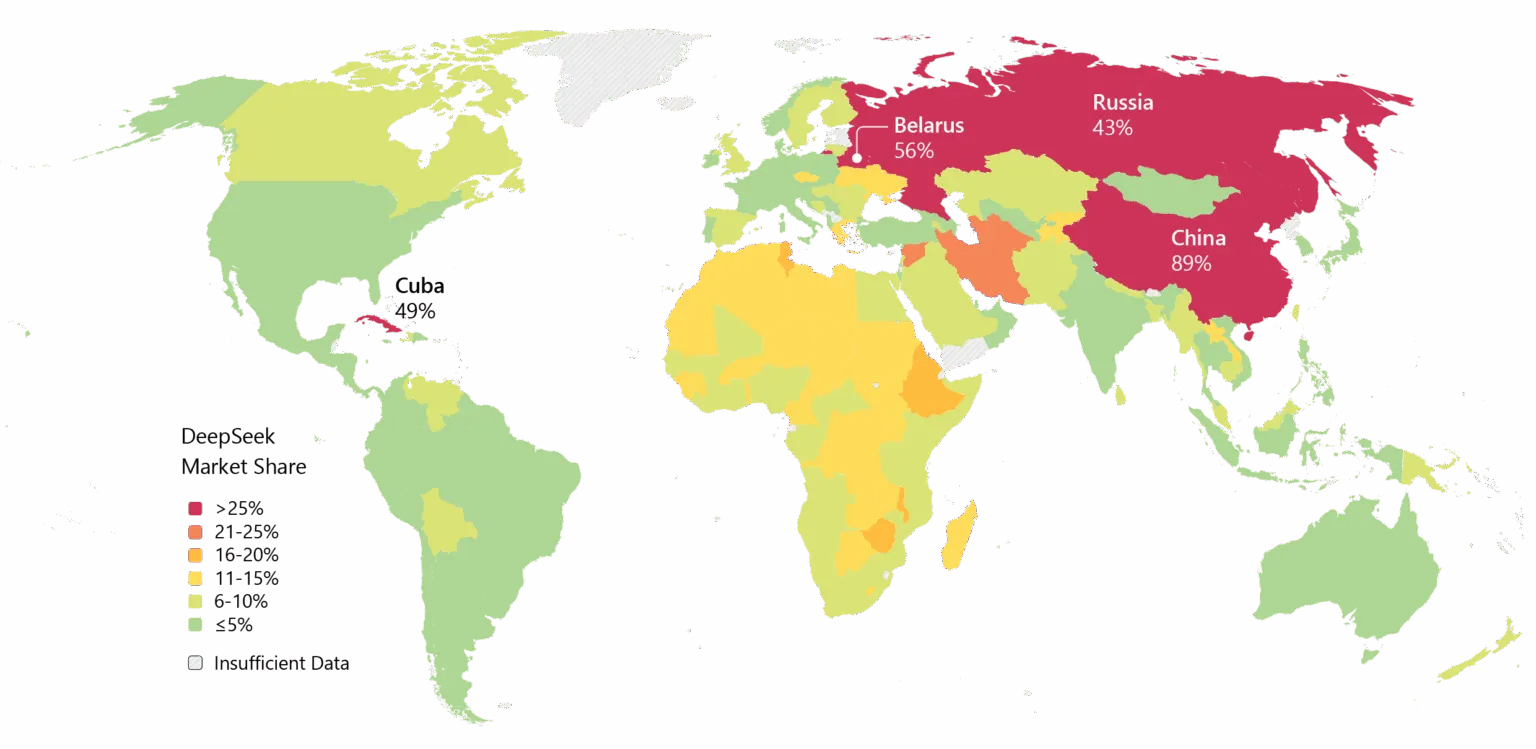
Still, the momentum is undeniable. Deepseek has been widely adopted in Asia, and if V4 delivers on its coding promises, then enterprise adoption in the West could follow.

Image: Microsoft

There’s also the timing. According to Reuters, DeepSeek had originally planned to release its R2 model in May 2025, but extended the runway after founder Liang became dissatisfied with its performance. Now, with V4 reportedly targeting February and R2 potentially following in August, the company is moving at a pace that suggests urgency—or confidence. Maybe both.

Generally Intelligent Newsletter

A weekly AI journey narrated by Gen, a generative AI model.


Source link

‘Baldur’s Gate 3’ Game Studio Says ‘Divinity’ Won’t Include AI-Generated Art – Decrypt

0
‘Baldur’s Gate 3’ Game Studio Says ‘Divinity’ Won’t Include AI-Generated Art – Decrypt


In brief

Larian Studios said its upcoming role-playing game Divinity will not include any AI-generated art.
Studio head Swen Vincke clarified the matter in a Reddit AMA following a recent interview that yielded controversy.
The developer said it may test AI tools internally, but will avoid generative AI for concept art and final assets.

Larian Studios, the developer behind 2023’s award-winning role-playing game Baldur’s Gate 3, said Friday that its upcoming game Divinity will not include any AI-generated art—though the studio didn’t entirely rule out the possibility of using AI-powered tools.

Studio head Swen Vincke addressed the issue in a response posted in a Reddit Ask Me Anything (AMA) thread. The clarification follows growing criticism from players and artists over how generative AI is being used in game development.

“So first off—there is not going to be any GenAI art in Divinity,” Vincke wrote. “I know there’s been a lot of discussion about us using AI tools as part of concept art exploration. We already said this doesn’t mean the actual concept art is generated by AI, but we understand it created confusion.”

The confusion Vincke aimed to address stemmed from a December interview with Bloomberg, where the studio head mentioned how Larian plans to use generative AI technology. Vinke’s comments today aimed to put that confusion to rest.

“To ensure there is no room for doubt, we’ve decided to refrain from using GenAI tools during concept art development,” he wrote. “That way there can be no discussion about the origin of the art.”

Since the public launch of ChatGPT and Midjourney in 2022, which brought prompt-based text and image generation to a wide audience, the gaming industry has grappled with how to use generative AI—or whether to use it at all.

Players, developers, and performers have raised concerns about its impact on creative work, even as studios face rising development costs and growing expectations from players.

]]>

Divinity, which was revealed in December, looks to continue the studio’s focus on large-scale role-playing adventures. While Vincke did not say when the next game in the Divinity saga would come out, he said Larian would continue to test AI tools in other parts of development.

“We continuously try to improve the speed with which we can try things out,” he wrote. “The more iterations we can do, the better in general the gameplay is.”

Vincke said any AI-generated content included in a game would be subject to limits around data ownership and consent.

“The important bit to note is that we will not generate ‘creative assets’ that end up in a game without being 100% sure about the origins of the training data and the consent of those who created the data,” he wrote. “If we use a GenAI model to create in-game assets, then it’ll be trained on data we own.”

Launched in 2002, Divinity is a series of fantasy role-playing games known for its turn-based combat, narrative choice, and cooperative multiplayer. The series helped establish the studio before its success with Baldur’s Gate 3. The previous entry, 2017’s Divinity: Original Sin II, launched to rave reviews from critics.

Whether or not the commitment to using generative AI only for prototyping satisfies players remains to be seen, as major game publishers, including Square Enix, and Microsoft, have slashed jobs in favor of automation.

Addressing concerns about the use of AI in game development, Larian Machine Learning Lead Gabriel Bosque said the studio views machine learning technology as a tool to support, not displace, its creative teams or voice actors.

“This is all new technology, so I totally understand why it’s difficult to see where the positive uses are,” he wrote. “We believe machine learning is a powerful tool to accelerate and make game development more efficient and streamlined. This means that our creatives have more time doing the work that makes their jobs more rewarding and the game a richer experience.”

GG Newsletter

Get the latest web3 gaming news, hear directly from gaming studios and influencers covering the space, and receive power-ups from our partners.


Source link

404 Page Not Found – Decrypt

0
404 Page Not Found – Decrypt


Crypto majors are mostly flat ahead of today’s supreme court opinion on the trump tariffs; btc +1% at $90,300; eth 13% at $3,090, sol +3% at $138; xrp +1% to $2.10. Polygon (+11%), zec (+11%) and syrup (+7%) led top movers. Jpmorgan said the recent bitcoin and ethereum sell-off may be bottoming, pointing to improving positioning and easing downside pressure after early-year weakness. Bank of america analysts upgraded coinbase to buy, citing improved regulatory clarity, growing institutional adoption, and stronger long-term earnings visibility. Morgan stanley is planning to launch a digital wallet later this year that could support tokenized assets, including private company equity. Florida lawmakers renewed their push for a state-level bitcoin reserve. Ethereum’s validator exit queue fully cleared, easing delays that had impacted liquid staking protocols and validator withdrawals. Polygon labs unveiled the open money stack, an initiative designed to streamline stablecoin payments. Polygon is reportedly close to acquiring coinme, a major bitcoin atm operator. Trump said that he won’t pardon ftx founder sam bankman-fried.


Source link

Popular Posts

My Favorites