Web3

Home Web3 Page 233

The New Search Engine Battle: Perplexity AI vs. Google

0
The New Search Engine Battle: Perplexity AI vs. Google


The search engine landscape is on the brink of another revolution. We’ve come a long way since the early days of Yahoo and MSN. Google redefined search by focusing on simplicity, precision, and user experience, making it the dominant search engine for nearly three decades. With an unprecedented market share—over 90% globally—and its own browser, Chrome, used by about 65% of internet users, Google seems almost irreplaceable. But even giants can face disruption.

Despite Google’s widespread use, the user’s fundamental goal has remained constant: finding the most accurate, efficient, and easy-to-access answers online. As Google ages, it increasingly relies on ad-centric strategies and SEO-dominated content to drive its business model. But now, advanced AI search engines like Perplexity are challenging Google’s methods, offering answers that align more closely with user intent.

Will Google adapt and thrive, or is it on the path to obsolescence? Let’s dig deeper.

Google’s Original Innovation and Why It Dominated the Market

When Google launched in 1998, it transformed search by focusing on simplicity, speed, and accuracy. Yahoo’s search results, for example, were embedded within a cluttered portal full of advertisements and other links, but Google’s clean, minimalist design prioritized the user’s need to find information quickly. The revolutionary PageRank algorithm introduced a way to rank pages by relevancy, vastly improving search quality.

Another key factor behind Google’s success was its innovative revenue model, AdWords, which leveraged targeted advertising. This model didn’t just generate profits; it gave Google the resources to maintain and expand its market presence. Google became synonymous with online search, leading to the phrase, “Just Google it,” cementing its place in digital culture.

However, over time, Google’s search structure has become more complex and, at times, cluttered. The foundational user intents—efficiency, accuracy, and simplicity—seem to have taken a back seat to revenue generation and SEO dominance.

How Google Has Fallen Short of User Expectations

While Google’s growth and success are undeniable, its evolution has left some user needs under-addressed. In a world where people search for everything from relationship advice to the best deal on flights, Google’s strategy often requires users to sift through multiple links and ads to find accurate answers. For instance, if you search for something specific, like the best hotel deals in New York, you might need to click on multiple ads, scroll through SEO-optimized content, and browse several pages to locate the right answer.

What users truly seek are three main things:

Efficiency – Quick and straightforward answers with minimal clicks.

Accuracy – Precise, relevant, and correct information.

Simplicity – A straightforward and easy-to-navigate interface.

While these expectations haven’t changed, Google’s response hasn’t kept pace. As a result, new technologies and platforms—like Perplexity AI—are stepping in to meet this demand.

Why Google’s Model Is Showing Its Age

The current design of Google’s search engine feels crowded and ad-heavy. A significant reason for this is Google’s dependence on SEO-driven content and an ad-centric revenue model. This has led to a compromised user experience, which raises friction for users and often results in a trust deficit. Google’s challenges stem from:

Ad-Centric Results: Prioritizing paid content can detract from the quality and relevance of search results.

SEO-Driven Influence: Results are often manipulated through SEO, which doesn’t always equate to the best answers.

User Journey Complexity: Users frequently need to explore multiple links and navigate through numerous pages to find direct answers.

As more users grow tired of these issues, AI-driven search engines are offering a new way to address user intent directly, without layers of ad-based distractions.

AI’s Impact: Solving Problems Google Couldn’t in 1998

AI advancements are making it possible to fulfill user intent more efficiently than ever. Thanks to Natural Language Processing (NLP), neural networks, and large language models, new platforms are bridging gaps Google struggles to address. This shift has been fueled by:

Natural Language Processing (NLP): Enabling AI to interpret human language accurately and contextually.

Neural Networks and Large Language Models (LLMs): Equipping systems to process extensive data and offer conversational responses.

Conversational Interfaces: Allowing users to receive answers in dialogue format, reducing the need for multiple searches and clicks.

AI-driven platforms like Perplexity and ChatGPT utilize these innovations to deliver concise, contextually relevant answers without the distractions of ads or SEO-optimized—but sometimes irrelevant—content.

Perplexity AI vs. Google Search: What Are Users Actually Looking For?

Unlike Google, which provides a list of links based on relevance and popularity, Perplexity AI offers answers in a conversational format. If you ask, “How many years since Google was founded?” Perplexity delivers the answer directly rather than leading you to a page full of links. Users like this straightforward approach, which saves time and reduces frustration.

Here’s a comparative chart that captures key differences between Perplexity AI and Google Search:

FeaturePerplexity AIGoogle Search

Primary FunctionAI-driven conversational search engineTraditional search engine with ranked results

Search MechanismProvides conversational responses and summarized answersShows a list of webpages ordered by relevance

Response TypeGenerates direct answers with supporting sourcesRelies on snippets with links to relevant websites

Contextual Follow-upAllows for context-based follow-up questionsGenerally requires rephrasing or new searches for follow-ups

Sources DisplayedCites sources explicitly in responsesLists sources as separate results, typically no in-text citations

User ExperienceMore interactive and conversationalLinear list-style results

StrengthsQuick, detailed answers; good for deep dives and direct knowledgeWide-ranging information; established, comprehensive index

WeaknessesMay miss specialized niche informationCan overwhelm with irrelevant or overly general results

Ideal Use CasesQuick research, summarization, specific queriesBroad information gathering, varied resources

Response CustomizationCan adapt answers based on prior queriesLacks adaptive, context-driven responses

Comparing the usage stats (as of mid-2024):

Google holds a commanding market share of around 90%, with over 4.3 billion users.

ChatGPT claims roughly 9.81% of users, while Perplexity has grown to capture 0.22% of the market within just two years.

This growth, despite Perplexity’s new entry into the market, demonstrates that some users are already seeking alternative solutions to Google.

A Historical Analogy: The Shift from Canals to Railroads

Google’s challenge is reminiscent of the early 19th-century shift from canals to railroads. Canals once dominated transportation, revolutionizing how goods were moved. They were initially efficient, reliable, and widely used. But when railroads emerged, they proved faster, more versatile, and usable year-round.

Railroads drastically reduced travel times, could be constructed over more diverse terrains, and operated even in winter, while canals froze over. Despite these advantages, many canal companies failed to anticipate the disruption caused by railroads, clinging to their established ways and ultimately facing obsolescence.

Similarly, Google, with its longstanding search model, may need to adapt quickly to remain competitive in the evolving digital world.

Google’s AI Overview: A Response to Competitors

To counter the competition, Google has started incorporating AI features, like the AI Overview section, which answers “who,” “what,” “when,” “why,” and “how” questions directly within search results. However, this feature has its limitations:

Limited Activation: The AI Overview is only available for certain question formats, meaning it doesn’t appear for all search types.

Inconsistent Accuracy: At times, the answers provided can be off-target or incomplete, leading users back to browsing multiple links for clarity.

In comparison, Perplexity consistently provides accurate answers without constraints, making it more user-friendly for those seeking precise, immediate information. Google’s current approach may not be enough to address the real demands of modern users.

Can Google Overcome Its Business Model’s Conflict with User Intent?

Google’s primary revenue comes from advertising, a model that incentivizes ad exposure over user satisfaction. This conflict has created an opening for platforms like Perplexity AI, which originally offered an ad-free, user-centered experience. However, as Perplexity grows, it too faces sustainability challenges. While an ad-free model is attractive, it’s also costly to maintain.

To address this, Perplexity’s CEO has announced plans to introduce ads, though in a user-centric way, such as placing native ads within related question prompts or offering brand-sponsored questions. This strategy aims to provide value without compromising the user experience, potentially making it a sustainable revenue stream for the platform.

Revenue-Sharing and Content Partnerships: Perplexity’s Innovative Approach

Perplexity is also introducing a revenue-sharing model with content publishers. When the platform uses and cites articles from sources like Time, Fortune, or Der Spiegel, it shares a portion of the ad revenue with these publishers. This collaborative approach benefits content creators, boosts Perplexity’s credibility, and ensures the sustainability of quality information.

What Lies Ahead: Questions for Google and Perplexity’s Leaders

Both Google and Perplexity face critical decisions. Google must weigh the value of its ad-based model against user satisfaction, while Perplexity must sustain its growth without losing its user-first philosophy. Key questions include:

Would users pay for a premium, ad-free experience? Google could offer a paid, ad-free search tier if demand warrants it.

Can Perplexity and other AI platforms capture more market share before Google fully adapts to meet modern needs?

How long can Google rely on its traditional methods before seeing a noticeable user shift toward AI-driven solutions like Perplexity?

Conclusion: Will Google Evolve or Risk Becoming Obsolete?

The comparison between Google and Perplexity is a stark reminder of how technology can disrupt even the most established companies. Like canals that were eventually overshadowed by railroads, Google risks being outpaced by faster, more adaptable technologies that better address user needs.

Google has the tools to adapt by integrating advanced AI more thoroughly into its platform, prioritizing user intent, and exploring alternative revenue streams. But if it remains anchored to an ad-heavy, SEO-influenced model, it may find itself in a battle with platforms like Perplexity that continue to evolve and grow.

The future of search is uncertain, but one thing is clear: the platforms that prioritize user needs while finding sustainable monetization strategies are the ones that will define the next era of search technology.

**FAQs

**

1. Can Perplexity AI fully replace Google?

Not entirely. Google has a vast user base and extensive services beyond search. However, Perplexity could become a preferred choice for users seeking quick, accurate answers without the ad-heavy experience.

2. Will Google offer an ad-free search experience?

It’s possible. Google may consider offering a paid, premium ad-free version if demand for a simpler, ad-free search grows.

3. How does Perplexity AI provide direct answers?

Using advanced AI, Perplexity interprets natural language queries and delivers conversational answers, minimizing the need for users to sift through multiple links.

4. Are ads necessary for AI platforms to be sustainable?

For many AI platforms, ads are a practical revenue source. When implemented thoughtfully, ads can support the platform without detracting from user experience.

5. What other AI platforms are challenging Google?

ChatGPT, Claude, and other AI-driven platforms are emerging as alternatives, offering conversational, direct answers that appeal to users looking for efficient search solutions.


Source link

Facebook’s Vision of the Metaverse: A New Digital Frontier – Web3oclock

0
Facebook’s Vision of the Metaverse: A New Digital Frontier – Web3oclock


What is the Metaverse According to Meta?

Key Pillars of Meta’s Metaverse Initiatives

The Technologies Behind Meta’s Metaverse

Potential Challenges and Criticisms

1. Horizon Worlds:

2. Horizon Workrooms:

3. Horizon Venues:

4. Oculus and Next-Gen VR/AR Hardware:

5. Meta Avatars and AI-Powered Personalization:

6. Spark AR and Augmented Reality Initiatives:

7. Virtual Economy and Digital Commerce:

8. Project Cambria (High-End VR Headset):

The Technologies Behind Meta’s Metaverse:

1. Virtual Events: 

Potential Challenges and Criticisms of Meta:


Source link

Grayscale to Launch Bitcoin ETF Options Following BlackRock’s Record Debut – Decrypt

0
Grayscale to Launch Bitcoin ETF Options Following BlackRock’s Record Debut – Decrypt


Crypto asset manager Grayscale Investments plans to roll out options trading on its spot Bitcoin ETFs on Wednesday amid the first glimpses of solid investor appetite for such products.

The announcement comes a day after BlackRock’s iShares Bitcoin Trust (IBIT) achieved record-breaking activity on its first day of options trading, pushing Bitcoin to a new all-time high.

Grayscale will launch options trading on GBTC (Grayscale Bitcoin Trust) and BTC (Bitcoin Mini Trust) to “further [develop] the ecosystem around our US-listed Bitcoin ETPs,” it said.

Following the Options Clearing Corporation’s (OCC) approval of Bitcoin ETF options, Grayscale quickly filed an updated prospectus for its Bitcoin Covered Call ETF on January 11.

The tooling aims to generate income by employing a covered call strategy—writing and buying options contracts on Bitcoin exchange-traded products (ETPs) while holding Bitcoin or GBTC as collateral.

Bloomberg ETF analyst Seyffart called attention to the speed of Grayscale’s response following the OCC’s clearance, tweeting Tuesday that the asset manager was “wasting no time.”

“They’ve filed an updated prospectus for their Bitcoin Covered Call ETF,” Seyffart tweeted. “The fund will offer exposure to $GBTC & $BTC while writing &/or buying options contracts on Bitcoin ETPs for income.”

Grayscale follows the unprecedented debut of BlackRock’s IBIT options, which recorded nearly $1.9 billion in notional exposure traded on its first day

Seyffart shared details on X, observing that 354,000 contracts were exchanged, including 289,000 calls and 65,000 puts, representing a 4.4:1 call-to-put ratio.

The ratio indicates that a significantly larger number of investors placed bets on Bitcoin’s price rise (calls) compared to those hedging against a potential price drop (puts). 

“These options were almost certainly part of the move to the new Bitcoin all-time highs today,” Seyffart wrote, referring to Bitcoin’s surge to $94,041 on Tuesday.

Bloomberg’s senior ETF analyst Eric Balchunas characterized the $1.9 billion trading volume as “unheard of” for any given options trading within an ETF during its first day.

“$For context, BITO did $363 million, and that’s been around for four years,” Balchunas wrote on X, referring to ProShares’ futures Bitcoin ETF.

Roughly 73,000 options contracts were traded in the first 60 minutes, placing IBIT among the top 20 most active non-index options on its opening day.

Grayscale’s launch comes a year after its major legal victory against the SEC. Last August, the U.S. Court of Appeals ordered the SEC to revisit its denial of Grayscale’s application to convert its Bitcoin Trust into a spot ETF.

This ruling was a turning point for crypto ETFs, challenging regulatory resistance that had stalled their approvals for nearly a decade.

Edited by Sebastian Sinclair

Daily Debrief Newsletter

Start every day with the top news stories right now, plus original features, a podcast, videos and more.


Source link

Step-by-Step Guide to Creating an LLM-Based App for Chat with Papers

0
Step-by-Step Guide to Creating an LLM-Based App for Chat with Papers


Staying updated with the latest in machine learning (ML) research can feel overwhelming. With the steady stream of papers on large language models (LLMs), vector databases, and retrieval-augmented generati on (RAG) systems, it’s easy to fall behind. But what if you could access and query this vast research library using natural language? In this guide, we’ll create an AI-powered assistant that mines and retrieves information from Papers With Code (PWC), providing answers based on the latest ML papers.

Our app will use a RAG framework for backend processing, incorporating a vector database, VertexAI’s embedding model, and an OpenAI LLM. The frontend will be built on Streamlit, making it simple to deploy and interact with.

Step 1: Data Collection from Papers With Code

Papers With Code is a valuable resource that aggregates the latest ML papers, source code, and datasets. To automate data retrieval from this site, we’ll use the PWC API. This allows us to collect papers related to specific keywords or topics.

Retrieving Papers Using the API

To search for papers programmatically:

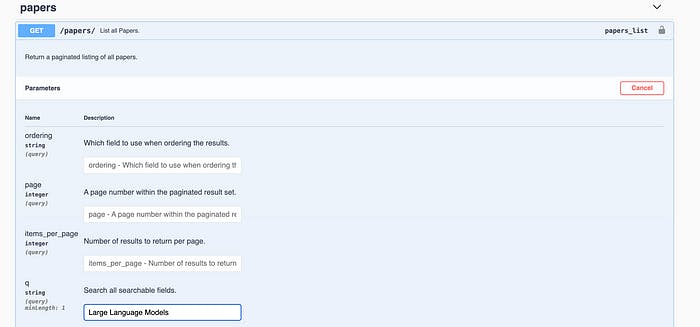
Access the PWC API Swagger UI and locate the papers/ endpoint.

Use the q parameter to enter keywords for the topic of interest.

Execute the query to retrieve data.

Each response includes the first set of results, with additional pages accessible via the next key. To retrieve multiple pages, you can set up a function that loops through all pages based on the initial result count. Here’s a Python script to automate this:

import requests
import urllib.parse
from tqdm import tqdm

def extract_papers(query: str):
query = urllib.parse.quote(query)
url = f”https://paperswithcode.com/api/v1/papers/?q={query}
response = requests.get(url).json()
count = response[“count”]
results = response[“results”]

num_pages = count // 50
for page in tqdm(range(2, num_pages)):
url = f”https://paperswithcode.com/api/v1/papers/?page={page}&q={query}
response = requests.get(url).json()
results.extend(response[“results”])
return results

query = “Large Language Models”
results = extract_papers(query)
print(len(results))

Formatting Results for LangChain Compatibility

Once extracted, convert the data to LangChain-compatible Document objects. Each document will contain:

page_content: stores the paper’s abstract.

metadata: includes attributes like id, arxiv_id, url_pdf, title, authors, and published.

from langchain.docstore.document import Document

documents = [
Document(
page_content=result[“abstract”],
metadata={
“id”: result.get(“id”, “”),
“arxiv_id”: result.get(“arxiv_id”, “”),
“url_pdf”: result.get(“url_pdf”, “”),
“title”: result.get(“title”, “”),
“authors”: result.get(“authors”, “”),
“published”: result.get(“published”, “”)
},
)
for result in results
]

Chunking for Efficient Retrieval

Since LLMs have token limitations, breaking down each document into chunks can improve retrieval and precision. Using LangChain’s RecursiveCharacterTextSplitter, set chunk_size to 1200 characters and chunk_overlap to 200. This will generate manageable text chunks for optimal LLM input.

text_splitter = RecursiveCharacterTextSplitter(
chunk_size=1200,
chunk_overlap=200,
separators=[“.”]
)
splits = text_splitter.split_documents(documents)
print(len(splits))

Step 2: Creating an Index with Upstash

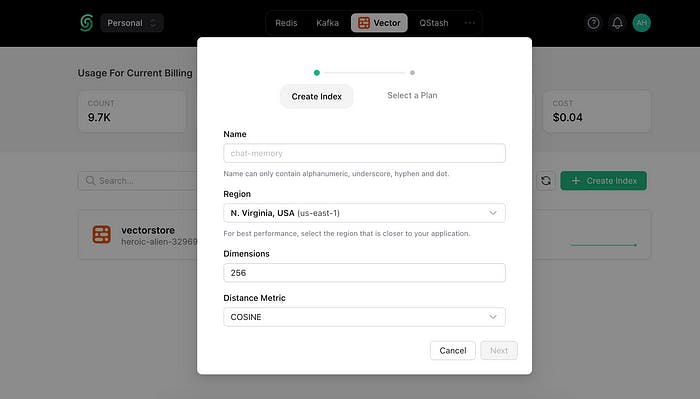
To store embeddings and document metadata, set up an index in Upstash, a serverless database ideal for our project. After logging into Upstash, set your index parameters:

Region: closest to your location.

Dimensions: 768, matching VertexAI’s embedding dimension.

Distance Metric: cosine similarity.

Then, install the upstash-vector package:

pip install upstash-vector

Use the credentials generated by Upstash (URL and token) to connect to the index in your app.

from upstash_vector import Index

index = Index(
url=“<UPSTASH_URL>”,
token=“<UPSTASH_TOKEN>”
)

Step 3: Embedding and Indexing Documents

To add documents to Upstash, we’ll create a class UpstashVectorStore which embeds document chunks and indexes them. This class will include methods to:

from typing import List, Optional, Tuple, Union
from uuid import uuid4
from langchain.docstore.document import Document
from langchain.embeddings.base import Embeddings
from tqdm import tqdm
from upstash_vector import Index

class UpstashVectorStore:
def __init__(self, index: Index, embeddings: Embeddings):
self.index = index
self.embeddings = embeddings

def add_documents(
self,
documents: List[Document],
batch_size: int = 32
):

texts, metadatas, all_ids = [], [], []

for document in tqdm(documents):
texts.append(document.page_content)
metadatas.append({“context”: document.page_content, **document.metadata})

if len(texts) >= batch_size:
ids = [str(uuid4()) for _ in texts]
all_ids += ids
embeddings = self.embeddings.embed_documents(texts)
self.index.upsert(vectors=zip(ids, embeddings, metadatas))
texts, metadatas = [], []

if texts:
ids = [str(uuid4()) for _ in texts]
all_ids += ids
embeddings = self.embeddings.embed_documents(texts)
self.index.upsert(vectors=zip(ids, embeddings, metadatas))
print(f”Indexed {len(all_ids)} vectors.”)
return all_ids

def similarity_search_with_score(
self, query: str, k: int = 4
) -> List[Tuple[Document, float]]:

query_embedding = self.embeddings.embed_query(query)
results = self.index.query(query_embedding, top_k=k, include_metadata=True)
return [(Document(page_content=metadata.pop(“context”), metadata=metadata), score)
for metadata, score in results]

To execute this indexing:

from langchain.embeddings import VertexAIEmbeddings

embeddings = VertexAIEmbeddings(model_name=“textembedding-gecko@003”)
upstash_vector_store = UpstashVectorStore(index, embeddings)
ids = upstash_vector_store.add_documents(splits, batch_size=25)

Step 4: Querying Indexed Papers

With the abstracts indexed in Upstash, querying becomes straightforward. We’ll define functions to:

Retrieve relevant documents.

Build a prompt using these documents for LLM responses.

def get_context(query, vector_store):
results = vector_store.similarity_search_with_score(query)
return “\n===\n”.join([doc.page_content for doc, _ in results])

def get_prompt(question, context):
template = “””
Use the provided context to answer the question accurately.

%CONTEXT%
{context}

%Question%
{question}

Answer:
“””
return template.format(question=question, context=context)

For example, if you ask about the limitations of RAG frameworks:

query = “What are the limitations of the Retrieval Augmented Generation framework?”
context = get_context(query, upstash_vector_store)
prompt = get_prompt(query, context)

Step 5: Building the Application with Streamlit

To make our app user-friendly, we’ll use Streamlit for a simple, interactive UI. Streamlit makes it easy to deploy ML-powered web apps with minimal code.

import streamlit as st
from langchain.chat_models import AzureChatOpenAI

st.title(“Chat with ML Research Papers”)
query = st.text_input(“Ask a question about ML research:”)

if st.button(“Submit”):
if query:
context = get_context(query, upstash_vector_store)
prompt = get_prompt(query, context)
llm = AzureChatOpenAI(model_name=“<MODEL_NAME>”)
answer = llm.predict(prompt)
st.write(answer)

Benefits and Limitations of Retrieval-Augmented Generation (RAG)

RAG systems offer unique advantages, especially for ML researchers:

Access to Up-to-Date Information: RAG lets you pull information from the latest sources.

Enhanced Trust: Answers grounded in source documents make results more reliable.

Easy Setup: RAGs are relatively straightforward to implement without needing extensive computing resources.

However, RAG isn’t perfect:

Data Dependence: RAG accuracy hinges on the data fed into it.

Not Always Optimal for Complex Queries: While fine for demos, real-world applications may need extensive tuning.

Limited Context: RAG systems are still limited by the LLM’s context size.

Conclusion

Building a conversational assistant for machine learning research using LLMs and RAG frameworks is achievable with the right tools. By using Papers With Code data, Upstash for vector storage, and Streamlit

for a user interface, you can create a robust application for querying recent research.

Further Exploration Ideas:

Use the full paper text rather than just abstracts.

Experiment with metadata filtering to improve precision.

Explore hybrid retrieval techniques and re-ranking for more relevant results.

Whether you’re an ML enthusiast or a researcher, this approach to interacting with research papers can save time and streamline the learning process.


Source link

Top 2024 Crypto Presales with 10x Growth Potential | Web3Wire

0
Top 2024 Crypto Presales with 10x Growth Potential | Web3Wire


“`html

As the cryptocurrency landscape continues to evolve, investors are perpetually on the lookout for the next big opportunity. One promising avenue in 2024 is crypto presales, where projects are available before official launch. These presales can be a strategic entry point, offering tokens at a discount, and potentially reaping significant returns if the project succeeds. In this post, we will explore some of the top crypto presales in 2024 that have the potential to grow tenfold or more.

Understanding Crypto Presales

Before diving into specific presales, it’s crucial to understand what crypto presales are. Essentially, a presale is a fundraising event in which blockchain startups sell their tokens to early investors before they become available to the general public. This early-phase fundraising provides startups with the much-needed capital to develop their projects.

Benefits of Investing in Crypto Presales:

Access to tokens at a discounted rate compared to post-launch pricesOpportunity to choose projects with innovative solutions and advanced technologyPotential for significant returns on investment if the project succeeds

Top 2024 Crypto Presales to Watch

Let’s explore some promising projects with the potential for substantial growth:

1. Project X: The Future of Decentralized Finance

Project X aims to transform the decentralized finance (DeFi) sector with its innovative platform, which offers new features and improved security. Its focus on creating a more user-friendly DeFi experience has garnered considerable attention from early investors. The team behind Project X comprises seasoned blockchain developers and financial experts.

Objective: Simplify and secure DeFi transactionsUnique Selling Point: User-friendly interface with enhanced security featuresGrowth Potential: High, given the expanding DeFi market

2. GreenToken: Revolutionizing Green Energy Investment

With an increasing emphasis on sustainable solutions, GreenToken aims to revolutionize the way individuals can invest in green energy projects. This blockchain-based platform offers transparency and easy access to a variety of green projects worldwide.

Objective: Enhance investment in green energy projectsUnique Selling Point: Democratize investment opportunities in sustainable energyGrowth Potential: Significant, as sustainability becomes more important globally

3. MetaVerseSpace: Pioneering Virtual Real Estate

The metaverse continues to capture interest, and MetaVerseSpace is at the forefront of virtual real estate. By offering a platform for users to buy, sell, and develop virtual land, this project has already attracted a strong community of early adopters excited about the possibilities within digital landscapes.

Objective: Facilitate virtual real estate transactions in the metaverseUnique Selling Point: Comprehensive platform for virtual land and real estateGrowth Potential: Immense, with increasing interest and investment in metaverse spaces

How to Assess a Crypto Presale

When considering which crypto presales to invest in, it’s important to conduct thorough research. Here are some factors to consider:

Project Fundamentals: Analyze the project’s whitepaper, roadmap, and team credentials.Technology and Innovation: Assess what makes the project stand out in the marketplace.Community Engagement: A strong, active community can be an indicator of future success.Market Opportunity: Understand the industry and scope where the project operates.

Conclusion: The Lucrative Potential of Crypto Presales

Crypto presales in 2024 present exciting opportunities for savvy investors ready to explore innovative projects with substantial growth potential. While investing in presales carries inherent risks, thorough research and strategic selection can help mitigate these risks, paving the way for potentially rewarding experiences.

The projects outlined above are just a glimpse of the emerging technologies and solutions coming our way. Each of these presales embodies significant potential, aligning with evolving market trends and technological advancements. By staying informed and strategic, investors can position themselves advantageously in the ever-evolving world of cryptocurrency.

“`

About Web3Wire Web3Wire – Information, news, press releases, events and research articles about Web3, Metaverse, Blockchain, Artificial Intelligence, Cryptocurrencies, Decentralized Finance, NFTs and Gaming. Visit Web3Wire for Web3 News and Events, Block3Wire for the latest Blockchain news and Meta3Wire to stay updated with Metaverse News.


Source link

Automate Anything on Your PC for Free with Local LLMs and Open-Source

0
Automate Anything on Your PC for Free with Local LLMs and Open-Source


Automation is now within everyone’s reach. From summarizing emails and generating insights to handling data and automating repetitive tasks, some tools let you run these processes directly on your PC without writing a single line of code. Leveraging local large language models (LLMs) alongside free, open-source, no-code tools, you can build powerful automation while keeping your data private and secure. This guide covers everything you need to know to get started.

The Shift Toward Local Automation

Over the past year, open-source AI models have greatly improved, allowing users to run capable models locally without relying on cloud-based solutions. Running tasks locally not only keeps your data private but also removes the need to send data to third-party servers. Previously, cloud-based automations were popular, but with privacy concerns and the evolution of local models, many are revisiting these processes to bring them in-house. While local models may not yet match the complexity of advanced models like GPT-4, they can handle most basic automation tasks, including summarization, extraction, and classification.

Key Tools for Local Automation

Setting up local automation requires just two main tools:

n8n – A free, open-source workflow automation tool similar to Zapier and Make.com.

LM Studio – A platform to run LLMs locally, allowing you to harness AI on your PC.

Using these tools together, you can build automated workflows and manage information in a streamlined way, whether it’s organizing emails, creating structured datasets, or even summarizing text.

Getting Started with n8n for Workflow Automation

n8n enables you to design workflows that automate tasks between apps and services, similar to what you might do with Zapier. However, n8n runs locally on your system, giving you control over your data. Here’s how to get started:

Install Node.js: First, download and install Node.js from its official website. This will provide the environment necessary to run n8n.

Set Up n8n: Open the terminal (or Command Prompt on Windows), and type in npx n8n to download and install n8n.

Access n8n Dashboard: Once installed, go to http://localhost:5678 in your browser. This is your n8n dashboard, where you’ll create and 1manage workflows.

Running Local LLMs Using LM Studio

LLMs enable your PC to understand and generate text based on prompts, making them incredibly useful for various tasks. LM Studio simplifies the process of running these models locally without needing extensive technical knowledge.

Choosing the Right Model

There are two recommended models for local automation:

Phi-2: This small, efficient model is ideal for older or less powerful PCs and laptops.

Mistral-7B: A more powerful model suited for gaming PCs or workstations, providing better consistency.

When choosing a model, you’ll encounter different quantization levels like Q4 and Q8. Quantization reduces model size by simplifying the data, making it easier to run on limited hardware. Here’s a general guide to help you choose:

ModelQuantizationRecommended Hardware

Phi-2Q4_K_MOld PC/Laptop

Phi-2Q8Regular PC/Laptop

Mistral-7BQ4_K_MGaming PC

Mistral-7BQ8High-End Gaming PC/Workstation

Running and Testing Models in LM Studio

After choosing your model, download it from LM Studio. The model will appear on the dashboard once loaded, and you can test it by chatting directly with it. To activate the automation capabilities, go to the Server tab in LM Studio and select Start Server.

Building Your First Automation with n8n and LM Studio

With both tools ready, you’re set to build a basic automation. In this example, let’s automate email summarization to provide a neat overview of your inbox, which can be especially helpful for prioritizing responses and managing tasks.

Creating an Email Summarization Workflow

Open n8n Dashboard: Navigate to http://localhost:5678 and create a new workflow.

Import Workflow File: If you’re using a pre-built email summarizer workflow, simply import it into n8n by selecting Import from File at the top right.

Set Email Information: Input the details of your email provider. This information can usually be found within your email client settings.

Configure CSV File Storage: Specify a location and file name for the output CSV file. This is where your summarized email data will be saved.

Once configured, the workflow will pull in emails, summarize the content, and store it in a CSV file that you can access and organize as needed.

Expanding Automation to Other Use Cases

Beyond email summarization, n8n and LM Studio allow for an impressive range of automation possibilities. Here are a few ideas:

Batch Processing CSV Data

Suppose you have a CSV file with product descriptions, pricing, or user information. You can set up n8n to process each row and prompt the language model to generate or extract information based on specific columns. For example:

Generate Product Descriptions: Use column data to create catchy product descriptions that include features or target audiences.

Extract Information: Pull specific names, dates, or details from a column and insert them into your desired format.

Batch processing enables you to perform time-intensive tasks quickly, which can be a game-changer for tasks that would otherwise require hours of manual work.

Setting Up Prompts and Outputs for Different Tasks

In n8n’s Set Prompt and Model Settings node, you can customize prompts and outputs to align with your task goals. For example, you might set up a prompt that asks the model to extract a key name or date from a text passage, format it as JSON, and store it in a way that’s easy to filter and analyze later. This customization lets you adapt workflows for countless applications.

Practical Tips for Using n8n and LM Studio Together

Start Simple: Begin with basic workflows to familiarize yourself with the n8n and LM Studio interface.

Use Quantization for Efficiency: If your PC struggles to run certain models, try using a lower quantization level to optimize performance.

Test and Adjust Models: Experiment with different model settings to find the optimal balance between quality and speed for your tasks.

Debug with ChatGPT: If you encounter setup issues, ChatGPT or other AI tools can assist with debugging and code snippets, especially since n8n uses JavaScript.

Conclusion

With the power of n8n and LM Studio, you can transform your PC into an automation powerhouse. From organizing emails to batch-processing data and generating descriptions, these tools allow you to create custom workflows while keeping your data private. While there’s a learning curve, starting with simpler tasks and expanding gradually can make automation accessible and rewarding. The best part? You can accomplish all of this without needing to be a programming expert.

FAQs

What hardware do I need to run local LLMs?

Local LLMs can run on a range of devices. Smaller models like Phi-2 work on standard PCs and even older laptops, while models like Mistral-7B require more powerful setups like gaming PCs or workstations.

Is coding required to use n8n and LM Studio?

No, both n8n and LM Studio are designed to be no-code tools. While some understanding of basic logic helps, you can automate tasks without any programming skills.

How secure is local automation compared to cloud-based options? Local automation keeps your data entirely within your system, making it much more secure than cloud-based tools that require data to be sent to external servers.

Can I use these tools to automate my business processes? Absolutely. You can automate tasks like generating reports, summarizing emails, and processing data, which can significantly enhance productivity for small businesses.

What types of tasks can I automate with n8n and LM Studio?

These tools are versatile and can automate tasks like email summarization, data extraction, classification, and even content generation—allowing you to streamline both personal and business processes efficiently.


Source link

Best Metaverse Stocks to Watch in 2024: Transformative Investments in Virtual Worlds – Web3oclock

0
Best Metaverse Stocks to Watch in 2024: Transformative Investments in Virtual Worlds – Web3oclock


Top Companies Leading the Metaverse Revolution

Factors Influencing Stock Prices

Key Considerations for Metaverse Investors

Top Metaverse Stock Companies Leading the Revolution:

1. Meta Platforms (formerly Facebook):

2. Microsoft:

3. Nvidia:

4. Apple:

5. Roblox:

6. Unity Technologies:

7. Tencent:

8. Alphabet (Google):

9. Amazon:

Picture Courtesy: wallsdesk.com

Factors Influencing Stock Prices:

2. Consumer Adoption Rates:

User Base Growth and Engagement: 

3. Competitive Landscape:

Key Considerations for Metaverse Investors:


Source link

Ultimate Guide to the Best NVIDIA GPUs for Running Large Language Mode

0
Ultimate Guide to the Best NVIDIA GPUs for Running Large Language Mode


Large Language Models (LLMs) like GPT-4, BERT, and other transformer-based models are reshaping AI applications, driving significant advancements across fields. However, running these models requires substantial computational resources, especially for inference tasks. Choosing the right GPU is crucial for optimizing performance, controlling costs, and ensuring scalability for any AI project—whether it’s a small-scale endeavor, a research-focused setup, or a full-scale production environment.

In this article, we’ll examine the best NVIDIA GPUs for LLM inference and compare them based on essential specifications such as CUDA cores, Tensor cores, VRAM, clock speed, and cost. This guide will help you select the ideal GPU for your needs, ensuring you balance performance and budget best.

Understanding Key GPU Specifications for LLM Inference

Before we analyze the top NVIDIA GPUs, let’s review the core specifications that determine a GPU’s suitability for LLM inference tasks. Here’s a breakdown of the essential factors:

CUDA Cores: The primary units responsible for parallel processing within a GPU. Higher CUDA core counts improve the GPU’s ability to handle large, complex computations in LLM inference.

Tensor Cores: Tensor cores are specially designed for matrix operations, which are crucial for neural network calculations. A higher Tensor core count generally enhances model performance, especially for large-scale deep learning tasks.

VRAM (Video RAM): VRAM, or memory, stores the model and data during inference. More VRAM allows for efficient handling of larger models and datasets.

Clock Frequency: Clock speed, measured in MHz, indicates the rate at which a GPU performs computations. Higher frequencies translate to faster processing speeds.

Price: The cost of a GPU is always a key consideration, especially for teams or individuals working within a budget. It’s essential to find a balance between performance and affordability.

Top NVIDIA GPUs for LLM Inference: An Overview

When it comes to selecting GPUs for LLM inference, NVIDIA’s offerings are extensive, from high-end, enterprise-grade models to more budget-friendly options. Below are the top GPUs categorized by performance and price, with the highest-ranked options listed first.

1. NVIDIA H100: The Premium Choice for High-Performance LLM Inference

The NVIDIA H100 is the top-tier GPU currently available for LLM inference tasks. Built on the advanced Hopper architecture, the H100 is designed for enterprises and large research labs requiring top-notch performance. Here’s why it stands out:

Tensor Cores & CUDA Cores: It features a record-breaking number of Tensor cores, maximizing its capacity for AI-related computations. The CUDA core count is also the highest in NVIDIA’s lineup.

Memory: With 80 GB of HBM3 memory, it can manage even the largest language models, such as GPT-4, in production.

Performance: The H100’s clock speed and architecture make it one of the fastest GPUs available, ensuring minimal latency in LLM inference.

Best For: Enterprise use, large-scale production deployments, and advanced research laboratories that require the highest performance without compromise.

Cons: The H100’s capabilities come at a steep cost, making it an investment best suited for entities with substantial budgets.

2. NVIDIA A100: High Performance with Cost Flexibility

The NVIDIA A100 is another top performer and is slightly more budget-friendly than the H100. Based on the Ampere architecture, it offers high processing power and memory capacity for LLM tasks.

Tensor Cores & CUDA Cores: It has an impressive Tensor core count and is optimized for AI and LLM performance.

Memory Options: The 40 GB and 80 GB HBM2e memory variants are available, allowing users to choose based on model size and requirements.

Performance: Ideal for high-throughput inference, the A100 easily handles demanding models, providing a balance between speed and cost.

Best For: Large research teams and organizations needing strong performance with a more manageable cost.

Cons: Although more affordable than the H100, the A100 still carries a premium price.

3. NVIDIA L40: The Balanced Performer

The NVIDIA L40, based on the Ada Lovelace architecture, is a versatile option for those needing robust performance without the extreme costs of the H100 or A100.

Tensor Cores & CUDA Cores: High core counts allow it to manage complex models effectively, though it’s not as fast as the H100 or A100.

Memory: With 48 GB of GDDR6 memory, it’s well-suited for substantial model sizes and multiple inference tasks simultaneously.

Best For: Teams needing high performance at a lower cost than top-tier models.

Cons: Its GDDR6 memory type is less efficient than HBM2e or HBM3, which can impact performance in highly demanding scenarios.

4. NVIDIA A40: Efficient Performance at a Moderate Price

The NVIDIA A40 offers solid LLM inference capabilities with a more modest price tag, making it suitable for high-performance tasks in budget-conscious settings.

Tensor Cores & CUDA Cores: Equipped with 4,608 Tensor cores, it delivers high performance, albeit below the A100.

Memory: With 48 GB of GDDR6 memory, it can handle mid-to-large-sized models.

Best For: Research environments and mid-sized production applications where performance is essential but budget constraints are tighter.

Cons: It lacks the cutting-edge architecture of the H100 and A100, which limits its potential for extreme high-performance demands.

5. NVIDIA V100: Legacy Power for Budget-Conscious High-Performance

The NVIDIA V100 remains a strong contender despite being based on the older Volta architecture. It’s a great option for those needing powerful performance without investing in the latest technology.

Tensor Cores & CUDA Cores: While fewer than newer models, its core counts are still robust enough for serious LLM inference tasks.

Memory: Available in 16 GB and 32 GB HBM2 memory options, sufficient for many LLM projects.

Best For: Smaller production setups, academic research, and lower-budget deployments.

Cons: It’s less power-efficient and slower than newer models, making it best suited for those prioritizing budget over cutting-edge performance.

Budget-Friendly NVIDIA GPU Options for LLM Inference

NVIDIA’s consumer-grade GPUs offer a powerful alternative for individuals or smaller teams with limited resources. These GPUs are more affordable while still delivering adequate performance for smaller-scale LLM inference.

6. NVIDIA RTX 3090 & RTX 3080: High Power for Smaller Budgets

The NVIDIA RTX 3090 and RTX 3080 are popular consumer-grade GPUs that bring solid Tensor core performance to the table.

Memory: The RTX 3090 comes with 24 GB of GDDR6X memory, while the RTX 3080 has 10-12 GB, providing a decent range for mid-sized LLM models.

Best For: Local setups, independent developers, or smaller teams working on development or moderate inference tasks.

Cons: Their consumer-grade design limits their efficiency and longevity for continuous, large-scale AI workloads.

7. NVIDIA RTX 2080 Ti & RTX 2080 Super: Reliable for Moderate-Scale Inference

These models offer a mid-tier performance level, making them ideal for less intensive LLM inference tasks.

Memory: The 2080 Ti has 11 GB of VRAM, and the 2080 Super has 8 GB. These are sufficient for moderate-sized LLM models.

Best For: Smaller development environments or individual researchers handling lightweight tasks.

Cons: Limited Tensor core counts and memory capacity make these less suitable for high-volume inference.

8. NVIDIA RTX 3060, RTX 2060 Super, & RTX 3070: Best for Entry-Level LLM Inference

These models are the most budget-friendly options in NVIDIA’s lineup for LLM inference. While they lack the Tensor cores of higher models, they’re adequate for lightweight inference tasks.

Memory: The RTX 3060 offers 12 GB of VRAM, while the RTX 2060 Super and 3070 provide around 6-8 GB.

Best For: Individuals and small teams conducting entry-level LLM inference or prototyping.

Cons: Limited memory and fewer Tensor cores make these the least powerful options for LLM inference.

Conclusion

Selecting the right NVIDIA GPU for LLM inference is about balancing performance requirements, VRAM needs, and budget. The NVIDIA H100 and A100 are unbeatable for enterprise-scale tasks, though their costs may be prohibitive. For smaller teams or solo developers, options like the RTX 3090 or even the RTX 2080 Ti offer sufficient performance at a fraction of the cost.

Whether you’re a researcher, developer, or enterprise, consider the model size, memory demands, and budget to find the best fit. You’ll be well-equipped to power efficient, scalable LLM inference with the right GPU.

FAQs

1. Can consumer GPUs like the RTX series handle large LLM inference?Yes, but they’re best suited for smaller models or lightweight tasks. High-end GPUs like the H100 or A100 are ideal for large-scale LLMs.

2. Is the A100 a good choice for academic research?Absolutely. Its performance and VRAM options make it perfect for handling complex models, even if its price might be challenging for smaller budgets.

3. How much VRAM is ideal for LLM inference?For large models,

at least 48 GB is recommended. Smaller setups may function with 12-24 GB depending on model size.

4. Are older GPUs like the V100 still relevant?Yes, the V100 remains effective for many tasks, especially for those on a budget. However, it lacks some efficiency compared to newer models.

5. Do higher clock frequencies improve LLM inference performance?Yes, higher clock speeds generally lead to faster processing, though Tensor core counts and memory are equally important factors.


Source link

Top 5 Innovative Projects Accelerating Bitcoin Adoption Globally | Web3Wire

0
Top 5 Innovative Projects Accelerating Bitcoin Adoption Globally | Web3Wire


“`html

Bitcoin has come a long way since its inception in 2009, but its journey for widespread adoption continues. As we move further into the digital era, there are numerous innovative projects popping up to propel Bitcoin into the mainstream. Here, we’ll explore the top 5 projects that are significantly contributing to this endeavor, pushing Bitcoin’s utility and accessibility to unprecedented levels.

1. Lightning Network

The Lightning Network has emerged as a crucial development in scaling Bitcoin transactions. Designed to enable near-instantaneous and cost-effective microtransactions, it addresses Bitcoin’s scalability issues.

The Lightning Network operates as a second-layer solution, permitting thousands of transactions per second.By offloading smaller transactions from the main Bitcoin blockchain, it reduces congestion and transaction fees.Its smart contract capabilities enhance security and trustless exchange.

This network’s ongoing development holds great promise for expanding Bitcoin’s use case as a convenient medium for payments worldwide.

2. Strike

Strike is revolutionizing how Bitcoin is integrated into everyday financial transactions. It is a payment platform that allows users to send and receive Bitcoin effortlessly, focusing on streamlining the remittance process.

With Strike, users can convert fiat to Bitcoin and vice versa, making cross-border transactions swift and inexpensive.It enables Bitcoin to be part of daily consumer spending by integrating with existing payment infrastructures.Through partnerships with major retailers, Strike is pushing Bitcoin into mainstream commerce.

Strike’s mission to democratize finance and decentralize banking with Bitcoin as a core component is reshaping the financial landscape.

3. Blockstream Satellite

Blockstream Satellite is enhancing Bitcoin’s decentralized nature by broadcasting the blockchain from space. This ensures that Bitcoin can be accessed globally, even in regions with poor internet connectivity.

By leveraging a network of satellites, Blockstream Satellite enables unrestricted access to Bitcoin.It offers increased privacy and security by reducing dependency on traditional internet service providers.Its long-term vision supports Bitcoin’s resilience in the face of terrestrial disruptions.

This bold initiative makes Bitcoin true to its roots as a borderless, unconfined financial system.

4. RSK (Rootstock)

RSK is enhancing Bitcoin’s functionality by bringing smart contracts to its ecosystem. Often viewed as Bitcoin’s response to Ethereum, RSK makes it possible to execute complex, conditional transactions on the Bitcoin blockchain.

RSK offers a two-way peg with Bitcoin, maintaining security while enhancing transactional capabilities.Its smart contracts facilitate decentralized applications (dApps), expanding Bitcoin’s utility far beyond a simple store of value.This integration creates opportunities for innovation in finance, such as decentralized finance (DeFi) platforms.

RSK’s focus on interoperability and scalability is pivotal for Bitcoin to engage in the broader blockchain industry developments.

5. Bitcoin Beach

Bitcoin Beach is a grassroots initiative that has gained worldwide attention by demonstrating Bitcoin’s potential as a community-building tool. Pioneering in a small town called El Zonte in El Salvador, it serves as a model for Bitcoin-driven economies.

Bitcoin Beach promotes the circular economy, where Bitcoin is used for daily transactions among community members.By enabling locals to embrace digital currency, it ensures financial inclusion in underserved areas.The success of Bitcoin Beach influenced El Salvador’s decision to adopt Bitcoin as legal tender, marking a historic milestone.

This project embodies Bitcoin’s ethos, illustrating its potential to transform socio-economic landscapes globally.

The Future of Bitcoin Adoption

The persistent expansion and evolution of these projects highlight the dynamic nature of Bitcoin’s adoption journey. Each innovation not only fortifies Bitcoin’s position in existing sectors but also paves the way for novel applications in global finance. As these projects mature, they collectively contribute to an ecosystem that positions Bitcoin as a robust, versatile player on the world stage.

The rise of these projects underscores a burgeoning interest and acceptance of Bitcoin, signaling its readiness for a more prominent role in the future of money. The confluence of technological advancements, visionary applications, and strategic partnerships are setting a promising trajectory for Bitcoin’s mainstream adoption, leading us closer to a decentralized, financially inclusive future. By leveraging the collective innovation these projects offer, Bitcoin enthusiasts and advocates continue to break down barriers and redefine what is economically possible.

Conclusion

Ultimately, the integration and acceptance of Bitcoin depend on such groundbreaking projects and the creative minds behind them. As they continue to tackle existing limitations and anticipate future needs, the future of Bitcoin looks brighter and more revolutionary than ever, carrying the potential to reshape financial systems and empower users worldwide. With these top 5 projects playing a critical role, Bitcoin’s adoption is destined for new heights.“`

About Web3Wire Web3Wire – Information, news, press releases, events and research articles about Web3, Metaverse, Blockchain, Artificial Intelligence, Cryptocurrencies, Decentralized Finance, NFTs and Gaming. Visit Web3Wire for Web3 News and Events, Block3Wire for the latest Blockchain news and Meta3Wire to stay updated with Metaverse News.


Source link

Chainlink Unveils Monumental Upgrade To Power Onchain Finance

0
Chainlink Unveils Monumental Upgrade To Power Onchain Finance


In his recent SmartCon 2024 keynote, Sergey Nazarov explored how TradFi and DeFi are converging into a single unified Internet of Contracts through Chainlink. This post is based on his presentation.

Our fundamental goal is to establish a global standard—one that works across both DeFi and traditional capital markets. These two sectors are set to converge, and when they do, we expect it will create an economic boom by combining into a single global Internet of Contracts. Chainlink’s mission is to lead this transformation by creating the standard powering this new onchain financial system.

Web3 and TradFi adoption of Chainlink standards.

Currently, these two worlds—DeFi and TradFi—are evolving in separate directions. We’ve already made significant strides in establishing Chainlink as the standard for DeFi by powering a significant portion of it, securing $75+ billion in DeFi TVL at its peak. Now, we’re also making progress in becoming the standard for TradFi capital markets. 

The ultimate goal is to create applications that work seamlessly together, defining the standard for how value is transacted across the entire financial system. That’s what success looks like—building a global standard that powers the Internet of Contracts, which we expect will lead to the economic boom that will result from merging these two worlds into a single global market.

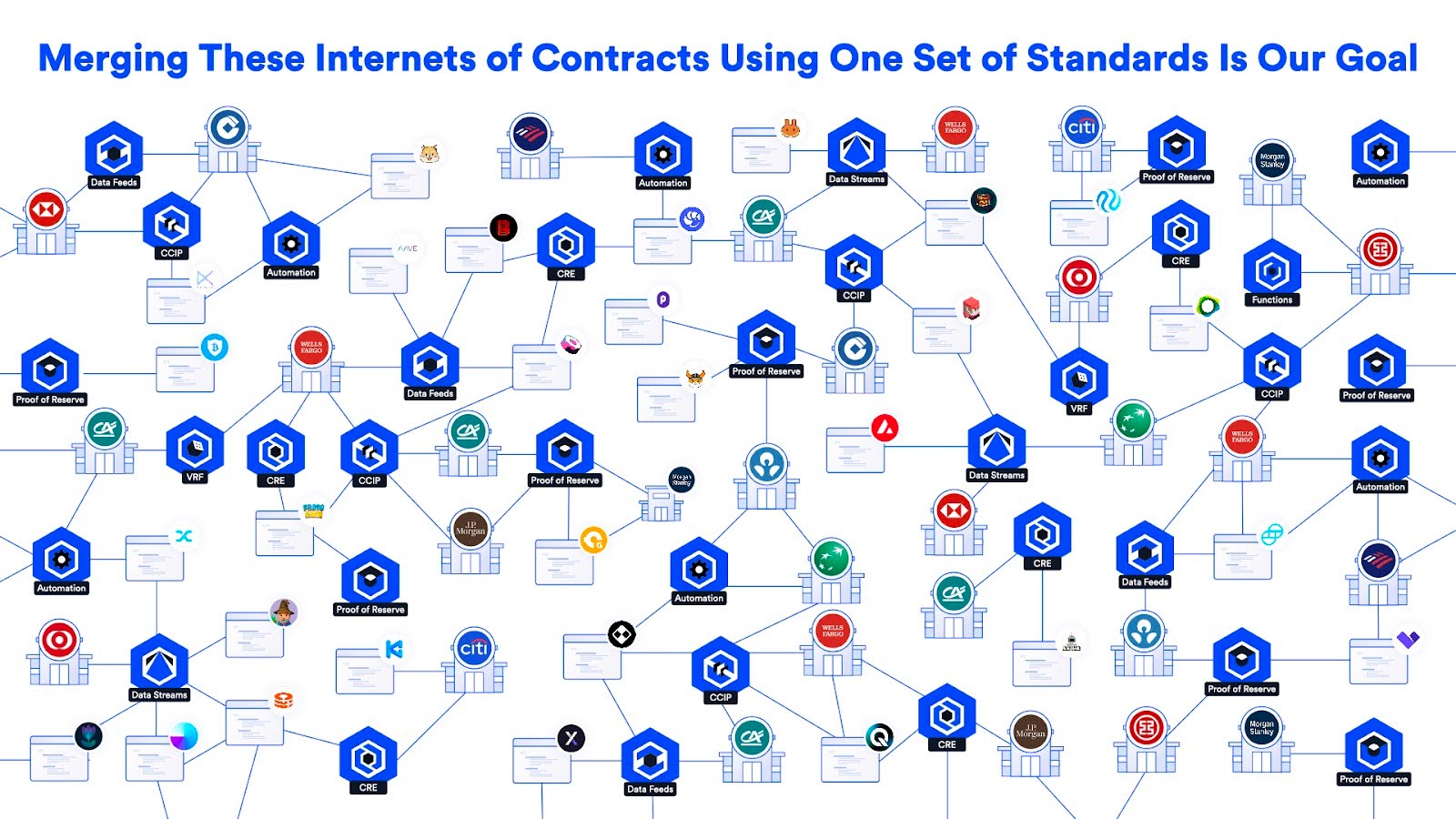
A visual representation of merging Web3 and TradFi on Chainlink standards.
The goal is to merge Web3 and TradFi ecosystems using a unified set of Chainlink standards.

We’ve made significant progress within TradFi markets. In addition to DeFi, we have implementations in production for large asset managers, multiple collaborations with major financial market infrastructures, and we’re in various stages of implementation with some of the biggest banks and asset managers in the world. Just like we’ve successfully established Chainlink as a global standard for the DeFi community, this year we’ve made great strides toward creating the standard for capital markets.

An overview of Chainlink’s collaboration with financial institutions.
Chainlink has been collaborating with leading financial institutions.
We’ve achieved this by providing a comprehensive set of services: data, proof of reserves, identity, cross-chain, and more—all integrated into contracts. One key lesson we’ve learned along the way is the need for a unified system to weave together these services, blockchains, smart contracts, and payment systems into a single application. 

Introducing the Chainlink Runtime Environment (CRE)

Looking back at the history of financial applications, each economic boom has been driven by the simplification of new technologies. In the 1970s, the introduction of COBOL as a runtime technology simplified interactions with databases and created the first electronic banking transactions. Similarly, in the 1990s, the Java Runtime Environment (JRE) simplified the interaction between new database technologies and the Internet, paving the way for online banking.
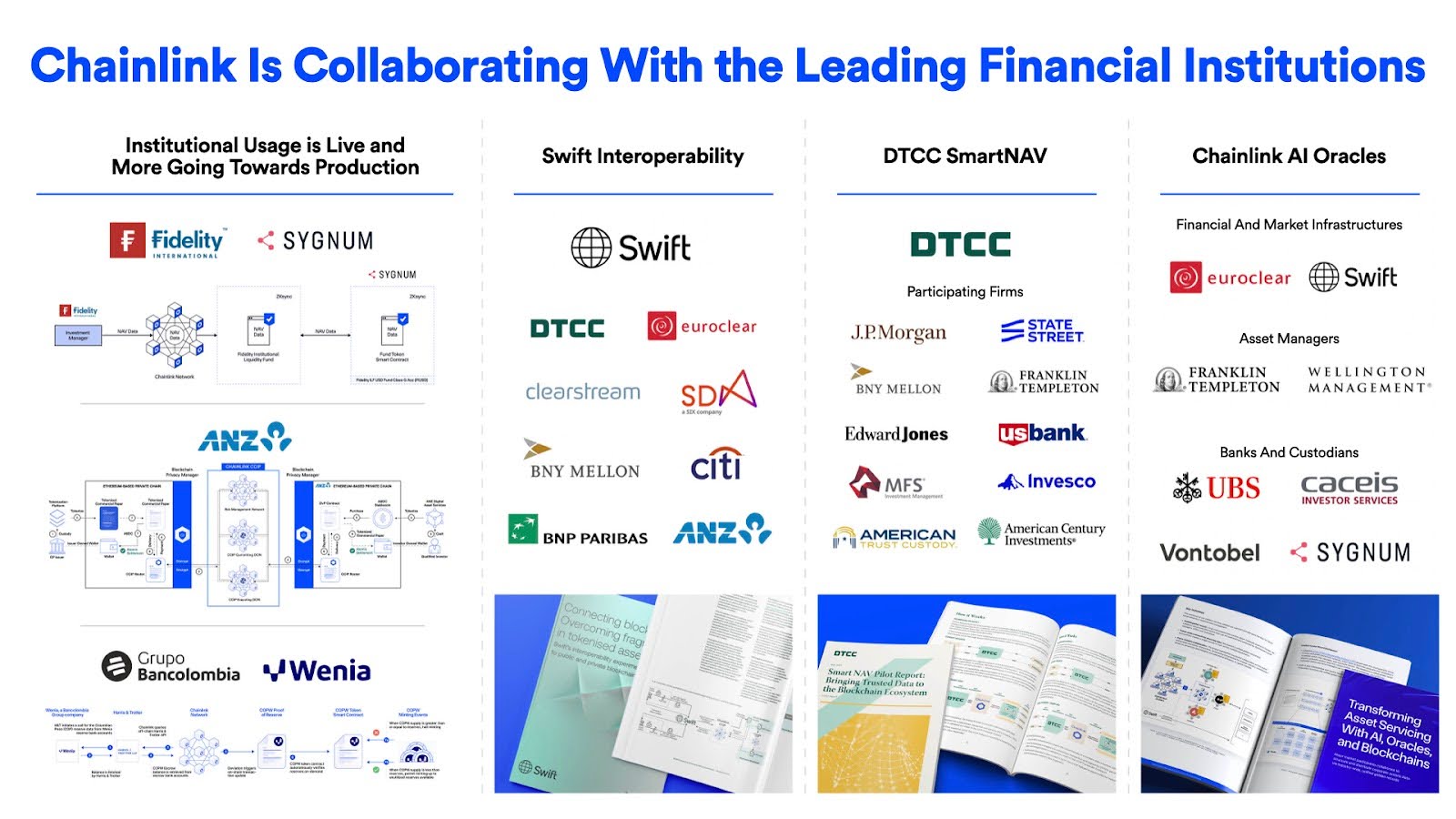
Illustration of financial system revolutions powered by runtime environments every 30 years.
Every 30 years there is a new runtime powering the financial system.

Now, as the world’s value migrates across hundreds of chains and thousands of oracle networks, the opportunity to unify these systems into a single application has emerged. The goal is to allow developers to create advanced applications much more quickly than before—within days or even hours. This simplification is what has driven economic booms in the past, and it’s what we aim to do now with the Chainlink Runtime Environment.

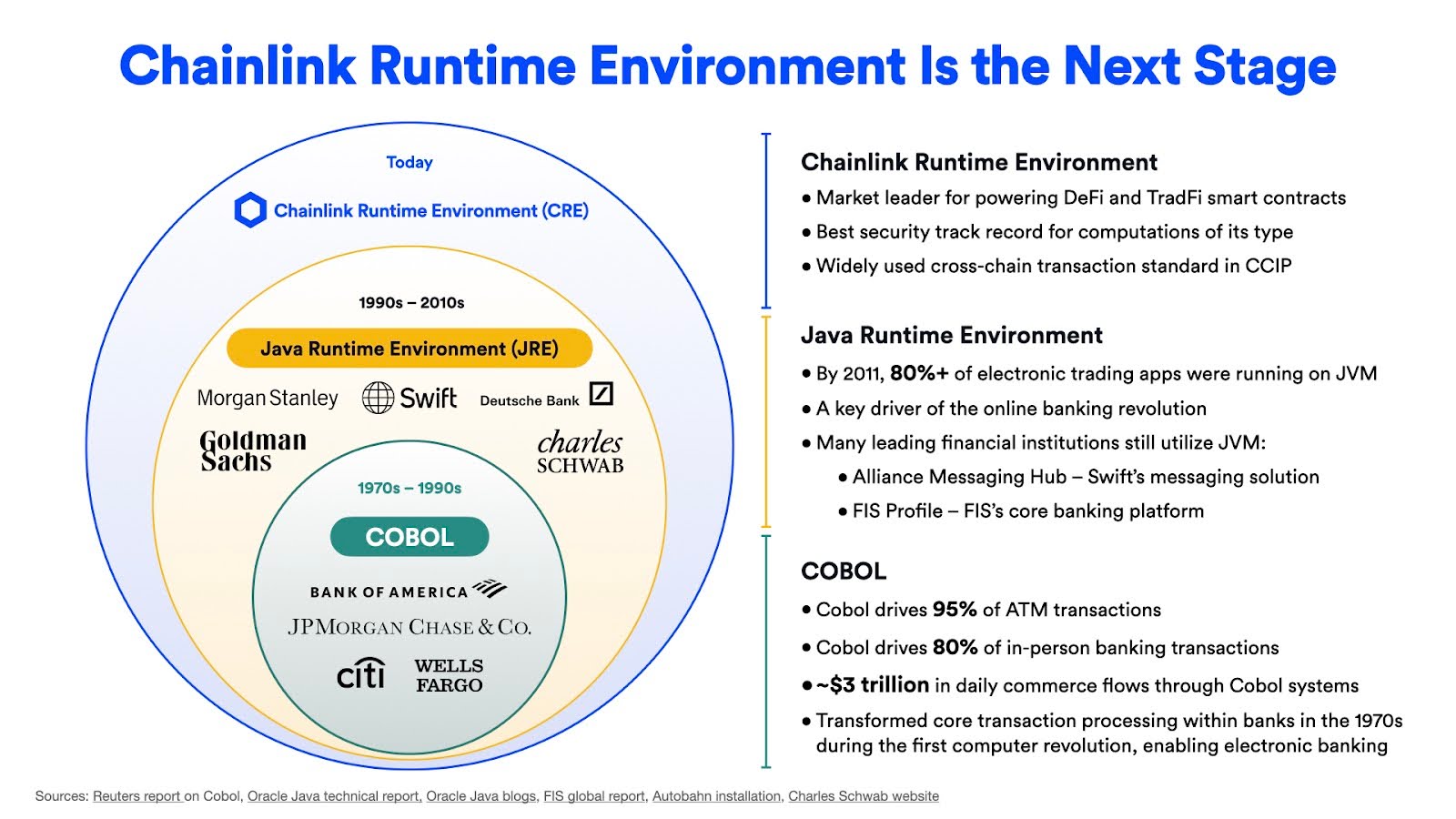
The Chainlink Runtime Environment (CRE) is designed to play the same role that COBOL and JRE played in previous economic booms in the last few decades. The CRE will coordinate blockchain technologies, oracle networks, and smart contracts into a unified application. By simplifying the complexities of interacting with multiple systems, the CRE will provide developers with an environment to easily integrate existing data, systems, and new blockchain technologies into a single application—this is the next step in simplifying blockchain application development.

Diagram showing the evolution of financial runtimes with the CRE being the next.
The CRE will emerge as the next runtime to power the financial system.

We’ve already seen this work with the Swift network. Through the CRE, we integrated Swift messages with multiple blockchains to create a seamless transaction flow. A small amount of engineering resources was needed to achieve this, demonstrating the CRE’s power in simplifying complex systems. This solution was showcased at Swift’s Sibos conference and received a strong response. The ability to coordinate Swift messages and blockchain events securely and efficiently is just one example of how the CRE will simplify cross-chain interoperability and make complex systems more manageable.

The adoption of the Chainlink Runtime Environment is a critical piece of our vision for the future. It’s designed to unify these complex services into one cohesive application, allowing developers to write code in languages they’re already familiar with, such as Go and TypeScript, with other languages like Rust under consideration. We believe this will lead to widespread adoption and make it easier for developers to build applications that integrate smart contracts, blockchain technologies, data, and payments—ultimately leading to the creation of a global, interconnected network of contracts.

A diagram of the architecture of the CRE.
The CRE enables secure data access, cross-chain interactions, and unified smart contracts with APIs for data, payments, and more.

Privacy Is the Key to Unlocking Institutional Adoption

As we continue to innovate, we are also addressing privacy in blockchain transactions. For institutional transactions, privacy is essential, and that’s why we’ve introduced the Blockchain Privacy Manager. This tool helps manage privacy across various chains by defining what information can and can’t leave a chain. We’ve also applied this tool to Chainlink’s Cross-Chain Interoperability Protocol (CCIP) to create private transactions, essential for institutional users.
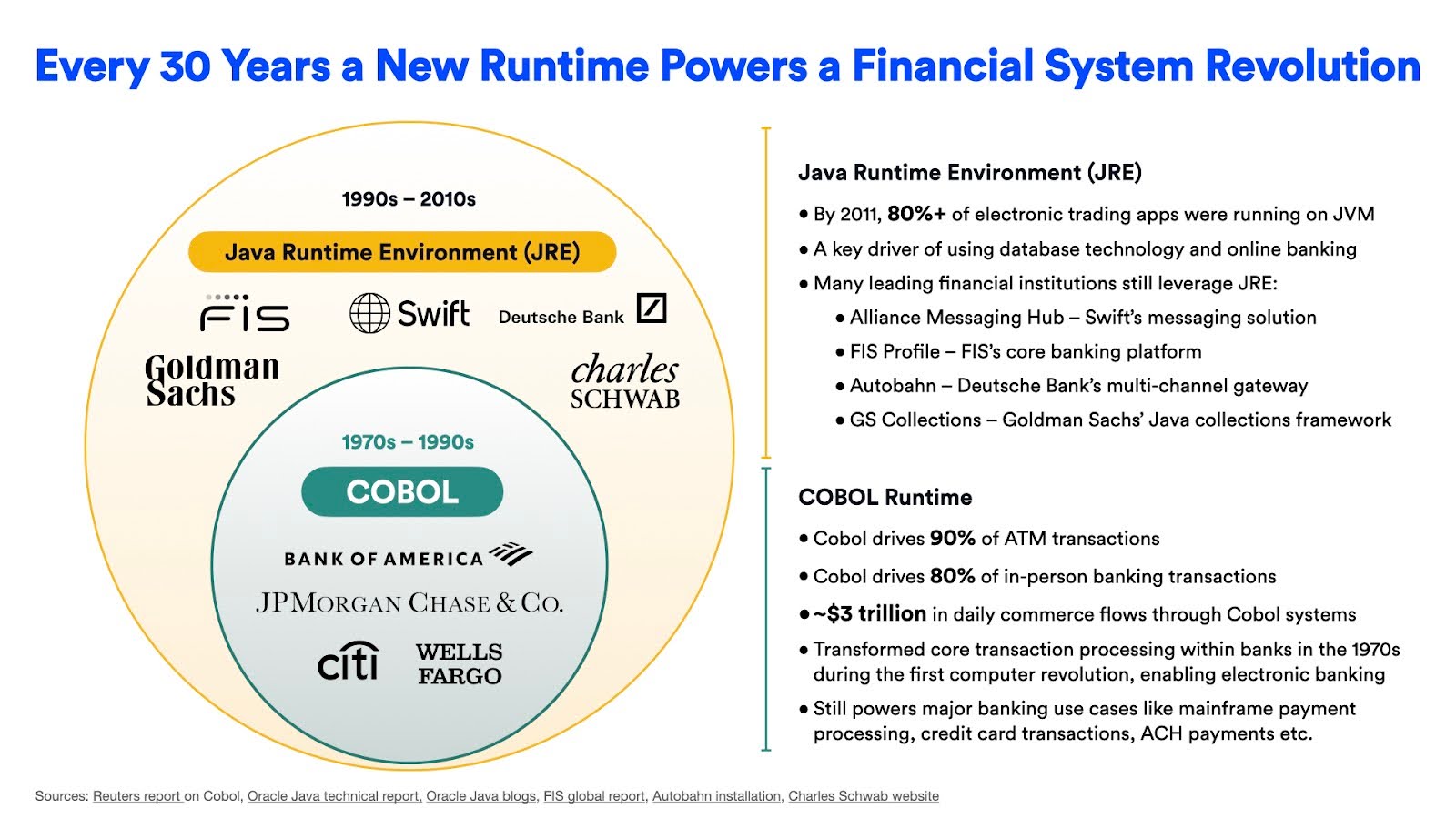
Diagram illustrating the Blockchain Privacy Manager's role in securely retrieving and writing offchain data.
The Blockchain Privacy Manager enables secure offchain data retrieval and writing with privacy management for blockchain applications.
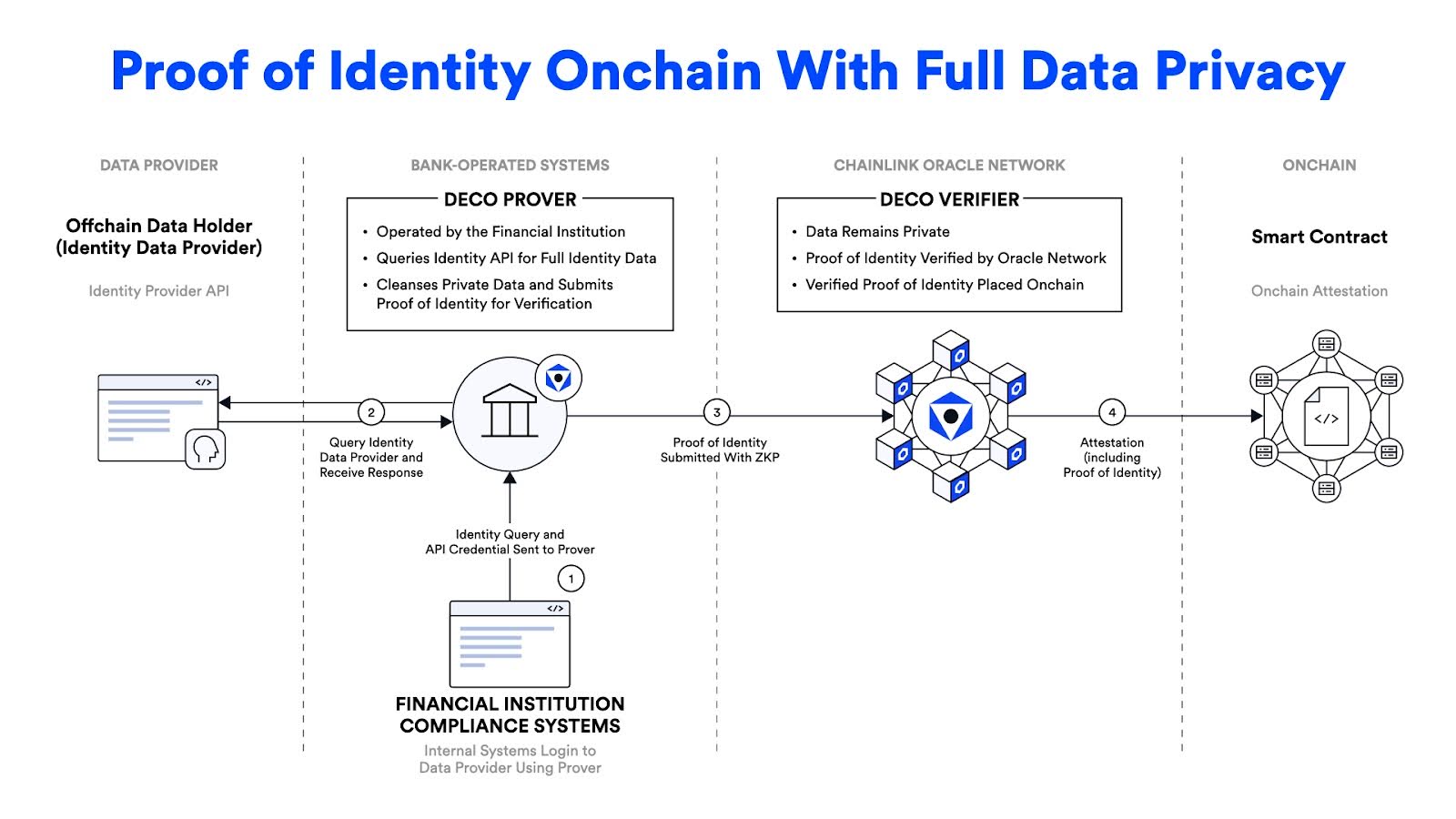
Additionally, we’re releasing tools like the DECO Sandbox, which allows developers to apply zero-knowledge proofs to any API and prove data information without revealing sensitive details. This is a significant advancement for privacy, especially in sectors like identity management and proof of funds, where confidentiality is crucial.
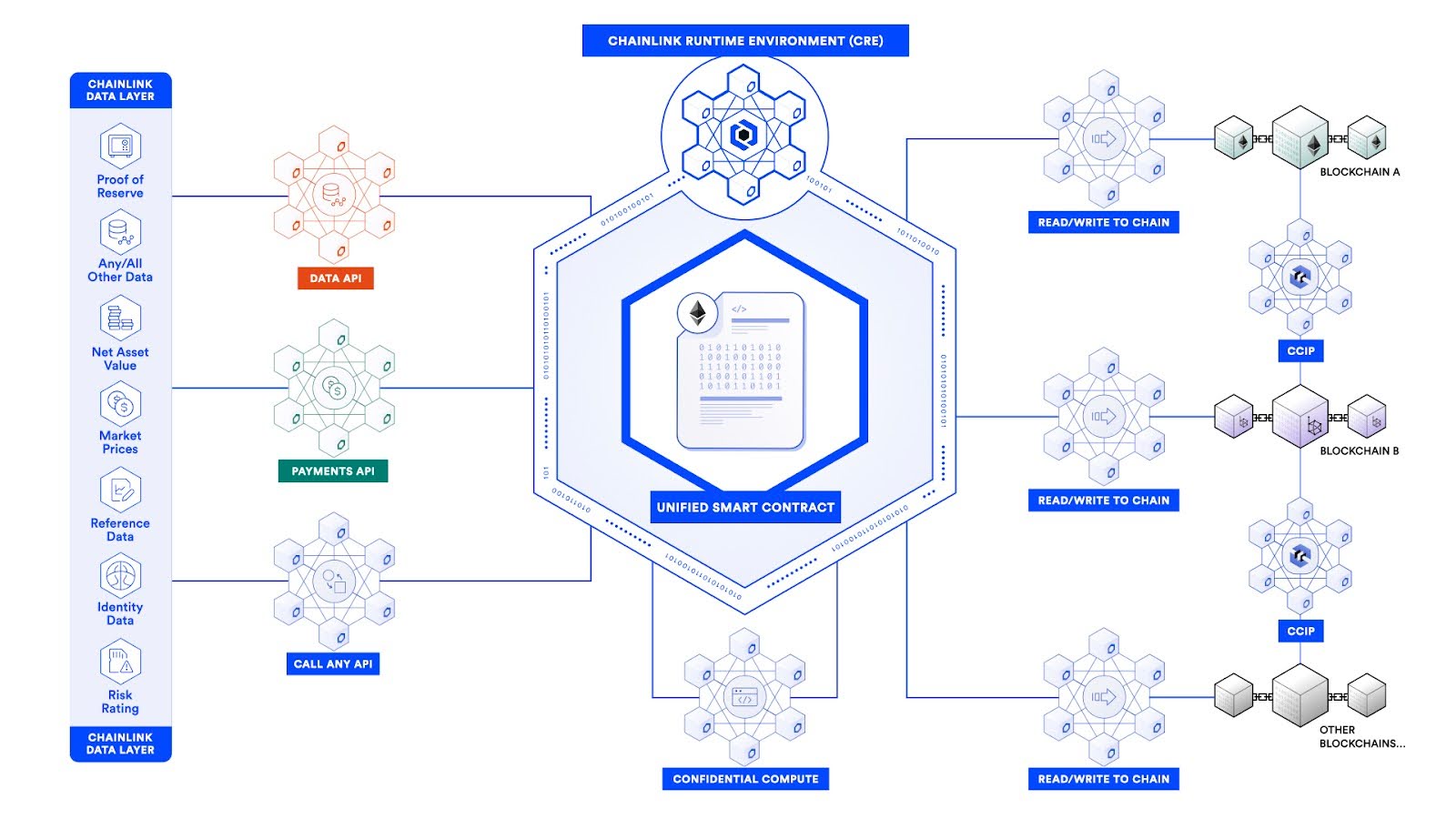
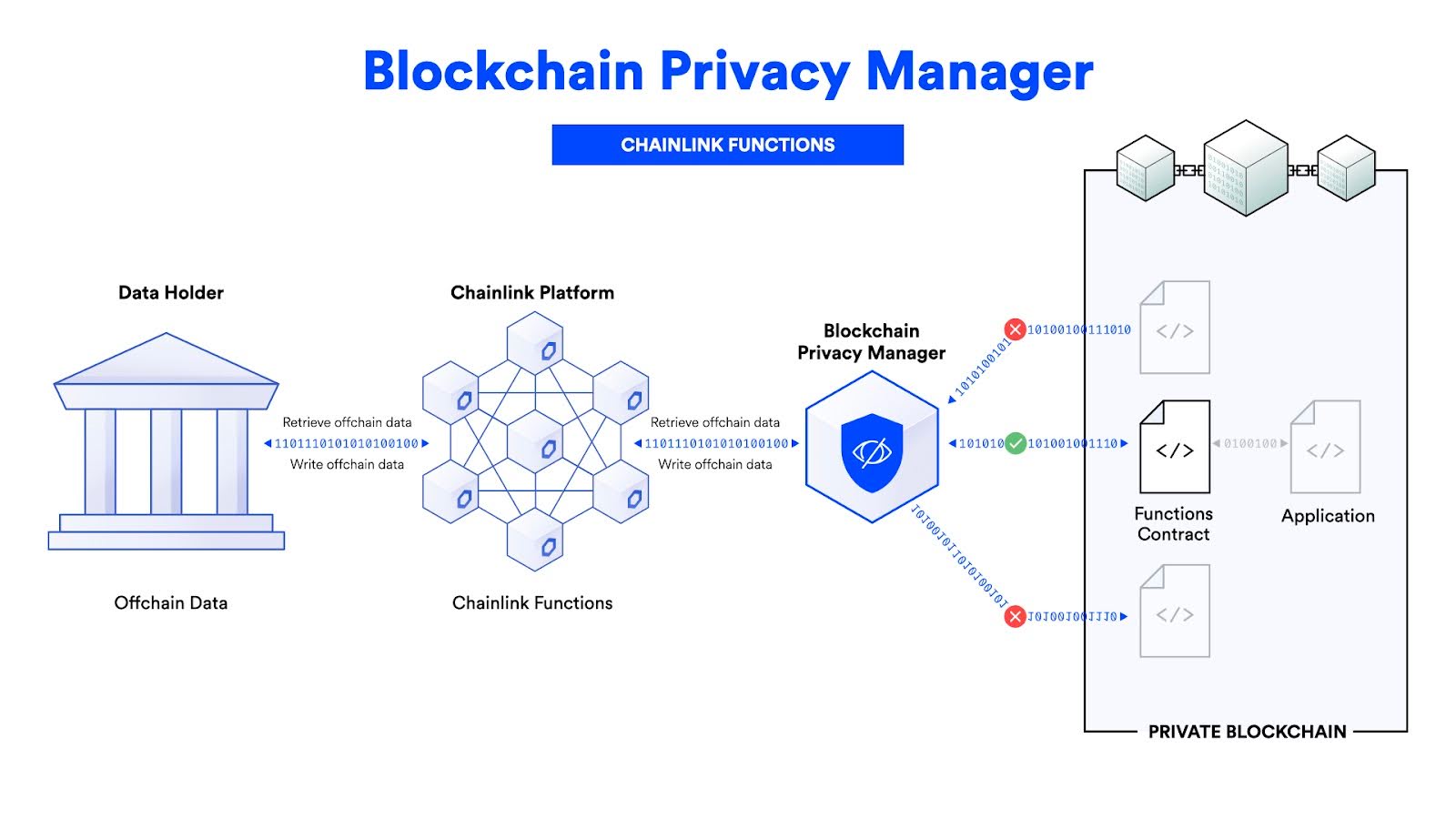
Diagram showing how proof of identity is securely verified onchain.
Proof of identity onchain with full data privacy using Chainlink’s Deco verifier and zero-knowledge proofs.

SmartData Leads to SmartAssets

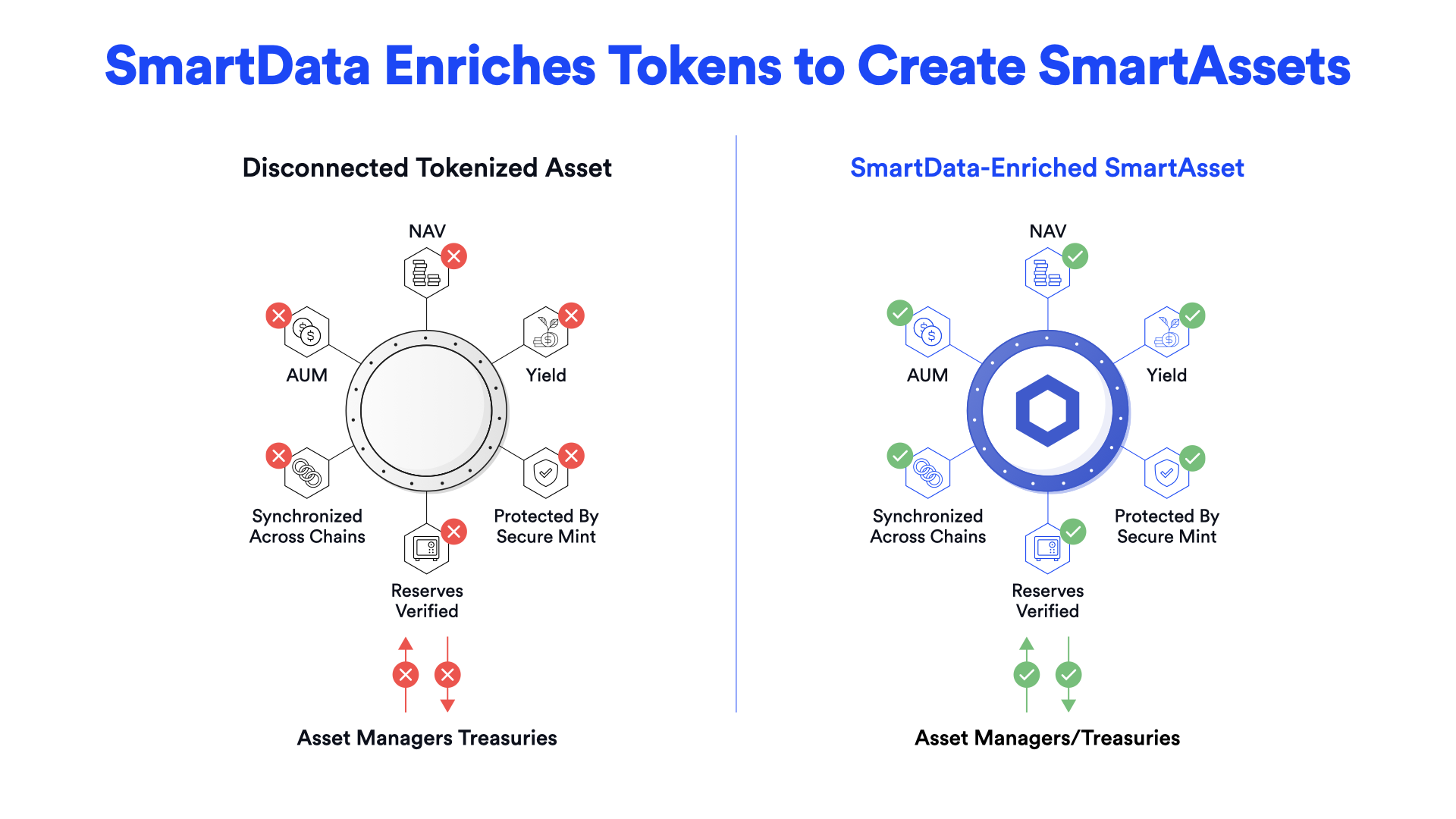
We also recognize the importance of creating data standards. Chainlink is rapidly becoming the standard for proof of reserves, a critical element in the reliability of stablecoins and commodity-backed assets. The work we’re doing with the SmartData standard will further expand the types of data that can be reliably transmitted onchain, leading to the creation of SmartAssets that are enriched and controlled by highly reliable data feeds.

Comparison of disconnected tokenized assets and SmartAssets.
SmartData enriches tokenized assets to create SmartAssets, ensuring data synchronization, yield, reserves verification, and protection across chains.

The Next Evolution of Chainlink CCIP

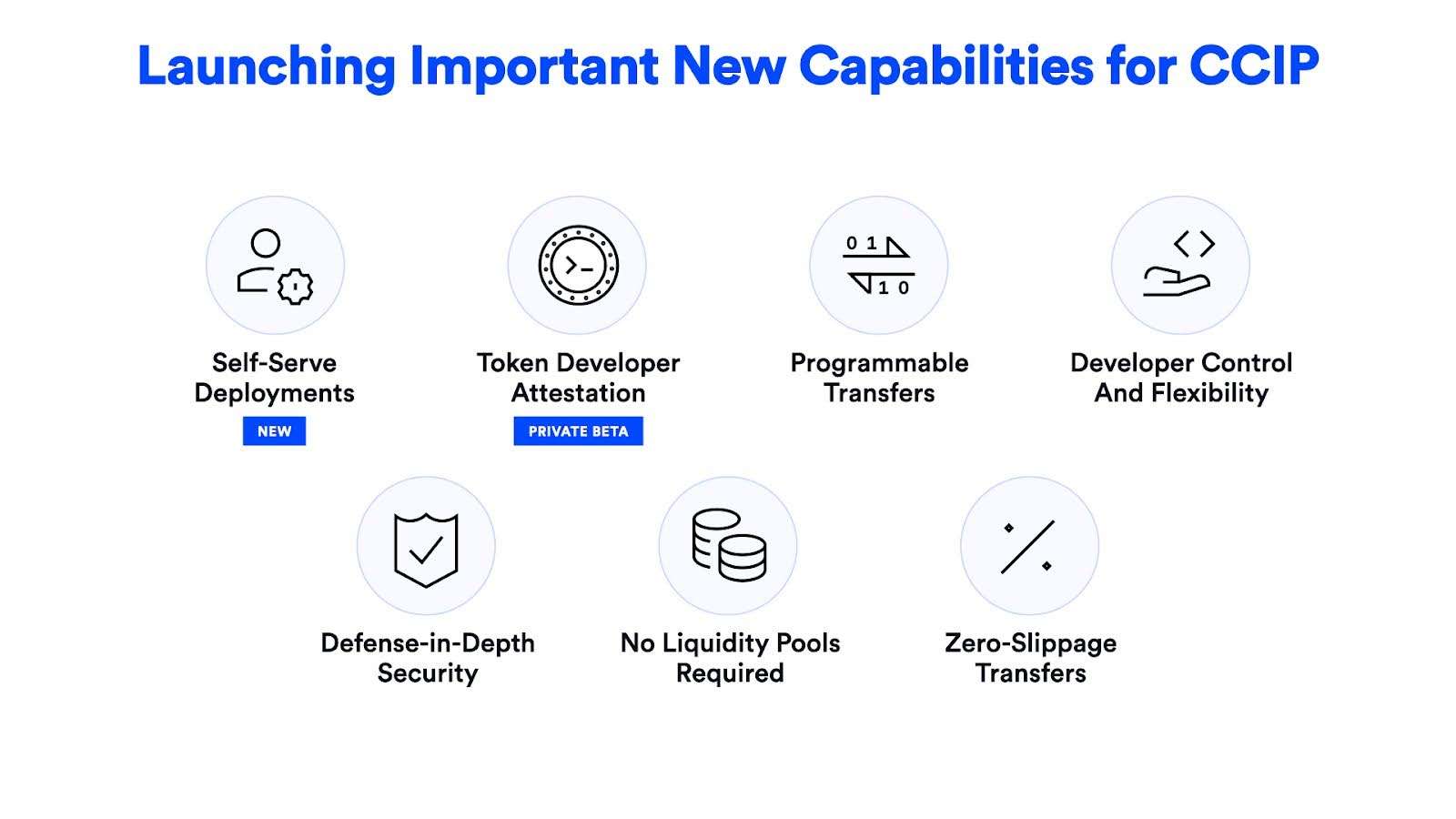
Finally, our vision extends to the continued evolution of CCIP. With features like Programmable Token Transfers, CCIP is being adopted by major blockchains as their canonical bridge solution, providing a reliable and secure way to transfer tokens across chains. The ability to conduct transactions and manage payments seamlessly across multiple blockchains will play a key role in the growth of this technology.

An overview of CCIP capabilities.
CCIP capabilities, including elf-serve deployments, token developer attestation, programmable transfers, and more.

The goal is to create a unified standard that spans both the DeFi and TradFi worlds. Through the Chainlink Runtime Environment, we are bringing that vision to life. We’re laying the groundwork for an interconnected global economy driven by smart contracts, and as we continue to develop these technologies, we believe Chainlink will be at the epicenter of the next economic boom.


Source link

Popular Posts

My Favorites

FIFA Launches Its Own Blockchain Network for NFT Collection

The International Federation of Association Football (FIFA) has officially announced the launch of a new blockchain network to support its NFT collections, as...