Web3

Home Web3 Page 193

Elon Musk’s Revolutionary Vision Unveiled as Bitcoin Approaches $100k | Web3Wire

0
Elon Musk’s Revolutionary Vision Unveiled as Bitcoin Approaches 0k | Web3Wire


“`html

The financial world was set abuzz in January 2025 as a massive leak—dubbed the “X Money Leak”—uncovered an ambitious plan by Elon Musk. This revelation comes at a time when Bitcoin is on the cusp of reaching a historic $100,000 mark. Musk, a name synonymous with innovation, is said to have a groundbreaking project that could transform the dynamics of digital assets, shaking the very foundation of how we perceive cryptocurrency.

Understanding the X Money Leak

The leaked documents revealed an extensive plan by Elon Musk, centered around a new type of digital asset strategy. Dubbed as the “X Money” initiative, this project is designed to leverage the global influence of existing Musk ventures while fostering unprecedented synergy within the cryptocurrency market. According to insiders, Musk aims to seamlessly integrate digital currency transactions with his high-profile companies like SpaceX and Tesla, facilitating a more fluid adoption of blockchain technology across industries.

The Role of Tesla and SpaceX

Central to the X Money strategy are Musk’s flagships—Tesla and SpaceX. These companies have been at the forefront of technological advancement and are ideally positioned to play pivotal roles.

Tesla: Already a player in the crypto space with previous Bitcoin investments, Tesla could implement a new payment system built around X Money, allowing seamless transactions for car purchases and energy products.SpaceX: As an aerospace giant, SpaceX is primed to utilize blockchain technology for secure, efficient contracts and logistics management. Envisioning a future where digital currency supports interstellar commerce is part of Musk’s grand vision.

The Implications of Bitcoin Nearing $100k

As Bitcoin inches towards the symbolic $100,000 threshold, this milestone marks a critical moment not only for investors but for the broader acceptance of cryptocurrencies. Here’s why:

Mainstream Adoption: A significant Bitcoin price signals broad acceptance by both retail and institutional investors, increasing confidence in digital assets.Market Dynamics: Enhanced valuations bring intensified market scrutiny, regulation talks, and, potentially, refined industry standards.Technological Advancements: The surge in Bitcoin’s price could drive more innovators and technologists towards exploring blockchain, hence pushing further developments.

Elon Musk’s Influence on Cryptocurrency

Musk is no stranger to the realm of cryptocurrency. His tweets and business decisions have historically sparked market movements. Here’s a look at how Musk has previously impacted the crypto landscape:

Promotion and Tweets: Musk’s endorsement of Bitcoin and Dogecoin on social media platforms usually results in immediate price reactions—both positive and negative.Investment Decisions: Tesla’s decision to invest in Bitcoin influenced other corporations to consider digital assets as part of their treasury strategy.Tech Advocacy: By advocating for sustainable energy solutions in crypto mining, Musk aligns technological advancements with environmental consciousness.

The Potential Impact of X Money

The X Money initiative, as outlined in the leaks, has the potential to serve as a cornerstone for a new era in digital finance. Here’s how:

Interoperability: By enabling various cryptocurrencies to interact seamlessly, X Money aims to tackle one of the biggest challenges in the crypto space.Scalability: Musk’s approach could address scalability issues, making crypto transactions faster and more efficient, thus supporting higher volumes.Regulatory Alignment: Building a platform compliant with global regulations may streamline crypto’s adoption in everyday transactions.

Challenges and Future Prospects

However, this revolutionary plan does not come without challenges:

Regulatory Hurdles: Navigating the complexities of various international regulations would be a significant undertaking.Technological Innovation: Consistent advancements are necessary to overcome potential technical challenges related to security and transaction processing speed.Market Reaction: The cryptocurrency market is notoriously volatile, and any initiative of this magnitude will undoubtedly influence market sentiments.

Despite the challenges, if successful, the X Money initiative could set a precedent for entrepreneur-led innovations in digital currencies, potentially elevating Musk’s influence to new heights.

Conclusion

Elon Musk’s game-changing plan, illuminated by the X Money leak, represents a significant pivot point for the cryptocurrency community as Bitcoin nears the audacious $100k price milestone. The integration of digital currencies within Musk’s sprawling business empire underscores a commitment to technological advancement and financial innovation. Whether the X Money initiative will achieve its ambitious goals remains to be seen, but one thing is certain—Musk is set on leaving an indelible mark on the future of digital finance.

Stay tuned as we continue to follow this groundbreaking development and its unfolding impact on the digital asset landscape.

“`

About Web3Wire Web3Wire – Information, news, press releases, events and research articles about Web3, Metaverse, Blockchain, Artificial Intelligence, Cryptocurrencies, Decentralized Finance, NFTs and Gaming. Visit Web3Wire for Web3 News and Events, Block3Wire for the latest Blockchain news and Meta3Wire to stay updated with Metaverse News.
Dark Carz Announces Series A Funding Round, After Pre-Seed of .3 Million from Founders | Web3Wire Republish


Source link

AMBER Mining launches new cloud mining program for cryptocurrency enthusiasts to earn free Bitcoin | Web3Wire

0
AMBER Mining launches new cloud mining program for cryptocurrency enthusiasts to earn free Bitcoin | Web3Wire


London, UK , Jan. 04, 2025 (GLOBE NEWSWIRE) —

Amber Mining has emerged as a game-changer in the cloud mining industry with its announcement of FCA-regulated mining contracts. This significant development ensures that cryptocurrency investors can participate in mining with greater transparency and security, backed by the stringent oversight of the UK Financial Conduct Authority (FCA).

A Milestone in Cloud Mining

Amber Mining’s FCA compliance marks a pivotal shift in the cryptocurrency mining landscape. With this move, the platform addresses common industry concerns such as fraud and lack of accountability, creating a reliable space for investors to explore cryptocurrency mining.

Amber Mining CEO stated:“The introduction of FCA-regulated contracts underscores our commitment to protecting investors while driving innovation in the cryptocurrency mining space. We aim to set a new standard for security and trust in the industry.”

Features of Amber Mining

Amber Mining combines cutting-edge technology and strict compliance measures to offer unparalleled services to its users. Key features include:

Global Operations: Over 100 mining centers worldwide ensure extensive service coverage.Advanced Hardware: Partnerships with manufacturers like Bitmain, Canaan, and Nvidia ensure efficient mining operations.High Hashrate Management: The platform operates with over 10 EH/s capacity, delivering significant mining efficiency.User-Friendly Design: The platform eliminates the need for users to manage hardware or software, making it ideal for both novice and experienced miners.Expert Support: A dedicated team of blockchain engineers ensures smooth technical operations.Consistent Earnings: Earnings are automatically credited every 24 hours for a stable income stream.

Getting Started with Amber Mining

Using the Amber Mining platform is straightforward:

Register on the Platform: Sign up in minutes and receive $12 immediately as a welcome bonus.Choose a Mining Contract: Select from various tailored contracts based on your budget and goals. Contracts range in duration and profitability, catering to diverse investment strategies.Start Profiting: Activate your chosen contract and let the system manage the mining process. Track your earnings through the platform’s intuitive dashboard and withdraw your profits as needed.

Amber Mining Contract Options

Below is a summary of the available contracts:

Contract PriceContract DurationDaily Interest RateTotal Income (Principal + Profit)$121 Day10%$12 + $1.2$1502 Days4%$150 + $12$5005 Days1.55%$500 + $38.75$1,0004 Days1.58%$1,000 + $63.2$2,00010 Days1.6%$2,000 + $320

Conclusion

Amber Mining’s FCA-regulated contracts set a new benchmark in the cloud mining industry. By offering transparency, regulatory assurance, and cutting-edge technology, the platform empowers investors to navigate the complexities of cryptocurrency mining confidently. With global reach, user-friendly operations, and consistent earnings, Amber Mining is poised to become a leading force in the cryptocurrency mining sector.

For more details, please visit https://ambermining.com

Disclaimer: The information provided in this press release is not a solicitation for investment, nor is it intended as investment advice, financial advice, or trading advice. It is strongly recommended you practice due diligence, including consultation with a professional financial advisor, before investing in or trading cryptocurrency and securities.

About Web3Wire Web3Wire – Information, news, press releases, events and research articles about Web3, Metaverse, Blockchain, Artificial Intelligence, Cryptocurrencies, Decentralized Finance, NFTs and Gaming. Visit Web3Wire for Web3 News and Events, Block3Wire for the latest Blockchain news and Meta3Wire to stay updated with Metaverse News.
Dark Carz Announces Series A Funding Round, After Pre-Seed of .3 Million from Founders | Web3Wire Republish


Source link

The ‘MicroStrategy of Dogecoin’ Launches DOGE Yield Strategy, Eyes Bitcoin and Solana Expansion – Decrypt

0
The ‘MicroStrategy of Dogecoin’ Launches DOGE Yield Strategy, Eyes Bitcoin and Solana Expansion – Decrypt


A firm that has adapted MicroStrategy’s Bitcoin reserve strategy with the meme coin Dogecoin has revealed plans to earn yield on its DOGE coins, with future ambitions to potentially offer products based on other major cryptocurrencies as investors look for new ways to get higher returns on their tokens.

Canadian investment firm Spirit Blockchain Capital said Thursday in a statement it intends to leverage its Dogecoin holdings through the new yield-generating strategy. The publicly traded company said the move will enable it to deliver value to its shareholders, in addition to expanding its treasury efficiency and enhancing the decentralized financial product adoption.

The initiative will serve as the bedrock for the company to launch potential yield-bearing strategies for other assets such as Bitcoin, Ethereum, Tether and Solana in the future, Spirit CEO Lewis Bateman said in a statement.

“We aim to unlock a previously untapped revenue stream while simultaneously positioning ourselves as a market leader in yield generation for not only Dogecoin, but the broader digital asset space,” Bateman said. 

How exactly the company plans to generate yield on its DOGE treasury is unclear, however, and the firm did not respond to Decrypt’s requests for comment. Spirit Blockchain Capital did not announce an exact date for its yield-bearing strategy’s rollout.

The company’s announcement comes a few months after it acquired Dogecoin Holdings, a firm that is amassing DOGE as a treasury reserve asset. Spirit previously declined to disclose the size of its Dogecoin treasury to Decrypt, citing regulatory guidelines for its acquisition.

Yield-bearing financial instruments such as stablecoins have gained steam during this latest crypto market rally, with several major companies rolling out new tokens in recent months to meet sky-high investor demand.

Crypto investors can also earn yield on assets through such measures as staking—or locking up assets within a proof-of-stake network to earn interest-like token rewards—or pledging assets to crypto lending services.

Edited by Andrew Hayward

Daily Debrief Newsletter

Start every day with the top news stories right now, plus original features, a podcast, videos and more.


Source link

Game On: The Hottest Upcoming Gaming Token Airdrops on Ethereum, TON and Beyond – Decrypt

0
Game On: The Hottest Upcoming Gaming Token Airdrops on Ethereum, TON and Beyond – Decrypt


Airdrop season is in full swing, with apps, protocols, and other projects seizing upon bear market vibes to finally drop their tokens—and potentially reward millions of crypto users in the process.

What exactly is an airdrop, though? When it comes to crypto tokens, an airdrop is typically a way for a project to reward its early users and contributors by giving them a share of a newly launched token, all while spreading the tokens far and wide for decentralized governance.

When it comes to blockchain networks and tokens primed specifically for gaming, there are some pretty compelling airdrops on the horizon in the months ahead. Here’s a look at what’s coming for gamers—there may still be time to get involved and score some tokens ahead.

Off the Grid

Avalanche-based Off the Grid burst onto the scene after early access opened to the public in October, jumping to the top of the Epic Games Store’s top free titles chart in short order. Since that time, publisher Gunzilla Games partnered with Delphi Ventures to advise on the launch of a GUNZ Foundation, which will oversee the rollout of the GUN token.

The GUN token and GUNZ mainnet are expected to launch in Q1 2025, though no official details of the token eligibility and launch date have been finalized.

Farm Frens

The developer of Telegram game Farm Frens announced it will launch its unnamed token in January. The token will launch on the Ethereum layer-2 network Base and maintain a connection to Farm Frens and Evereseed, an upcoming tower defense game built by the developers on Base.

Token specifics have not yet been shared, but allocations for Farm Frens players will be provided based on the number of Nuts, Dirt, and Dung accrued in-game. The Everseed allotment will be based on the amount of Everseed Ranger, Sprout, and Diddit NFTs held. No official airdrop date has been set.

Wanderers

Sci-fi dungeon crawler Wanderers will launch its WANDER token on January 8. Arriving in partnership with Treasure DAO, WANDER will debut on Base and power the entire Wanderers ecosystem, beyond its existing game.

Any users that engaged with Wanderers in the past may be eligible for the upcoming drop or future WANDER airdrops. WanderCorp, the entity launching the WANDER token, recently released a rank checker to those seeking clarity on their eligibility.

Zoo

Telegram game Zoo—sort of a streamlined take on Microsoft’s classic Zoo Tycoon—will launch its upcoming ZOO token after its mining period ends on January 31. Until then, users can acquire in-game ZOO which will eventually turn into tokens at a 1:1 ratio. Players can boost their Zoo earnings by buying and feeding animals, upgrading enclosures, and completing quests daily.

Onchain Heroes

Onchain Heroes, a fully on-chain idle RPG, told its followers that “REDACTED” would come with the launch of Abstract mainnet, the layer-2 network from the Pudgy Penguins parent company that is expected to go live in January 2025.

Though no name is set for the token, it’s expected to be distributed to holders of the Onchain Heroes Genesis Rings NFT, which previously launched on the Ethereum blockchain.

Cat Gold Miner

Cat Gold Miner will launch its CATGOLD token on January 9. The token will be provided to those collecting NFT vouchers during an exclusive event running from January 2-6. Operating in a first-come, first-served manner, those collecting NFT vouchers via Cat Gold Miner will split a pool of 300 million CATGOLD tokens.

The CATGOLD token will launch on The Open Network (TON).

TapSwap

Tap-to-earn game TapSwap will launch its TAPS token sometime in the second half of January. The developers claim that the TAPS token will become critical to the TapSwap ecosystem moving forward, which is pivoting focus to prioritize skill-based gaming.

Airdrop eligibility will be determined based on a player’s overall engagement and frequency with TapSwap and its city-builder game mode. The upcoming token airdrop will take place on the Open Network (TON).

Captain Tsubasa: Rivals

Soccer-themed tap-to-earn game Captain Tsubasa: Rivals racked up millions of players after its launch on Telegram, and soon it will airdrop its JOHN token to some of them.

Users are expected to earn allotments of the JOHN token, which will likely launch on TON, based on criteria like the total accumulated soccer balls in game, unlocked players and levels, and how many tasks they’ve completed. No official date for the airdrop has been provided but announcements indicate it is “coming soon.”

Seed

Seed, a Telegram game in which you plant trees, earn seeds, and care for birds, is set to launch its SEED token on January 15. Unlike many other popular Telegram games, Seed is choosing to launch its upcoming NFTs and token on Sui’s layer-1 blockchain.

The community will receive 70% of the total SEED supply, rewarding current players and future activations in the Seed Ecosystem.

InfiniGods

Mobile gaming studio InfiniGods is preparing for the launch of its GOD token on the Ethereum mainnet. While no launch date has been provided, a total supply of 777.77 million tokens has been announced alongside token utility like crafting, in-app purchases, and more.

Users can prepare for the GOD token by owning InfiniGods NFTs or completing quests hosted by the Valhalla Foundation, the organization overseeing the launch of the token.

In December, InfiniGods made headlines when it paid $1 million in an auction to acquire the GOD ticker on Hyperliquid, allowing it to eventually utilize the ticker on the Hyperliquid Exchange upon launch.

Rumble Kong League

With its iOS and Android basketball game soft-launched in mobile app stores, Rumble Kong League is gearing up for a January or February launch for its FAME token.

The token will be made available to those earning in-game, utilizing the now-popular “play-to-airdrop” mechanics which will reward those playing the RKL basketball game in-app with the eventual FAME token.

FAME will have a supply of 7 billion total tokens, with 30% earmarked for the community airdrop, staking, and other rewards. Rumble Kong League is being built on Avalanche, so we currently expect FAME to launch on AVAX.

Editor’s note: This story was originally published on December 27, 2023 and was last updated with new info on January 4, 2025.

GG Newsletter

Get the latest web3 gaming news, hear directly from gaming studios and influencers covering the space, and receive power-ups from our partners.


Source link

When will web3 have its Apple moment?

0
When will web3 have its Apple moment?


Join Japan's Web3 Evolution Today

The following is a guest article from Jackie Bona, Co-founder and CEO at Valora.

Five Challenges Standing in the Way of Mass Adoption

In today’s digital world, mobile technology is more than just a convenience—it’s a lifeline connecting billions of people to the internet. With over 8.58 billion mobile phones globally — surpassing the world’s population — smartphones have evolved into essential tools for communication, commerce, and financial management. Despite Web3’s potential to transform industries, financial systems, and digital interactions, it is still awaiting its “Apple moment”—the pivotal event that makes a disruptive technology intuitive and accessible to the masses.

So what’s holding it back? For Web3 to leap from an emerging technology to widespread adoption, it must overcome five major obstacles.

A Lack of Mobile-Native Solutions

Despite smartphones being the primary owned device for billions of users, Web3 applications remain largely confined to desktop environments. Recent reports show that 92.1% of global internet users connect via mobile phones, yet only 8 of the top 100 Web3 dApps on DappRadar offer mobile-native experiences. Why the gap? 

This gap is particularly problematic in emerging markets, where mobile phones are often the sole means of accessing the internet. For example, in countries like Vietnam, India, the Philippines, and South Africa, more than 70% of adults own their mobile devices as their only means of connecting to the internet.

Among the top ecosystems working to close the mobile gap is the Celo Community. As the leading blockchain supporting projects built with a mobile-first approach — including projects like Valora, Mento Labs, and Opera’s Mini Pay — the Celo community is responding to the opportunity to provide practical web3-powered solutions to a mobile-first world. The strategy is already paying off as Celo reached nearly 700,000 daily active addresses using stablecoins in September, demonstrating the appetite for mobile-native solutions. 

Also highlighting how well mobile-first design fits the current market’s need has been the positive response to Opera MiniPay, which has surpassed 3 million wallets across the African continent. By prioritizing ease of use and affordability, Opera MiniPay has made digital finance accessible in regions with limited traditional banking infrastructure, growing their user base. This demonstrates the power of mobile-centric solutions in expanding access to digital assets –  especially in areas where financial inclusion is a key challenge – and underscores the market opportunity for Web3 companies to provide mobile-centric solutions.

Complex User Interfaces

For the average person, interacting with Web3 applications can be an intimidating experience, especially when considering the complexities of managing security and digital assets. Keep in mind that more than two-thirds of Web2 users utilize the same password across all their accounts, highlighting how difficult it can be for mainstream users to navigate the unique requirements of Web3.

Blockchain, decentralized finance (DeFi), and digital wallets often come with steep learning curves including security measures like seed phrases or complex keys, making it challenging for people to engage with the technology confidently. 

While Web3 continues to innovate, its user base has been limited, with only 220 million active addresses recorded in September of this year — a number that pales in comparison to the billions who regularly interact with Web2 platforms.

This hasn’t gone unnoticed by the Web3 community. Nearly 1 in 4 Web3 users cite complicated user interfaces and complex onboarding as barriers to mass adoption. By focusing on simplifying user experiences Web3 platforms can create inviting entry points for individuals who are new to blockchain and decentralized finance.

Low Awareness of Web3

Despite its transformative potential, Web3 remains relatively unknown to the general public. Surveys indicate that only 8% of people are even aware of Web3’s existence, making this low level of awareness one of the biggest hurdles to achieving mainstream adoption.

The lack of awareness is particularly problematic in regions where Web3 could have the most profound impact – emerging markets where traditional banking services are either underdeveloped or inaccessible. 

The World Bank estimates that there are 1.4 billion people in these regions that lack access to financial services. Web3 has the potential to empower these underserved communities by offering decentralized solutions to long-standing issues like access to credit, high transaction fees, and currency instability. However, without effective education and outreach, many individuals remain unaware of how these decentralized technologies could benefit their lives. 

Bridging this gap requires a focused effort to educate users about the real-world applications of Web3. For example, the Valora Learning Program, a partnership between Valora, Tether, and Celo, leverages Valora’s mobile-first design to provide hands-on learning experiences for users in emerging markets.

This initiative has already activated over 75,000 users in Nigeria and is expanding to Vietnam, South Africa, and Brazil to empower even more people through stablecoin adoption and seamless, borderless crypto transactions. Through accessible modules, users can learn while they earn, experiencing the benefits of financial freedom firsthand with USDT and the fully mobile Valora wallet.

Programs like Valora Learn & Earn enable users to understand stablecoin use cases such as secure remittances, savings, and cross-border payments, helping individuals take control of their finances with practical applications that fit into everyday life.

By making educational content accessible on mobile devices, apps like Valora are turning curiosity into meaningful engagement, driving the real-world adoption of Web3 in emerging markets.

The Digital Gap

In many emerging markets, where access to traditional banking and financial services is limited, mobile technology has become the gateway to the global digital economy. However, a significant digital gap persists, with UN experts fearing that 2.7 billion people globally are at risk of not having internet access due to the expense of upgrading broadband infrastructure and outdated technology.   

In countries like Brazil, Turkey, and Vietnam, where crypto adoption is seeing above-average growth, the appetite for digital assets is clear. However, while there are millions of individuals in such emerging markets who own their mobile devices, many respondents cite cost as a reason why they may not be able to have their own. 

An example of how this can be addressed is Jambo’s partnership with the Aptos Foundation. By making affordable smartphones with internet access and Web3 capabilities available to users in over 40 countries across Africa, Southeast Asia, and Latin America, Jambo is helping to close the digital gap and bring more emerging market users online. 

As Jambo demonstrated, to truly unlock its potential, the industry needs to meet these customers where they are, and create onboarding ramps that can either help close or circumvent the digital gap.

Moving Beyond Speculation: Stablecoins as Proof of Web3’s Real-World Use

Web3’s reputation has long been tied to speculation and investment, but the recent surge in stablecoin use points to a shift toward practical, real-world applications. Stablecoins — digital assets pegged to traditional currencies like the U.S. dollar — have achieved a significant product-market fit by offering a stable and accessible way for everyday transactions, savings, and cross-border payments, without the volatility that often defines the crypto market. This stability makes stablecoins appealing to users looking for digital tools they can rely on for daily financial needs.

In emerging markets, where banking access remains limited, stablecoins provide a means for individuals to store and transfer value globally, essentially serving as a “bank in their pocket.” Programs that allow users to earn and engage with stablecoins are helping introduce people to digital assets they can use meaningfully in their everyday lives.

Through stablecoins, Web3 is demonstrating how digital assets can deliver value beyond speculation, fostering financial empowerment and stability.

This increase in stablecoin adoption shows that people want more from Web3 than just high-risk returns; they’re looking for dependable digital tools to support their financial lives. By emphasizing stablecoins and other practical applications, Web3 can shift from its speculative image to a system that fosters inclusion, ultimately broadening its appeal and drive greater adoption.

The Path Forward: Embracing Mobile for Web3’s Future

As Web3 stands on the cusp of revolutionizing global industries, financial systems, and digital interactions, its path to mainstream adoption is still hindered by several critical challenges. At the heart of overcoming these obstacles lies a powerful and obvious solution: embracing mobile technology. With the majority of global internet users accessing the internet in the palm of their hands, the transition from desktop-centric platforms to mobile-first solutions is not just necessary — it’s inevitable.

The stakes are high. If Web3 fails to fully embrace mobile technology, it risks remaining confined to a niche audience, limiting its global impact. However, by addressing these five key challenges and fully embracing the mobile revolution, Web3 may finally have its Apple moment. 


Source link

Dark Carz Announces Series A Funding Round, After Pre-Seed of $5.3 Million from Founders | Web3Wire

0
Dark Carz Announces Series A Funding Round, After Pre-Seed of .3 Million from Founders | Web3Wire


Wilmington, DE, January 03, 2025 –(PR.com)– Dark Carz, an on-demand technology platform for luxury transportation, today announces the launch of its series A first funding round. The Series A round includes $5.3 million seed capital from the company’s founders, underscoring strong confidence in Dark Carz’s market potential and business strategy.

The Series A raise is poised to accelerate Dark Carz’s global expansion, focusing on key regions in the United States, Europe, and the Middle East, and supporting the company’s continued innovation in AI-driven transportation.

“This investment sets the stage for scalable growth as we enhance our platform and cater to the evolving demands of modern travelers,” says CEO Patrick McAuliffe.

Global Footprint and PartnershipsDark Carz maintains a significant presence in prominent markets, including:

Middle East: Dubai, Abu Dhabi, Doha, Riyadh, Kuwait, BahrainAsia: China, Singapore, ThailandEurope: Italy, Germany, Belgium, Luxembourg, Spain, France, Czech RepublicAmericas: Puerto Rico

Backed by nearly 2,000 operator partners, Dark Carz delivers consistent, premium services while creating new revenue opportunities for livery operators. The Series A round further supports the company’s goal of broadening market coverage and refining customer experiences.

AI-Driven InnovationA key component of Dark Carz’s platform is its AI technology, which identifies the nearest coffee shop to a traveler’s pickup point, ensuring hot and fresh beverages are ready upon arrival.

Strengthening the Business Model

Diverse Revenue Streams: Partnerships with varied livery operators help reduce potential risks.Market Opportunity: Growing demand for specialized, on-demand transport underscores Dark Carz’s expansion plan.Advanced Tech Approach: Real-time route optimization and location tracking enhance efficiency and traveler satisfaction.

Crowdfunding InitiativeIn addition to the Series A round, Dark Carz has also introduced a crowdfunding campaign, making it possible for a broader audience to participate in the company’s future.

Crowdfunding Link: Join Dark Carz to Revolutionize Global Luxury Transportation

About Dark CarzDark Carz is a on-demand technology platform focusing on premium transportation services. By integrating AI-driven solutions, strategic global partnerships, and an unwavering commitment to customer satisfaction.

Media Contact:Email: media@darkcarz.comWebsite: www.darkcarz.comInstagram: @darkcarzluxury

About Web3Wire Web3Wire – Information, news, press releases, events and research articles about Web3, Metaverse, Blockchain, Artificial Intelligence, Cryptocurrencies, Decentralized Finance, NFTs and Gaming. Visit Web3Wire for Web3 News and Events, Block3Wire for the latest Blockchain news and Meta3Wire to stay updated with Metaverse News.
Republish


Source link

FDIC Took Issue With Banks Using Public Blockchains Like Ethereum, FOIA Docs Reveal – Decrypt

0
FDIC Took Issue With Banks Using Public Blockchains Like Ethereum, FOIA Docs Reveal – Decrypt


American banks seeking to offer customers services built on public blockchain networks appear to have been discouraged from doing so by the Federal Deposit Insurance Corporation, documents released Friday revealed. 

The disclosure came courtesy of a trove of newly unredacted crypto-related correspondences between the FDIC and member banks. San Francisco-based cryptocurrency exchange Coinbase obtained the documents via the Freedom of Information Act, or FOIA. Last month, Coinbase secured heavily redacted versions of 23 such letters

Thanks to a court order, the contents of those letters—and two new ones—were revealed today in their (near) entirety. 

One of those letters, sent in March 2022 from the FDIC’s New York office to a member bank, detailed how the federal agency had learned that the bank planned to roll out a “Bank Digital Deposit” program built to run on a public blockchain. The name of that public blockchain remains redacted. 

In the letter, the FDIC appears to take issue with the bank opting to use a public blockchain instead of a private, permissioned network. Blockchains like Ethereum and Solana are decentralized and permissionless, meaning that activity on them is fully public and cannot be overridden by third-party human administrators. By contrast, private blockchain networks, like those used by nation states to issue central bank digital currencies, place limits on who can use them and for what purpose.

The FDIC is apparently not a fan of member banks launching products on anything-goes, fully transparent networks. The regulator instructed the New York bank in the March 2022 letter to submit to a new, detailed review process before launching any products on public blockchains. 

Other letters disclosed Friday show the FDIC ordering member banks to halt the implementation of services related to the buying and selling of Bitcoin. Sections of the same letters unredacted last month showed the FDIC instructing member banks to “pause all crypto asset-related activity.”  

Coinbase Chief Legal Officer Paul Grewal touted today’s revelations as further proof of an alleged Biden administration initiative waged against the crypto industry via banking regulations that’s become known as “Operation Chokepoint 2.0” (borrowing the name from the Obama era scheme that targeted firearms dealers and payday lenders).

“They show a coordinated effort to stop a wide variety of crypto activity,” Grewal said on X (formerly Twitter) of Friday’s FDIC letters.

Daily Debrief Newsletter

Start every day with the top news stories right now, plus original features, a podcast, videos and more.


Source link

Exploring the Role of Technology in Modern Fashion Design

In the ever-evolving world of fashion, technology is playing an increasingly pivotal role. As designers seek new ways to innovate and differentiate their creations, the integration of technology into fashion design has become a significant trend. From the use of digital tools in the creative process to the development of smart textiles, technology is reshaping how fashion is conceived, produced, and consumed. This article explores the intricate relationship between technology and fashion design, highlighting the innovations that are shaping the industry’s future and examining the challenges and opportunities that arise from this tech-driven evolution.

The Intersection of Technology and Fashion Design

The fusion of technology and fashion design has opened up new avenues for creativity and expression. Designers now have access to advanced software that allows them to visualize their ideas in 3D, enabling a more precise and efficient design process. This digital transformation has not only accelerated the pace of fashion cycles but has also democratized design, allowing emerging designers to compete on a global scale without the need for extensive physical resources.

Moreover, the use of technology in fashion design extends beyond the creation of garments. The entire supply chain is being revolutionized by innovations such as digital pattern making, virtual fittings, and automated cutting systems. These technologies not only reduce waste and improve sustainability but also enhance the speed and accuracy of production, allowing designers to bring their visions to life more quickly and with fewer errors.

Wearable technology is another exciting frontier in the intersection of fashion and technology. From smart fabrics that can change color to garments equipped with sensors that monitor health metrics, the possibilities are endless. These innovations are not only transforming how fashion is perceived but also expanding its functionality, offering consumers products that are both stylish and practical.

The rise of e-commerce and digital marketing has further blurred the lines between technology and fashion design. Social media platforms and virtual showrooms allow brands to engage with consumers in real-time, creating personalized shopping experiences that were once unimaginable. This digital landscape has also given rise to data-driven design, where consumer insights inform everything from color palettes to silhouettes.

Sustainability is another critical area where technology is making a significant impact. Designers are increasingly using technology to create eco-friendly materials and processes, such as 3D printing and digital fabric dyeing. These innovations not only reduce the environmental footprint of fashion but also offer new creative possibilities, allowing designers to experiment with textures and forms that were previously unattainable.

As the boundaries between technology and fashion design continue to dissolve, the industry is witnessing a paradigm shift. This convergence is not only redefining what fashion can be but also challenging traditional notions of craftsmanship and artistry. As designers navigate this new landscape, the role of technology in fashion design will undoubtedly continue to evolve, offering exciting possibilities for the future.

Innovations Shaping the Future of Fashion Design

The future of fashion design is being shaped by a host of technological innovations that are pushing the boundaries of creativity and functionality. One of the most groundbreaking developments is 3D printing, which allows designers to create intricate, customized pieces with minimal waste. This technology is particularly appealing for its ability to produce complex structures that would be impossible to achieve with traditional methods, offering a new realm of possibilities for avant-garde fashion.

Augmented reality (AR) and virtual reality (VR) are also making waves in fashion design. These technologies are being used to create immersive experiences, from virtual fashion shows to interactive fitting rooms, that enhance the consumer’s engagement with a brand. By allowing customers to visualize how a garment will look and fit in real-time, AR and VR are revolutionizing the shopping experience and reducing the barrier to online purchases.

Smart textiles are another innovation that is set to transform the fashion industry. These fabrics, embedded with technology, can react to environmental stimuli or collect data from the wearer. For example, garments that monitor body temperature or adjust to light levels are no longer the stuff of science fiction. As these textiles become more sophisticated, they promise to offer new functionalities that blend seamlessly with fashion.

Biotechnology is also playing a crucial role in the future of fashion design. Researchers are developing bio-fabrics made from sustainable materials like algae, mushrooms, and bacteria, which offer a more eco-friendly alternative to traditional textiles. These bio-fabrics not only reduce the environmental impact of fashion but also provide designers with new textures and forms to explore.

Artificial intelligence (AI) is another powerful tool that is transforming fashion design. AI algorithms can analyze vast amounts of data to predict trends, optimize inventory, and personalize customer experiences. Additionally, AI-driven design tools are enabling designers to experiment with new patterns and styles, pushing the boundaries of what is possible in fashion.

Finally, blockchain technology is set to revolutionize the fashion industry’s supply chain. By providing a transparent and secure way to track the provenance of materials and garments, blockchain can enhance sustainability and authenticity, offering consumers greater confidence in their purchases. As these innovations continue to evolve, they will undoubtedly shape the future of fashion design, creating new opportunities for creativity and sustainability.

Challenges and Opportunities in Tech-Driven Fashion

The integration of technology in fashion design presents both challenges and opportunities. One of the primary challenges is the steep learning curve associated with new technologies. Designers must acquire new skills and adapt to rapidly changing tools and processes, which can be daunting for those accustomed to traditional methods. This need for continuous learning and adaptation can slow down the adoption of technology in the industry.

Another challenge is the cost of implementing cutting-edge technologies. While innovations like 3D printing and smart textiles offer exciting possibilities, they often require significant investment in equipment and training. For smaller brands and independent designers, these costs can be prohibitive, limiting their ability to compete with larger, tech-savvy companies.

Despite these challenges, the opportunities presented by tech-driven fashion are immense. Technology offers designers new ways to express their creativity and connect with consumers. Digital platforms and tools can democratize fashion, allowing emerging designers to showcase their work to a global audience and engage with customers in innovative ways.

Sustainability is another area where technology offers significant opportunities. By reducing waste and improving the efficiency of production processes, technology can help the fashion industry move towards more sustainable practices. Innovations like bio-fabrics and digital dyeing are paving the way for a more eco-friendly future, offering designers new materials and methods to explore.

The rise of data-driven design also presents exciting opportunities for personalization. By leveraging consumer data, designers can create more tailored and relevant products, enhancing the customer experience and driving brand loyalty. This shift towards personalization is set to redefine how fashion is designed and consumed, offering new opportunities for brands to differentiate themselves in a crowded market.

As technology continues to advance, the fashion industry will need to navigate the delicate balance between innovation and tradition. While the challenges are significant, the potential rewards are too great to ignore. By embracing technology, designers can unlock new creative possibilities and build a more sustainable and inclusive fashion industry for the future.

As we stand at the crossroads of fashion and technology, the possibilities for innovation and transformation are boundless. While challenges remain, the integration of technology into fashion design offers unprecedented opportunities for creativity, sustainability, and consumer engagement. As designers and brands continue to explore this dynamic intersection, they have the potential to redefine the fashion industry and shape the future of how we express ourselves through clothing. The journey is just beginning, and the future of fashion promises to be as exciting as it is unpredictable.

Exploring the Intersection of AI and Modern Design

In recent years, the fusion of artificial intelligence (AI) and modern design has sparked a revolution in creative industries. As technology advances, AI is increasingly becoming an integral part of the design process, offering new tools and possibilities that were once unimaginable. This article explores the intersection of AI and modern design, examining how AI is shaping design trends, bridging creativity with technology, and transforming the future of design.

Unveiling AI’s Role in Shaping Modern Design Trends

Artificial intelligence is playing a pivotal role in shaping modern design trends by introducing innovative tools and methodologies. Designers are now equipped with AI-powered software that can generate design concepts, analyze aesthetics, and even predict future trends. This technological advancement allows designers to explore a wider array of possibilities and push the boundaries of creativity. AI’s ability to process vast amounts of data enables it to identify patterns and preferences, offering insights that were previously inaccessible.

One of the key areas where AI is making an impact is in the realm of personalized design. With AI, designers can tailor products and experiences to meet the unique preferences of individual users. By analyzing user data, AI can suggest design elements that resonate with specific audiences, creating more engaging and relevant experiences. This personalization trend is evident in various industries, from fashion to interior design, where customization is becoming a standard practice.

AI is also influencing the aesthetics of modern design. Through machine learning algorithms, AI can analyze and replicate artistic styles, allowing designers to experiment with different visual elements. This capability opens up new avenues for creativity, enabling designers to blend traditional styles with contemporary elements seamlessly. As a result, AI is fostering a new era of design where the fusion of art and technology is celebrated.

Moreover, AI’s role in sustainability is gaining prominence in modern design. By optimizing resource usage and minimizing waste, AI-driven design processes contribute to more sustainable practices. For instance, AI can simulate and test various design configurations, identifying the most efficient and eco-friendly solutions. This approach not only reduces environmental impact but also aligns with the growing demand for sustainable and ethical design practices.

The integration of AI in design is also streamlining workflows and enhancing productivity. Designers can leverage AI tools to automate repetitive tasks, such as resizing images or generating design variations, allowing them to focus on more complex and creative aspects of their work. This shift in workflow dynamics is enabling designers to produce high-quality work more efficiently, ultimately leading to greater innovation and output.

Finally, AI’s role in shaping modern design trends extends to the democratization of design tools. With AI-powered platforms becoming more accessible, individuals without formal design training can now create professional-quality designs. This democratization is empowering a new generation of designers, fostering diversity and inclusivity within the design community.

Bridging Creativity and Technology in Design

The intersection of AI and design is bridging the gap between creativity and technology, offering a harmonious blend of artistic intuition and computational precision. As AI becomes more sophisticated, it is enabling designers to harness its capabilities without compromising their creative vision. This synergy between creativity and technology is transforming the design process, making it more dynamic and iterative.

AI is enhancing the creative process by providing designers with novel tools and resources. For instance, AI-driven generative design software can produce numerous design iterations based on specific parameters set by the designer. This iterative approach allows designers to explore a multitude of options quickly, refining and evolving their ideas in real-time. By automating certain aspects of the design process, AI frees up designers to focus on the conceptual and artistic elements of their work.

Collaboration between AI and designers is fostering a new form of co-creation, where human intuition and machine intelligence work in tandem. Designers can use AI as a creative partner, leveraging its analytical capabilities to inform and inspire their work. This collaborative approach is particularly beneficial in complex design projects, where AI can provide insights and recommendations that enhance the overall design outcome.

AI is also facilitating experimentation and innovation in design. By analyzing vast datasets and learning from diverse sources, AI can identify unconventional design solutions that might not be apparent to human designers. This ability to think outside the box is encouraging designers to take risks and explore uncharted territories, leading to the creation of groundbreaking designs that challenge traditional norms.

The integration of AI in design is redefining the role of designers, shifting their focus from technical execution to strategic thinking and problem-solving. As AI takes on more routine tasks, designers are free to concentrate on developing creative concepts and strategies that drive innovation. This shift is empowering designers to become visionaries and storytellers, using design as a powerful tool for communication and expression.

Furthermore, AI is enabling cross-disciplinary collaboration in design, breaking down silos between different fields and disciplines. By facilitating communication and collaboration between designers, engineers, and data scientists, AI is fostering a more holistic approach to design. This cross-pollination of ideas and expertise is leading to the development of more comprehensive and impactful design solutions.

The Future of Design: AI’s Transformative Impact

As AI continues to evolve, its transformative impact on the future of design is becoming increasingly evident. The integration of AI is not only changing how designs are created but also how they are experienced. With advancements in AI technology, designers are poised to explore new frontiers and redefine the boundaries of design.

One of the most significant impacts of AI on the future of design is the potential for hyper-personalization. AI’s ability to analyze individual preferences and behaviors will enable designers to create bespoke experiences tailored to each user. This level of personalization will transform industries such as retail, entertainment, and architecture, offering consumers more meaningful and immersive interactions with products and spaces.

AI’s impact on the future of design also extends to the realm of virtual and augmented reality. As AI technology advances, designers will be able to create more realistic and interactive virtual environments, enhancing the way users engage with digital content. This evolution will have far-reaching implications for fields such as gaming, education, and healthcare, where immersive experiences are becoming increasingly valuable.

Moreover, AI is set to revolutionize the design of smart and connected environments. With the rise of the Internet of Things (IoT), AI-driven design will play a crucial role in creating intelligent spaces that adapt to the needs and preferences of their occupants. This shift towards smart design will enhance comfort, efficiency, and sustainability, ultimately improving the quality of life for users.

The future of design will also see AI facilitating greater inclusivity and accessibility. By analyzing diverse datasets and learning from a wide range of perspectives, AI can help designers create products and experiences that cater to different needs and abilities. This inclusive approach will ensure that design is accessible to all, promoting equity and social good.

As AI continues to shape the future of design, ethical considerations will become increasingly important. Designers will need to navigate the challenges of data privacy, algorithmic bias, and transparency to ensure that AI-driven design solutions are ethical and responsible. This emphasis on ethical design will be crucial in building trust and credibility in AI-powered design processes.

Ultimately, the future of design in the age of AI is one of limitless possibilities. By embracing AI as a creative partner, designers can unlock new levels of innovation and creativity, transforming the way we interact with the world around us. As AI technology continues to advance, the design landscape will evolve, offering exciting opportunities for designers to shape the future in ways we have yet to imagine.

The intersection of AI and modern design is a dynamic and evolving landscape, offering unprecedented opportunities for creativity and innovation. As AI continues to advance, its role in shaping design trends, bridging creativity with technology, and transforming the future of design will only become more pronounced. By embracing AI’s capabilities, designers can harness the power of technology to create meaningful and impactful design solutions that resonate with audiences and redefine the boundaries of possibility. As we move forward, the collaboration between AI and design promises to unlock new realms of creativity, offering a glimpse into a future where technology and artistry coexist in harmony.

Exploring Emerging Trends in the Digital Fashion World

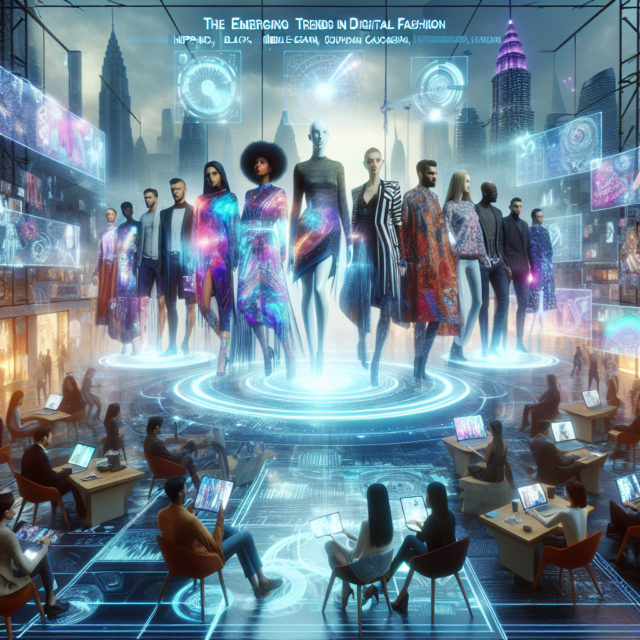
The digital fashion world is undergoing a transformative journey, reshaping how we perceive style, design, and ownership in the virtual realm. As technology continues to evolve, the fashion industry is embracing new digital trends that are redefining the boundaries of creativity and consumer engagement. This article explores the emerging trends in digital fashion, focusing on the rise of virtual fashion platforms, innovations in digital clothing design, and the role of NFTs in fashion’s future.

The Rise of Virtual Fashion Platforms

The digital fashion landscape is witnessing a significant shift with the emergence of virtual fashion platforms. These platforms provide a space where designers and consumers can interact in a purely digital environment, free from the constraints of physical materials and geographical boundaries. Virtual fashion platforms allow designers to showcase their creations in 3D environments, offering consumers a unique and immersive experience that was previously unimaginable.

One of the most notable aspects of virtual fashion platforms is their ability to democratize fashion. By removing the need for physical production, these platforms enable designers from all backgrounds to present their work to a global audience. This shift not only broadens the scope of fashion but also encourages diversity and inclusivity within the industry. Emerging designers can now gain exposure and recognition without the traditional barriers associated with the fashion world.

Additionally, virtual fashion platforms are revolutionizing consumer engagement by offering interactive and personalized experiences. Users can virtually try on clothing and accessories, experimenting with different styles and looks before making a purchase. This level of interactivity enhances the shopping experience, making it more engaging and tailored to individual preferences. As a result, consumers are more likely to make informed decisions, leading to higher satisfaction and reduced returns.

Moreover, these platforms are playing a crucial role in promoting sustainability within the fashion industry. By eliminating the need for physical production, virtual fashion reduces waste and minimizes the carbon footprint associated with traditional manufacturing processes. This aligns with the growing consumer demand for sustainable and eco-friendly fashion options, further driving the adoption of virtual fashion platforms.

The rise of virtual fashion platforms is also fostering collaborations between fashion and technology companies. By leveraging advanced technologies such as augmented reality and artificial intelligence, these platforms are pushing the boundaries of what’s possible in digital fashion. This collaboration is leading to the development of cutting-edge tools and features that enhance the user experience, creating a seamless blend of fashion and technology.

In conclusion, virtual fashion platforms are paving the way for a new era in the fashion industry. By offering a space for creativity, inclusivity, and sustainability, these platforms are transforming how we experience and engage with fashion. As technology continues to advance, the potential for virtual fashion platforms to innovate and inspire is limitless.

Innovations in Digital Clothing Design

Digital clothing design is at the forefront of the fashion industry’s transformation, driven by technological advancements and creative exploration. One of the key innovations in this field is the use of 3D modeling and rendering software, which allows designers to create intricate and hyper-realistic garments without the need for physical prototypes. This digital-first approach not only reduces production time and costs but also opens up new possibilities for experimentation and creativity.

The integration of artificial intelligence (AI) in digital clothing design is another groundbreaking development. AI-powered tools can analyze fashion trends, consumer preferences, and historical data to generate unique design concepts. This technology enables designers to create personalized and data-driven collections that resonate with their target audience. Furthermore, AI can assist in optimizing the fit and functionality of digital garments, ensuring a seamless virtual try-on experience for consumers.

Augmented reality (AR) is also playing a pivotal role in revolutionizing digital clothing design. With AR, consumers can visualize how digital garments will look and fit in real-time, bridging the gap between virtual and physical fashion experiences. This technology enhances the shopping experience by providing a realistic and interactive preview of clothing, allowing consumers to make more confident purchasing decisions.

The concept of "phygital" fashion is emerging as a trend that combines physical and digital elements in clothing design. This approach involves creating garments that exist both in the real world and as digital counterparts. Phygital fashion offers consumers the flexibility to switch between digital and physical wear, catering to the growing demand for versatile and sustainable fashion options. This trend is gaining traction among fashion-forward consumers who value innovation and adaptability in their wardrobe choices.

In addition to technological innovations, digital clothing design is embracing sustainability through the use of digital fabrics and eco-friendly materials. Designers are experimenting with virtual textiles that mimic the look and feel of traditional fabrics, allowing for sustainable design practices without compromising on aesthetics. This approach aligns with the industry’s shift towards reducing environmental impact and promoting responsible fashion consumption.

Overall, innovations in digital clothing design are reshaping the fashion industry by offering new creative possibilities and enhancing the consumer experience. As technology continues to evolve, digital clothing design is set to become an integral part of the fashion landscape, driving further innovation and inspiring a new generation of designers and consumers alike.

The Role of NFTs in Fashion’s Future

Non-fungible tokens (NFTs) are making waves in the fashion industry, offering a revolutionary way to authenticate, trade, and own digital fashion assets. NFTs are unique digital tokens that represent ownership of a specific item or piece of content, recorded on a blockchain. In the context of fashion, NFTs are being used to create digital collectibles and exclusive virtual garments that hold value in the digital realm.

One of the most significant impacts of NFTs in fashion is their ability to establish digital ownership and provenance. By leveraging blockchain technology, NFTs provide a secure and transparent way to verify the authenticity and history of digital fashion items. This is particularly valuable in an industry where counterfeiting and unauthorized reproductions are prevalent. NFTs ensure that digital fashion assets remain unique and traceable, adding a layer of trust and value for consumers and creators alike.

NFTs are also transforming the way fashion brands engage with their audiences. By offering limited edition digital fashion pieces as NFTs, brands can create a sense of exclusivity and scarcity, driving consumer interest and demand. This approach not only enhances brand loyalty but also opens up new revenue streams through the sale and resale of digital fashion assets. As a result, fashion brands are increasingly exploring the potential of NFTs as a means to connect with tech-savvy consumers and tap into the growing digital economy.

Furthermore, NFTs are enabling fashion designers to experiment with new business models and creative concepts. Designers can use NFTs to monetize their digital creations, offering virtual fashion items directly to consumers without the need for traditional retail channels. This direct-to-consumer approach empowers designers to retain creative control and capture a larger share of the revenue generated from their work. Additionally, NFTs allow designers to explore new artistic expressions and collaborations, pushing the boundaries of digital fashion.

The integration of NFTs in fashion is also fostering a sense of community and collaboration within the industry. Digital fashion communities are emerging around NFT marketplaces, where creators, collectors, and enthusiasts can connect, share ideas, and support each other’s work. These communities are driving innovation and encouraging the exploration of new possibilities in digital fashion, creating a vibrant and dynamic ecosystem.

In conclusion, NFTs are playing a pivotal role in shaping the future of fashion by redefining ownership, creativity, and consumer engagement in the digital realm. As the technology continues to evolve, the potential for NFTs to transform the fashion industry is immense, offering exciting opportunities for brands, designers, and consumers to explore and embrace the digital fashion revolution.

The digital fashion world is on the brink of a new era, driven by the rise of virtual fashion platforms, innovations in digital clothing design, and the transformative potential of NFTs. These emerging trends are reshaping the industry, offering new possibilities for creativity, sustainability, and consumer engagement. As technology continues to advance and the digital landscape evolves, the fashion industry is poised to embrace a future where digital and physical fashion coexist harmoniously, opening up a world of limitless opportunities for designers, brands, and consumers alike.

Popular Posts

My Favorites