

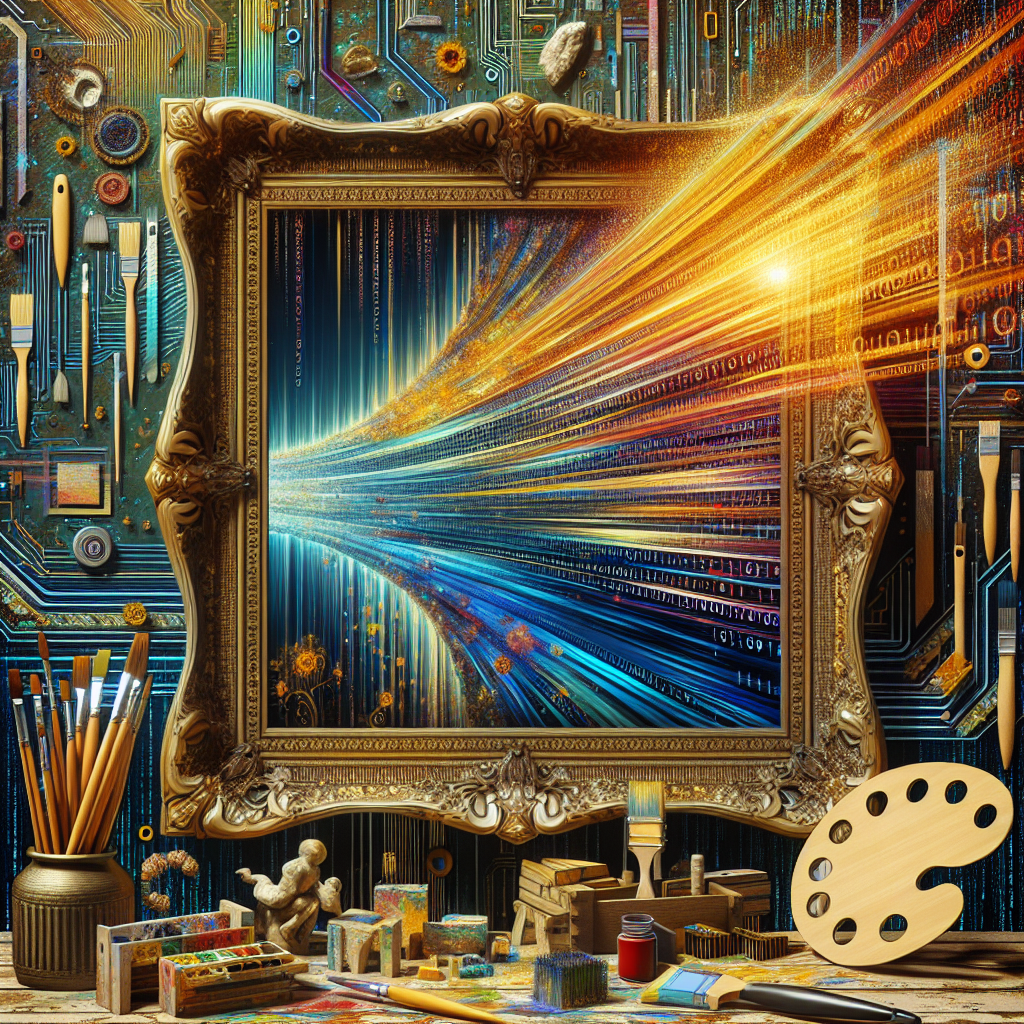
In an era where technology is reshaping every aspect of our lives, the realm of art stands at the forefront of this transformation. "Beyond the Frame" invites us to delve into the fascinating interplay between technology and creativity, revealing how these forces are not just coexisting but synergistically enhancing one another.
The Evolution of Art through Technology
Historically, technology has disrupted artistic practices, from the invention of the camera in the early 19th century to the introduction of digital media in the late 20th century. Each innovation has challenged artists to rethink their techniques and expand their mediums. Today, technologies like artificial intelligence (AI), virtual reality (VR), and augmented reality (AR) are no longer just tools; they are foundational elements that redefine what art can be.
Artificial Intelligence: A New Collaborator
AI has emerged as one of the most compelling forces in the art world, capable of creating intricate pieces that rival human craftsmanship. Algorithms can analyze existing artworks, predict trends, and even generate entirely new compositions. Artists like Mario Klingemann and Refik Anadol have embraced AI, using it to explore themes of creativity, identity, and machine intelligence. This raises questions about authorship: if a machine produces a piece, who is the artist?
Virtual and Augmented Realities
VR and AR offer immersive experiences that transform how we engage with art. Museums and galleries are increasingly utilizing these technologies to create interactive displays that pull viewers into the narrative of the artwork. Through VR, users can step inside a painting, experiencing it from unique perspectives. Meanwhile, AR allows for the overlay of digital elements onto physical artworks, bridging the gap between the real and the imagined. Platforms like Artivive enable artists to enhance their work with digital animations, enriching the viewer’s experience.
Blockchain and the Democratization of Art
Blockchain technology has introduced concepts like non-fungible tokens (NFTs), reshaping the art market and ownership dynamics. NFTs allow artists to tokenize their work, ensuring provenance and enabling direct sales to collectors without intermediaries. This democratization of art not only empowers artists but also creates new economic models and participatory cultures. However, it also brings ethical considerations, such as environmental concerns related to energy consumption in cryptocurrency transactions.
The Impact on Artistic Expression
The fusion of technology and art fosters unprecedented creative expressions. Artists are finding innovative ways to incorporate data, social commentary, and viewer interaction into their work. For instance, data-driven art can communicate complex societal issues, turning statistics into visual narratives that resonate with audiences on a deeper level.
Furthermore, social media platforms have become essential tools for artists to showcase their work, reach wider audiences, and foster community engagement. This democratized access creates a vibrant ecosystem where emerging talents can thrive alongside established names, challenging traditional hierarchies within the art world.
Challenges and Ethical Considerations
While the intersection of technology and art offers exciting possibilities, it also presents challenges. Issues of copyright, authenticity, and the nature of creativity itself are increasingly scrutinized. As AI-generated art gains popularity, questions about intellectual property rights and the commercialization of creativity emerge.
Moreover, as artists engage with technology, there is a risk of alienating traditional audiences. Balancing innovation with accessibility remains a crucial challenge for artists and institutions alike.
Conclusion: A New Artistic Frontier
"Beyond the Frame" encapsulates a transformative moment in the history of art where technology and creativity intersect in profound ways. As artists embrace these tools, they invite audiences to engage with art differently—challenging perceptions, sparking dialogue, and expanding the very definition of what art can be.
In this new artistic frontier, the only limit is imagination. As we continue to explore the potentials of technology in art, we are reminded that creativity knows no boundaries, and each new innovation opens doors to fresh perspectives and experiences. As we look to the future, the convergence of art and technology promises to redefine not just how we create— but also how we perceive and appreciate the world around us.


