

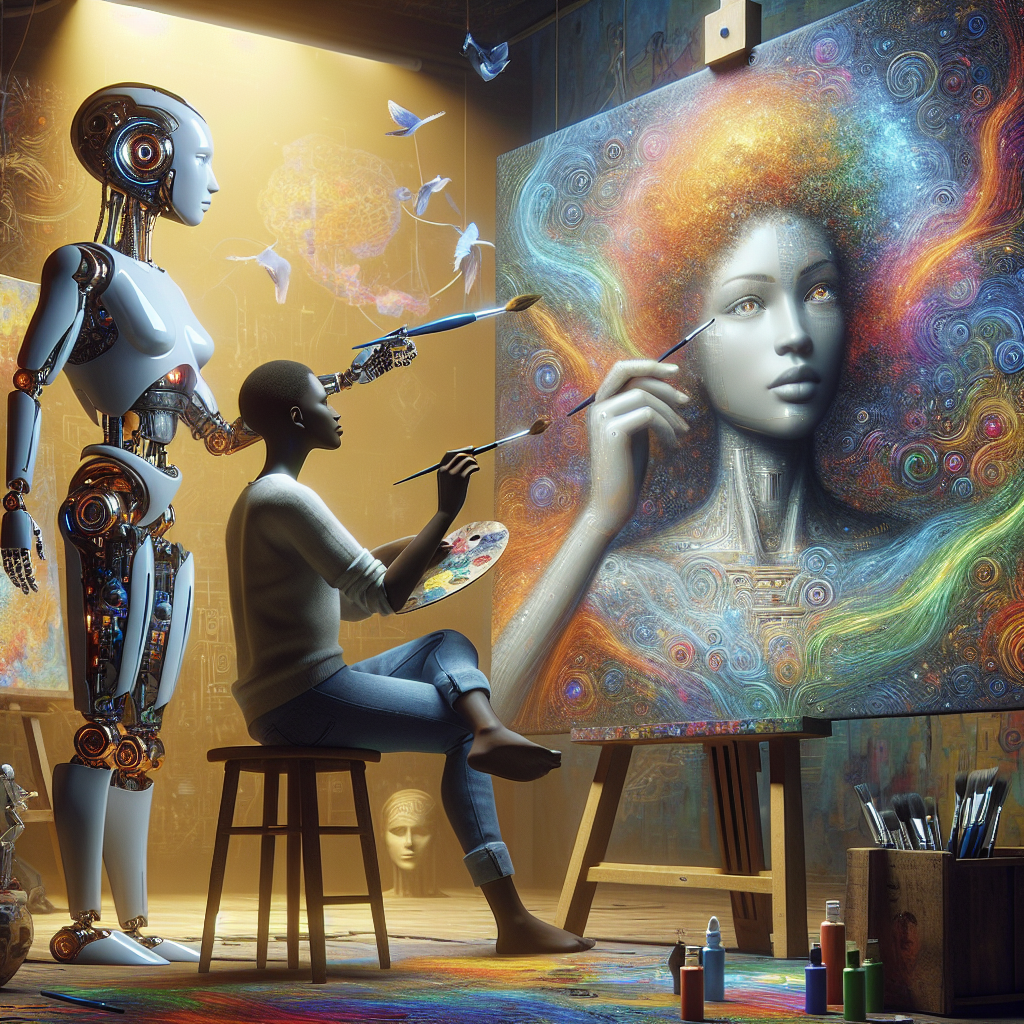
The intersection of artificial intelligence (AI) and art is not just a fleeting trend, but a profound evolution that signals a new era of creative collaboration between humans and machines. As artists and technologists explore this synergy, a remarkable journey unfolds—one that redefines creativity, challenges traditional norms, and opens up exciting avenues for innovation.
The Rise of AI in Artistic Expression
Over the past decade, significant advancements in machine learning, particularly in neural networks, have enabled AI to analyze and generate artworks. Algorithms can now mimic the styles of renowned artists, produce original compositions, and even generate poetry or music. This capability transforms the way art is created, making it more dynamic and accessible.
Generative Adversarial Networks (GANs) are a notable technological advancement, allowing AI to generate images based on combinations of existing styles and themes. This technique has led to the emergence of art that can resonate with emotional depth and complexity, compelling audiences to appreciate AI as a legitimate creative partner.
Collaboration Over Replacement
The notion that AI could replace artists is an oversimplification. Instead, AI is proving to be a tool that enhances human creativity. Artists utilize AI to push their boundaries, experiment with new styles, and explore uncharted territories in their work. This collaboration fosters an environment where human intuition meets machine precision, resulting in unexpected and innovative outcomes.
For instance, renowned contemporary artists like Mario Klingemann and Refik Anadol incorporate AI in their creative processes, creating pieces that reflect both technological ingenuity and human emotion. Through such collaborative efforts, artists can explore new modalities that were previously unattainable.
Democratizing Art Creation
One of the most exciting implications of AI’s integration into the art world is the democratization of art creation. Platforms powered by AI, such as DeepArt or Artbreeder, allow individuals—regardless of technical skill—to create compelling artworks. This accessibility encourages a wider audience to engage with art, fostering a more inclusive environment.
Moreover, AI tools can assist in fine-tuning techniques, providing feedback, and automating repetitive tasks, which can be particularly advantageous for emerging artists looking to hone their crafts without the constraints of traditional methods.
Ethical Considerations
As with any transformative technology, the integration of AI into art raises ethical questions. Issues surrounding authorship, copyright, and the potential loss of traditional artistic skills are increasingly relevant. Who owns an artwork generated by an AI? Can an algorithm be credited as an artist? These questions challenge us to rethink our definitions of creativity and originality.
Some artists advocate for transparency in AI-generated works, emphasizing the importance of acknowledging both human and machine contributions. This perspective nurtures a dialogue about the nuanced relationship between technology and traditional art forms.
The Future of Art and AI
Looking ahead, the potential for AI in the art world appears limitless. As algorithms evolve, their ability to emulate complex human emotions and abstract ideas may enhance, driving the creation of even more profound works. Moreover, interdisciplinary collaborations among artists, scientists, and technologists could usher in innovative forms of expression not yet imagined.
Art institutions and galleries are increasingly showcasing AI-generated art, reflecting a growing acceptance of this new medium. As AI continues to redefine the landscape of creativity, it may also inspire new genres and movements, reminiscent of the shifts seen with Impressionism or Abstract Expressionism.
Conclusion
The advent of AI in the art world represents a new chapter in the ongoing narrative of creative expression. By fostering collaboration between humans and machines, we unlock the potential for unprecedented innovation and accessibility. As this relationship evolves, it promises to engage audiences in fresh and profound ways, inviting us to reconsider what art means in the modern age. Embracing AI as a creative collaborator rather than a competitor may just be the key to a vibrant, enriched future in the arts.


