


I have to admit, when I first saw the latest launch footage from Cape Canaveral, my mind immediately jumped to classic sci-fi movies where little robotic drones zip around fixing massive starships mid-flight. We aren’t quite at the Starship Enterprise level yet, but what SpaceX and Northrop Grumman just pulled off is the closest thing to it.
On July 21st, a Falcon 9 rocket carried something truly revolutionary into the stars: the MRV (Mission Robotic Vehicle). But this isn’t just another satellite to beam internet or monitor the weather. It is essentially an orbital mechanic equipped with giant robotic arms, and I think it’s about to completely change how we manage our orbital infrastructure.
Why Launching a “Space Mechanic” is a Massive Deal
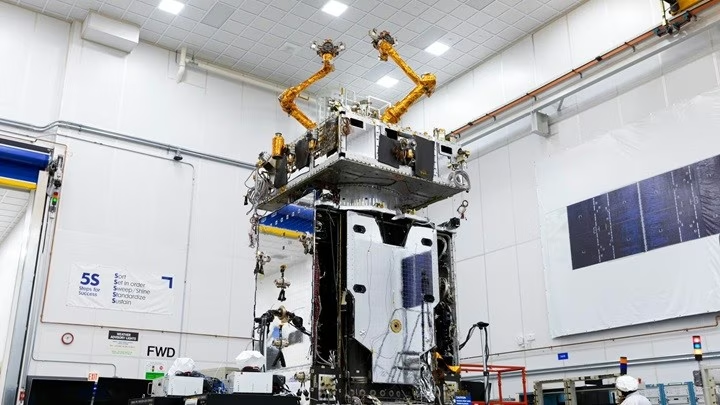
For decades, the lifecycle of a satellite was frustratingly simple: you launch it, you use it until it runs out of fuel or breaks, and then it becomes a multi-million-dollar piece of space junk. I’ve always found this incredibly wasteful.
Northrop Grumman has been working on this problem, and their previous solution was the MEV (Mission Extension Vehicle). The MEV was cool, but it had a major flaw: it had to permanently dock with a single dying satellite to keep it alive. It was a one-to-one relationship.
The new MRV changes the game entirely. Instead of babysitting one satellite, it acts as a delivery truck and mechanic rolled into one.
Here is exactly how this fascinating system works:
The Payload (MEPs): The MRV launched with three Mission Extension Pods (MEPs). Think of these as high-tech jetpacks.The Journey: Right now, the MRV is making its way to the geostationary orbit (GEO), a staggering 35,786 kilometers above Earth.The Robotic Arms: Once it reaches its target, the MRV uses its two 3-meter-long robotic arms (developed in collaboration with DARPA, which is incredibly cool) to grab an MEP and physically attach it to the back of an aging satellite.The Boost: Here is the genius part—the MEP doesn’t transfer fuel. Instead, it uses its own electric propulsion system to take over the satellite’s navigation and altitude control, essentially acting as a new engine.
Giving Old Satellites a New Lease on Life
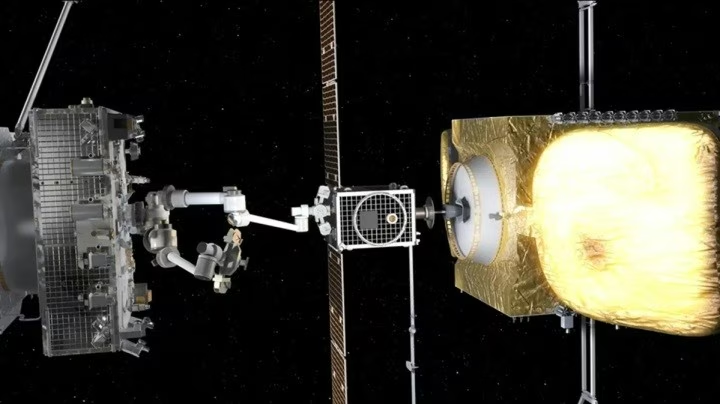
When I dug into the technical specs, I was surprised by how much extra life these pods provide. By strapping an MEP onto a typical 2,000-kilogram GEO satellite, operators can extend its functional life by 6 to 8 years.
The first three customers are already lined up: two pods for Intelsat and one for the Australian operator Optus. But what excites me the most is the MRV’s long-term potential. Northrop Grumman built the MRV to stay active for about 15 years. It can wait in orbit for future rockets to deliver new batches of MEPs, grab them, and install them on new clients.
Furthermore, it isn’t just a pod-installer. The MRV is designed to:
Relocate satellites to different orbits.Inspect damaged hardware up close.Repair and update existing orbital tech.
The Future of Orbital Sustainability
Perhaps the smartest feature of the MRV is that it is future-proofed. It carries a Passive Refueling Module (PRM), which is the first standard refueling interface approved by the U.S. Space Force. This means that in the future, another spacecraft can fly up and refuel the MRV itself, extending its 15-year lifespan even further.
I really believe we are witnessing the birth of a sustainable orbital economy. Instead of littering our orbit with dead tech, we are finally building the infrastructure to maintain, repair, and upgrade our assets in space. It’s a huge leap forward for space exploration and environmental responsibility up in the cosmos.
What do you guys think about this? If we can actively repair and refuel satellites in orbit, do you think this will finally slow down the alarming growth of space debris, or will it just encourage companies to launch even more hardware into an already crowded sky? Let me know your thoughts!


