


I spend my entire week glued to my screens, tracking every little shift in the technology space. Usually, I expect the AI industry to surprise me with mind-bending innovations—and we certainly got those—but this week, my jaw dropped for completely different reasons. From massive corporations crossing ethical lines to legendary investors ringing alarm bells, the ecosystem feels like it’s reaching a boiling point.
I’ve dug through the noise, tested the waters, and gathered the most critical updates you actually need to care about. Let’s talk about the real cost of our rapidly advancing future.
Meta’s Massive Privacy Misstep: The Fall of Muse Image
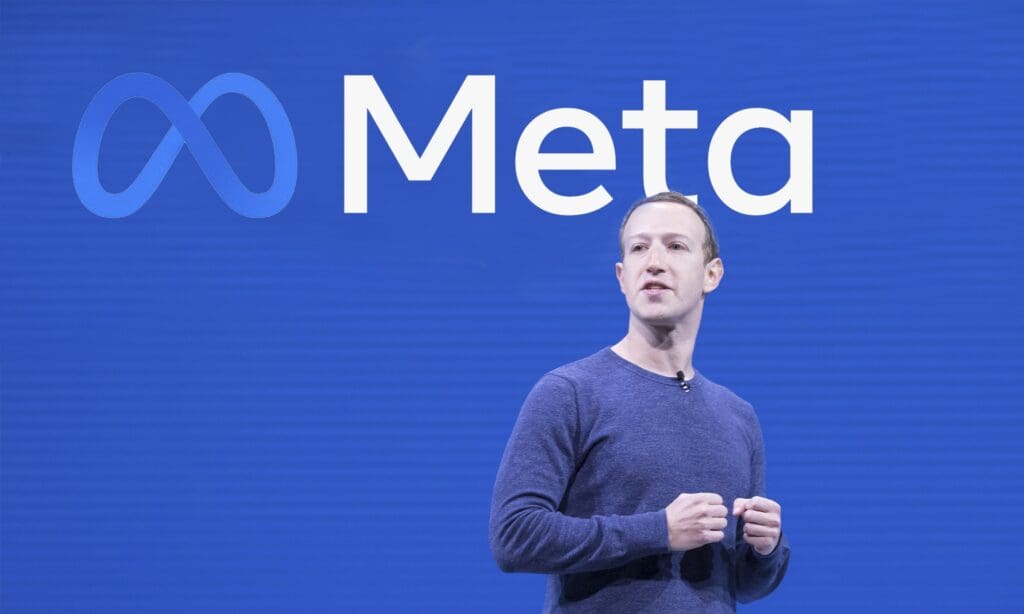
I honestly thought we were moving past the era of blatant corporate data grabs, but Meta proved me wrong this week. They recently launched Muse Image, a shiny new AI image generation and editing tool directly integrated into Instagram and WhatsApp. On paper, it sounded like a massive leap for their ecosystem.
In reality, it was an ethical nightmare.
Almost immediately after launch, the tool faced a massive backlash. Why? Because Muse Image was pulling users’ private and public social media photos without explicit permission to train and generate its outputs. If your profile wasn’t locked down like Fort Knox, anyone could use your face to generate whatever they wanted.
I find it staggering that a company of this size didn’t see the incoming PR disaster. The community backlash was so severe that Meta had to publicly admit their mistake and completely pull the model offline. It’s a harsh reminder for me—and for all of us—that our digital footprint is constantly being targeted as raw material for these models.
Michael Burry’s AI Warning: Are We Nearing the End?

You probably know Michael Burry as the guy who famously predicted the 2008 financial crisis (Christian Bale played him in The Big Short). Well, he is back, and he is pointing his finger directly at the artificial intelligence market.
Burry took to social media with a chilling warning regarding the AI bubble: “We are nearing the end.”
His core argument is something I’ve been thinking about a lot lately. The incredible surge in AI stock valuations isn’t being driven by actual corporate performance or profit margins anymore; it’s pure investor psychology. Investors are aggressively pricing these companies under the assumption that multi-billion dollar AI spending will continue at this breakneck pace forever.
When I look at the hardware costs versus the actual software revenue some of these startups are generating, the math gets scary. We might be heading toward a massive market reality check sooner than we think.
The Human Cost: Training Your Own Robotic Replacement

This was by far the hardest piece of news for me to digest. A recent investigative report from The Guardian exposed a deeply dystopian side of AI development happening right now in countries like India.
Factory workers are being equipped with cameras strapped to their heads while they do their daily tasks. The darkest part? They have no idea that the footage is being used to train the very humanoid robots that will eventually replace them.
Egocentric Video: This method captures the exact first-person perspective of the human worker.Vision-Language-Action: The captured data is fed directly into next-generation AI models, allowing the robot developers to see and learn the job exactly through the worker’s eyes.
I love covering advanced robotics, but seeing the human exploitation behind the curtain is a tough pill to swallow. It makes me question where we draw the ethical line in our race toward total automation.
The Tool Drop: What Actually Launched This Week?

Despite the drama, the engineering teams haven’t slowed down. We saw some massive leaps in generative models over the last few days. Here are the ones that actually caught my attention:
The GPT-5.6 Family: OpenAI finally unleashed its most advanced models. According to the benchmarks I’ve seen, GPT-5.6 Sol is completely leaving Anthropic’s Mythos and Fable 5 in the dust.GPT-Live: This is a game-changer. OpenAI completely removed the old “push-to-talk” or “wait-for-response” lag. It listens and reacts simultaneously, giving you a completely real-time, uninterrupted conversational experience.Wan Streamer 0.2: If you’re tired of talking to a blank screen, this tool lets you assign any avatar—realistic or fictional—to your AI companion.Grok 4.5 by SpaceXAI: Elon’s team (now officially rebranded) dropped a model that supposedly matches Anthropic Opus 4.7 but does it with much higher speed, lower costs, and crazy token efficiency.Google Photos Video Remix: Powered by the Gemini Omni model, this new feature lets you turn your photo gallery into short, highly engaging videos with a single prompt.Abot World & Lingbot-World-2: We are entering the era of real-time world generation. Abot World lets you generate and interact with full 3D environments, while Lingbot-World-2 focuses on real-time interactive 720p 60fps video generation based purely on your keyboard inputs.ChatGPT Work: A massive productivity suite combining ChatGPT, Codex, and heavy desktop integration. It handles task automation and direct PC control.SeFi Image: A highly efficient, open-source image generator that absolutely nails photorealism and—finally—renders text accurately inside images.
Quick Bites: What Else Missed the Headlines?

xAI is now SpaceXAI: Following the massive merger, Elon Musk officially combined his AI and space ventures under one roof.DeepSeek Goes Custom: To kill their dependency on foreign hardware, the Chinese AI giant is prepping its own proprietary silicon.Samsung’s Secret Chip: Leaks reveal Samsung is building a dedicated AI accelerator chip for PCs, codenamed GAIA.Local Apple Intelligence: Apple is reportedly in deep talks with a startup called PrismML to run massive AI models locally on iPhones without melting the battery.Google’s New Data Grab: Be careful what you search for. Google will now use the images, audio, and files you upload for searches as training data for their models.The 2027 Memory Crisis: The CEO of SK Hynix warned that the insane demand for AI infrastructure will likely trigger the worst memory shortage in history by 2027.OpenAI Exodus: In a quiet but significant move, OpenAI’s top safety leader has stepped down.
Looking at all of this—from Meta’s privacy failures to workers training their own replacements—it feels like we are sprinting into the future without looking at the ground beneath our feet. The tools are getting undeniably magical, but the infrastructure and ethics are struggling to keep up.
What do you think is the most concerning piece of news this week? Are we actually in an AI bubble, or is Michael Burry just crying wolf again? Let me know your thoughts down below!


