


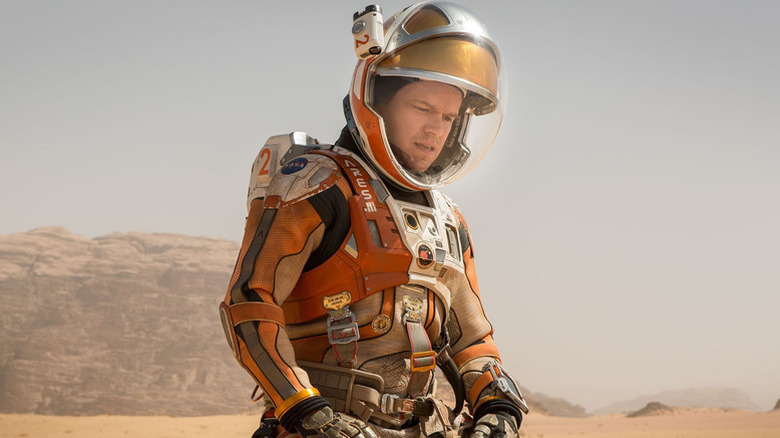
“The Martian” and “Project: Hail Mary” author Andy Weir was a computer programmer before he found success as a Hollywood-inspiring writer. Given his STEM background, it’s not surprising his books prioritize technical detail, but in a way where the possibilities of science inspire you. For Weir, more sci-fi books could take the path of optimism.
In 2018, Weir discussed the trend of science-fiction dystopia novels with Writer’s Digest, and argued that this kind of storytelling just doesn’t ring true for him.
“The whole young adult market is all these bleak, dismal futures, and I don’t get why that happened because, to me, it’s clear that the future is almost always better than the past. I mean, at least in the long term. […] We have our dips and valleys — I’d rather live in 1923 than 1943, especially if I were European — but I would rather live in 2023 than 1923.”
Teens fighting against a dystopian government was the default YA story for the 2000s and 2010s. Suzanne Collins’ “The Hunger Games” was a smash hit and other writers tried to ride in its wake. Brad Bird’s 2015 sci-fi movie misfire “Tomorrowland” took on this trend directly, arguing we as a people have forgotten how to dream of a better tomorrow and prefer to fantasize about the apocalypse, like a civilization-wide death drive.
Weir is a noted fan of classic “Star Trek” shows, the preeminent utopian American science fiction. “Star Trek” suggests humans will one day be able to free themselves from shackles like greed and bigotry. When Weir is used to watching a future like that, little wonder he can’t find his way into the dystopian sci-fi trend.
Andy Weir thinks science fiction could use less dystopia
20th Century Studios
Weir’s argument that the future is always better to live in than the past hinges heavily on how technology advances over time. From the 19th century to the end of the 20th, the average life expectancy doubled. That trend was helped along by medical advances, like the discovery of an antibiotics that could treat once often-fatal diseases; it wouldn’t be exaggerating to call penicillin one of the most important inventions in human history.
For a sci-fi example, let’s look at James S. A. Corey’s space opera book series “The Expanse,” one of the many sci-fi books that Weir has recommended. Per “The Expanse,” the 24th century is neither a utopia or a dystopia. Even if this future falls short of “Star Trek,” there’s still conveniences that would be life-changing today. In the first book, “Leviathan Wakes,” the hero James Holden is exposed to lethal radiation. In 2011 (when the book was published) that would be a death sentence. Yet all Holden has to do to survive is take regular meds; cancer has gone from the lethal disease to a treatable chronic condition like, say, diabetes.
Weir’s own work allows for his concession that in the short-term, things don’t always get better. Take “Project: Hail Mary,” set in 2032, where humanity faces a serious threat of extinction due to the sun fading. But the world’s best and brightest manage to identify the problem and solve it. Weir’s comments about YA dystopia seem to speak to a cultural consensus; the trend has faded from its 2010s peak, suggesting people got sick of reading about oppressive futures. While there is a new “Hunger Games” film, “Sunrise on the Reaping” out this year, that feels more like lingering affection for that specific franchise.
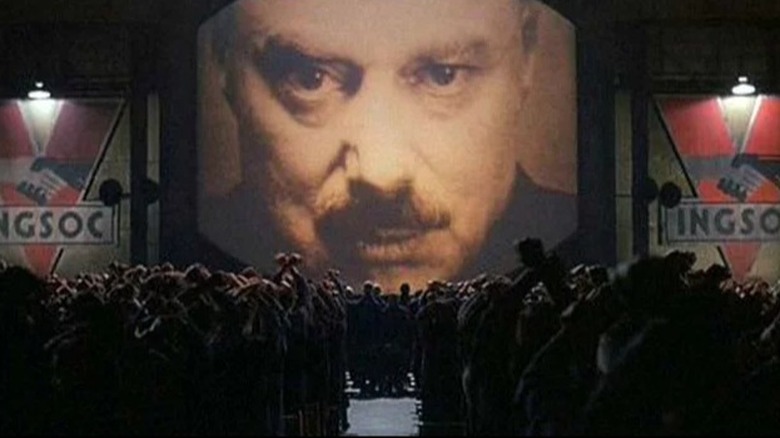
Dystopian sci-fi is often a reflection of the present
20th Century Fox
Noted Trekkie though he may be, Andy Weir isn’t one of those “Star Trek” fans who loves the franchise for its political messaging about how the key to a better future is diversity and cooperation.
“I dislike social commentary. Like … I really hate it,” Weir said in a 2017 interview with Futurism. “When I’m reading a book, I just want to be entertained, not preached at by the author.” Frankly, I think this attitude has given Weir a bit of a blind spot. A key reason dystopia is a common genre for sci-fi is because writers use fictional futures to explore the issues of their own time. Take Ray Bradbury’s “Fahrenheit 451,” set in a future where books are banned. Published in 1954, this coincided with Red Scare-influenced calls for book burning in the United States.
Circling back to “The Hunger Games,” that series resonated because it commented on a rising trend of the 2000s: reality television. It did what good satire does by pushing reality a step further, suggesting in the future we will watch children kill each other on live TV for entertainment. In the “Hunger Games” books, media and celebrity shape political narrative, just like in reality.
I’m currently watching the sci-fi TV series “Babylon 5,” which features a series-long arc about the rise of a xenophobic, authoritarian government on Earth. “Babylon 5” was made in the mid-1990s, the so-called “end of history” when American democracy had won the ideological battle. “Babylon 5” functioned as a warning for the complacent, in the vein of Sinclair Lewis’ “It Can’t Happen Here,” by suggesting fascism could rise again in the future.
Science fiction can help us imagine a better future, but allegory can also help us understand our present.


