“Special things often need explanation. Because they’re special, they’re unusual, and so not familiar. Whether through writing or imagery or trying, they need that little bit of explanation.”
I recently reconnected with the guys at Stoffa after a few years of being out of touch. I did so, partly, because my recent article on A Presse reminded me how Stoffa really is my preferred version of that kind of brand.
Both develop unusual, distinctive products with custom fabrics. The fits and silhouettes aren’t always for me, but I find the designer-led approach consistently interesting.
The difference with Stoffa is that in each collection there will always be one or two things that fit my style – and my particular wardrobe – in a way that doesn’t happen with A Presse or other fashion brands. They remain close enough to classic menswear ideas.
Then the wonderful thing is how utterly unique those pieces are – whether it’s the fabric, the design or the silhouette. Stoffa is a designer brand in that sense – at least today – and in that way different to most we cover.
It helps that Stoffa always starts with fabric, rather than the ideas of shape and silhouette that designers usually begin with. Custom fabric has always been part of Stoffa’s approach – it’s what the name means.
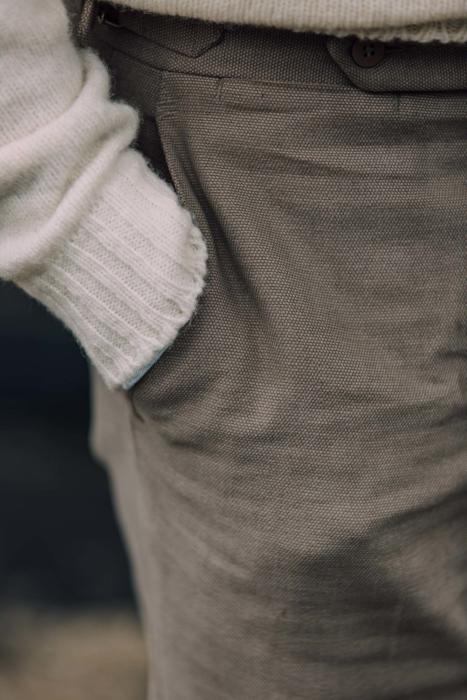
Going back nine years to when we first covered Stoffa, the first piece I made was a pair of trousers in their basketweave cotton (above). It felt completely different to what I was seeing from tailors or MTM brands – matte, washed and naturally dyed, it was elegant but relaxed.
Since then the range of fabrics has expanded considerably, and you can see them all listed on the fabric page here. There are also deep dives into them here. Stoffa is expensive, but when you read about the work that goes into that fabric (and you personally value it) it’s hard not to see the value.

Unique fabrics means unusual fabrics, which means they won’t necessarily be for you. An example is the fig silk blouson, which I tried recently (above). As Nick and Agyesh put it: “That was our most adventurous piece of the season, the extreme version of the silhouette.”
It’s made with a silk crepe designed for summer shirts, which means it’s light and flyaway. It’s also made in a shirt workshop, which means finer needle stitching and finishing. It’s beautiful, but certainly not for everyone.
The mistake I consistently made with Stoffa over the years, I think, was looking at the brand as a whole and assuming I would either wear all of it or none of it. It was either a brand for me, or it wasn’t.
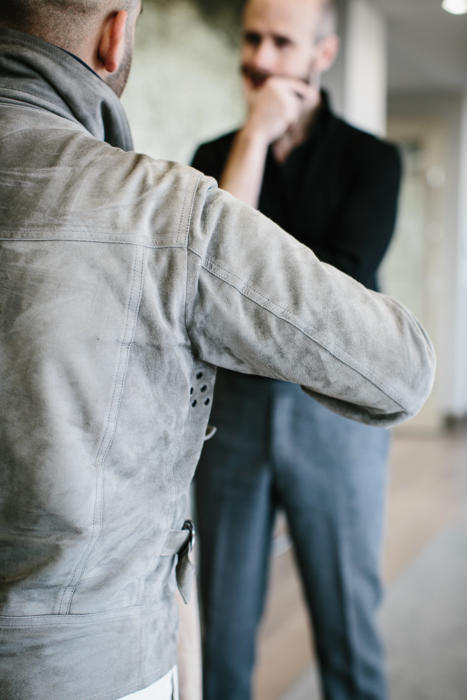
I loved those basket-weave trousers, and eventually had three pairs made in different colours. But I was surprised that the suede flight jacket didn’t work for me. I should have seen the difference – one was more classic, the other more unusual, too cropped and wide for the style I like in a jacket.
This is the case with most designers I find – even the biggest fans wouldn’t buy everything. Instead, they appreciate the range and freshness of new ideas, and enjoy picking out which ones they buy into.
Perhaps the biggest difference between Stoffa and other fashion brands is that Stoffa was built around made to order, and most clothes still work on that basis.
This means that if you like the silhouette of a jacket but it’s a little short on you, you can add length. If you need one size in a shirt’s body but another in the collar, that can be done. You shouldn’t try and change the intended design (another mistake I’ve made in the past) but you can make the design work a lot better for your shape than at other brands.
I might cover this more in depth in a follow-up article, as I know readers will want to know which current Stoffa pieces we recommend, and which we’d have made to measure or not.

Stoffa have always followed their own path, yet they feel more relevant today than ever. The world has turned towards their muted colours and drapey silhouettes, and places more value on their natural processes and sustainability focus.
It makes complete sense to me now that a reader I know would want to get married in a Stoffa suit – in a pale pistachio wool, with wide-legged trousers and a cream knitted top. It feels very much a contemporary version of elegance.
My problem has always been that I hugely admired the people and the brand, but didn’t quite know how to wear it in my style. Seeing Stoffa as a designer for me to pick and choose from – rather than a haberdasher to fill all my needs – has made a big difference.
Quote used at the top: from Nick (Ragosta) at Stoffa, during our conversation. It summed up for me why I sometimes struggled with their designs, but also the value PS can perhaps provide in talking about them.