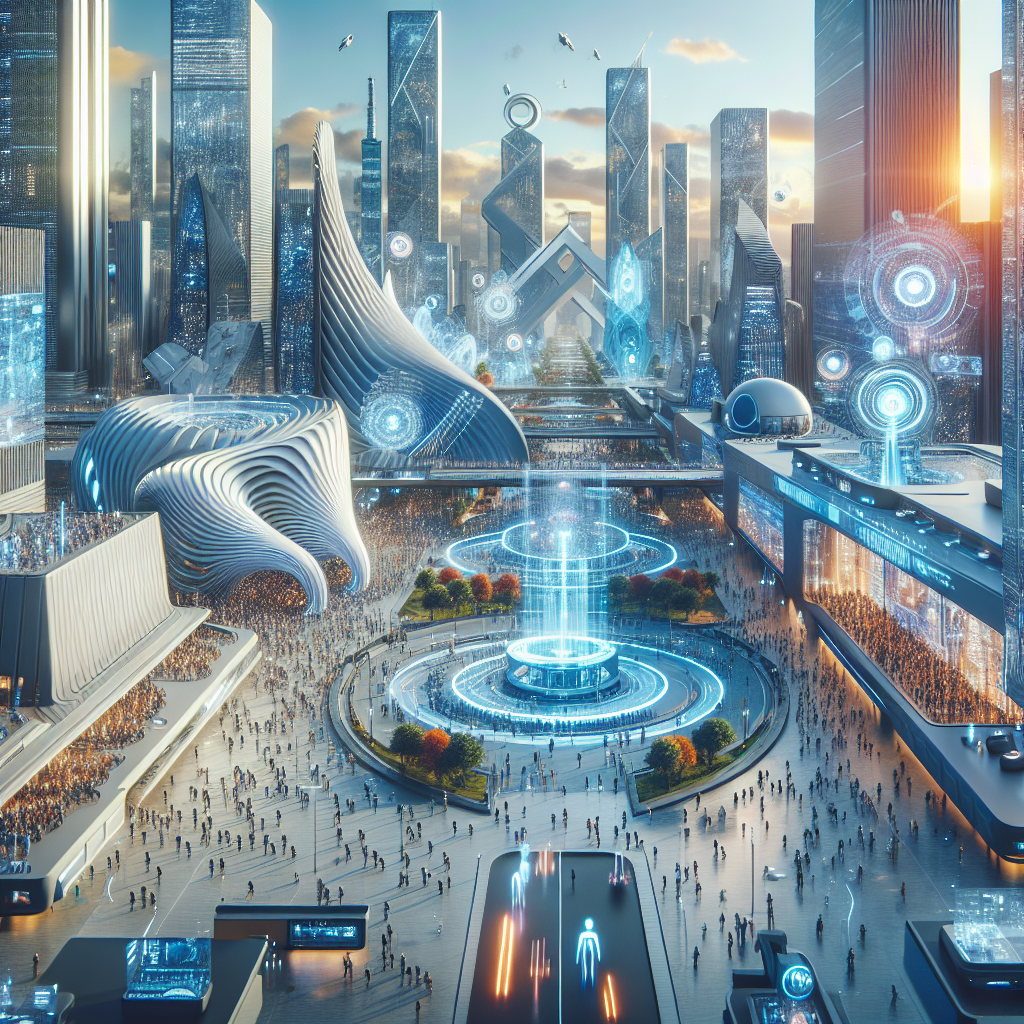
First impressions matter!
Immersive technologies have come a long way in a relatively short time. What began as visually impressive simulations gradually found their way into training rooms, design studios, and operational environments. For many organizations, these early immersive experiences were a revelation. They made complex systems easier to understand and allowed people to practice skills in safe, controlled settings.
But as adoption grew, expectations evolved.
The era of static simulations
Static simulations played an important role in proving the value of immersive technology. They offered fixed scenarios, predefined paths, and consistent outcomes for every user. This made them predictable, repeatable, and easier to deploy at scale.
For demonstrations and basic training, that was enough. People could see a process, walk through a scenario, and gain familiarity before stepping into the real world. Static simulations helped teams visualize complexity and reduce initial uncertainty.
Why dynamic visualizations are the future
Real environments are rarely predictable. People do not learn in the same way or at the same pace. Some hesitate, some rush, some repeat the same mistake for different reasons. Confidence grows unevenly, and stress affects performance in ways no predefined script can anticipate.
Static simulations treat all users the same. They assume that following a single path is enough to prepare everyone equally. In practice, this creates gaps between what people experience in a simulation and what they face in real situations.
As organizations pushed immersive technology deeper into training and operations, they needed systems that could respond to these human realities.
The rise of self-adapting immersive environments
Self-adapting immersive environments mark a clear shift from fixed experiences to responsive systems. Instead of running through the same sequence every time, these environments observe how users behave and adjust accordingly.
Difficulty levels change based on performance. Guidance appears when hesitation is detected. Scenarios evolve to challenge users where they need it most. The experience no longer simply plays out. It listens, responds, and adapts.
This shift transforms immersion from something people experience into something that actively supports them.
The role of AI in making immersion adaptive
Artificial Intelligence is the key enabler behind this evolution. Not in the form of visible features or complex interfaces, but as an invisible layer that interprets behavior and context in real time.
AI can recognize patterns in how users interact with an environment. It can detect errors, measure progress, and adjust pacing without interrupting the experience. Over time, it allows immersive environments to improve continuously rather than remaining static.
When implemented thoughtfully, AI does not add complexity. It reduces friction by making experiences feel more intuitive and supportive.
How Adaptive Immersion changes training
In training environments, the impact of adaptation is immediate. New learners can move at their own pace without feeling overwhelmed. Experienced users can be challenged more deeply without wasting time on basics.
This leads to faster onboarding, better skill retention, and higher confidence before real-world exposure. Training becomes less about completing a module and more about reaching readiness.
Most importantly, adaptive immersion helps organizations reduce risk. People are better prepared before they step into high-stakes situations.
Beyond training: Adaptive Immersion in operations
The same principles apply beyond learning. In operational contexts, adaptive immersion enables AR-driven workflows that respond to real-time conditions.
Instructions can change based on context. Warnings can appear before errors occur. Guidance can be tailored to the situation rather than delivered generically. This makes immersive technology a practical tool for execution, not just understanding.
As immersive systems integrate with data, sensors, and workflows, they begin to function as intelligent companions within real operations.
Designing for adaptation
Building self-adapting immersive environments requires a shift in design thinking. The focus moves away from adding features and toward understanding human behavior. Intelligence must remain subtle, supportive, and purposeful.
Success is measured by how well it helps people perform. Clarity, usability, and outcome-driven design become more important than visual complexity.
What this shift signals for the future
The move from static simulations to self-adapting environments signals a broader change in how immersive technology is perceived. It is no longer about creating isolated experiences. It is about building systems that learn, respond, and evolve alongside the people who use them.
As this shift continues, immersive environments will become a natural part of how organizations train, operate, and make decisions.
The TILTLABS perspective
At TILTLABS, this shift from static simulations to self-adapting immersive environments is central to how we approach immersive design. We focus on building experiences that respond to people, not just processes. By combining immersive technologies with intelligence, behavioral insight, and thoughtful experience design, we create environments that evolve with users over time. Our work spans training, operations, and interactive experiences where adaptability, clarity, and real-world usefulness matter more than visual novelty. For us, immersive technology succeeds only when it becomes a natural extension of how people learn, decide, and perform.
The post From Static Simulations to Self-Adapting Immersive Environments appeared first on TILTLABS.