

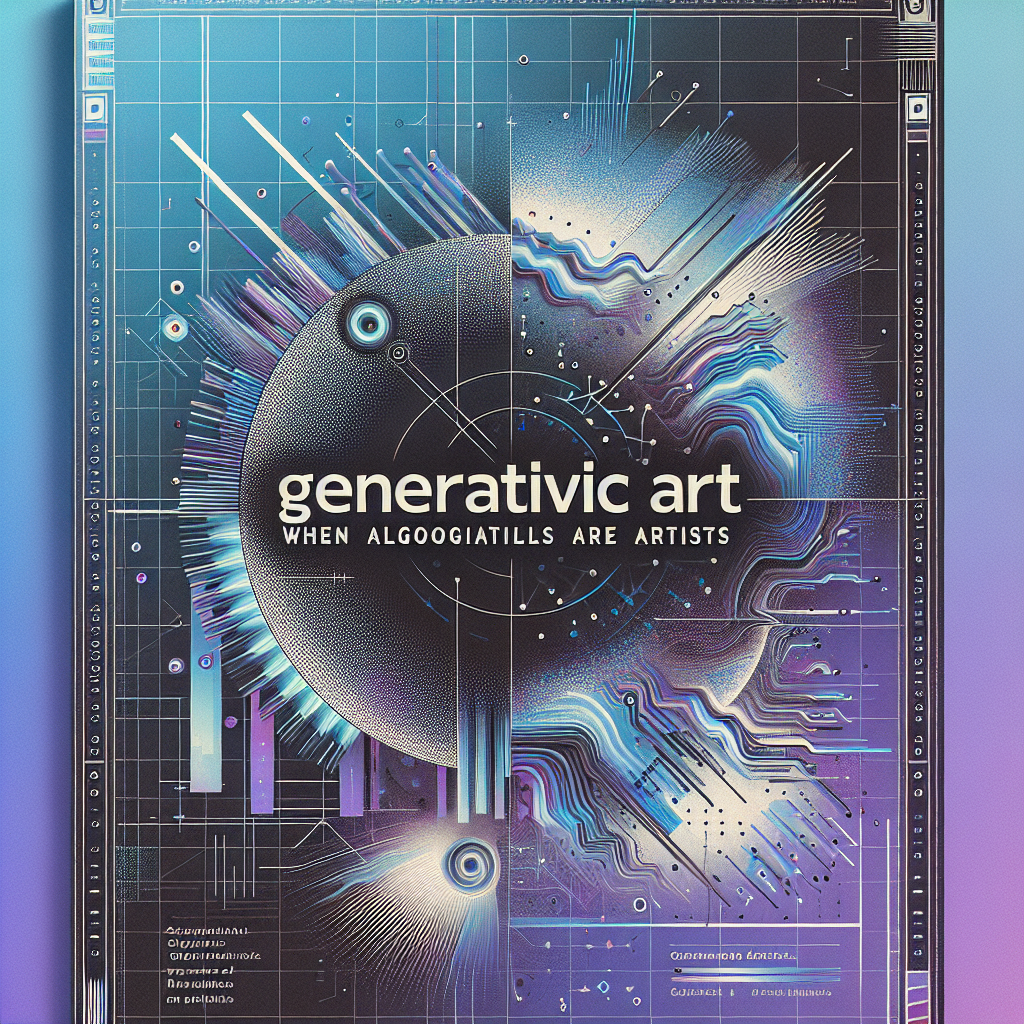
In the ever-evolving landscape of art, a groundbreaking form has emerged that blurs the lines between creativity and computation: generative art. This innovative discipline harnesses algorithms and computational processes to create unique artworks, challenging our traditional notions of authorship, creativity, and aesthetic value.
What is Generative Art?
Generative art refers to pieces that are created using autonomous systems, typically algorithms or computer programs, which can generate visuals, sounds, or other forms of art. Unlike traditional art, where an artist crafts a piece from start to finish, generative art involves setting rules and parameters within which the artwork is created. This blend of artistic intent and computational logic allows for an endless variety of outcomes.
The Process
-
Algorithm Design: At the heart of generative art is the algorithm itself—a set of instructions or rules designed by the artist. These can be as simple as mathematical formulas or as complex as artificial intelligence models.
-
Randomness and Variability: Many generative artists embrace randomness, allowing chance to influence the final output. This can lead to unexpected and sometimes serendipitous results, giving each piece a unique quality.
-
Interactivity: Some generative artworks allow viewer interaction, meaning the audience can influence the final outcome in real time, further enhancing the dynamic nature of the work.
Historical Context
Generative art isn’t a novel concept. Its roots can be traced back to the early 20th century, with pioneers like Vladimir B. Propp and Frieder Nake, who first began exploring the intersection of art and computer science. However, it gained significant traction in the 1960s and 70s with artists like Harold Cohen, who developed AARON, a computer program capable of creating art autonomously.
As technology evolved, so did generative art. The advent of personal computers in the 1980s made this form more accessible. With the rise of the internet in the 1990s, artists began to share their work globally, leading to collaborative projects and the formation of online communities dedicated to generative art.
Contemporary Generative Art
Today, generative art is a thriving field, enriched by advancements in technology. Artists now utilize powerful programming languages like Processing and p5.js, as well as machine learning and data visualization techniques. Notable contemporary generative artists include:
- Casey Reas: Co-creator of Processing, Reas’s work often explores the interplay between software and physical spaces.
- Memo Akten: A pioneer in merging machine learning with visual art, Akten creates pieces that evolve through viewer interaction.
- Rafael Lozano-Hemmer: Known for his large-scale interactive installations, Lozano-Hemmer’s work incorporates real-time data to create immersive experiences.
The Role of the Artist
The rise of generative art raises intriguing questions about the role of the artist. In traditional art forms, the artist is the sole creator, but in generative art, much of the creative process is entrusted to algorithms. This shift invites discussions about authorship and the nature of creativity.
Can an algorithm be considered an artist? While some may argue that it merely executes the artist’s instructions, others contend that the algorithm’s ability to create unexpected results endows it with a degree of creativity. Moreover, as AI technology advances, the lines between human and machine creativity become increasingly blurred.
The Future of Generative Art
As we look ahead, the future of generative art promises exciting possibilities. Increasingly sophisticated algorithms, coupled with advancements in virtual and augmented reality, will likely push the boundaries of this art form. Artists are experimenting with immersive environments, allowing viewers to become part of the artwork in ways previously unimaginable.
Furthermore, the integration of generative art in commercial applications—such as advertising, design, and entertainment—continues to grow. Brands are recognizing the potential of generative aesthetics to engage audiences and create unique experiences, further propelling the genre into mainstream culture.
Conclusion
Generative art represents a fascinating intersection of technology and creativity, challenging our perceptions of the artist’s role and the definition of art itself. As algorithms continue to evolve, they are not just tools; they are collaborators in the creative process. In this brave new world, the question is not just about whether machines can create art, but rather, what new dimensions of art and creativity we can explore together. As we embrace the possibilities of generative art, we find ourselves at the forefront of a revolution that invites us to rethink the very nature of what it means to be an artist.


