

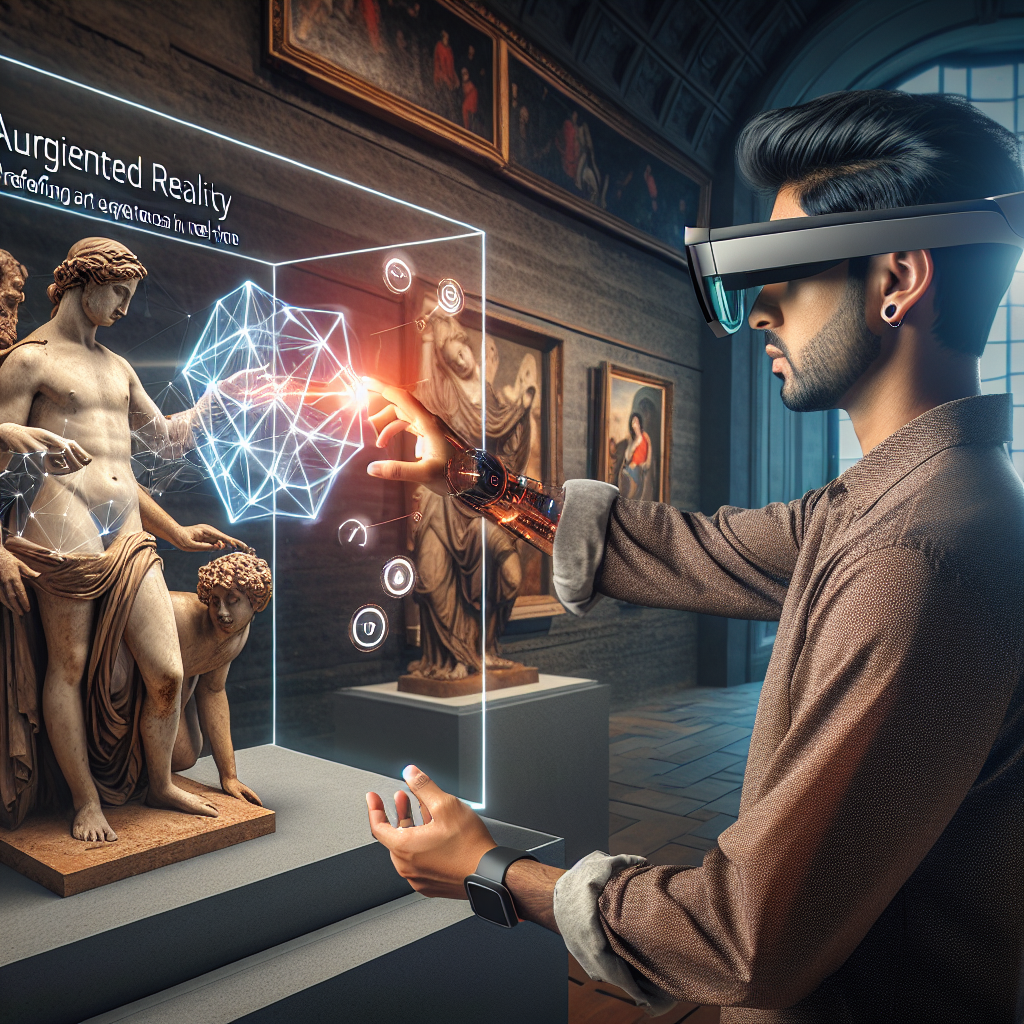
In recent years, augmented reality (AR) has emerged as a transformative technology, reshaping various industries, including education, gaming, and retail. One of the most fascinating areas where AR is making a significant impact is in the realm of art. By merging the physical world with digital overlays, AR offers a new lens through which we can experience and interact with art, redefining how we perceive creativity and expression.
The Essence of Augmented Reality in Art
Augmented reality enhances the real world by layering digital information on top of it, allowing users to engage with both environments simultaneously. In the art world, this means that a simple painting on a wall can spring to life through an AR application, revealing hidden layers, animations, and additional narratives that enhance the viewer’s experience. Artists are beginning to explore this technology as a medium in its own right, pushing the boundaries of traditional art forms.
Creating Immersive Experiences
AR offers artists unparalleled opportunities to craft immersive experiences. For example, installations can incorporate sound, video, and digital interactions that are triggered by an observer’s movement or engagement. Museums and galleries are at the forefront of adopting AR technology to create visitor-friendly experiences.
Case Study: The Van Gogh Museum
The Van Gogh Museum in Amsterdam utilizes AR to enrich its exhibits. Visitors can use their smartphones to view additional content alongside Van Gogh’s masterpieces. For instance, they can see sketches, animations of the painting process, or even hear Van Gogh’s letters read aloud, giving a multi-faceted understanding of the artist and his work. This approach not only educates the audience but creates a more personal connection to the artwork.
Enhancing Accessibility
One of the most significant advantages of AR in the art world is its potential to make art more accessible. Traditional exhibitions often require physical presence, which can be limiting for individuals who are unable to visit due to geographical or physical constraints. With AR applications, art can be virtually transported to anyone’s device, allowing for remote visits that would have been impossible otherwise.
Online Art Exhibitions
Artists and institutions have increasingly turned to AR to recreate exhibitions online. Digital AR galleries allow viewers from across the globe to experience shows as if they were physically present. This democratization of art not only broadens audience reach but also cultivates a new appreciation for diverse art forms and cultural expressions.
Interactive Storytelling
AR fosters a unique form of storytelling where viewers are not just passive observers but active participants. As users interact with the artwork, they can uncover stories and insights that deepen their understanding and engagement.
Example: "The Night Fisherman" By Notable Artists
"The Night Fisherman," an AR experience by a collective of artists, guides users through the narrative of a fisherman’s life. As users point their devices at specific parts of the installation, different layers of the story come to life—animations of the fishing process, environmental sounds, and interviews with local fishermen. This interactive engagement transforms a standard art piece into a rich, narrative journey.
Future Prospects
As technology continues to evolve, the future of AR in art looks promising. Innovations such as improved AR glasses and advancements in 5G connectivity will break down barriers, allowing for more seamless and interactive experiences. Artists are likely to experiment even further, blending virtual and physical art forms to create hybrid works that challenge the definition of art itself.
Community Engagement and Co-Creation
Future AR art experiences may also encourage community engagement and co-creation. Imagine a public space where anyone can contribute to a digital mural viewed through AR, fostering a sense of community ownership and interaction with local art.
Conclusion
Augmented reality is not merely a technological trend; it is a powerful tool that is reshaping the way we experience art. By merging the digital and physical worlds, AR offers dynamic, immersive, and accessible ways to engage with creativity and expression. As artists and institutions continue to embrace this technology, the future of art experiences promises to be more vibrant, interactive, and inclusive than ever before. Whether you’re a seasoned art lover or a casual observer, AR opens the door to a new dimension of appreciation, inviting everyone to explore the endless possibilities of artistic innovation.


