

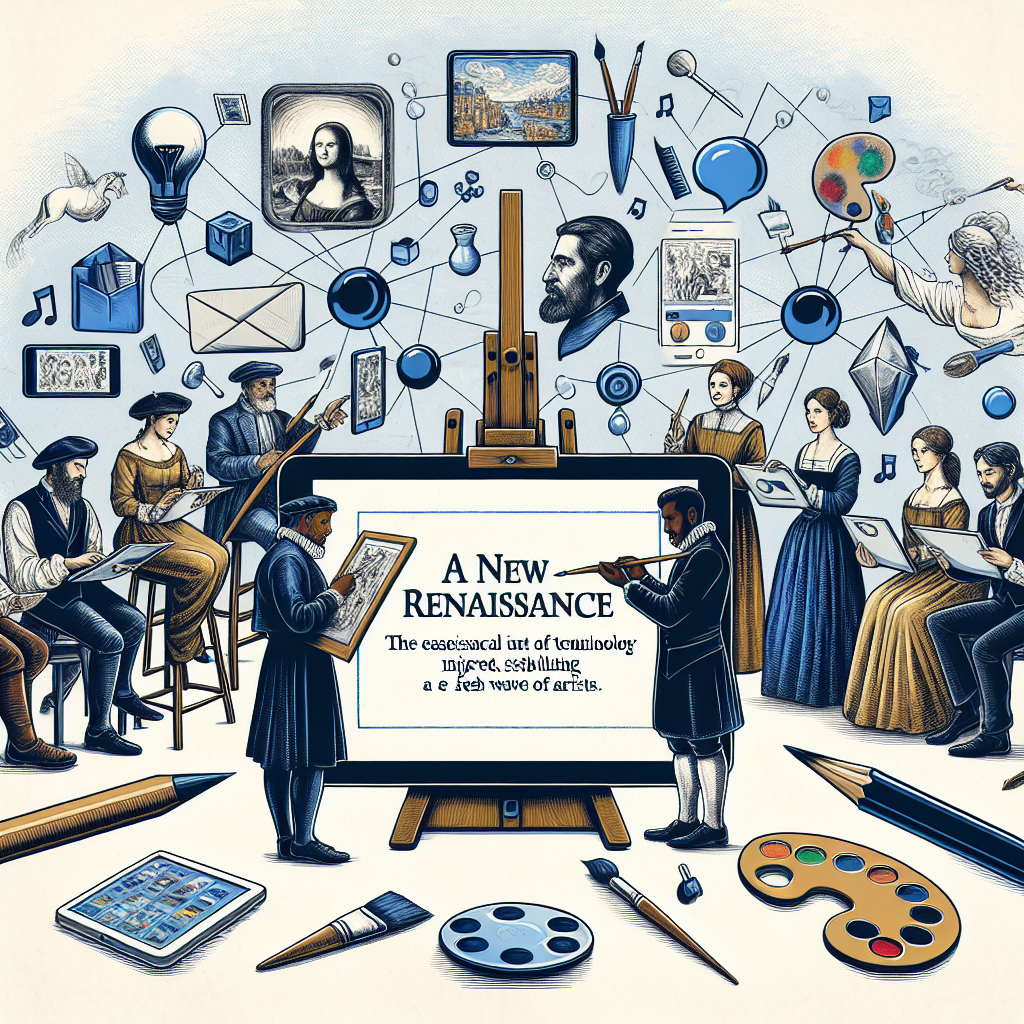
The New Renaissance: How Tech is Inspiring a Fresh Wave of Artists
In the annals of history, the term "Renaissance" refers to a vibrant period of rebirth in art, culture, and intellectual thought that blossomed in Europe during the 14th to 17th centuries. Today, we find ourselves on the cusp of what many are calling a "New Renaissance." This reawakening is driven largely by the evolution of technology, which is reshaping the landscape of artistic expression and inspiring a new generation of creators.
The Intersection of Art and Technology
The advent of digital tools has transformed traditional artistic mediums. Software like Adobe Creative Suite, Procreate, and Blender allows artists to explore new realms of creativity while maintaining the principles of classical techniques. With an array of tools at their fingertips, artists can now merge painting, sculpture, animation, and design into multidimensional experiences.
For instance, the rise of 3D printing technology has enabled sculptors to turn digital creations into tangible artworks, while artists can use augmented reality (AR) and virtual reality (VR) to create immersive experiences for their audiences. This multi-faceted approach is reminiscent of the Renaissance period, when artists like Leonardo da Vinci and Michelangelo pushed the boundaries of art using the technology of their time.
Democratizing Art Creation
Digital platforms have democratized access to art creation. Social media platforms like Instagram, TikTok, and Behance serve as galleries where artists can showcase their work to global audiences without the barriers that once limited exposure. Artists who might have remained unknown in their local communities can now garner international followings overnight.
Moreover, crowdfunding platforms like Patreon and Kickstarter allow creators to fund their projects directly through their audience’s support. As a consequence, the relationship between artist and patron has transformed, echoing the Renaissance’s patronage system but with an added layer of direct engagement and community.
Innovative Artistic Movements
The technological revolution has birthed unique artistic movements that redefine creativity. Digital art and generative art—created by algorithms—are gaining immense popularity. Artists such as Refik Anadol and Dmitri Cherniak are pioneering this space, producing visually captivating works that blend technology with human emotion.
Furthermore, the recent rise of NFTs (Non-Fungible Tokens) has created new avenues for artists to monetize their work while ensuring authenticity and ownership in a digital landscape. This movement is resonating strongly with a younger demographic that seeks to redefine the very notion of art and ownership in the digital age.
Collaboration Across Disciplines
One of the most exciting aspects of this New Renaissance is the collaboration across various disciplines. Artists, coders, designers, and engineers are now working together to create dynamic installations and performances that blur the lines between art, science, and technology. Collaborative projects like teamLab in Japan exemplify this synergy, where art, technology, and the environment converge to create immersive, interactive experiences.
These collaborations encourage a thriving culture of innovation, akin to the Renaissance workshops where artists collaborated with scientists and philosophers. The fusion of ideas from different fields sparks creativity and fosters the exploration of new artistic expressions.
Challenges and Criticisms
While the New Renaissance is an exciting development, it is not without challenges. The commercialization of art through social media and NFTs has raised questions about authenticity and value. Some critics argue that algorithm-driven platforms prioritize the popular over the profound, leaving nuanced or unconventional artists struggling to gain visibility.
Moreover, the environmental impact of digital tech—especially around cryptocurrency and NFTs—has prompted important conversations about sustainability in the art world. As creators navigate these challenges, they must balance innovation with ethical considerations.
Conclusion
The New Renaissance, powered by technology, invites us to rethink the nature of creativity, expression, and community. Artists today are not only creators but also entrepreneurs, social advocates, and collaborators. In this dynamic landscape, the interplay between art and technology offers endless possibilities, reminding us that art, much like the human experience, is in a state of constant evolution.
As we embrace this new era, it’s essential to support diverse voices and innovative approaches in art, ensuring that this renaissance is inclusive and reflective of the world we live in. Just as the Renaissance reshaped cultural identity in the past, this fresh wave of creativity stands to redefine our collective future, weaving technology into the very fabric of artistic expression.


