

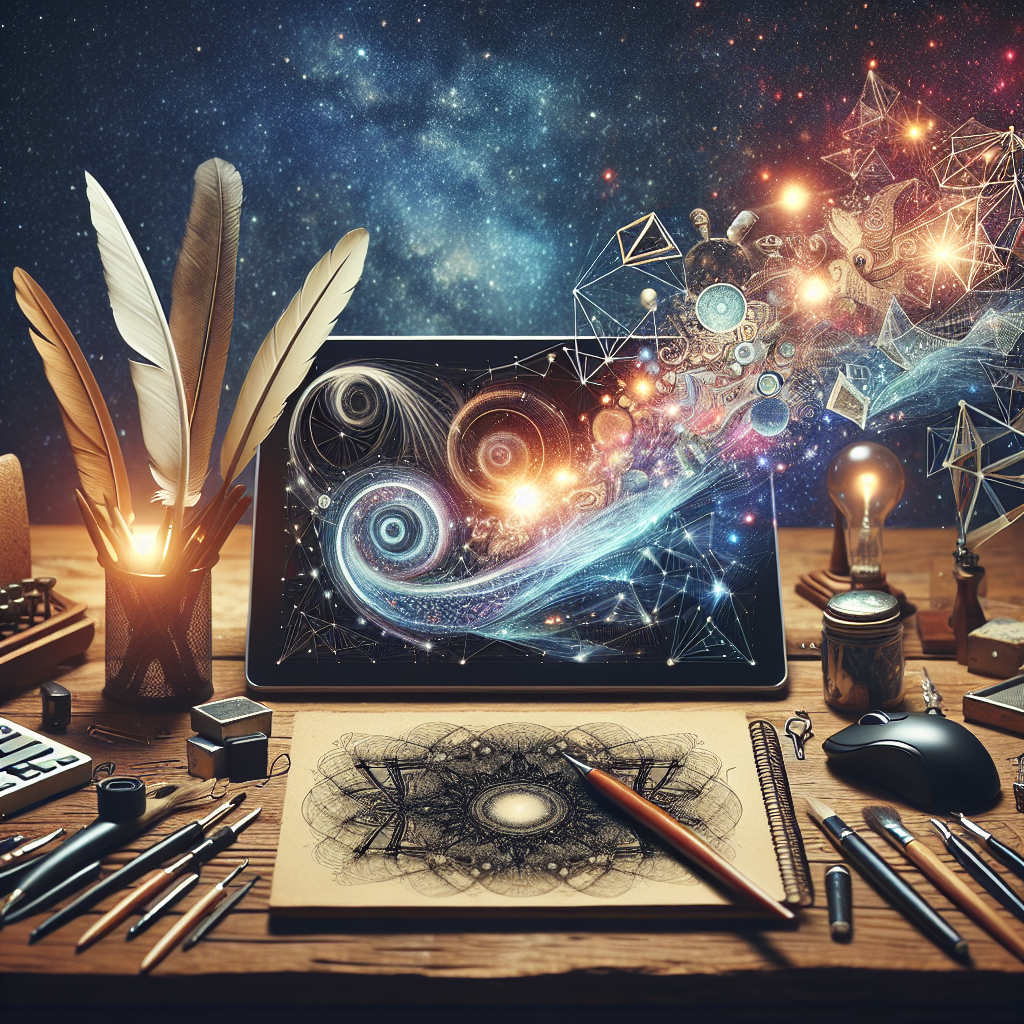
Generative art is an innovative movement that harnesses the power of algorithms to create aesthetically pleasing visuals. By blending art and technology, creators push the boundaries of traditional art forms, generating pieces that are not only beautiful but also dynamic and complex. This guide will explore the world of generative art and the tools available for artists and enthusiasts alike.
What is Generative Art?
Generative art refers to art created through autonomous systems. Artists write algorithms that generate artwork based on predefined rules or parameters, resulting in creations that are often unexpected and unique. This process can incorporate elements of randomness, making each output distinctive, even from the same source code.
Key Characteristics:
- Algorithmic Foundation: The creation process is rooted in code and mathematical principles.
- Interactivity: Many generative artworks evolve based on viewer interactions or environmental changes.
- Emphasis on Process: The journey of making the art is often as significant as the final piece itself.
Benefits of Generative Art
- Infinite Possibilities: One algorithm can produce countless variations, offering an expansive canvas for creativity.
- Precision and Complexity: Algorithms can execute intricate designs that might be challenging to achieve manually.
- Cross-Disciplinary: Integrates concepts from mathematics, computer science, and traditional art forms.
Popular Generative Art Tools
-
Processing
- Overview: Created by Ben Fry and Casey Reas, Processing is a flexible software sketchbook and a language for learning how to code within the context of the visual arts.
- Key Features: Simple syntax, a robust community, and extensive libraries make it accessible for beginners.
- Use Cases: Animation, data visualization, and interactive installations.
-
p5.js
- Overview: A JavaScript library that makes coding accessible for artists, designers, educators, and beginners.
- Key Features: An open-source library that extends the capabilities of Processing to the web.
- Use Cases: Web-based interactive art, educational tools, and creative coding.
-
TouchDesigner
- Overview: A node-based visual programming language for real-time interactive multimedia content.
- Key Features: Perfect for live visuals and installations, offering extensive capabilities for real-time media manipulation.
- Use Cases: VJing, interactive visuals for performances, and immersive installations.
-
Max/MSP
- Overview: A visual programming language for music and multimedia that allows users to build their software for sound and visuals.
- Key Features: Strong sound processing capabilities combined with visual elements, enabling holistic art experiences.
- Use Cases: Sound installations, interactive art, and audiovisual performances.
-
ShaderToy
- Overview: A community and tool that allows users to create and share shader-based generative art.
- Key Features: Real-time rendering and community sharing enable collaboration and innovation.
- Use Cases: Visual art, games, and interactive media.
Exploring Algorithms and Techniques
To create stunning generative art, artists often use a variety of algorithms and techniques:
- Fractals: Patterns that repeat at every scale, creating intricate and beautiful designs.
- Cellular Automata: Mathematical models for complex systems featuring simple rules that yield sophisticated results.
- Particle Systems: Simulations of a large number of entities, resulting in natural phenomena like smoke, fire, or flocking behavior.
- Machine Learning: AI algorithms that can generate artworks based on learned styles or patterns, expanding the creative toolkit for artists.
Conclusion
Generative art is a captivating blend of technology and creativity, offering a fresh lens through which to view the world. With tools like Processing, p5.js, and TouchDesigner, artists can explore new horizons, producing work that is both mesmerizing and thought-provoking. As technology continues to evolve, the potential for innovative artistic expression will only grow, making it an exciting domain for anyone interested in the intersection of art and algorithms.
Get Started Today!
Whether you’re an aspiring artist or a seasoned creator, the world of generative art awaits. Dive into these tools, experiment with algorithms, and let your imagination run wild. In this digital age, the canvas is limitless—embrace the beauty of creation with algorithms today!


