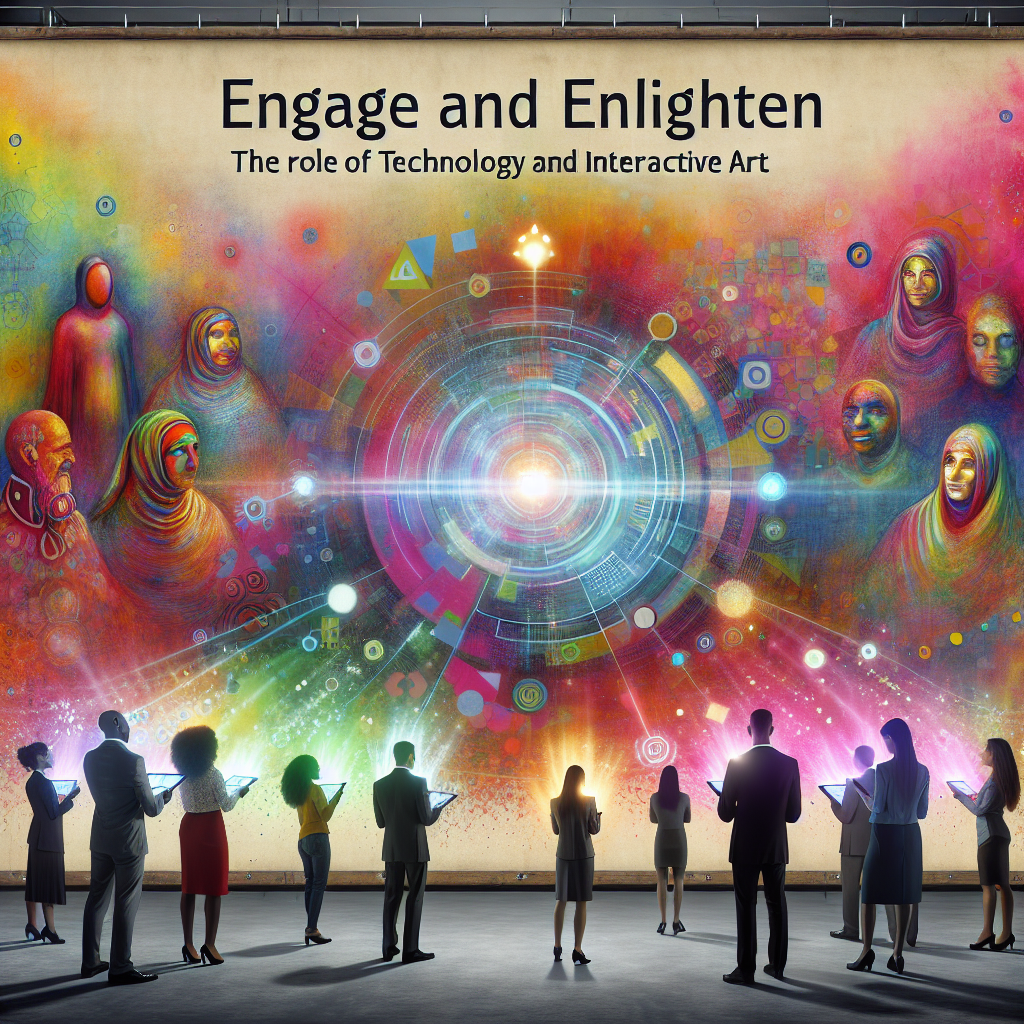
Engage and Enlighten: The Role of Technology in Interactive Art
In a world increasingly influenced by technology, the realm of art has not remained untouched. Interactive art, a genre that invites audience participation, has begun to harness the capabilities of digital tools, creating immersive experiences that engage and enlighten viewers in unprecedented ways. This article explores how technology shapes interactive art, enhancing its capacity to engage participants and provoke thoughtful reflection.
The Evolution of Interactive Art
Interactive art has its roots in the early 20th century, but the advent of digital technology has transformed its landscape dramatically. Artists like Nam June Paik and later figures in the 1960s and 70s laid the groundwork with video art and early computer-generated works. However, it wasn’t until the rise of the internet, augmented reality (AR), virtual reality (VR), and artificial intelligence (AI) that interactive art grew into a dynamic and participatory medium.
Today, interactive art installations can range from responsive sculptures that change shape based on viewers’ movements to digital projections that react to touch. These advancements have redefined the artist-audience relationship, turning passive observers into active participants.
Engaging the Audience
The core of interactive art lies in its ability to engage the audience on multiple levels. Traditional art forms often create a barrier between artwork and observer; in contrast, interactive art invites individuals to step closer, touch, and influence the work. This engagement fosters a sense of agency and connection that traditional forms often lack.
For example, installations using sensors and real-time data can create experiences that change based on audience movements or reactions. Projects like Rafael Lozano-Hemmer’s “33 Questions per Minute” utilize interactive algorithms that respond to viewer input, enabling a dialogue between the artwork and the audience. This responsive design encourages participants not just to view but to question, explore, and create.
Moreover, interactive art can reach broader audiences. Utilizing social media elements, such works can explore themes of identity, culture, and community, allowing individuals from diverse backgrounds to connect and share their experiences. The global accessibility of technology means that installations can resonate with a multitude of viewers, enriching the dialogue surrounding the artwork.
Enlightening Through Exploration
Beyond engagement, interactive art serves an enlightening purpose, prompting audiences to ponder deep themes and societal issues. Artists are increasingly using technology to raise awareness about critical topics such as climate change, social justice, and mental health. By transforming complex ideas into immersive experiences, interactive art makes them more approachable and thought-provoking.
Projects like Olafur Eliasson’s “The Weather Project” at the Tate Modern illustrate this potential. Utilizing light and installation, Eliasson created a sun-like orb that invited reflection on issues such as climate change and human relationship with nature. Viewers interacting with the piece not only engage with the art but also reflect on their roles within larger societal contexts.
The use of VR and AR in interactive art has also opened up new avenues for enlightenment. These technologies allow for the creation of simulated environments where participants can experience scenarios that challenge their perceptions, such as witnessing the effects of environmental degradation or navigating socio-political landscapes. This empathetic engagement can lead to a deeper understanding and compassion for issues affecting humanity.
Challenges and Considerations
While the integration of technology in interactive art presents exciting opportunities, it also poses challenges. Access to technology can be a limiting factor; not all audiences have the means or familiarity to engage with high-tech installations. Furthermore, artists must consider the sustainability of these technologies, ensuring that their work doesn’t become obsolete too quickly.
Additionally, the fast-paced development of technology can sometimes overshadow the artistic intent behind the work. It’s crucial for artists to strike a balance between technical innovation and artistic expression, ensuring that the mediums serve to enhance the message rather than distract from it.
Conclusion
Interactive art exemplifies how technology can foster engagement and enlightenment, transforming the way we experience and relate to art. By breaking down barriers between artist and audience, interactive art invites participation, allowing viewers to immerse themselves in thought-provoking experiences that challenge perceptions and provoke reflection. As technology continues to evolve, so too will the possibilities for interactive art, paving the way for future generations to explore the profound connections between art, technology, and the human experience.