

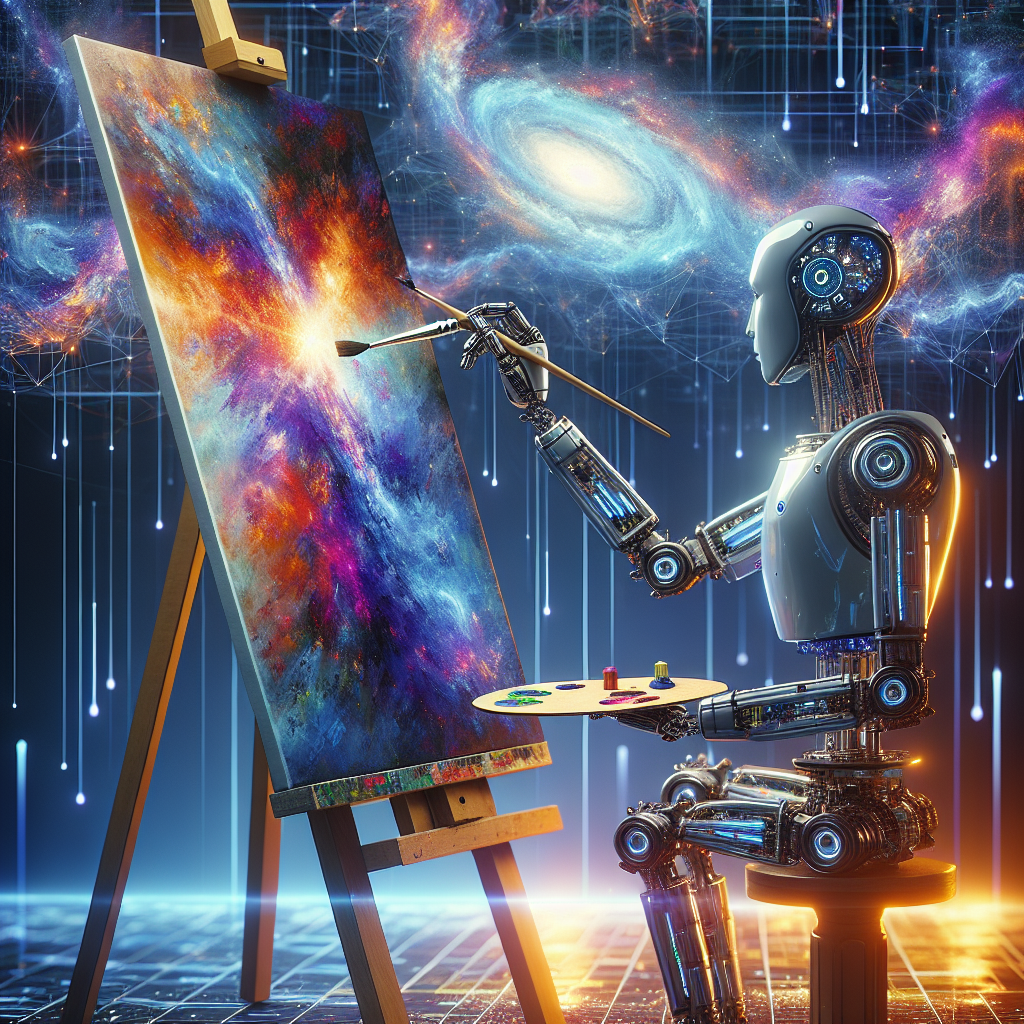
In the ever-evolving landscape of technology, the emergence of artificial intelligence (AI) has stirred discussions about creativity, artistry, and the very essence of what it means to be an artist. The advent of AI artists—algorithms capable of generating art—has prompted questions that challenge our traditional notions of creativity and human expression. As we explore this fascinating intersection of art and technology, we must consider whether machines can indeed create masterpieces.
Understanding AI in Art Creation
AI art revolves around complex algorithms that learn from vast datasets of existing artworks to generate new pieces. These algorithms can mimic styles, produce original compositions, and even blend various artistic influences seamlessly. Programs like OpenAI’s DALL-E and DeepArt have demonstrated that machines can be trained to create images based on specific styles, themes, or even textual prompts.
Machine Learning and Neural Networks
Central to the capabilities of AI artists is machine learning, particularly neural networks. These systems learn to recognize patterns, generate images, and adapt responses based on input. For instance, Generative Adversarial Networks (GANs) pit two networks against each other: one generates images while the other evaluates them. This process pushes the generator to improve continuously, resulting in high-quality artwork that can often be indistinguishable from human-created art.
The Evolving Definition of Art
The emergence of AI-generated art forces us to revisit our definition of art itself. Traditionally viewed as a product of human emotion, experience, and intention, art’s relationship with technology raises the question: can a machine, devoid of feelings or experiences, create art? Proponents argue that the value of art lies in its ability to evoke a reaction rather than the artist’s identity or intention. If an AI-generated work elicits a profound emotional response or intellectual engagement, can it not be considered art?
The Role of the Artist
While AI can generate art, the role of the human artist in this collaboration remains pivotal. Many AI artists require human input in the form of prompts, guidance, and curation. The interplay between human creativity and machine-generated outputs can lead to innovative artworks that might not be possible through traditional methods. Artists now have the opportunity to act more as curators or directors of their AI collaborators, shaping the final product while embracing new tools and techniques.
Ethical Considerations and Implications
The rise of AI artists presents a complex array of ethical issues. Questions around authorship and copyright often arise: if an AI generates a work, who owns the copyright? Is it the programmer, the user who prompted the AI, or the machine itself? Moreover, the potential for deepfakes and misleading representations raises concerns about authenticity in art.
The Art Market and Perception
In recent years, AI-generated artworks have made their way into galleries and auction houses, challenging conventional perceptions of value. The sale of "Portrait of Edmond de Belamy," an AI-generated painting, for $432,500 at Christie’s in 2018 marks a significant milestone in this arena. As collectors increasingly embrace AI art, the boundaries of the art market continue to shift.
Conclusion: A New Frontier
The rise of AI artists opens a new frontier in the realm of creativity. While machines can produce stunning visual works, the essence of art—its ability to connect, provoke, and inspire—remains fundamentally human. As AI continues to evolve, it is up to us to navigate the implications of its integration into the artistic realm. Rather than replace human artists, AI has the potential to enhance and expand the definition of creativity, fostering a future where humans and machines collaborate to create innovative masterpieces.
In this brave new world, the question may not be whether machines can create masterpieces, but rather how we, as a society, choose to define and appreciate the art they produce.


