Home Blog Page 992

RAY Soars 13% with Raydium’s LaunchLab Debut on Solana

0
RAY Soars 13% with Raydium’s LaunchLab Debut on Solana


Raydium, a leading decentralized exchange (DEX) and automated market maker (AMM) on the Solana blockchain, officially launched LaunchLab on April 16, 2025. It has positively impacted $RAY’s price and the Solana ecosystem, driving increased activity and innovation. Explore Raydium’s LaunchLab now and participate in cutting-edge projects and opportunities.

What is LaunchLab?

LaunchLab is a token launchpad platform designed to compete with Pump.fun, a popular Solana-based memecoin launch platform. It aims to simplify token creation and distribution for developers, creators, and the broader Solana ecosystem. 

What is LaunchLab?

Source: LaunchLab

Raydium’s LaunchLab introduces a suite of innovative features designed to streamline and secure token launches on Solana. Creators can leverage customizable bonding curves to set token sale amounts, enabling dynamic pricing that adapts to market demand. The platform’s no-code interface offers flexibility with two modes: “JustSendIt” for quick launches with default settings and “LaunchLab” for tailored options like token supply, vesting, and distribution.

Free token launches make the platform accessible, allowing anyone to create a token, with liquidity automatically migrating to Raydium’s AMM pool upon reaching targets like 85 $SOL in JustSendIt mode.

To ensure trust, liquidity locking or burning post-migration minimizes rug pull risks. LaunchLab’s fee structure includes a 1% transaction fee, split as 50% to a community pool, 25% for $RAY buybacks, and 25% for infrastructure and operations. Additionally, token creators benefit from a post-migration fee share, claiming 10% of LP fees from AMM pool trades, incentivizing long-term project engagement.

Competitive Dynamics: LaunchLab’s Response to Pump.fun

The launch of LaunchLab is a strategic response to competitive pressures, particularly from Pump.fun, which had been a significant revenue driver for Raydium. Pump.fun announced its own AMM (PumpSwap) in March 2025, reducing its reliance on Raydium’s liquidity pools. Previously, Pump.fun tokens reaching a $69,000 market cap would migrate to Raydium for trading, contributing ~41% of Raydium’s swap fee revenue.

According to DefiLlama, PumpSwap’s debut, with over $31.7 billion in trading volume in just 10 days, increased the fierce competition with Raydium.

Moreover, with Pump.fun’s shift to PumpSwap, Raydium faced a potential loss of its revenue. LaunchLab aims to capture token launch activity and maintain Raydium’s dominance as Solana’s top DEX.

Therefore, LaunchLab aims to recapture token launch activity and reinforce Raydium’s dominance in Solana’s ecosystem. Beyond competition, it reflects Raydium’s vision to transition from a liquidity provider to a broader “ecosystem infrastructure builder,” supporting diverse, long-term projects with many key differences from Pump.fun, including:

Flexibility: LaunchLab offers advanced customization (bonding curves, vesting, fee-sharing) compared to Pump.fun’s aesthetic-only changes.Integration: LaunchLab connects directly to Raydium’s AMM, while Pump.fun now uses PumpSwap.Focus: LaunchLab supports all token types, not just memecoins, and aims for long-term project sustainability, addressing Pump.fun’s criticism for enabling pump-and-dump schemes.

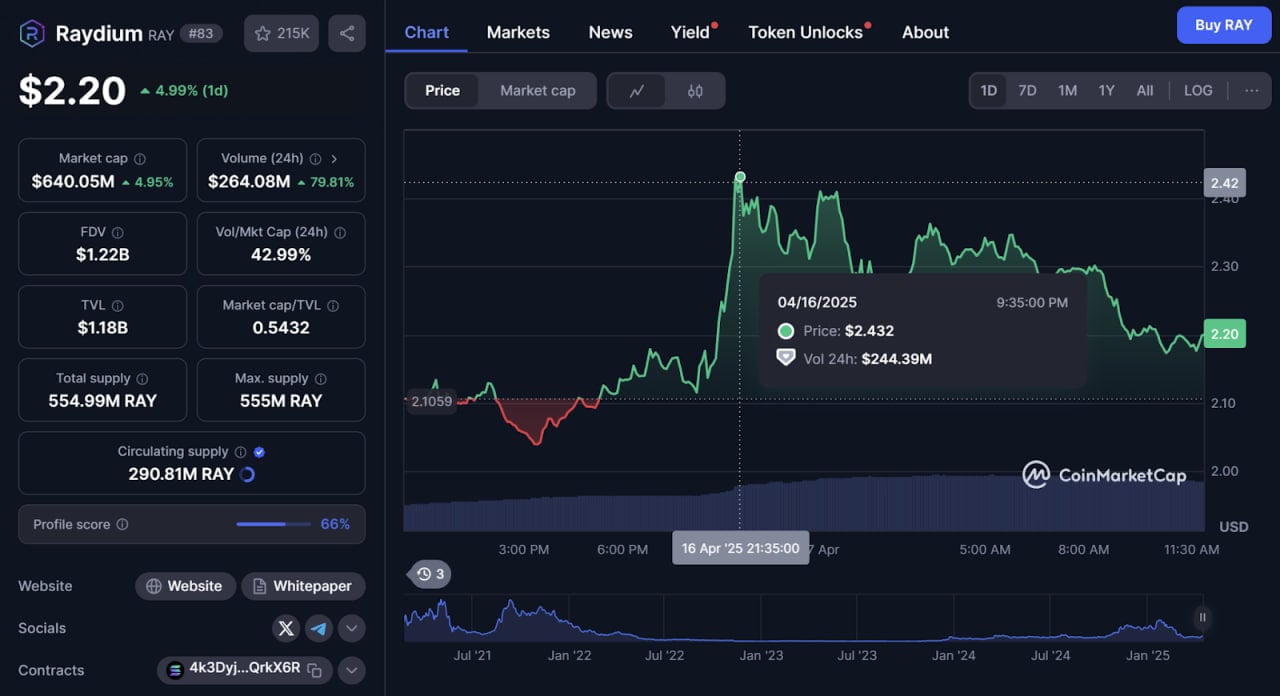
LaunchLab’s Immediate Effect: $RAY and $SOL Price Surge

LaunchLab's Immediate Effect: $RAY and $SOL Price SurgeLaunchLab's Immediate Effect: $RAY and $SOL Price Surge

Source: CoinMarketCap

The LaunchLab announcement catalyzed a 13% spike in RAY, just over 1 hour after the news, reaching ~$2.43 with a market cap exceeding $680 million. Trading volume surged 80% to $264.08 million in 24 hours. The launch and 25% fee allocation for $RAY buybacks might support this bullish sentiment. 

Learn more: Solana Price Prediction

For SOL, the direct impact is also immediate, with the price increasing 4.16% to $131 today. This spike is because of the belief in LaunchLab’s potential to drive ecosystem activity through new token launches and increased transactions, which could bolster $SOL’s value over time by enhancing Solana’s network usage.

While the initial market reaction has been positive, LaunchLab demonstrates significant potential beyond immediate price movements. Its focus on broader token types, long-term sustainability features, and direct integration with Raydium’s ecosystem positions it as a platform whose long-term impact on both Raydium and the wider Solana network is highly anticipated.


Source link

Sam Thompson’s pal Pete Wicks throws shade at Louis Tomlinson and Zara McDermott’s ‘car park’ date

    0
    Sam Thompson’s pal Pete Wicks throws shade at Louis Tomlinson and Zara McDermott’s ‘car park’ date


    Zara McDermott and Louis Tomlinson were pictured together for the first time earlier this week, in pictures that will surely have come as a blow to her ex Sam Thompson.

    The snaps came after Zara appeared to make things Instagram official with her new boyfriend Louis Tomlinson last week. She shared a picture of them at brunch, with the singer’s tattoos clearly visible in the snap.

    Now, they’ve been seen in LA walking hand-in-hand. And, while Sam hasn’t broken his silence, his bestie Pete Wicks has, and he’s thrown a considerable amount of shade at the new lovebirds…

    Zara split from I’m A Celebrity winner Sam Thompson last December (Credit: SplashNews)

    Zara McDermott shares image of Louis Tomlinson

    The couple first sparked romance rumours back in March. Fans spotted the duo enjoying a romantic meal at The Suffolk in Aldeburgh. Photos from a fellow diner swiftly made the rounds online.

    While neither publicly confirmed the relationship at the time, they’ve since begun subtly sharing moments that hint at their growing connection.

    Earlier this month, both Zara and Louis shared clips from the Stereophonics gig at The Wiltern in LA just minutes apart. The subtle overlap had fans buzzing.

    Zara’s blossoming romance with Louis comes after her high-profile split from I’m a Celebrity winner Sam Thompson earlier this year. The former couple dated for five years.

    Earlier this month, the 28-year-old documentary maker and former reality star gave fans their first real glimpse of her relationship with the One Direction heart-throb, 33.

    Zara posted a seemingly innocent brunch snap from their date in Malibu, California to her Instagram Story. But eagle-eyed followers were quick to notice a very telling detail: Louis’ tattooed arm resting casually in the corner of the photo.

    The image showed a table laden with blueberry pancakes and eggs benedict, with Louis’ distinctive ink peeking into view.

    Zara McDermott shared an image of Louis on her Instagram

    Louis’ cross tattoo was spotted in Zara’s Instagram Story (Credit: @zaramcdermott via Instagram)

    Louis has ‘put a real smile back on her face’

    “Zara has already met all the family. They can tell that she has made Louis giddy,” a friend of the singer told The Sun. “It’s the first time in a long time that they have seen him happy. They think Zara is super wholesome and health-conscious. They are happy he is with someone who shuns the party life.”

    Sources close to Zara say she’s relieved that her relationship is now in the open after weeks of keeping things under wraps.

    Friends told MailOnline that she’s already received the stamp of approval from Louis’ siblings – including sisters Lottie, Phoebe and Daisy Tomlinson – who all follow Zara on Instagram.

    “[Louis has] put a real smile back on her face,” one insider shared.

    Their subtle online interactions were first picked up by devoted One Direction fans. The fans noticed Louis had started following Zara on Instagram and liking a series of her photos. But things weren’t confirmed until photos emerged of the pair during their cosy March dinner date.

    Louis Tomlinson on stage

    Louis’ cross tattoo was spotted in Zara’s Instagram snap (Credit: Cover Images)

    First pictures of Louis and Zara together

    Earlier this week (April 16), the first pictures of the pair together were revealed. In the snaps, they looked loved-up as they walked hand-in-hand during an outing in Los Angeles.

    In the pictures, Zara and Louis are seen chatting, before heading to Soho Beach House, where they enjoyed a low-key late lunch by the ocean.

    Zara wore light grey jogging bottoms, a black cropped vest, a leather jacket and glasses. Louis, meanwhile, wore a dark tracksuit.

    One insider shared: “Louis and Zara are totally hooked on each other. They have kept everything very low key so far but their relationship is getting more serious. She is really happy and has found someone very special in Louis.”

    However, while Sam hasn’t addressed Zara’s new romance, Pete Wicks most definitely has!

    Sam Thompson, Zara McDermott and Pete Wicks at the airport with balloons

    Sam, Zara and Pete were once inseparable (Credit: Splash News)

    Pete Wicks has his say on Zara’s romance

    Speaking to Olivia Attwood on Kiss FM, Pete shared: “‘I know them, I have a slight connection there and you know, I’m happy, I’m happy for them. That’s amazing.”

    I’ve seen the pictures they’re walking through a car park, really romantic…

    However, he then added: “I’ve seen the pictures. They’re walking through a car park, really romantic…”

    Pete then told Olivia: “I’m really struggling not to say anything but it is good gossip. I might tell you some more off air.”

    Read more: Sam Thompson ‘grows close’ to gorgeous new star after split from girlfriend Zara McDermott

    YouTube video player

    So what do you think of this story? You can leave us a comment on our Facebook page @EntertainmentDailyFixand let us know.


    Source link

    Spring Into Action With 11 New Games on GeForce NOW

    0
    Spring Into Action With 11 New Games on GeForce NOW


    As the days grow longer and the flowers bloom, GFN Thursday brings a fresh lineup of games to brighten the week.

    Dive into thrilling hunts and dark fantasy adventures with the arrivals of titles like Hunt: Showdown 1896 — now available on Xbox and PC Game Pass — and Mandragora: Whispers of the Witch Tree on GeForce NOW. Whether chasing bounties in the Colorado Rockies or battling chaos in a cursed land, players will gain unforgettable experiences with these games in the cloud.

    Plus, roll with the punches in Capcom’s MARVEL vs. CAPCOM Fighting Collection: Arcade Classics, part of 11 games GeForce NOW is adding to its cloud gaming library — featuring over 2,000 titles playable with GeForce RTX 4080 performance.

    Spring Into Gaming Anywhere

    With the arrivals of Hunt: Showdown 1896 and Mandragora: Whispers of the Witch Tree in the cloud, GeForce NOW members can take their gaming journeys anywhere, from the wild frontiers of the American West to the shadowy forests of a dark fantasy realm.

    It’s the wild, wild west.

    Hunt: Showdown 1896 transports players to the untamed Rockies, where danger lurks behind every pine and in every abandoned mine. PC Game Pass members — and those who own the game on Xbox — can stream the action instantly. Whether players are tracking monstrous bounties solo or teaming with friends, the game’s tense player vs. player vs. environment action and new map, Mammon’s Gulch, are ideal for springtime exploration.

    Jump into the hunt from the living room, in the backyard or even on the go — no high-end PC required with GeForce NOW.

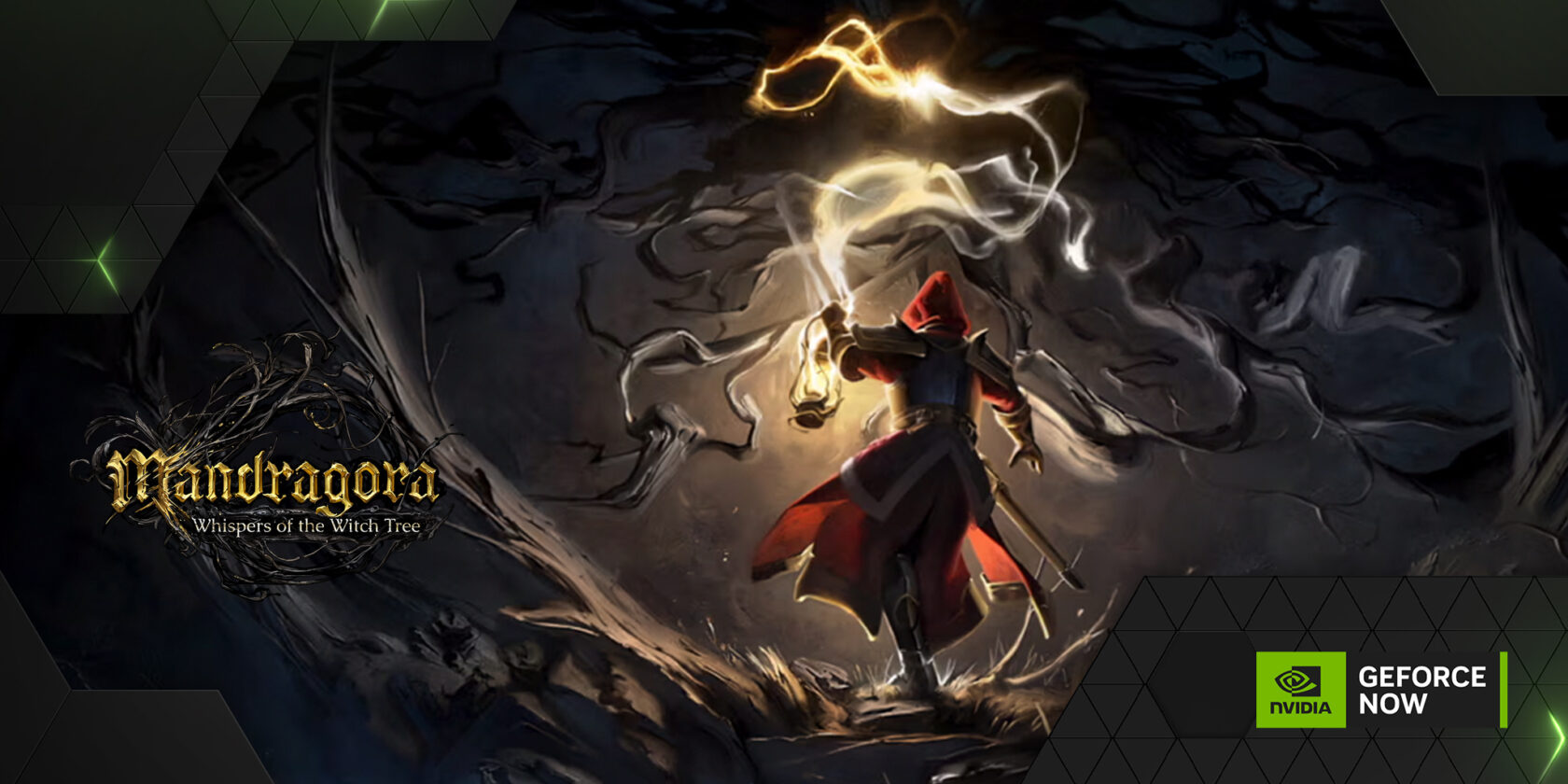
    Mandragora on GeForce NOW
    Every whisper is a warning.

    Step into a beautifully hand-painted world teetering on the edge of chaos in Mandragora: Whispers of the Witch Tree. As an Inquisitor, battle nightmarish creatures and uncover secrets beneath the budding canopies of Faelduum. With deep role-playing game mechanics and challenging combat, Mandragora is ideal for players seeking a fresh adventure this season. GeForce NOW members can continue their quest wherever spring takes them — including on their laptops, tablets and smartphones.

    Time for New Games

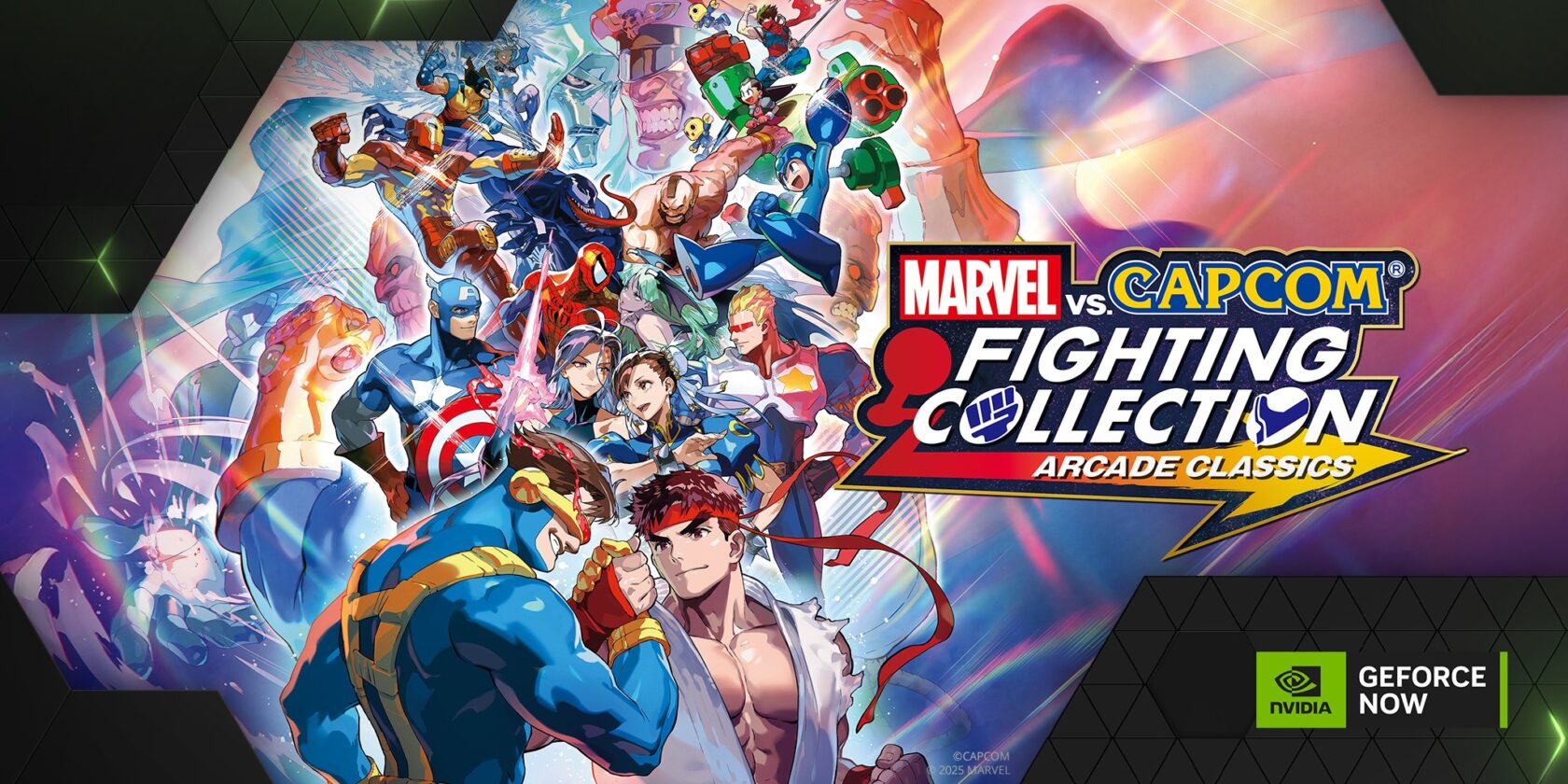
    Marvel VS. Capcom on GeForce NOW
    Everyone’s shouting from the excitement of being in the cloud.

    Catch MARVEL vs. CAPCOM Fighting Collection: Arcade Classics in the cloud this week. In this legendary crossover collection of arcade classics from the fan-favorite Marvel and Capcom crossover games, dive into an action-packed lineup of seven titles, including heavy hitters X-MEN vs. STREET FIGHTER and MARVEL vs. CAPCOM 2 New Age of Heroes, as well as THE PUNISHER. 

    Each game in the collection can be played online or in co-op mode. Whether new or returning to the series from their arcade days, players of all levels can together enjoy these timeless classics in the cloud.

    Look for the following games available to stream in the cloud this week:

    Forever Skies (New release on Steam, available April 14)
    Night Is Coming (New release on Steam, available April 14)
    Hunt: Showdown 1896 (New release on Xbox, available on PC Game Pass April 15)
    Crime Scene Cleaner (New release on Xbox, available on PC Game Pass April 17)
    Mandragora: Whispers of the Witch Tree (New release on Steam, available April 17)
    Tempest Rising (New release on Steam, Advanced Access starts April 17)
    Aimlabs (Steam)
    Blue Prince (Steam, Xbox)
    ContractVille (Steam)
    Gedonia 2 (Steam) 
    MARVEL vs. CAPCOM Fighting Collection: Arcade Classics (Steam)
    Path of Exile 2 (Epic Games Store)

    What are you planning to play this weekend? Let us know on X or in the comments below.


    Source link

    What Can Be Done with Artificial Intelligence? – Metaverseplanet.net

    What Can Be Done with Artificial Intelligence? – Metaverseplanet.net


    When you hear “artificial intelligence,” what comes to your mind? A few years ago, the answer might have been robots, sci-fi movies, or maybe aliens. But today, thanks to tools like ChatGPT and Google Bard, AI means something entirely different.

    AI has gone from futuristic fantasy to everyday reality — and not just in tech circles. You might not realize it, but artificial intelligence is already a big part of your daily life, and its presence is expanding fast.

    Let’s explore what can be done with artificial intelligence — across health, finance, education, e-commerce, agriculture, and more!

    What is Generative AI?

    What Can Be Done with Artificial Intelligence?

    Generative AI refers to a type of artificial intelligence that can create content — including text, images, audio, and video.

    FormatExample Tools📝 TextChatGPT, Jasper AI🖼️ ImageMidjourney, DALL·E🔊 AudioElevenLabs, Murf AI🎥 VideoSynthesia, Pika Labs

    These tools don’t just mimic content — they create new, original, and often interactive results!

    AI in Your Pocket: Smartphones & Digital Assistants

    Have you ever said, “Hey Siri” or “OK Google”?

    AI powers virtual assistants like:

    Siri

    Google Assistant

    Alexa

    🎵 They play music, type your messages, check the weather, or answer your questions — all through voice recognition.

    🎮 Even many video games use AI to control non-player characters (NPCs), making games more challenging and immersive.

    Smart Shopping with AI: E-Commerce

    When you shop online and see suggestions like:

    “Customers who bought this also bought…”

    That’s AI in action!

    AI analyzes your behavior and offers personalized recommendations, increasing sales and improving customer experience.

    AI Benefits in E-Commerce:

    📈 Boosts conversions

    🛍️ Personalizes shopping experiences

    ⏱️ Saves time for users

    AI in Medicine: A Life-Saving Revolution

    AI helps doctors and medical staff detect diseases early and recommend personalized treatments.

    Examples of AI in Healthcare:

    🧬 Analyzing MRI & X-ray scans

    🧑‍⚕️ Supporting diagnosis

    💊 Creating treatment plans

    👥 Personalized medicine based on genetic data

    AI isn’t replacing doctors — it’s empowering them with better tools.

    AI in Finance: Smarter Decisions, Faster Results

    Banks and financial institutions use AI for:

    📊 Market analysis

    🧠 Predictive investment strategies

    🔍 Credit risk evaluation

    For instance, when someone applies for a loan, AI algorithms assess their creditworthiness, income, and past behavior to provide fast, accurate decisions.

    AI in Education: Personalized Learning Paths

    Imagine an AI that understands how you learn and gives you custom lessons.

    That’s exactly what AI-powered education tools do:

    FeatureBenefit📖 Adaptive contentMatches student strengths/weaknesses🎓 Real-time feedbackImproves performance📊 Performance trackingHelps teachers optimize learning

    AI in education promotes accessibility, efficiency, and success!

    AI in Transportation & Logistics

    From autonomous vehicles to smart delivery systems, AI is reshaping mobility.

    Current Uses:

    🚘 Self-driving cars

    🚦 AI-based traffic control

    📦 Drone deliveries

    Soon, AI-powered delivery robots may bring packages directly to your doorstep!

    AI in Agriculture: Feeding the Future

    In farming, AI is boosting productivity while saving resources.

    Agricultural Applications:

    🦠 Early detection of plant diseases

    💧 Smart irrigation systems

    🌾 Yield forecasting

    🚜 Autonomous tractors & drones

    This leads to sustainable farming and helps meet global food demands. 🌍

    AI in Everyday Tools

    Have you used Google Translate or seen your Instagram feed organized magically?

    AI plays a key role here too:

    🌐 Translates languages instantly (with growing accuracy)

    📷 Suggests content you’ll like based on your activity

    💬 Detects spam, hate speech, or inappropriate content

    Even the content you see and don’t see is often determined by AI algorithms.

    The Future is AI — Are You Ready?

    Artificial intelligence is no longer the stuff of science fiction — it’s a core part of our modern lives. Whether it’s helping you choose a movie, manage your health, or learn a new language, AI is everywhere.

    💡 Fun Fact: One day, you might have a robot friend powered by AI. Until then, exploring how AI works and how you can use it might just shape your future career.

    ✅ Final Thoughts: Why It Matters

    So, what can be done with artificial intelligence? Just about everything. And the list keeps growing every day.

    🔍 Keep exploring. 🚀 Stay curious. 💼 You could even build your own AI tools one day!

    You May Also Like

    Follow us on TWITTER (X) and be instantly informed about the latest developments…

    Copy URL


    Source link

    MapleStory Universe Launches Henesys Chain

    0
    MapleStory Universe Launches Henesys Chain


    MapleStory Universe has launched the Henesys Chain, a new Layer 1 blockchain network built on Avalanche and powered by AvaCloud, to provide the technical foundation for MapleStory Universe’s expansion into web3 gaming.

    Designed to simplify blockchain interactions for players, the Henesys Chain introduces features such as gasless transactions and a permissioned NFT system.

    Developers will also have access to new tools that allow them to create dApss tied to the MapleStory Universe ecosystem.

    MapleStory Universe Launches Henesys Chain Source: MapleStory Universe

    What is Henesys Chain?

    Henesys Chain is a custom Layer 1 blockchain created specifically for MapleStory Universe, developed using Avalanche’s technology through AvaCloud. The chain is named after Henesys, the starting village familiar to many MapleStory players, and is intended to reflect the original game’s focus on community, exploration, and player-driven narratives.

    The network is built with an emphasis on scalability, accessibility, and transparency with key features including gasless transactions, permissioned minting of NFTs to maintain item scarcity, and integration with Chainlink’s Verifiable Random Function (VRF) to support fair in-game mechanics.

    The technical infrastructure is designed to serve as the foundation for MapleStory Universe’s evolving web3 gaming platform, prioritising both new user onboarding and long-term ecosystem stability.

    MapleStory Universe Launches Henesys Chain
    MapleStory Universe Launches Henesys Chain Source: MapleStory Universe

    What are the key features of Henesys Chain?

    Henesys Chain introduces several systems aimed at improving user experience and supporting future growth.

    Gasless Transactions: Players can complete blockchain transactions without paying gas fees or managing complex wallet interactions. This is achieved through meta-transaction technology provided by Bloxy and an Approve Controller system, removing common barriers for new users.Preserve and Enhance Item Value: The chain uses a permissioned model where only authorised smart contracts can mint in-game items as NFTs. This approach aims to preserve the value and scarcity of digital assets whilst using Chainlink VRF to ensure transparent and verifiable randomisation for item enhancements.Developer Tools for Synergy Apps: An upcoming Software Development Kit (SDK) will allow third-party developers to build Synergy Apps, which could include companion games, social tools, or marketplaces. These apps will extend the MapleStory IP into decentralised experiences linked directly to the Henesys Chain ecosystem.Participate-to-Own Economy: Henesys Chain supports the $NXPC token, designed as an ecosystem currency tied to item creation, enhancement, and trading. The model focuses on real economic activity within the network. $NXPC is positioned as a reflection of the ecosystem’s growth and activity, connecting gameplay, user-generated content, and digital economies.

    The network’s design also includes plans for future interoperability, allowing assets to move between different games and blockchains.

    MapleStory Universe Launches Henesys Chain
    MapleStory Universe Launches Henesys Chain Source: MapleStory Universe

    What’s next for MapleStory Universe?

    Following the launch of Henesys Chain, MapleStory Universe has outlined several planned updates aimed at expanding functionality and improving transparency.

    These include launching a public blockchain explorer to enable players to track item ownership and review transaction histories, integrate NFT-based name reservations obtained during the “Make Special Name” community event and expand the $NXPC contribution and reward system to further encourage participation by developers and content creators. These initiatives are part of a broader roadmap focused on building MapleStory Universe into a full-scale gaming ecosystem, rather than a single game.

    Future developments will prioritise sustainability, community trust, and long-term player engagement, reflecting MapleStory Universe’s intent to create a lasting and evolving web3 platform rooted in player ownership and decentralised experiences.


    Source link

    OpenAI Unveils New AI Models: o3 and o4-mini – Metaverseplanet.net

    OpenAI Unveils New AI Models: o3 and o4-mini – Metaverseplanet.net


    OpenAI has introduced two new AI models, o3 and o4-mini. What sets these models apart is that, rather than responding immediately, they first pause to reflect—engaging in an internal reasoning process to deliver more logical and accurate answers.

    The o3 model emerges as OpenAI’s most powerful “thinking” AI to date. It appears to outperform previous versions across a wide range of tasks—from mathematics and coding to logical reasoning, scientific analysis, and visual interpretation. Meanwhile, the o4-mini model offers a more cost‑effective alternative, striking a balance between speed and performance. OpenAI has confirmed that both models can leverage the built‑in ChatGPT tools for web browsing, Python code execution, image processing, and image generation, and that they can incorporate analysis of user‑uploaded images directly into their response workflow.

    These new models are available immediately to subscribers of the ChatGPT Pro, Plus, and Team plans. In addition, OpenAI has rolled out an o4-mini-high variant, which allocates extra compute time to further boost response accuracy.

    In internal evaluations using the SWE‑bench test (which measures coding proficiency), o3 achieved a score of 69.1%, while o4-mini scored 68.1%. Beyond their enhanced visual processing capabilities, both models can execute Python code directly in the browser and perform live internet searches to access the latest information.

    For developers, OpenAI offers integration via the Chat Completions API and the Responses API. Pricing is set at $10 per million input tokens and $40 per million output tokens for the o3 model; the o4-mini model carries the same rates as its predecessor, o3-mini.

    Looking ahead, OpenAI plans to launch an o3-pro model exclusively for ChatGPT Pro subscribers in the coming weeks. CEO Sam Altman noted that o3 and o4-mini may be the final standalone reasoning‑focused models released before GPT-5.

    You May Also Like

    Follow us on TWITTER (X) and be instantly informed about the latest developments…

    Copy URL


    Source link

    The Finals update 6.4.0 patch notes deliver big weapon buffs, nerfs and more

    0
    The Finals update 6.4.0 patch notes deliver big weapon buffs, nerfs and more


    You can trust VideoGamer. Our team of gaming experts spend hours testing and reviewing the latest games, to ensure you’re reading the most comprehensive guide possible. Rest assured, all imagery and advice is unique and original. Check out how we test and review games here

    The Finals Season 6 is currently in the midst of celebrating Easter, the time of the year where we all get fat devouring boxes of chocolate eggs. Embark’s last update delivered free rewards and some balance changes, and now the developer has just delivered a new patch. The Finals update 6.4.0 patch notes have just been shared, and they deliver a couple of big weapon buffs and nerfs, along with some new items in the store to get you in the Easter mood.

    The Finals update 6.4.0 patch notes:

    Below are The Finals update 6.4.0 patch notes:

    This week’s update is all about controlled chaos. Tuning weapons for precision, flipping the switch on full-blown gameshow madness, and suiting up in some of our most stylish sets yet.

    Gameplay-wise, we’re making targeted balance changes to two of the Arena’s most talked-about weapons. The CB-01 Repeater gets a boost to its environmental damage, making it far better at dealing with deployables and ziplines, while the Minigun receives a notable accuracy upgrade when focus-firing. We’re not touching the spin-up mechanic just yet, but it’s something we’re actively evaluating as the season progresses.

    Week 2 of Bunny Bash is also live now, with a new circuit of event contracts for you to complete for some amazing rewards!

    World Tour: Protocol Overdrive (Sponsored by ENGIMO)

    ENGIMO is redefining chaos – again.

    In Protocol Overdrive, gameshow events don’t just show up once per match – they hit back-to-back, dropping contestants into a relentless gauntlet of environmental hazards and alien mayhem.

    Expect short moments of calm between bursts of absolute madness, with Meteor Showers and Alien Invasions shaking up the mid-game and forcing players to adapt on the fly. There’s barely time to breathe before the next disaster hits.

    Arenas in rotation:

    SYS$HORIZON

    Bernal

    Kyoto

    Las Vegas Stadium

    Over in the store, we’ve got a wild lineup of new cosmetics ready to drop:

    Night Munchies Set“Carrots optional, casualties guaranteed.”Suit up in the Predator Payload outfit, complete with Assault Rabbit headgear and glowing Warren Glare eyes. Fluffy on the outside, ruthless on the inside.

    Arena Vision Set“For contestants who see every angle in THE FINALS.”Featuring the Sappy Ending skin for the Cerberus, Sledgehammer, and SR-84. Because every story should end with a bang.

    Opulent Heavy Bundle“Devastating luxury, tailored for destruction.”Dominate the battlefield with Skullbound Oblivion skins for the Shak-50, Flamethrower, and M60 – dark, ominous, and absurdly stylish.

    Balance Changes

    Weapons 

    CB-01 Repeater

    Increased environmental damage from 8 to 18

    Dev Note: With the previous environmental damage value the Repeater had a tough time destroying ziplines. This change should help to address that.   

    M134 Minigun

    Decreased bullet dispersion when standing still and ‘focus firing’ (secondary fire) by approximately 10%, making the weapon more accurate

    Decreased bullet dispersion when moving and focus firing by approximately 10%, making the weapon more accurate

    Dev Note: We really like that the spin-up time of the Minigun encourages players to adopt a different style of play to other weapons when using it, such as making use of various shields to protect while spinning up, or using Proximity Sensors to provide an early warning that gives time to spin-up. Because of this, despite some feedback that the Minigun is a little underpowered, we’re reluctant to address that by reducing the spin-up time and making the gun more responsive, as this risks it simply turning into another LMG. Instead, we’re making an adjustment to the weapon’s accuracy to make it slightly more effective at range. Performance wise, our data is showing the Minigun performing somewhere in the middle of the pack, so we’re reasonably happy with how it’s behaving. 

    We do feel that ‘juggling’ and maintaining the spin-up state while moving is a little too easy right now, so it is our intent to review that and potentially change it later this season, as we do really want using the Minigun to commit players to being prepared in how they play, but it’s likely that if that change does go ahead, it will come with some other tweaks to offset that change. We’ll see exactly where we go with that as the season goes on.

    For more The Finals, check out our guide to the best weapons in the game ranked, and we also have a guide to the best gadgets. In addition, we have a guide to the best FPS settings to help you win matches along with a ranking of the best classes in the game.


    The Finals


    Platform(s):
    PC, PlayStation 5, Xbox Series S, Xbox Series S/X, Xbox Series X


    Genre(s):
    Action, First-Person Shooter, Shooter


    Source link

    How Tariffs Are Changing the Global GPU Market: A Move Towards Decentr

    0
    How Tariffs Are Changing the Global GPU Market: A Move Towards Decentr


    Recent implementations of significant economic tariffs, particularly between the United States and China, have introduced substantial volatility into the global technology landscape. The imposition of broad US import tariffs, including steep rates on Chinese goods, and subsequent retaliatory measures by China, have created considerable market turmoil. While a subsequent 90-day pause on most retaliatory tariffs (notably excluding China) provided temporary market relief, evidenced by significant stock market gains, the underlying instability and the persistence of base tariffs underscore ongoing risks.

    This report analyzes the repercussions of this tariff environment on the global graphics processing unit (GPU) industry based on available information. The analysis indicates that tariff-induced disruptions expose vulnerabilities within traditional, centralized GPU manufacturing and supply chain models. These disruptions manifest as increased production costs, potential delays, and strategic challenges for key industry players. Consequently, the Artificial Intelligence (AI) sector, heavily reliant on GPU compute power, faces rising costs, potentially hindering innovation, especially for smaller entities. Against this backdrop, the report examines the argument presented for decentralized, borderless GPU-as-a-Service platforms, exemplified by Spheron Network, as a potentially resilient and cost-effective alternative infrastructure model better suited to navigate the current climate of geopolitical and economic uncertainty.

    The Evolving Tariff Landscape: A Catalyst for Uncertainty

    A series of tariff actions initiated by the United States administration under President Donald Trump have significantly impacted the global economic environment. These actions target numerous industries and countries. Understanding these measures and their current status is crucial for assessing their impact on technology supply chains, particularly for GPUs.

    Overview of Introduced Tariffs

    The tariff actions described include several key components. Firstly, the U.S. administration implemented 10% general import tariffs targeting goods from 86 countries worldwide. Specific measures were also directed at China, resulting in tariffs that brought the total effective rate on certain goods from China to a substantial 145%. The administration framed these actions as efforts to address trade imbalances and encourage domestic manufacturing. In response to the U.S. measures, China announced its retaliatory tariffs. Initially set at 84% on targeted U.S. goods, these increased to 125%. The magnitude of these percentages underscores the severity of the trade dispute and its potential to disrupt established economic flows.

    The Temporary Pause and Lingering Instability

    President Trump announced a 90-day pause on retaliatory tariffs for most countries to de-escalate tensions. This move triggered a significant positive reaction in financial markets, reportedly initiating a $3.5 trillion inflow back into the stock market. Major indices saw substantial gains: the S&P 500 erased earlier losses to rise by 9.5%, the Dow Jones Industrial Average increased by 2,000 points (or 5%), and the Nasdaq composite climbed 6.8%.

    However, this pause carries critical caveats. Firstly, it explicitly excludes China, meaning the high tariff rates between the world’s two largest economies remain primarily in effect. Secondly, the 10% base general import tariff imposed by the U.S. on numerous countries also remains active. Therefore, while the pause on retaliatory measures offered temporary relief, it did not resolve the core trade conflicts or remove all tariff barriers. The selective nature of the relief, focusing away from China, inadvertently sharpens the focus on the unresolved trade friction involving arguably the most critical single nation within the global electronics supply chain, thereby maintaining significant underlying risk. Furthermore, the strong positive market reaction highlights the sensitivity to tariff news, yet contrasts sharply with the persistent risks posed by the remaining base tariffs and the unresolved China situation. This suggests that short-term market sentiment may not fully capture the long-term structural vulnerabilities introduced by this new era of trade friction. The instability caused by the initial imposition of tariffs, the uncertainty surrounding their potential reinstatement after the 90-day pause, and the ongoing situation with China continue to underscore the vulnerability of global markets and supply chains.

    Summary of Mentioned Tariffs and Status

    Tariff Type

    Rate(s) Mentioned

    Target(s)

    Current Status (as described)

    US General Import Tariff

    10%

    Goods from 86 countries

    Active

    US Tariffs on China

    Totaling 145%

    Goods from China

    Active (Excluded from pause)

    China Retaliatory Tariffs

    84%, then 125%

    Goods from the US

    Active (Excluded from pause by the US)

    US Retaliatory Tariff Pause

    N/A

    Retaliatory tariffs against most countries

    Active (90-day duration from announcement)

    GPU Supply Chain Under Strain: Geopolitics Hits Manufacturing

    The introduction and potential continuation of tariffs raise critical questions about the resilience of the global GPU supply chain. Given the geographic concentration of manufacturing and the sector’s reliance on specific materials, it appears particularly exposed to these geopolitical pressures, especially with China remaining outside the scope of the temporary tariff pause.

    Vulnerability of Key Manufacturing Hubs

    The GPU supply chain relies heavily on manufacturing and component sourcing from specific regions, many of which are now directly affected by the tariff regimes. Key hubs identified as burdened include not only China, which faces ongoing high tariffs, but also Taiwan, South Korea, and Vietnam. These nations are central to the production of critical GPU components and final assembly. The imposition of tariffs, or the threat of their reinstatement, creates significant disruption risks. Expected consequences include increased production costs, as tariffs add direct expenses to imported components or materials; potential delays in shipments due to new customs procedures or supply chain adjustments; and a forced reevaluation of manufacturing strategies by leading semiconductor and technology companies seeking to mitigate these risks. The dependence on these specific geographic locations highlights a critical vulnerability in the existing supply chain structure.

    Material-Specific Impacts: The Aluminum Example

    The impact of tariffs extends beyond finished components to basic materials essential for manufacturing. Aluminum, for instance, has been targeted with particularly high tariffs of 25%. This is significant because aluminum is described as a fundamental material used in constructing various GPU components, likely including heat sinks, frames, and other structural elements. The direct consequence of tariffs on such a core material is an anticipated increase in the production costs for GPUs. These higher manufacturing costs are expected to be passed down the value chain, ultimately leading to higher retail prices for consumers and enterprise buyers. This ripple effect has downstream implications, potentially increasing operational costs for large-scale users of GPUs, such as cloud computing providers and AI enterprises that rely on vast arrays of these processors within their data centers.

    Semiconductor Exemptions vs. Broader Electronics Impact

    While it is noted that semiconductors, the core processing units within GPUs, were initially exempted from some tariff actions, this has not insulated the GPU industry from negative effects. The broader electronics industry, which encompasses the assembly and other components that constitute a complete GPU product, has been significantly affected. Tariffs on materials like aluminum, other electronic components sourced from affected regions, and the general market uncertainty contribute to the overall impact. Although the stated rationale for the tariffs by the U.S. administration involves addressing trade imbalances and encouraging domestic production, the immediate repercussions observed include significant turmoil in global technology markets and sharp declines in the stock prices of major GPU and AI-related companies. This demonstrates that disrupting the supply chain, even if core chips are initially spared, can have far-reaching consequences. The interconnected nature of the supply chain means that vulnerabilities exist at multiple points – targeting essential materials or key manufacturing hubs can create bottlenecks and cost increases just as effectively as targeting the semiconductor itself.

    Semiconductor and GPU Company Responses: Navigating the Turbulence

    Major corporations within the semiconductor and GPU ecosystem are directly confronting the challenges posed by the tariff environment. Their responses involve navigating increased costs, managing investor concerns reflected in stock price volatility, and undertaking significant strategic shifts in manufacturing footprints.

    Impacts on Industry Giants (TSMC, Samsung)

    Leading chip manufacturers, such as Taiwan Semiconductor Manufacturing Company (TSMC) and Samsung Electronics, are reportedly grappling with the compounded effects of these tariffs. These effects impact both their operational efficiency and overall profitability. The sensitivity of the market to these geopolitical actions was starkly illustrated when TSMC’s shares reportedly dropped 15% as of April 8, following the unveiling on April 2 of a potential 32% U.S. tariff on imports from Taiwan. This rapid and significant decline underscores how tightly financial markets are linking tariff announcements directly to the perceived value and future earnings potential of critical players in the semiconductor supply chain. In response to these pressures, companies like TSMC have announced significant investments aimed at diversifying their manufacturing base, including major new production facilities in the U.S. However, these strategic moves are not without their own tariff-related complications. Operational costs associated with relocating production facilities, potentially including the import of specialized manufacturing equipment or materials needed for construction and setup, are themselves subject to tariffs, which can dramatically increase the projected expenses of such initiatives. This suggests that geographic relocation, while a logical long-term strategy, is complex, costly, and not an immediate or complete solution to escaping tariff pressures.

    NVIDIA’s Strategic Maneuvering

    NVIDIA, identified as the global leader in the GPU market, is also taking steps to adapt. The company has announced plans to shift some of its manufacturing operations to the United States. Specifically, NVIDIA revealed it was finalizing plans to produce its advanced Blackwell AI GPU chip at TSMC’s new plant in Arizona, with production anticipated to begin in 2025. This move is explicitly framed as an attempt by NVIDIA to mitigate the potential negative impacts of the ongoing tariff situation on its business operations and supply chain resilience. This represents a long-term strategic adjustment aimed at de-risking its manufacturing dependence on regions currently embroiled in trade disputes. However, the 2025 timeline highlights the difference between long-term strategic planning and the immediate financial and operational headwinds created by the current tariff environment. While such moves position the company for greater future resilience, they do not alleviate the near-term cost pressures and market volatility impacting the industry today.

    Implications for the Artificial Intelligence Sector: Rising Compute Costs

    With its immense appetite for computational power, the AI industry is particularly sensitive to GPU market disruptions. Tariffs’ effects ripple through AI development costs, data center operations, and the accessibility of cutting-edge technology, potentially creating divergent outcomes for different players within the sector.

    The Direct Cost Impact: Expensive GPUs

    The most immediate consequence of tariffs impacting the GPU supply chain is an anticipated rise in GPU prices. Higher production costs, stemming from tariffs on materials like aluminum and components sourced from affected regions, are often passed through the value chain to the end consumer. This leads to more expensive GPUs in the retail and enterprise markets. Such price surges have the potential to dampen demand, particularly within sectors that rely heavily on GPU acceleration, including AI research and deployment, high-performance computing, gaming, and data centers. Analysts have expressed concern that these increased costs could make AI development significantly more expensive. This, in turn, carries the risk of hindering the pace of innovation and potentially slowing growth in a field reliant on accessible, powerful computing resources. However, there appears to be some uncertainty regarding the demand elasticity.

    Cloud Providers and Data Center Expenses

    A significant challenge arises from the impact of tariffs on the operational costs of cloud computing providers, which serve as the primary source of GPU infrastructure for many AI companies. Rising costs for GPUs themselves, coupled with potential increases in data center construction and maintenance expenses (potentially linked to tariffs on materials like aluminum used in building infrastructure and cooling systems), contribute to higher overall operating expenditures for these providers. AI enterprises are identified as prominent clients of large, centralized cloud data centers housing thousands of high-performance GPUs. To maintain profitability amidst rising input costs, these cloud providers are expected to increase their service prices. This makes their already expensive GPU compute instances even less affordable, directly impacting the budgets of AI companies relying on their services. The structure of the cloud market thus acts as a direct transmission mechanism, channeling tariff-related cost increases from the hardware supply chain directly to AI end-users.

    Differential Impact: Large Enterprises vs. Startups

    The burden of rising GPU compute costs is unlikely to be distributed evenly across the AI landscape. Large, well-funded AI organizations, such as OpenAI, are often better positioned to secure the necessary GPU resources, even at inflated prices, due to their scale, existing relationships with hardware vendors, and financial capacity. In contrast, smaller companies and AI startups, particularly those operating in emerging areas like the Web3 sector, may encounter significant obstacles in accessing the top-quality GPU chips required for advanced AI workloads like Large Language Model (LLM) training, generative AI development, and AI agent training. This disparity threatens to exacerbate existing inequalities within the AI field, potentially concentrating cutting-edge development capabilities within larger organizations and stifling innovation from smaller, more agile players who may be priced out of accessing essential compute resources. Faced with these challenges, AI enterprises are reportedly exploring alternative ways to secure GPU resources.

    Decentralized GPU-as-a-Service: The Spheron Network Model

    Amidst the challenges posed by tariffs to traditional GPU supply chains and centralized cloud infrastructure, the concept of decentralized GPU compute networks is presented as a viable alternative. Spheron Network is highlighted as a specific example of this approach, leveraging a Decentralized Physical Infrastructure Network (DePIN) model.

    Introducing the Concept: DePIN and Decentralization

    Spheron Network offers a decentralized cloud computing infrastructure designed to provide a “tariff-proof” service for enterprises requiring premium GPU computing, particularly in the AI and gaming sectors. The foundation of this offering is its DePIN stack. The core principle involves creating a globally distributed network of GPU resources, rather than concentrating them in large, geographically fixed data centers. This inherently borderless structure is positioned as a key advantage in circumventing localized geopolitical tensions and economic barriers like tariffs. The fundamental premise is that extreme geographic distribution mitigates the risk associated with any single country or region facing trade restrictions or instability; issues in one location are less likely to cripple the entire network’s availability or cost structure.

    Spheron’s Infrastructure Components

    The Spheron Network’s scale aims to establish its capacity to serve enterprise needs. It reportedly comprises over 10,400 high-performance GPUs distributed globally. This pool includes access to sought-after high-end chips and 35.2K MAC Chips. Additionally, the network incorporates over 768K CPUs. To ensure reliability and consistent service quality across this distributed infrastructure.

    Operational Model: Resource Pooling and Host Incentives

    The operational model of Spheron Network relies on aggregating compute resources from a wide array of providers. It employs a system where anyone meeting the requirements can become a “Cloud Host” by contributing their high-performance GPU compute capacity to the network. In return for providing these services, hosts are rewarded with FN Points. This incentive structure is crucial for attracting and retaining a diverse, global pool of GPU providers, thereby enabling the network’s scale and distributed nature. Spheron then utilizes decentralized resource pooling mechanisms to efficiently channel this aggregated computing power directly from these various sources to clients. This model is claimed to maximize the utilization of connected GPUs and enhance overall cost-efficiency compared to traditional centralized approaches.

    Spheron Network: Offerings and Claimed Advantages

    Building on its decentralized infrastructure model, Spheron Network promotes specific offerings and advantages to attract users, particularly those impacted by the rising costs and uncertainties in the traditional cloud market.

    Specific High-End GPU Offerings and Pricing

    A key part of Spheron’s value proposition involves offering access to cutting-edge AI chips at highly competitive prices.

    By highlighting low hourly rates for these specific, high-demand chips (essential for advanced AI workloads), Spheron directly contrasts its pricing with the anticipated cost increases from incumbent providers affected by tariffs. Aggressive pricing on the latest hardware is a strategic tool to capture market share from customers feeling the financial pressure of the current geopolitical environment.

    Core Claimed Advantages

    Beyond specific pricing, Spheron emphasizes several core advantages stemming from its decentralized architecture, positioning itself as particularly well-suited to the current unstable global trade environment:

    Tariff-Proof Service: The global, distributed nature of the network is claimed to insulate it from country-specific tariffs and trade disputes.

    Cost-Efficiency: Achieved through decentralized resource pooling, potentially higher GPU utilization rates compared to centralized models, and lower overhead associated with managing massive data centers. This enables “unbeatable pricing.”

    Resilience: The distributed infrastructure is presented as less vulnerable to single points of failure, whether technical, economic, or geopolitical.

    Scalability: The model allows for aggregating resources globally, suggesting inherent scalability supported by its large claimed network size.

    Predictable Pricing: Offered as a contrast to the potential for sudden price hikes from centralized providers who may need to pass on tariff-related costs or react to supply chain disruptions.

    These claimed benefits collectively form the argument that Spheron provides a more stable, affordable, and reliable source of GPU compute in an increasingly unpredictable world.

    Centralized vs. Decentralized Cloud Architectures: A Comparative View

    Centralized cloud providers are facing inherent structural challenges exacerbated by geopolitical instability. These providers typically concentrate vast GPU resources within large, capital-intensive data centers in specific geographic regions, making them susceptible to local operating costs, regulations, and tariffs. A key criticism is inefficiency, claiming that these providers often suffer from low GPU utilization rates, cited as sub-30%. This implies that a significant portion of expensive GPU hardware sits idle, contributing to higher operational costs. To maintain profitability under these conditions, centralized providers reportedly charge “hefty service fees” and may engage in over-provisioning (maintaining excess capacity) to guarantee resource availability, further adding to costs. This cost structure, it is argued, makes high-performance GPU compute increasingly unaffordable, especially for smaller AI companies and startups. Furthermore, their centralized nature and exposure to supply chain fluctuations make them vulnerable to sudden price shifts driven by external factors like tariffs.

    Decentralized Model Advantages (as presented by Spheron)

    In contrast, Spheron Network’s decentralized model is presented as an “affordable, democratized” alternative. By pooling resources from numerous distributed Cloud Hosts incentivized by point rewards, the model aims to maximize GPU utilization, channeling compute power directly to where it is needed. This focus on high utilization is a fundamental driver of cost efficiency, allowing Spheron to offer significantly lower prices. The claim of higher utilization directly addresses the purported inefficiency of the centralized model, suggesting less waste and a better return on hardware investment, translating to savings for the end-user. Global distribution provides inherent resilience against localized disruptions, including geopolitical and economic volatility such as tariffs. This resilience also contributes to better pricing stability and predictability for customers.

    Comparison of Cloud Models

    Feature

    Centralized Model

    Decentralized Model

    Infrastructure

    Concentrated in large, expensive data centers

    Globally distributed network of individual providers (DePIN)

    GPU Utilization

    Claimed low (sub-30%), leading to idle resources

    Claimed high, maximized via resource pooling

    Cost Structure

    High operational costs, requires hefty fees, potential over-provisioning

    Lower overhead, cost-efficient due to high utilization

    Pricing

    Expensive, potentially volatile due to external factors (tariffs)

    Affordable (“unbeatable”), claimed predictable pricing

    Geopolitical Resilience

    Vulnerable to localized tariffs, regulations, disruptions

    Resilient due to borderless, distributed nature (“tariff-proof”)

    Accessibility

    Can be unaffordable for smaller entities

    More accessible, “democratized” approach

    Geopolitical Instability as a Catalyst for Decentralization: Spheron’s Opportunity

    The era of predictable global trade and stable supply chains may be over, at least for the foreseeable future. Even with temporary pauses on specific tariffs, the underlying tensions and the demonstrated willingness to use tariffs as policy tools have introduced a lasting sense of market instability and uncertainty. Businesses, it suggests, can no longer rely solely on the established trends and agreements of the past. Evidence for this heightened volatility is drawn from the behavior of financial markets since the tariff escalations began in early April, with the stock prices of central AI and GPU companies reportedly exhibiting wild swings that are more characteristic of volatile cryptocurrency markets than traditional technology stocks. This suggests a fundamental shift in market perception of risk within the sector.

    The Risk for AI Enterprises

    This pervasive uncertainty poses a serious operational risk for AI enterprises. These organizations often depend on consistent access to reliable, high-performance GPU compute for their core development and deployment activities. The potential for centralized cloud providers to abruptly change pricing in response to tariff impacts or face supply chain disruptions that limit GPU availability represents a significant vulnerability. Such disruptions could derail projects, inflate budgets unexpectedly, and hinder competitiveness, particularly for companies without the resources to buffer against such shocks.

    Spheron’s Strategic Inflection Point

    This heightened risk and uncertainty climate is framed not merely as a challenge, but as a “powerful inflection point” and a strategic “opportunity” for decentralized platforms like Spheron Network. As businesses are forced to reevaluate their infrastructure strategies for better stability and cost predictability, Spheron’s model is presented as a “compelling alternative.” Its core claimed attributes – resilience derived from decentralization, cost-efficiency enabled by higher utilization and lower overhead, inherent scalability, a borderless global reach insulating it from localized issues, and predictable pricing – directly address the pain points created by the current geopolitical environment. The narrative strategically reframes the adverse market conditions (instability, volatility, rising costs) as positive drivers, creating demand for the specific solutions offered by the decentralized model.

    Future Outlook and Call to Action

    Spheron Network is well-positioned to become a critical “infrastructure backbone” for AI enterprises seeking stability in a disrupted world. The potential for forging strategic partnerships, particularly with organizations directly impacted by tariffs, is highlighted as a means to accelerate adoption and solidify Spheron’s market position.

    Based on the provided information, the analysis indicates that recent tariff implementations, particularly between the US and China, have significantly disrupted the global GPU industry. These disruptions manifest as heightened supply chain vulnerabilities for key manufacturing regions and materials like aluminum, leading to increased production costs for major players such as TSMC and NVIDIA, despite strategic efforts to relocate manufacturing. Consequently, the AI sector faces rising GPU compute costs, primarily transmitted through centralized cloud providers, which disproportionately affect smaller companies and startups, potentially stifling innovation.

    The central argument is that this sustained geopolitical and economic uncertainty environment exposes the inherent risks of relying solely on centralized infrastructure models. The volatility and cost unpredictability associated with traditional supply chains and data centers create a compelling case for alternatives. Decentralized GPU-as-a-Service platforms, exemplified by Spheron Network’s DePIN model, are positioned as a timely solution. By leveraging global resource distribution, incentive mechanisms for participation, and potentially higher utilization rates, these platforms claim to offer greater resilience, cost-efficiency, and pricing predictability. Therefore, the current market instability, driven by tariff actions, is framed not just as a crisis for traditional models but as a significant market opportunity, validating and potentially accelerating the adoption of decentralized compute infrastructure within the AI and broader technology sectors. Spheron Network is presented as being strategically positioned to benefit from this shift, offering a potential haven of stability and affordability in an increasingly turbulent global landscape.




    Source link

    Starknet Foundation Launches Startup House, Welcoming MVP-Stage Projects

    Starknet Foundation Launches Startup House, Welcoming MVP-Stage Projects


    In Brief

    Starknet Foundation unveiled the launch of Startup House, a new program aimed at transforming MVP-stage projects into high-growth startups.

    Starknet Foundation Launches Startup House, Welcoming MVP-Stage Projects

    Organization committed to supporting the development and growth of the Ethereum Layer 2 network Starknet, Starknet Foundation unveiled the launch of Startup House, a new program aimed at transforming MVP-stage projects into high-growth startups. 

    Set to debut at ETHcc in Cannes, Startup House is a selective, 5-day program designed for early-stage teams building on Starknet. The program offers structured mentorship and high-leverage workshops that focus on various aspects such as business model design, user acquisition strategies, team recruitment, pitch preparation, and fundraising. The goal of the program is to help teams build new products and launch startups that can make an immediate impact in the market.

    Starknet is more than a blockchain for deploying contracts, it represents a comprehensive ecosystem and community where long-term, scalable Web3 companies can grow and thrive. As an early-stage startup, navigating each stage of the development path requires support, and Startup House aims to provide that. By offering resources across product development, business strategy, and community engagement, the program fosters an environment where the challenges of building and launching onchain products are well understood.

    Eligibility Criteria For Startup House Applicants

    This program is intended for teams that have already launched a working MVP on Starknet. It is anticipated that the potential participants have gathered some early user feedback, and they are familiar with the obstacles to overcome. They are ready for the next phase of growth. Specifically, Starknet Foundation is looking for founders, entrepreneurs, and builders who have a live MVP on Starknet and teams with a balance of technical and business expertise. Founders should be prepared to dedicate 5 days to focused company-building and should be open to feedback, iteration, and executing effectively. 

    Starknet Foundation noted that it is particularly interested in teams working within Web3 sectors like decentralized finance (DeFi), gaming, Bitcoin, payments, and more. Participants do not have to already be part of the Starknet ecosystem; as the new teams from across the broader Web3 space are welcomed.

    Disclaimer

    In line with the Trust Project guidelines, please note that the information provided on this page is not intended to be and should not be interpreted as legal, tax, investment, financial, or any other form of advice. It is important to only invest what you can afford to lose and to seek independent financial advice if you have any doubts. For further information, we suggest referring to the terms and conditions as well as the help and support pages provided by the issuer or advertiser. MetaversePost is committed to accurate, unbiased reporting, but market conditions are subject to change without notice.

    About The Author


    Alisa, a dedicated journalist at the MPost, specializes in cryptocurrency, zero-knowledge proofs, investments, and the expansive realm of Web3. With a keen eye for emerging trends and technologies, she delivers comprehensive coverage to inform and engage readers in the ever-evolving landscape of digital finance.

    More articles


    Alisa Davidson


    Alisa, a dedicated journalist at the MPost, specializes in cryptocurrency, zero-knowledge proofs, investments, and the expansive realm of Web3. With a keen eye for emerging trends and technologies, she delivers comprehensive coverage to inform and engage readers in the ever-evolving landscape of digital finance.


    More articles


    Source link

    Where is the Saltburn mansion located? | MarkMeets Media

      0
      Where is the Saltburn mansion located? | MarkMeets Media


      Where is the Saltburn mansion located?

      Grade I-listed mansion Drayton House, near the village of Lowick, is thought to have been built around 1328 and is not open to the public. Located at Drayton House Lowick, Kettering NN14 3BB,

      The 127-room mansion has been owned by the Sackville family since the 18th century.

      The enigmatic Saltburn mansion, a Grade I-listed estate nestled near the village of Lowick, its history shrouded in the mists of time. Revered as a cinematic icon in the psychological thriller crafted by Emerald Fennell, this venerable mansion, known formally as Drayton House, stands as a silent witness to the ebb and flow of centuries. Yet, behind its stately façade lies a contemporary tale of unexpected consequence, as the influx of admirers, drawn by the film’s narrative, brings forth both fascination and distress for its current custodians.

      Drayton House is a real-life stately home located near the village of Lowick in Northamptonshire, England. It gained significant attention after being featured as the filming location for the 2023 movie “Saltburn.”

      Here are some key facts about Drayton House:

      History: Built around 1328, the Grade I-listed house has a rich history and has been in the hands of the Sackville family since the 18th century.
      Filming in “Saltburn”: Director Emerald Fennell chose Drayton House for its unique, “unreal” aesthetic, wanting a location unfamiliar to most viewers. The house’s grand architecture, including “spooky winding corridors” and a hedge maze (though the film’s maze was actually created with CGI), served as a backdrop for the movie’s story about wealth and social satire.
      Public access: Drayton House is not generally open to the public. The owner, Charles Stopford Sackville, has expressed his discomfort with the surge of trespassing and social media activity surrounding the house since the film’s release. He emphasizes that visitors should respect the privacy of the property and stay on the public footpath.

      While you cannot tour the house itself, the surrounding 200-acre park is open for visitors to explore on foot.

      Unraveling the Mystery: The Saltburn Mansion’s Location

      Situated in the picturesque environs of Lowick, Kettering NN14 3BB, the Saltburn mansion, with its imposing presence, commands attention. Constructed around 1328, Drayton House exudes an aura of antiquity, its architectural grandeur a testament to bygone eras. Enveloped by verdant landscapes and steeped in historical significance, this majestic abode has long been synonymous with the Sackville family, its guardians since the 18th century.

      The Dichotomy of Ownership: Embracing Celebrity and Shunning Intrusion

      Amidst the serene ambiance that envelops Drayton House, a disquieting discord emerges—a consequence of newfound fame intertwined with intrusion. Unlike the Catton family, who welcomed the curious stranger with open arms in the cinematic realm, the real-life proprietors of the Saltburn mansion harbor contrasting sentiments. Charles Stopford Sackville, the incumbent custodian at 63, finds himself thrust into an unforeseen spotlight, grappling with the repercussions of the film’s popularity. Expressing a blend of bemusement and dismay, he articulates his sentiments, remarking, “I never envisaged the amount of interest there would be. It’s quite weird.”

      The Phenomenon of Cinematic Fandom: A Double-Edged Sword

      As the tendrils of cinematic allure permeate societal consciousness, the Saltburn mansion emerges as a beacon for enthusiasts and aficionados alike. Bolstered by the film’s satirical narrative, which traverses the realms of wealth, class, and desire, the estate assumes newfound significance in popular culture. Yet, this surge in prominence brings with it an unintended consequence—the relentless influx of tourists, influencers, and movie buffs eager to capture a glimpse of cinematic history.

      TikTok and the Viral Spiral: Propelling the Saltburn Mansion into the Limelight

      In the age of digital virality, platforms such as TikTok wield unparalleled influence in shaping cultural phenomena. Rhian Williams, an influencer whose viral directions unearthed the path to the Saltburn mansion, unwittingly catalyzed a deluge of visitors to its hallowed grounds. However, the unintended repercussions of this virtual pilgrimage manifest in the form of trespassing and intrusion, prompting the estate’s stewards to fortify its defenses against unwarranted encroachment.

      Navigating the Fine Line: Between Admiration and Respect

      While the allure of cinematic nostalgia beckons admirers to the Saltburn mansion, it also underscores the imperative of responsible stewardship. Amidst the fervor of visitations, the sanctity of private property remains paramount, necessitating a delicate balance between admiration and respect. As visitors flock to this hidden gem of Northamptonshire, the imperative to adhere to designated pathways becomes ever more pressing—an homage to the estate’s rich legacy and the sanctity of its environs.

      The Perils of Obsession: A Cautionary Tale

      As the fervor surrounding the Saltburn mansion reaches a crescendo, a sobering reality emerges—the thin line between admiration and obsession. While the allure of cinematic reenactments may tempt enthusiasts, the boundaries of propriety must never be breached. For within the hallowed grounds of Drayton House lie echoes of history, resonating with tales untold and memories cherished—a legacy that transcends the transient allure of cinematic acclaim.

      Preserving the Legacy: A Call to Action

      In the wake of newfound prominence, the onus falls upon both custodians and admirers alike to preserve the legacy of the Saltburn mansion. Through conscientious stewardship and respectful visitation, the estate’s rich tapestry of history and heritage can endure for generations to come. As the final credits roll on this cinematic saga, let us heed the timeless wisdom encapsulated within the hallowed halls of Drayton House—a testament to the enduring power of storytelling and the indelible mark it leaves upon the fabric of our collective consciousness.

      Conclusion: The Enduring Legacy of the Saltburn Mansion

      In the annals of cinematic history, the Saltburn mansion occupies a hallowed place—a symbol of intrigue, allure, and timeless elegance. From its humble origins to its contemporary prominence, Drayton House stands as a testament to the enduring power of storytelling—a beacon for enthusiasts and admirers alike. As its guardians navigate the delicate balance between fame and intrusion, let us embark on a journey of discovery—a celebration of the rich tapestry of history and heritage that defines this venerable estate. For in the quietude of its halls and the majesty of its architecture, the Saltburn mansion beckons, inviting us to partake in a timeless tale of wonder and fascination.


      Source link

      Popular Posts

      My Favorites

      Money Launderer Sentenced to 70 Months Over $263M Crypto Social-Engineering Scheme...

      0
      In brief Evan Tangeman, 22, of Newport Beach was sentenced to 70 months in federal prison for money laundering. The criminal enterprise he worked with...