Home Blog Page 980

Plume Blockchain and RWAfi: Bringing Real Assets On-Chain | NFT News Today

Plume Blockchain and RWAfi: Bringing Real Assets On-Chain | NFT News Today


Many people are now exploring Real World Assets Finance (RWAfi), a branch of blockchain that turns physical items into tokens. Plume Blockchain stands out by weaving compliance and asset tokenization into one platform. Discover how Plume and RWAfi work together, why they matter, and how they could reshape your approach to owning and trading real items.

Understanding RWAfi

RWAfi involves converting real-world assets into blockchain tokens. Imagine scanning a paper document so you can handle it digitally—only now you’re working with tangible items with actual market value. Through RWAfi, you can fractionalize ownership and streamline transfers, enabling people worldwide to invest or trade in assets without being limited by location.

Real estate, rare art, collectibles, and commodities can all be represented by tokens, which simplifies buying, selling, and transferring these physical resources. More importantly, it creates new financial products since you can pair tokenized items with decentralized finance (DeFi) protocols and data feeds, potentially introducing fresh ways to earn income or hedge against market swings.

What is Plume?

Plume is the first modular blockchain built exclusively for RWAfi. Other blockchains often center on digital currencies or specific use cases, but Plume integrates compliance and tokenization at its foundation. This structure allows many real-world assets—from collectible memorabilia to precious metals—to become digital tokens.

Plume welcomes different asset classes, empowering institutions, casual collectors, and inventive developers to interact within one ecosystem. By handling compliance directly on the chain, Plume avoids extra hurdles many projects face when they try to include legal checks in their smart contracts. As a result, everything runs more transparently for those looking to bring real assets on-chain.

Plume Arc: the tokenization engine

Plume Arc stands as the engine behind asset tokenization on Plume. It’s a modular framework that links issuers to key service providers—like KYC/AML platforms or custodians—ensuring every aspect of compliance is handled smoothly.

For instance, if you plan to tokenize real estate, you’ll rely on Plume Arc to confirm the legal identity of buyers, manage fiat gateways, and verify that each step meets regulatory requirements. Its versatility comes from a specialized token standard called ERC-3643, which embeds compliance features into tokens themselves.

Smart wallets: native account abstraction

After tokenizing an asset, you’ll want an easy way to manage and trade it. This is where Plume’s Smart Wallets step in. Traditional blockchains use externally owned accounts that often need extra smart contracts for advanced features, which can be cumbersome. Plume embeds those features into user accounts by default, reducing the need for separate contracts.

This native account abstraction lets you perform gas-sponsored transactions or combine multiple actions simultaneously. You could stake a tokenized painting or switch between various DeFi strategies without juggling different wallets.

Plume Data Highway: Oracle and Real Data Feeds

RWAfi depends on accurate data from outside sources. Plume’s Data Highway ensures real-time information flows securely into the blockchain. It uses TLSNotary technology to verify data, reserving part of each block to store external updates. For example, if you want to tokenize commodities that rely on market prices, the Data Highway can confirm daily rates and feed that information directly on-chain.

This isn’t limited to financial data; it can incorporate weather details for agricultural tokens or consumer demand statistics for new kinds of assets. Having reliable data baked into the chain, Plume helps RWAfi projects automate calculations based on real-world events.

Expanding RWAs: collectibles, art, and more

The range of assets that can be tokenized on Plume goes beyond real estate or metals. Collectors might want to tokenize antique items, while tech fans could fractionalize GPUs used for AI tasks. Plume’s Smart Wallets simplify handling these varied assets by offering built-in functions for staking, lending, or storing them until they’re ready for sale. Because every user account on Plume comes pre-equipped with these features, you can manage an entire RWAfi portfolio in a single wallet instead of juggling multiple smart contracts.

With more than 170 projects already developing on Plume, the network continues to expand rapidly. Plume offers a modular software development kit (SDK) to handle this. Developers can design custom workflows that tap into Plume’s compliance tools and data feeds. That way, new projects can concentrate on their core goal while meeting security and legal requirements.

Source Plume

Overcoming hurdles for institutional adoption

Plume tackles two main challenges that big financial institutions care about. The first is compliance, which Plume handles by automating identity checks and transaction monitoring at the blockchain layer. This helps banks and asset managers meet global standards. The second is liquidity. By working with secondary marketplaces like tZERO, Plume gives tokenized assets a ready space to be traded. If you hold a stake in a tokenized real estate project or want to sell equities that are on-chain, you’ll likely face fewer waiting periods.

The Plume token: key details

At the core of Plume’s blockchain is the PLUME token, introduced on January 21, 2025, with a total supply capped at 10 billion, with an initial circulating supply of 20%, equating to 2 billion tokens. PLUME handles transaction fees to keep the network active. It also allows staking to secure the chain, rewarding those who help maintain it.

On top of that, PLUME grants governance rights, letting holders propose or vote on system changes. Since the token plays multiple roles in the ecosystem, it keeps the community involved in Plume’s direction.

Plume’s Roadmap and Plume Passport

Looking ahead, Plume aims to scale its infrastructure and incorporate more real-time data feeds. As the platform brings in more asset classes, you’ll see new ways to participate in RWAfi—from tokenized collectibles to equity-based offerings. One major milestone is the arrival of the Plume Passport, an all-in-one wallet that combines identity checks with gasless transactions.

By bundling compliance, staking, and collateral options into a single user interface, Plume Passport hopes to cater to everyone, not just crypto veterans. This approach removes common stumbling blocks by letting you handle multiple DeFi actions under one roof, backed by Plume’s inherent legal and technical safeguards.

Moca Network and 0G AI Agents

Moca Network, connected to Animoca Brands, merges its AIR Kit digital identity with Plume. Over 700 million people from Moca’s partner ecosystems gain easier access to RWAfi opportunities, including institutional-grade asset staking. By embedding universal identity verification, this partnership cuts through many regulatory delays and makes the onboarding process smoother.

Plume is also joining forces with 0G to introduce RWAI Agents—an AI-powered suite that simplifies real-world asset (RWA) finance. These decentralized agents will handle everything from tokenizing assets to conducting research, generating reports, and managing DeFAI-based vault operations.

Conclusion

RWAfi and Plume offer a glimpse of how physical goods can be digitized and traded at blockchain speed. By weaving compliance and data verification right into the chain, Plume is clearing hurdles that often slow asset tokenization on other platforms. The result aims to be a simpler journey for those who want to own or trade items backed by real-world value.




Source link

Sharon Osbourne Cancels Talk Show Tour Over ‘Family Issue’

    0
    Sharon Osbourne Cancels Talk Show Tour Over ‘Family Issue’


    Sharon Osbourne has mysteriously called off her planned talk show tour over an alleged “family issue.”

    The TV personality had previously canceled a public appearance at Mad Monster Party in Phoenix due to her husband Ozzy Osbourne “not being able to fly.”

    Sharon Osbourne has been the primary caretaker of her ailing husband, who has been battling Parkinson’s disease and is said to be unable to walk.

    Article continues below advertisement

    Sharon Osbourne Cancels Her Entire Talk Show Tour

    XYZ/©2012 NCNA PHOTO / MEGA

    Sharon has sparked concerns after she abruptly canceled her entire talk show tour.

    The 72-year-old was scheduled to head to Scandinavia this week for a series of four shows dubbed “Cut The Cr-p,” but the dates have now been mysteriously canceled at the last minute.

    She was supposed to kick off the tour on Tuesday in Stockholm and visit other cities within the region, including Helsinki, where one venue detailed the event saying: “Sharon Osbourne, the well-known international TV personality, is now making her debut on stage – live. On her European tour, she’ll be interviewed by Danish model and actress Brigitte Nielsen.”

    “On stage, Sharon promises to reveal everything about the most challenging years of her eventful life,” the venue added.

    Article continues below advertisement

    Although Sharon is yet to comment on why she pulled the plug on the tour, The Mirror reports that Oslo’s Folketeateret Venue, where she was due to be appearing on Saturday, said they believed it was because of a “family issue.”

    Last year, she was forced to cancel a public appearance at Mad Monster Party in Phoenix due to her husband Ozzy “not being able to fly.”

    Article continues below advertisement

    Sharon Osbourne’s Husband’s Health Is Worsening

    Ozzy and Sharon Osbourne hold hands as they leave Mr Chow restaurant after celebrating Billy Idol's 63rd birthday party
    MEGA

    The tour cancellation comes amid her husband Ozzy’s ailing health condition with Parkinson’s disease.

    Sharon has been the primary caregiver of the legendary rocker, who was first diagnosed with the condition in 2003.

    In February, she opened up about Ozzy’s health as he prepares to hit the stage for his final concert in July with his Black Sabbath group.

    Sharon disclosed that the Black Sabbath frontman can no longer walk due to the effects of the condition on his health, but shared that his singing voice is “as good as ever.”

    “He’s very happy to be coming back and very emotional about this,” Sharon told The Sun of her husband’s final show.

    Article continues below advertisement

    “Parkinson’s is a progressive disease. It’s not something you can stabilize. It affects different parts of the body, and it’s affected his legs,” she continued. “But his voice is as good as it’s ever been.”

    Ozzy disclosed he had been diagnosed with the brain disorder in 2020 after suffering a fall the previous year.

    He has reportedly undergone seven surgeries in the past five years, including a fourth spinal surgery in September 2023.

    Article continues below advertisement

    Ozzy Will Not Perform A Full Set In Black Sabbath Show

    Ozzy Osbourne
    MEGA

    Meanwhile, Ozzy will reportedly not perform a full set when he reunites with his Black Sabbath band for the first time in 20 years.

    Earlier this year, the Prince of Darkness opened up about his upcoming performance in his “Ozzy Speaks Show,” where he confessed that he’ll only be doing “little bits and pieces.”

    “I’m not planning on doing a set with Black Sabbath, but I am doing little bits and pieces with them,” he said, per the Daily Mail. “I am doing what I can, where I feel comfortable.”

    The event will feature a dozen bands, including Metallica, Slayer, Pantera, Gojira, and Anthrax, and will also see a “supergroup” performance comprising members of Limp Bizkit, Van Halen, The Smashing Pumpkins, and Faith No More.

    Sharon Osbourne Says The Performance Would Be Ozzy’s ‘Full Stop’

    Ozzy Osbourne and Sharon Osbourne at The Pre-Grammy Gala and Grammy Salute to Industry Icons Honoring Sean "Diddy" Combs
    MEGA

    Despite Ozzy’s love for performance, Sharon noted that the concert would be the rocker’s final show.

    “Ozzy didn’t have a chance to say goodbye to his friends, to his fans, and he feels there’s been no full stop,” she said. “This is his full stop.”

    The all-day heavy metal concert at Villa Park is a charity initiative, as proceeds from the show will be donated to several Parkinson-related charities.

    These charities include Cure Parkinson’s, the Birmingham Children’s Hospital, and Acorn Children’s Hospice, a Children’s Hospice supported by Aston Villa.

    Article continues below advertisement

    Ozzy Osbourne Says He’ll ‘Die A Happy Man’ If He Passes Away While Performing

    LOS ANGELES - JAN 25: Ozzy Osbourne, Sharon Osbourne at the 2020 Clive Davis Pre-Grammy Party at the Beverly Hilton Hotel on January 25, 2020 in Beverly Hills, CA
    MEGA

    Sharon’s husband, Ozzy, was forced to quit touring in early 2023 because of his many health conditions.

    However, he disclosed that if he got the chance to play one final show, it would be to repay a debt of gratitude he owed to his fans for their support through the years.

    “That’s one of the things I’ve been the most fucking pissed off at: I never got the chance to say goodbye or thank you,” he told Rolling Stone UK. “Because my fans are what it’s all about. If I can just do a few gigs… They’ve been loyal to me for f-cking years. They write to me, they know all about my dogs. It’s my extended family, really, and they give us the lifestyle we have. For whatever reason, that’s my goal to work to. To do those shows.”

    He added: “If I can’t continue doing shows on a regular basis, I just want to be well enough to do one show where I can say, ‘Hi guys, thanks so much for my life.’ That’s what I’m working towards, and if I drop down dead at the end of it, I’ll die a happy man.”


    Source link

    Celebrity Big Brother hit with triple eviction as viewers are left ‘devastated’ over ‘robbed’ contestant

      0
      Celebrity Big Brother hit with triple eviction as viewers are left ‘devastated’ over ‘robbed’ contestant


      During tonight’s Celebrity Big Brother triple eviction, Angellica Bell, Ella Rae Wise, and Patsy Palmer were the latest housemates to be voted out.

      It was revealed that Angellica, Chris Hughes, Ella, Patsy, and JoJo Siwa would face the public vote following yesterday’s (April 21) face-to-face nominations.

      However, after JoJo found the hidden golden egg, she was saved. As a result, she was forced to pick someone else to put up for eviction and chose Drag Race star Danny Beard.

      Angellica was the first evictee of the evening (Credit: ITV)

      Celebrity Big Brother triple eviction

      For the past day, viewers had been voting on who they wanted to save via the ITV app. During the second half of tonight’s show, hosts AJ Odudu and Will Best announced that Angellica, 49, was the first celebrity to be evicted after receiving the fewest votes.

      However, little did the remaining housemates know, two more would also be leaving.

      Minutes after Angellica walked out the front door, Ella, 24, was revealed as the second evictee of the evening.

      Ella Rae Wise smiling

      Ella was announced as the second evicted housemate (Credit: ITV)

      Joining her as the final evicted housemate was Patsy, 52, who seemed happy with the result.

      I’m pleased she went’

      Following tonight’s show, viewers reacted to each celebrity leaving.

      Stop Angellica was so robbed she deserved to [bleep]ing win,” one user wrote on X.

      Angellica needs to recognise how much of an ICON she is. Likeeee put some respect on your name siss!!!!!” another person shared.

      Ella being a higher placement then Ekin Su doesnt sit right with me,” a third remarked.

      Ella looks amazing but she wasn’t not the best of housemates I’m pleased she went she’s not final material,” a fourth said.

      Thank god Ella’s gone,” a fifth shared.

      Patsy Palmer smiling

      Viewers were fuming that Patsy was evicted (Credit: ITV)

      ‘I did not expect that’

      The biggest surprise of the night, however, appeared to be when EastEnders star Patsy was voted off.

      Patsy robbed!!!! Should have been Chris !” another remarked.

      Patsy?! I did not expect that,” a shocked viewer stated.

      Nooooo not Patsy,” another gutted fan shared.

      NOOOOOOOOOOOOOOO Patsy‘s been evicted!” another said.

      “Patsy out i’m absolutely devastated,” another stated.

      Read more: Celebrity Big Brother fans fume over ‘awful’ triple eviction twist: ‘This series is too short!’

      Nominations, but FACE to FACE! | Ep.13 - Celebrity Big Brother 2025 | Sun 20th April

      What do you think of tonight’s eviction? You can leave us a comment on our Facebook page @EntertainmentDailyFix and let us know.


      Source link

      Marvel Rivals Will Soon Add A Big Head Mode

      0
      Marvel Rivals Will Soon Add A Big Head Mode


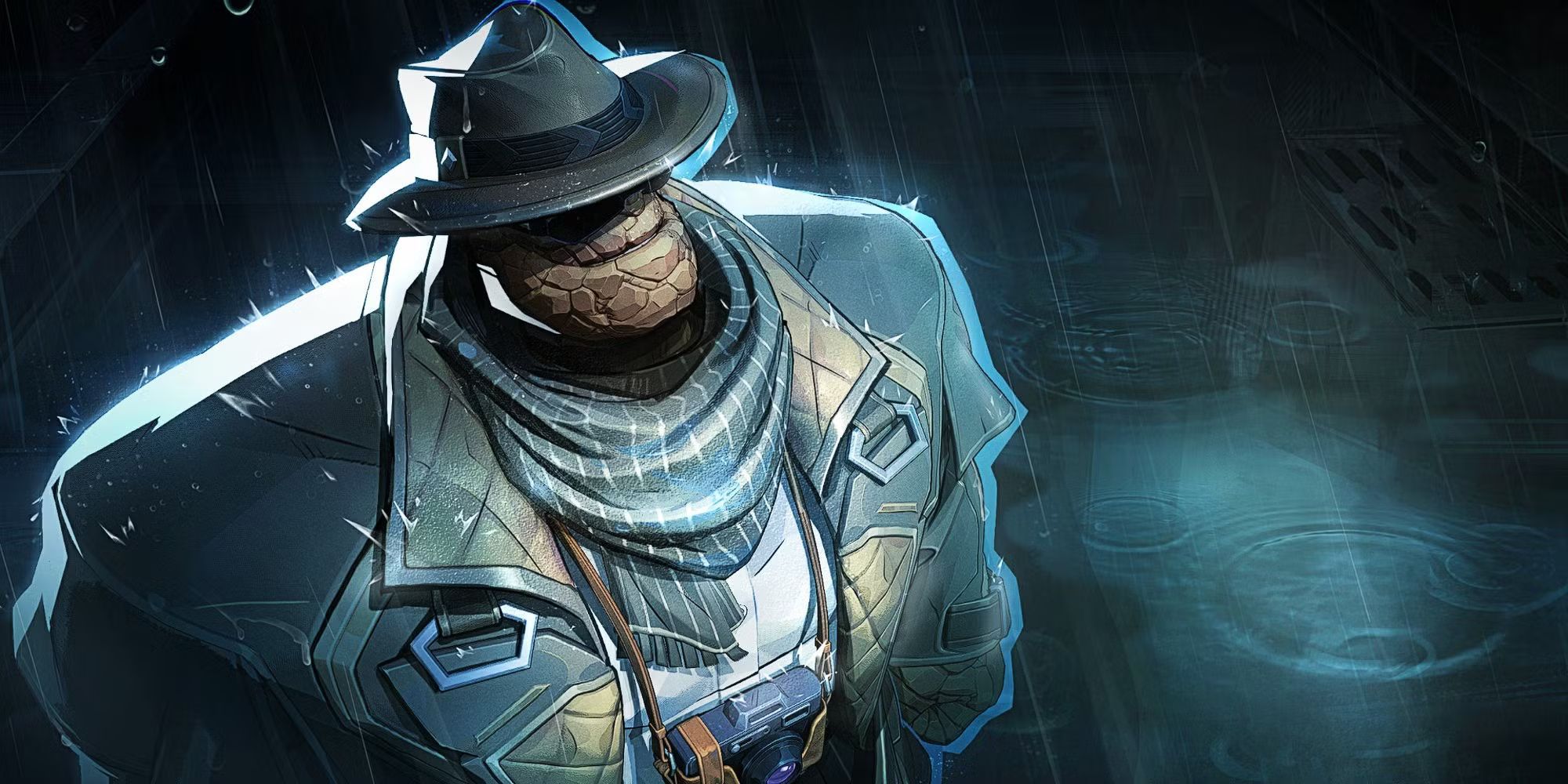
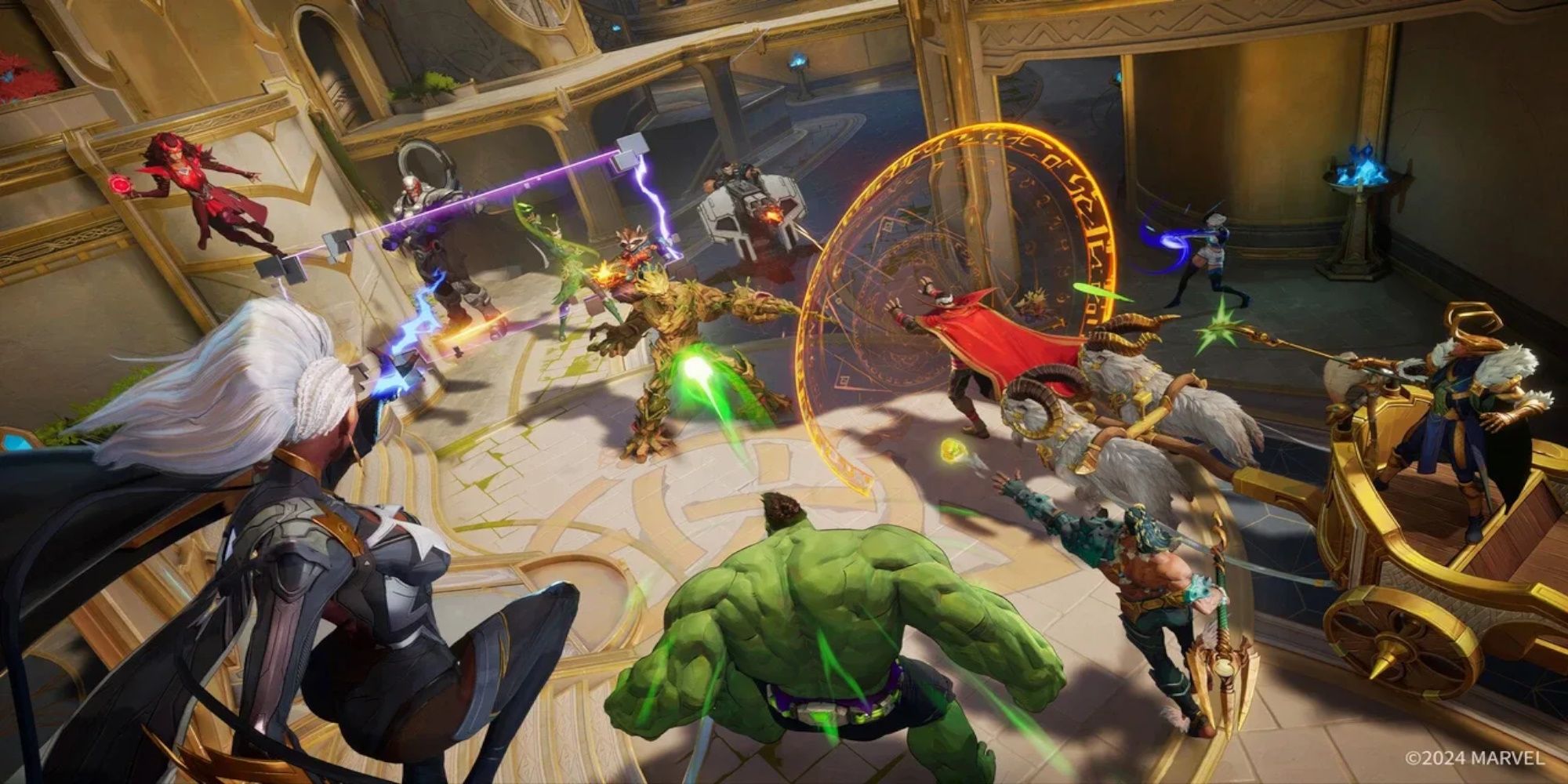
      The next big event is headed for NetEase’s Marvel Rivals. Apparently, the devs have gotten frustrated at players missing easy headshots – now, it’s all headshots, all the time.

      The Giant Size Brain Blast event is exactly what it looks like. Those classic big-head-mode cheat codes have been brought into the default experience, and promise free rewards for anyone looking to grind them out.

      While the exact details of this event remain under wraps (thanks, MarvelRivals.gg), there is a good deal we already know.

      First and foremost, a release date. The chaos starts on April 25th, and if you play at least 10 rounds of it during the festivities, you’ll get an emote for a character of your choice. What is the emote? You’ll never guess – it makes their head big.

      You’ll also pick up a Title reward, depending on how you do. The top 10, 100, and 500 players of each character will get a corresponding title.

      Marvel Rivals Giant Sized Brain Blast Event Title Rewards Chart

      Naturally, when the event ends, so do your chances at these rewards. Welcome to free-to-play, baby.

      Beyond the obvious gameplay implications, we don’t yet know how exactly the event will play out. The adapted game mode, for instance, remains a mystery.

      Related

      Marvel Rivals Puts Competitive Balance Second – Here’s Why

      Balance isn’t NetEase’s number-one priority with Marvel Rivals. It’s up there, but they have grander plans in mind.

      But, given everything about the premise, it’s a pretty safe bet that something called the “Giant Size Brain Blast” event won’t be especially sweaty. Just some good, nostalgic fun for those who remember when cheat codes were a thing.

      Giant Size Brain Blast Event Trailer Shows Off Marvel Heroes’ New Looks

      With the announcement of a new event comes a new trailer, and Marvel Rivals fans can get an up-close view of what their favorite character might look like with an enlarged cranium.

      While not a complete showcase, the trailer does show off a wide array of heroes. Iron Fist in particular has a lot of fun putting several concussive blows directly into Captain America’s skull.

      Related

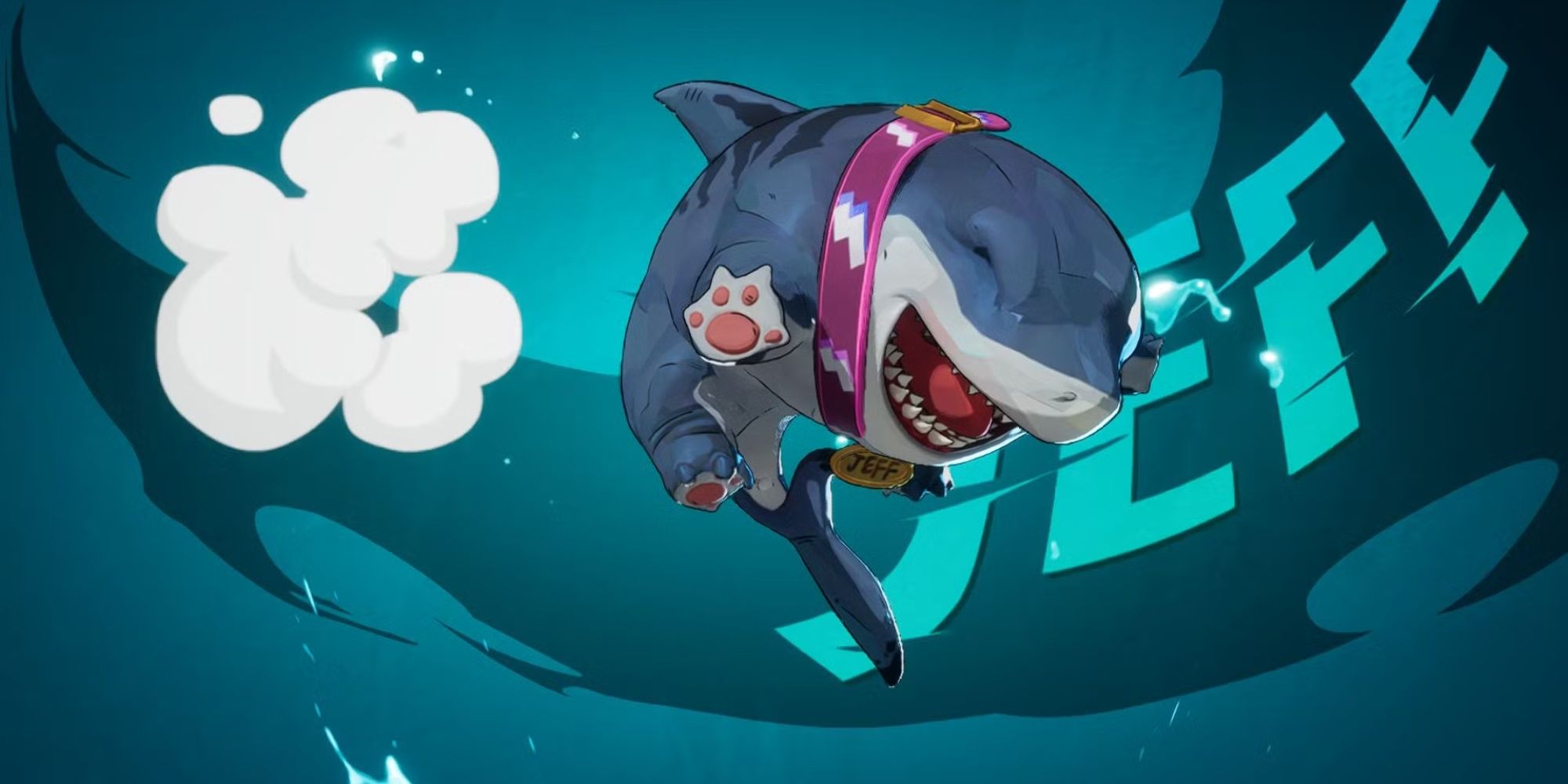
      Jeff the Land Shark Creator Tells Marvel Rivals Players to Get Good

      While Marvel Rivals playuers complain about the popular hero, his comic book creator says it “sounds like a skill issue.”

      You also get to hear the fun little cartoon honk that’ll play whenever you smack someone upstairs. Is it a satisfying hitmarker, or something more annoying? You’re the judge there.

      Either way, no excuses from now on, ok? You have the shot into someone’s head, you take it. Climb the leaderboard and get into a skull-measuring contest with all your fellow Marvel Rivals players when the event launches in just a few days.

      NEXT

      Fix Marvel Rivals’ Performance Issues With NetEase’s “Experimental Feature”

      NetEase is running an experiment to fix some of Marvel Rivals’ performance problems.


      Source link

      Why Helen Lederer knew she’d divorce her first husband years before she even met him

        0
        Why Helen Lederer knew she’d divorce her first husband years before she even met him


        Helen Lederer recently revealed how she always knew her first marriage was destined to end… many years before she’d even met her husband-to-be!

        Helen, 70, is perhaps best known on TV for her comedy roles in Absolutely Fabulous, French and Saunders, The Young Ones and Bottom. Tonight (April 22) she continues her trek on BBC Two’s Pilgrimage: The Road Through The Alps.

        However, despite her presentation on screen as a comedian and actress, Helen has also endured her share sadness away from the cameras, too.

        Helen Lederer’s first marriage lasted 18 months (Credit: BBC iPlayer)

        Who is Helen Lederer married to?

        Helen has been married twice, and is mum to actress Hannah Lederer-Alton, who she shares with her first husband Roger Alton.

        He is a journalist and former editor of The Observer, while Helen’s second husband, Chris Browne, is a GP.

        Helen and Chris got wed in 1999, just three weeks after her mum passed away. The couple first met in a car park as they attended a dinner dance.

        Helen recalled on the Suddenly Single podcast: “My friend says she can still remember the moment our eyes met. It was very Mills and Boon.”

        She went on: “I said something very witty about his bow tie, and he stood up for himself, so I thought, ‘Okay, Helen, lose the attitude!’ I’d been doing a lot of salsa, so we were on the dance floor doing some crazy moves, which he went along with.”

        Helen added: “We married six months later.”

        Helen Lederer walking on Pilgrimage

        Comedy star has been appearing in Pilgrimage (Credit: BBC iPlayer)

        Helen Lederer split from first husband

        However, Helen’s first marriage to Roger lasted only 19 months. Speaking to Best magazine, Helen didn’t seem all that surprised it didn’t work out. That’s because she felt the future had been ‘predicted’ for her while she was still a young schoolgirl.

        She revealed: “In junior school we had this rule. On your thumb, if you have three creases, it is like your marriage line. It will show if you’re divorced. So of course, I just knew I was going to get divorced from the age of 10 because of the line on my thumb.”

        Helen added: “It didn’t come as a shock when it happened. I thought, it is in the stars. Well, on my thumb.”

        She went on, remembering her first meeting with the man who went on to be her first husband: “Someone had told me Roger had liked me. So I needed to know a person likes me because I find it hard to, certainly in those days, initiate. And so he walked in and I just thought, yeah, I’ll marry you. And because of the thumb thing, obviously I’ll divorce you.”

        Read more: Josie Gibson ‘brought back down to earth with a bang’ by gout diagnosis

        Pilgrimage: The Road Through the Alps is on BBC Two tonight, Tuesday April 22, at 9pm. 

        YouTube video player

        What do you think of this Helen Lederer story? Leave us a comment on our Facebook page @EntertainmentDailyFix and let us know.


        Source link

        Bitcoin Bounces, ETH Breaks – Cold Wallet Presale Steals the Spotlight with 50x Surge

        0
        Bitcoin Bounces, ETH Breaks – Cold Wallet Presale Steals the Spotlight with 50x Surge


        What happens when Bitcoin (BTC) surges above $81K and Ethereum (ETH) News signals a recovery after dipping below $1,500? Traders start looking for what’s next, and which new network has real upside while prices are still early. While popular crypto coins price action gets attention, the smarter play might be elsewhere.

        Cold Wallet is doing more than following trends. It’s offering something with structure: fixed and dynamic staking yields, DAO access, partner airdrops, and multichain tools powered by its native $CWT token. And right now, CWT is priced at just $0.007.

        With Staking, Airdrops & DAO Access, Cold Wallet’s $0.007 Token Isn’t Just Cheap, It’s Smart.

        This isn’t hype without substance. CWT runs the whole system, and with a 50x path to $0.35171, it’s shaping up to be one of the most practical entry points of 2025.

        Cold Wallet’s $0.007 Token Brings Utility to the Forefront

        Cold Wallet isn’t just pushing another crypto presale, it’s building a wallet system backed by real functionality. At its core is $CWT, a token priced at $0.007 that’s designed to power everything from staking and DAO access to partner airdrops and loyalty rewards. With both fixed and dynamic staking yields, users can choose how they want to earn. And with exclusive airdrops from Cold Wallet’s future partners, holding CWT means more than just watching price charts.

        The platform is also giving CWT holders direct access to governance. Proposals, voting rights, treasury control, and DAO-based upgrades are all part of the plan. From early access to new features to loyalty tiers with enhanced rewards, Cold Wallet is turning utility into the foundation, not just a buzzword. In a space where popular crypto coins price is often the main focus, Cold Wallet is betting on product strength.

        Cold Wallet’s $0.007 Token Brings Utility to the Forefront

        The presale includes 150 stages, with 4 billion tokens available, 40% of the total 10 billion CWT supply. The starting price is set at $0.007, and the projected listing price is $0.35171, giving early supporters a potential 50x runway. That launch would also give Cold Wallet high market cap projections. This setup combines low entry with high utility, something missing from many token sales.

        In a time where popular crypto coins price is bouncing on news cycles, Cold Wallet is focusing on fundamentals. And that’s what makes $CWT a smart move, not just a cheap one.

        Latest Ethereum (ETH) News: Bearish Pressure Then a Bounce

        Ethereum (ETH) News turned bearish earlier this month as ETH slipped below the $1,500 support level and even under its realized price, a zone that typically signals capitulation. On-chain activity dropped, spot ETF outflows topped $94 million in two weeks, and open interest in ETH futures fell 48% from January highs. Funding rates flipped negative, showing traders were betting on more downside.

        Latest Ethereum (ETH) News: Bearish Pressure Then a BounceLatest Ethereum (ETH) News: Bearish Pressure Then a Bounce

        But things shifted fast. Ethereum (ETH) News flipped positive after Trump’s tariff pause boosted global markets. ETH jumped nearly 10% in 24 hours to trade around $1,609, reclaiming key levels. While the bounce is strong, some analysts still warn of a potential fall toward $1,000 if ETF demand doesn’t return. For now, ETH is holding steady, but the next moves will depend on institutional flows and network activity picking up again.

        Bitcoin (BTC) Surges Above $81K, Relief Rally or Just a Pause?

        Bitcoin (BTC) surges above $81K after Trump’s announcement to halt new tariffs for 90 days. That move boosted risk assets across the board, and BTC jumped nearly 7% in a single day, bouncing from lows near $74K to retest $82K. The global crypto market cap rose to $2.69 trillion, with BTC holding strong at 60.49% dominance, showing it’s still the anchor.

        Bitcoin (BTC) Surges Above $81K, Relief Rally or Just a Pause?Bitcoin (BTC) Surges Above $81K, Relief Rally or Just a Pause?

        But while the price pump looks solid, institutional data paints a different picture. Spot Bitcoin ETFs saw five straight days of outflows, with $127 million pulled out, $89.7 million from BlackRock’s IBIT alone. This could mean the current rally is being driven by retail momentum. So even as Bitcoin (BTC) surges above $81K, some hesitation remains under the surface. The next move depends on whether bigger players step back in or continue to sit out.

        Key Insights

        Bitcoin (BTC) surges above $81K, bouncing back after the tariff pause triggered renewed interest in crypto. At the same time, Ethereum (ETH) News shows ETH recovering to $1,609 after dipping under critical levels earlier in the week. While both moves lifted market sentiment, ETF outflows and weak institutional backing leave some uncertainty on the table.

        That’s where Cold Wallet’s angle stands out. With staking, airdrops, and DAO access all tied to its token utility, CWT isn’t just another presale crypto, it’s part of a full platform. At $0.007, it’s priced lower than most meme coins, but it offers actual function and participation. And with a clear path to $0.35171, this isn’t just early, it’s calculated. In a market tracking every popular crypto coins price, Cold Wallet is giving users a reason to engage early and hold with purpose.

        cold walletcold wallet

        Explore Cold Wallet Now:

        Presale: https://purchase.coldwallet.com/

        Website: https://coldwallet.com/

        X: https://x.com/ColdWalletToken

        Telegram: https://t.me/ColdWalletTokenOfficial


        Source link

        One Of The Worst ’90s Horror Movies Got A Choose-Your-Own-Adventure Sequel – SlashFilm

          0
          One Of The Worst ’90s Horror Movies Got A Choose-Your-Own-Adventure Sequel – SlashFilm


          When done right, interactive fiction and horror can be a winning combination. Take R.L. Stine’s “Give Yourself Goosebumps” book series as an example, which featured a single story with choice-based branching plotlines. The idea was that the reader would play an active role in nudging the tale towards a certain direction, be it in the form of simple puzzle-solving or classic choices. For instance, if a road diverged, the reader choosing left would land on a certain page number, which would then continue the story and map out the consequences of that choice. This thrilling choose-your-own-adventure approach to “Goosebumps” facilitated a one-of-a-kind storytelling experience, as it added yet another layer of anticipation to the stakes within the narrative. Sadly, almost all of these interactive books in Stine’s series are currently out of print.

          Advertisement

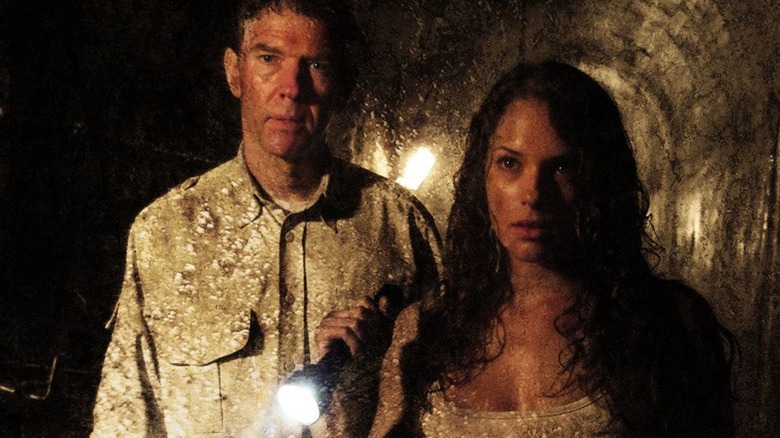
          Interactive fiction in horror, however, is not confined to novels or short stories. There’s the Emmy-winning “Black Mirror: Bandersnatch” (which makes clever use of the anxiety surrounding high-risk choices) and Netflix’s “Jurassic World Camp Cretaceous: Hidden Adventure,” which pits a group of kids against hungry dinosaurs. But what about a straight-to-video horror sequel centering around a choose-your-own-adventure concept that allows viewers to create 96 (!!!) versions of the film? Let’s talk about Victor Garcia’s “Return to House on Haunted Hill,” the oddly ambitious sequel to the 1999 critical pan, “House on Haunted Hill.”

          As dubious as “House on Haunted Hill” is as a gimmicky horror flick, it performed exceptionally well on release, grossing $65 million worldwide. In the film, some strangers are invited to a party held at an abandoned sanatorium, where a whopping million dollars is offered to anyone who manages to survive the night. If this storyline sounds familiar, it’s because it is: the 1999 film is a remake of William Castle’s eponymous horror classic, which employs camp and theatrical scares to great effect. Needless to say, the remake fails to measure up to its source material on all fronts, but can be treated as an unserious, one-time watch for fun. The same cannot be said about its sequel, whose branched narrative ends up making matters worse.

          Advertisement

          Return to House on Haunted Hill misuses the choose-your-own-adventure trope

          If you watch “Return to House on Haunted Hill” in good-old linear fashion, it will play out as a drab retread of the 1999 version, which doesn’t have much going for it in the first place. But once you delve into its interactive DVD features, it ceases to be a run-of-the-mill horror and emerges as a rare curio that exudes intrigue. You would think that such painstaking efforts to create branched narratives were planned from the get-go, but this was not the case.

          Advertisement

          The original script didn’t contain any branching scenes at all, and the revised versions of the script arrived when the film’s principal photography was being sorted out. After news about the sequel’s DVD extra-feature (dubbed Navigational Cinema) was announced, actor Jeffrey Combs told CBR that he was “confused” about the filming process, where he gave “everything equal weighting,” but it was easy to “forget the variations” of the events. This is understandable, as shooting out of sequence with 90+ narrative branches in mind can get very confusing even in the most controlled, tight-knit on-set environments. All things considered, it is baffling that these elaborate story choices mostly lead to scenes with more nudity or gore, but only one choice changes the outcome of “Return to House on Haunted Hill” in a substantial way (where — spoilers! — you can choose to kill off every character in the film towards the end).

          Advertisement

          The only merit that the sequel has to its name is the return of Combs’ Dr. Vannacutt, who is portrayed as a brilliant, yet irredeemably evil physician with a nefarious plan in the original film. The sequel, however, negates this innate complexity and frames him as a morally neutral doctor corrupted by an evil Baphomet idol (booooring!), which causes him to go insane enough and kill folks in gory, extravagant ways. Everything else feels stale and uninspired, where no amount of narrative shuffling is enough to salvage a story that was conceived more as a gimmick than a sincere attempt to scare or entertain.

          Although “Return to House on Haunted Hill” squandered the opportunity to do something interesting with its interactive framework, a similar approach can be employed in future stories with a clearer artistic vision in mind. After all, the beating heart of horror often boils down to split-second choices, which cast characters into the mold of expendables or the final survivor. In the end, these navigational choices should matter.


          Source link

          What Is Web3 Insurance? A Guide for Blockchain Builders and Investors | NFT News Today

          What Is Web3 Insurance? A Guide for Blockchain Builders and Investors | NFT News Today


          As the blockchain economy grows, so do the risks. Cryptocurrency exchanges face constant cyber threats. DeFi platforms battle smart contract vulnerabilities. NFT marketplaces and DAOs handle large volumes of assets with little traditional oversight. For businesses operating in these decentralized spaces, standard insurance doesn’t go far enough. Enter Web3 insurance.

          This guide breaks down two key ideas: first, how insurance is being built to protect Web3 businesses from digital-native risks. Second, how Web3 technologies themselves—like smart contracts and oracles—may reshape the future of insurance as a whole.

          What Is Web3 Insurance?

          Web3 insurance refers to coverage specifically designed for businesses operating in decentralized digital environments. It includes protection for crypto wallets, DeFi protocols, blockchain developers, and anyone else building or transacting on-chain.

          These policies address threats that traditional insurance usually overlooks—like token theft, smart contract failures, governance mishaps, or rapidly shifting legal standards for digital assets.

          It’s important to understand that Web3 insurance is not one thing. It’s an evolving category that spans traditional insurers offering new products and decentralized insurance models built on the blockchain.

          Who Needs Web3 Insurance?

          If you’re working with digital assets, there’s a good chance you do.

          Crypto exchanges and wallet providers face constant cyber threats. DeFi platforms manage user funds and depend on the reliability of smart contracts. NFT marketplaces must secure high-value assets and prove authenticity. DAOs handle treasuries and vote on high-stakes decisions.

          Even traditional companies exploring blockchain—through tokenized products or NFTs—take on unique risks that conventional coverage often misses.

          Whether you’re holding, building, or transacting value on-chain, Web3 insurance offers the kind of protection designed for this environment. It helps you stay resilient in a space where a single error or exploit could mean millions in losses.

          What Risks Does It Cover?

          Web3 insurance focuses on six major risk categories:

          Digital Asset Theft or Loss: Coverage for crypto, NFTs, or tokenized assets stolen or lost due to hacking or wallet breaches.

          Cyber Threats: Includes data breaches, denial-of-service attacks, and other forms of digital disruption targeting Web3 infrastructure.

          Fraud and Crime: Covers embezzlement, insider theft, social engineering attacks, and other types of unauthorized access or manipulation.

          Regulatory Risks: Helps manage the fallout from changing laws, compliance errors, or regulatory investigations.

          Operational Errors: Addresses losses from mismanagement, governance failures, or other internal breakdowns within protocols or DAOs.

          These risks aren’t just technical but often tied to fast-moving innovation, governance experiments, and volatile asset markets.

          How Traditional Insurers Are Adapting

          Some of the world’s largest insurance brokers and underwriters are entering this space. Aon, for example, has a dedicated Web3 team offering products that cover slashing risks in staking, smart contract flaws, and token custody. They’ve even built capacity for directors and officers (D&O) coverage, specifically for executives in crypto-native firms.

          In the Gulf region, Relm and Liva Insurance launched SIGMAWEB3—a comprehensive insurance solution tailored for digital asset companies. Its VARA-compliant version is designed to help crypto firms meet Dubai’s specific regulatory standards.

          These products signal growing interest from traditional insurers—but also show how coverage must evolve to suit the realities of decentralized businesses.

          How Web3 Could Transform Insurance Itself

          While Web3 insurance today focuses on protecting digital businesses, there’s another side of the conversation: how Web3 technology could eventually reshape how insurance is designed, delivered, and governed.

          Here’s where things start to shift from what’s already happening to what might happen next.

          Smart Contracts might replace traditional policies with self-executing agreements. In theory, these contracts could handle premium collection, enforce conditions, and issue payouts without human intervention.

          Blockchain Transparency could bring trust to underwriting and claims processing. Every step—from policy activation to claim resolution—could be recorded on-chain for anyone to audit.

          Oracles could feed real-time data into these systems. Imagine flight insurance that pays automatically when a delay is confirmed by an aviation API or a DeFi hack payout that’s triggered the moment funds are drained from a protocol.

          Decentralized Insurance Pools may become more common. Protocols like Nexus Mutual already allow users to pool risk and vote on claims using governance tokens. This community-driven model could expand, especially in areas where conventional insurers are hesitant to offer coverage.

          Token-based incentives could attract liquidity to insurance markets. People might fund risk pools in exchange for yield, just as they do in DeFi lending. At the same time, tokens could offer voting rights on risk assessments or claim decisions.

          All of this points toward a version of insurance that’s faster, more transparent, and more aligned with how Web3 operates. Whether these models go mainstream will depend on adoption, regulation, and real-world performance.

          Benefits of Each Approach

          For Web3 businesses, insurance brings stability to an unpredictable landscape. It enables safer growth, attracts more institutional support, and protects users and stakeholders from high-impact risks.

          For insurers, Web3 opens new product categories and potentially more efficient ways to operate. Automation could reduce overhead. Blockchain could reduce fraud. Community involvement could speed up innovation.

          But it’s not without trade-offs. Decentralized models must still prove they can be fair, responsive, and legally enforceable. And traditional insurers must continue learning about on-chain systems to remain relevant.

          Challenges That Still Remain

          The road ahead won’t be smooth (it rarely is). Key hurdles include:

          Legal Uncertainty around how smart contract-based insurance holds up in court

          Complex Risk Modeling in environments with pseudonymous users and constantly changing protocols

          Market Fragmentation, making it hard to compare policies or trust unfamiliar providers

          Slow Governance in community-run models, where voting delays can affect response times

          Still, the momentum is real—and so is the demand.

          Final Thoughts

          Web3 insurance serves two critical functions: it protects digital-first businesses from high-stakes technical and legal risks, and it provides a testing ground for reimagining how insurance itself could work.

          One is practical and already in motion. The other is experimental but gaining ground.

          If you’re building in Web3, insurance should be part of your toolkit. And if you’re watching this space from the outside, keep an eye on how these ideas evolve. Whether as policyholders or innovators, we’re all part of the shift in how risk is defined, managed, and protected.


          Source link

          What time does Clair Obscur: Expedition 33 release?

          0
          What time does Clair Obscur: Expedition 33 release?


          Players explore a world inspired by Belle Époque-era France (replete with a flaccid Eiffel Tower) as they fight enemies with a blend of turn-based and real-time combat. Clair Obscur: Expedition 33 is set to launch on PlayStation 5, Windows PC, and Xbox Series X, and it will also be available to Xbox Game Pass subscribers on day one of its release.

          This guide will tell you what time Clair Obscur: Expedition 33 release in your time zone and tell you what we know about the preload size.

          What time does Clair Obscur: Expedition 33 release?

          Clair Obscur: Expedition 33 will be released at 3:00 a.m. EDT on Thursday, April 24, in the United States, according to a post on X from publisher Kepler Interactive. Here’s when that is in your time zone:

          Clair Obscur: Expedition 33 preload size

          Xbox Game Pass subscribers can pre-download Clair Obscur: Expedition 33 at the time of publication. According to the download page, the preload requires 42.27 GB of storage space (not including any additional patches that might go live after release).

          As of this writing, preload is available for PlayStation 5 users or those who purchase the game via Steam of the Epic Games Store. According to its Steam page, players will need 55GB of available storage space to download the game on Windows PC. If you’re a PC user who wants to download it early, you can do so by accessing Xbox Game Pass on your Windows PC.


          Source link

          Kye – A C64 port of Colin Garbutt’s puzzle game from 1992 [UPDATE & Commodore Plus/4]

          0
          Kye – A C64 port of Colin Garbutt’s puzzle game from 1992 [UPDATE & Commodore Plus/4]


          Another challenging puzzler has graced our C64 screens today, as thanks to Saberman letting us know through Facebook, he has told us that if you head on over to the itch.io website linked below, you can download the latest release of ‘Kye’ by cobbpg ; A C64 port of Colin Garbutt’s puzzle game from 1992, Kye. In light of this news, especially if you like Puzzle games then make sure to check out the latest gameplay footage provided by our good friend Saberman.

          Here is what is described about the original game located (here) : “This is a shareware puzzle game, registration originally designed to support the charity “Save the Children.” In it, you play a green ball whose object is to go through the maze and get all of the diamonds. There’s many enemies that you have to watch out for, but you’re also given many tools to help you deal with the enemies. You’re given a hint at the beginning of each level, and the level name at the end.”

          Links :1) Source 

          UPDATE : It has been some years since we played the Commodore 64 port of Colin Garbutt’s Puzzle game. Well fast forward to this week however, and we’ve just been told that Patai Gergely has released the Commodore Plus/4 version. As in the words of the Plus/4 website. “After the very popular Stunt Car Racer, cobbpg with adaption by Patai Gergely, is back with his second conversion: Kye! The original game is by Colin Garbutt from 1992. The goal of the game is simple: move around with the green circle thing and collect all the diamonds. It’s up to you to discover the rules! The game is controlled with the joystick in port 2 exclusively; there’s no keyboard input. Most notably, the music is done using a new custom music player, read the details on GitHub. Check it out!”

          Links :1) Source


          Source link

          Popular Posts

          My Favorites

          After Nearly a Decade, Gary Gensler’s Poster Child for Crypto Compliance...

          In brief Nearly a decade after its founding and raising $100 million, Prometheum has officially executed its first crypto trades. Co-CEO Aaron Kaplan argues the...