Home Blog Page 977

Affordable LV Bags That Exude Elegance: Style Meets Savings

Affordable LV Bags That Exude Elegance: Style Meets Savings


April 24, 2025


Louis Vuitton has been synonymous with luxury for a long time. Known for its quality craftsmanship and classic designs, owning a Louis Vuitton bag doesn’t mean you necessarily have to spend thousands of dollars on a bag in the Louis Vuitton catalog. With a little research, you can find on-trend LV bags at lower prices. Whether you’ve bought a few luxury bags in the past years or are ready to dive into luxury for the first time, these bags are a great balance between style, function, and price.

Here is a list of the eight most affordable Louis Vuitton bags that combine both style and function. The luxury bags are perfect for someone who wants to incorporate some luxury into their wardrobe, without paying luxury prices. Let’s take a look at the top picks!

1. Louis Vuitton Speedy 25

Louis Vuitton Speedy 25

The Louis Vuitton Speedy 25 is one of the brand’s most popular and stylish purses, featuring a small size, chic form, and versatility. The Speedy 25 makes a great introduction to the house of Louis Vuitton, featuring a classic Monogram canvas and functional everyday design. Whether you’re running errands, out for a lunch date, or taking a stroll, the bag looks elegant with whatever you wear.

The Speedy 25 is very appealing because of its size. It is not too big, not too small, but the perfect size for carrying your essentials like your wallet, phone, keys, and makeup. Even though it is a smaller design, it is surprisingly spacious, which is great for someone who loves fashion that can still be useful.

The Speedy 25 has gained a reputation over time as a “go to” piece in the Louis Vuitton collection and has become a staple for everyone from fashionistas to ladies who casually rock luxury accessories. For someone looking for an affordable Louis Vuitton bag who wants something chic and fashionable the Speedy 25 is a great option as it never goes out of style.

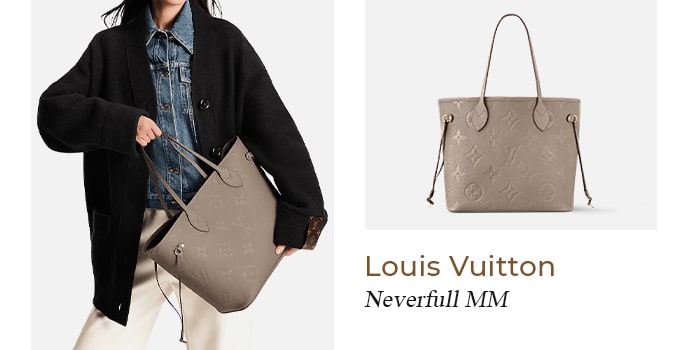
2. Louis Vuitton Neverfull MM

affordable lv bags

The Louis Vuitton Neverfull MM is among the most famous and recognizable products the brand has to offer. It is spacious and practical and has a casual style that provides a nice companion for daily use. The Neverfull MM is flexible enough to allow use wherever someone is going. It provides enough space for your essentials and other items someone might want to carry, but also makes it usable for the fashionista who values fashion and function.

The Neverfull MM is made from Louis Vuitton’s signature Monogram canvas or one of the Damier patterns – either the Damier Ebene or Damier Azur. All three options provide different options for personal taste or preference in contributing fashion. The top of the bag has a wide opening that makes it easy to access the large interior space. 

There are two laces on either side of the bag that can be used to cinch in the sides and change the shape and size of the bag to be more versatile. The Neverfull also offers a removable pouch that can turn into a separate clutch or be used to organize small items together. The Neverfull is truly an affordable luxury and has a special feeling for someone when they wear it.

3. Louis Vuitton Pochette Accessories

Louis Vuitton Pochette Accessories

The Louis Vuitton Pochette Accessoires is a small bag that is a practical and fashionable bag, beloved by many in the luxury fashion and handbag space. Constructed from Louis Vuitton’s signature Monogram canvas with impeccable details, the Pochette Accessoires provides a classic, yet understated chicness.

The compact size of the bag makes it easy to carry your essentials – phone, wallet, keys, or makeup- without being bulky like a larger handbag. The beauty of this bag, and its ease, is that it holds a surprising amount while remaining compact, with an interior that keeps all your belongings organized and neat.

This bag can be styled as a clutch bag for a sophisticated evening outfit, in addition to being a chic option as a crossbody or shoulder bag if you want to carry your essentials hands-free. This bag is relatively affordable compared to Louis Vuitton’s other bags, making it an excellent starter piece for someone interested in carrying a luxury bag in the world of bags

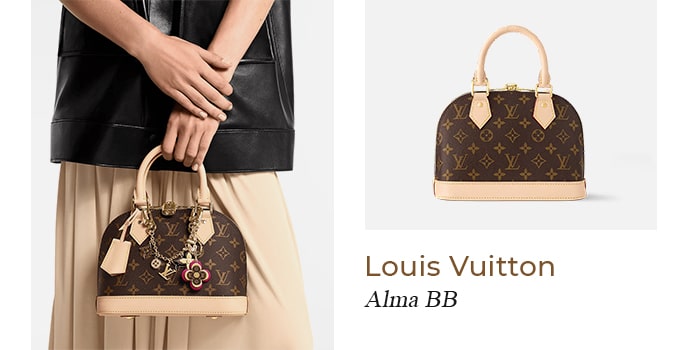
4. Louis Vuitton Alma BB

affordable lv bags

The Louis Vuitton Alma BB is a smaller edition of the brand’s well-known Alma bag, offering a classy, compact shape that is both stylish and functional. The stylish personality of the Alma BB makes it the perfect accessory for those who love a size-down version of a handbag that has structured refinement. Iconic Monogram canvas or the Damier Ebene print, the Alma BB is timeless and synonymous with the classic but relevant silhouette. 

The structured shape with elegant curves gives it a polished appeal that can be used casually or formally. Simmered down in size, the bag is deceptively spacious, able to carry essentials such as a cell phone, wallet, and makeup, while remaining lightweight and easy to carry. 

The Alma BB functionality has a twist: the bag has elegant rolled leather handles for handheld carry and a detachable strap for crossbody/shoulder wear. Functionality aside, the Alma BB is a stylish, lightweight bag for ideal everyday use. The charm of the bag is in its sophistication.

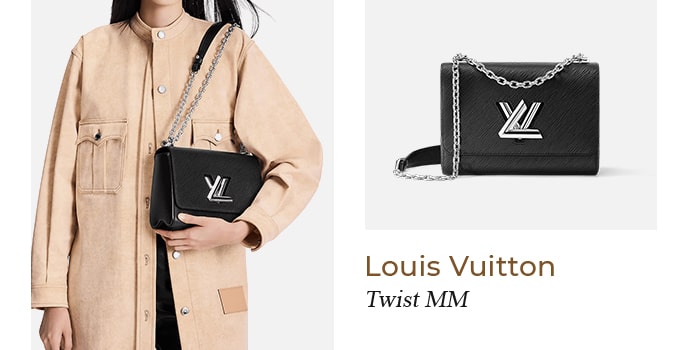
5. Louis Vuitton Twist MM

Louis Vuitton Twist MM

The Louis Vuitton Twist MM is a modern interpretation of the quintessential luxury handbag, combining contemporary elements with Louis Vuitton’s longstanding tradition. With its trademark twist-lock closure, the bag embodies sophistication and versatility, perfect for anyone trying to update their accessories aesthetic.

Available in either Louis Vuitton’s signature Monogram-coated canvas or Epi leather, the Twist MM bag provides a fashionable yet sensible way to carry your essentials. The defining feature of the Twist MM is the “Twist” clasp that can simply be twisted open, adding a layer of refinement and interest to the piece. Its clean and sleek lines, along with a more structured silhouette, offer an ideal mix of elegant yet sensible carrying functionality.

This is a perfect-sized bag for those looking for a medium-sized luxury bag that will comfortably fit all the everyday essentials, from your wallet and phone to your keys and makeup. Additionally, it is designed with an adjustable chain strap and has plenty of versatility to wear as a crossbody or shoulder bag while remaining stylish and easy to carry.

6. Louis Vuitton Montsouris Backpack

affordable lv bags

The Louis Vuitton Montsouris Backpack combines style, practicality, and luxury in a sleek bag. This classic Louis Vuitton backpack has both a stylish and functional design, perfect for fashion lovers who want a hands-free accessory that is also chic for running errands. Constructed from Louis Vuitton’s classic Monogram canvas or Damier Ebene, the Montsouris Backpack has a relaxed yet finished look, adding an elegant touch to casual outfits when needed. 

The Montsouris Backpack is designed with a drawstring and flap opening, allowing easy access to the interior compartment. The fabric straps also allow for adjustment to ensure you get the perfect fit throughout your day. The versatility of the Montsouris Backpack is one of its greatest selling points as it goes effortlessly from Monday mornings to Friday nights.

It has botha practical function and enough capacity for storage to use it as an everyday backpack. Yet, a backpack that embodies Louis Vuitton’s polished elegance, this bag can be worn with casual and semi-formal pieces alike.With the Montsouris Backpack, anyone looking for something practical yet luxurious with a Louis Vuitton label should buy one and add it to their collection.

7. Louis Vuitton Capucines Mini

Louis Vuitton Capucines Mini

The Louis Vuitton Capucines Mini encapsulates understated sophistication and luxury, all in a compact bag. It is a modern classic that gives beauty in its defined structure and quality canvas. This bag is ironically named after the Rue des Capucines in Paris, where Louis Vuitton first opened a store, representing the brand’s history while remaining classic and modern.

This bag is made of the brand’s various leather types, such as Taurillon leather, which can be made of classic Monogram canvas, or you can choose Epi leather. The best feature is the flap that has LV initials that can be worn tucked into the bag for a simple look or out for some interest. 

It is a “mini” bag, but it can fit your phone, wallet, and keys. The Capucines Mini has one top handle with a removable leather strap, which is nice to add some length if you would like to wear it crossbody or over the shoulder. While it is a more expensive mini bag, it is worth the money if you are looking for a nice investment piece.

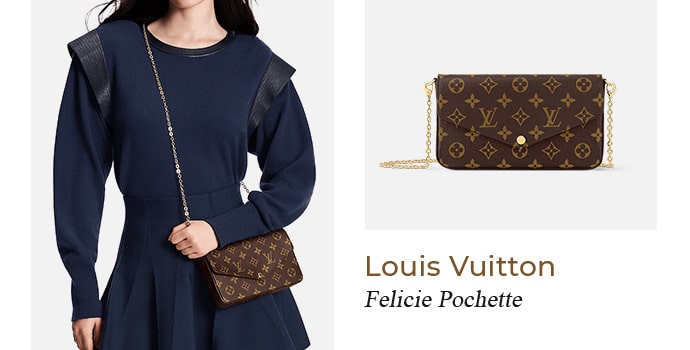
8. Louis Vuitton Felicie Pochette

affordable lv bags

The Louis Vuitton Felicie Pochette is a stylish compact bag with a great combination of functionality and luxury. Its streamlined shape, function, and minimalist style appeal to those who like a little luxury in a compact bag. The Felicie Pochette can be used depending on the occasion, whether it is for an evening out or for running errands, because it has just the right blend of style and convenience.

The Felicie Pochette is manufactured in Louis Vuitton’s signature Monogram canvas or in the Damier Ebene pattern to deliver craftsmanship with a contemporary edge. The simple yet sophisticated shape is embellished by gold-tone hardware and LV signature plaque for an upscale effect. 

It also includes two sections in addition to a small, removable packet for even more organization, which adds practicality. Its stylish and compact form factors make the Felicie Pochette a questionably affordable entry-level luxury item at Louis Vuitton.

Luxury does not always mean emptying your wallet. These 8 Louis Vuitton bags make a case for purchasing a classic product associated with high fashion, quality craftsmanship, and timelessness without splurging. Whether you’re a first-time buyer or looking to build upon your current collection, these picks are the perfect balance of value and style! Ready to be head-turning? Your LV moment is just beginning!


Source link

Top Free and Paid AI Image Generation Tools to Use in 2025 – Metaverseplanet.net

Top Free and Paid AI Image Generation Tools to Use in 2025 – Metaverseplanet.net


AI image generation refers to the process of creating digital visuals using artificial intelligence algorithms. These platforms analyze user input—whether it’s text, sound, or even a reference image—and generate a new image based on that prompt. Thanks to powerful machine learning models like Stable Diffusion and DALL·E, the results can range from realistic photos to fantastical art.

These tools are not only useful for artists and designers but also for businesses, educators, marketers, and even casual users who want to quickly generate visuals for social media or personal projects. The generated content can be static images, dynamic visuals, or even AI-powered videos.

🔝 Best AI Tools for Visual Creation (2025 Overview)

ToolFree PlanIdeal ForOutput TypeMultilingualDALL·E 3❌Complex and realistic imagesHigh-res stills❌ English onlyMicrosoft Bing✅Quick, simple prompts1024×1024 stills✅ YesHotpot.ai✅Photo editing and content creationEdited photos, AI art❌ English onlyPlayground AI✅Digital art and creative designsArtistic stills❌ English onlyDeep Dream Gen.✅*Dreamlike, abstract visualsSurreal artworks❌ English onlyRunway ML❌Professional video/image projectsVideos, edits, art❌ English onlyMidjourney❌Stylized, artistic visuals via Discord4 variations/stills❌ English onlyAdobe Firefly✅Adobe users seeking professional outputsImage + Video❌ English onlyDreamStudio✅*Stable Diffusion model loversUp to 500 images❌ English onlyLeonardo AI✅*Detailed, quick image creationHigh-res images❌ English only

📝 *Limited free credits or daily tokens included.

DALL·E 3 – Premium AI from OpenAI

DALL·E 3, developed by OpenAI (the creators of ChatGPT), remains one of the most powerful and precise AI art generators on the market. It is capable of converting detailed text descriptions into visually stunning artwork.

Subscription: Requires a $20/month plan.

How It Works: Simply type a prompt like, “A golden ship sinking in a storm with currency symbols in the background” and DALL·E creates a realistic version of your vision.

Use Cases: Graphic novels, ad campaigns, book covers, conceptual art.

🧠 The trick to success with DALL·E? Be concise but descriptive. Think like a storyteller but write like a child—simple, clear language helps the AI interpret your vision accurately.

Microsoft Bing Image Creator – Fast & Free Visuals

Powered by OpenAI technology and integrated into Microsoft Edge, Bing Image Creator provides a completely free alternative to paid tools.

No Payment Required: Just sign in with a Microsoft account.

Multilingual: Accepts prompts in various languages including Turkish, Spanish, French, and more.

Output: Generates 4 image variants per prompt in 1024×1024 resolution.

🎯 Ideal for: Teachers making slides, marketers crafting ad mockups, or casual users creating memes and personal content.

Example prompt: “A robot slam dunking a basketball under glowing neon lights.”

Hotpot.ai – Edit, Enhance, and Create

Hotpot.ai is more than just a generator—it’s a versatile AI toolkit for anyone needing polished visual content.

Tools Include: AI photo enhancer, colorizer, image restoration, art creation, and more.

No Design Skills Needed: Great for entrepreneurs or social media users.

Free Plan: Most tools are free with optional credits for advanced processing.

💡 Use it to repair old photos, build app icons, generate product mockups, or enhance selfies—Hotpot offers everything in a clean and easy-to-use interface.

Playground AI – Artistic Freedom for All

Playground AI is designed for creatives. With a focus on style, flexibility, and custom control, this platform helps users craft aesthetic artwork using text prompts.

Trial Access: You can try it without registering.

English Only: Prompts must be written in English.

Art Styles Available: From photorealistic to fantasy, pixel, anime, and more.

Use Playground AI if you want to create stylized Instagram content, abstract art pieces, or mood boards without complex software.

Deep Dream Generator – Surreal and Strange

Created originally by Google engineers, Deep Dream Generator excels at making dreamlike, hallucinogenic visuals.

Free to Use (initially): You can generate a few images without signing up.

Ideal For: Album art, conceptual design, trippy posters, and mood pieces.

No Turkish Support: Commands must be in English.

After writing a phrase like “a forest made of galaxies” and clicking “Generate,” the platform creates an abstract visual interpretation.

Runway ML – For Advanced Users

Runway ML is a powerful multimedia platform designed for creators working in video editing, motion graphics, and AI animation.

Plans Start At: $12/month with limited free use.

Tools: Convert text to video, video to video, image editing with motion brushes, and more.

Ideal For: Filmmakers, marketers, educators, and content creators seeking studio-grade results.

From creating promotional clips to AI-generated avatars, Runway brings your creativity to life.

Midjourney – Discord’s Art Generator

Operating through a Discord server, Midjourney allows users to generate 4 highly stylized visual options per prompt.

Prompt Style: Use /imagine followed by your English description.

Flexible Ratios: Add –aspect 4:3 or –aspect 16:9 for widescreen.

Customization: Use U to upscale, V to remix the variation.

Midjourney’s unique outputs are often used in NFT art, digital installations, and storyboarding. It’s particularly popular among creative communities and indie designers.

Adobe Firefly – Trusted by Professionals

Built into Adobe’s Creative Cloud ecosystem, Adobe Firefly offers tools for text-to-image and text-to-video creation.

Free with Adobe ID: Access via firefly.adobe.com

Commercial-Use Safe: Unlike many tools, Firefly-generated content is designed for commercial use.

Perfect For: Designers, ad agencies, illustrators.

You can type in descriptions like “a paper city lit by neon lights” and get ready-to-use content for presentations or product mockups.

DreamStudio – Home of Stable Diffusion

If you’re familiar with Stable Diffusion, then DreamStudio is your launchpad. This platform lets users control variables like resolution, sampling steps, and models.

Free Credits: 100 credits on signup (enough for around 500 images).

Tools: Text-to-image, inpainting, resizing, and more.

DreamStudio is ideal for those who want more technical control over their image generation process without compromising on quality.

Leonardo AI – Hidden Gem for Custom Visuals

Originally launched in Australia, Leonardo AI is gaining momentum thanks to its daily free tokens, quick image generation, and preset style options.

150 Free Tokens/Day: No credit card required.

Speed: Generates visuals in under 40 seconds.

Customization: Choose image type, lighting, style, and resolution.

Whether you’re building product catalogs, fantasy artwork, or ad visuals, Leonardo AI offers a reliable and quick experience.

AI image generators are more accessible, more powerful, and more fun than ever. Depending on your goals—whether for professional design, educational content, or personal creativity—there’s a platform suited for you.

🌟 Pro Tip: Keep your prompts clear, descriptive, and in English (unless the tool supports other languages). Simplicity enhances accuracy!

Start Creating with Just a Prompt

Whether you’re illustrating a book, designing a poster, or crafting visuals for your blog, AI is your new creative partner. The only limit is your imagination.

You Might Also Like;

Follow us on TWITTER (X) and be instantly informed about the latest developments…

Copy URL


Source link

The 15 Most Comfortable Sneakers for Men in 2025 – TLC

The 15 Most Comfortable Sneakers for Men in 2025 – TLC


The 15 Most Comfortable Sneakers for Men in 2025: From All-Day Walkers to Luxury Kicks

Your feet do all the work, so why punish them with subpar sneakers? Life’s too short for uncomfortable shoes. Whether clocking 10,000 steps, crushing miles on the treadmill, hiking up a mountain, or sprinting through an airport, you need the best sneakers that combine comfort, durability, and style. And that isn’t a luxury—it’s a necessity. 

Ill-fitting shoes don’t just feel bad; they mess with posture, energy levels, and even long-term health. Fortunately, sneaker tech has come a long way, and today’s options offer plush comfort, performance precision, and style—sometimes all in one.

Do Men and Women Need Different Sneakers? Yes—Here’s Why

Before we jump into the most comfortable sneakers for every activity, let’s clear up a common myth: that men’s and women’s feet are basically the same, just in different sizes. Nope. Not even close.

Men’s and women’s feet aren’t just scaled versions of each other. Men generally have wider feet, different weight distribution, and require more impact protection—especially in high-pressure zones like the heel and forefoot. That’s why brands don’t just slap a bigger size label on women’s sneakers and call them “men’s.” They re-engineer everything from the sole to the arch.

For men, sneakers often prioritize:

Wider toe boxes to accommodate broader feet
Extra durability in high-impact areas
More rigid midsoles for better support under heavier weight

On the flip side, women’s sneakers may offer:

Narrower heels and arch support
Softer cushioning to align with lower body mass
More flexibility in the forefoot

So, this list focuses on men’s sneakers specifically, taking into account the biomechanics, foot anatomy, and performance needs of men. (Ladies, we’ll show you love in a separate post—we promise.) In this guide, we’re breaking down the most comfortable sneakers for men across every activity—from tennis shoes and summer walking shoes to luxury men’s sneakers and even vegan kicks. But before that, what should be the criteria for comfort when buying shoes!

How to Choose the Most Comfortable Sneakers?

Key Considerations:

Foot Type: Understand whether you have flat feet, high arches, or neutral alignment. This impacts the level of arch support you need.
Use and Function: Daily walking? Running? Hiking? Specific sport? Choose sneakers tailored for your activity to prevent fatigue or injury.
Material & Breathability: Lightweight uppers, engineered mesh, or knit designs keep feet cool and dry.
Midsole Cushioning: EVA foam, air units, or proprietary technologies can absorb shock and return energy.
Outsole Grip: Look for traction patterns suited to your terrain—urban, trail, or gym floors.
Fit & Width: Brands offer standard and wide-width options; a snug yet flexible fit is key to long-term comfort.

Pro Tip: Always try on sneakers in the evening when your feet are naturally more swollen—this ensures an optimal fit.

Comfort Isn’t One-Size-Fits-All: Why Function Matters

Different feet. Different needs. A sneaker that’s perfect for running may be a disaster for trekking or standing all day. That’s why we’re categorizing the best sneakers for men by use—to help you find exactly what your feet need.

Most Comfortable Sneakers by Use

# Everyday Comfort: 

Most Comfortable Everyday Sneakers

Key Needs: Understated design, enduring comfort, all-day versatility

Top Picks:

Reebok Club C 85: Classic silhouette with subtle flair and step-in softness.
Nike Air Max 90: Iconic styling with enhanced daily wearability.
New Balance Fresh Foam 1080v13: Performance technology refined for everyday sophistication.
Adidas Samba: Fuses sleek design with cushioned everyday wearability, ideal for casual styling and urban exploration.

Bonus Attribute: These are top-tier options not only for the best everyday sneakers but also for multi-use men’s kicks.

 Best Sneakers for Standing All Day

Key Needs: Enduring comfort, orthotic-level support, breathable uppers, and long-lasting solesTop Picks:

Asics Gel-Kayano 31: A legendary performer offering stability and premium arch support.
Nike Air Max 90: Iconic cushioning with enduring comfort—style meets all-day wearability.
New Balance 990v6: Legendary for ergonomic design and availability in wide-width men’s shoes.
Asics Gel-Nimbus 26: Gel-infused midsoles offer relief during prolonged hours on your feet.
New Balance Fresh Foam X 1080v14: Advanced cushioning meets anatomical support.
Allbirds Tree Runners: Sustainable and ultralight—among the top vegan shoes for everyday wear.Bonus Attribute: Ideal for educators, healthcare professionals, and business travelers seeking the best shoes for standing all day.

3. Most Comfortable Sneakers for Walking All Day

Key Needs: Superior arch support, shock absorption, multi-surface adaptabilityTop Picks:

Hoka Clifton LS: Cushioned innovation tailored for walking-intensive days.
Brooks Ghost Max 2: A broader base and plush feel offer long-distance ease.
Brooks Addiction Walker 2: Reliable support and slip-resistant outsoles ideal for all terrains.
Asics Gel-Nimbus 26: Marathon-grade cushioning tailored for city explorers and errand runners alike.
On Cloudtilt: A sleek, ergonomic option with responsive cushioning.
Skechers Arch Fit 2.0: Solid arch support, best budget sneakers for all-day walking.

Bonus Attribute: Topping the list of men’s summer walking shoes that combine performance with elegance. 

4. Most Comfortable Sneakers For Travelling:

Key Needs: Lightweight construction, all-day cushioning, versatility for walking and standing, easy to pack

On Cloud 5 – Ultralight and supportive for airport sprints and city strolls. 
On Cloudnova – Sleek design meets responsive comfort for seamless transitions from terminals to tours. 
Nike Air Max 90 – Stylish cushioning for long days on the move with retro flair and dependable support. 
On Cloudtilt – Adaptive cushioning in a breathable build—ideal for endless gate changes and museum walks.
New Balance Fresh Foam X 1080v14 – Plush and stable enough to take on sightseeing marathons with a smooth, premium ride.

Bonus Attributes: Stylish design, breathable materials, airport-friendly slip-on or lace systems

5. Most Comfortable Sneakers for Trekking and Hiking

Key Needs: Rugged traction, ankle protection, all-weather resistance, durable buildTop Picks:

Salomon X Ultra 4 GTX: Engineered for technical terrain with waterproof versatility.
Merrell Moab Speed GTX: A time-tested favorite, balancing airflow with trail toughness.
Nike ACG Lowcate: Functional enough for trails, stylish enough for city streets.
Hoka Anacapa 2 Low GTX: Maximized cushioning in a durable, waterproof shell—ideal for long hikes.
Adidas Terrex Swift R3 GTX: Delivers optimal stability and traction for unpredictable landscapes.

Bonus Attribute: Premium contenders in the realm of best travel shoes for adventurous men.

# Performance Training Sneakers 

6. Best Running Sneakers for Performance

Key Needs: Maximum energy return, lightweight construction, stability during speed work

Top Picks:

ASICS Novablast 5: Extraordinary comfort with plush foam cushioning, lightweight and durable—especially suited for wide feet.
Nike Pegasus 41: Responsive and breathable with versatile support.
Puma Deviate Nitro 3: Ideal for tempo training and longer distances with energetic propulsion.
Nike Vaporfly 3: Low-weight, highly breathable—an elite choice for long races in warmer climates.
Adidas Ultraboost Light: Boost foam delivers a luxurious, responsive ride.
Saucony Endorphin Speed 3: A race-day favorite that doesn’t compromise comfort.
On Cloudmonster: Groundbreaking CloudTec cushioning offers plush energy return for elite performance, perfect for long-distance runners.

Bonus Attribute: It dominates running shoe reviews with maximum cushioning, support, durability, and versatility, whether it’s a sprint or a marathon.

7. Most Comfortable Sneakers for Jogging

Key Needs: Lightweight structure, breathable materials, responsive cushioning, seamless heel-to-toe transitionTop Picks:

Nike Pegasus 41: Responsive ZoomX foam and airflow-enhancing mesh make it an elite choice for consistent daily runs.
Brooks Glycerin 22: Exceptionally plush and smooth, this sneaker prioritizes comfort without sacrificing pace.
ASICS Novablast 5: Bold energy return and a trampoline effect underfoot—designed for daily mileage and weekend sprints alike.
Hoka Clifton 9: Plush yet weightless—ideal for longer distances and recovery jogs.
Brooks Ghost 16: A perfect harmony of support and softness, built for casual runners.
New Balance Fresh Foam X More v5: Thick cushioning paired with a stable platform—excellent for heavier runners.

Bonus Attribute: Premium choices for men exploring popular running shoes with optimal joint protection.

8. Best Basketball Sneakers

Key Needs: Lateral stability, ankle support, responsive cushioning, durable tractionTop Picks:

Nike LeBron 21 and Nike LeBron 22: Built for power players—premium Zoom cushioning and lockdown fit for all-day comfort on and off the court.

Adidas D.O.N. Issue # 6: Excellent support, impact protection, traction, and breathability in a lightweight, stylish, and high-value package.

Adidas Harden Vol. 7: Blends plush cushioning with aggressive grip—ideal for dynamic movement.

Puma MB.02: Lightweight and bouncy, great for quick cuts and sustained play. 

Bonus Attribute: Great for men seeking comfortable sneakers for basketball with everyday wearability.

9. Best Cricket Sneakers:

Key Needs: All-day comfort, multi-surface traction, protective reinforcementTop picks:

Asics Gel-Peake – Durable grip and cushioned comfort for long stints on turf or grass.
Puma 22 FH Rubber – Lightweight and breathable with reinforced toe protection for dynamic fielders.
New Balance CK4020v5 – Cushioned midsole with superior grip, designed for agile movement and quick pivots.

Bonus Attributes: Lightweight build, toe protection, breathable mesh

10. Best Tennis Sneakers: 

Key Needs: Lateral stability, traction, toe and heel protection, breathable materialsTop picks:

ASICS Court FF 3 – Advanced grip and FlyteFoam cushioning with added heel protection—ideal for explosive players.
NikeCourt Zoom NXT – Breathable mesh upper with exceptional lateral stability for quick direction changes.
Adidas Barricade – Reinforced torsion system and medial support make it a go-to for aggressive movers.
ASICS Gel-Challenger 14 – Comfortable and stable with rearfoot Gel cushioning for shock absorption and confident play.
New Balance FuelCell 996v5 – Sleek profile with lightweight responsiveness and high-traction outsole—perfect for all-court players.

Bonus Attributes: Responsive midsoles, reinforced uppers, sleek athletic design.

11. Best Football (Soccer) Sneakers:

Key Needs: Multi-directional grip, lockdown fit, ball feel and control

Top picks:

Adidas Copa Pure 2 – Premium leather upper with responsive cushioning and excellent ball touch for traditionalists.
Nike Tiempo Legend 10 – Sleek FlyTouch Plus upper and adaptive plate offer a lightweight yet stable ride for defenders and midfielders alike.

Bonus Attributes: Lightweight materials, soft leather uppers, ankle stability

12. Best Weight-Lifting Sneakers for Men

Key Needs: Solid base, foot security, minimal compression for power transferTop Picks:

Nike Metcon 9: Engineered for elite-level lifting with a low, locked-in profile.
Reebok Nano X3: Blends versatility with structured stability.
TYR CXT-1 Trainer: Gaining traction among serious lifters for its unbeatable balance and support.

Bonus Attribute: Premium performers in the category of best weight-lifting shoes for disciplined training.

# Comfortable Sneakers For Specialized Needs

13. Best Sneakers for Arch Support

Key Needs: Targeted orthotic support, high-rebound cushioning, ergonomic designTop Picks:

Asics Gel-Kayano 31: Stability-focused with lasting comfort through arch-cradling midsoles.
Brooks Adrenaline GTS 23: Built-in GuideRails tech supports natural foot movement and posture.
New Balance 1540v3: Engineered specifically for overpronators—one of the strongest arch support sneakers in the game.
Hoka Arahi 7: Dynamic stability in a cushy package—ideal for those needing structured support without stiffness.
Orthofeet Coral Stretch Knit: Podiatrist-recommended with a foot-hugging design and ergonomic insoles.Bonus SEO Hit: These options dominate lists of best sneakers for arch support and most supportive men’s shoes for walking, standing, or sports.

14. Comfortable and Versatile Sneakers for Flat Feet

Key Needs: Structured arch support, stability features, extra width optionsTop Picks:

Brooks Addiction Walker 2: Designed with motion control and arch reinforcement for flat-footed wearers.
Asics Gel-Kayano 31: A go-to option with stability-focused tech.
New Balance 990v6: Ergonomic comfort and available in wide-width sizes.
Hoka Arahi 7: Offers supportive cushioning with built-in stability.
Orthofeet Edgewater Stretch Knit: Orthopedic design without compromising on style. 

Bonus Attribute: Exceptional for those seeking comfortable sneakers for flat feet that don’t look orthopedic.

# Comfortable Sneakers As Per Taste and Preference

15. High-End Luxury Men’s Sneakers

Key Needs: Artisan craftsmanship, aesthetic refinement, opulent comfortTop Picks:

Common Projects Achilles Low: The pinnacle of minimalism, hand-stitched in Italy.
Gucci Off The Grid: A blend of sustainable innovation and designer heritage—an exemplary vegetarian men’s shoe.
Balenciaga Triple S: Boldly expressive with enduring plushness.
Golden Goose Superstar: Most iconic and versatile sneaker, blending vintage charm with timeless colors in a casual, comfortable silhouette.

Bonus Attribute: Tailored for tastemakers who value high-end luxury men’s sneakers with no comfort compromise.

16. Best Vegan and Eco-Friendly Sneakers

Key Needs: Ethical materials, innovative sustainability, uncompromised functionalityTop Picks:

Allbirds Tree Dasher: Athletic-grade construction in a planet-friendly form.
Veja Condor 2: A stylish performer with transparent sustainability practices.
Adidas x Stella McCartney Loop: Cutting-edge design meets circular economy principles. 

Bonus Attribute: Leaders in the category of tennis shoes for men that are eco-conscious and cruelty-free.

Final Word: Where Comfort Meets Prestige

True luxury is never at odds with functionality. Whether your preference leans toward comfortable sneakers for men, luxury statement pieces, or ethically made essentials, this expertly curated guide ensures you step out with confidence, comfort, and class.

Comfort Is the New Cool @ The Luxury Closet

Gone are the days when you had to choose between style, comfort, and performance. Today’s sneaker game is stacked with options that let you walk (or run, or hike) comfortably into your best life. The trick is choosing based on what you actually need. So whether you’re pounding pavement or scaling trails, give your feet the upgrade they deserve—trust us, they’ll thank you forever.

Men Sneakers for Sale

Frequently Asked Questions

What are the most comfortable sneakers for men with wide feet?

Look for brands offering wide-width options like New Balance 990v6, ASICS Novablast 5, and Brooks Ghost Max 2. These models provide extra room in the toe box and structured support without squeezing your stride.

Are luxury sneakers comfortable?

Yes—brands like Common Projects, Gucci, and Balenciaga blend premium materials with ergonomic design. While they may not match performance runners in tech, they excel in daily comfort, breathability, and long-wear appeal.

What sneakers are best for standing all day at work?

Top choices include the ASICS Gel-Kayano 31, New Balance Fresh Foam X 1080v14, and Allbirds Tree Runners. These shoes deliver arch support, cushioned midsoles, and breathable uppers ideal for long shifts.

Can sneakers help with flat feet or plantar fasciitis?

Yes, especially models designed for stability and arch reinforcement. Try Brooks Addiction Walker 2, Orthofeet Edgewater, or Hoka Arahi 7—they reduce foot fatigue and support proper alignment.

What’s the difference between walking and running shoes?

Running shoes prioritize energy return and impact absorption with more heel cushioning while walking shoes focus on flexibility, stability, and all-day wear. Choose based on your activity—not just style.

What’s the best sneaker for travel?

Versatile picks like the Nike Air Max 90, Hoka Clifton LS, and On Cloudtilt work well—they’re lightweight, stylish, and functional for airport runs and sightseeing.

Are vegan sneakers durable?

Absolutely. Brands like Allbirds, Veja, and Adidas x Stella McCartney use innovative materials like eucalyptus fiber, sugarcane foam, and recycled polyester, offering durability without animal byproducts.

Are basketball shoes good for running?

Generally, no. Basketball shoes are built for lateral movement, ankle support, and short bursts of speed. They lack the flexibility and forward-motion cushioning needed for long-distance running.

Are Nike Air Max good for running?

Nike Air Max models like the Air Max 90 offer casual comfort but aren’t optimized for running. They tend to be heavier and more focused on style than performance.

Which are the best running shoes for heavy men?

Look for plush cushioning and a stable base. Top picks include the New Balance Fresh Foam X More v5, Brooks Glycerin 22, and Hoka Bondi 8—all of which support greater impact with maximum comfort.


Source link

ZKsync Security Council Recovers $5M In Stolen Tokens, Closes Case Following Hacker Cooperation

ZKsync Security Council Recovers M In Stolen Tokens, Closes Case Following Hacker Cooperation


In Brief

ZKsync Security Council confirmed that the individual behind a recent $5 million token breach has returned the funds within the safe harbor period, leading to a resolution of the case.

ZKsync Security Council Recovers $5M In Stolen Tokens, Closes Case Following Hacker Cooperation

Governance authority overseeing the security framework of ZKsync, the ZKsync Security Council, conveyed that the individual involved in the recent security incident has cooperated and returned the compromised funds within the designated safe harbor timeframe. 

The Council emphasized that, in line with its earlier communication, the matter is now regarded as resolved. This resolution suggests a collaborative approach was taken, prioritizing the swift recovery of assets and system stability.

“The assets are now in the custody of the Security Council, and the decision on what will be done with the assets will be made by governance. The final investigation report is being prepared and will be published once completed,” it noted in a post on social media platform X.

The update follows efforts to establish communication with the individual responsible for a recent security breach that led to the unauthorized withdrawal of approximately $5 million in ZK tokens. Earlier in the week, the ZKsync Security Council had reached out through an on-chain message, proposing a 10% bounty incentive if the individual returned 90% of the exploited funds. The Council also assured that, should the conditions be met, the cooperation would be recognized and the matter concluded without pursuing additional measures. This approach highlights a strategy focused on recovery and resolution rather than prolonged confrontation.

ZKsync Confirms $5M Token Breach Via Compromised Admin Account, User Funds Unaffected

Last week, the ZKsync security team disclosed via social media that approximately $5 million worth of ZK tokens had been misappropriated due to a compromised administrative account. Reports indicated that the attacker accessed unclaimed tokens linked to a previous ZKsync airdrop. Despite the incident, the project reassured the community that user assets remained completely secure and were not affected at any point. Additionally, it was clarified that the core ZKsync protocol and the ZK token contract were not compromised, and no further tokens were at risk.

Following the breach, the market value of ZK tokens saw a drop of about 20%, a decline likely influenced by the sell-off of the stolen assets. ZKsync, a Layer 2 scaling solution for Ethereum developed by Matter Labs, had launched its token airdrop last year, distributing from a total supply of 21 billion tokens. While the airdrop expanded token access, it also drew criticism regarding its distribution model and challenges in preventing Sybil attacks, where individuals manipulate the system by creating multiple identities.

Disclaimer

In line with the Trust Project guidelines, please note that the information provided on this page is not intended to be and should not be interpreted as legal, tax, investment, financial, or any other form of advice. It is important to only invest what you can afford to lose and to seek independent financial advice if you have any doubts. For further information, we suggest referring to the terms and conditions as well as the help and support pages provided by the issuer or advertiser. MetaversePost is committed to accurate, unbiased reporting, but market conditions are subject to change without notice.

About The Author


Alisa, a dedicated journalist at the MPost, specializes in cryptocurrency, zero-knowledge proofs, investments, and the expansive realm of Web3. With a keen eye for emerging trends and technologies, she delivers comprehensive coverage to inform and engage readers in the ever-evolving landscape of digital finance.

More articles


Alisa Davidson


Alisa, a dedicated journalist at the MPost, specializes in cryptocurrency, zero-knowledge proofs, investments, and the expansive realm of Web3. With a keen eye for emerging trends and technologies, she delivers comprehensive coverage to inform and engage readers in the ever-evolving landscape of digital finance.


More articles


Source link

Digital Asset Management Market Trends, Demand, and Growth Forecast 2025-2033 | Web3Wire

0
Digital Asset Management Market Trends, Demand, and Growth Forecast 2025-2033 | Web3Wire


Digital Asset Management Market

Market Overview:

The Digital Asset Management Market is experiencing rapid growth, driven by cloud adoption surges, ai-driven automation expands, and compliance demands grow. According to IMARC Group’s latest research publication, “Digital Asset Management Market Size, Share, Trends and Forecast by Type, Component, Application, Deployment, Organization Size, End-Use Sector, and Region, 2025-2033”, The global digital asset management market size was valued at USD 7.73 Billion in 2024. Looking forward, IMARC Group estimates the market to reach USD 31.99 Billion by 2033, exhibiting a CAGR of 15.26% from 2025-2033.

This detailed analysis primarily encompasses industry size, business trends, market share, key growth factors, and regional forecasts. The report offers a comprehensive overview and integrates research findings, market assessments, and data from different sources. It also includes pivotal market dynamics like drivers and challenges, while also highlighting growth opportunities, financial insights, technological improvements, emerging trends, and innovations. Besides this, the report provides regional market evaluation, along with a competitive landscape analysis.

Grab a sample PDF of this report: https://www.imarcgroup.com/digital-asset-management-market/requestsample

Our report includes:

● Market Dynamics● Market Trends And Market Outlook● Competitive Analysis● Industry Segmentation● Strategic Recommendations

Factors Affecting the Growth of the Digital Asset Management Industry:

● Cloud Adoption Surges:

The Digital Asset Management (DAM) market is experiencing rapid growth due to increasing cloud adoption. Businesses are shifting from on-premise solutions to cloud-based DAM platforms for scalability, cost-efficiency, and remote accessibility. Cloud DAM systems enable seamless collaboration across global teams, real-time updates, and enhanced security features like encryption and automated backups. As hybrid work models become the norm, demand for cloud-native DAM solutions is expected to rise, driven by industries like media, retail, and healthcare that require centralized, secure asset repositories.

● AI-Driven Automation Expands:

AI integration is transforming DAM systems by automating metadata tagging, content categorization, and search optimization. Advanced machine learning algorithms analyze visual and textual assets, improving accuracy and reducing manual effort. This trend is particularly valuable for organizations managing large content libraries, as AI enhances discoverability and streamlines workflows. Predictive analytics also help businesses understand asset performance, enabling data-driven decisions. As AI capabilities evolve, expect DAM platforms to offer smarter, more intuitive features that boost productivity and user experience.

● Compliance Demands Grow:

Stricter data privacy regulations (e.g., GDPR, CCPA) are fueling demand for DAM solutions with robust compliance features. Organizations need systems that ensure secure storage, access controls, and audit trails to meet legal requirements. Industries like finance and healthcare prioritize DAM platforms with encryption, permission-based access, and automated retention policies. Additionally, rising concerns over digital rights management (DRM) are pushing vendors to embed copyright protection tools. As regulatory scrutiny intensifies, compliance will remain a key driver in DAM market growth, with businesses seeking solutions that balance accessibility with security.

Buy Full Report: https://www.imarcgroup.com/checkout?id=1831&method=1670

Leading Companies Operating in the Global Digital Asset Management Industry:

● Adam Software● Canto Inc.● Celum● Cognizant Technology Solutions● IBM Corporation● Mediabeacon Inc.● North Plains Systems● OpenText Corporation● Oracle Corporation● QBank● Webdam Inc.● Widen Enterprises Inc.

Digital Asset Management Market Report Segmentation:

Analysis by Type:

● Brand Asset Management System● Library Asset Management System● Production Asset Management System

Brand asset management system offer specialized tools designed to handle and protect brand-related content.

Analysis by Component:

● Solution● Services● Consulting● System Integration● Support and Maintenance

Solution leads the market with 63.6% of the market share. They provide comprehensive tools that address a wide range of business needs.

Analysis by Application:

● Sales and Marketing● Broadcast and Publishing● Others

Sales and marketing account for 46.7% of the market share. Businesses depend heavily on effective asset management to enhance their marketing strategies.

Analysis by Deployment:

● On-premises● Cloud

On-premises deployment provides businesses more control over their data and security.

Analysis by Organization Size:

● Small and Medium-sized Enterprises● Large Enterprises

Large enterprises account for 62.0% of the market share. They handle vast amounts of digital content across various departments, requiring sophisticated and scalable solutions.

Analysis by End-Use Sector:

● Media and Entertainment● Banking, Financial Services and Insurance (BFSI)● Retail● Manufacturing● Healthcare and Life Sciences● Education● Travel and Tourism● Others

Media and entertainment lead the market with 37.6% of the market share in 2024. These industries generate, store, and use a vast amount of digital content.

Regional Insights:

● North America (United States, Canada)● Asia Pacific (China, Japan, India, South Korea, Australia, Indonesia, Others)● Europe (Germany, France, United Kingdom, Italy, Spain, Russia, Others)● Latin America (Brazil, Mexico, Others)● Middle East and Africa

North America, holding 32.8%, enjoys the leading position in the market. The advanced technology infrastructure and high adoption of digital solutions across industries are impelling the market growth.

Ask Analyst for Sample Report: https://www.imarcgroup.com/request?type=report&id=1831&flag=C

Research Methodology:

The report employs a comprehensive research methodology, combining primary and secondary data sources to validate findings. It includes market assessments, surveys, expert opinions, and data triangulation techniques to ensure accuracy and reliability.

Note: If you require specific details, data, or insights that are not currently included in the scope of this report, we are happy to accommodate your request. As part of our customization service, we will gather and provide the additional information you need, tailored to your specific requirements. Please let us know your exact needs, and we will ensure the report is updated accordingly to meet your expectations.

About Us:

IMARC Group is a global management consulting firm that helps the world’s most ambitious changemakers to create a lasting impact. The company provide a comprehensive suite of market entry and expansion services. IMARC offerings include thorough market assessment, feasibility studies, company incorporation assistance, factory setup support, regulatory approvals and licensing navigation, branding, marketing and sales strategies, competitive landscape and benchmarking analyses, pricing and cost research, and procurement research.

Contact Us:

IMARC Group

134 N 4th St. Brooklyn, NY 11249, USA

Email: sales@imarcgroup.com

Tel No:(D) +91 120 433 0800

United States: +1-631-791-1145

This release was published on openPR.

About Web3Wire Web3Wire – Information, news, press releases, events and research articles about Web3, Metaverse, Blockchain, Artificial Intelligence, Cryptocurrencies, Decentralized Finance, NFTs and Gaming. Visit Web3Wire for Web3 News and Events, Block3Wire for the latest Blockchain news and Meta3Wire to stay updated with Metaverse News.


Source link

Elderly Americans Hit Hardest by $9.3B Crypto Scam Wave in 2024: FBI – Decrypt

0
Elderly Americans Hit Hardest by .3B Crypto Scam Wave in 2024: FBI – Decrypt


In brief

Crypto ATM fraud complaints jumped 99% in a year, with seniors losing over $107 million.
The average loss for victims over 60 reached $83K, four times the overall average.
Investment scams remain a primary threat, accounting for $1.6B in losses among seniors.

The FBI’s Internet Crime Complaint Center (IC3) has revealed a troubling trend in its 2024 annual report, released on Wednesday.

Americans aged 60 and older are most vulnerable to crypto fraud, despite making up a smaller portion of the population, the agency found.

“The criminals Americans face today may look different than in years past, but they still want the same thing: to harm Americans for their own benefit,” B. Chad Yarbrough, operations director at the FBI’s criminal and cyber division, wrote in the report.

According to the FBI, crypto-related fraud reached an all-time high of a little over $9.3 billion in 2024, a 66% increase from the previous year’s $5.6 billion.

While the data is concerning across all demographics, the impact on older Americans stands out in the data.

Of the total crypto fraud losses, nearly $2.8 billion—or 30%—came from individuals over 60, despite the age group representing only about 17% of the U.S. population.

This demographic filed 33,369 crypto-related complaints, with an average loss of $83,000 per victim, more than four times the overall average loss of $19,372 for other online crimes, the agency said.

It’s worth noting that the FBI confirms the reported figures likely undercount actual losses.

Many more victims never report or are unable to report these incidents to law enforcement, creating an incomplete picture of crypto fraud’s actual scale.

Crypto fraud surges

Another concern is the rapid rise in crypto ATM and kiosk fraud, which saw incidents almost double from 2023 to 2024.

These convenient but often poorly understood exchange points have become a major vector for scammers targeting the elderly.

The FBI reported that 2,674 individuals over the age of 60 contacted them regarding $107 million in losses, specifically through crypto ATM schemes.

A scammer typically “requests payment from the victim and may direct the victim to withdraw money from the victim’s financial accounts, such as investment or retirement accounts,” a separate warning from the FBI notes.

Meanwhile, investment fraud remains the largest category for crypto scams affecting seniors, accounting for $1.6 billion in losses for the group.

Still, the FBI has responded with initiatives like Operation Level Up, which identifies and notifies victims of crypto investment fraud, saving an estimated $285 million since its launch in January last year.

Edited by Sebastian Sinclair

Daily Debrief Newsletter

Start every day with the top news stories right now, plus original features, a podcast, videos and more.


Source link

Gold vs. Bitcoin: Two Pillars of Value Preservation, But Which Is Better?

0
Gold vs. Bitcoin: Two Pillars of Value Preservation, But Which Is Better?


Amid persistent inflation, a weakening U.S. dollar, escalating trade wars, and waning trust in fiat currencies, the two assets most frequently discussed by investors today are gold and Bitcoin.

From fears of devaluation to the desire to preserve purchasing power, the race to become the “safe deposit box” of the 21st century has never been more intense.

Gold and Bitcoin Surge Amid Economic Uncertainty

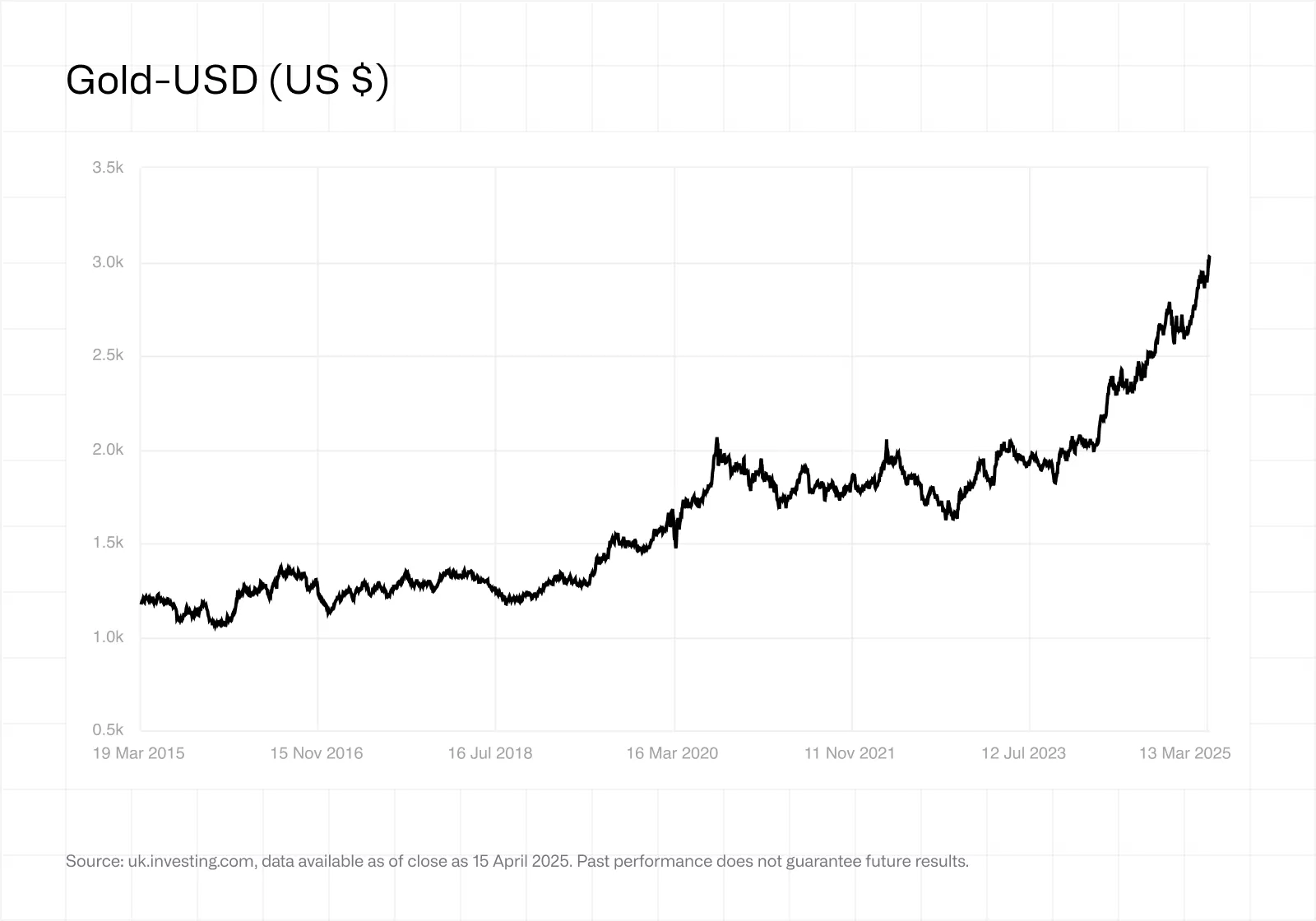
Spot gold prices surpassed $3,500 per ounce on April 22, marking a new all-time high. JPMorgan forecasts the average gold price in 2025 to reach $3,675/oz, potentially climbing to $4,000/oz if high interest rates persist over an extended period.

Data shows that China now holds over 2,292 tonnes of gold, accounting for 6.5% of its total foreign exchange reserves. The People’s Bank of China has been steadily accumulating gold for several consecutive months, fueling global demand and accelerating the trend toward de-dollarization.

Gold and Bitcoin Surge Amid Economic Uncertainty

Source: UK Investing

Bitcoin has also made significant strides. As of April 23, BTC is trading around $93,500, up more than 20% year-to-date. BlackRock’s spot ETF (IBIT) has attracted over $39.7 billion, becoming a key driver in Bitcoin’s institutional adoption. Investment giants such as Fidelity, ARK Invest, and VanEck are also increasing their BTC allocations in long-term portfolios.

When Cash Is No Longer Attractive

On a policy level, Bitcoin’s role has been elevated following U.S. President Donald Trump’s executive order to establish a “Strategic Bitcoin Reserve” under the Department of the Treasury. This move not only carries symbolic significance but also formalizes Bitcoin as part of the nation’s reserve assets. Meanwhile, gold continues to serve as a traditional pillar in central bank reserves worldwide.

According to data published by CoinShares on April 22, both gold and Bitcoin act as effective hedges against declining purchasing power in inflationary environments. Purchasing power, the ability of a unit of currency to buy goods and services has been consistently eroded amid rising inflation. 

The Consumer Price Index (CPI) remains a common tool to measure this decline, and in such a landscape, gold and Bitcoin stand out as two of the few assets capable of preserving real value.

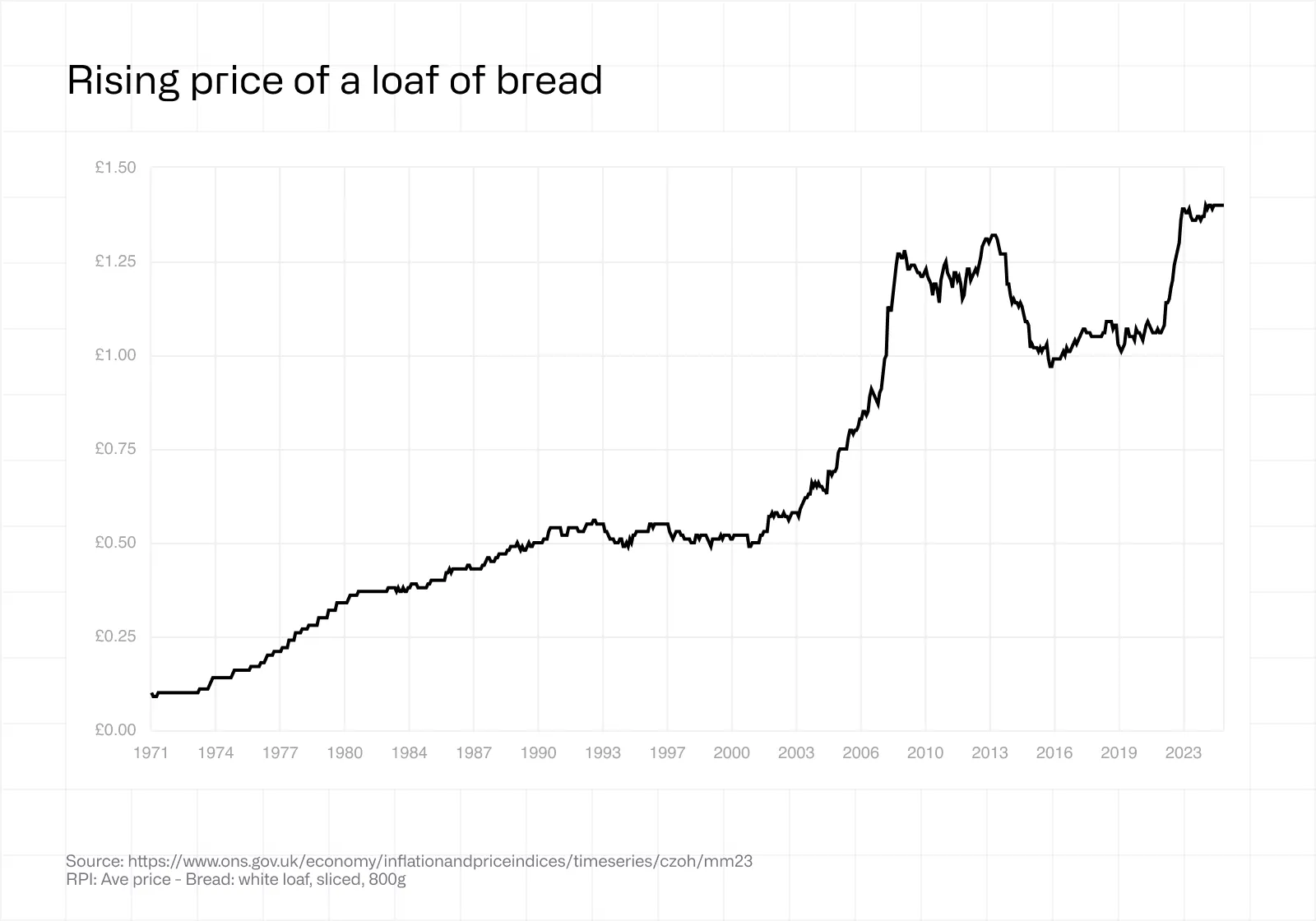
The report cites examples such as the United Kingdom, where the price of an 800-gram loaf of white bread has increased steadily since 1971, reflecting significant depreciation of the British pound. In Lebanon, where inflation peaked at 268% in April 2023, citizens were forced to abandon their local currency in favor of gold and Bitcoin to preserve purchasing power.

These are clear indicators that fiat currencies can fail in their role as a store of value, prompting a shift toward “hard assets.” Bitcoin has emerged as the digital successor to gold, particularly favored by younger generations and communities excluded from the traditional banking system.

When Cash Is No Longer AttractiveWhen Cash Is No Longer Attractive

Bread Price – Source: UK Investing

In practical terms, Bitcoin offers superior flexibility in storage and transfer. Unlike gold, Bitcoin stores in cold wallets and moves globally in minutes with low cost. A rapidly evolving security infrastructure, featuring multi-signature wallets, offline storage, and digital asset insurance is also strengthening its appeal.

Gold and Bitcoin: Which one is better?

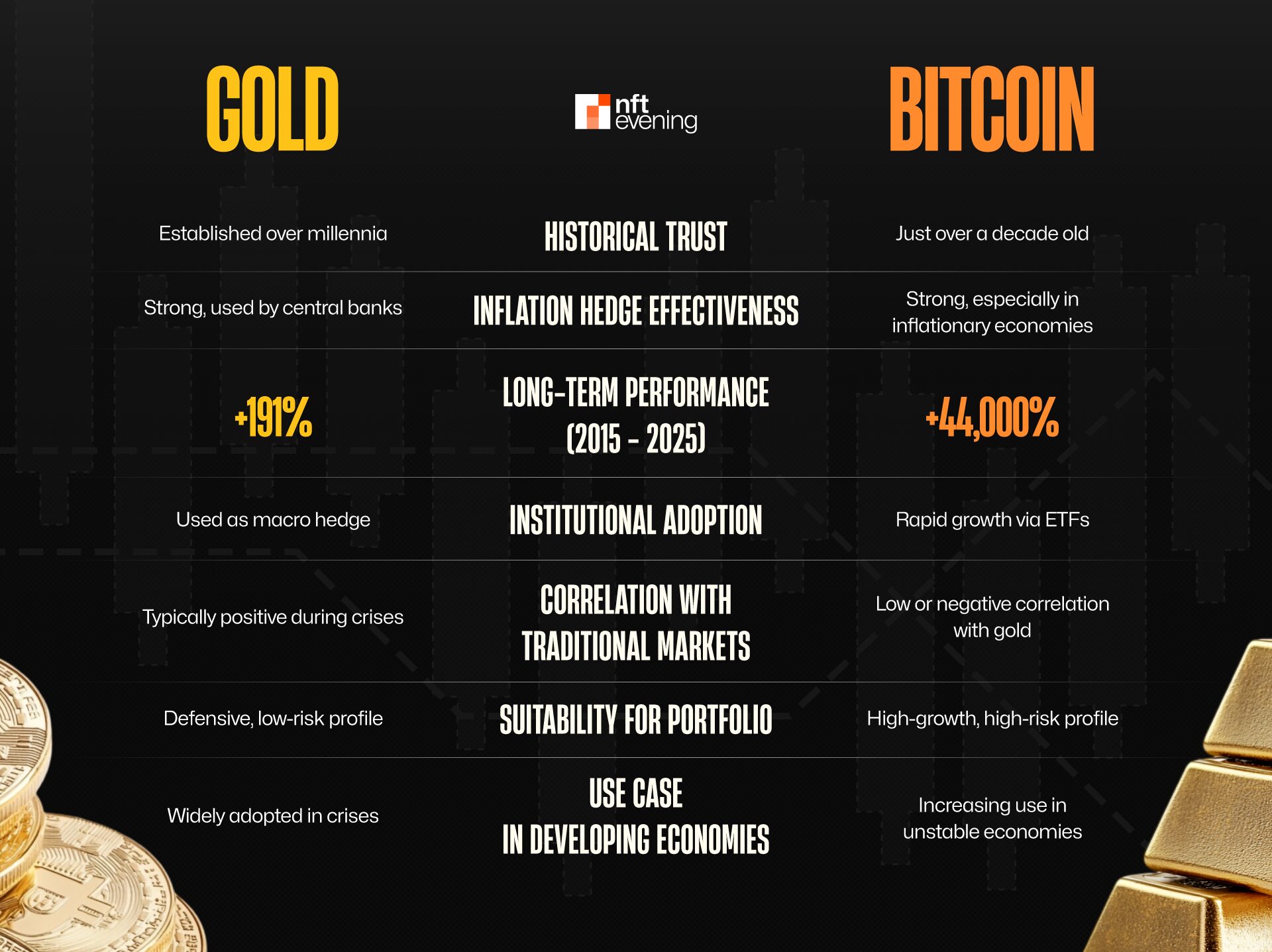
Volatility – once seen as Bitcoin’s biggest drawback, is showing signs of stabilization. According to data from CoinMetrics and Bloomberg, Bitcoin’s 30-day volatility currently sits at 46%, its lowest level in two years. In contrast, the Gold Volatility Index (GVZ) is climbing to its highest point since the pandemic, signaling a resurgence in short-term speculation.

Long-term trends offer a compelling view: in terms of purchasing power growth since 2011, Bitcoin has significantly outperformed gold. However, due to its higher volatility, Bitcoin is better suited for long-term investors with a high risk appetite, while gold remains the defensive asset of choice.

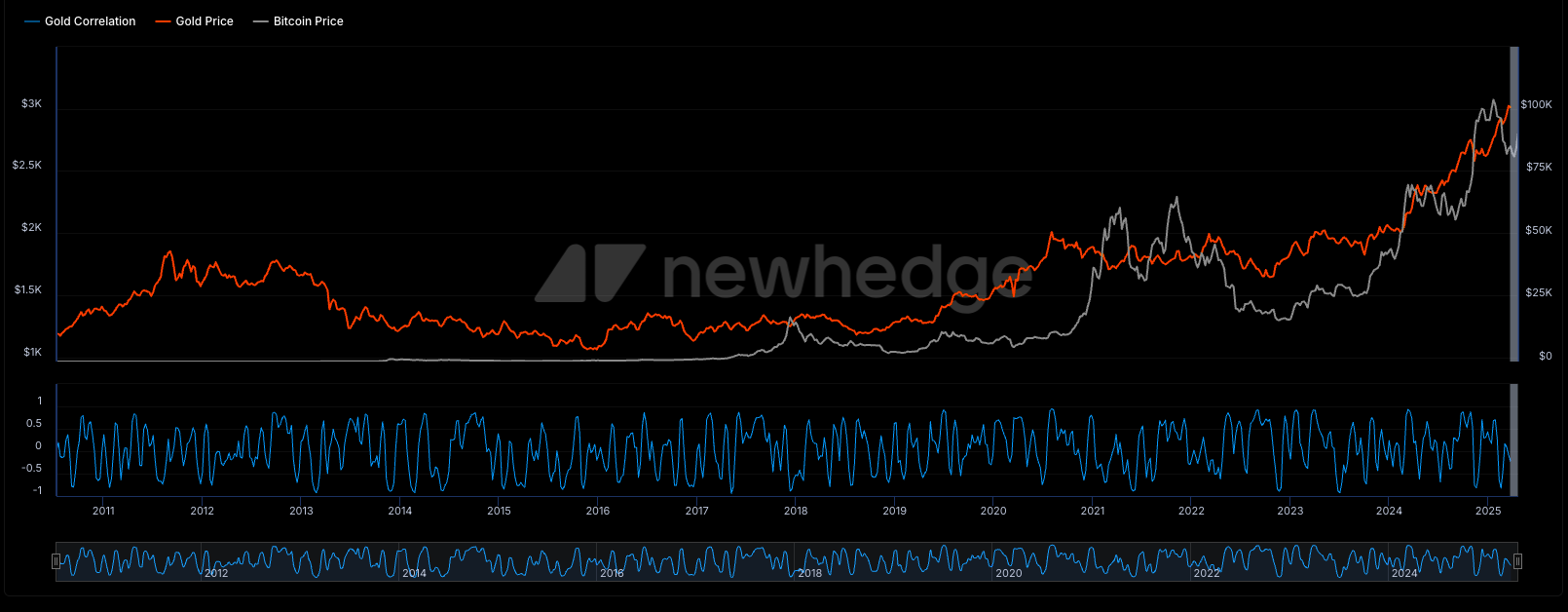
Studies show Bitcoin and gold stay weakly or negatively correlated, especially in market stress. Newhedge data shows the Bitcoin and gold correlation rarely stays above 0.5, often turning negative.

Notably, during major Bitcoin drawdowns (2018, 2022) or sharp rallies (2021), its correlation with gold tends to decline. This evidence shows gold reacts to risk, while Bitcoin responds to growth and liquidity shifts.

Gold and Bitcoin: Which one is better?Gold and Bitcoin: Which one is better?

Bitcoin and Gold correlation – Source: Newhedge

As a result, combining both assets in a portfolio can improve risk-adjusted returns through diversification. Investors increasingly view Bitcoin and gold as complementary assets in modern allocation strategies.

Major institutional players now favor dual exposure: gold for macroeconomic stability and Bitcoin for asymmetric growth potential. ARK Invest holds gold as a hedge and raised Bitcoin exposure to 12% in 2024.

SkyBridge Capital allocates 85% to gold and bonds and 15% to Bitcoin and tech stocks. This balanced strategy has proven effective amid increasingly volatile market cycles.

Gold and Bitcoin: Which one is better?Gold and Bitcoin: Which one is better?

Conclusion

While gold offers consistency and trust built over millennia, Bitcoin provides adaptability and scalability for a digital future. Historical performance, institutional momentum, and evolving monetary policies suggest that the optimal strategy for investors is not to pick sides but to diversify intelligently. Allocating a portion of one’s portfolio to both assets, balancing gold’s defensive strength with Bitcoin’s growth trajectory, may offer the best chance at preserving and expanding wealth in the 21st century.

Read more: Day Trading Crypto: A Beginner’s Guide


Source link

SEC Closes Key Crypto Cases— Is It a Turning Point? | NFT News Today

SEC Closes Key Crypto Cases— Is It a Turning Point? | NFT News Today


The SEC has wrapped up several high-profile investigations involving some of the industry’s biggest names, like Ripple, Immutable, Kraken, OpenSea, and Yuga Labs. This could signal a real change in how regulators treat crypto, especially with Commissioner Hester Peirce now heading a revamped Crypto Task Force in the United States.

The focus is shifting toward striking a balance between investor protection and innovation—a move that could help reshape the future of blockchain regulation.

Key Takeaways

The SEC has ended investigations into several major crypto firms, including Ripple and Immutable.

Ripple settled with the SEC for $50 million, down from the original $125 million fine.

Immutable’s probe closed with no enforcement action.

A 2025 Executive Order reversed earlier crypto policies and banned Central Bank Digital Currencies (CBDCs).

Despite the closures, legal challenges and regulatory uncertainty persist for many crypto companies.

Ripple’s Legal Win and Settlement Details

After nearly four years of legal battles, Ripple has finalized a $50 million settlement with the SEC—significantly reduced from the original $125 million. Both Ripple and the SEC dropped their appeals, officially closing the case in March 2025.

The SEC will refund $75 million of the $125 million fine a New York judge had ordered Ripple to pay last year, finalizing the settlement at $50 million. The outcome is seen as a landmark moment for crypto regulation, setting a precedent for companies pushing back against SEC enforcement actions.

Immutable Investigation Ends Without Penalty

In another major development, the SEC closed its investigation into Immutable with no enforcement action. The probe centred around the company’s 2021 IMX token sales and a blog post on pricing and token splits.

Immutable called the closure a “win for all builders, creators and gamers fighting for true digital ownership in gaming”.

Despite the investigation, Immutable maintained strong momentum:

Signed partnerships with three billion-dollar firms

Launched over 500 gaming titles

Built zkEVM blockchain infrastructure

Reached 4.9 million Passport sign-ups

SEC Backs Off Multiple Crypto Cases

Recent moves by the SEC suggest a more lenient approach to crypto regulation. The agency has either closed or backed away from several major cases involving Yuga Labs, Kraken, Coinbase, OpenSea, and Binance—all high-profile players in the industry.

Yuga Labs announced on March 4 that the SEC ended its nearly three-year investigation into the company’s NFT offerings. While the SEC hasn’t officially commented, the decision suggests it doesn’t view Yuga’s NFTs as securities.

Kraken shared on March 3 that the SEC plans to dismiss its 2023 lawsuit, which accused the exchange of selling unregistered securities. The case will wrap up with no penalties, no changes to Kraken’s business, and no admission of wrongdoing.

A Shift in U.S. Crypto Policy

These investigation closures align with broader changes in crypto policy under the current administration. In January 2025, a new Executive Order reversed several Biden-era regulations, banned CBDCs, and launched a pro-innovation Working Group on Digital Asset Markets.

Commissioner Hester Peirce now leads the revamped Crypto Task Force, tasked with developing clear and balanced regulatory frameworks. 

These changes reflect a growing effort to create a regulatory environment that encourages growth while maintaining oversight.

In a recent speech, SEC Commissioner Hester M. Peirce emphasized the need for regulators and the crypto industry to collaborate, stating:

“I invite you to join us in determining how to get from regulatory desolation to a place where the crypto industry can blossom without the weeds of fraud, grift, and market manipulation.”

She acknowledged that centralized intermediaries won’t disappear anytime soon, yet warned that if rules are “too heavy, too light, or simply not right,” people will turn to decentralized options.

Peirce also suggested that crypto’s innovations could help modernize equity markets, explaining:

“Perhaps these discussions also will help us to rationalize the regulatory framework for our traditional equity markets… Blockchain technology might even be an agent in that streamlining initiative.”

Market Reaction and Industry Outlook

The crypto market responded with measured optimism. XRP’s price held steady post-settlement, suggesting the outcome had already been priced in. Meanwhile, regulatory clarity is expected to improve investor confidence—especially among institutions wary of compliance risks.

The Web3 gaming space stands to benefit from reduced regulatory pressure, and Immutable’s progress during its investigation is a sign of resilience in the sector.

Looking ahead, proposals like a national crypto reserve could further reshape asset liquidity and create new opportunities for blockchain-based finance.

What’s Next for Crypto Regulation?

The SEC’s rollback of enforcement signals a more constructive approach to regulation. Industry players are now looking for more clarity on token classification and long-term compliance standards.

The current direction aims to support innovation without compromising investor protection. As new frameworks are introduced, they’ll likely shape how crypto assets are governed—and could help position the U.S. as a leader in blockchain development.

For crypto companies, this shift opens the door to greater focus on building and scaling—with less immediate pressure from regulators. Still, staying compliant remains essential in an evolving legal landscape.


Source link

SEC Drops Yuga Labs Investigation: What It Means for NFTs and Investors | NFT News Today

SEC Drops Yuga Labs Investigation: What It Means for NFTs and Investors | NFT News Today


The U.S. Securities and Exchange Commission (SEC) has officially closed its inquiry into Yuga Labs. This decision marks a significant shift for digital collectibles and signals new possibilities for creators in this sector.

The SEC had launched its probe under former Chair Gary Gensler in late 2022. Observers noted that regulators aimed to see if certain non-fungible tokens resembled stocks. Investigators focused on whether offerings like fractional NFTs fit the definition of securities.

Market Reactions and Implications

Yuga Labs gained attention by producing some of the most sought-after digital collections. Bored Ape Yacht Club (BAYC) and Mutant Ape Yacht Club rose to prominence during the market’s peak. The firm also acquired the rights to CryptoPunks, a groundbreaking series that once commanded high prices.

Data shows that BAYC’s floor price briefly jumped to 13.75 ETH (about $29,650) after the announcement, though it remains far below its peak of 153.7 ETH. Observers add that Mutant Ape NFTs and the associated ApeCoin token continue to face price drops of over 95% since their 2022 highs. CryptoPunks also saw a reduction of more than 70% from their previous peak.

Yuga Labs announced on X that the SEC had stopped its investigation after more than three years. The company described it as a major victory, declaring “NFTs are not securities.” That statement resonated with many collectors who’ve championed digital art as a distinct form of ownership rather than a stock-like vehicle.

A Broader Shift in Crypto Regulation?

This closure isn’t an isolated event. The SEC ended its investigation into the NFT marketplace OpenSea late last month. The agency also withdrew its suit against Coinbase and canceled a case against Kraken. Some participants believe these moves hint at a softened approach that might benefit crypto startups.

New angles on banking policy add another layer to this conversation. The CEO of Custodia Bank has accused federal agencies of failing to reverse measures that discourage traditional banks from engaging with digital assets. She contends that no clear legal changes have allowed banks to feel comfortable with crypto services. That gap creates uncertainties for those looking to adopt crypto-based solutions.

Analysts predict that a change in presidential administration could alter the approach to enforcement again. Current and former government officials suggest financial fraud cases won’t vanish, yet immigration and other topics might take priority. Shifts like these could reduce some scrutiny of cryptocurrency ventures.

Many see the SEC dropping Yuga Labs as a positive signal. It could embolden developers planning to launch new forms of digital collectibles or expand existing NFT utilities. Investors might find renewed confidence in a market that suffered significant declines after the bull run of 2021 and early 2022.

It’s a decisive moment for NFTs. The decision sets a precedent that may inspire broader acceptance of digital assets, so watchers will likely keep a close eye on regulatory moves. While some rules around decentralized finance and stablecoins remain unclear, a positive trend appears to be forming.

Observations highlight that this shift could encourage further innovation. Questions about oversight aren’t going away, but the SEC’s choice to let Yuga Labs move forward marks a pivotal development. The digital collectible space has scored a victory that might pave the way for fresh opportunities and greater mainstream acceptance.


Source link

How SEC Chair Paul Atkins Plans to Shape Digital Asset Regulation | NFT News Today

How SEC Chair Paul Atkins Plans to Shape Digital Asset Regulation | NFT News Today


In April 2025, Paul S. Atkins was sworn in as the 34th Chair of the U.S. Securities and Exchange Commission (SEC), marking a significant shift in the agency’s stance toward digital assets​. Nominated by President Donald Trump and confirmed by the Senate in a 52–44 vote, Atkins takes over from Gary Gensler with a mandate to recalibrate crypto regulation​.

A former SEC Commissioner (2002–2008) known for advocating cost-benefit analysis and market-friendly policies, Atkins has publicly vowed to establish a “firm regulatory foundation for digital assets” through a “rational, coherent, and principled” approach.

This represents a clear break from the previous administration’s strategy of “regulation by enforcement,” which drew heavy criticism from the crypto industry for its aggressiveness and lack of clear rules​.

Indeed, Coinbase’s chief legal officer applauded Atkins’ appointment as “sorely needed and cannot come a day too soon”​, reflecting the optimism among crypto stakeholders.

Atkins brings not only regulatory experience but also direct involvement in the digital asset sector. He helped develop best practices for the crypto industry in his post-SEC career​ and even disclosed personal investments of up to $6 million in crypto-related assets (including stakes in a crypto custodian and a tokenization platform) during his confirmation​.

While this crypto-friendly background signals an embrace of innovation, it has also raised eyebrows. Senator Elizabeth Warren described Atkins’ potential conflicts of interest as “breathtaking”, underscoring concerns that a more industry-sympathetic SEC could go too soft on investor protection.

Balancing these perspectives, Atkins has promised to “go back to the basics” of the SEC’s mission – protecting investors, ensuring fair markets, and facilitating capital formation – but with a fresh strategy for digital assets​.

Below, we examine how Chair Atkins is expected to regulate three key categories of emerging assets: non-fungible tokens (NFTs), gaming-related digital assets, and tokenized real-world assets (RWA). We also contrast his approach with that of former Chair Gensler, highlighting philosophical and strategic differences.

Non-Fungible Tokens (NFTs) – From Crackdown to Clarity

Gensler’s Crackdown: Under Gary Gensler, the SEC started scrutinizing NFTs as a potential vehicle for unregistered securities offerings. In 2023, the SEC brought enforcement actions against multiple NFT issuers – for example, charging Los Angeles-based company Impact Theory for a $30 million NFT sale that the SEC argued was essentially an investment contract (the firm had encouraged buyers to view NFTs as an investment in its business)​.

Another high-profile case involved the “Stoner Cats” NFT project, which was fined for raising funds through NFT sales to fund a web series, deemed by regulators as an unregistered securities offering​.

Gensler’s SEC even probed major NFT marketplaces and creators; investigations into OpenSea (the largest NFT trading platform) and Yuga Labs (creator of the Bored Ape Yacht Club NFTs) were launched to determine if certain token sales qualified as securities.

This aggressive posture sent a chill through the nascent NFT industry – any token, even digital art or collectibles, that was marketed with an expectation of profit could become an SEC target.

Atkins’ Shift to Clarity: The Atkins-led SEC is poised to take a more nuanced and measured approach to NFTs. Even before Atkins took office, the Commission had begun quietly pulling back on some NFT enforcement.

In late 2024, the SEC withdrew certain lawsuits against NFT projects, choosing to reserve enforcement for only the most egregious cases involving “clear promises of returns” or fraud (essentially, Ponzi-like NFT schemes)​.

Moreover, in early 2025, the SEC dropped its probes into OpenSea and Yuga Labs, a move welcomed by the industry as a sign of relief. However, legal experts cautioned that this did not mean NFTs have a free pass; whether an NFT is deemed a security will “depend on how it is sold,” i.e. the specifics of the transaction and the promises made to buyers​.

In other words, an NFT purely functioning as a digital collectible or artwork may fall outside SEC purview, whereas one sold as an investment with an expectation of profit could still be subject to securities law.​

Atkins appears intent on drawing a clearer line between those two scenarios. He is expected to prioritize guidance over crackdown in the NFT arena – providing the market with clearer criteria for when an NFT might be considered a security (for instance, fractionalized NFTs or those that include profit-sharing rights likely still trigger SEC scrutiny).

This more “rational and coherent” stance stands in stark contrast to the previous approach of casting a wide net. By focusing enforcement on outright scams and ponzi-like token schemes, Atkins’ SEC aims to foster a creative NFT economy while still policing fraud. Such an approach aligns with the new Chair’s broader philosophy of not “predetermining economic winners and losers” through overzealous regulation​.

It also heeds Commissioner Hester Peirce’s call for “clear and reasonable boundaries of regulatory authority” so that compliance is achieved via rulemaking rather than courtroom battles​. The coming months may see the SEC issue interpretive guidance or even a report on NFTs (analogous to its 2017 DAO Report), clarifying how securities laws apply in this domain.

For NFT creators and marketplaces, Atkins’ tenure so far signals a more open dialogue: the focus is on transparency and compliance strategies going forward, rather than punishing past sales that were conducted in murky regulatory waters.

Gaming Tokens and Digital Assets – Recognizing Utility vs. Speculation

Play-to-Earn or Pay-to-Play (by SEC rules)? Digital assets in video games and online worlds – including in-game cryptocurrencies, tokens, and gaming NFTs – form another frontier of regulation. Under the prior SEC regime, these assets were largely viewed through the same lens as other tokens.

Chair Gensler repeatedly asserted that the “vast majority” of crypto tokens are securities, with “all digital assets other than Bitcoin” falling under SEC jurisdiction in his view​. This uncompromising stance implied that even tokens primarily used for gameplay or virtual goods could be deemed securities if, in substance, they involved an investment scheme.

For example, if a game developer sold tokens to the public to finance game development (with promises that the tokens would rise in value as the game grew popular), the SEC would likely consider it an unregistered securities offering.

Under Gensler, the SEC did not carve out exceptions for “utility tokens” used in games – as regulators often noted, “merely calling a token a ‘utility’…does not prevent [it] from being a security”. This lack of distinction sowed uncertainty for blockchain gaming companies.

In fact, by late 2024 the SEC had reportedly extended investigations into blockchain gaming firms like Immutable (a platform for in-game NFTs and tokens), leaving the entire Web3 gaming sector unsure of what token activities might trigger enforcement​.

Atkins’ Level-Up for Game Assets: The new SEC leadership signals a greater recognition of the difference between speculative crypto investments and genuine in-game utility assets. A telling development came in March 2025, when the SEC terminated its inquiry into Immutable and related gaming projects, finding no violations and opting not to pursue enforcement.

Immutable’s president, Robbie Ferguson, lauded this outcome as bringing “regulatory clarity to the Web3 gaming industry” and predicted it would “drive more institutional investment” into blockchain games​. The decision suggests that regulators, under Atkins, concluded those gaming tokens were not being used as investment contracts in practice.

It marks a notable shift to a more permissive (or at least, understanding) stance: if a token’s primary function is to be used within a game ecosystem (for playing, trading in-game items, or rewarding players), and not marketed for profit-potential, the SEC is more inclined to let it be.

Moving forward, we anticipate Atkins will work to articulate clear guidelines for gaming-related digital assets. The goal is to ensure “utility tokens” get treated by their use-case, not just by their name. This could involve factors like: whether the token is sold to investors or only earned through gameplay, whether its value is tied mainly to game utility or speculative demand, and what promises (if any) are made to purchasers.

By engaging with the industry – for instance, through the SEC’s new Crypto Task Force and public roundtables – the agency can refine its approach in collaboration with game developers. Indeed, one of the SEC’s spring 2025 roundtables focuses on “DeFi and the American Spirit”​, a discussion likely to touch on decentralized gaming economies as well.

Such dialogue-based governance is a far cry from the confrontational tone of prior years and aligns with Atkins’ intent to regulate with the market rather than against it.

It’s worth noting that a more accommodative approach does not mean gaming tokens are completely off the hook. Atkins’ SEC will still police schemes where a “game” is merely veneer for fundraising. Projects that sell tokens with grand promises (“buy our tokens now and profit as our metaverse expands!”) will remain in the crosshairs as potential unregistered securities.

However, bona fide gaming platforms integrating blockchain – think play-to-earn games where tokens reward players for participation – may find a more receptive regulator willing to provide no-action assurances or tailored rules. By acknowledging the utility aspect of these digital assets, Atkins aims to avoid stifling a burgeoning sector that merges tech innovation with entertainment.

The broader impact is that companies in the blockchain gaming space can operate with less fear of sudden enforcement, as long as they steer clear of treating their players like passive investors. This balanced mindset could keep the U.S. as a competitive hub for Web3 gaming development, whereas a rigid Gensler-style approach risked driving these projects overseas.

As one commentator put it, the SEC’s recent flexibility is turning a potential “game over” into a “game on” for the crypto gaming industry – albeit under reasonable guardrails that Atkins believes can protect players and investors alike.

Tokenized Real-World Assets – Bridging Traditional Finance and Blockchain

The Promise and Peril of RWA: “Tokenized real-world assets” (often abbreviated RWA) refer to digital tokens that represent ownership of tangible or traditional financial assets – for example, tokens representing shares of stock, fractions of real estate, commodities, bonds, or even fine art.

This concept holds transformative promise: by putting real assets on blockchains, trading can become more efficient and accessible 24/7, with potentially greater liquidity and transparency. Under Gary Gensler, the SEC’s stance on RWA was guarded. Gensler acknowledged that nothing about crypto technology negates the need for investor protection​- a tokenized stock is still a stock, and thus subject to securities laws.

His SEC did not actively oppose tokenization outright, but it provided no special accommodations for it either. In practice, that meant any firm offering tokenized securities had to fully comply with existing registration, disclosure, and exchange regulations.

The previous Commission proposed broad rules (such as expanding the definition of “exchange” to capture crypto trading platforms) which, if enacted, could have made trading tokenized assets on decentralized platforms illegal without broker-dealer registration​.

This cautious approach, critics argued, left the U.S. behind as other jurisdictions experimented with regulated tokenized bonds or funds. Security token projects complained that Gensler’s SEC offered little guidance on how they could lawfully issue and trade tokenized assets beyond telling them to “come in and register” – a process ill-suited for novel blockchain-based markets.

Atkins’ Embrace of Tokenization: Paul Atkins appears far more enthusiastic about integrating blockchain into traditional finance. His own financial ties underscore this: prior to taking office, Atkins had board or equity stakes in Securitize (a platform for tokenizing real-world assets) and a fintech firm called Pontoro. While he has pledged to divest those holdings to avoid conflicts, the insight he gained from them is likely to inform the SEC’s policy.

Observers note that Atkins’ appointment “signals an immediate shift toward more crypto-friendly regulation” and a push to “reduce barriers to capital and crypto markets”, consistent with the Trump administration’s goal of eliminating regulations that stifle innovation​. In the context of RWA, this means creating a regulatory environment where tokenization projects can flourish under clear rules.

Senator Cynthia Lummis, a leading crypto proponent, said she expects Atkins will “work quickly to provide regulatory certainty for the digital asset industry” – which would include clarity on tokenized stocks, bonds, and other instruments.

Early signs of this direction are evident. The SEC has scheduled a public roundtable in May 2025 on “Asset Tokenization and Integration with Traditional Finance”​, signaling that the agency is actively seeking input on how to modernize rules to accommodate blockchain-based assets. Rather than shunning tokenization, the Commission under Atkins is exploring how to harness it safely.

This could involve updating custody rules (so brokers can securely hold tokenized securities), refining disclosure requirements for on-chain issuances, and coordinating with other regulators on issues like settlement and market infrastructure.

The new Chair has also indicated support for legislative efforts to define digital assets in law. He may back the proposed “Digital Asset Market Structure Act,” which aims to delineate regulatory jurisdiction between the SEC and CFTC and clarify what counts as a security token versus a commodity token. By reducing regulatory overlap and uncertainty, such legislation would directly benefit RWA initiatives.

Critically, Atkins’ SEC seems inclined to approve or at least seriously entertain innovative tokenized products that were stalled under Gensler. It now has 70+ crypto-related ETF applications in the queue – ranging from spot Bitcoin ETFs to more exotic crypto asset funds – and analysts describe issuers taking a “spaghetti cannon approach” to see what the new regime might allow​.

Outside of ETFs, companies like Robinhood are “accelerating their push” into offerings like tokenized equities, explicitly because the regulatory climate is “shifting in [their] favor” with Atkins at the helm​. This palpable optimism suggests that tokenized stocks or funds, once nearly taboo, could soon hit U.S. markets through proper channels.

Even Wall Street giants are vocal – BlackRock’s CEO Larry Fink has touted tokenization as the “future of markets,” and with an SEC chief now sympathetic to that vision, collaborations between traditional finance and crypto tech are expected to deepen.

Of course, a fair and critical assessment must note that easing the path for tokenization carries risks. The SEC will need to ensure that investor protections (disclosures, antifraud provisions, etc.) remain robust in this new medium. Atkins has framed his mission as making the U.S. “the best and most secure place in the world to invest and do business”​.

Thus, his approach to RWAs will likely pair deregulation in the form of removing “unnecessary barriers to entry” with vigilance on core protections. We might see, for example, streamlined approval for a blockchain-based securities exchange – but coupled with strict reporting standards and oversight of that exchange’s operations. The net effect could be a win-win: legitimate asset tokenization ventures get a green light, while scams (e.g. sham “tokenized real estate” offerings with no real assets behind them) still get shut down.

If successful, Atkins’ strategy could position the U.S. as a leader in the tokenization of finance, unlocking capital and liquidity in new ways, much as his supporters predict​.

From Gensler to Atkins: A Philosophical and Strategic Shift

The change in SEC leadership from Gary Gensler to Paul Atkins represents a tectonic shift in regulatory philosophy. While both men profess the same statutory mission, their interpretations and tactics differ sharply:

Regulatory Philosophy: Gensler maintained that existing securities laws are largely sufficient for crypto; he famously took the view that nearly every digital asset (apart from Bitcoin) is a security by default. Under his tenure, the SEC for years declined to write new crypto rules or definitions, insisting the industry “figured it out” on their own at their peril​.

In contrast, Atkins espouses a philosophy of engagement and update. He acknowledges that the digital asset market needs a “regulatory foundation” built on clarity and modernized rules. Rather than stretching 90-year-old laws to cover every blockchain token, he favors working “with…Congress” to fill in gaps and explicitly “clarify the standards for distinguishing between securities and non-securities tokens”​.

Philosophically, Gensler was more of a strict constructionist of securities law, whereas Atkins is more of a reformer seeking to adapt the framework to contemporary markets.

Enforcement vs. Guidance (Strategic Approach): Under Gensler, the SEC’s primary tool was regulation by enforcement. The agency brought numerous high-profile cases against crypto exchanges (e.g. Coinbase, Binance), token issuers, lending platforms, and even NFT creators, often without accompanying guidance or rulemaking.

This approach, described by many in the industry as capricious and opaque, led to accusations that the SEC was effectively making policy through lawsuits​.

Atkins, by contrast, is pivoting towards “dialogue-based governance”. In the first months of 2025, the Commission (led first by Acting Chair Mark Uyeda and now Atkins) dropped or settled several crypto enforcement actions – some against major firms like Coinbase, ConsenSys, Gemini, and Uniswap were reportedly halted or reassessed​.

Simultaneously, the SEC launched a Crypto Task Force to liaise with industry and scheduled multiple public roundtables on crypto trading, custody, DeFi, and tokenization​. This strategy suggests Atkins prefers to set policy through consensus-building and clear rules, using enforcement more selectively (targeting fraud and egregious violations) rather than as a blanket policy instrument.

Tone on Innovation: Gensler’s tenure was characterized by a guarded, often skeptical tone toward crypto innovation. He frequently highlighted the risks of crypto – fraud, market volatility, investor harm – and showed willingness to sacrifice some innovation in order to enforce compliance. In practice, this meant many novel crypto products (from lending yields to tokenized stocks) were stymied or pushed offshore due to regulatory fear or uncertainty.

In contrast, Atkins strikes a tone of qualified optimism. He has “spoken favorably of blockchain technology within financial systems” in the past​ and signals that the SEC should not impede the growth of digital asset markets so long as core investor protections are met.

The new Chair’s mindset is summed up in a guiding principle from a recent White House directive: regulations “should not predetermine economic winners and losers” nor “reduce competition, entrepreneurship, and innovation”​. In practice, Atkins’ SEC is more likely to give the benefit of the doubt to innovators – allowing pilot programs, sandboxes, or exemptions to let new products come to market under supervision – whereas Gensler’s SEC was more likely to say “no” first and ask questions later.

That said, Atkins is not an uncritical cheerleader: his promise to uphold the SEC’s investor protection mandate means outright speculative mania without disclosure won’t get a free ride. It’s a more balanced rhetoric: encouraging responsible innovation, versus Gensler’s emphasis on reining in irresponsible innovation.

Industry and Political Reception: The divergent approaches have elicited very different responses. Industry players, who often felt antagonized by Gensler, have largely welcomed Atkins. As noted, crypto executives described his arrival as a “ray of hope”​ and U.S. firms like Robinhood immediately began charting expanded crypto offerings in expectation of a friendlier regime​.

Under Gensler, some companies faced a choice of compliance puzzles or lawsuits – prompting lawsuits against the SEC in return (Coinbase sued the SEC for lack of rulemaking, for instance) and leading to courtroom battles that sometimes undercut Gensler’s claims (e.g. the partial court victory for Ripple in 2023, where a judge ruled XRP sales on exchanges were not securities by default).

Atkins aims to avoid such deadlocks by addressing concerns upfront and mending the SEC’s relationship with the sector. Politically, Gensler’s aggressive stance pleased certain lawmakers (many Democrats, like Sen. Warren, praised his tough enforcement), but drew ire from others (Republican lawmakers frequently accused him of overreach).

Atkins, as a Trump-appointed Republican, enjoys support from pro-crypto legislators who see him as an ally for sensible rules. However, he faces skepticism from staunch crypto critics who worry the SEC might become too lenient or even “captured” by the industry. During his Senate hearing, Atkins acknowledged the “backlash” the SEC had incurred and called some prior practices “disturbing,” vowing to “boost the Commission’s image” and restore trust.

This indicates a desire to be seen as fair by the broad public – not just a crypto booster – as he navigates between fostering innovation and preventing abuse.

In sum, where Gary Gensler saw the crypto world largely as a Wild West to be tamed with the whip of enforcement, Paul Atkins sees a developing frontier that should be guided with a more nuanced hand. Gensler leaned on 20th-century interpretations to regulate 21st-century assets, often resulting in adversarial showdowns; Atkins is inclined to update the rulebook for the 2020s, seeking collaborative input and only drawing the line when necessary.

This philosophical shift is already manifesting in day-to-day SEC policy: fewer headline-grabbing lawsuits, more engagement with industry, and a concerted effort to actually write regulations (or support legislation) that address digital assets explicitly.

Whether one approach is “better” will ultimately be judged by outcomes – can Atkins’ SEC protect investors as effectively as Gensler’s did, while also fostering a healthier environment for innovation? Early indications are promising, but only time (and wise execution) will tell if this critical balance can be achieved.

Conclusion

As Paul Atkins assumes the reins of the SEC, the regulatory landscape for digital assets is undergoing a careful but consequential recalibration. In the realms of NFTs, gaming tokens, and tokenized real-world assets, Atkins’ message is one of “rational” calibration rather than blunt-force crackdown. He appears determined to draw clearer lines: distinguishing art and collectibles from investment contracts, distinguishing in-game economies from securities markets, and distinguishing genuine asset tokenization from unlawful offerings.

This nuanced approach, backed by public statements and early policy moves, reflects an optimism that smart regulation can both protect investors and allow novel markets to thrive​. It’s a departure from the prior chair’s philosophy that saw nearly every crypto innovation as a potential threat to be smothered under existing law​.

Atkins’ tenure is still in its infancy, and being “critical yet fair,” one must recognize the road ahead is not without hazards. By easing up on across-the-board enforcement, the SEC risks creating a gray zone – industry players must be careful not to misinterpret regulatory forbearance as a green light for reckless behavior.

As one legal expert noted regarding the recent enforcement pullbacks, the absence of active cases could leave the industry in a “vacuum” of uncertainty that only formal guidance or new laws can fill​. Atkins will need to follow through on issuing that guidance and supporting those new laws; otherwise, the clarity he promises could remain patchy.

Moreover, his friendly stance will surely be tested the moment a major fraud or market meltdown occurs on his watch – the true measure of his approach will be how swiftly and decisively the SEC responds in such crises, proving that “crypto-friendly” does not mean “fraud-friendly.”

Still, the strategic differences between Atkins and Gensler are stark and, many argue, refreshing. By realigning the SEC toward rulemaking, public engagement, and targeted enforcement, Chair Atkins is charting a course that could make the U.S. a global leader in responsible digital asset innovation​.

Already, the change in tone has led to tangible shifts: previously reluctant companies are expanding crypto offerings domestically​the-cfo.io, and international observers see the U.S. regulatory stance softening after years of hostility. Atkins’ own words upon being sworn in encapsulate the balance he strives for: “Together we will work to ensure that the U.S. is the best and most secure place in the world to invest and do business”​.

Achieving “the best” while maintaining “the secure” is no easy task – but if Atkins can provide clear rules for NFTs, gaming assets, and RWAs that legitimize these markets without inviting abuse, he will indeed have engineered a pivotal regulatory evolution.

In comparing the two eras – Gensler’s and Atkins’ – a fair conclusion is that neither extreme enforcement nor total laissez-faire is a viable long-term strategy. The SEC’s credibility depends on protecting investors and fostering fair, orderly markets. Gensler hammered the first point, arguably at the expense of the second; Atkins is now tilting back toward the center.

His early initiatives (dropping marginal cases, convening roundtables, articulating guiding principles) have set a constructive tone. The coming year will reveal how this translates into concrete policy – be it new safe-harbor rules for tokens, approvals of long-pending crypto ETFs, or clearer definitions distinguishing a game coin from a stock.

The digital asset industry and its skeptics alike should stay engaged in this process. A sustainable regulatory framework for digital assets in the U.S. will require input and compromise from both sides of the aisle and both sides of the crypto debate.

In steering that process, Paul Atkins has positioned himself as a pragmatic referee, one who understands the game but is unafraid to call fouls. His tenure offers a critical opportunity to get crypto regulation right – an opportunity forged in contrast to his predecessor’s path, and one that, if executed wisely, could benefit investors, innovators, and the markets at large.




Source link

Popular Posts

My Favorites